

 by Tom Gurney
Tom Gurney BSc (Hons) is an art history expert with over 20 years experience
Published on January 25, 2026 / Updated on January 26, 2026
Email: tomgurney1@gmail.com / Phone: +44 7429 011000
Modigliani Exhibitions and Critical Reception
Amedeo Modigliani's reputation was shaped as much by exhibitions and public response as by the paintings and sculptures themselves. During the artist's lifetime, he was marginalised, misunderstood and often ignored by critics and institutions.
It is fair to say that he should take some of the blame for that, with his wild antics putting many off. After his death, however, things would change. Indeed, in the latter part of his career Modigliani was already starting to make progress, but sadly this was cut short by his health problems.
Today, his work is among the most recognisable in modern art, the subject of major international retrospectives exhibitions and record-breaking auctions. Within this page we will discuss his fleeting success in exhibiting work within his own lifetime, as well as discussing how his work has been critically received then and now.
This journey explores how public scandal, dealer advocacy, museum endorsement and changing scholarly judgements would transform Modigliani from a neglected outsider into one of the defining figures of twentieth-century art.
- Artist: Amedeo Modigliani
- Lifetime solo exhibitions: 1
- Year: 1917
- Venue: Galerie Berthe Weill, Paris
- Works exhibited: Painted nudes
- Public reaction: Police intervention; exhibition curtailed
- Recognition during lifetime: Limited and controversial
- Recognition after death: Major international retrospectives
Early Exhibitions and Artistic Struggles (1906-1914)
When Modigliani arrived in Paris in 1906, it was a city full of foward-thinking artists. Exhibitions of avant-garde artists and movements were regular, and an open-minded public. As an unknown, inevitably, Modigliani started off having to exhibit alongside others, often in unfashionable, quiet locations were little interest was fostered.
During these years, Modigliani showed work sporadically at independent salons such as the Salon des Indépendants, though records suggest his presence made little impact. Whilst unique artists were appreciated in Paris, it was not easy to place his work alongside others in exhibitions, because of his unique approach. We did not align with the dominant Cubism, Fauvism or Symbolism, for example.
Additionally, his sculptures would rarely be exhibited at all, remaining in his studio waiting to be discovered. Critics who did encounter his work frequently dismissed it as “primitive” or "unfinished." While African and archaic influences were common among modern artists, Modigliani's synthesis of these sources with classical portraiture did not fit prevailing narratives of progress or abstraction.
Dealers, Studios and Informal Displays
Rather than institutional exhibitions, Modigliani's work circulated primarily through private studios, cafés, and small dealer networks. The artist's sociable nature was both a help and a hindrance in this regard - he was loud and memorable, helping to promote himself around the city on his evenings out, but sometimes he could go too far. He became better known for his behaviour than his art in some circles.
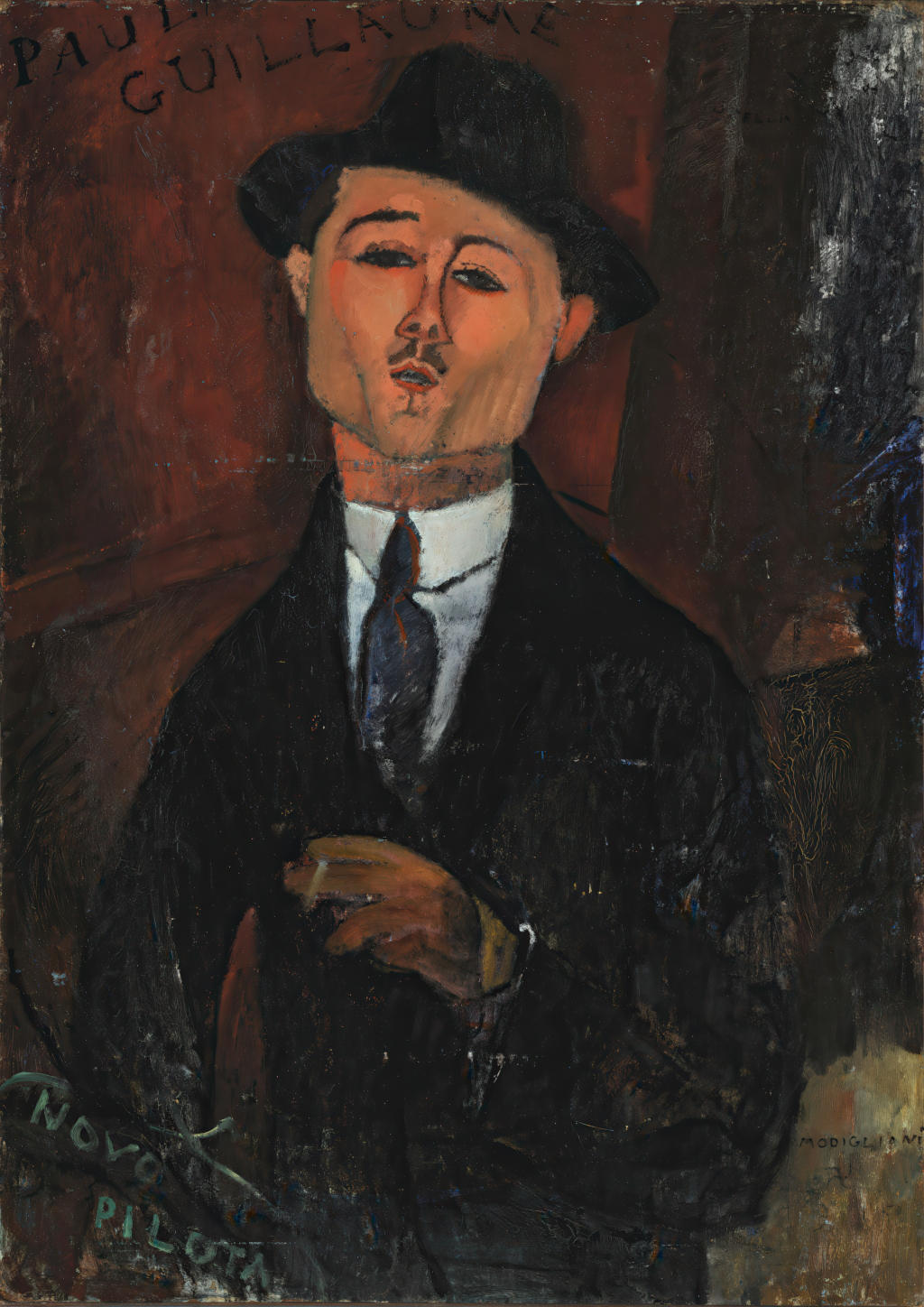
Figures such as Paul Guillaume and Léopold Zborowski played an increasingly important role in bringing his work to view, often arranging informal displays or small group shows.
These exhibitions lacked prestige but were crucial in keeping Modigliani visible within artistic circles. Fellow artists, writers, and collectors encountered his work more often through personal networks than through galleries. It appeared that Amedeo was becoming a big fish in a small pool, but yet to break into the mainstream and therefore would struggle financially for the foreseeable future.
The 1917 Nude Exhibition and Public Scandal
The most famous exhibition of Modigliani's lifetime occurred in December 1917 at the Galerie Berthe Weill in Paris. It was his first, and last solo exhibition.
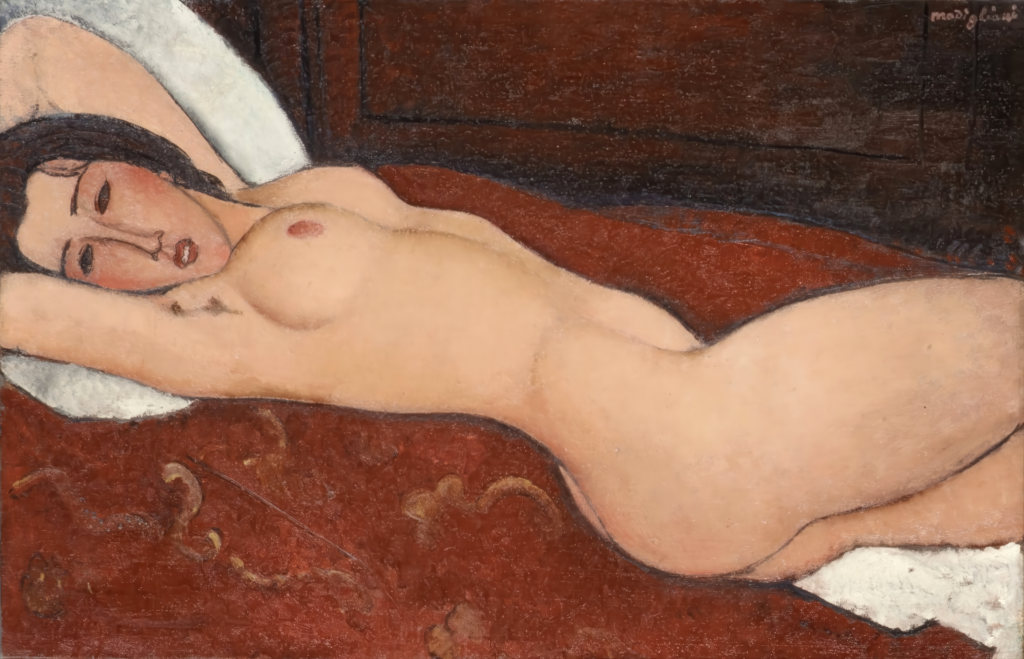
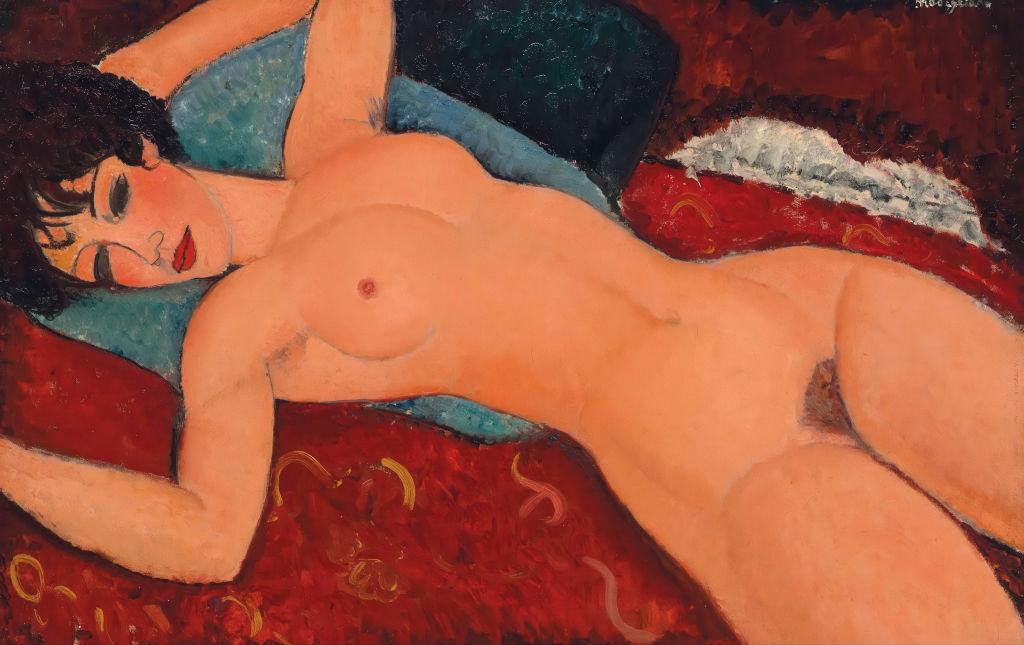
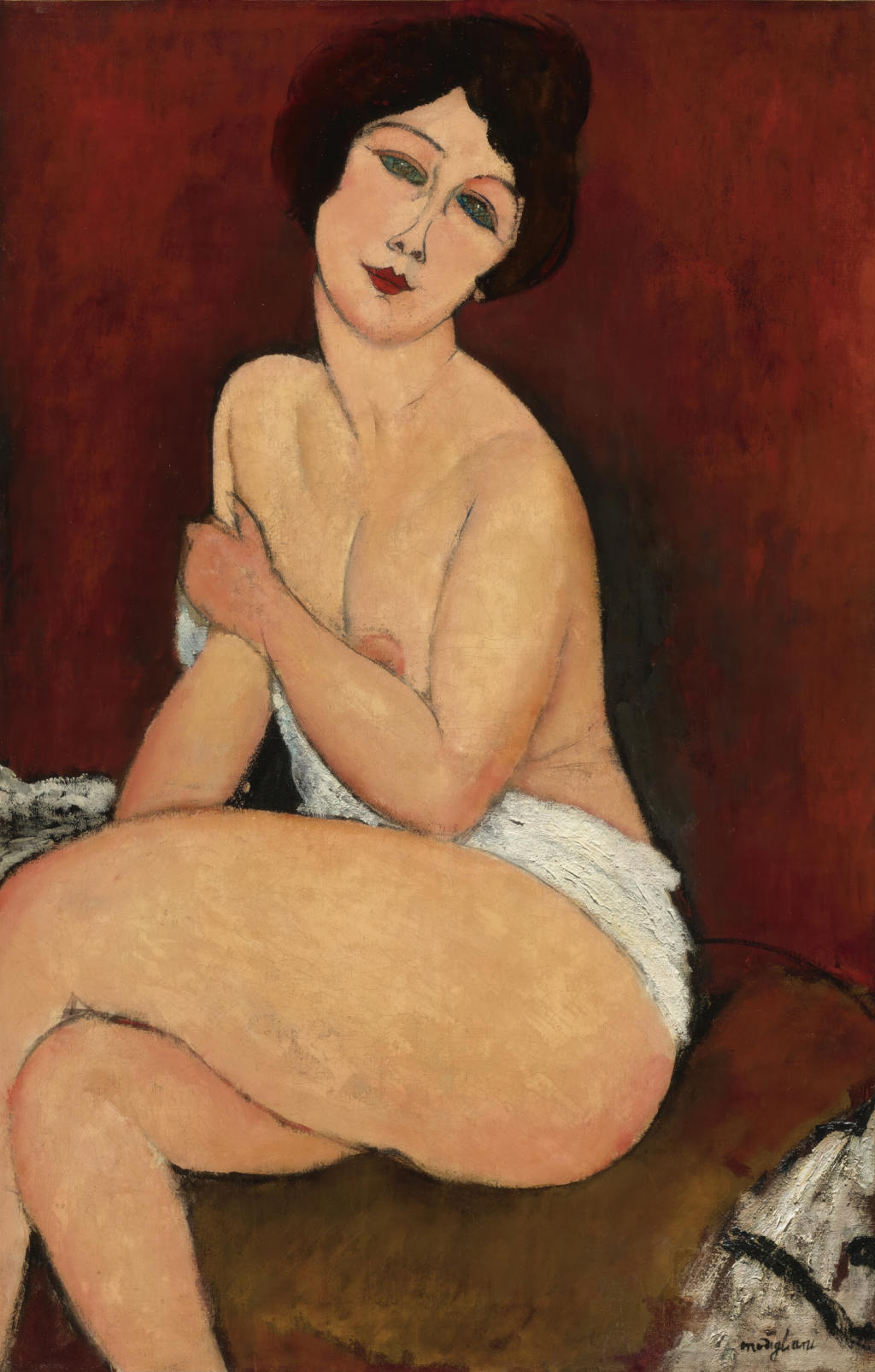
The images below summarise the exhibtion, and its focus on his nude series. Sadly, whilst bringing publicity, it also brought scandal. The public was prepared for nude art, but not in this manner - there was no mythology, or other narrative, just nakedness thrust towards the viewer.
Whilst the intention was not erotic, the public still coiled away from such sights, bringing the artist's name into disrepute. Within hours of the exhibition opening, the police intervened, demanding the removal of the works from public view on grounds of indecency. Although the exhibition was not officially shut down, it effectively ended almost immediately.
If Modigliani could not find support in Paris, then where? This incident became central to Modigliani's legend. At the time, it reinforced perceptions of him as scandalous and marginal. In retrospect, it is often cited as evidence of his radical modernity. So it seemed his reputation would rise, but not during his own lifetime.
Despite living and working in Paris for more than a decade, this 1917 exhibition at Galerie Berthe Weill was the only solo exhibition Modigliani held during his lifetime. All later recognition, retrospectives, and museum exhibitions occurred posthumously.
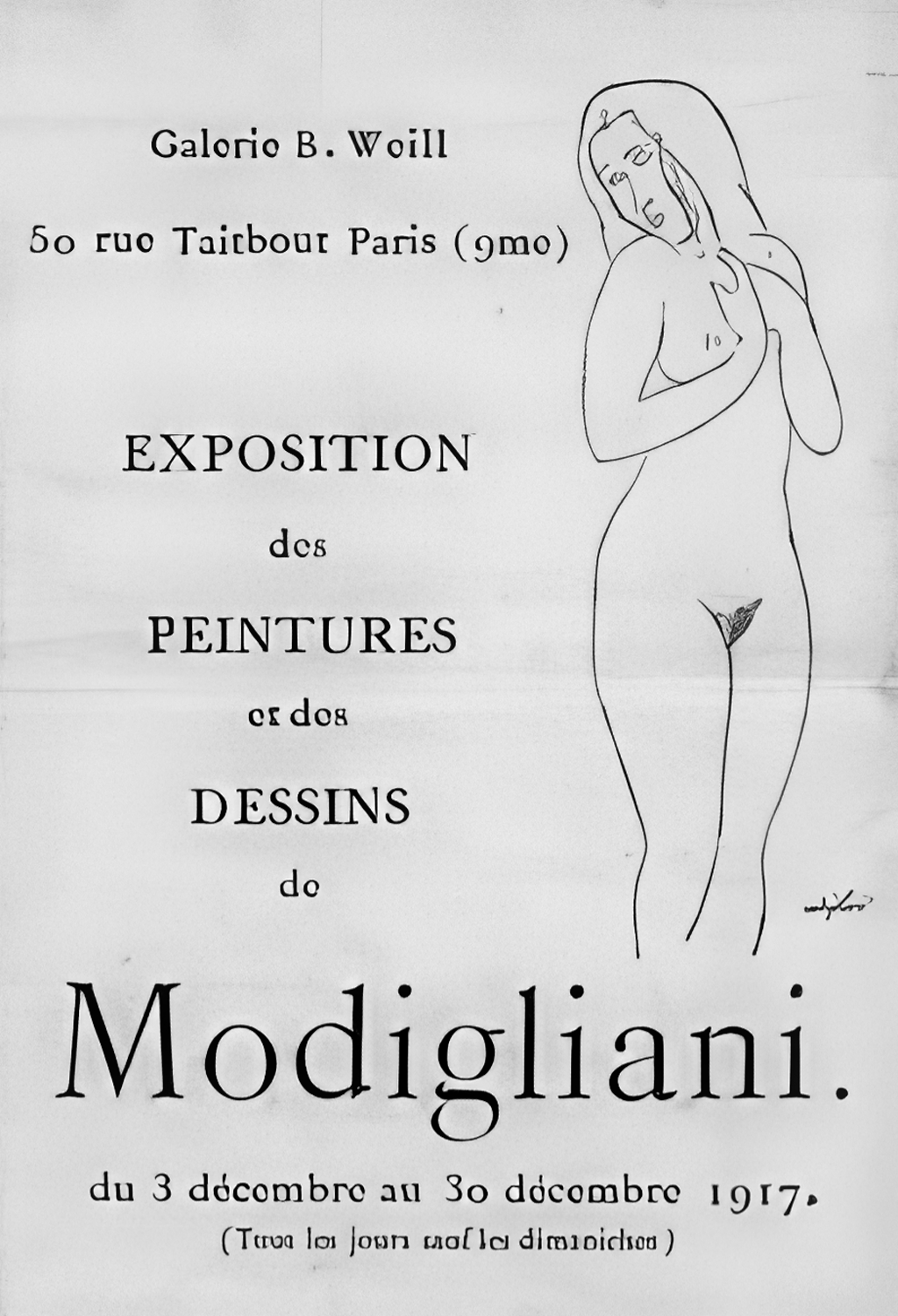
Solo Exhibition - Galerie Berthe Weill, Exposition des Peintures et des dessins de Modigliani Poster
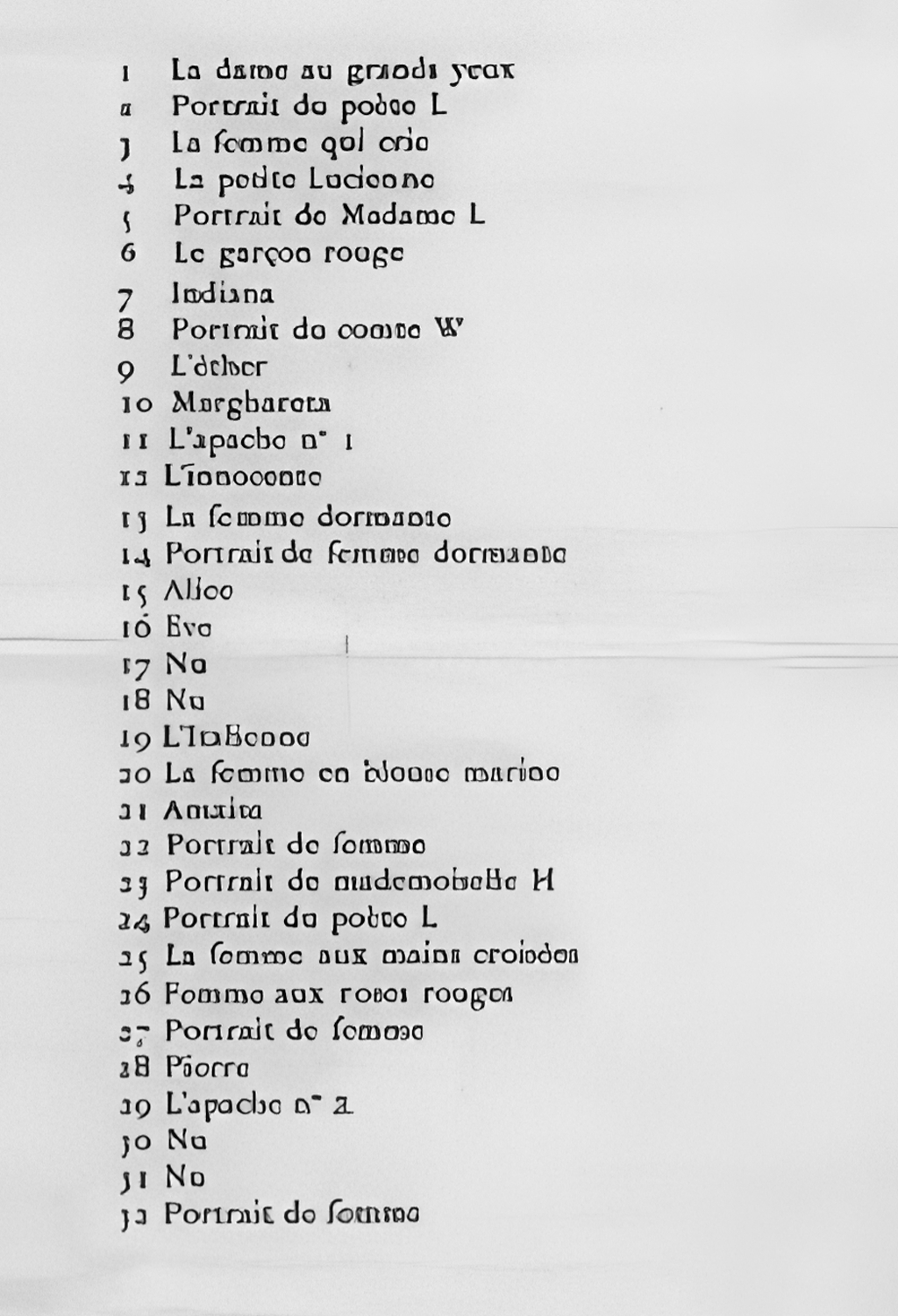
Solo Exhibition - Galerie Berthe Weill, Exposition des Peintures et des dessins de Modigliani List of Artworks
Critical Reception During Modigliani's Lifetime
Critical response to Modigliani during his lifetime was inconsistent and generally limited. Few critics devoted sustained attention to his work, and those who did often struggled to interpret it. Some described his paintings as decorative or overly stylised. Others saw his elongated figures as affectations rather than innovations.
Modigliani tended to sit uncomfortably between the emerging movements of the time, making it hard to place his work, both in exhibitions, but also for critics to appraise it. He also was not connected strongly enough with others to share a collective momentum.
Modigliani was therefore treated more as an amusing sideshow, on the fringes of the Paris art scene rather than as a potential figurehead for any particular movement or idea. Consequently, the public rarely heard of him, or encountered his work and even fewer were able to understand it.
Death and Immediate Posthumous Recognition (1920s)
Modigliani's death in January 1920 marked the beginning of a dramatic shift in his critical reception. Suddenly, a story was to be told, capturing tragedy, brilliance, love and the suicide of Jeanne Hébuterne. Public interest and sympathy appeared for the first time, but sadly too late for Amedeo to experience himself.
Within a few years of his death posthumous exhibitions appeared in Paris, and knowledge of his work quickly spread. This drove demand for his work, with dealers and collectors suddenly showing interest, dramatically increasing the value of his work. The narrative of the misunderstood genius proved compelling, and exhibitions increasingly reflected this reinterpretation.
Early Retrospectives and Dealer Influence
Throughout the 1920s and 1930s, Modigliani's reputation was shaped heavily by dealers such as Paul Guillaume and later by gallery-led retrospectives. These exhibitions played a crucial role in stabilising his legacy, presenting a curated image of his work and life.
Most works can be traced back to this period, and so these early years are important to those cataloging his oeuvre. Most of his paintings passed through several key dealers, and so their provenance was established from these early retrospectives. Many of these exhibitions were organised by these same dealers, and themed around his nudes, portraiture and sculptural works.
Sadly, some forgeries also appeared at this early stage, hoping to take advantage of the artist's death and take advantage of his growing reputation.
Reputation from the Mid-20th to 21st Century
It was by the mid-20th century that Modigliani's work started to appear in major museum collections, marking his arrival in the mainstream. Institutions such as the Museum of Modern Art, the Tate, and later the Centre Pompidou incorporated his paintings into narratives of modern art and he was now a part of the story of the history of art.
The narrative around Modigliani started to change, recognising his influence and creating a better understanding of how he combined modern and classical styles. He became part of the coversation alongside the likes of Matisse, Picasso and Soutine.
In the twenty-first century, Modigliani exhibitions have become global blockbusters, attracting large audiences and extensive media coverage. Major retrospectives draw on international loans and present comprehensive surveys of his work.
Public reception today combines scholarly respect with popular appeal. His distinctive style is instantly recognisable, and exhibitions often attract visitors who may not engage deeply with other modern artists
Additionally, advanced research techniques, including x-ray imaging, pigment analysis and also archival research in recent years have revealed Amedeo to be more deliberate than first thought. Study of his drawings and sculptures has also helped to bring all of his work together, into one coherent body of work. They have since grown lives of their own, with exhibitions of his sculptures and drawings not uncommon.
Market Reception and Auction Impact
Record-breaking sales of nude paintings, in particular, have been accompanied by renewed exhibition interest. While market value is not equivalent to artistic merit, it undeniably influences reception, drawing attention to his work and sustaining institutional interest.
It is a remarkable transition, from the artist's struggles in poverty to the extraordinary valuations given to the likes of Nu Couche and Reclining Nude.
Modigliani's Place in Art History
The exhibition history of Modigliani reveals a dramatic transformation. During his lifetime, exhibitions failed to secure recognition or stability. After his death, exhibitions were highly influential in how his reputation was built, discussed and secured.
Today, Modigliani is recognised as a central figure of modern art — not because he fit neatly into a movement, but because exhibitions have demonstrated the coherence and originality of his vision. His work is better understood than ever before, and his paintings are now instantly recognisable as his own, commanding huge valuations for even his fringe artworks.