


 by Tom Gurney
Tom Gurney BSc (Hons) is an art history expert with over 20 years experience
Published on June 19, 2020 / Updated on August 16, 2026
Email: tomgurney1@gmail.com / Phone: +44 7429 011000
Pieter Bruegel the Elder: Introduction
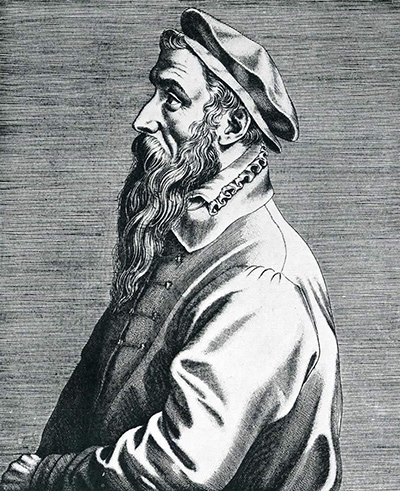
Pieter Bruegel the Elder is one of the defining artists of the Northern Renaissance: a painter of crowded human worlds, a designer of prints, a maker of monumental landscapes, and one of the sharpest observers of social life in sixteenth-century Europe. His surviving paintings are few, but they contain an unusually wide range of experience. Hunters cross a frozen landscape. Harvesters sleep and eat in late-summer heat. Children fill a town square with games. A wedding feast unfolds in a barn. Proverbs become bodies. Death sweeps across the earth. The Tower of Babel rises as both technical marvel and moral warning.
Bruegel's art is famous because it is accessible at first glance and inexhaustible on a second look. He can seem comic, worldly, moral, affectionate, severe, panoramic, intimate and strange, sometimes within the same work. He brought peasants, children, craftsmen, fools, pilgrims, soldiers, builders and crowds into compositions of exceptional control. He also transformed landscape into a stage for time, weather and human labour, especially in the great cycle of seasons painted in 1565 for the Antwerp merchant and collector Niclaes Jonghelinck [4] [5].
The Pieter Bruegel biography traces the evidence for his life from the Low Countries to Italy, Antwerp and Brussels. The paintings, prints and drawings sections introduce the different forms in which his art circulated. The thematic pages on style and technique, landscapes and seasons, proverbs and iconography, peasant imagery and workshop copies and attribution offer slower routes through the questions that make Bruegel so absorbing.
At a Glance
- Borncirca 1525/30, traditionally associated with Breugel or Antwerp.
- Died1569, Brussels.
- Historical settingsixteenth-century Netherlandish art, often discussed within the Northern Renaissance.
- Known forpaintings, drawings and designs for prints.
- Key placesAntwerp, Brussels, Italy and the Alpine landscape encountered during travel.
- Important print connectionthe Antwerp publisher Hieronymus Cock.
- Important patronNiclaes Jonghelinck, associated with the seasons cycle.
- Familyfather of Pieter Brueghel the Younger and Jan Brueghel the Elder.
- Surviving paintingsabout forty, with the Kunsthistorisches Museum in Vienna holding the largest and most important group.
- Best starting worksThe Harvesters, Hunters in the Snow, The Tower of Babel, Netherlandish Proverbs, Peasant Wedding, Children's Games and The Triumph of Death.
Bruegel’s connections
Italy and the Alps: Soon after becoming a master in Antwerp, Bruegel travelled south. The exact route cannot be reconstructed from travel papers, but drawings and prints support an itinerary through France and Italy.[2][8]
Antwerp print culture: The design and the finished print of Big Fish Eat Little Fish tell different stories about whose name sold an image.[13][14][9]
Brussels and patrons: A date on a painting does not always tell us where it was made.[15]
Brueghel family and copies: Bruegel married Mayken Coecke in Brussels in 1563 . Their sons were still children when he died: Pieter Brueghel the Younger was born in 1564, and Jan Brueghel the Elder in 1568 .[2][2][1]
Bruegel in context
Northern Renaissance
Sixteenth-century setting[12][8][1][2]Antwerp print culture
1550s–1560s[13][14][9]Brueghel family and copies
After 1569[2][2][1]Antwerp guild
1551–1552[2]Italy and the Alps
Early 1550s[2][8]Brussels and family
Marriage in 1563[2][2][1]Triumph of Death
1562–1563[1]Four stages of Bruegel’s career
Essential Bruegel paintings

Hunters in the Snow
1565 · Painted in 1565, the panel belongs to Bruegel's great cycle of the Seasons, a group originally made for the Antwerp merchant and collector Niclaes Jongelinck.[2][7][1][5]

Tower of Babel
1563 · The Tower of Babel story is brief, but its afterlife in art is enormous.[6]

Netherlandish Proverbs
1559 · Pieter Bruegel the Elder's Netherlandish Proverbs is one of the great pictures of human foolishness.[1]

The Harvesters
1565 · The Metropolitan Museum of Art identifies The Harvesters as a 1565 oil on oak by Pieter Bruegel the Elder , now in New York as object 19.164 .[1][1][3]
Contents
- Introduction
- Why Bruegel Matters
- Life And Evidence
- Paintings
- Prints And Drawings
- Landscapes And Seasons
- Proverbs, Peasant Imagery And Crowds
- Technique And Close Looking
- Copies, Attribution And Dynasty
- Best Starting Points
Why Bruegel Matters
Bruegel matters because he enlarged the imaginative territory of European painting. Earlier Netherlandish art had already achieved extraordinary powers of observation, especially in the work of Jan van Eyck, where minute surfaces, reflective light and devotional intensity became a new language of pictorial truth. Bruegel inherited that Northern appetite for detail, but he turned it toward broader social worlds. His paintings ask what happens when human behaviour, season, labour, folly, belief and landscape are seen together.
His place is also different from that of Albrecht Durer, whose prints and drawings carried German Renaissance art into an international conversation with Italian theory, proportion and humanist learning. Bruegel knew the power of graphic art too. In the sixteenth century he was known especially through prints, and the Low Countries were a centre for international print production and trade. His designs moved through drawing, engraving, publication and multiple states, reaching viewers far beyond those who could see his paintings [6]. That graphic reach helps explain why Bruegel was not simply a painter of rare panels. He was also an artist of multiplication, circulation and visual wit.
Comparisons with Hieronymus Bosch are inevitable and often useful. Bosch had created fantastical moral worlds filled with hybrid creatures, punishments, temptations and startling inventions. Bruegel absorbed part of that moral and imaginative atmosphere, especially in works of satire, folly and catastrophe. Yet he is not Bosch's imitator. Bruegel's strangeness often grows from ordinary activity pushed to a grand scale: villagers feasting, children playing, crowds moving, workers harvesting, travellers crossing snow. His art can make daily life look comic and cosmic at once.
That double vision is one reason Bruegel remains so modern to many viewers. He rarely gives the viewer one simple moral position. The peasants in his art are not merely mocked; they are physical, hungry, tired, festive, comic and dignified. Crowds are not only disorderly; they become systems. Landscapes are not empty backgrounds; they hold weather, labour and time. A small figure can matter because the whole world around that figure matters too.
Bruegel also anchors a long Northern tradition of looking at ordinary life that later changes shape in Dutch and Flemish art. The household light of Vermeer and the psychological range of Rembrandt belong to different seventeenth-century worlds, but both can be better appreciated when Bruegel is seen as part of the longer history that made everyday people, rooms, gestures and social rituals worthy of serious art.
Life And Evidence
Bruegel's life is famous, but the documentary record is not large. The Kunsthistorisches Museum gives his birth as circa 1525/30, either in Breugel or Antwerp, and records his death in Brussels in 1569 [1]. The uncertainty around his birthplace is a reminder that Bruegel's art is much better preserved than the paperwork of his early life. He is known through a combination of later biographical tradition, surviving works, dated designs, patronage evidence and institutional records.
Tradition connects his training with Pieter Coecke van Aelst and Mayken Verhulst [1]. That connection matters because it places Bruegel near a world of learned design, tapestry, print culture and artistic family networks. The evidence cannot turn his early training into a fully detailed classroom scene, but it helps locate him within the Antwerp artistic environment that shaped his career.
Bruegel travelled to Italy and encountered the Alps, an experience often discussed in relation to his landscapes [1]. This journey did not make him an Italianate painter in a simple sense. Instead, it seems to have sharpened his understanding of scale, distance and terrain. His landscapes can feel vast without losing their grip on human action. Paths, slopes, cliffs, valleys, towers, towns and fields are organized with a deep intelligence about how the eye travels through space.
Antwerp was crucial. Bruegel worked within the print network of Hieronymus Cock, one of the most important publishers of the period [1] [6]. In that world, an artist's invention could pass from drawing to engraving and then into printed impressions sold and collected across borders. Bruegel's reputation was therefore not confined to painted panels for patrons. It moved through the commercial and intellectual machinery of the print trade.
In 1563 Bruegel moved to Brussels and married Mayken Coecke, the daughter of Pieter Coecke van Aelst [1]. His Brussels years include some of the most famous paintings now associated with his name. They also connect him to important patrons, including Niclaes Jonghelinck, the Antwerp merchant whose country-house dining room was associated with the great seasons cycle [1] [4]. Bruegel died in 1569, leaving two sons who would become artists: Pieter Brueghel the Younger and Jan Brueghel the Elder [1].
The shortness of Bruegel's career makes the concentration of his achievement more striking. The surviving paintings number about forty, according to the Royal Museums of Fine Arts of Belgium and the Kunsthistorisches Museum exhibition material [8] [2]. In 2018-19, Vienna's Bruegel exhibition brought together 29 of those roughly forty surviving paintings and around half of the surviving drawings and prints, a rare demonstration of how compact and powerful the surviving body of work is [2].
Paintings
Bruegel's paintings are the heart of his fame, even though they survive in relatively small number. They range from monumental landscapes to crowded moral images, from scenes of rural life to visions of death, war, folly and collective behaviour. What links them is not a single subject but a way of composing the world. Bruegel builds images that can be read from a distance as strong structures and then searched up close for hundreds of local events.
The Kunsthistorisches Museum in Vienna holds twelve works by Bruegel, described by the museum as the largest and most important collection of his paintings [2]. That concentration has shaped modern understanding of the artist. Vienna preserves many of the works through which Bruegel's range is most vividly known, including major seasonal, peasant and moral subjects.
Bruegel's painting technique rewards slow looking. His compositions are often clear in broad design, but their meaning emerges through distributed attention. The viewer is asked to move. A group at the edge may revise the tone of the center. A small gesture may unlock a proverb. A landscape passage may change the emotional temperature of the human scene. This is why Bruegel's pictures so often feel both legible and unstable. One sees what is happening, then realizes there is much more happening than first appeared.
The Harvesters is a useful starting point. The Metropolitan Museum of Art records it as a 1565 oil on oak panel and part of a six-part seasons cycle made for the dining room of an Antwerp merchant's country house [5]. The scene represents July or August, with rural labourers harvesting, eating and resting. The Met describes the workers as sympathetic yet idealized, a balance that captures a great deal about Bruegel's rural art [5]. He notices bodily fatigue, appetite and work, but he also gives the scene a broad harmony that no single worker controls.
Hunters in the Snow shows another side of the seasons cycle: winter as a total environment. The hunters return with their dogs, the landscape opens beneath them, and the eye travels into a village world of ice, play, fire, bridges and distant mountains. The painting is celebrated because it makes weather into structure. Snow is not a decorative covering; it is the condition through which movement, labour and survival are understood.
The Tower of Babel turns architecture into theology, politics and spectacle. Bruegel's tower is astonishingly engineered and visibly doomed, a human construction project that overwhelms the people around it. It belongs naturally beside his interest in crowds and systems: human ambition becomes a building site, and the building site becomes an image of disorder disguised as progress.
Netherlandish Proverbs is one of Bruegel's most famous comic-moral inventions. The painting turns sayings into actions, filling a village with embodied phrases. It is not simply an illustration of language. It is a world in which language has taken physical form. That makes it a central work for understanding Bruegel's proverbs and iconography, because meaning is scattered across the whole surface rather than placed in one obvious emblem.
Children's Games works in a related way. It fills urban space with play, but the result is not merely charming. The repetition, seriousness and absorption of the children make the painting feel like a study of society in miniature. Games become rituals. The child's world begins to resemble the adult world, with its rules, contests, collisions and performances.
Peasant Wedding has often defined Bruegel in popular imagination, yet it should not be reduced to quaint genre painting. The barn, the food, the servers, the bride, the guests and the angled movement of the composition create a social theatre. The picture invites attention to appetite, ceremony and community, while also raising the question of how an urban painter and his patrons looked at rural festivity.
The Triumph of Death is one of his most devastating works. The Prado records it as an oil on panel from 1562-63 [9]. Its world is crowded like a fair or battle scene, but the crowd has been overtaken by death. No rank, pleasure, skill or form of worldly order seems able to resist the catastrophe. The painting shows how Bruegel could use abundance not for comedy but for terror.
Prints And Drawings
Bruegel's prints and drawings are essential, not secondary. In the sixteenth century, Bruegel was known especially through graphic work [6]. The Royal Library of Belgium emphasizes that Flanders was an international centre for print production and trade, and that Bruegel and Hieronymus Cock were key figures in that culture [6].
This matters for understanding Bruegel's public reach. A painting normally belonged to a patron, house or collection. A print could circulate in multiple impressions. It could be bought, handled, copied, studied and sent elsewhere. Bruegel's inventions therefore moved through a wider viewing public than his panels alone could have reached. His graphic work helped spread his reputation for landscape, moral satire, peasant subjects and densely populated visual narratives.
The print process also shaped the nature of invention. Bruegel's designs could pass from drawing to engraving, then through published impressions and multiple states [6]. That chain involved collaboration as well as authorship. It also means that a Bruegel image may exist not as a single painted object but as a designed idea carried through another maker's hand and a publisher's business.
The Royal Library of Belgium has made its complete Bruegel print collection available online through Belgica [7]. That fact is important for readers because it reflects a broader scholarly shift: Bruegel's graphic art can now be explored in a more complete and comparative way. His prints are not merely illustrations beside the paintings. They are one of the main ways his art entered European visual culture.
Drawings occupy a more intimate place in this story. They connect the artist's observation, invention and design process. Some relate to printmaking; others preserve a kind of graphic intelligence that helps explain his landscapes and figures. Bruegel's drawn line is often economical but searching. It can carry topography, bodily movement, comic emphasis and moral point with remarkable compression.
The best way into this side of Bruegel is to treat the graphic work as a field of ideas. The drawings and prints show him thinking across media: how to organize a crowd, how to make a landscape legible, how to turn a proverb into action, how to move a viewer from laughter to unease. The print world also reminds us that Bruegel's art was not trapped in museum silence. It belonged to a lively culture of publishing, collecting and exchange.
Watch Bruegel’s art
Explore Bruegel with TheHistoryOfArt and artwork discussions from Smarthistory.
Pieter BRUEGEL Explained in 10 Minutes (updated)
A TheHistoryOfArt film about Bruegel.
Watch on YouTubeLandscapes And Seasons
Bruegel's landscapes and seasons are among the most ambitious achievements of sixteenth-century painting. He did not treat landscape as a mere setting for figures. He made it a structure of time, weather, labour and human scale. The viewer often begins with people, then realizes that the land itself is the larger subject.
The seasons cycle of 1565 is central. The Kunsthistorisches Museum explains that the series originally consisted of six large panels made for the country-house dining room of Niclaes Jonghelinck [4]. The surviving panels include The Gloomy Day, Haymaking, The Harvesters, Return of the Herd and Hunters in the Snow; the spring panel is lost [4]. This original setting matters. These were not small cabinet pictures. They were large paintings for a dining room, surrounding viewers with a cycle of the year.
The cycle's power comes from Bruegel's ability to make season visible through action. Summer is not just golden colour; it is harvesting, eating, fatigue, ripening fields and distant heat. Winter is not merely whiteness; it is return, cold, skating, fire, dogs, descent and the difficulty of movement. Autumn brings herds, weather and return. Each panel joins human work to a larger rhythm that no person controls.
This is why The Met's record for The Harvesters is so helpful. The museum identifies the painting as a 1565 oil on oak panel and part of the six-part seasons cycle for an Antwerp merchant's country-house dining room; it also identifies the season as July or August and notes the sympathetic yet idealized presentation of rural labourers [5]. Those details show how Bruegel balances specificity and breadth. The workers are observed as people, but they also stand within a general image of seasonal abundance.
The lost spring panel sharpens the sense of survival and absence. Bruegel's fame often makes his art feel inevitable, as if the known works were always waiting to become canonical. In reality, the surviving record is partial. The missing spring panel reminds us that the artist we know is also shaped by what has disappeared.
Landscape in Bruegel is rarely empty. Roads, fields, slopes and villages create networks of movement. Figures enter, leave, climb, fall, gather and return. Even when a scene feels panoramic, it is full of routes. The eye becomes a traveller, and that travelling eye is one of Bruegel's great inventions. He teaches the viewer to look across the world rather than only at the center.
Proverbs, Peasant Imagery And Crowds
Bruegel's proverbs and iconography belong to the same visual intelligence as his crowd scenes. He understood that meaning can be distributed. Instead of isolating a moral lesson in one central figure, he often spreads it across dozens of episodes. A Bruegel painting can behave like a city, with many things happening at once and no single viewer able to master them immediately.
Netherlandish Proverbs is the clearest example. Proverbs become people, postures, tools, houses and gestures. The painting is funny because sayings are literalized, but it is also unsettling because the world seems saturated with foolishness. There is no pure observing position inside the image. Human error is everywhere.
Bruegel's peasant imagery has produced long debate because it sits between observation, comedy, social distance and sympathy. The peasant wedding, the harvest meal and the rural dance are not modern documentary scenes in a neutral sense. They are made by an educated artist for viewers who were not identical with the people represented. Yet they are also too physically convincing to be dismissed as simple caricature. Bruegel gives his rural figures weight, appetite, awkwardness, energy and communal presence.
That balance is one of his distinctive strengths. He can show peasants eating with open mouths, dancing heavily or crowding a room, while still making the event structurally serious. The viewer may smile, but the picture does not collapse into mockery. Bodies have gravity. Work has cost. Food matters. Festivity takes space.
Crowds in Bruegel are never only crowds. They are systems of attention. In a wedding, people attend to food, ceremony, conversation and movement. In Children's Games, children attend to their own rules, contests and small dramas. In The Triumph of Death, panic and violence spread across the surface like a social order turned inside out. In The Tower of Babel, builders, rulers and workers participate in an immense project that dwarfs them.
This is why Bruegel's crowded pictures remain so compelling. They do not ask only, "What is happening?" They ask, "How does a world behave when many things are happening at once?" That question makes him feel close to modern experience, even though his subjects belong to the sixteenth century. Bruegel's art understands attention overload long before the modern city, the newspaper page or the screen.
His moral vision is therefore not narrow preaching. It is embedded in looking. Folly is something one discovers by searching. Human dignity is also discovered that way. Bruegel makes the viewer work, and the work of looking becomes part of the meaning.
Technique And Close Looking
The page on style and technique approaches Bruegel through composition, drawing, paint handling, scale, underdrawing, panel study and the discipline of close looking. Technical research has become especially important because Bruegel's surviving paintings are few, valuable and often surrounded by questions of condition, authorship, version and later copying.
The Kunsthistorisches Museum began a major research initiative in 2012 with support from the Getty Panel Paintings Initiative, studying its twelve Bruegel panel paintings through non-invasive methods including infrared, infrared reflectography, X-ray, X-ray fluorescence and 3D mapping [3]. The museum's Inside Bruegel project launched on 2 October 2018, opening this technical research to a wider audience [3].
Such methods matter because Bruegel's paintings are not only images but physical objects. Panels, grounds, underdrawings, pigments, changes and damages all affect how the works can be understood. Technical study can clarify how a composition was prepared, how passages were built, and how later condition may alter what viewers see now.
Close looking at Bruegel often means holding two scales in mind. At the large scale, his compositions are remarkably organized. Roads, diagonals, horizons, crowds, architectural forms and colour groupings guide the eye. At the small scale, local incidents keep multiplying. A figure slips, carries, points, eats, bends, runs, watches or misreads the situation. The picture's design is stable; the human behaviour inside it is restless.
This tension helps explain the intensity of Bruegel's best works. In The Harvesters, the broad rhythm of fields and trees gives order to a scene of work and rest. In Hunters in the Snow, the descending foreground figures lead the eye into a vast winter world. In Netherlandish Proverbs, the architecture holds together a field of comic-moral fragments. In The Triumph of Death, the total design amplifies catastrophe because death is not isolated; it is everywhere.
Bruegel's technique is therefore inseparable from thought. He does not merely fill pictures with detail. He controls how detail is found. The viewer's movement through the image becomes a moral and perceptual experience.
Copies, Attribution And Dynasty
The page on workshop copies and attribution is essential because Bruegel's name did not end with his death. His sons, Pieter Brueghel the Younger and Jan Brueghel the Elder, became artists in their own right [1]. Later copies, versions, workshop practices and family reputation have shaped how Bruegel's art has been seen and collected.
Pieter Brueghel the Younger is especially associated with repeated versions of his father's compositions, while Jan Brueghel the Elder developed a different artistic identity marked by refined finish, landscapes, flowers and collaborative work. The family name therefore carries both continuity and complication. A work connected to "Bruegel" may belong to Pieter the Elder, to one of his sons, to a workshop, to a later copyist, or to a more uncertain category.
This is not a dry catalogue problem. Attribution changes interpretation. If a painting is by Pieter Bruegel the Elder, it belongs to the concentrated surviving body of roughly forty paintings. If it is a later copy after him, it may still be historically important, but it tells a different story about reception, demand, copying and family legacy. The distinction affects how a viewer understands invention, date, technique and cultural meaning.
The Royal Museums of Fine Arts of Belgium describe their holdings after Vienna as the second-largest collection of Bruegel paintings, and note that their Brussels collection includes Fall of the Rebel Angels, The Census at Bethlehem, Winter Landscape with a Bird Trap and Icarus-related attribution material [8]. That last phrase points to one of the most important realities of Bruegel study: some famous images are surrounded by attribution questions, versions or later histories that need careful wording.
The Prado's Wine of Saint Martin's Day is another reminder that Bruegel scholarship remains active. The museum identifies it as a 1566-67 glue-size painting on twill canvas and records that it was acquired after rediscovery and authentication [10]. Its history shows that even for a painter as famous as Bruegel, the known body of work has not always been fixed in the way casual viewers might assume.
The same caution applies to object facts, dates and titles. Bruegel's world reaches us through museums, conservation, scholarship, inventories, copies and family tradition. To study him well is to accept both the power of the images and the complexity of their survival.
Best Starting Points
Two contrasting views open different routes through the work. In the Kunsthistorisches Museum's Tower of Babel, a harbour and city give scale to a building whose layers open to view. The smaller Rotterdam painting gives more of the frame to the tower itself. You can read its coloured bands and densely worked walls by moving your attention from the lowest storeys to the unfinished crown. Looking at the two paintings consecutively makes the distance between the observer and the building as important as the story the two pictures share [11].
For a different kind of comparison, move from the winter Hunters in the Snow to Haymaking, the Lobkowicz painting associated with early summer. Each offers a distant landscape and figures close at hand. In the winter picture the black shapes of birds and dogs register against snow and ice. In Haymaking the movement in the fields and the approach of the foreground group pull the eye across warmer ground. The cycle joins months through changes in work, weather and the way a landscape opens up before a viewer [12].
Begin with The Harvesters if you want Bruegel at his most spacious and humane. It shows rural labour at the height of summer and belongs to the great seasons cycle [5]. The Metropolitan Museum of Art records the work as Public Domain, an object fact that reflects its open-access collection record [5].
Go next to Hunters in the Snow for winter landscape, atmosphere and the relationship between human movement and the vastness of the world. It is one of the most persuasive images ever made of season as lived experience.
The Tower of Babel introduces Bruegel's ability to turn architecture and human ambition into a moral landscape. It is also one of the clearest works for seeing his interest in labour, scale and collective systems.
Netherlandish Proverbs is the best entry into Bruegel's proverb world. It teaches the viewer how to search a painting, how to connect gesture and meaning, and how comic detail can become a vision of social folly.
Children's Games is a natural companion because it shows collective behaviour through play. It is lively and inviting, but also oddly serious in its sense that games reveal social habits.
Peasant Wedding opens the rural and festive side of Bruegel's art. It is best seen not as a simple slice of village life but as a highly organized social image in which food, ceremony and bodily presence matter.
The Triumph of Death shows the darkest reach of his imagination. The Prado identifies it as a 1562-63 oil on panel [9]. It is crowded, terrifying and unsparing, a painting in which Bruegel's gift for abundance becomes a vision of universal vulnerability.
After those works, the strongest route is thematic. The biography explains the documented life. The paintings page gives the main painted body of work. The prints and drawings pages restore the graphic side of his reputation. The pages on landscapes and seasons, proverbs and iconography, peasant imagery, style and technique and workshop copies and attribution then let the pictures unfold in depth.
Legacy
Bruegel's legacy is unusually wide because his art speaks to several histories at once. He belongs to Netherlandish painting, to the Northern Renaissance, to the history of print culture, to landscape, to satire, to peasant imagery, to moral vision and to the long European fascination with crowds. Few artists make so many routes through art history feel connected.
His influence is not only a matter of direct imitation. It also lies in the permission his art seems to give: permission to treat ordinary life as serious, to make landscape vast and inhabited, to distribute meaning across an entire surface, to see comedy and catastrophe as neighbours, and to build pictures that reward both quick recognition and patient scrutiny.
The Bruegel family extended his name across generations, while copies and prints kept his inventions in circulation. Museums have continued to reshape public understanding of him through conservation, exhibition and digital access. Vienna's 2018-19 exhibition, which displayed 29 of about 40 surviving paintings and around half of the surviving drawings and prints, demonstrated how rare it is to see so much of his work together [2]. The Kunsthistorisches Museum's research initiative and the Royal Library of Belgium's online print access show a different kind of legacy: Bruegel as an artist whose work is still being examined, compared and rediscovered through modern tools [3] [7].
Yet the deepest reason Bruegel endures is simpler. His pictures still feel inhabited. They contain worlds that do not wait politely for the viewer. People eat, work, fall, play, build, dance, carry, stare, hunt, panic and misunderstand. Weather changes the body. Food changes the room. Sayings become behaviour. Death enters the crowd. A tower rises and fails. A field is harvested. A child plays as if play were the whole order of life.
Bruegel saw that human beings are most revealing when they are part of something larger than themselves: a season, a crowd, a proverb, a ceremony, a landscape, a disaster, a cycle of labour, a family name, a market for printed images. That is why his paintings still feel expansive. They do not merely show people in the world. They show the world as a web of human action, natural force and moral consequence.
For a first encounter, start with one picture and stay longer than seems necessary. Bruegel rewards the extra minute. The main subject will be there, but so will the overlooked figure, the small joke, the distant path, the uneasy moral turn and the structure that holds it all together. His art teaches a habit of looking that is also a habit of thinking: the world is crowded, comic, beautiful, dangerous and never exhausted by the first thing we notice.
Bruegel artworks directory
| Name | Date | Explore |
|---|---|---|
| The Adoration of the Kings in Brussels | See object history | Article and object evidence |
| Adoration of the Kings in the Snow | See object history | Article and object evidence |
| Adoration of the Kings | See object history | Article and object evidence |
| Alchemist | See object history | Article and object evidence |
| Alpine Landscape with Deep Valley | See object history | Article and object evidence |
| Alpine Landscape | See object history | Article and object evidence |
| Avarice | See object history | Article and object evidence |
| The Beekeepers and the Birdnester | See object history | Article and object evidence |
| The Beggars | See object history | Article and object evidence |
| The Belgian Wagon | See object history | Article and object evidence |
| Big Fish Eat Little Fish | See object history | Article and object evidence |
| The Blind Leading the Blind | See object history | Article and object evidence |
| Three Blind Pilgrims After Pieter Bruegel the Elder | See object history | Article and object evidence |
| Calumny of Apelles | See object history | Article and object evidence |
| Census at Bethlehem | 1566 | Article and object evidence |
| Children's Games | 1560 | Article and object evidence |
| Christ and the Woman Taken in Adultery | See object history | Article and object evidence |
| Conversion of Paul | See object history | Article and object evidence |
| The Crafty Bird-Catcher | See object history | Article and object evidence |
| Death of the Virgin | See object history | Article and object evidence |
| Desidia (Sloth) | See object history | Article and object evidence |
| The Drunkard Pushed into the Pigsty | See object history | Article and object evidence |
| Elck | See object history | Article and object evidence |
| The Pilgrimage to Molenbeek | See object history | Article and object evidence |
| The Fair at Hoboken | See object history | Article and object evidence |
| Fall of the Rebel Angels | See object history | Article and object evidence |
| Fight Between Carnival and Lent | See object history | Article and object evidence |
| The Flight into Egypt | See object history | Article and object evidence |
| Gloomy Day (Early Spring) | See object history | Article and object evidence |
| The Harvesters | 1565 | Article and object evidence |
| Hay Harvest | See object history | Article and object evidence |
| Hunters in the Snow | 1565 | Article and object evidence |
| Invidia | See object history | Article and object evidence |
| Italian Landscape | See object history | Article and object evidence |
| Land of Cockaigne | See object history | Article and object evidence |
| Landscape with a Fortified Town | See object history | Article and object evidence |
| Landscape with a Group of Trees and a Mule | See object history | Article and object evidence |
| Landscape with Christ and the Apostles at the Sea of Tiberias | See object history | Article and object evidence |
| Landscape with Saint Jerome | See object history | Article and object evidence |
| Landscape with the Fall of Icarus | See object history | Article and object evidence |
| Landscape with the Flight into Egypt | See object history | Article and object evidence |
| Landscape with the Parable of the Sower | See object history | Article and object evidence |
| The Little Tower of Babel | See object history | Article and object evidence |
| Mad Meg | See object history | Article and object evidence |
| Magpie on the Gallows | See object history | Article and object evidence |
| Massacre of the Innocents | See object history | Article and object evidence |
| The Misanthrope | See object history | Article and object evidence |
| Mountain Landscape with a River | See object history | Article and object evidence |
| Mountain Landscape with Ridge and Valley | See object history | Article and object evidence |
| Mule Caravan on Hillside | See object history | Article and object evidence |
| Naval Battle in the Gulf of Naples | See object history | Article and object evidence |
| Netherlandish Proverbs | 1559 | Article and object evidence |
| Pastoral Landscape | See object history | Article and object evidence |
| Path through a Village | See object history | Article and object evidence |
| Peasant and the Nest Robber | See object history | Article and object evidence |
| Peasant Dance | See object history | Article and object evidence |
| Peasant Wedding | 1568 | Article and object evidence |
| The Penitent Magdalene | See object history | Article and object evidence |
| Portrait of an Old Woman | See object history | Article and object evidence |
| The Procession to Calvary | See object history | Article and object evidence |
| Rest on the Flight into Egypt | See object history | Article and object evidence |
| The Resurrection of Christ | See object history | Article and object evidence |
| Return of the Herd | See object history | Article and object evidence |
| Ripa Grande in Rome | See object history | Article and object evidence |
| Rustic Market | See object history | Article and object evidence |
| Rustic Solicitude | See object history | Article and object evidence |
| The Sermon (Preaching) of Saint John the Baptist | See object history | Article and object evidence |
| Seven Virtues - Love | See object history | Article and object evidence |
| The Gooseherd After Pieter Bruegel the Elder | See object history | Article and object evidence |
| Soldiers at Rest | See object history | Article and object evidence |
| Southern Cloister in a Valley | See object history | Article and object evidence |
| Spring | See object history | Article and object evidence |
| St Jerome in the Wilderness | See object history | Article and object evidence |
| The Suicide of Saul | See object history | Article and object evidence |
| Summer | See object history | Article and object evidence |
| Sylvan Landscape with Five Bears | See object history | Article and object evidence |
| The Temptation of St Anthony | See object history | Article and object evidence |
| The Painter and The Buyer | See object history | Article and object evidence |
| The Three Soldiers | See object history | Article and object evidence |
| Tower of Babel | 1563 | Article and object evidence |
| Triumph of Death | 1562–1563 | Article and object evidence |
| Twelve Proverbs | See object history | Article and object evidence |
| Two Chained Monkeys | See object history | Article and object evidence |
| View of Tivoli | See object history | Article and object evidence |
| The Way to Emmaus | See object history | Article and object evidence |
| Wedding Dance | See object history | Article and object evidence |
| The Wine of Saint Martin's Day | See object history | Article and object evidence |
| Winter Landscape with a Bird Trap | See object history | Article and object evidence |
| Wooded Landscape with a Distant View toward the Sea | See object history | Article and object evidence |
| Wooded Landscape with Mills | See object history | Article and object evidence |
| Wooded Region | See object history | Article and object evidence |
Discussion
What feels most revealing about Pieter Bruegel the Elder: the village detail, the landscape setting, the moral wit, or the way everyday life becomes a complete world?
Reader Insights
Begin with one small action in a Bruegel scene, then follow how it connects to the surrounding figures, setting and rhythm of the whole image.
Connect the work to Northern Renaissance visual culture, printmaking, proverb traditions and Bruegel's interest in rural and urban life.
Which detail changes the interpretation most once you know the subject, date, proverb source or present collection?
Join the Conversation
Have a thought or observation about Pieter Bruegel the Elder? Share it below. Thoughtful responses may be added to this section as the Bruegel pages develop.
Frequently Asked Questions
His place is also different from that of Albrecht Durer , whose prints and drawings carried German Renaissance art into an international conversation with Italian theory, proportion and humanist learning. Bruegel knew the power of graphic art too. [6]
Bruegel's life is famous, but the documentary record is not large. The Kunsthistorisches Museum gives his birth as circa 1525/30, either in Breugel or Antwerp, and records his death in Brussels in 1569 . [1]
The Kunsthistorisches Museum in Vienna holds twelve works by Bruegel, described by the museum as the largest and most important collection of his paintings . That concentration has shaped modern understanding of the artist. [2]
References
- Kunsthistorisches Museum, Pieter Bruegel the Elder, View source.
- Kunsthistorisches Museum, The Best of Bruegel - Only in Vienna, View source.
- Kunsthistorisches Museum, Researching Bruegel, View source.
- Kunsthistorisches Museum, Six Seasons for a Dining Room, View source.
- The Metropolitan Museum of Art, The Harvesters, View source.
- KBR, The World of Bruegel in Black and White, View source.
- KBR, All Bruegel prints now online, View source.
- Royal Museums of Fine Arts of Belgium, Bruegel: The Originals, View source.
- Museo Nacional del Prado, The Triumph of Death, View source.
- Museo Nacional del Prado, The Wine of Saint Martin's Day, View source.
- Kunsthistorisches Museum, A Summit of Masterpieces, View source.
- Kunsthistorisches Museum, Six Seasons for a Dining Room, View source.



