


 by Tom Gurney
Tom Gurney BSc (Hons) is an art history expert with over 20 years experience
Published on June 19, 2020 / Updated on October 14, 2023
Email: tomgurney1@gmail.com / Phone: +44 7429 011000
Charity (Caritas), from the Seven Virtues: Introduction
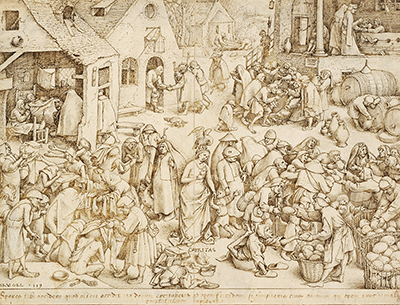
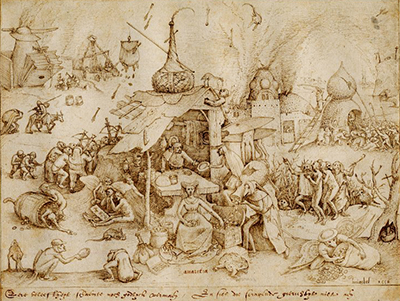
Pieter Bruegel the Elder’s Charity, also known as Caritas or Love, is a signed drawing of 1559 in Museum Boijmans Van Beuningen, Rotterdam. At its centre stands a woman holding a heart, accompanied by children and a pelican. Around her, people feed, clothe and visit others, and carry out burial. Philips Galle engraved Bruegel’s design for Hieronymus Cock’s Seven Virtues. The image above shows the drawing. Its central figure gives a name to the virtue, while the surrounding scenes show how it can be practised [1] [2] [3].
This work across Bruegel’s career
Tower of Babel
1563The Harvesters
1565Peasant Wedding
1568Children's Games
1560Triumph of Death
1562–1563Seven Virtues - Love
This artworkContents
- Introduction
- The Heart and the Pelican
- Seven Works of Mercy
- Drawing, Engraving and Inscription
- Charity within the Virtues
- Annotated Details
The Heart and the Pelican
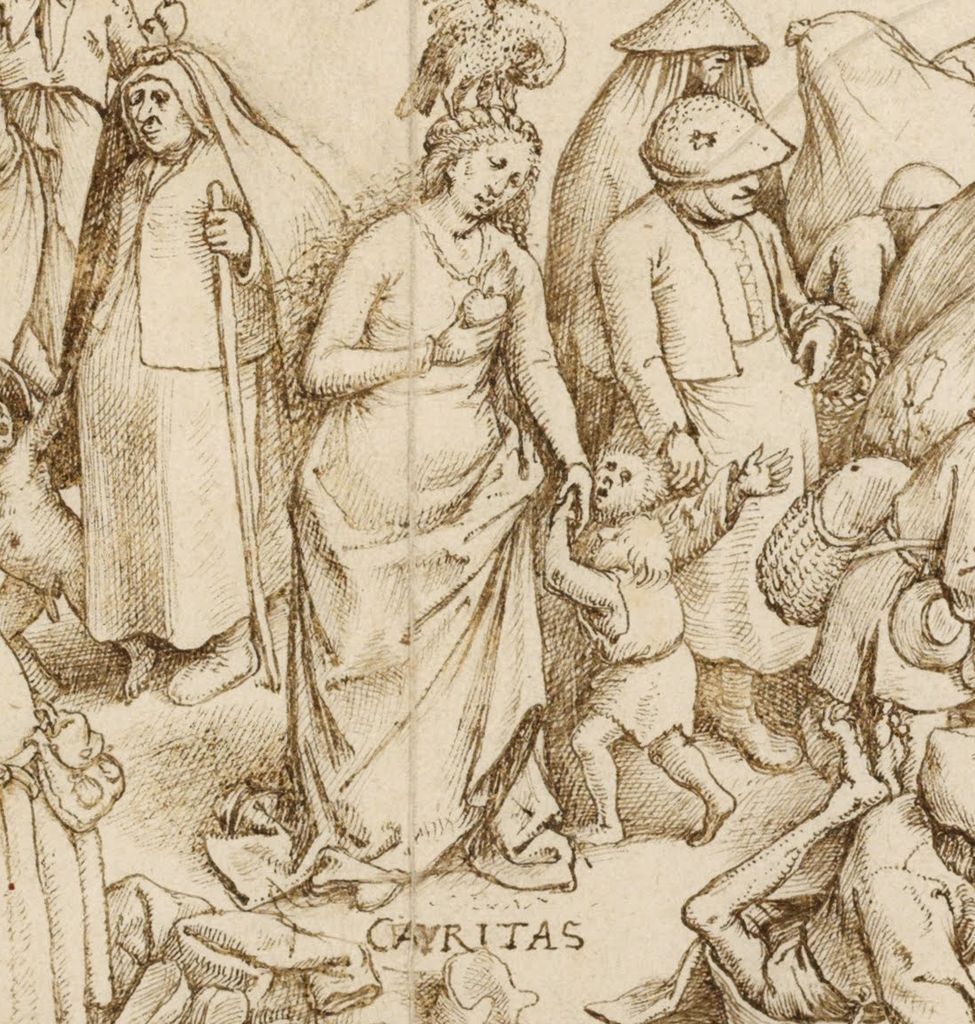
Begin low in the middle of the sheet. Charity stands among groups whose bodies overlap, but enough of her dress remains visible to follow its outline to the ground. The heart she holds is easier to find after you identify the children beside her. The pelican is above her head and takes up much less space than the people who surround her. These small objects let her be recognised even where the others move and look in different directions [1].
The figure stands in space that other people need to cross. A visitor moving from one side of the foreground to the other would pass close to her and to the children. Bruegel lets us see the work around her without losing access to her compact shape. Follow the lower edge to find her name, then go back up to the heart. The word and the object attach an idea to a figure in a place where many practical actions are already visible [1] [2].
The museum distinguishes the meanings of the attributes. It reads the burning heart as love of God and the pelican as love of one’s neighbour. The pelican belongs to a Christian tradition in which it revives its young with its own blood. The children give a human form to the protection suggested by the bird. The figure therefore holds together several kinds of care before the eye moves outward to the people who practise them [1].
Annotated Details from Charity (Caritas)
Find the personification first, then follow the encounters around her.
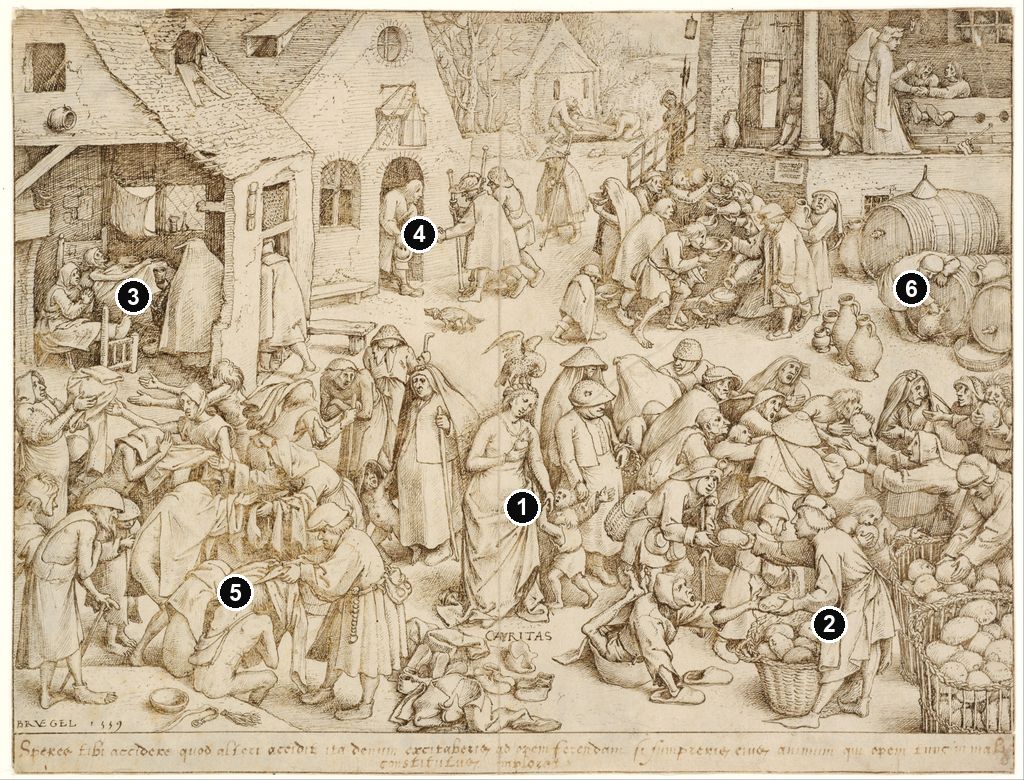
Details from CHARITY (CARITAS)
Six details show the figure of Charity and five of the surrounding acts.
Charity and the children
The heart and pelican identify Charity. Two children stay close to her, among the people carrying out the works of mercy.
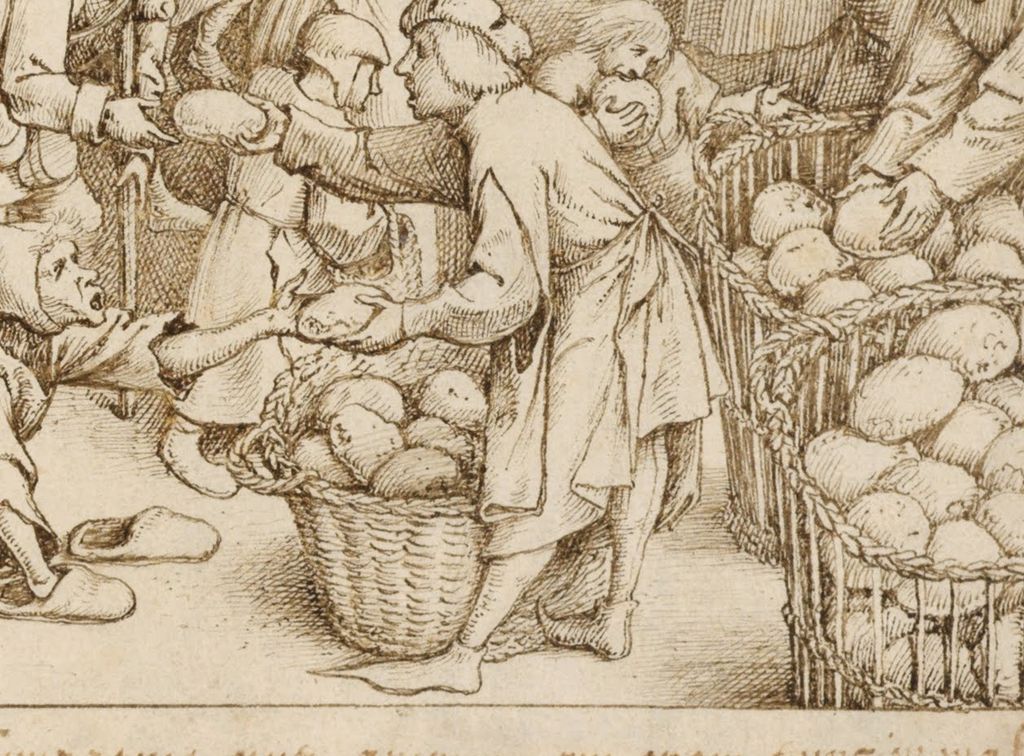
Loaves passed from hand to hand
Look from the basket to the people reaching across it. Bruegel makes the exchange clear through their hands.
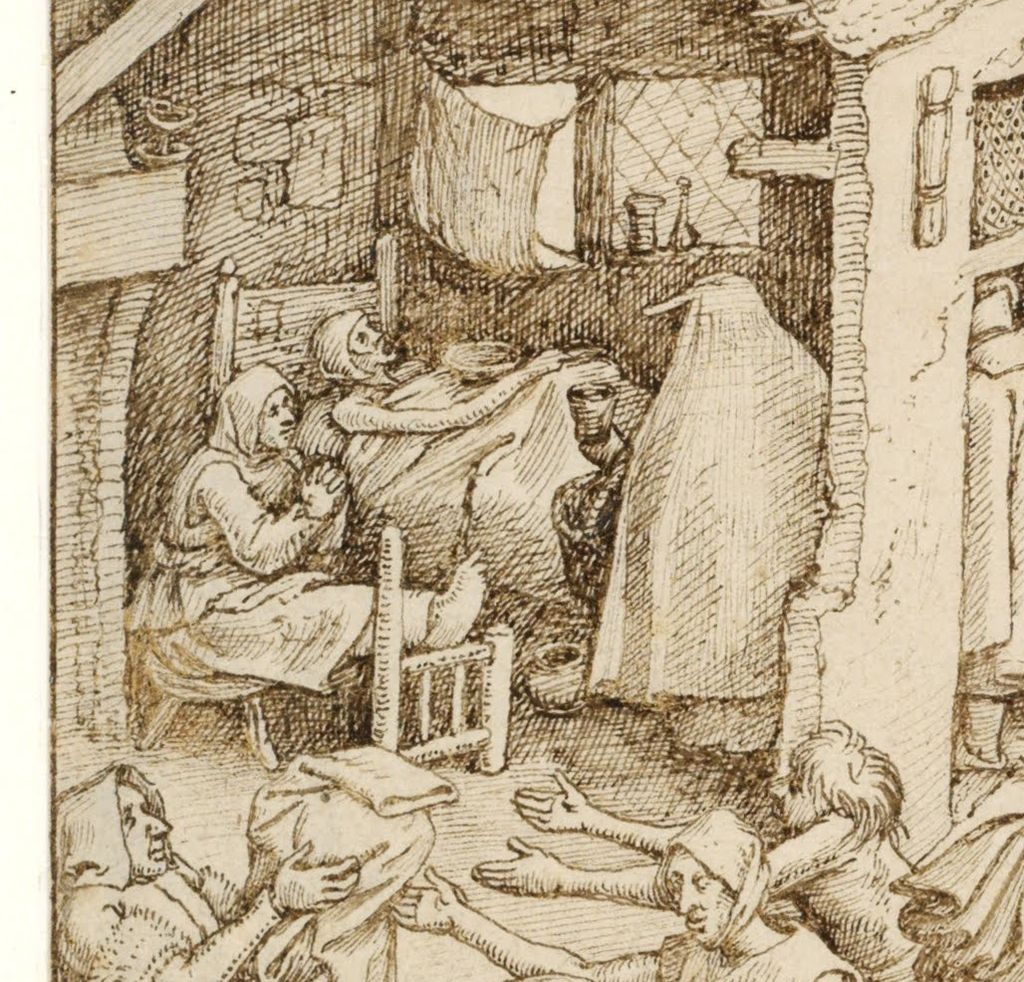
Care beside a bed
Several people come close to the bed under the roof. The room gives the visit a scale distinct from the gatherings on the street.
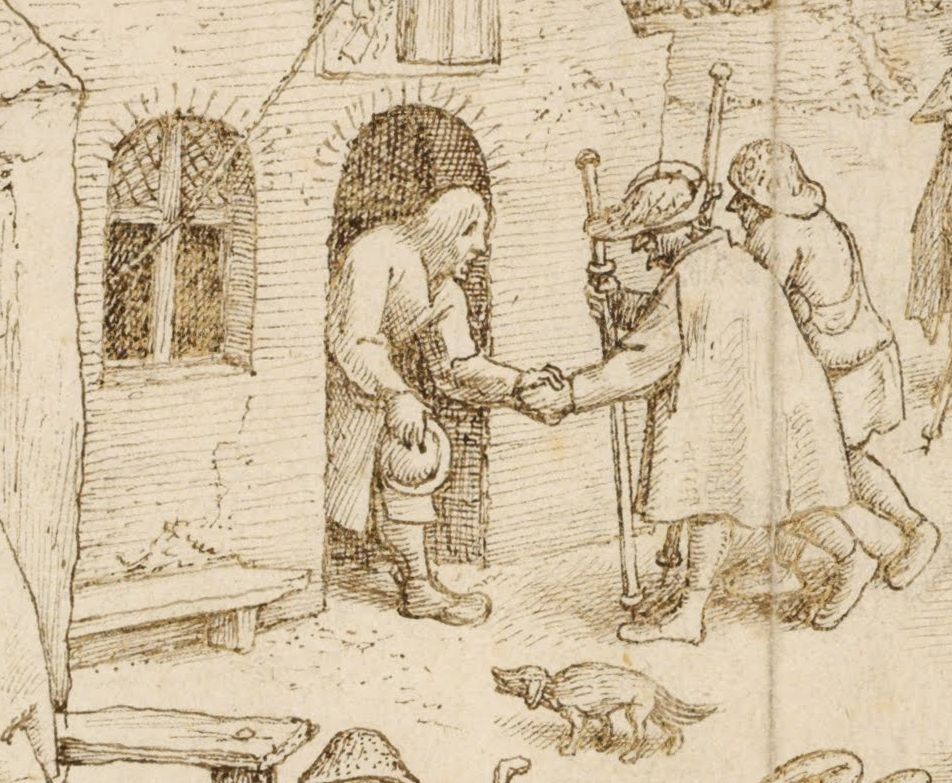
Receiving a stranger
One figure stands inside the doorway and another reaches towards him. Their hands meet at the threshold.
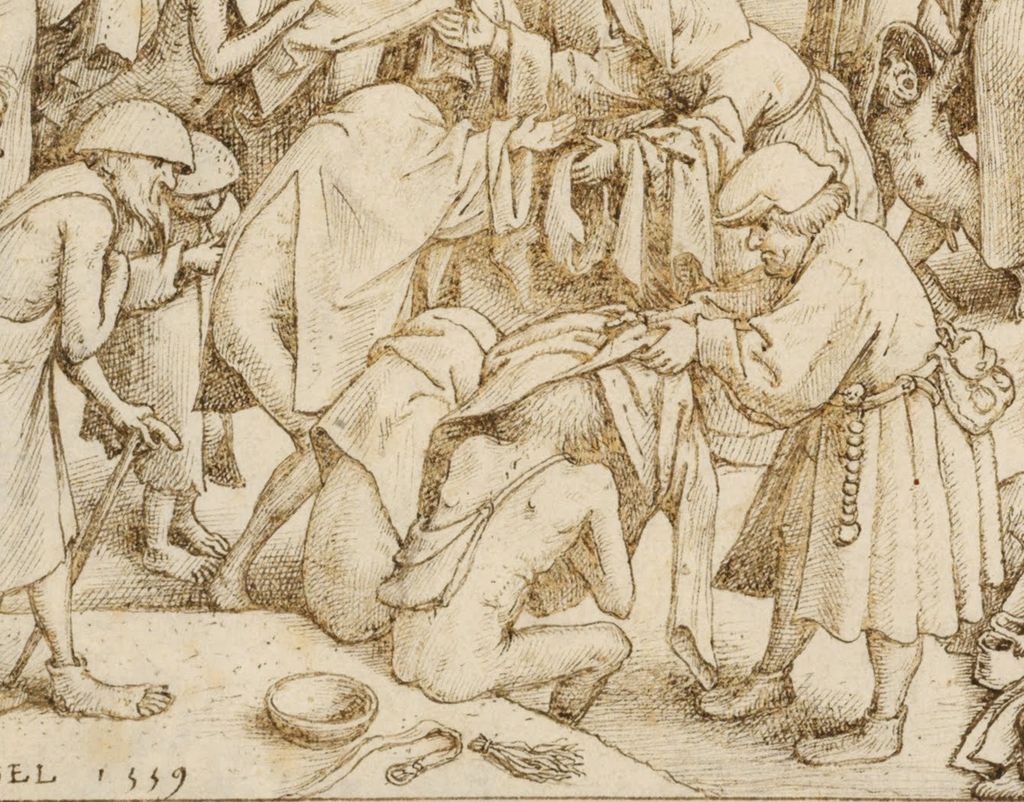
Clothing in the foreground
A large piece of cloth links several of the people at the left. Look at how their hands carry it towards the person who needs it.
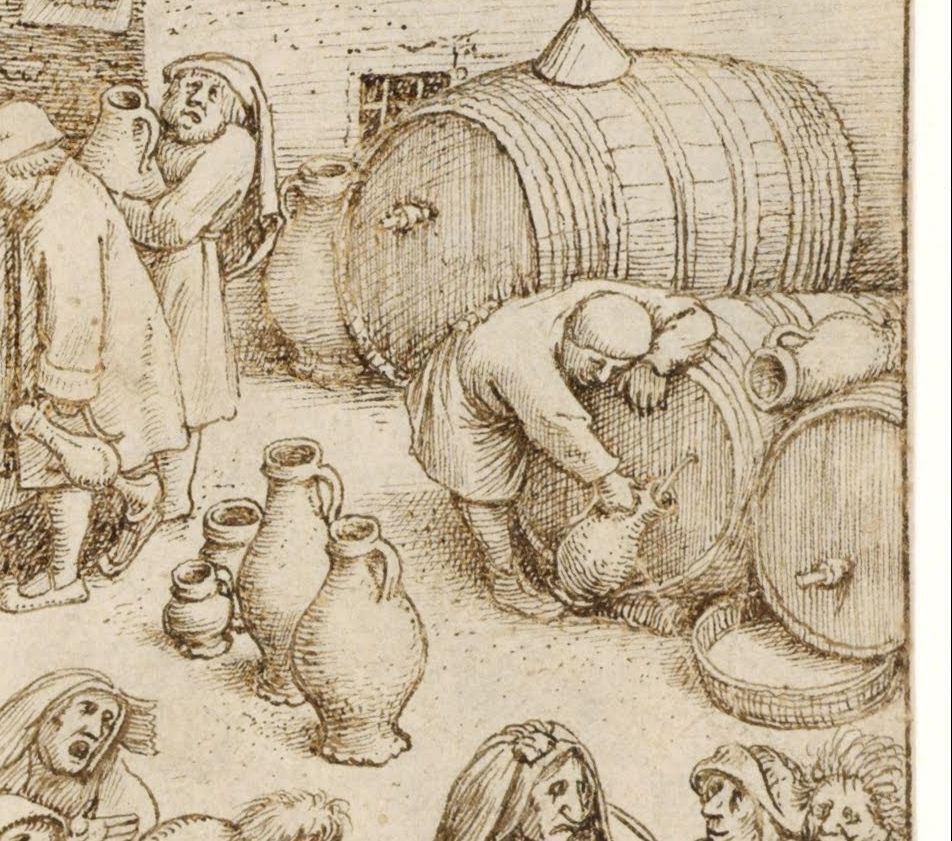
Vessels for drink
Large casks and smaller vessels help distinguish the distribution of drink from the encounters around it.
Seven Works of Mercy
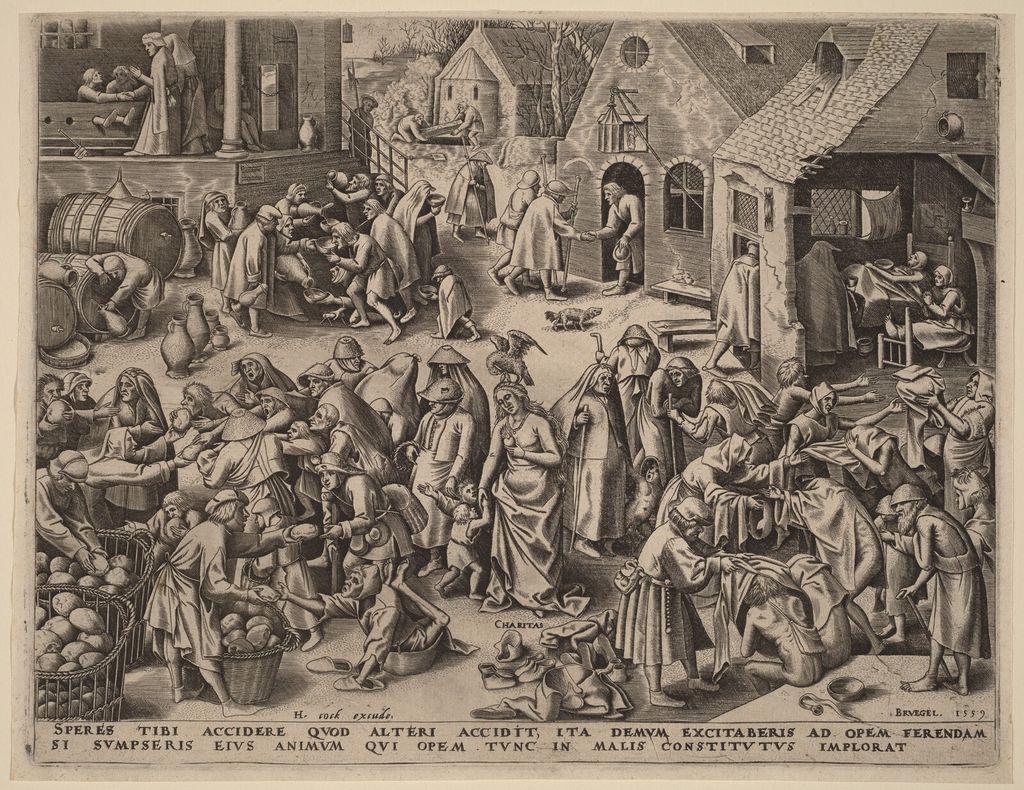
The traditional works shown here are feeding the hungry, giving drink to the thirsty, clothing the naked, welcoming strangers, visiting the sick, visiting prisoners and burying the dead. It helps to look first for the kinds of spaces these tasks need. A doorway is a place to receive someone. A sick person needs room to lie down, and the people who attend have to be able to get close. At the front, figures reach towards others across low groupings of baskets and containers [1] [3].
At the lower right of the drawing, look for hands extending over a basket of round loaves. The people who handle the food stand close to the people who receive it. A bent figure can reach down to someone seated or crouched, while someone upright can reach towards the basket. The different heights make the distribution visible before you have found every face. This part of the picture also gives food a clear physical scale. A loaf can be lifted in one hand, while the whole supply needs a container big enough to be set down [1] [3].
Farther back at the right, large vessels and a barrel give the eye a clue to the distribution of drink. Closer to the middle, an encounter at a doorway shows assistance across a threshold. One arm extends out and another reaches towards it. At the left, under a roof, people gather close to a bed. The different arrangements make it possible to recognise an act that consists largely in visiting someone, even when the hand movements are less apparent than the handing over of food at the front [1] [3].
Boijmans reads the sequence clockwise from the food at lower right. After feeding come clothing and care for the sick on the left, welcome at the doorway, burial, a visit to prisoners and finally drink at the right. Following that order leads beyond the easiest foreground gestures. It turns the scene from a set of objects handed over into a wider account of how people respond to need, including situations where what they give is their presence [1].
The architecture allows time for separate encounters. Some people draw close to a wall or an opening, while others gather outside. Bruegel gives the viewer enough of the route between them to understand that these are places in the same scene. The connecting ground matters because it lets the eye move from one act to the next. It also gives a sense of the number of people who may encounter each other during a day in the town [1].
Drawing, Engraving and Inscription
The Rotterdam drawing, inventory N 18 (PK), is signed and dated at the lower left. Its pen-and-brown-ink lines and the indenting recorded by the museum show how much of the design was established on paper before it reached the plate. The museum also records a watermark in the same position as one on Bruegel’s drawing of Temperance. It identifies the paper in the two designs as coming from the same supply. That gives the two physical sheets a link that can be checked separately from their shared subject matter and maker [1].
The engraving held by the National Gallery of Art in Washington, accession 1943.3.2120, reverses the drawing. The basket of round loaves is on the left, and the bed under cover is on the right. The inscription names Cock and gives Bruegel’s name and date. The museum records Galle as the engraver. These details give a reader the means to identify the particular work in front of them. The series title and the story remain recognisable across the different objects [1] [2].
A Latin text below the scene asks readers to imagine suffering a misfortune like the one another person is experiencing. The appeal is to share something of that person’s situation so that help actually follows. Rotterdam identifies the inscription on the drawing as a later addition. In the engraving the text sits below the pictorial border as part of the printed sheet. Trying to do what the statement asks can change the order of looking. First find someone in need, then identify where the help comes from and what it requires [1] [2].
Charity within the Virtues
Boijmans places Caritas with Faith and Hope among the three theological virtues. The printed series includes those three alongside Justice, Prudence, Fortitude and Temperance. Bruegel uses a female personification and accompanying actions to make a large subject visible within a single design. Avarice from the earlier series also gives the eye a central woman and an object in her hands. In Caritas, the nearby figures carry the eye towards several encounters in which resources or attention pass to someone else [1] [4].
Return to the doorway, then look towards the people with the loaves. Neither group needs to occupy the centre for its actions to be understood. Bruegel gives each enough room for the hands and bodies to find one another, and the title below the woman supplies a word for what they share. In this design, love takes the form of things people can see one another doing.
Discussion
Which detail in this work most changes how you read it?
Frequently Asked Questions
Begin low in the middle of the sheet. Charity stands among groups whose bodies overlap, but enough of her dress remains visible to follow its outline to the ground. [1]
The Rotterdam drawing, inventory N 18 (PK), is signed and dated at the lower left. Its pen-and-brown-ink lines and the indenting recorded by the museum show how much of the design was established on paper before it reached the plate. [1]
References
- Museum Boijmans Van Beuningen, One of the Seven Virtues: Caritas (Charity), N 18 (PK), View source.
- National Gallery of Art, Charity, engraving by Philip Galle after Bruegel, 1943.3.2120, View source.
- Städel Museum, Caritas (Charity), works of mercy in the composition, View source.
- The Metropolitan Museum of Art, Avarice (Avaritia), engraving 26.72.37, View source.







