


 by Tom Gurney
Tom Gurney BSc (Hons) is an art history expert with over 20 years experience
Published on June 19, 2020 / Updated on August 16, 2026
Email: tomgurney1@gmail.com / Phone: +44 7429 011000
Pieter Bruegel was a Dutch artist in the 16th century. He was a Renaissance artist and covered themes which were popular during the period.
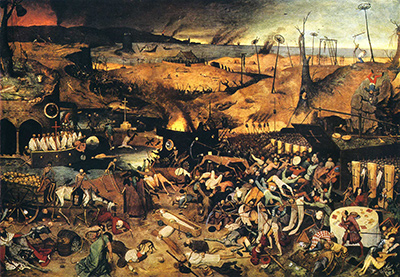
His works were usually based on religious themes, lifestyle of the peasants, or proverbs that were popular at the time. Bruegel was trained by the famous Dutch painter, Pieter Coecke van Aelst, and he even went on to marry van Aelst's daughter, Mayken. He was also influenced to some extent by the works of his peer, Hieronymus Bosch. In Triumph of Death, Bruegel was depicting the idea of death that was ever-present in Europe.
Between the two plague epidemics that overtook the continent in recent years, and the clash between the Church traditionalists or Catholics and the Reformers, as well as the religious wars between Spain and Flanders, death was an everyday occurrence that people had to deal with. The painting shows a landscape of death. The scenery is bleak and dead, with no life blooming in any form. There are fires burning in the background and an army of skeletons are taking apart everything.
They are going after the living, who are unable to fight back. One of the interesting things about this painting is that it depicts people from different backgrounds, including soldiers, peasants, noblemen, and even priests. Another thing of interest is the fact that the painting shows daily life scenes and objects such as playing cards and a mechanical clock. Triumph of Death was painted in 1562. Today, it hangs in Museo del Prado in Madrid, which obtained it in 1827. It is considered to be one of the most terrifying paintings in Western art, a familiar and timeless depiction of war, death, and destruction that still resonates with us today.
Discussion
What feels most revealing about Pieter Bruegel the Elder: the village detail, the landscape setting, the moral wit, or the way everyday life becomes a complete world?
Reader Insights
Begin with one small action in a Bruegel scene, then follow how it connects to the surrounding figures, setting and rhythm of the whole image.
Connect the work to Northern Renaissance visual culture, printmaking, proverb traditions and Bruegel's interest in rural and urban life.
Which detail changes the interpretation most once you know the subject, date, proverb source or present collection?
Join the Conversation
Have a thought or observation about Pieter Bruegel the Elder? Share it below. Thoughtful responses may be added to this section as the Bruegel pages develop.