

 by Tom Gurney
Tom Gurney BSc (Hons) is an art history expert with over 20 years experience
Published on June 19, 2020 / Updated on January 12, 2026
Email: tomgurney1@gmail.com / Phone: +44 7429 011000
Jewish Woman, also sometimes known as La Juive or The Jewess, is an early portrait from Amedeo Modigliani that dates to around 1908.
This painting was relatively obscure within Modigliani's career until a high profile auction in 2013, in which the artwork was puchased for an impressive $6.8m. Jewish Woman offers an important insight into the development of the artist, and how he worked stylistically, prior to the influence of sculpture and African masks which came about in the 1910s.
There are some elements of Modigliani's signature approach in this painting, such as the psychological presence and simplified form, but without the elongated limbs and neck, nor the sculptural construction of the face. This clear difference ensures the date of 1908 is accurate and reliable, and this was further confirmed by Christie's, prior to its sale in 2013. Jewish Woman, or The Jewess, is more in tune with Post-Impressionism, Symbolism, and early modern portraiture, which were at the forefront of the artist's mind at this time.
Painted in 1908, Jewish Woman is one of Amedeo Modigliani's earliest known portraits from his first years in Paris — a period of intense experimentation before his mature style fully emerged. The piece offers an insight into Modigliani's formative years and his engagement with identity, ethnicity and individuality.
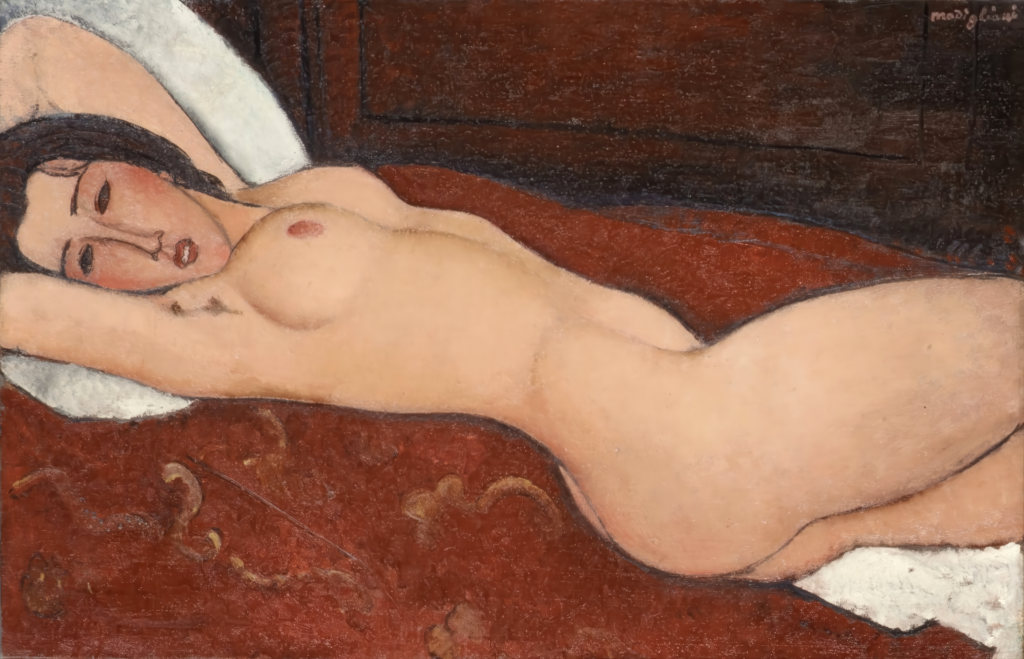
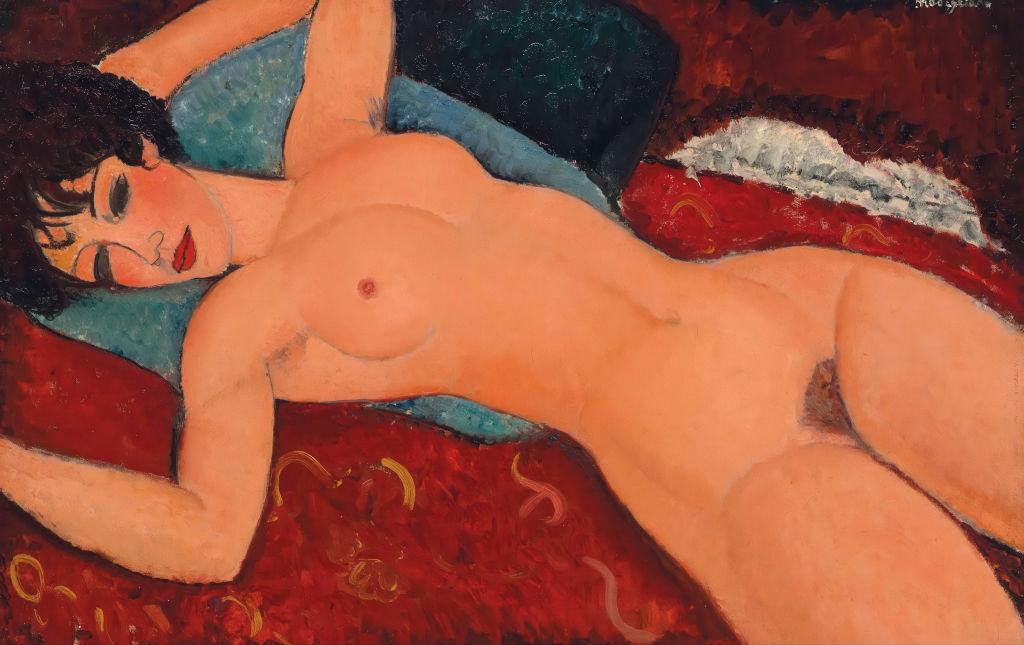
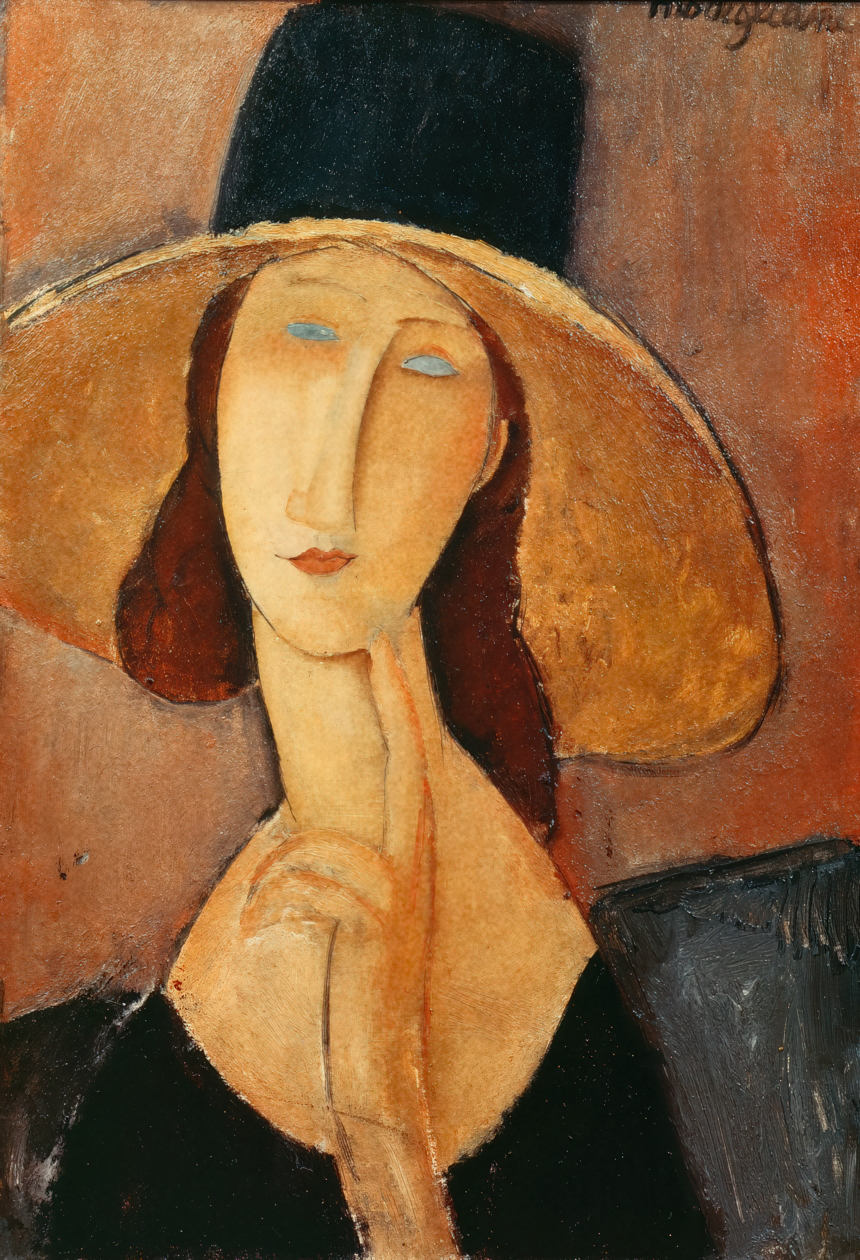
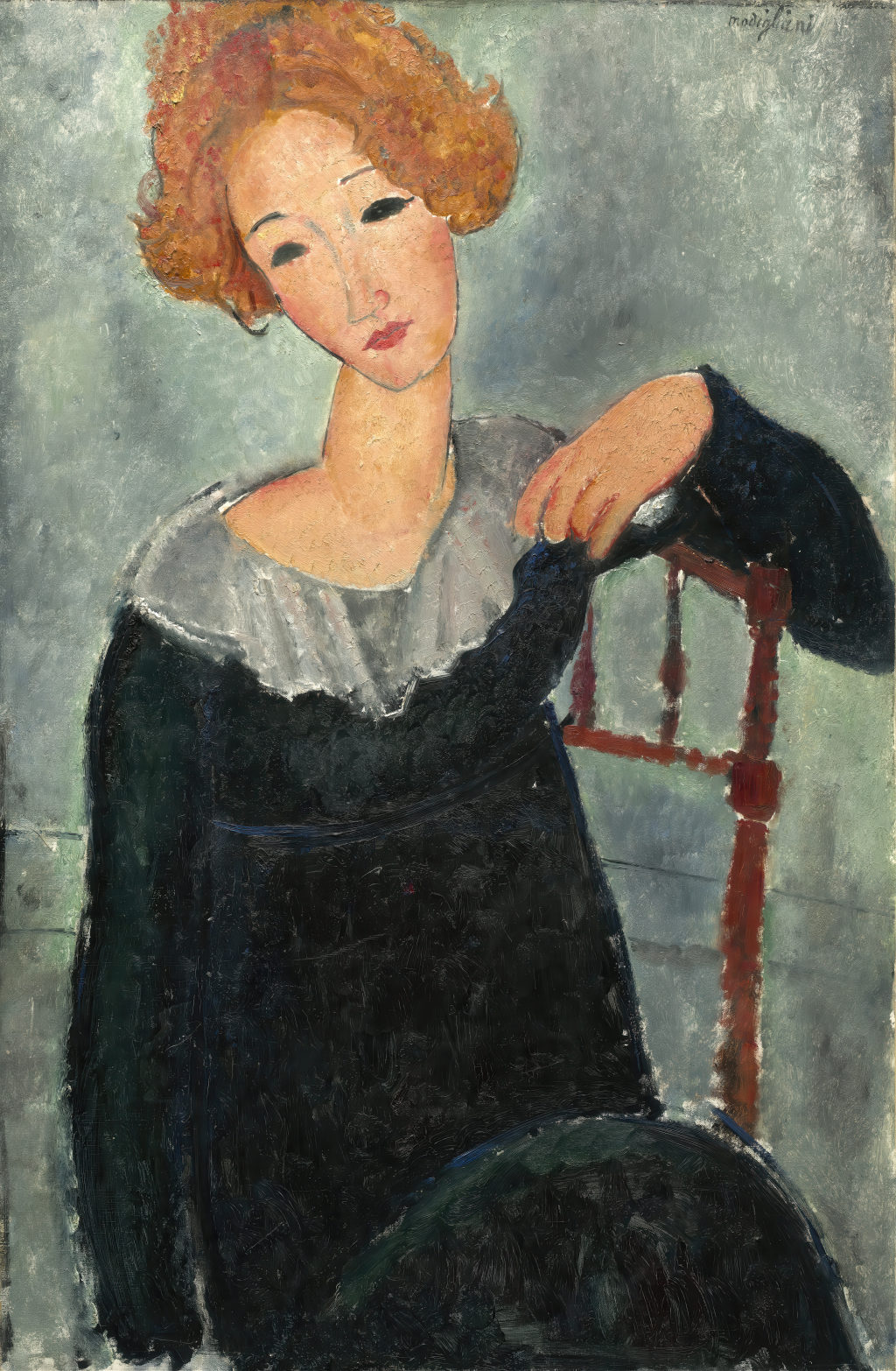
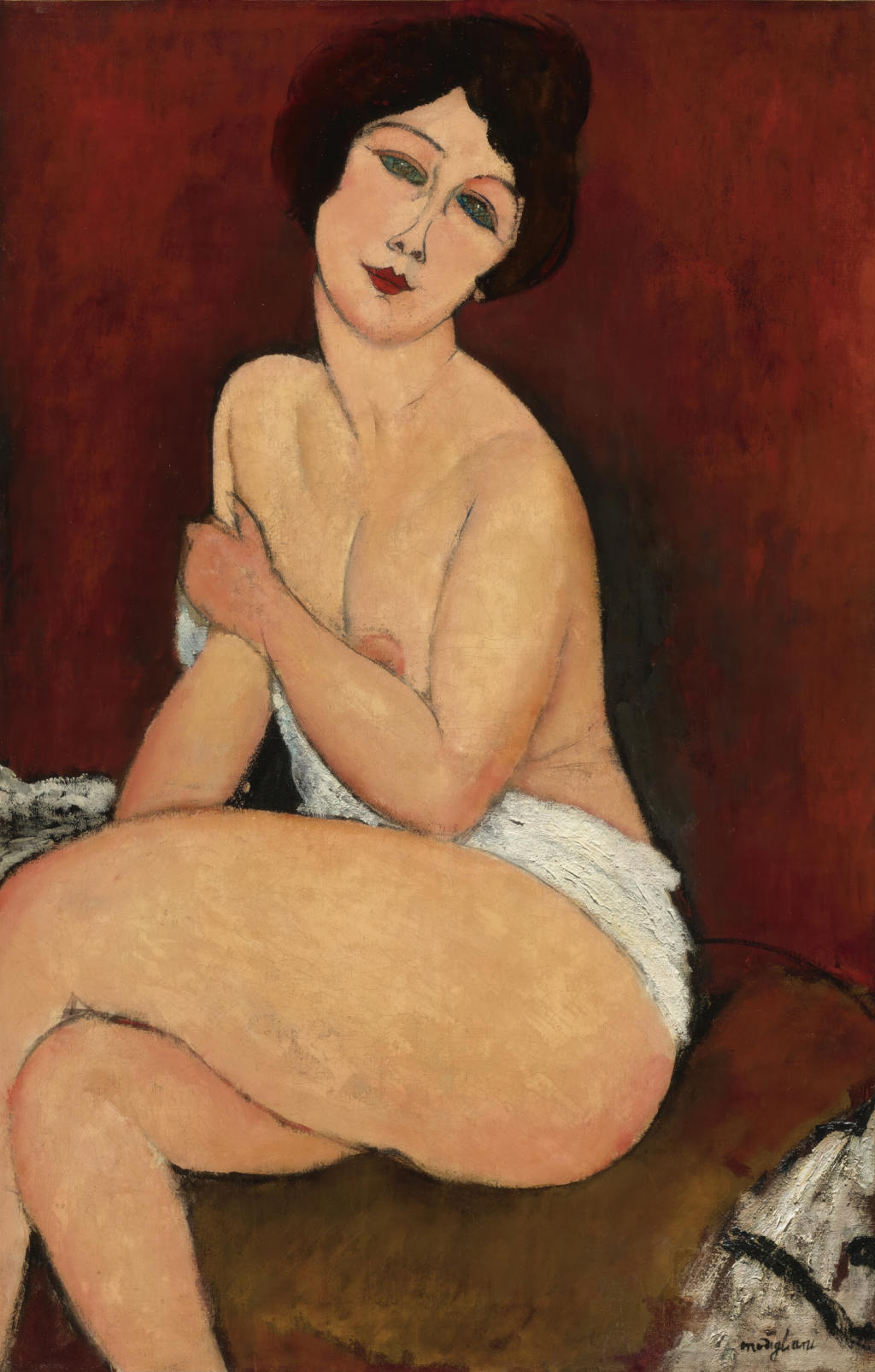
This article describes the significance of this painting, and places it within the wider scope of Modigliani's career. There is also technical and stylistic discussion of how it compares to his more famous later works, such as Nu Couche and Reclining Nude.
- Artist:Amedeo Modigliani
- Title:Jewish Woman
- Date:1908
- Medium:Oil on canvas
- Style:Early Modernism
The Painting
In the painting the colours demonstrate boldness and uniqueness. It contrasts the bright background with the dark colours of the woman being portrayed. This makes the woman the definite centerpiece of the art while adding more colour to the picture.
It is painted with precision strokes which allow for the fine details are the characters chin, while the broad strokes help give the background personality. In this painting the fine blend of these techniques make it unique and allows the art to be great when eamined from multiple angles.
The portrait depicts a woman seated against a loosely defined background, her face pale and angular, her expression introspective and withdrawn. This feels experimental in its execution, and a closer examination of the painting reveals a variation in paint application, with some areas revealing much of the original canvas from below.
Crucially, although the model has a pointed chin, this does not have the same elongation as the artist's later works - nor are her limbs or torso stretched in any way. The colour scheme is muted, certainly, and we get a strong contrast between her light skin and the darker background behind. Some of the tones found here would not appear in later works, but certainly the contrast is consistent with how his career developed.
Amedeo signed the painting in the top left corner, with his signature curved over - see a photograph of that below. Some parts of the scene are entirely blurred, giving an atmosphere to this piece which is increased by the intense gaze of the sitter. She looks in our direction with a stern expression, but not quite directly at us.
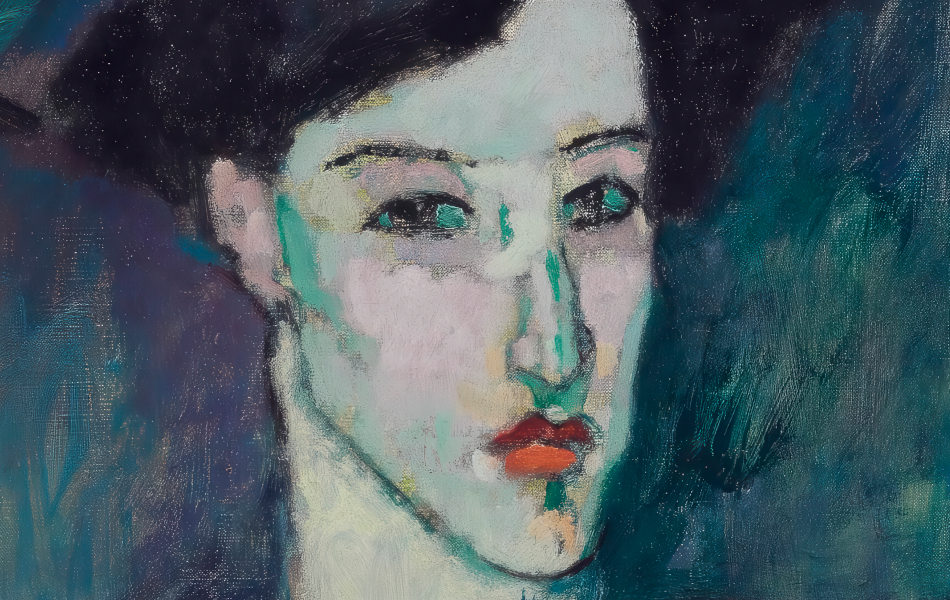
Face Detail of Jewish Woman (La Juive, The Jewess), 1908, Amedeo Modigliani
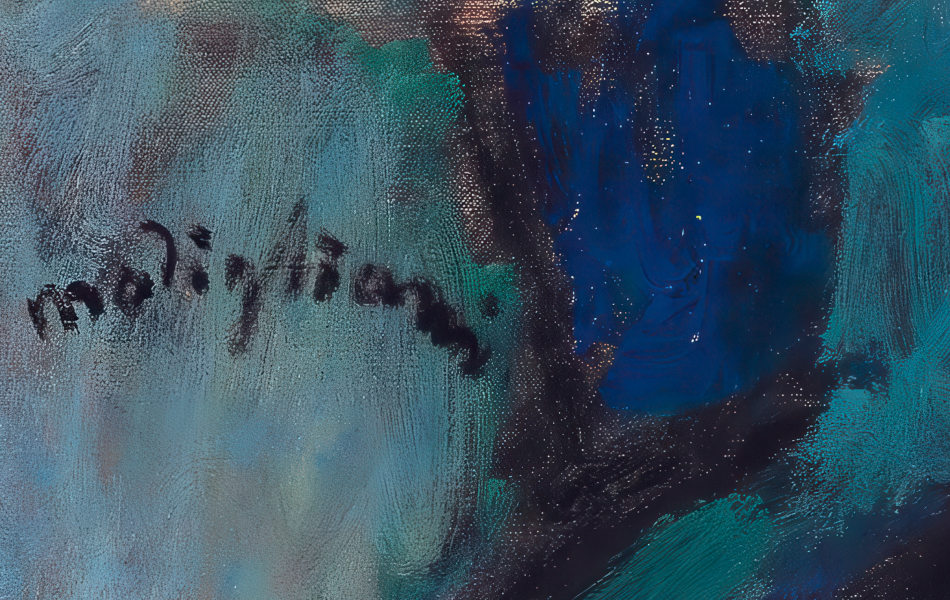
Modigliani Signature
The Identity of the Sitter (A Question of Debate)
There remains no clear concensus over the identity of the model for Modigliani's Jewish Woman painting from 1908.
Research has put forward two possibilities most commonly - either Modigliani's lover Maude Abrantès, or perhaps Chaïm Soutine's sister.
The majority of scholars and auction catalogues have acknowledged this and been careful not to claim the identity without enough evidence to support it. It may in fact be the case that this painting is more about the artist's connection to his Jewish faith, and that the precise identity of the sitter is not actually important.
Indeed, the title of this painting, any of Jewish Woman, La Juive or The Jewess, with likely have been attributed to the painting by others looking to categorise the piece, rather than the artist himself. Amedeo himself, as well as the wider Jewish community, did suffer discrimination within Paris during his own lifetime, and so his identity was very much on his mind during his time living in France.
Date and Attribution
Jewish Woman is widely dated to 1908. This dating is supported by
- Christie's catalogue entry for the 2013 Impressionist and Modern Art Evening Sale
- Stylistic comparison with Modigliani's earliest Paris portraits
- Multiple other reputable publications
The year 1908 corresponds with Modigliani's earliest sustained portrait production in Paris, before his focus shifted increasingly toward sculpture between 1909 and 1914. Taking everything into account, this date attribution is as solid as almost any other work by this artist.
Provenance and Auction History
Jewish Woman has appeared in major international sale catalogues, most notably at Christie's.
The artwork rose in fame on the 8th of May, 2013, when sold at the the Impressionist and Modern Art Evening Sale, organised by Christie's New York. It was here that the date was again confirmed as 1908. The painting was given an estimate of $2,000,000 - $3,000,000, but eventually was purchased for $6,843,75.
In terms of provenance prior to this sale, the piece can be traced back as far as Paul Alexandre in 1913, before passing into a private collection in 1951. After changing hands several times more, it was acquired by Maruko Partners in Art, Japan in 1989 before they chose to auction it off in 2013.
The painting has appeared countless times in publications on the artist, with the earliest being in 1929, which is referenced at the foot of this article.
Style and Artistic Context
The style of this piece, as mentioned elsewhere, is noticeably different to Modigliani's most famous paintings. The impact of sculpture and African masks is yet to truly dominate, and instead we see elements of artists such as Toulouse-Lautrec, Cézanne and potentially Symbolism too. At around this time Kirchner was also building up an impressive body of work, and elements of Jewish Woman connect with his work too - particularly the colour schemes and loose detail.
One could therefore place this at the crossroads in the artist's career - with a suggestion of what is to come, but with a stronger connection to the artist's original influences.
Why Jewish Woman Matters
As a more obscure work within Modigliani's career, it is necessary to determine just why Jewish Woman remains a significant painting within his career. Whilst it had not traditionally received the most attention, it does help us to understand the stylistic transition of Amedeo between 1908 and around a decade later. It that time he would achieve success with sculpture before then returning back to painting. We therefore find him searching for direction, evolving as he goes.
Its status as an inbetween, transitionary piece explains how many would not immediately identify this as a Modigliani, even though its attribution is entirely accepted.
Role of Women in Society and the Artist's Jewish Background
Jewish Woman is an Amedeo Modigliani painting with a robust technique and a deep meaning behind this fine work.
In it the artist works to capture the robustness of women of all social classes while respecting the past that women have dealt with. In addition to this the artists work also sheds light on every woman's dream of a great and prosperous future for themselves and their place in history.
Amedeo Modigliani also acknowledges the Jewish culture as observed in the painting name "Jewish Woman". While the role of women in society is the primary focus of this painting, Jewish women also encounter discrimination due to race as well as gender.
Wile it makes a point that people can be discriminated in multiple ways this painting demonstrates that culture is the driving force how how people perceive others. In this regard the painting "Jewish Woman" demonstrates the weakness of a diverse society; yet, it embraces diversity by being a bold piece.
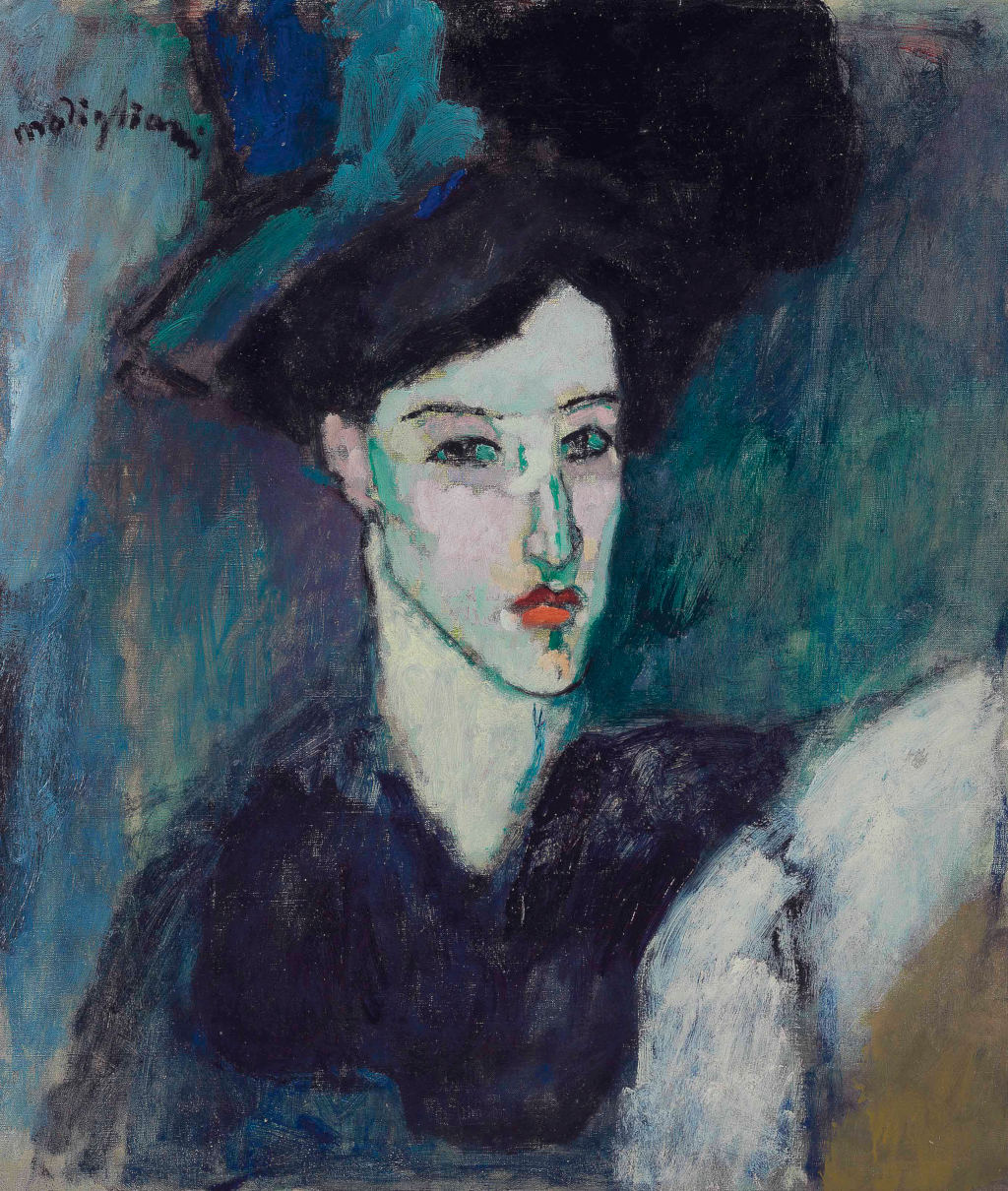
Jewish Woman, 1908, Amedeo Modigliani
FAQs
References
- Painting on SecretModigliani.com
- Christie's Auction Sale
- The Jewish Museum
- Pfannstiel, "catalogue presume" Modigliani. L'Art et la Vie. Preface de Louis Latourrettes, Seheur, Paris, 1929, p. 1 (earliest known published mention of the painting)