

 by Tom Gurney
Tom Gurney BSc (Hons) is an art history expert with over 20 years experience
Published on June 19, 2020 / Updated on January 5, 2025
Email: tomgurney1@gmail.com / Phone: +44 7429 011000
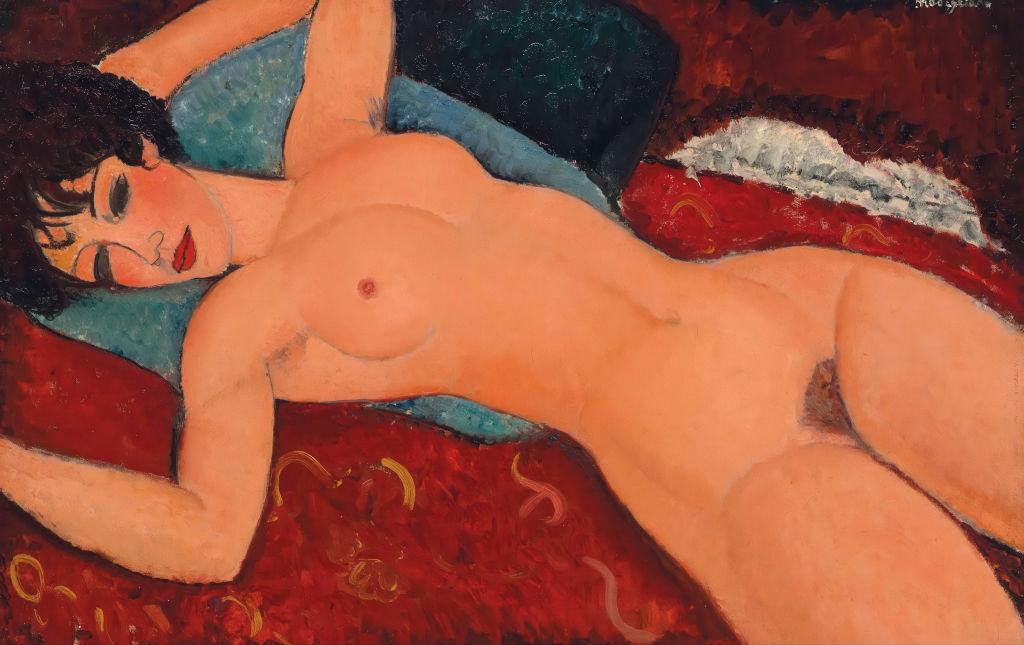
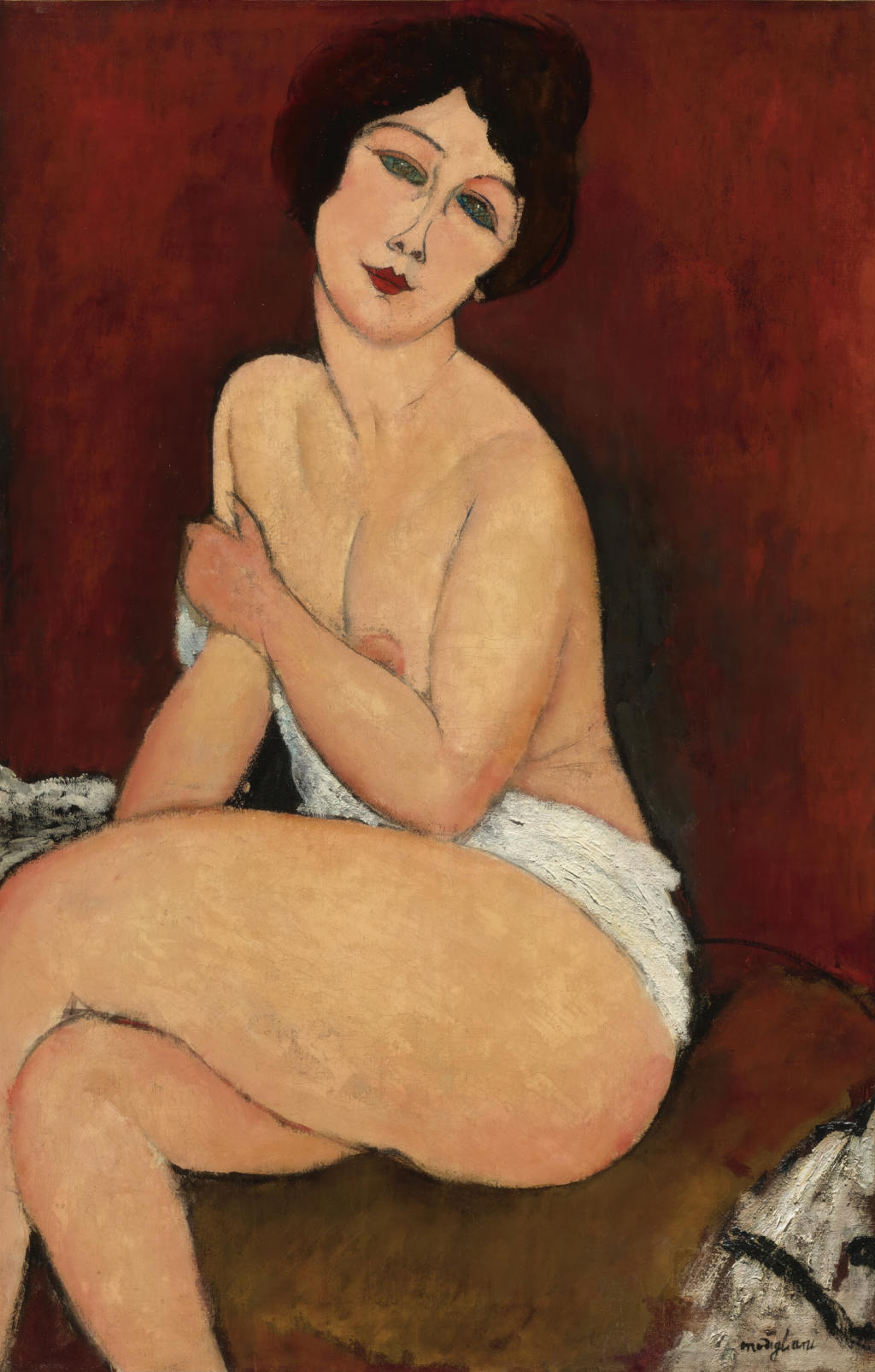
Reclining Nude (Nu Couché), 1917, is part of Amedeo Modigliani's famous series of nude paintings.
Whilst nude depictions had been seen in art for many centuries, and across different civilisations, Modigliani brought something new to this genre. Rather than producing idealised, mythological depictions of the nude, he works from a more modern perspective.
Within this version, Reclining Nude from 1917, for example, there is no narrative to follow. Details are kept to a minimum and the artist focuses on the smooth lines of the body. His series would go on to experiment with different postures and arrangements, but the same style would continue throughout, with some ideas influenced by his work with sculpture.
This painting remains one of the most famous of the entire nude series, thanks to its inclusion within the world-famous collection of the Metropolitan Museum of Art, in New York, USA. Nu couché, from the same year, which resides in a private collection is the other most notable entry within Modigliani's most significant series of paintings.
- Artist:Amedeo Modigliani
- Title:Reclining Nude (Nu Couché)
- Date:1917
- Medium:Oil on canvas
- Size:60.6 cm x 92.7 cm (23.9 in x 36.5 in)
- Style:Modernism
- Theme:Female nude
- Location:Metropolitan Museum of Art, New York
Composition and Painting Description
The model lies on her back, with her torso angled slightly away from the viewer, and her head and legs twisting slightly towards us. The light flesh tones contrast against the reddish brown bedding and background. Her face is presented with the elongated features typical of Modigliani, with a long, narrow nose and matching skull and neck stretched vertically.
There is an unusual combination in this painting in how we are placed close in to the nude, but also feel distant because of the lack of pupils in her eyes. There is a connect, and disconnect. She is angled horizontally, with her head somewhere close to the top left hand corner of the canvas, and her legs cropped out on the right hand side.
The purpose of the cropping was to increase this feeling of immediate presence, and it would have been rare to see such a technique of portraiture in European art prior to the 20th century. It is also noticeable how the model looks towards us, and although she is left without pupils, she does direct her gaze in our direction whilst traditionally nudes may be looking elsewhere.
The painting is crafted in such a way that we see the model from above, close-up with an emphasis on her facial features, breasts and hips. The hands and feet are intentionally left out of the frame, during more of the viewers' attention to torso sprawled out in a provocative manner.
Her pale, snow-white skin can be seen to contrast against intense passionate red of the bed on which she rests. The use of white and red is often used symbolically to represent innocent virginity and fertility. This piece of work is signed on the upper right quadrant with Modigliani's signature.
Modigliani's painting seems to overtly vary itself from Renaissance depictions of women such as Venus, as despite the subject in question appears seductive, whilst expressing gloom and sorrow through her face.
Moreover, the mythological style of painting is abandoned in place of erotically presenting this reclining nude without fabled justification; the model is presented in such a way, that the eroticism yields its own purpose needless of rationalisation.
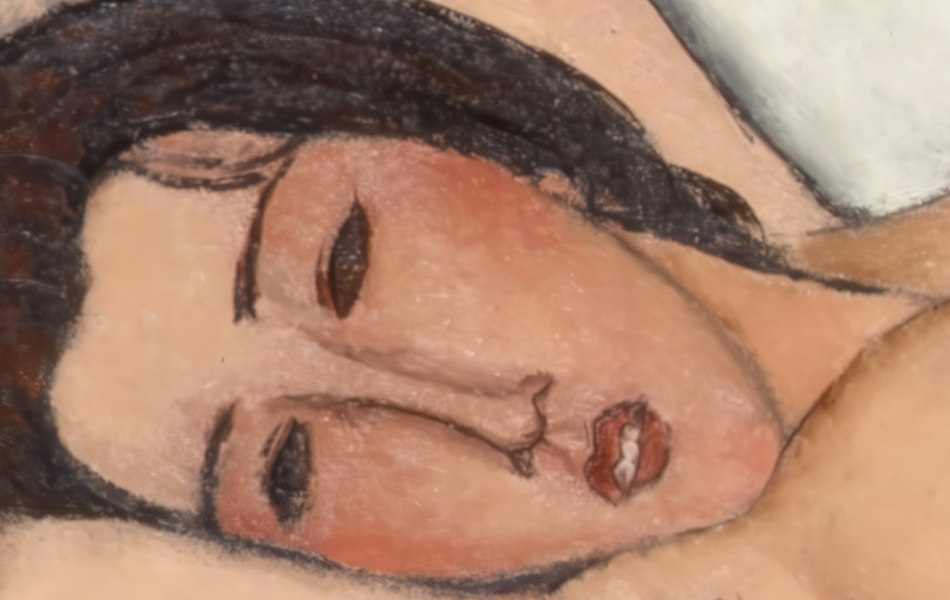
(Face Detail) Reclining Nude, Amedeo Modigliani
Colour, Line, and Sculptural Form
Modigliani would not use colour as significantly as, say, Kandinsky or Klee, but it still was an important consideration in his work - you will notice here how he focuses our eyes on the nude by contrasting the model with her background.
Modigliani was more interested in form, and related his paintings to his use of sculpture. Some have argued that he was actually more talented as a sculptor, but his worsening health meant carving stone became too arduous a task. He brought the same smooth surfaces into his portraits, with reduced details that reflect his love of African masks and sculpture.
See also the smooth, simple lines that form the reclining nude's figure - This reflects his love of drawing, simplicity and the abstract influences which lay behind his work. Even with all of these acknowledged influences, Modigliani's portraits are still instantly recognisable as his own.
Exhibition, Controversy and Reception
Modigliani's solo exhibition at the Galerie Berthe Weill in Paris in 1917 attempted to introduce the public to this artist's innovative style. It included a number of nude paintings, one of which is the Reclining Nude shown here. Sadly, the honesty of the artist's work, without mythology or other narratives wrapped into their core, caused outrage amongst a small minority of patrons who demanded the show to be shut down.
This moment reminds us of how, despite Paris' deserved reputation for artistic exploration and innovation, society was still extremely conservative in the early 20th century and artists like Modigliani had little chance of acceptance within their own lifetimes - but it would come later.
Provenance
Reclining Nude, 1917, by Amedeo Modigliani has been a part of the collection of The Met since arriving courtesy of The Mr. and Mrs. Klaus G. Perls Collection in 1997. It remains a key part of the museum's Modern and Contemporary Art collection.
Part of his Nude Series
It was in the year 1916 where his series of paintings know as reclining nudes are known to have started. Much like many of his other works, 'Reclining Nude' is characterised by distortions of Renaissance imagery of idealistic women.
Common ways, in which Modigliani expressed his famously unique style, is by the elongation of the face and other bodily features such as the torso and occasionally breasts.
Although Reclining Nude is often discussed as part of Modigliani's celebrated nude series of 1916-1919, this painting stands as one of the clearest and most resolved expressions of the theme. Many later reclining nudes revisit similar poses, colour harmonies and compositional strategies first developed in this example.
Turbulent Life behind these Powerful Portraits
The common themes found within his paintings can be denoted from his young suffering hellishly from pleurisy and later developing tuberculosis; a death sentence in the time of Modigliani's life, that he was very much aware of, and did indeed claim him.
In addition to his lung ailments, he was prone to typhoid fevers, which often sent him into a state of delirium. Allover, he was a risk-taker and self-destructive individual; love for wine became an addiction to absinthe and his sexual affairs are infamous. This painting shows that creative genius may indeed manifest from a man of chaos.
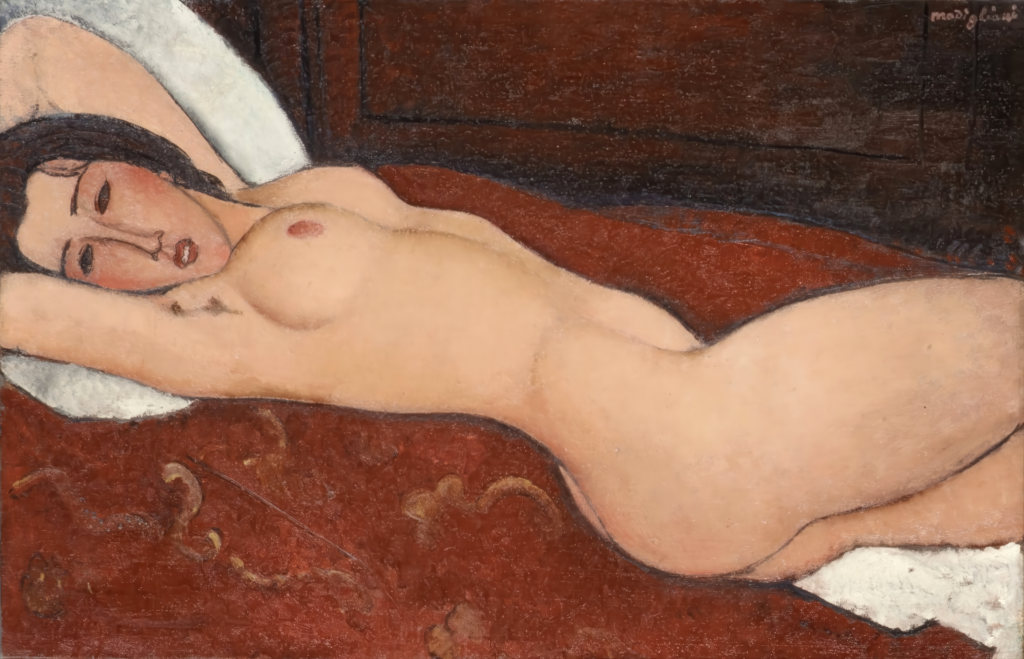
Reclining Nude, Amedeo Modigliani