


Drawing is not one fixed stage between an idea and a finished artwork. It can be a means of testing a figure, recording a landscape, designing another object or making an independent work on paper. The artists gathered here demonstrate those different purposes across five centuries. Their materials range from metalpoint and chalk to ink, wash, pastel and watercolour; their subjects include portraits, dancers, animals and places encountered while travelling.
This is an artist-led directory, not a ranking. Each entry uses one securely identified drawing to illuminate a wider working practice without reducing an entire career to a single sheet. The companion Famous Drawings directory is organised around individual works, while Drawings, Drawing Mediums and Drawing Styles provide broader routes through the subject. Readers interested specifically in contour and economy of mark can also visit Line Artists. Those neighbouring pages have different purposes, so their material is linked rather than repeated here.
Artists by birth year
Use the chronology to move to a card, or combine period, medium and drawing-practice filters.
15 artists shown
How to use this directory
The artists appear by birth year, making changes in material and function easier to compare. The period, medium and practice labels are browsing aids rather than claims that an artist belonged to only one tradition or worked in only one way. A representative sheet anchors every entry in a specific object record. Where the site has a legitimate artist page, the artist's name opens that wider coverage; no substitute destination has been invented for artists who do not yet have one.
Renaissance artists: drawing as investigation and design
Leonardo da Vinci
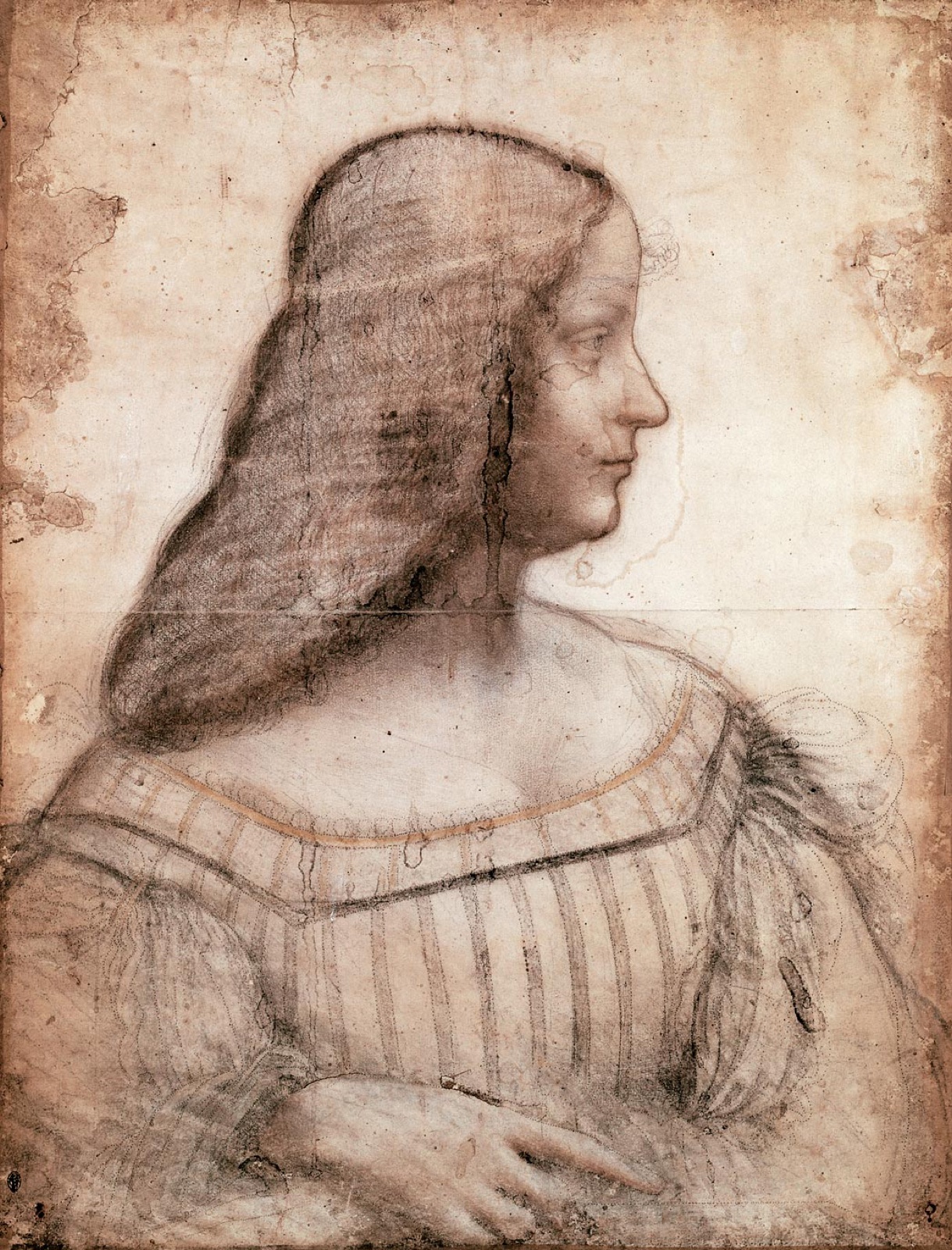
Leonardo da Vinci used drawing to move between observation, invention and the preparation of larger projects. In the profile portrait of Isabella d'Este, a precisely described face and patterned bodice coexist with hands that remain more lightly stated. Pricked outlines indicate that parts of the design were prepared for transfer, so the sheet records both a finished visual proposition and a working procedure. The Louvre's material description also reveals how many graphic tools could operate within one image. That range makes Leonardo's drawings central to understanding his method, including the careful preparation behind painted portraits such as Ginevra de' Benci. His practice belongs within the wider field of Renaissance artists, but its unusual combination of analysis and experiment remains distinct.[1]
Albrecht Dürer
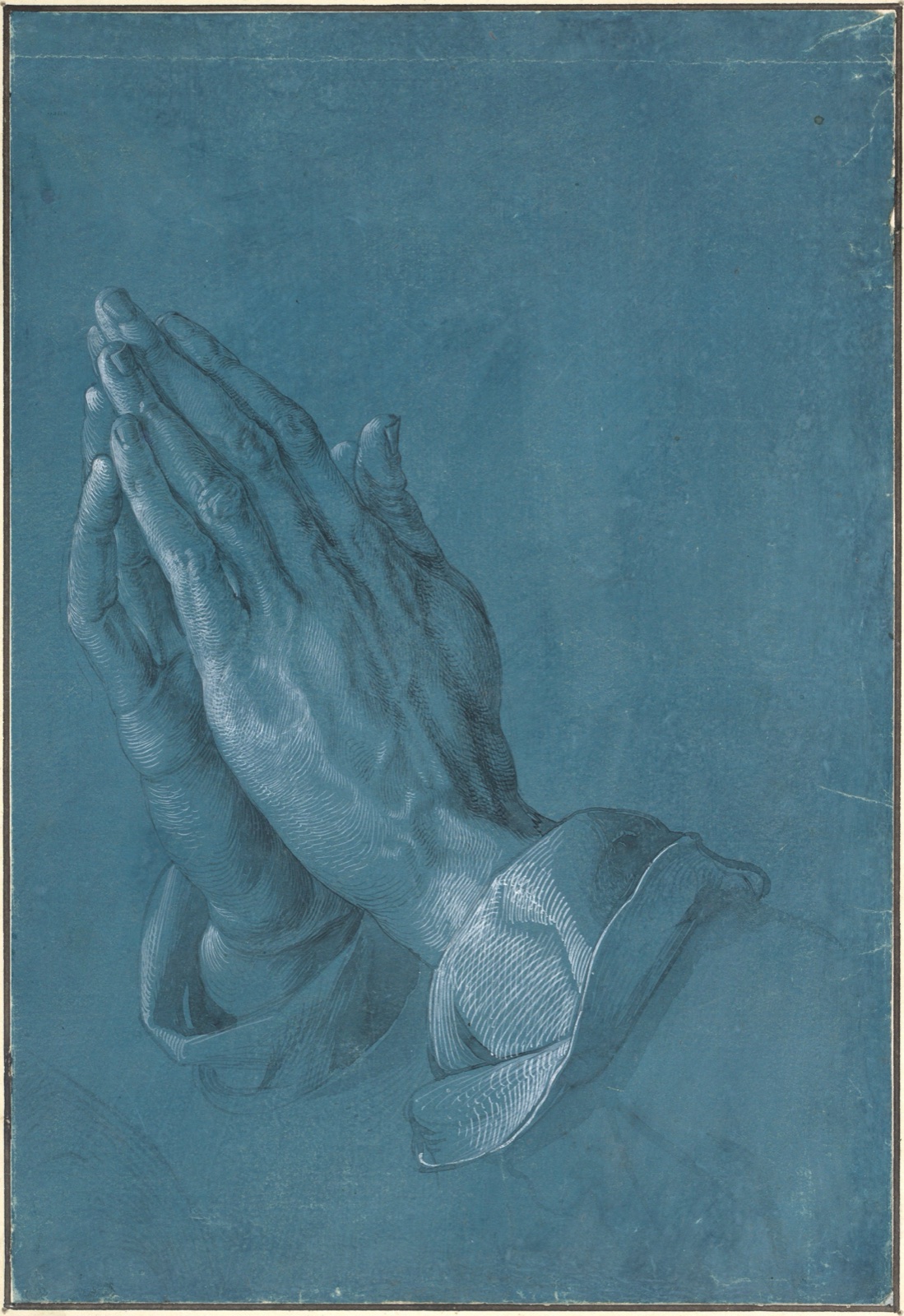
Albrecht Dürer brought extraordinary control to drawing while treating paper as a place for close observation and sustained invention. Praying Hands isolates a detail intended for an apostle in the Heller Altarpiece. Grey and black strokes model the fingers and tendons, while white heightening activates the blue ground. The sheet's fame can obscure its practical origin, yet the Albertina's identification restores that connection: an image now encountered independently began as concentrated preparation for a larger commission.[2] The museum situates such drawings alongside Dürer's investigations across nature, portraiture and design, demonstrating a graphic intelligence that also shaped his engravings and woodcuts. Drawing did not merely precede those prints; it established the structures, textures and emphases that other processes translated.[3]
Michelangelo
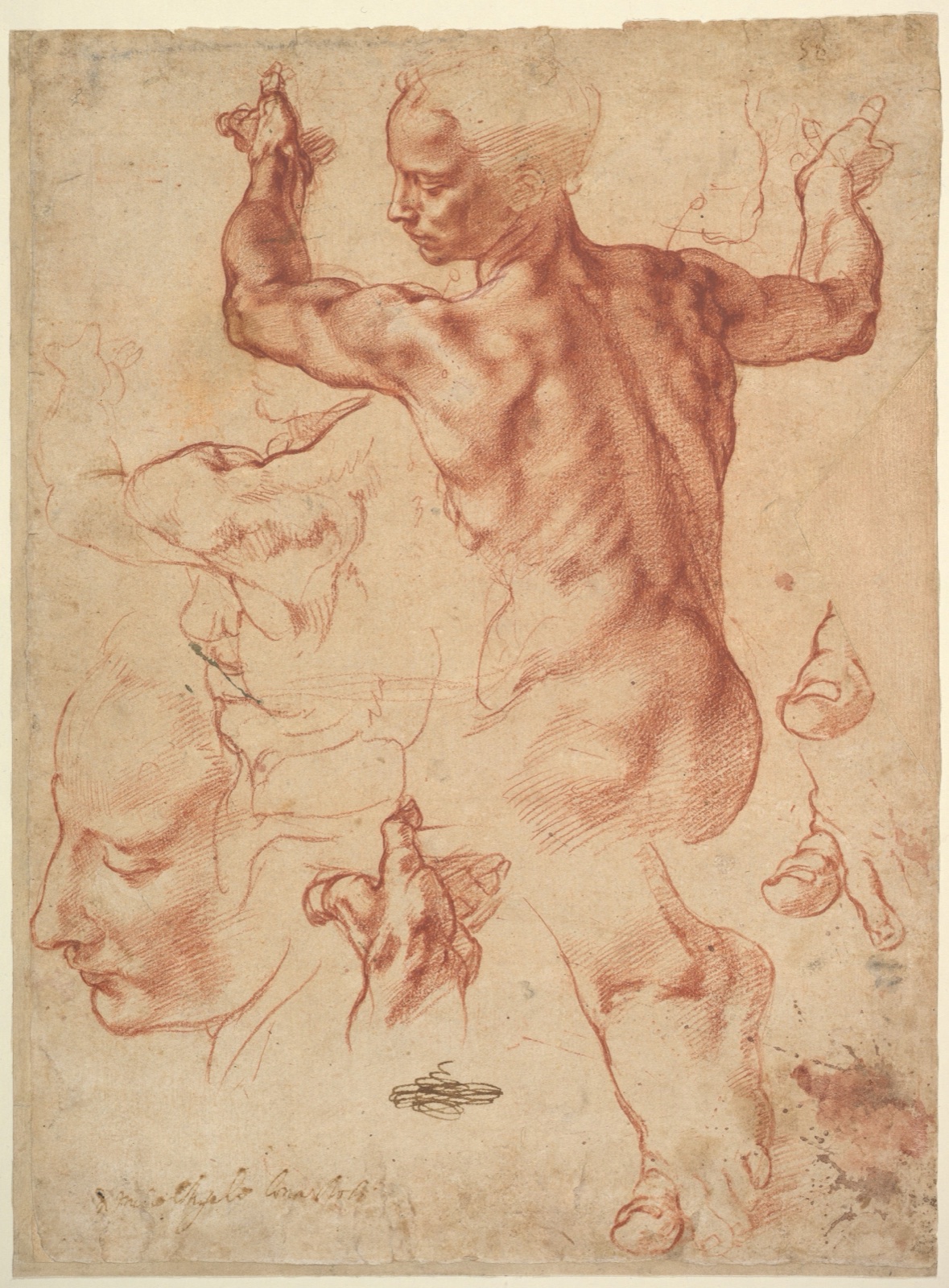
Michelangelo used drawing to solve problems of anatomy, weight and movement before carrying figures into monumental settings. The recto of Studies for the Libyan Sibyl joins a strongly turned seated nude to separate studies of a hand and foot. Red chalk describes the muscular load of the pose, while small white accents clarify projecting forms. The Met connects the figure directly with the Libyan Sibyl on the Sistine Chapel ceiling and records different material on the reverse. The sheet therefore preserves attention moving between the total action of a body and the individual parts that make its rotation convincing. It shows preparation as a sequence of focused decisions rather than a rough approximation of the final fresco.[4]
Baroque and eighteenth-century artists: energy, place and presence
Peter Paul Rubens
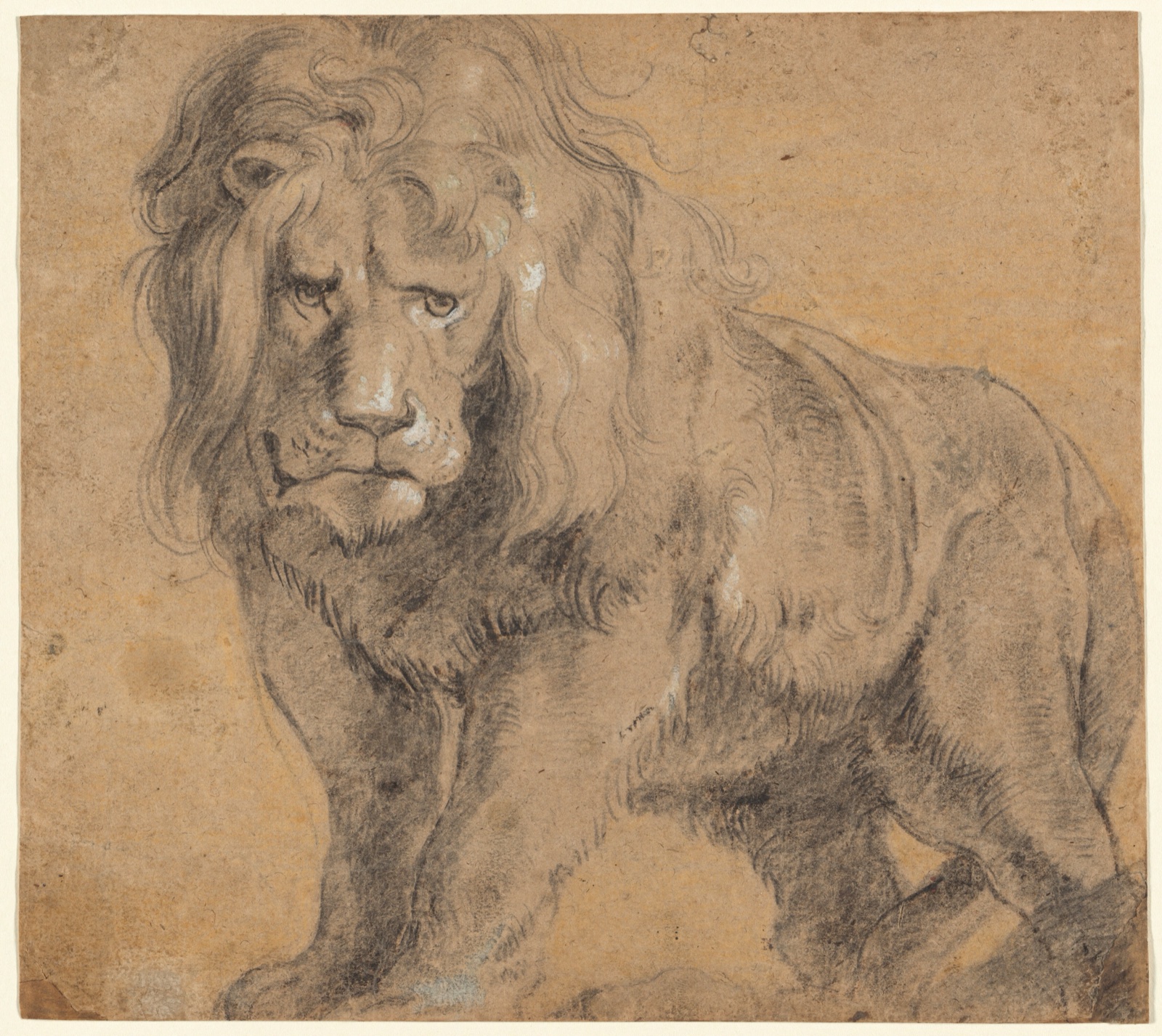
Peter Paul Rubens could use chalk to give a study both immediacy and physical authority. In Lion, the animal stands in profile while turning its head outward. Dark strokes establish the mane and bodily mass; white heightening catches light along the face and back, and touches of yellow distinguish the surrounding ground. The National Gallery of Art records the sheet as a work of about 1612–1613 and maintains its attribution to Rubens. Its value within this directory is not as a miniature substitute for one of his paintings. It demonstrates how animal observation could become a store of convincing form, texture and attitude for an artist accustomed to building animated Baroque compositions.[5]
Rembrandt
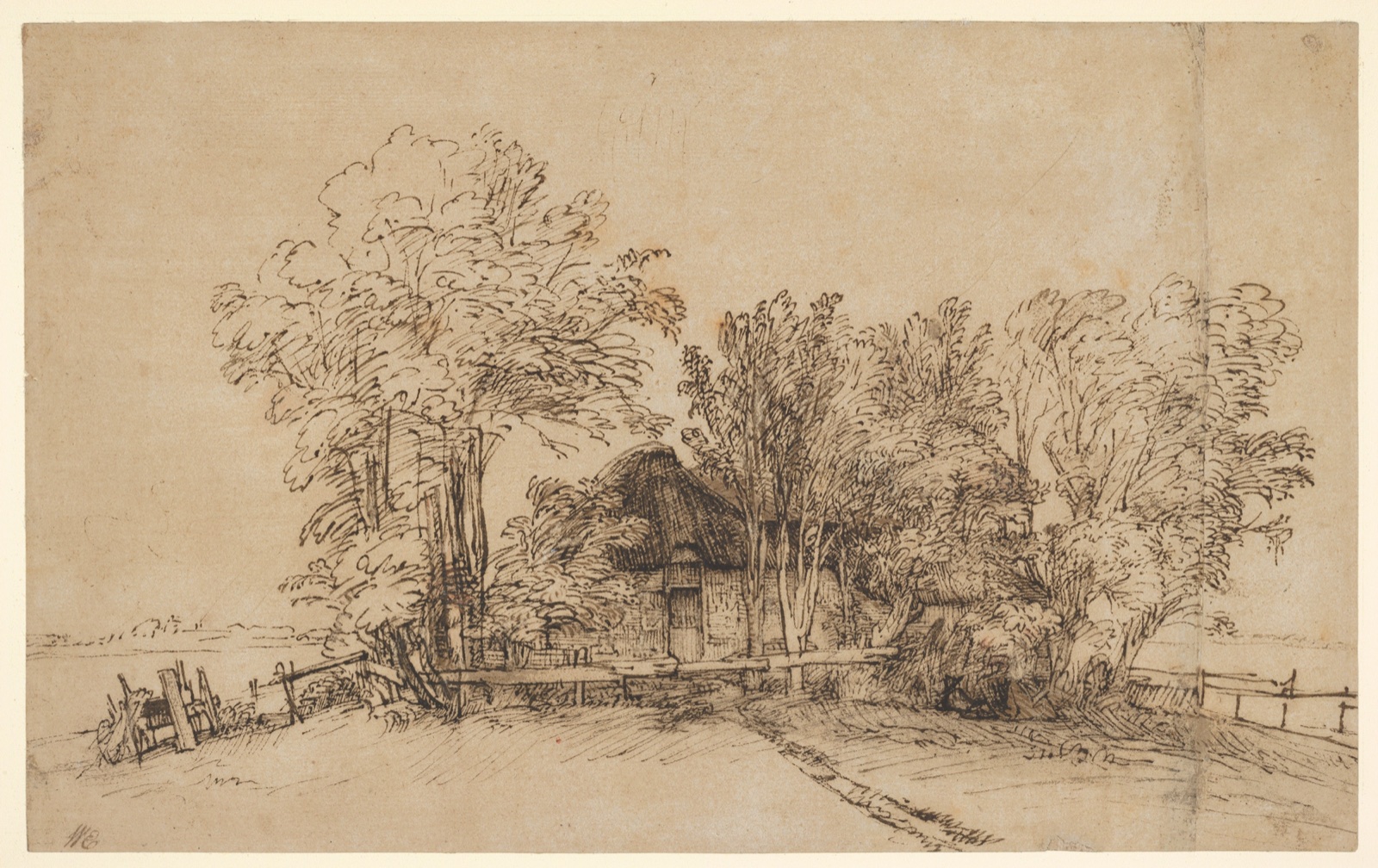
Rembrandt used a limited range of brown ink and wash to organise landscape through changes of pressure, density and tone. In Cottage among Trees, heavy foliage gathers around a low building while fences and an open horizon lead the eye into distance. The Met notes an artist-added vertical strip, a physical alteration that suggests composition remained negotiable even after marks had accumulated. The same economy that gives the drawing breadth also helps explain the expressive spatial decisions seen in Rembrandt's etchings, although the two media make different demands. This sheet is neither a topographical inventory nor a reduced painting. It is an active arrangement of shelter, vegetation and light in which omission is as important as description.[6]
Élisabeth Vigée Le Brun
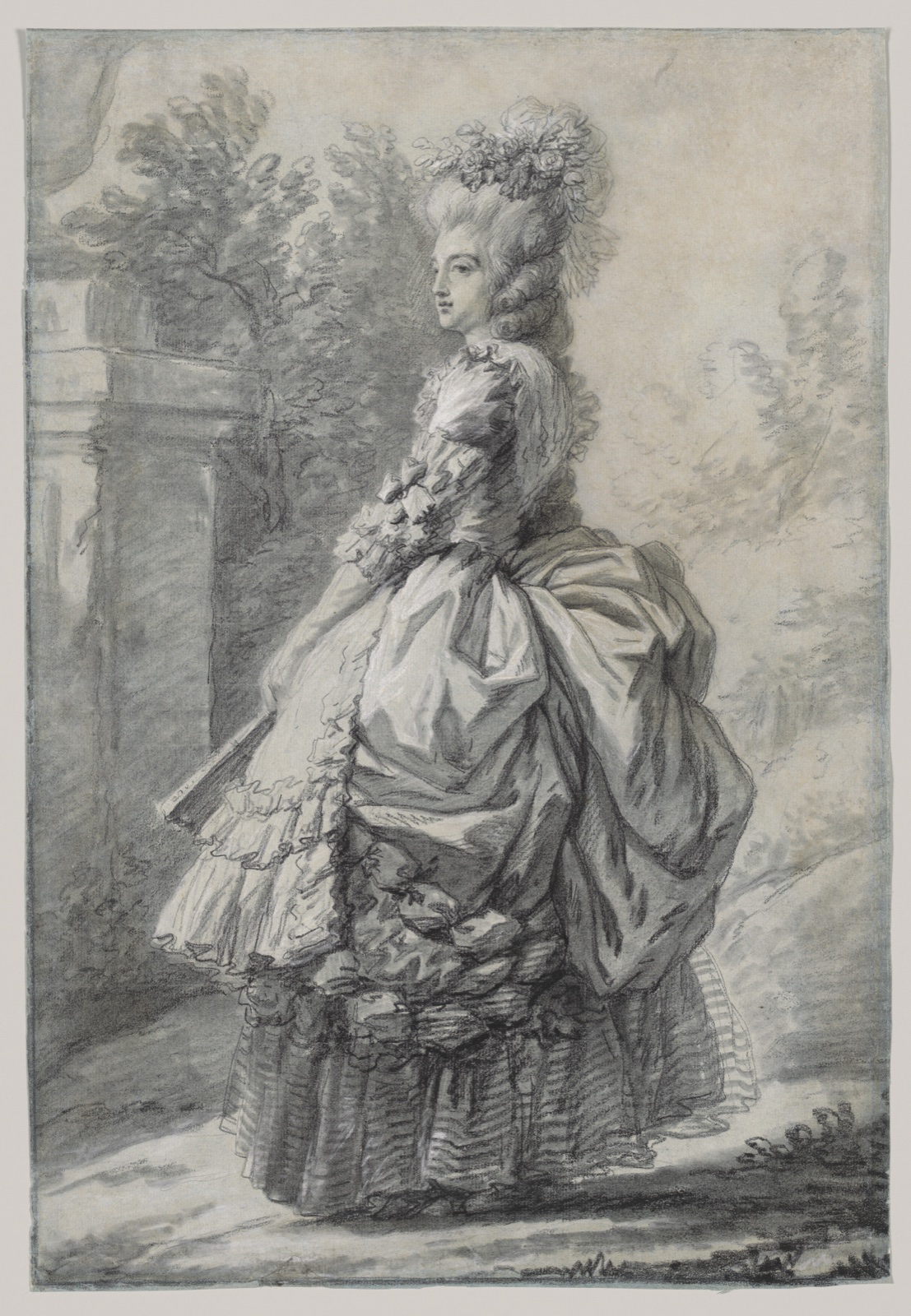
Élisabeth Vigée Le Brun developed portrait ideas through a graphic language capable of joining likeness, costume and setting. Marie Antoinette in a Park presents the queen standing in a full skirt and informal rural headdress, with trees and foliage placing the figure within a cultivated outdoor scene. Stumped black chalk supplies soft tonal transitions, while white chalk lifts the face and fabric from the sheet. The Met's record preserves the qualified dating and the work's attribution history, both important when a drawing exists in relation to a famous sitter and a larger portrait practice. Here, the figure is not merely an accessory to biography: pose, dress and surroundings are composed together through the specific possibilities of chalk.[7]
Nineteenth-century artists: travel, teaching and modern observation
J. M. W. Turner
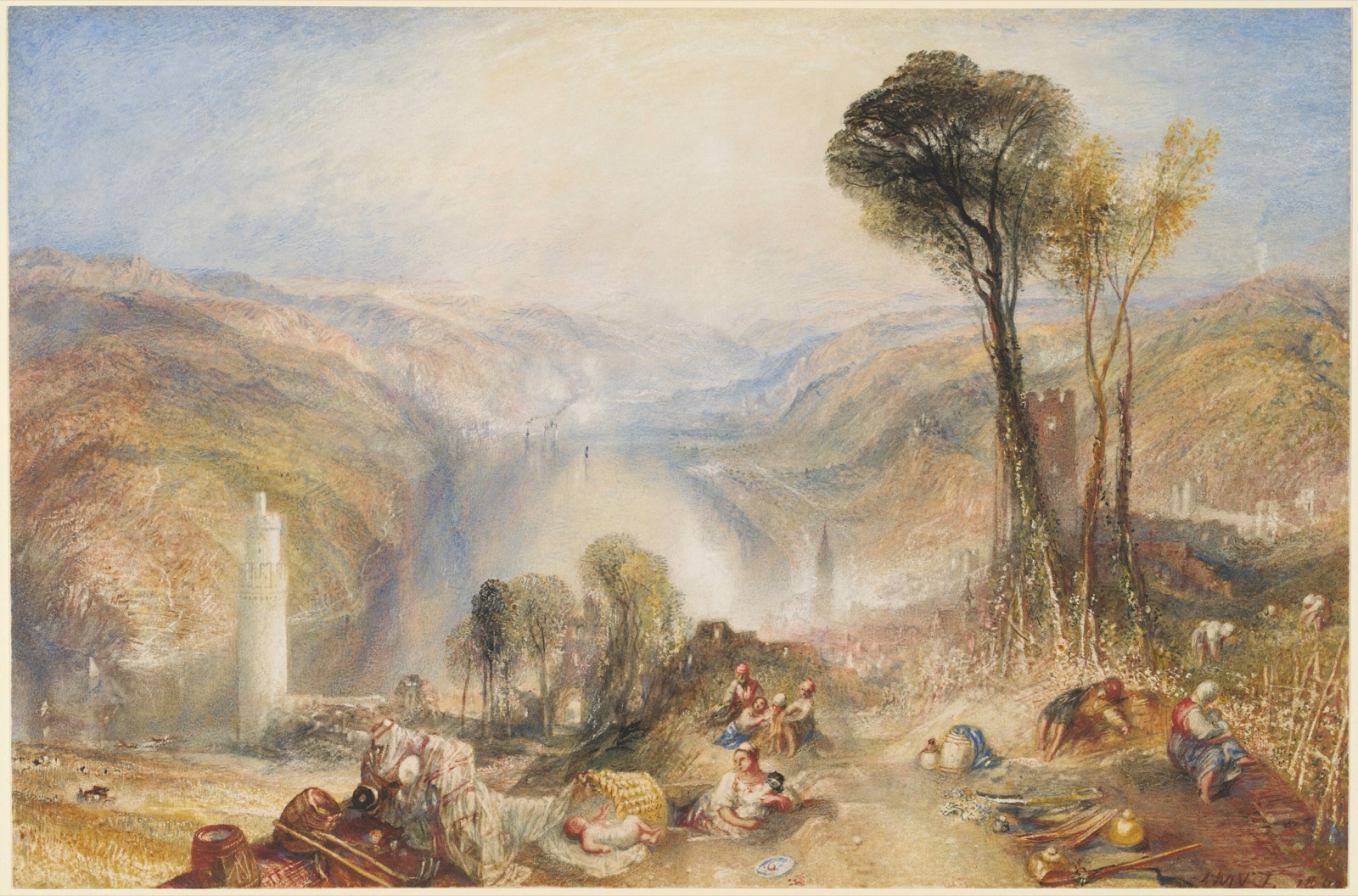
J. M. W. Turner treated travel as an opportunity to collect impressions and transform them through colour. Oberwesel looks down across the Rhine from vineyards above the town, placing resting figures before a luminous river valley. Graphite provides structure, watercolour and gouache build atmosphere, and scratching-out retrieves sharp passages of light. The National Gallery of Art identifies the sheet as signed and dated, tying it securely to Turner's 1840 Rhine journey. It offers a focused example of the mobility explored throughout his drawings and the chromatic range of his watercolours. Within the broader history of Romanticism, Turner's landscape practice shows how an observed place could be reorganised through memory, light and fluid material.[8]
Eugène Delacroix
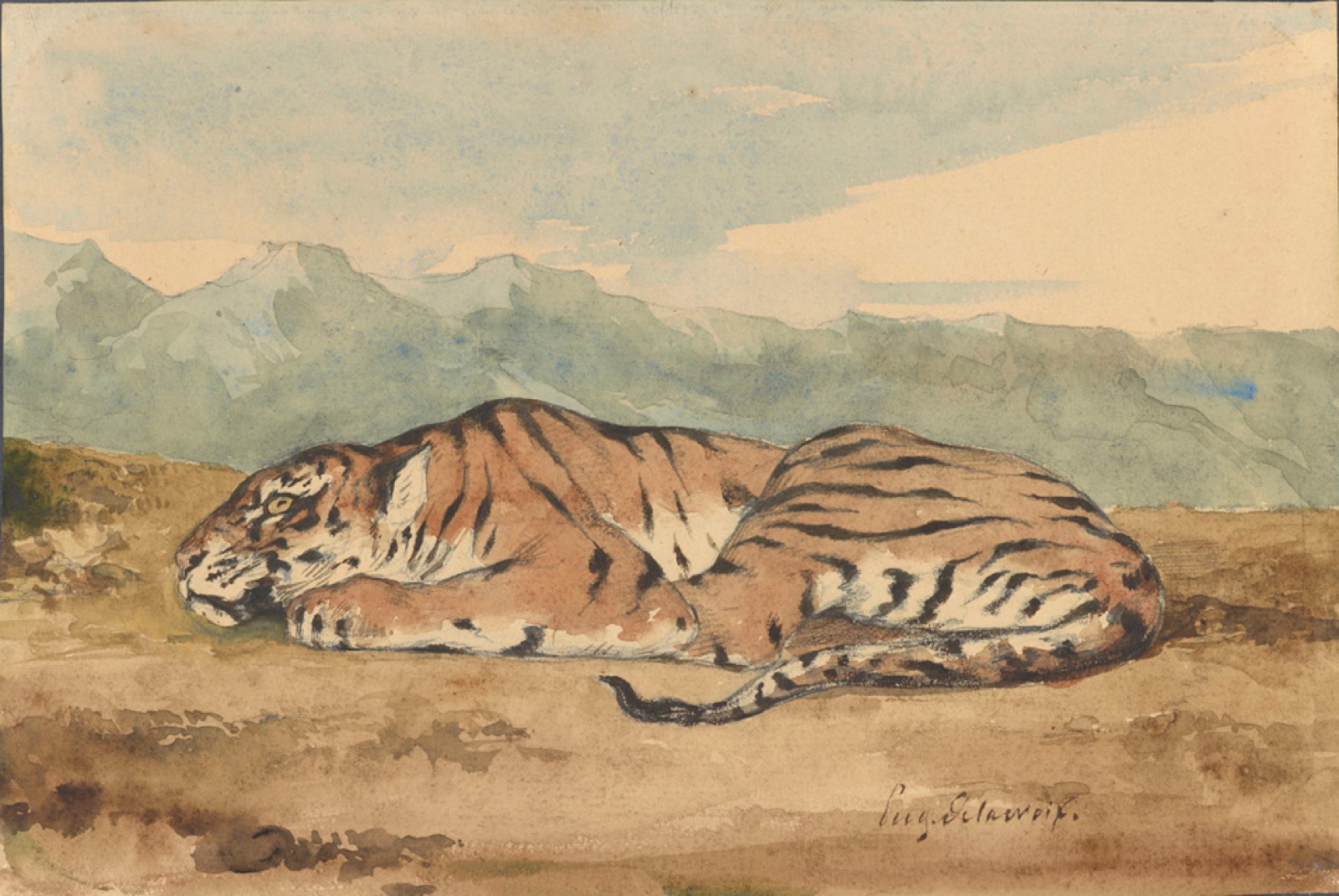
Eugène Delacroix made animal studies a serious part of his search for movement and expressive form. Royal Tiger shows a crouching tiger turning its head toward the viewer. Layered watercolour establishes the striped coat and muscular body without fixing every edge, while graphite and ink contribute structure. The Morgan identifies the sheet and relates it to Delacroix's opportunities to study exotic animals in Paris. That context keeps the work grounded in observation even as its colour and compressed pose heighten drama.[9] It also provides a useful bridge to the site's wider collection of animal drawings. The energy developed on paper could inform Delacroix's complex paintings, but this sheet remains compelling because the animal's alert presence is fully resolved within its small format.
Charles Bargue
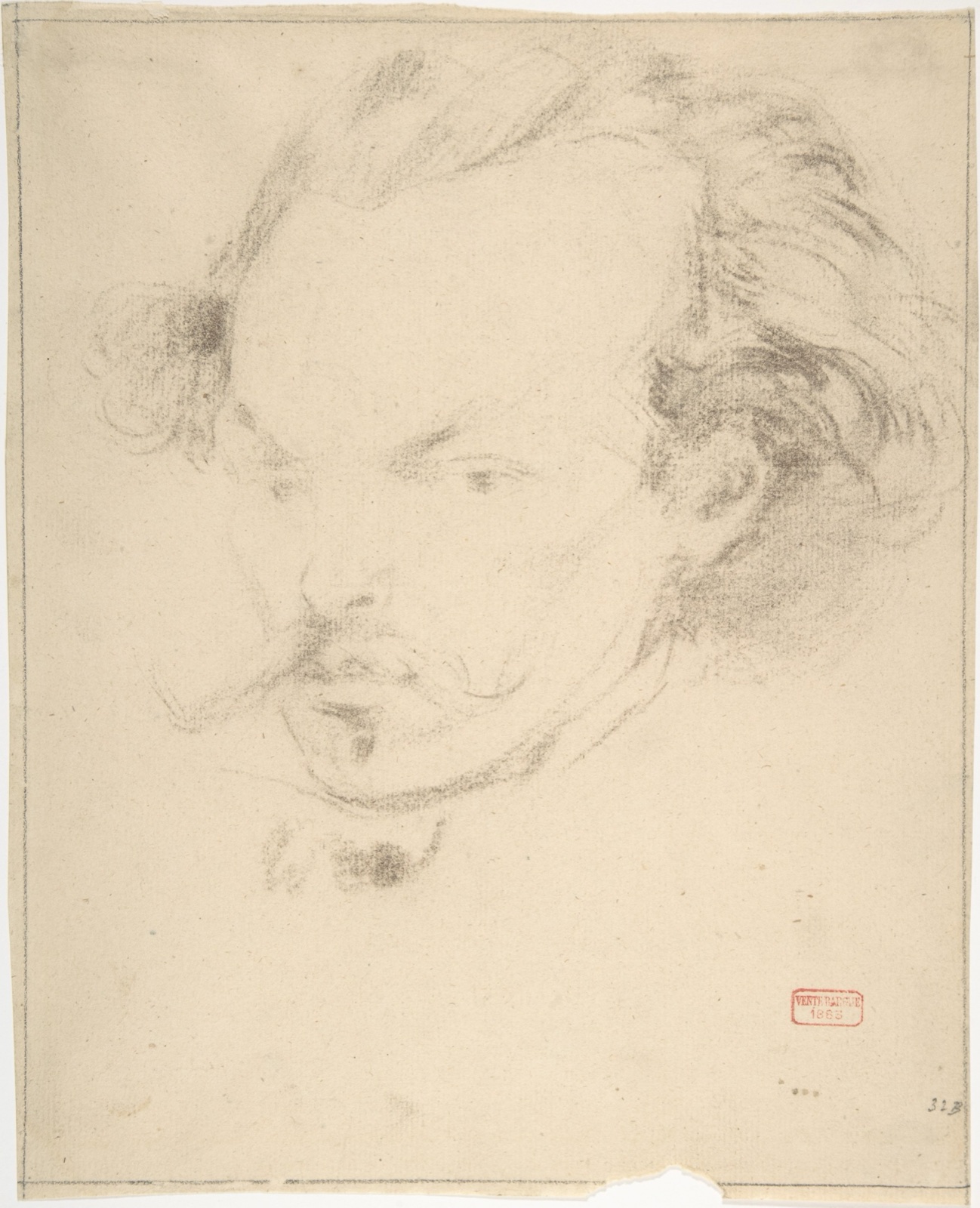
Charles Bargue occupies a different place in the directory from artists represented by large surviving bodies of independent drawings. The Met cautiously titles its brown-chalk head Portrait of the Artist (?); retaining that question mark is essential because the sitter's identity is not certain. Strong modelling and restrained contours make the sheet a useful example of the academic clarity associated with Bargue's name, while its broad date range prevents false chronological precision.[10] His lasting importance also rests on the Drawing Course produced with Jean-Léon Gérôme, whose plates guided students from copying parts of the body toward complete figures and studies after established art. The Helsinki University Museum documents the course's use within a teaching collection.[11] That historical system differs from the open-ended frameworks of contemporary artists; this entry explains its influence without turning the directory into a lesson.
Edgar Degas
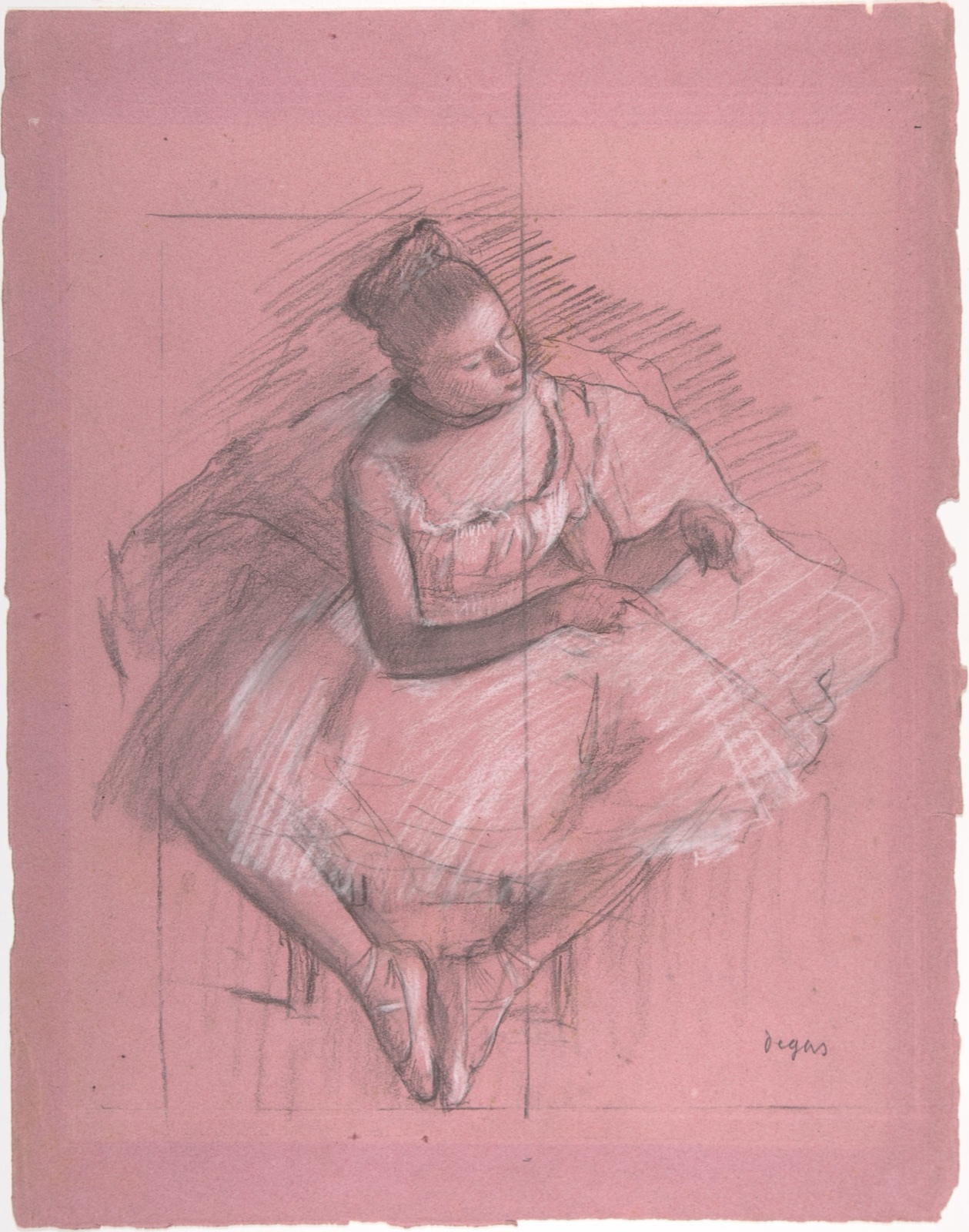
Edgar Degas repeatedly drew dancers because rehearsal supplied bodies in transition: resting, stretching, adjusting and preparing rather than merely performing. Seated Dancer concentrates on one folded pose. Graphite and charcoal establish the figure, white heightening works against the pink sheet, and a square grid records a controlled transfer process. The Met's object record secures those materials and that function.[12] A related museum record explains how stock figure studies could be brought into larger rehearsal compositions, so repetition in Degas's practice was a method of recombination rather than simple duplication.[13] His wider drawings and pastels show how line and coloured powder could pursue similar subjects through different surfaces. Alongside other Impressionist artists, he used observation selectively, constructing pictorial rhythms from studied poses.
Claude Monet
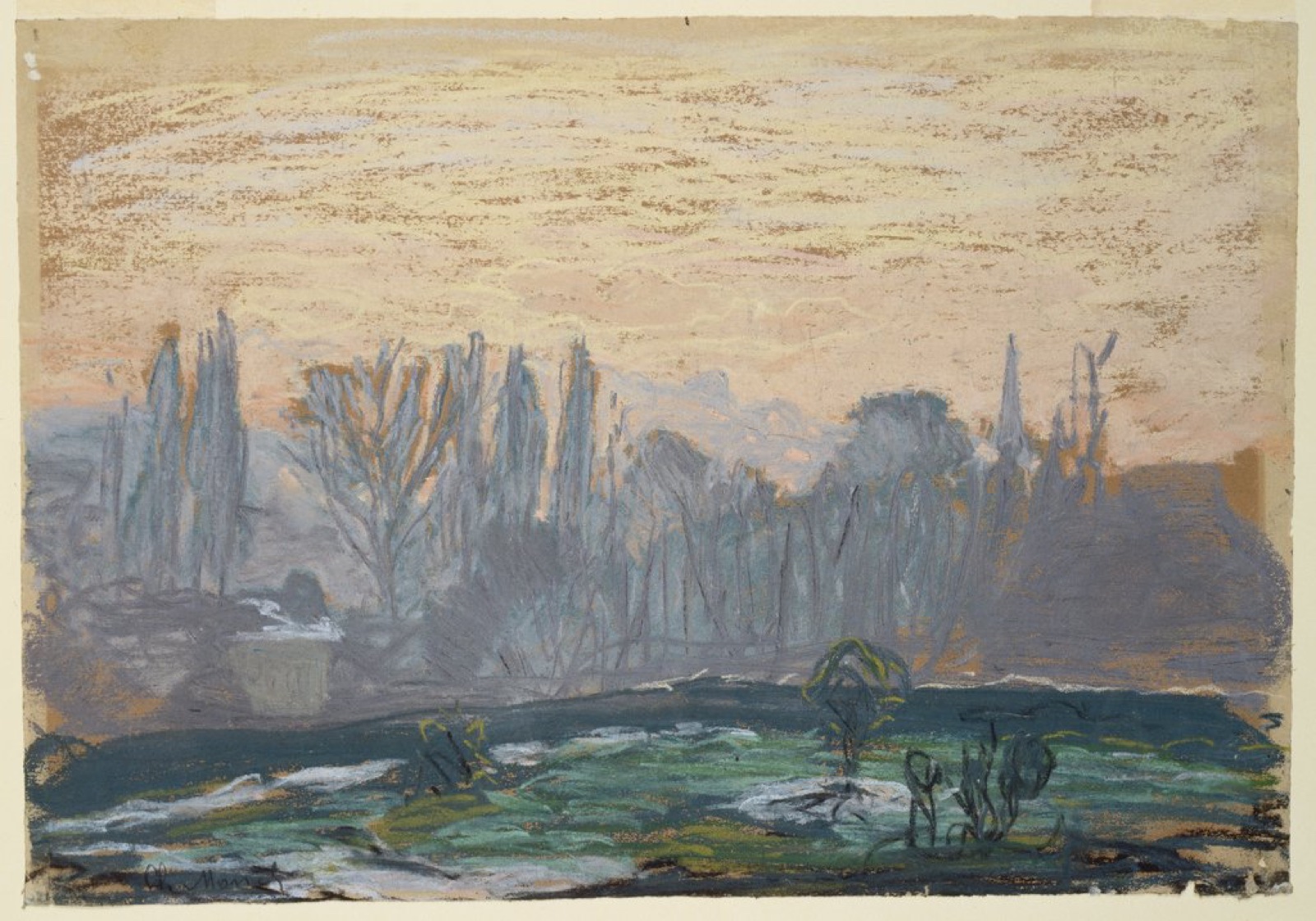
Claude Monet is associated chiefly with painting, yet Winter Landscape with Evening Sky demonstrates how pastel could serve as an autonomous means of studying atmosphere. Low snow-covered ground sits beneath a softly coloured sky, with compact accents describing distant vegetation and structures. The Städel Museum identifies the work as SG 410 Z and dates it broadly to about 1870–1880. Pastel lets colour and mark arrive together: a stroke can establish local form, reflected light or weather without the liquid preparation of oil paint. The sheet therefore belongs within Monet's investigation of transient conditions while remaining materially distinct from canvas. It also complicates any account of Impressionist drawing limited to monochrome pencil or charcoal.[14]
Vincent van Gogh
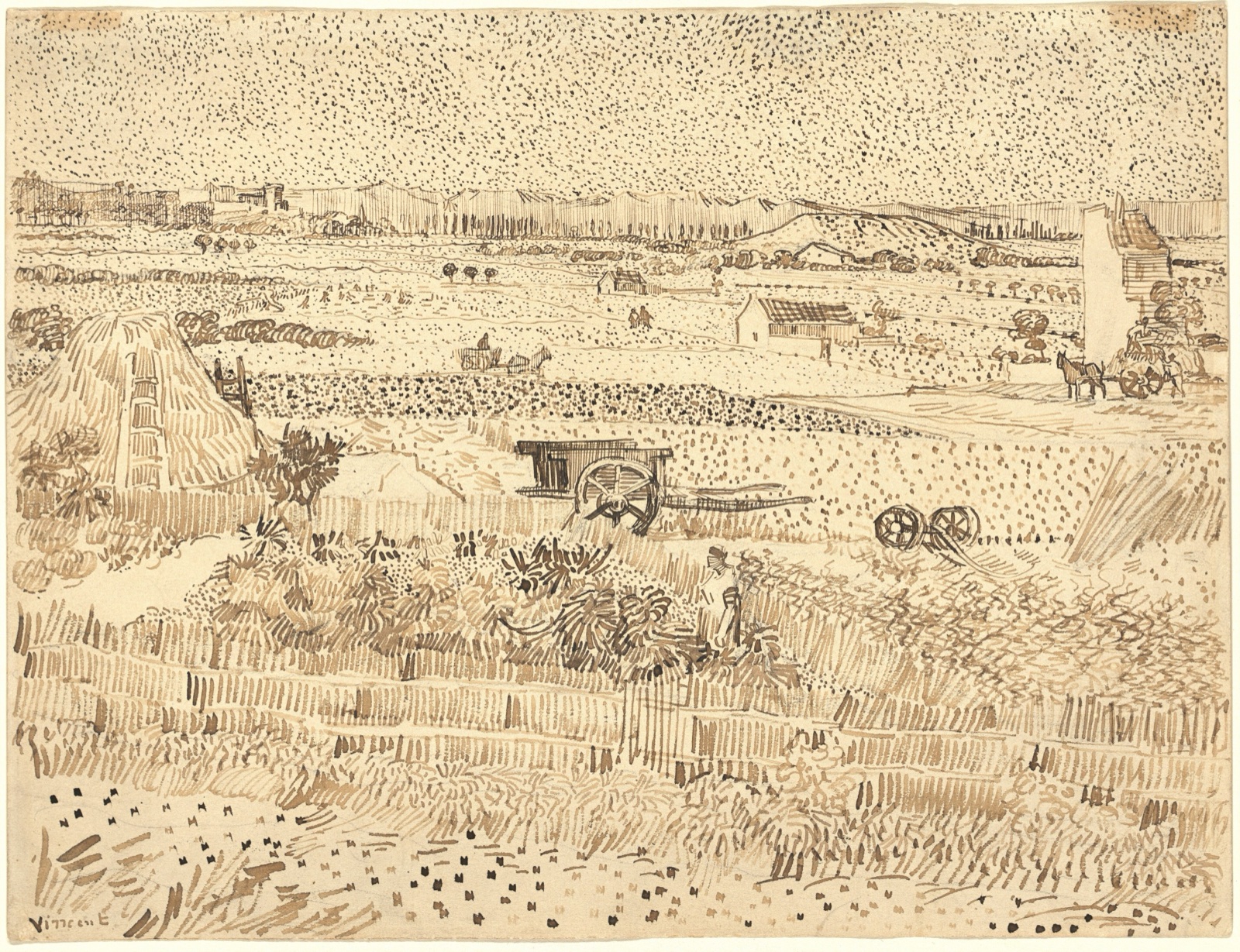
Vincent van Gogh built landscape with graphic marks that vary according to what they describe. In Harvest—The Plain of La Crau, dots, short strokes, hatching and longer contours separate fields, haystacks, roads and distant buildings. The National Gallery of Art records the underlying graphite and the reed pen that gives the brown ink its changing breadth.[15] Van Gogh's extensive drawing practice was not simply preparatory; the Van Gogh Museum describes hundreds of surviving sheets across varied materials and periods, showing sustained attention to graphic work throughout his short career.[16] The patterned field also invites comparison with the site's broader material on trees in art: natural forms become legible through chosen rhythms rather than through uniform notation.
Modern artists: line, body and psychological presence
Gustav Klimt
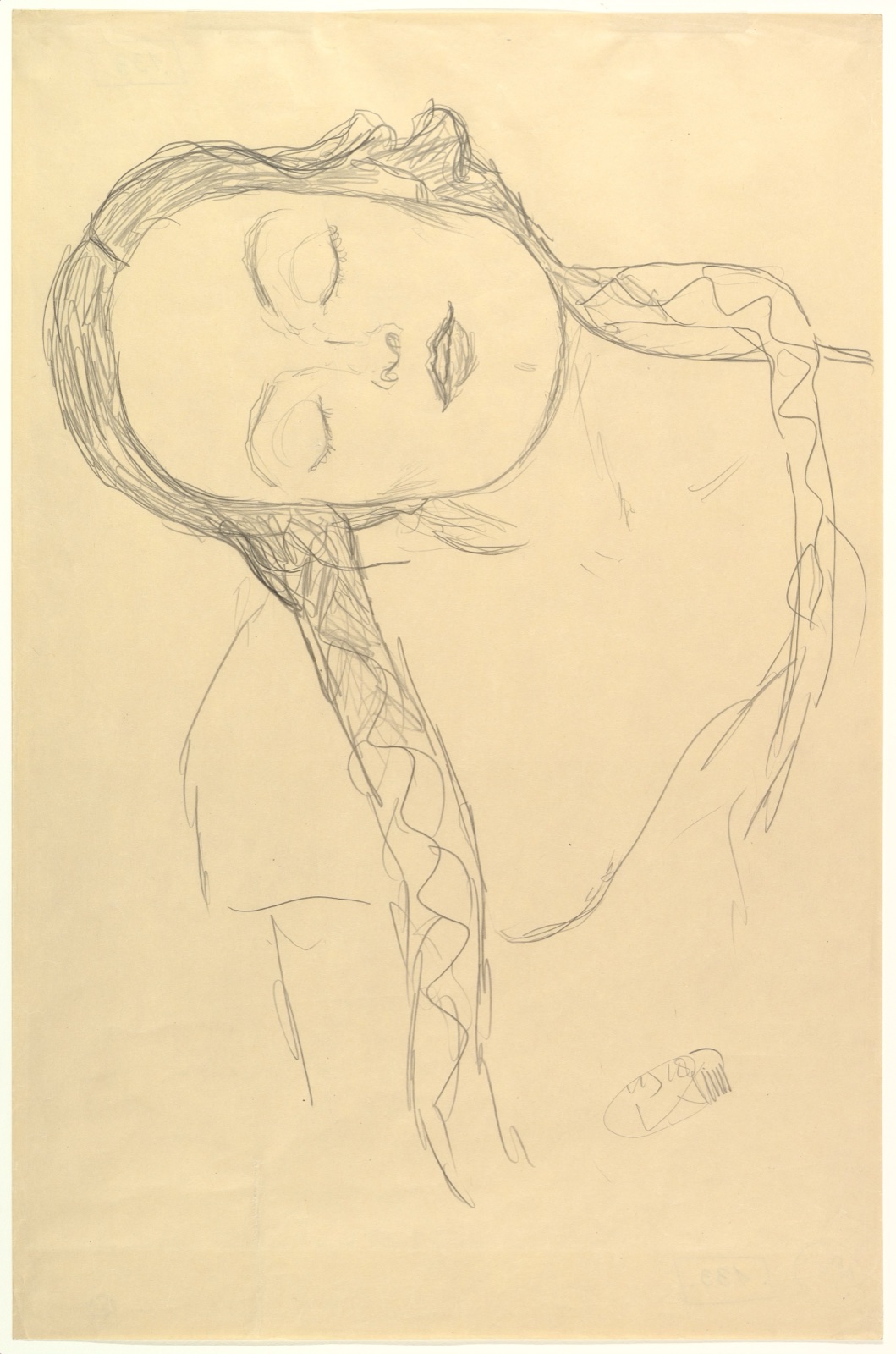
Gustav Klimt made figure drawing a sustained daily practice rather than an occasional preliminary exercise. In Half-figure of a Young Woman, graphite outlines a tilted head, upper body and loosely indicated clothing. Variations in pressure give the face and hair greater concentration while allowing much of the paper to remain open. The Met dates the sheet to the final year of Klimt's life and connects it with his repeated exploration of poses and themes.[17] Getty exhibition research likewise treats his drawings as a route to understanding the planar forms and recurring subjects of his modern work.[18] The economy of this sheet differs sharply from the ornamental surfaces of Klimt's paintings. It can also be considered beside other minimal artists, provided minimal is understood here as economy of means rather than a retrospective movement label.
Pablo Picasso
Pablo Picasso's Standing Female Nude uses charcoal to break the body into interlocking planes while preserving the figure's upright stance. The Met dates the sheet to 1910 and places it within the period of Analytic Cubism. Drawing here is not a transparent window onto a model; it is a means of testing how multiple facets can occupy one compressed surface.[19] That structural use of line differs from Picasso's later, more economical animal images, so the artist should not be reduced to a single familiar manner. The contrast is useful when exploring line drawing or comparing the radical simplifications associated with Henri Matisse. In this directory, Picasso's role is to show how graphic practice could dismantle conventional volume as decisively as painting.
Egon Schiele
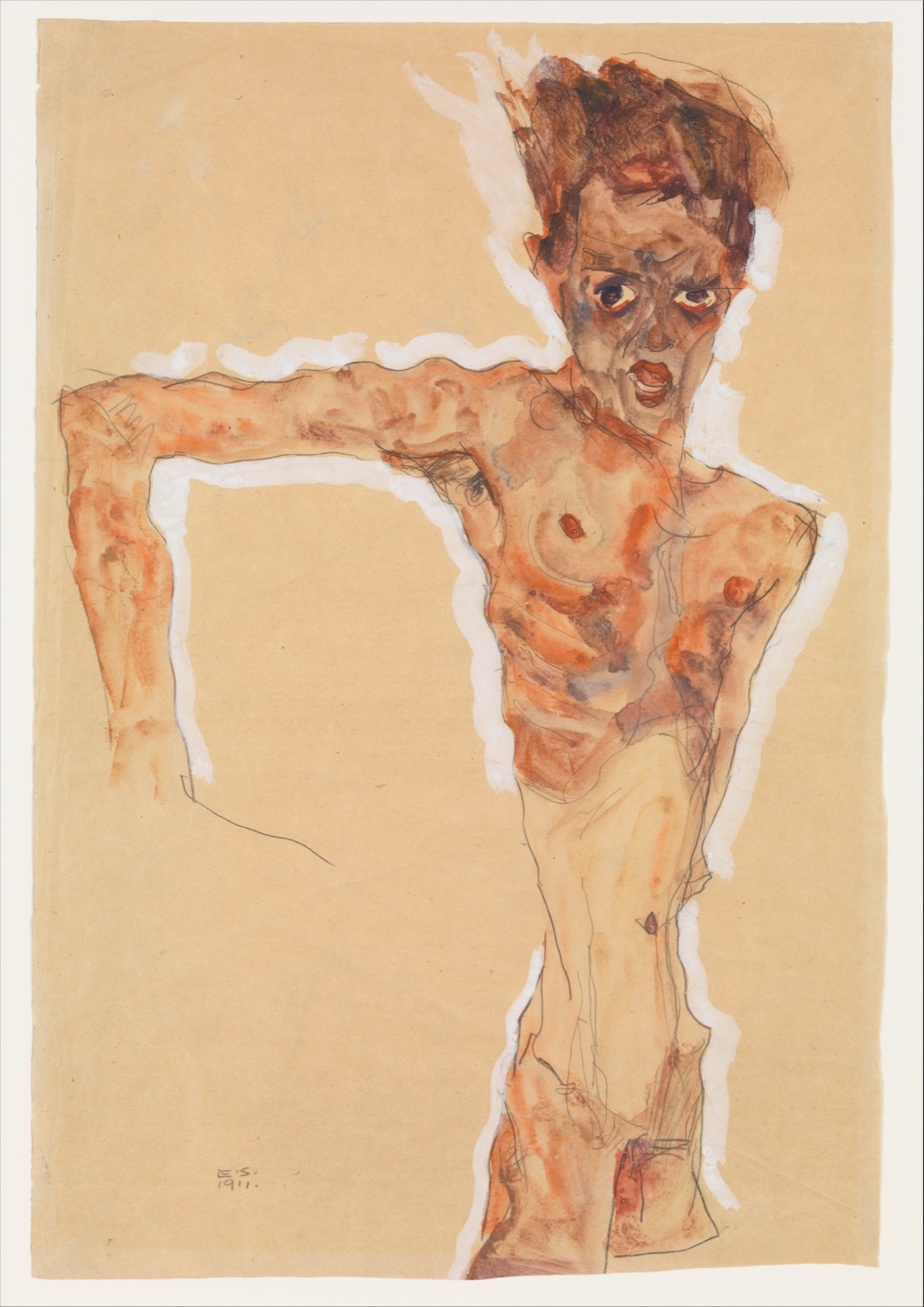
Egon Schiele made the human body a vehicle for angular rhythm and psychological intensity. In the 1911 Self-Portrait, outstretched arms, sharply bent contours and areas of exposed paper prevent the figure from settling into a conventional likeness. Graphite establishes the structure, while watercolour and gouache concentrate colour around selected anatomical and expressive details. The Met identifies the sheet as a self-portrait and records its composite accession, preserving its exact object history.[20] Schiele's graphic method can appear sparse, but it is not casual: abbreviated surroundings make every turn of the body more emphatic. As the youngest artist in the chronology, he closes the directory by showing drawing operating as a complete modern statement, not only as preparation for another medium.
Ways to compare the artists
Chronology reveals continuities that movement labels can hide. Leonardo, Dürer and Michelangelo each use drawing to prepare, transfer or test, yet their sheets range from a court portrait to an altarpiece detail and a monumental figure study. Rubens and Delacroix turn close attention to animals into bodily energy. Rembrandt, Turner, Monet and Van Gogh approach landscape with different combinations of ink, wash, graphite, watercolour and pastel, showing that place can be constructed through selective marks as much as through continuous description.
Function offers another route. Portrait and figure studies may address likeness, pose, anatomy or the reorganisation of form. Landscape sheets can record travel, atmosphere or a reusable vocabulary of marks. Preparatory drawings sometimes gain independent identities, while apparently self-contained works can still preserve transfer, revision or teaching histories. These categories overlap, which is precisely why the directory uses filters as points of comparison rather than fixed definitions.
Taken together, the 15 artists demonstrate that draftsmanship is not a single measure of polish. It can depend on the resistance of metalpoint, the softness of chalk, the speed of ink, the colour of pastel or the transparency of watercolour. What links these practices is the visible act of choosing: what to describe, what to omit, what to repeat and what to carry into another work.
References
- Musée du Louvre, “Portrait of Isabella d'Este,” MI 753 Recto.
- The Albertina Museum, “Praying Hands (Study for an Apostle in the Heller Altar),” inventory 3113.
- The Albertina Museum, “Albrecht Dürer”.
- The Metropolitan Museum of Art, “Studies for the Libyan Sibyl,” 24.197.2.
- National Gallery of Art, “Lion,” 1969.7.1.
- The Metropolitan Museum of Art, “Cottage among Trees,” 29.100.939.
- The Metropolitan Museum of Art, “Marie Antoinette in a Park,” 2019.138.4.
- National Gallery of Art, “Oberwesel,” 2007.77.1.
- The Morgan Library & Museum, “Royal Tiger,” 2006.54.
- The Metropolitan Museum of Art, “Portrait of the Artist (?),” 22.151.
- Helsinki University Museum, “A Face from the Past”.
- The Metropolitan Museum of Art, “Seated Dancer,” 29.100.942.
- The Metropolitan Museum of Art, “The Rehearsal of the Ballet Onstage,” 29.160.26.
- Städel Museum, “Winter Landscape with Evening Sky,” SG 410 Z.
- National Gallery of Art, “Harvest—The Plain of La Crau,” 1992.51.10.
- Van Gogh Museum, institutional drawing-practice record.
- The Metropolitan Museum of Art, “Half-figure of a Young Woman,” 1982.446.
- J. Paul Getty Museum, “Gustav Klimt: The Magic of Line”.
- The Metropolitan Museum of Art, “Standing Female Nude,” 49.70.34.
- The Metropolitan Museum of Art, “Self-Portrait,” 1984.433.298ab.