


 by Tom Gurney
Tom Gurney BSc (Hons) is an art history expert with over 20 years experience
Published on November 28, 2025 / Updated on December 5, 2025
Email: tomgurney1@gmail.com / Phone: +44 7429 011000
Rosa Bonheur Biography: Life, Training and Artistic Legacy
One of the most accomplished animal artists in history, and an integral part of the French Realism movement, Rosa Bonheur forged a unique place in art history in the mid to late 19th century. This biography explores her childhood, education, artistic development, travels, personal life and lasting influence.
Early Life
Marie-Rosalie (Rosa) was born in Bordeaux on the 16th of March, 1822. Her family was highly cultured, wth her mother a piano teacher, and her father a professional artist. He immediately encouraged his daughter, along with all of her siblings, to pursue a similar career to his own.
Most successful female artists of the 19th century would have needed assistance such as this, due to the barriers put in their way by society at that time.
In addition to having a father already involved in the art industry, Rosa was also fortunate in that her family believed strongly in educating boys and girls to the same level, which was somewhat unusual for the time. This attitude of equality allowed Oscar-Raymond and Sophie's children to maximize their potential, regardless of their gender.
A number of Rosa's siblings also became successful artists under the encouragement of their parents, and the theme of animal portraiture ran throughout their work.
The family moved to Paris in order to seek new opportunities and Rosa was introduced to various artistic techniques from a young age. Sadly, her mother passed away when she was only eleven, but her interest in visual art had already been established by that point.
Early Training
It quickly became clear that Rosa was not naturally academic, but was gifted as an artist, and was also passionate about developing her technical skills. Her father chose to formally train his daughter in painting, whilst she continued to sketch in her spare time.
Rosa and her siblings would be reminded of their mother when studying animals, just as they had read books on the same themes together when she was alive, and so Oscar-Raymond embraced this interest by incorporating living animals into their periods of study. He would also take his children out into the suburbs of Paris in order to see various animals in a more natural environment. This helped to make the lessons more interesting, aiding their collective learning.
Alongside her live studies, Rosa understood the importance of learning from the old masters and spent many afternoons in the Louvre, sketching sculptures and browsing related paintings up close. She paid particular attention to any works in oil that touched on her own genre of animal painting.
She would therefore have admired the likes of Paulus Potter, Frans Pourbus the Younger, Louis Léopold Robert, and Salvatore Rosa who could be found within the Louvre's permanent collection.
In an additional phase to her technical development, Rosa would spend time in abattoirs around Paris, carefully studying the muscular compositions of various animals in order to make her paintings as lifelike as possible. Other specialists in this genre had done likewise previously, including British painter George Stubbs a century earlier.
Typically, whilst visiting these locations around the city, Rosa would produce detailed sketches which could then provide the basis for various oil paintings at a later date.
Mature Period
Rosa Bonheur's earliest success occurred in 1849, Ploughing in the Nivernais, with her mature period lasting until around the early 1890s. To receive a government commission at the age of 27 that was later displayed in the Musée d'Orsay in Paris would signal the potential for this artist, and in the next decade her reputation would truly soar.
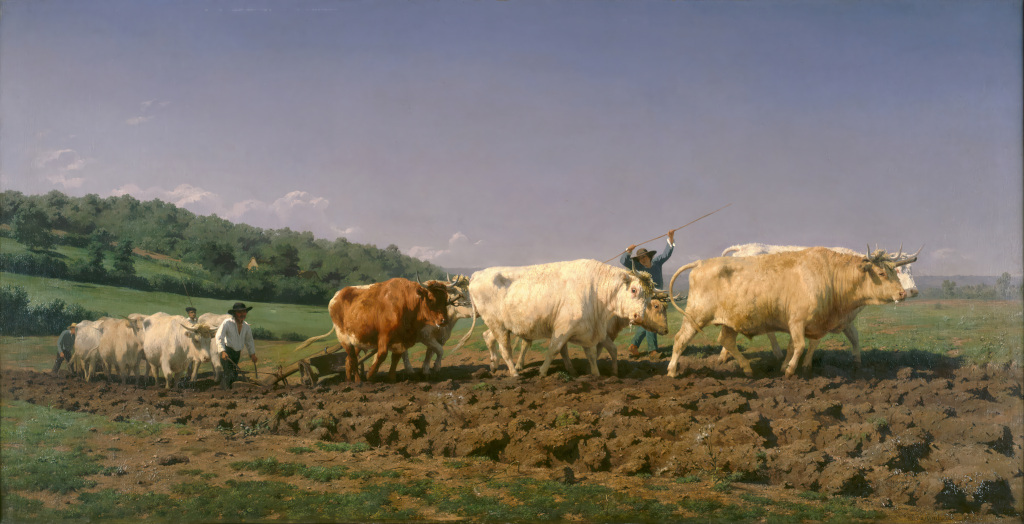
She received encouragement from Queen Victoria in Scotland, and was persuaded to spend some time there studying the nation's rural landscape. For the next few decades she would continue to expand her repertoire of animals, and found further success in France as well as in the US for the first time.
Signature Masterpiece
The Horse Fair established Bonheur as one of Europe's most celebrated artists. Its scale, energy, and technical brilliance earned medals, exhibitions abroad, and major patrons.
To sketch freely at horse markets, she famously secured a permit to wear men's clothing — a practical rather than political choice, but one that gave her freedom to work without harassment.
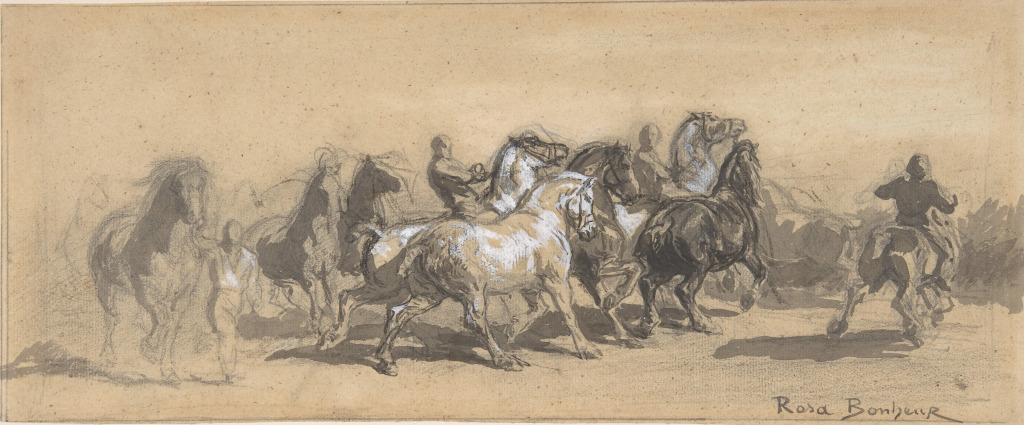
Study for The Horse Fair Rosa Bonheur Black chalk, brush and gray wash, heightened with white
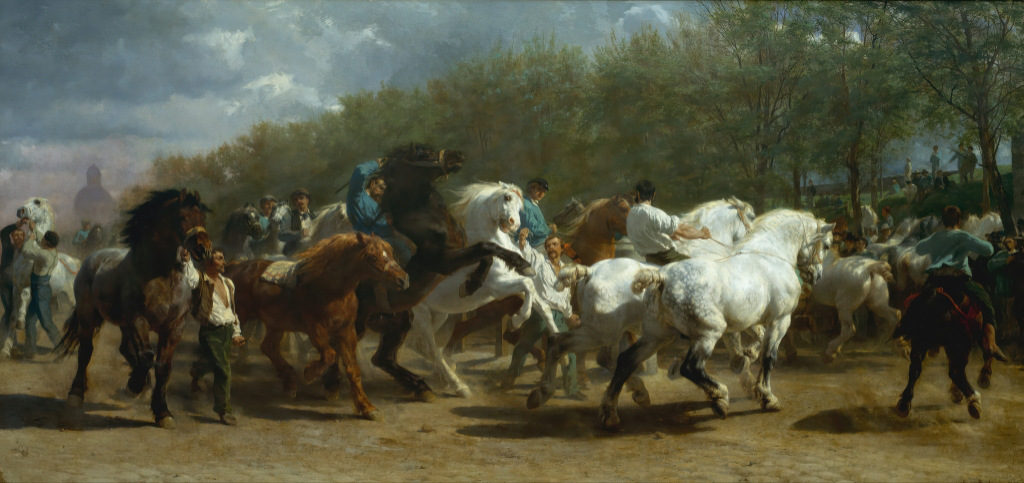
The Horse Fair Rosa Bonheur
International Fame
Towards the end of her career her success was recognised by the awarding of the French Legion of Honour as well as being promoted to Officer of the Order. She had now achieved more than almost any other female painter in history and her artistic legacy was truly established. Her biggest commercial successes were made in the UK, and additional income was provided by a series of prints which were produced directly from her paintings.
This also helped to spread her own reputation, reaching lower levels of society who would not have been able to purchase her original works. She moved out of Paris for the final four decades of her life and was based near Fontainebleau.
Financial success allowed Bonheur to purchase the Château de By, where she built a spacious studio, kept animals for study, and welcomed artists and dignitaries from across Europe. This mansion which was later converted into a museum, devoted to her career.
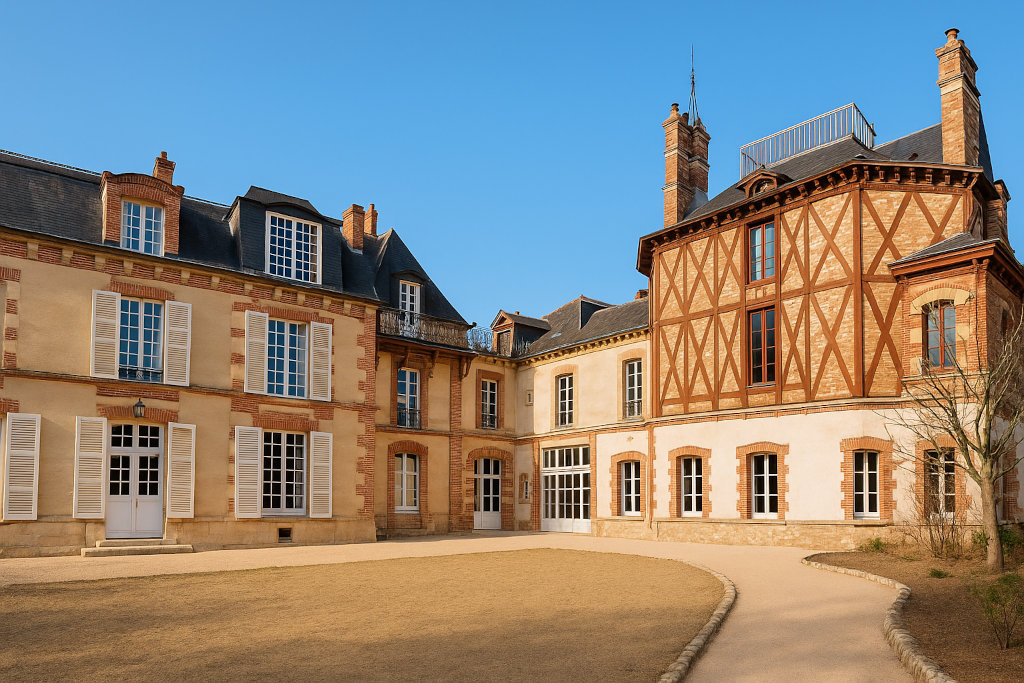
Chateau de By, Rosa Bonheur Museum
Personal Life
Rosa lived openly as a lesbian, at a time when French society was not entirely receptive to homosexuality. She is known to have lived with Nathalie Micas for over 40 years and was vocal about her sexuality, regardless of the consequences. She would have given support to others, therefore, both within the art industry but also in wider society.
As a lesbian, she was therefore fighting the conservative, male-dominated art world on two fronts, but was able to succeed thanks to her strength of character and also the quality of her work.
Her partner, Nathalie Micas, lived and worked with her for decades; after Micas' death, the American painter Anna Klumpke became Bonheur's companion and biographer.
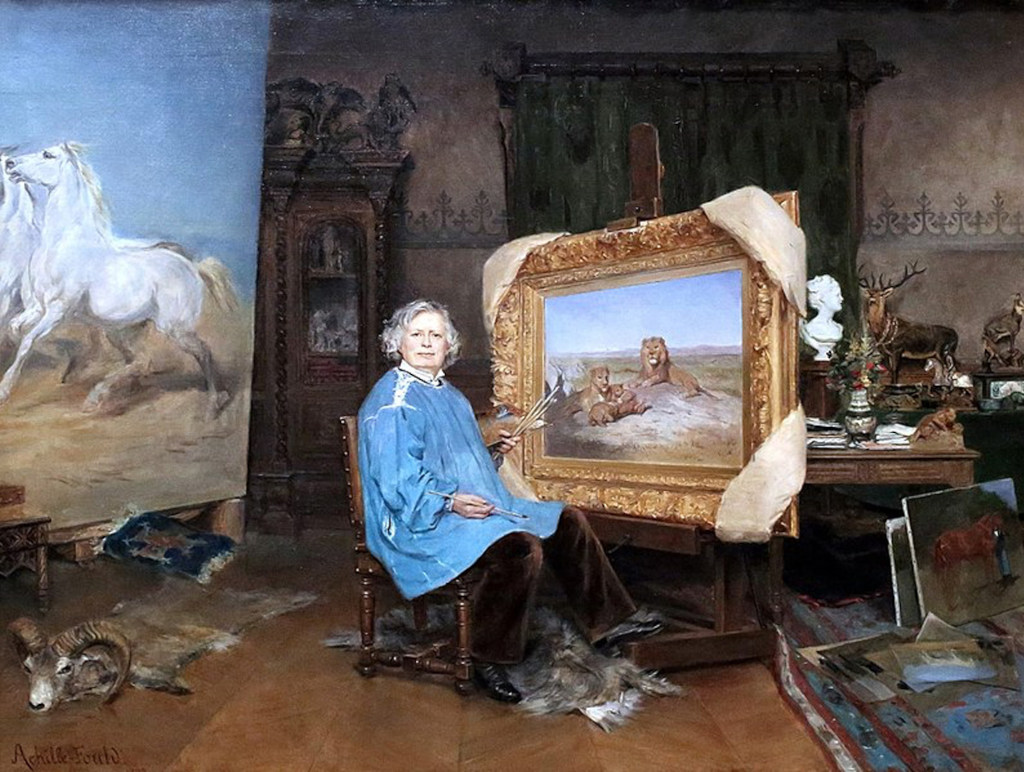
Rosa Bonheur in her Studio
Death & Legacy
Rosa Bonheur died on the 25th of May, 1899, at the Château de By, aged 77. She was buried alongside her partner who had passed away a decade earlier.
The artist's legacy would suffer in line with all other realist artists during the 20th century, when this artistic style fell out of fashion. Efforts more recently to better promote significant female painters from the past have, however, helped to re-expose her work to a new generation and interest in her oeuvre has risen substantially over the past decade.
She remains one of the few women to have been exhibited in major French galleries during the 19th century, and also helped to open doors to other women who followed on afterwards. Additionally, her openness about her sexuality also helped others to feel more accepted within French society.
Today, Rosa Bonheur is celebrated as:
- A pioneer of women in visual arts
- A master of animal painting
- A Realism master who combined science and passion
- A cultural figure whose work bridges fine art and natural history
Her artworks continue to inspire scholarly study, museum exhibitions and a growing community of admirers worldwide, most notably in her native-France, as well as the UK and US, where a number of her paintings were sold as her reputation grew.
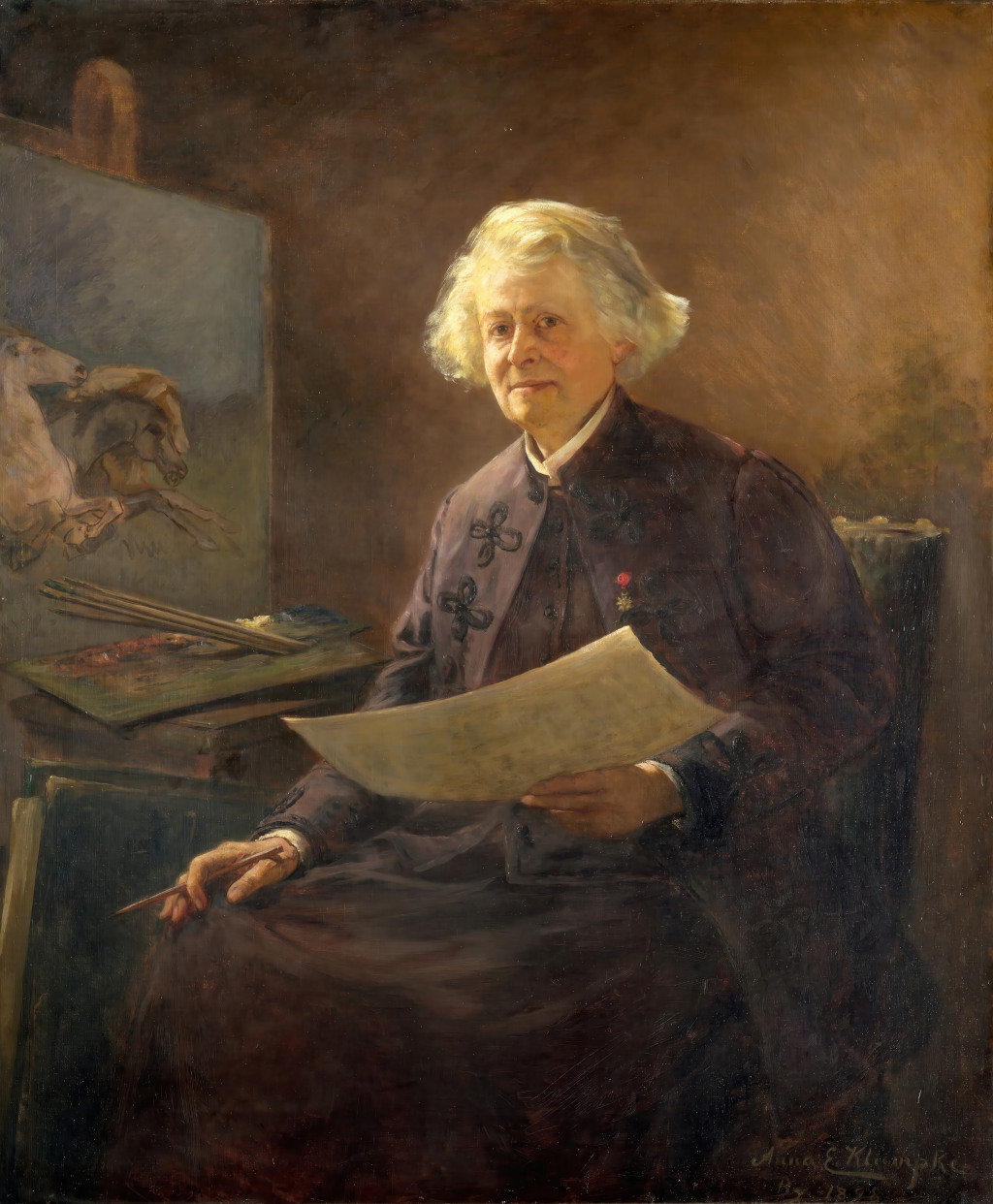
Rosa Bonheur - Portrait by Anna Elizabeth Klumpke, 1898