

 by Tom Gurney
Tom Gurney BSc (Hons) is an art history expert with over 20 years experience
Published on June 19, 2020 / Updated on January 20, 2026
Email: tomgurney1@gmail.com / Phone: +44 7429 011000
Amedeo Modigliani was a controversial Italian artist from the early 20th century who specialised in portraiture and figurative art.
This multi-skilled creative impressed with drawings, paintings and sculptures, though he also made headlines with his turbulent personal life and outlandish behaviour.
He is most noted for the strikingly elongated portraits he produced in the last few years of his short life, as well as for the nude figures he painted. He made considerable use of asymmetric patterns, matching them with bold yet simple lines.
Although his popularity was limited for the bulk of his lifetime, Modigliani has since come to be recognised as one of the most important figures of the early 20th century artistic scene. This biography is peppered with masterpieces, instances of illness and domestic struggles, much of it self-inflicted. There is also a detailed timeline here.
When I know your soul, I will paint your eyes.
- Full Name: Amedeo Clemente Modigliani
- Born: 1884, Livorno, Italy
- Died: 1920, Paris, France
- Nationality: Italian
- Known For: Portraits, Nudes, Sculpture, Drawings
- Movement: Modern Art (Independent)
Early Life
Family
Modigliani, who was nicknamed "Dedo" as a young boy, was the fourth and last child of his parents Eugenia and Flaminio; they were part of the substantial Sephardic Jewish community that resided in late 19th-century Livorno. At the time of his birth, Amadeo's family were in very reduced circumstances and had been officially declared bankrupt.
However, ancient Italian tradition meant that no woman in labour could have her possessions repossessed to pay debts. Since Eugenia was in childbirth when officials visited the family home, the provision ensured that the family could keep at least of its heirlooms. Nevertheless, money was always tight and this may well have affected the youngster's health.
Education
The young Amadeo was strongly influenced by his grandfather and aunt, who valued education and quickly began to show him what they considered the best of the visual, literary and philosophical arts from the Renaissance onward.
Sickness
Before he had reached his teens, Amedeo fell ill; he was to have poor health throughout his life, although he often did not help himself in this regard.
On one occasion, suffering badly with typhoid, he is said to have told his mother that he wished to become a painter and to travel to see the magnificent works hanging in the Uffizi Gallery in Florence. She had hoped he would follow an academic career, but in 1898 she allowed him to start formal lessons in drawing. A year later, he ended his other education and devoted himself entirely to art.
Maturing as an Artist
Artistic Education
In 1901, while Modigliani was recovering from a bout of tuberculosis in the warm climate of southern Italy, his mother took him on trips to cities where great classical artworks could be found: Rome, Florence, Naples, Venice. He became ever more fascinated with the fine arts, not only painting but also sculpture.
With permission from his mother, he eventually set up home in Florence and attended figure drawing classes at the Scuola Libera di Nudo. At first, he was drawn towards being a sculptor, perhaps as a result of having seen Michaelangelo's masterpieces. However, he found sculpting too lengthy and laborious a process for his frail frame.
Influences in Italy
During Modigliani's time in Florence, he met the Chilean painter Manuel Ortiz de Zarate, who told him intoxicating tales of the avant-garde set in Paris and of the great Impressionist painters he had met. Modigliani was intrigued and hoped to move to the French capital himself, though his mother asked him to remain in Italy and he reluctantly agreed.
Instead, he moved to Venice and attended the Istituto di Belli Arti, but became frustrated by what he saw as its hidebound and old-fashioned approach to the subject. Instead, he increasingly haunted the city's cafés and bohemian bars. He did his fragile health little good by experimenting extensively with drugs, and his mother eventually decided that Amadeo would after all be permitted to set up home in Paris; he made the move in 1906.
Early Years in Paris
After his move to Paris, Modigliani initially spent most of his time visiting noted local galleries, though he also enrolled formally at the Académie Colarossi. He met a number of established figures in the art world, such as Pablo Picasso and Max Jacob, and became part of the so-called Bateau Lavoir set.
Modigliani settled permanently in Paris in 1906, and was immediately immersed in creativity and artistic energy in what was the capital of global art at that time. Montmartre and later Montparnasse offered Amedeo access to everything from painters and sculptors to poets and philosophers, and there was an open-minded atmosphere to new ideas. Picasso became friends with Modigliani, but he also came across the likes of Constantin Brâncuși, Juan Gris, Chaim Soutine and André Derain. At around this time he also produced this portrait of Maude Abrantes.
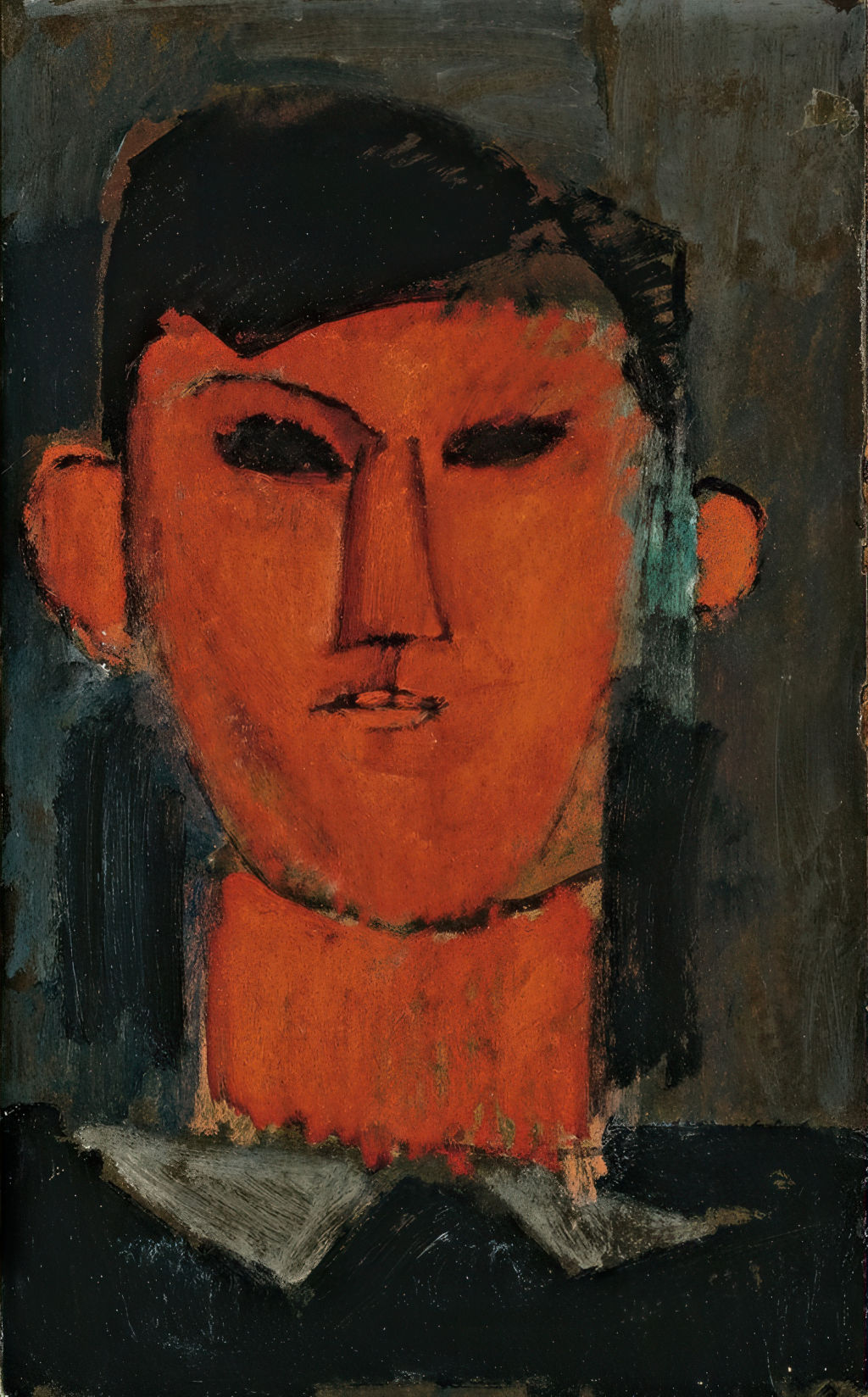
Portrait of Pablo Picasso by Amedeo Modigliani
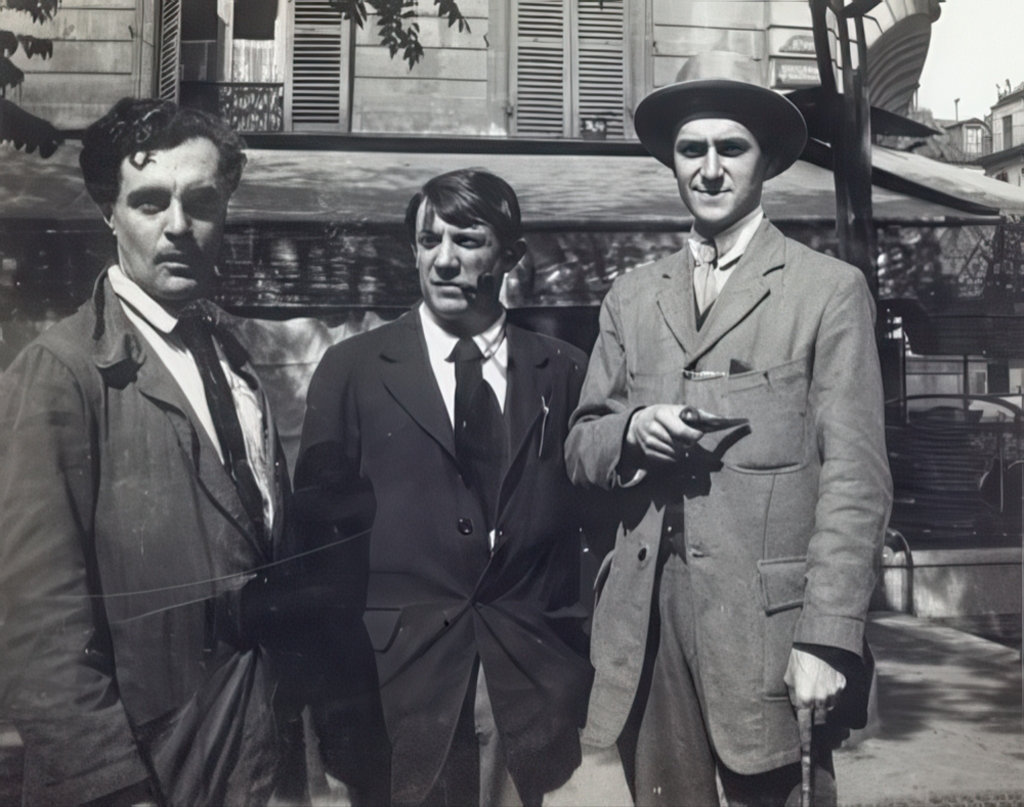
Amedeo Modigliani and Pablo Picasso in front of the Cafe de la Rotonde
There was an interest in abstraction at that time, with fragmentation from Cubism, but Modigliani wanted to concentrate on the flow of the human figure, and would combine elements of painting and sculpture together. Whilst Paris brought opportunities, it also was highly competitive, having attracted so many artists from across Europe who would fight to impress a limited number of donors - Modigliani was unable to establish himself well enough to secure his financial freedom, and his own beahaviour did not help.
Earliest Works
Inspired by these great personalities of the Parisian arts scene, he looked for a way in which he too could make his mark on the local artistic community. Among his first major paintings, produced in 1907, was "Head of a Woman Wearing a Hat", in which Modigliani blends Post-Impressionist features and striking use of emotional expression with with those of the burgeoning Art Nouveau movement.
Debut Exhibition
By this time, he had put on his first exhibition, a modest affair featuring only three paintings. It was almost completely ignored, and Modigliani was at times reduced to the humiliation of using art to pay for basic essentials, even food. He returned to drugs and began to drink heavily; unsurprisingly, his health became even worse.
New Patrons
He was, however, encouraged by his new patron Paul Alexandre, who was impressed by works such as the Cézanne-influenced "The Jewess", painted in 1908. By now, Modigliani's style had progressed, with much thicker strokes and solid, dark blocks of colour. Despite Alexandre's support, however, his work was passed over at the the 1908 Salon des Indépendants: he sold not a single piece.
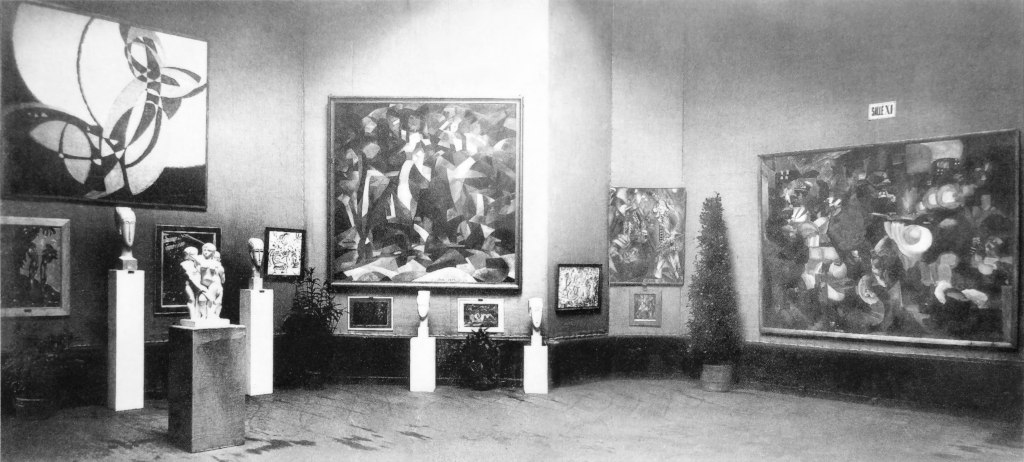
Four sculptures by Modigliani exhibited at the 1912 Salon d'Automne along with the Cubists
Artistic maturity
Switch to Sculpture
Upset at the lack of public interest in his paintings, Modigliani now turned to sculpture and Alexandre's acquaintance Constantin Brancusi. Modigliani was impressed by Brancusi's simple, strong style and used elements of it in his own sculptures.
Between roughly 1909 and 1914, Modigliani devoted himself intensely to sculpture — a period often misunderstood as a brief experiment. In reality, sculpture became the structural foundation of his mature style, influencing also his contributions in other disciplines too.
Carving directly into stone, Modigliani produced a small number of elongated heads and caryatids influenced by African masks, Cycladic idols, and archaic Mediterranean sculpture. He was fortunate enough to visit a number of private collections featuring these exotic interests, and he started to fuse different ideas together to form his own, signature approach.
In 1910, he began one of his major works, "Head", carved from limestone. This piece, which because of its substantial scale took two years to complete, also incorporated Asian and African influences, which Modigliani had picked up via the avant-garde movement in Paris. His intention in his sculpting work was to produce pure, strong forms with a minimum of embellishment or decoration.
Drawings: Modigliani's Private Laboratory
Modigliani's drawings form one of the most important — and undervalued — aspects of his work. He produced only a few sculptures in his career, after being forced to reduce his output due to his suffering health. He therefore explored this discipline by drawing and experimenting, so that his sculptural periods would be as effective as possible. He was interested in caryatids, and hundreds of examples of those existed on paper, using any of chalk, pen and charcoal.
Return to Painting
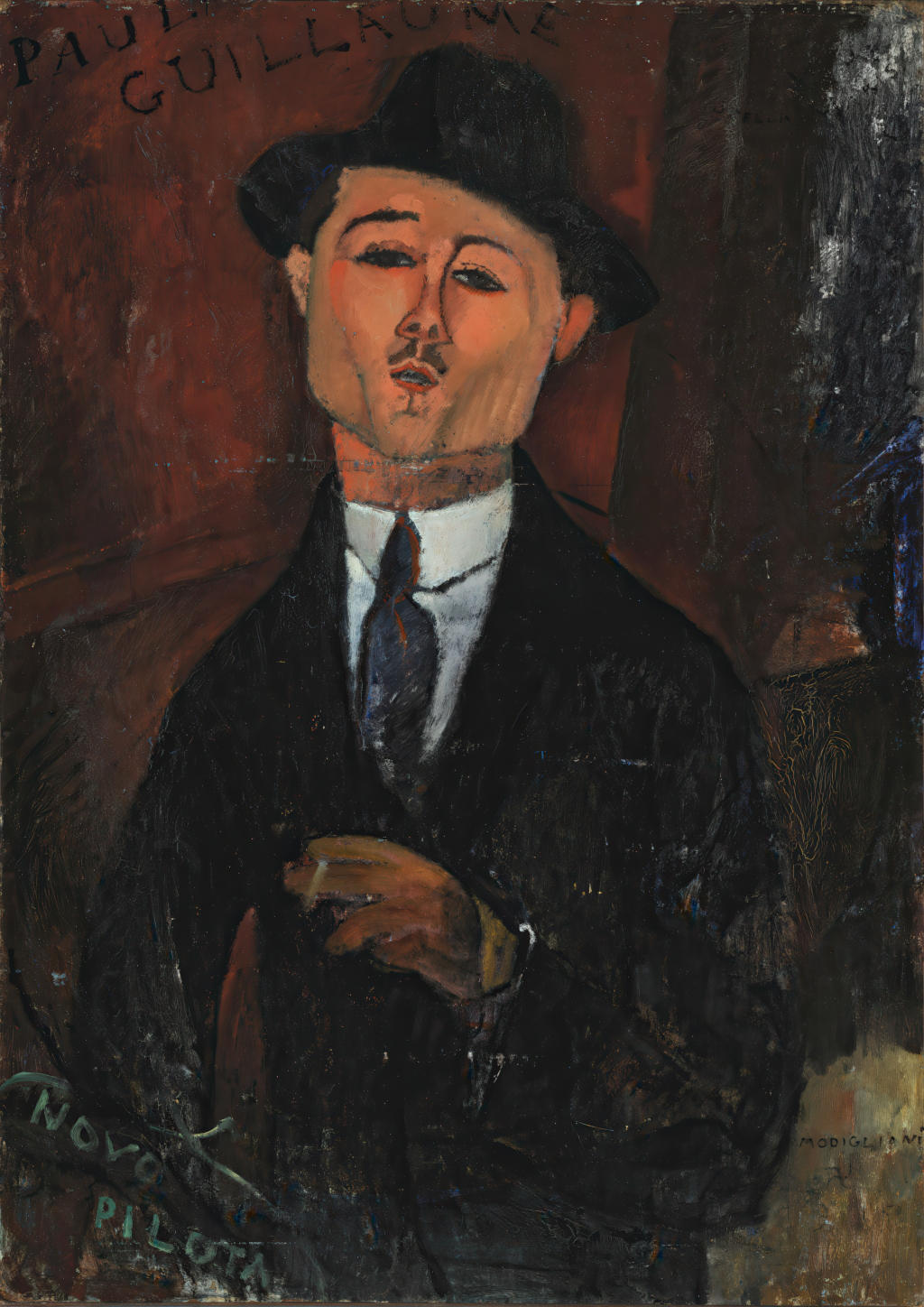
Modigliani returned to painting a few years after this, and in 1914 Paul Guillaume, an art dealer who was an associate of Max Jacob's, purchased some of his work; soon afterwards, he began to act as Modigliani's promoter. The artist met with only modest success but, that summer, he met and fell in love with Beatrice Hastings - real name Emily Haigh - a poet and writer originally from England.
He painted her portrait on a number of occasions, giving her a somewhat ethereal appearance. Hastings was impressed and attempted to get her lover's work more widely appreciated, but she fell out with him over his dissolute behaviour and before long the couple had ended their relationship.
Portraiture and Psychological Distance
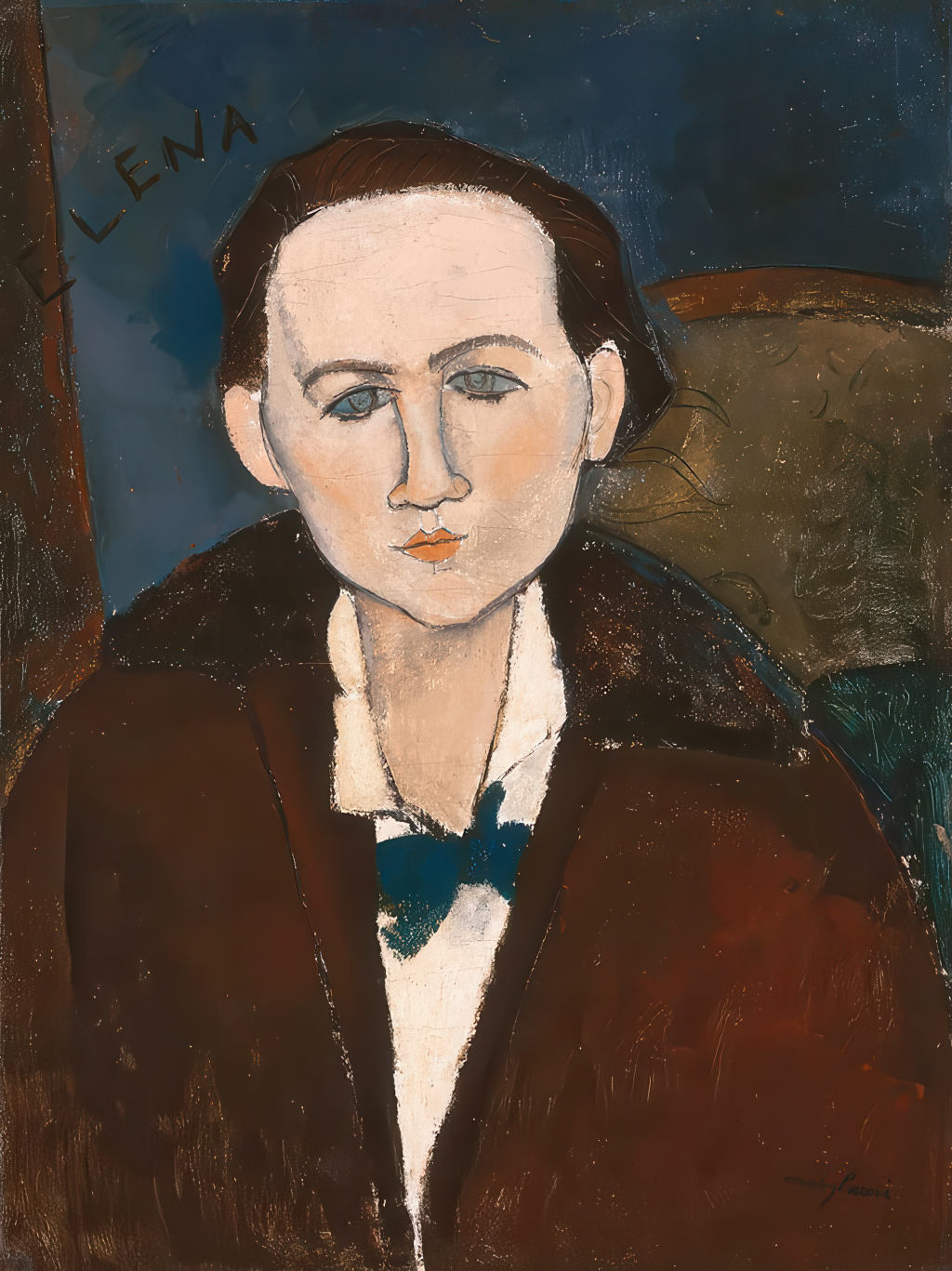
Modigliani's portraits and figurative works kept a distance between viewer and model. There is no intrusion, even though the artist knew many of his models personally. He wanted to avoid replicating appearance, and instead creates a mysterious atmosphere, leaving us to fill in the blanks - which in the case of their eyes, literally.
Last years
Turbulent Lifestyle
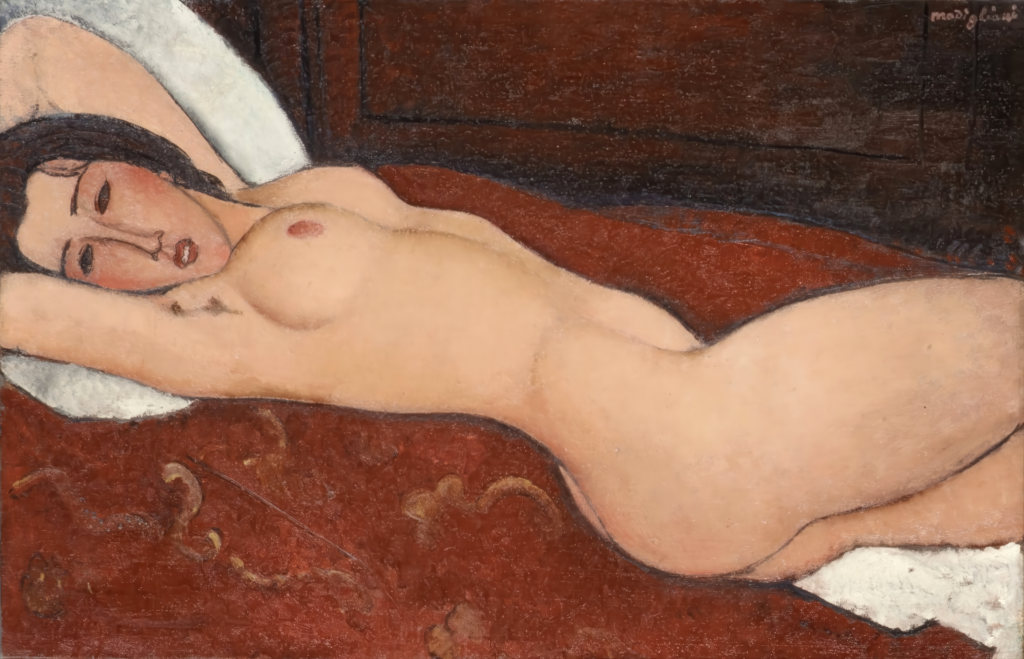
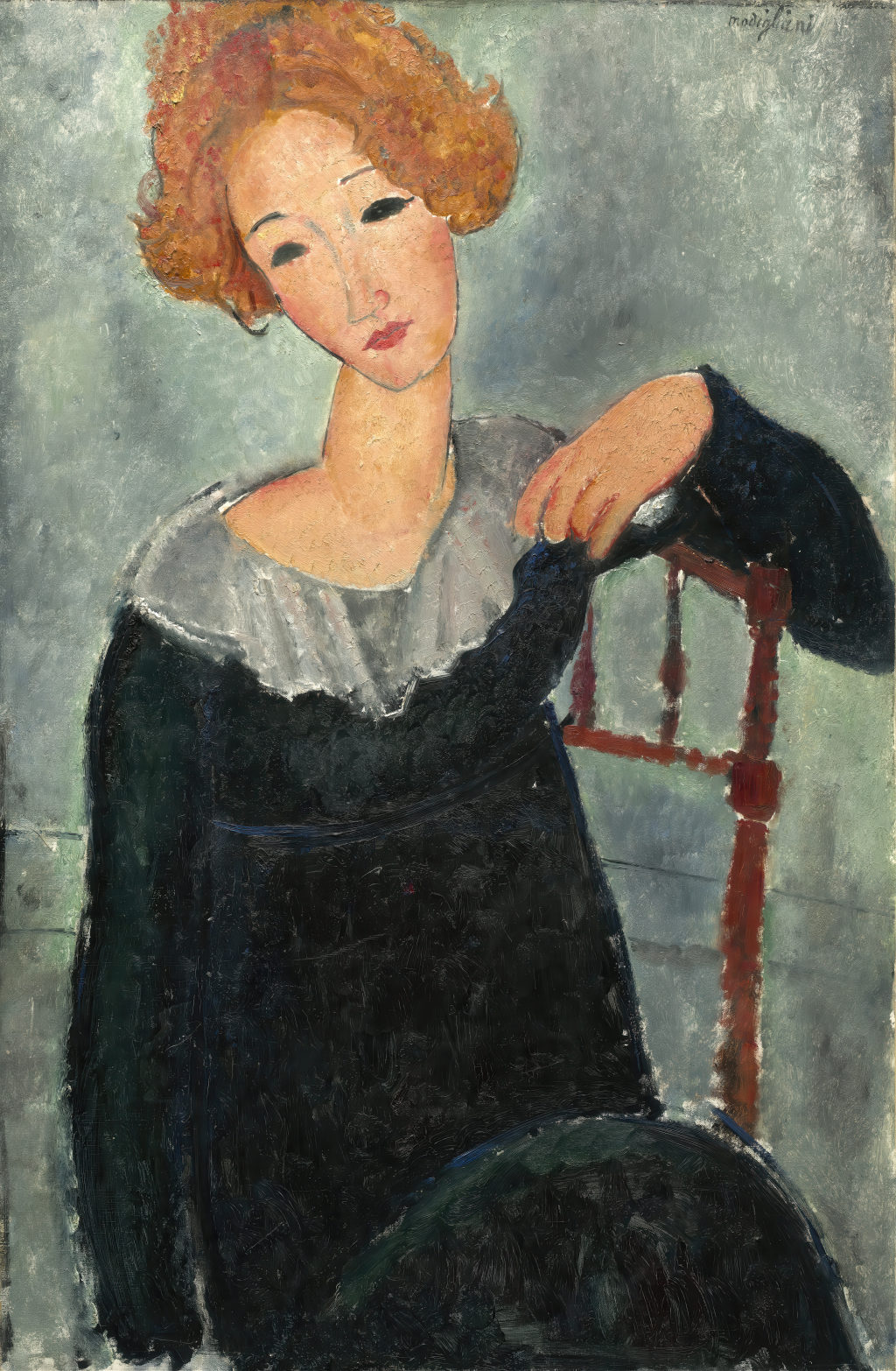
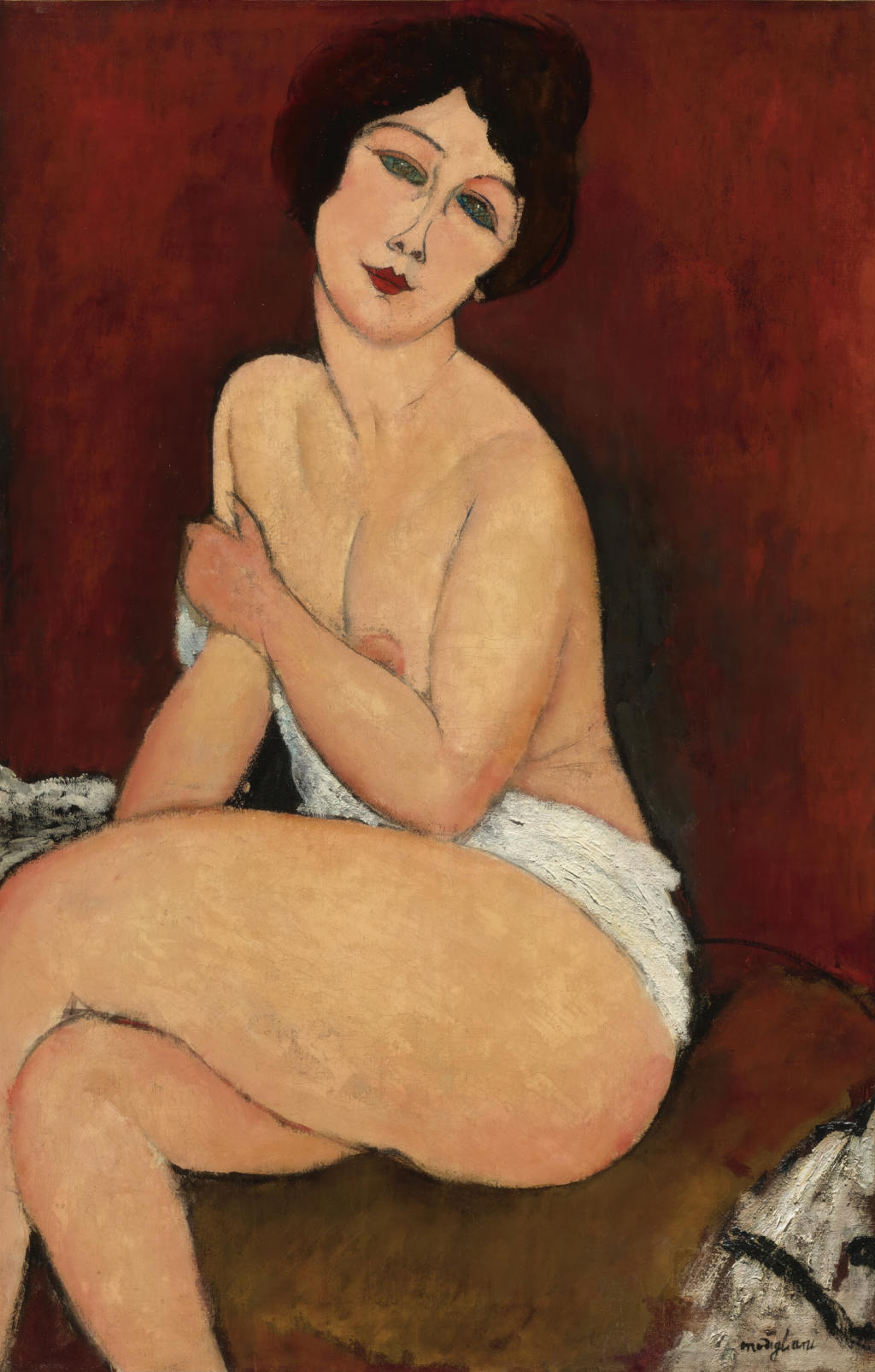
Alone again, Modigliani fell once more into poor health, drinking as heavily as before. Although he recovered from illness, he was too weak to resume his sculpting work and instead devoted himself almost entirely to portraits. Indeed, only three of his landscapes are known to exist. His new paintings, many female nudes, saw Modigliani finally achieve the style for which he remains best known, the heads of his subjects striking in their elegance and stylised, elongated appearance.
They were fairly poorly received despite their expressiveness, though Modigliani did manage his own exhibition in late 1917, at Berthe Weill's gallery. The deliberate placing of a nude in the window resulted in its temporary closure by the police on grounds of morality, but eventually led to a jump in sales.
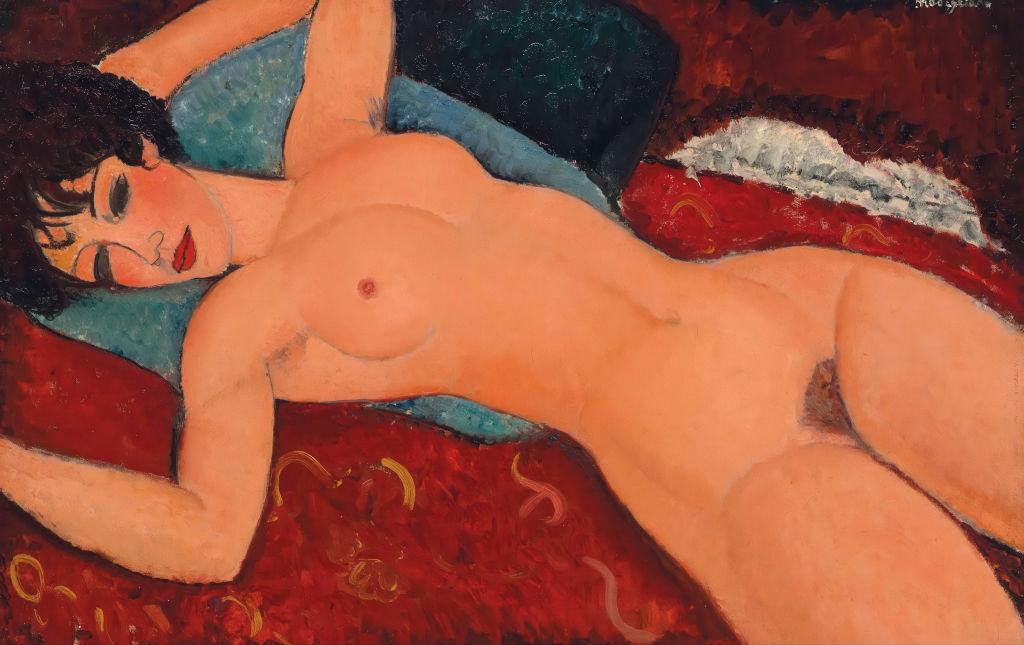
Nu Couche Amedeo Modigliani
Relationship with Jeanne Hebuterne
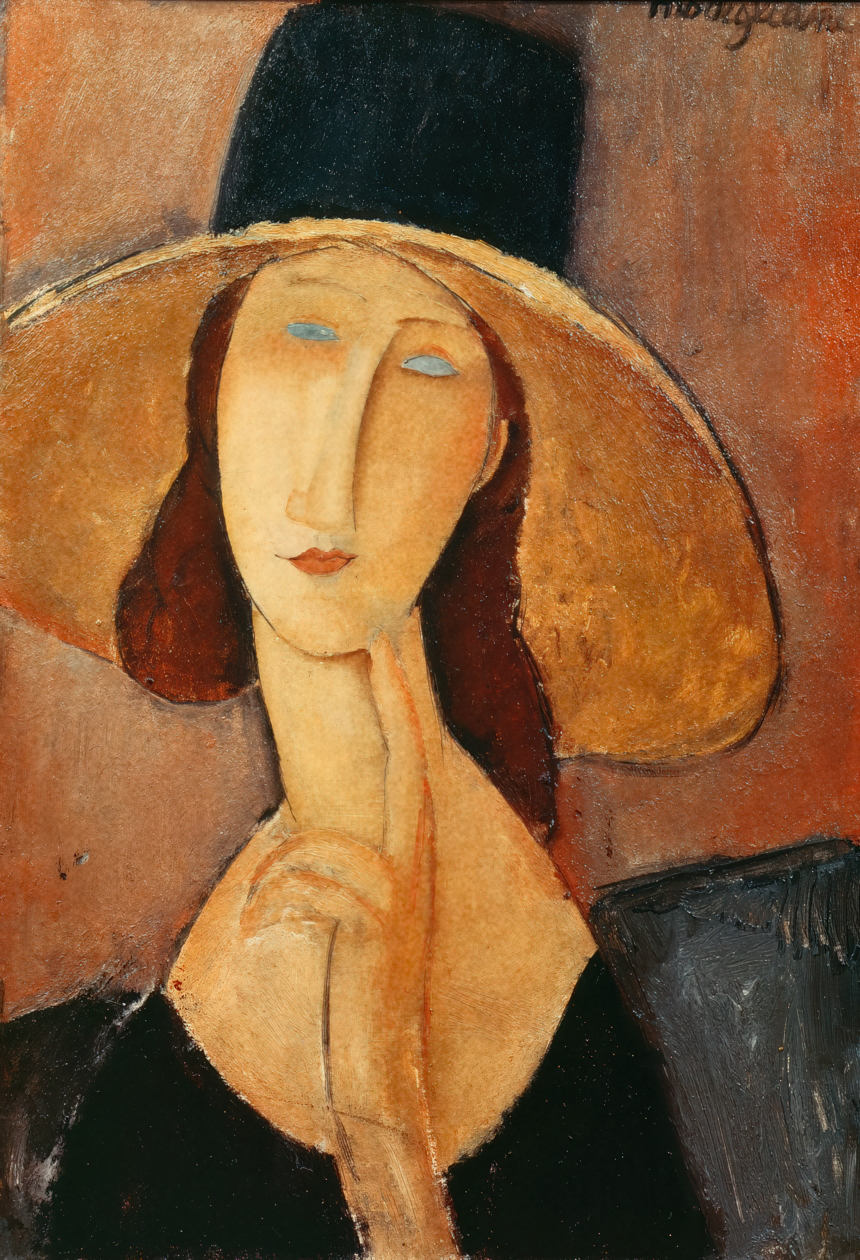
Also in 1917, Modigliani fell in love again, this time with an art student named Jeanne Hebuterne; they later lived together. The artist's associates hoped that this would give him the stability he needed to improve his lifestyle. The relationship between Modigliani and Jeanne Hébuterne marked the final chapter of his life and art. Hébuterne, a young art student and painter herself, became both his most frequent sitter and, temporarily, his emotional anchor.
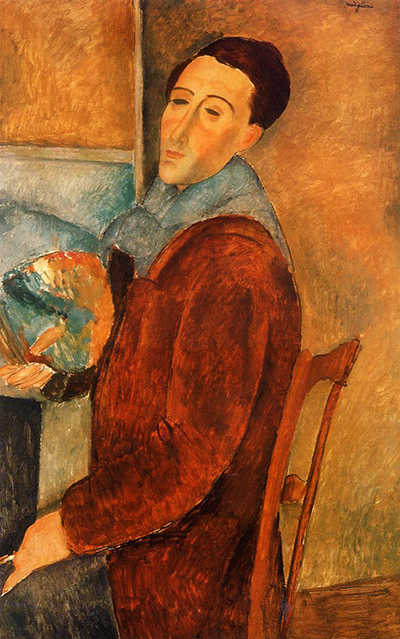
Sadly this would not last as he continued to take drugs and drink alcohol at a prodigious rate. Even so, he produced portraits of his partner that showed a calmness that had previously been absent; this was also present in his 1919 self-portrait. In 1918 the couple had a daughter, and Modigliani's determination not to repeat the poverty of his own childhood pushed him to increase his output.
During these years, Modigliani produced many of his finest works, including portraits of Jeanne and a sequence of reclining nudes that would later become among the most valuable paintings in the world. His health, however, deteriorated rapidly.
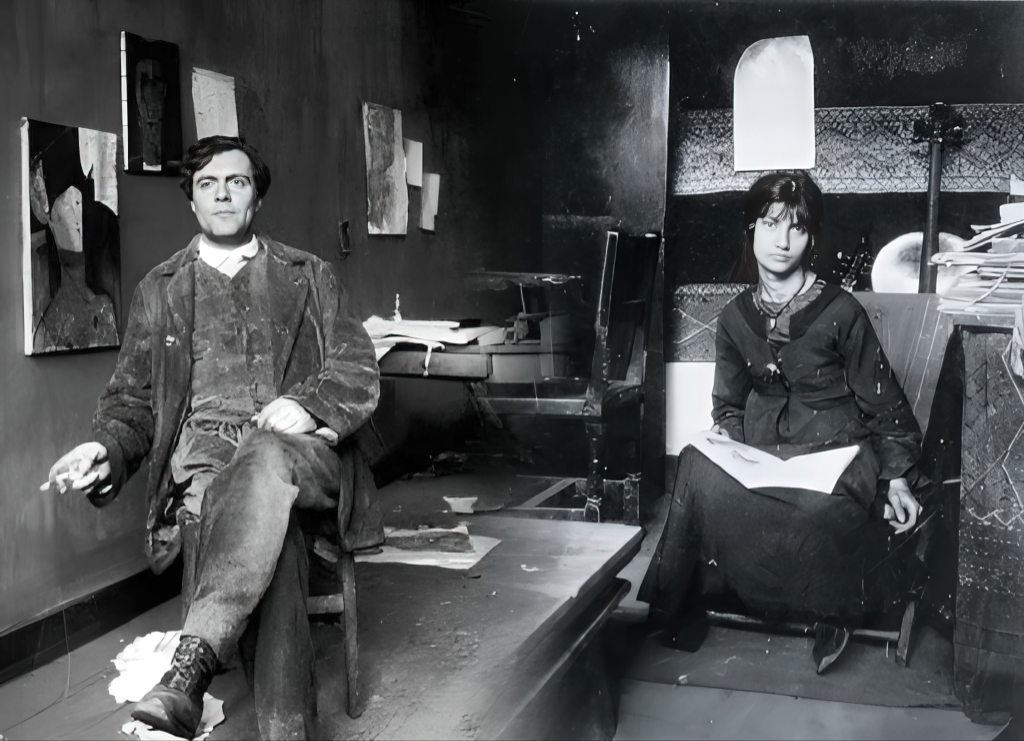
Amedeo Modigliani and Jeanne Hebuterne in Modigliani's studio in Paris
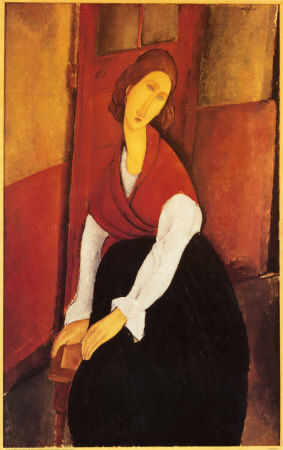
Jeanne Hebuterne by Amedeo Modigliani
Death and Legacy
Although happier in his domestic affairs than he had been for many years, Modigliani never managed entirely to rid himself of his health problems, and he suffered frequent alcoholic blackouts. In January 1920 he contracted tubercular meningitis, at that time incurable in its final stages, and he succumbed to the disease a few days later in a local hospital.
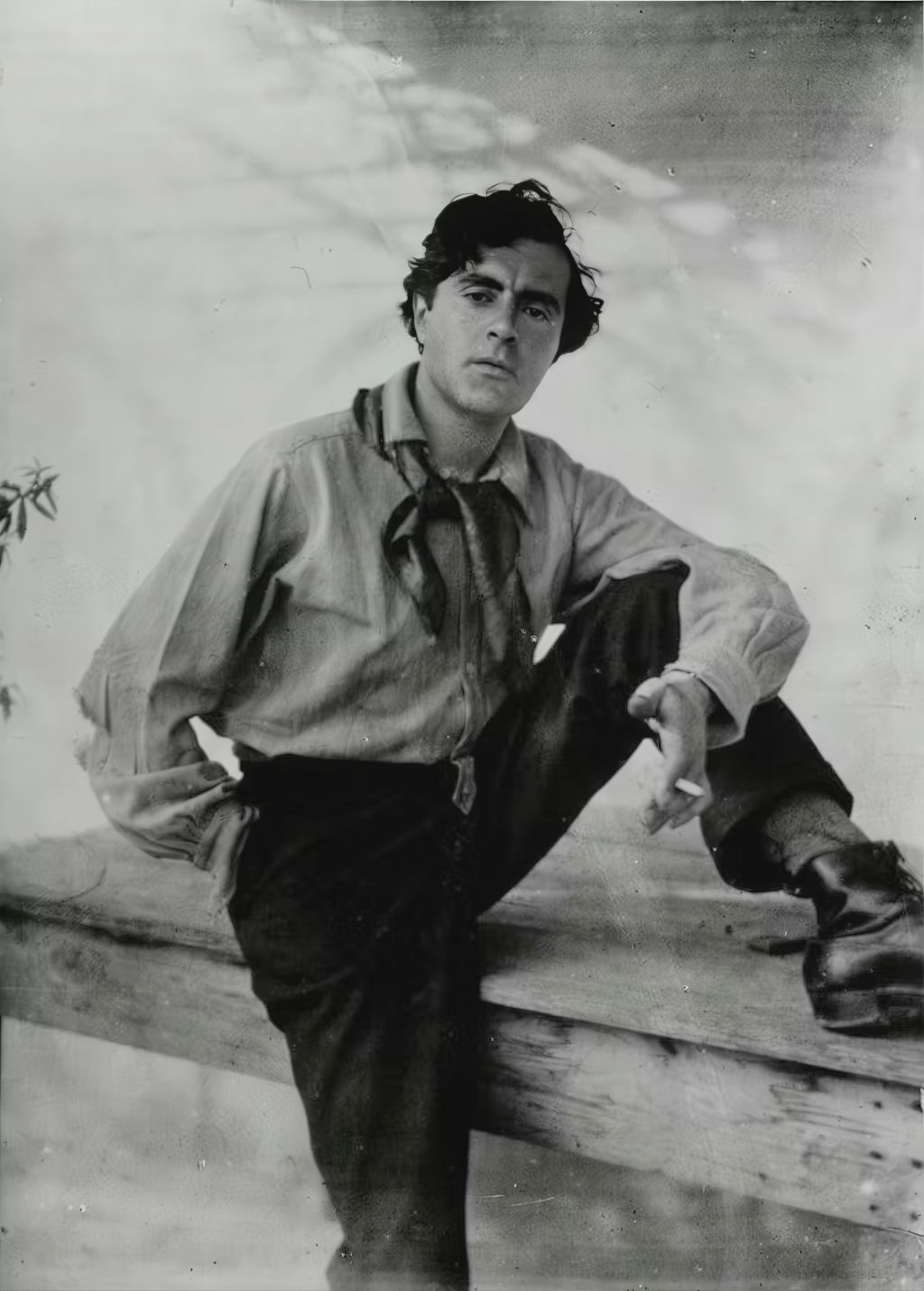
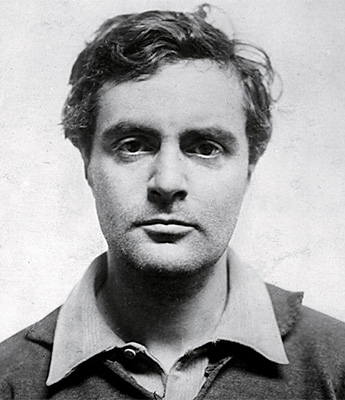
Amedeo Modigliani by an unknown photographer
Funeral
His funeral was a major event, with the large attendance including many members of the Parisian artistic community. His wife, eight months pregnant, was inconsolable and jumped from a high window at her parents' house, killing both herself and her unborn baby. Her family blamed Modigliani and insisted she be buried separately; only in 1930 did they relent and allow her to be moved to Père Lachaise Cemetery to be with her love.
Posthumous Reputation
Modigliani's works were not especially popular with art buyers while he lived, but later their reputation improved greatly, and by the late 20th century he was almost universally acknowledged as one of the great portrait painters. Works that sold for almost nothing during his lifetime later entered major museum collections and set record prices at auction.
The mixture of passionate hedonism and penniless misery that had marked his life became part of his appeal in death, and his biography has been used as the basis for numerous books and feature films. One of these, Man and Myth, was written by his daughter. In recent years, Modigliani has been recognised as having been highly innovative in combining emotional insight and experimentation in his paintings.
Today, Modigliani stands as one of the defining figures of early 20th-century Modernism - not because he aligned with a movement, but because he forged a singular path that bridged ancient tradition and modern form. He also managed to stretch this from sculpture to painting, and back again.
Rising Market Value
Modigliani paintings have sold for high prices on the international art market, despite the fact that no universally agreed catalogue of hiss works exists, a problem exacerbated by doubts over the authenticity of some of the paintings included in recent lists by Christian Parisot.
The artist's nudes are the most sought after, with the current record set in 2015 at Christie's in New York. Here, his 1917 piece "Red Nude" ended the bidding at $170 million, a record by far for any Modigliani. Other notable sales include "Le Belle Romaine", which sold for $68 million in 2010, and a portrait of Jeanne Hébuterne, which made $19 million.