

 by Tom Gurney
Tom Gurney BSc (Hons) is an art history expert with over 20 years experience
Published on December 20, 2025 / Updated on December 21, 2025
Email: tomgurney1@gmail.com / Phone: +44 7429 011000
Amedeo Modigliani would stretch and contort his portraits, reflecting a variety of influences on his work.
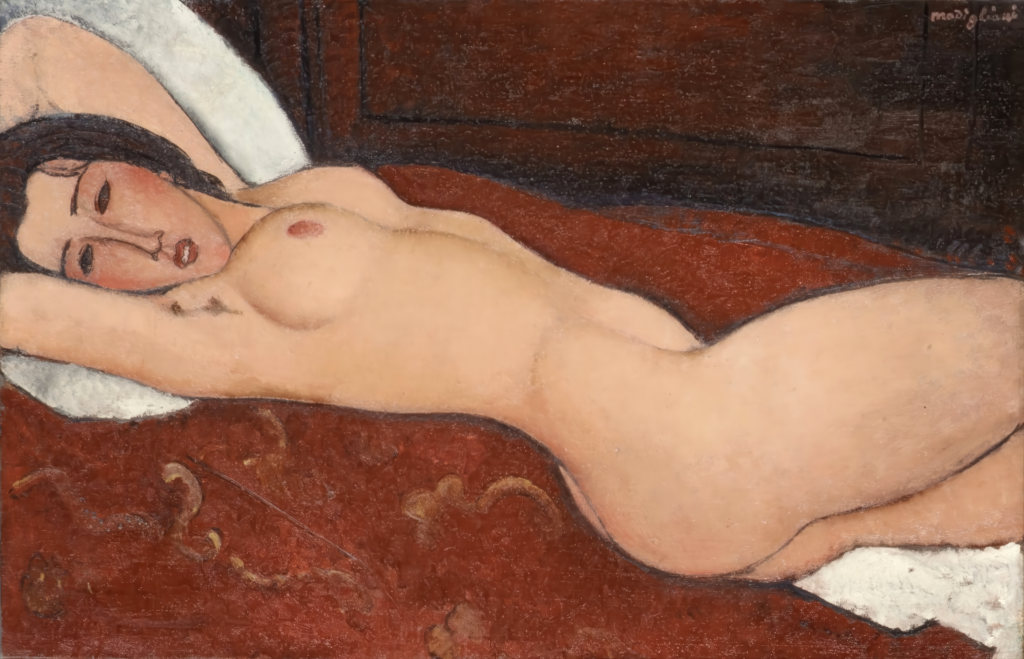
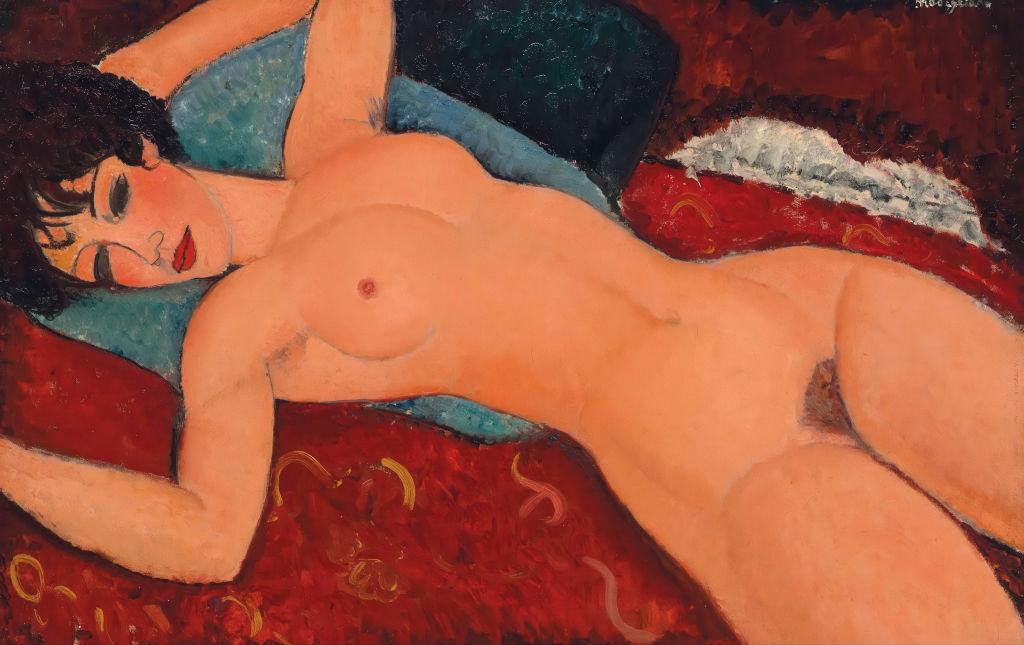
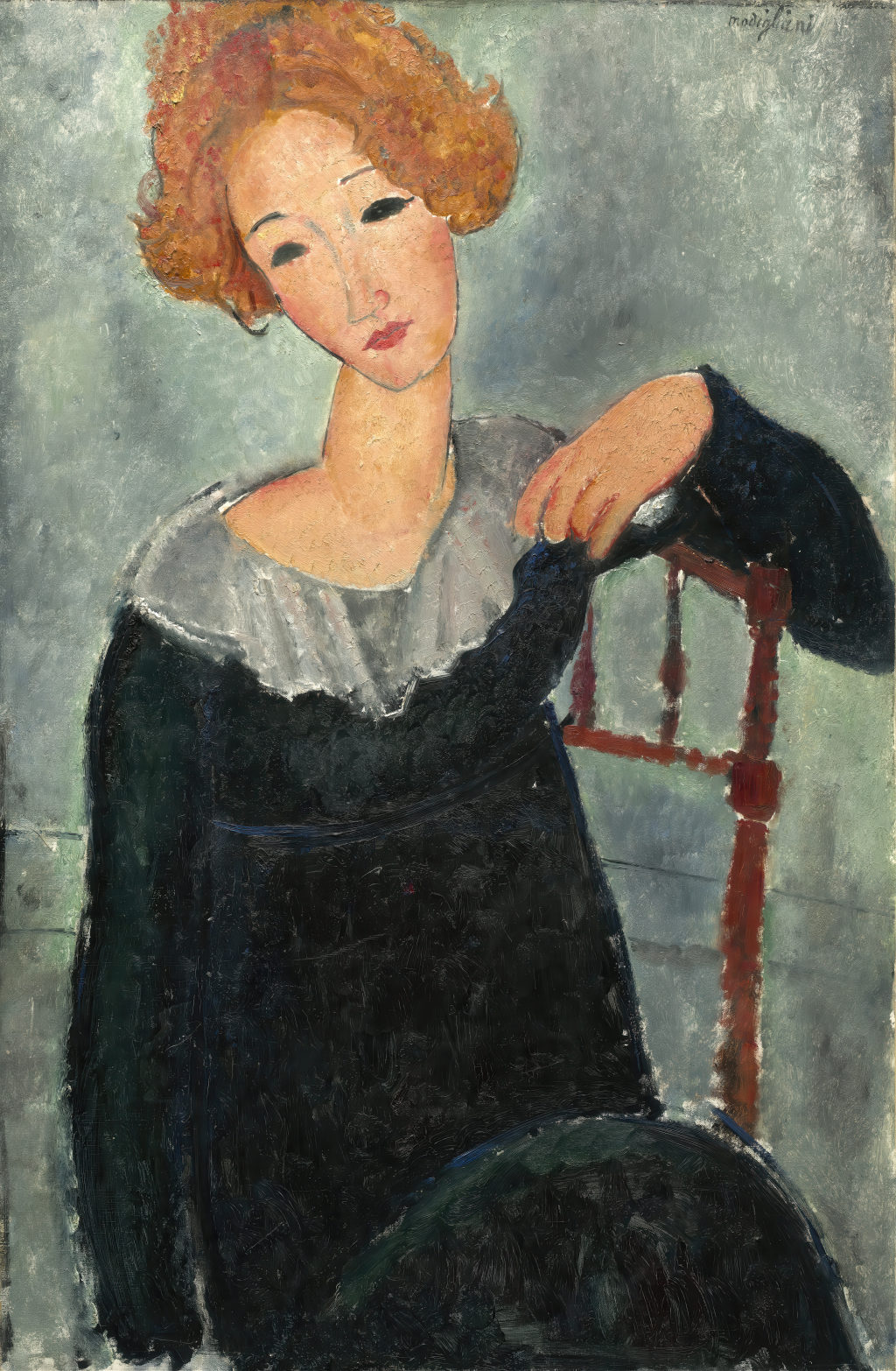
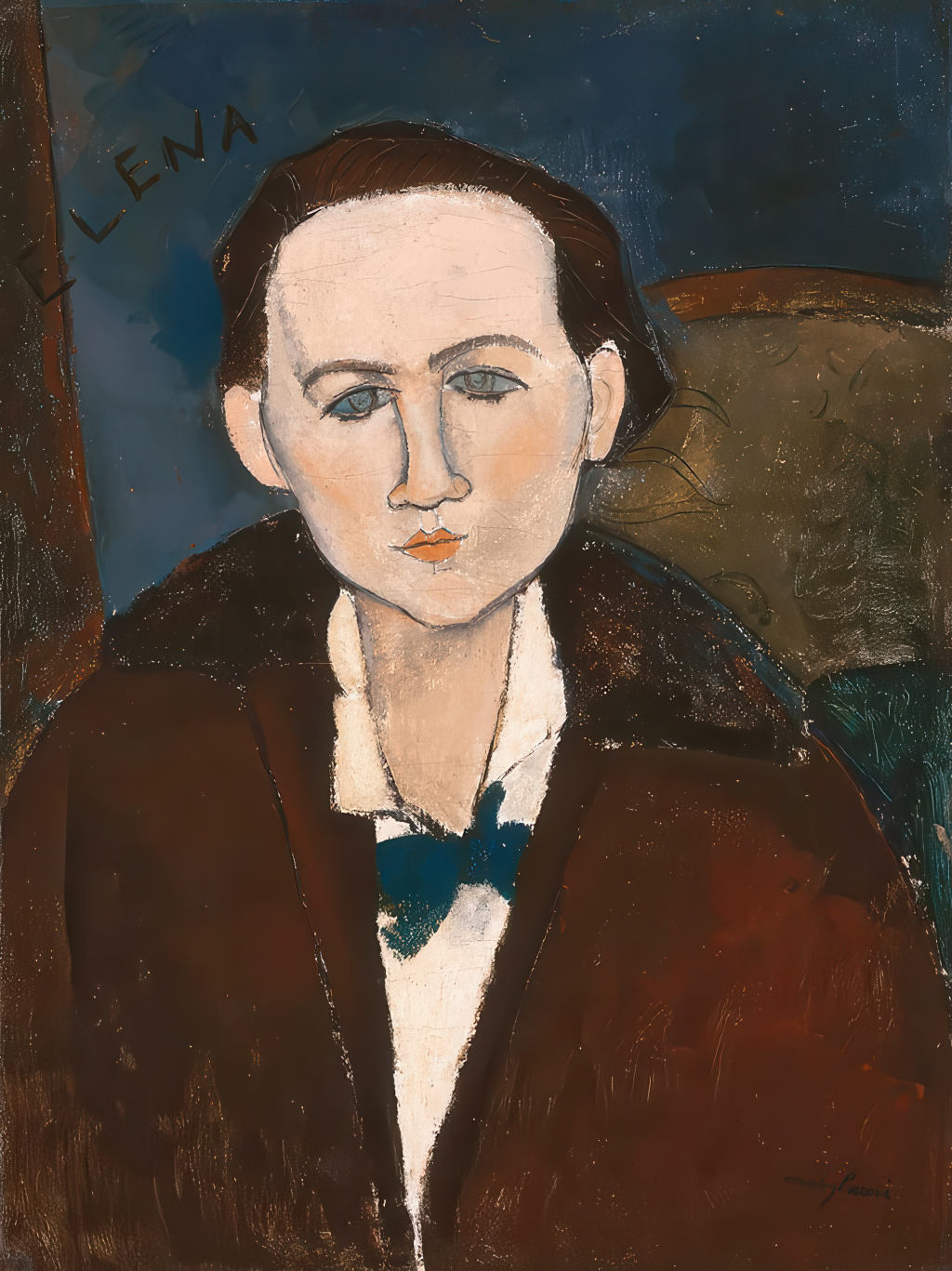
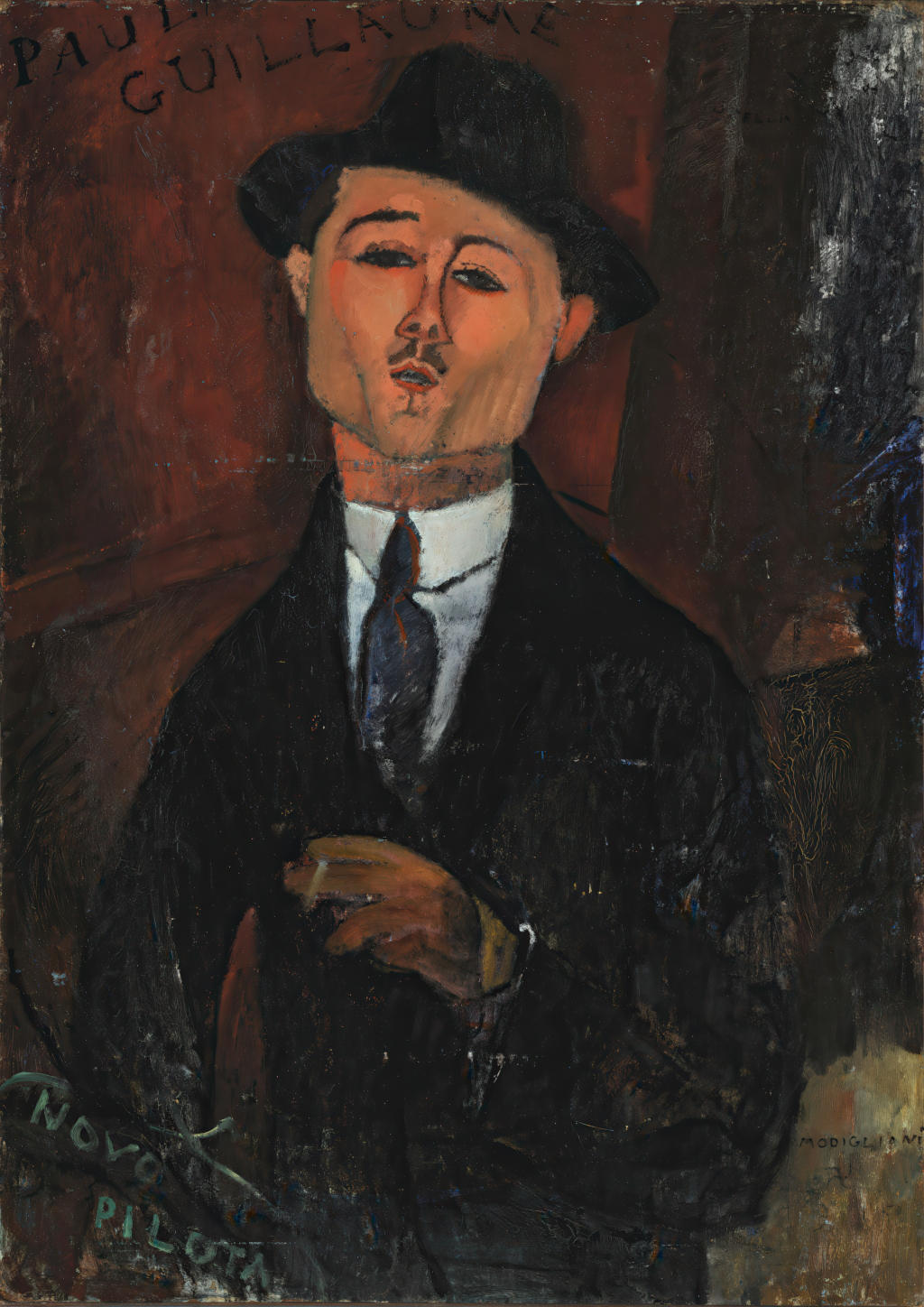
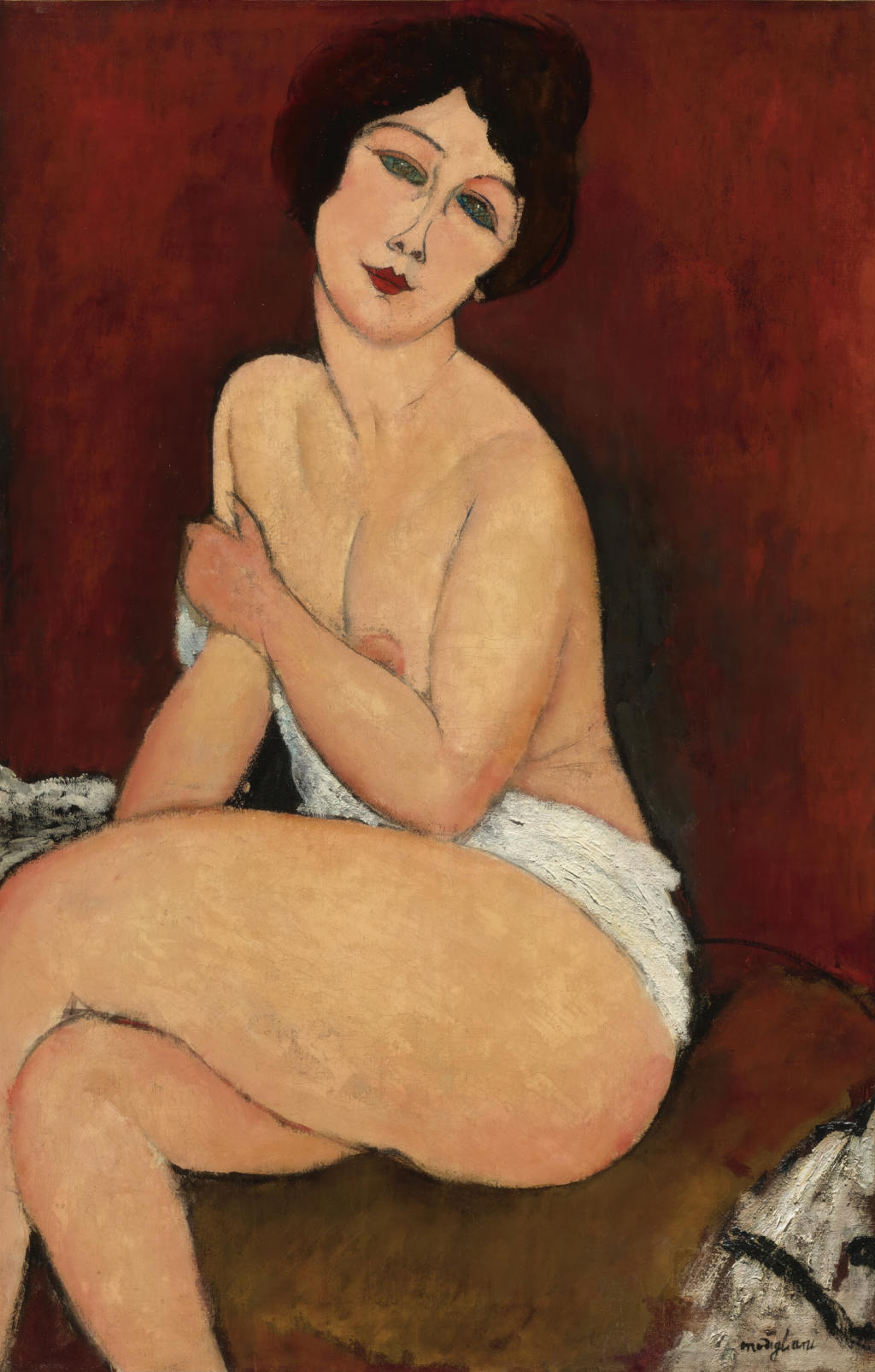
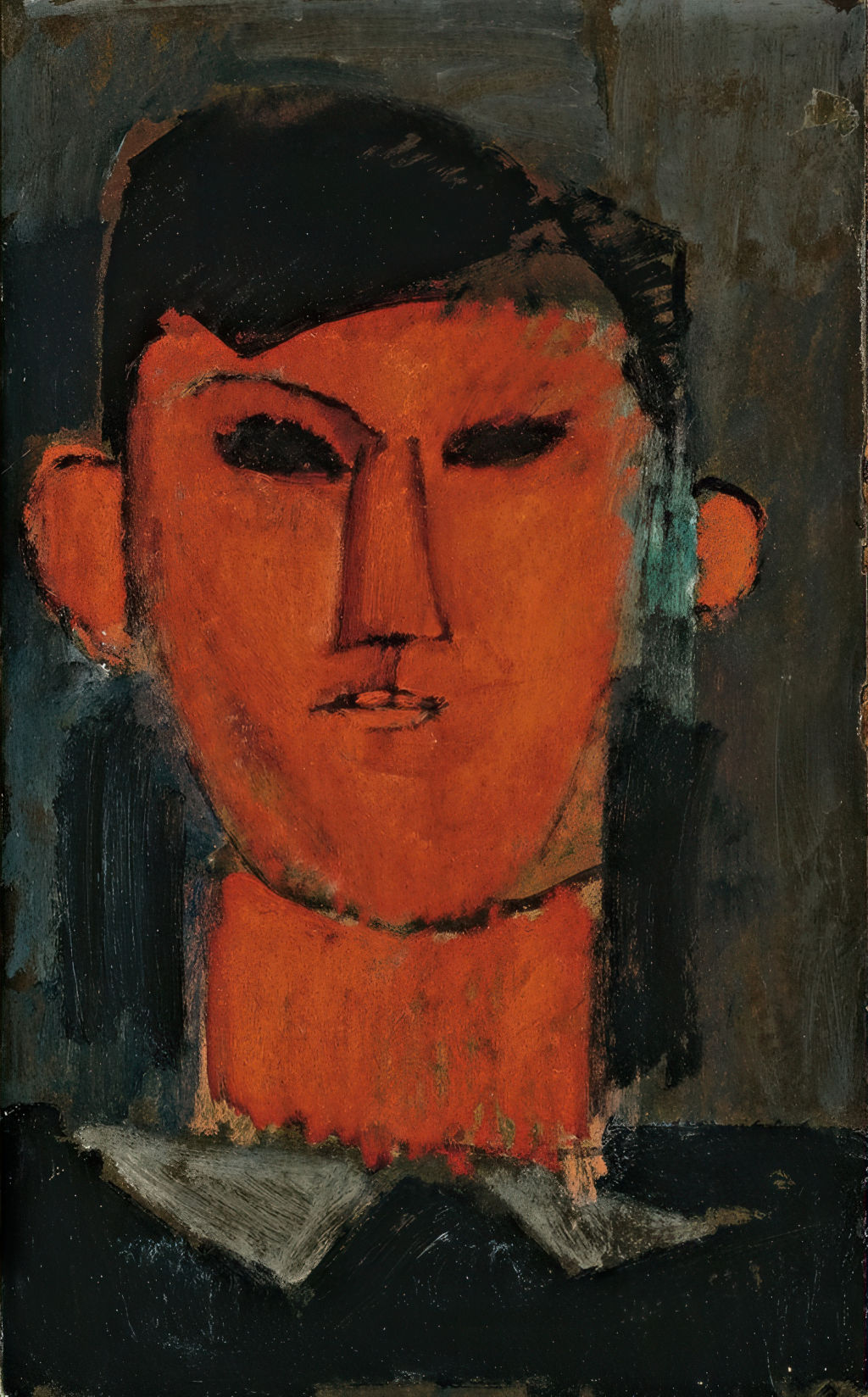
Amedeo Modigliani elongated faces to simplify form, emphasise emotional presence, and create timeless, sculptural figures. Influenced by African masks, archaic sculpture, and his own work as a stone carver, Modigliani rejected naturalistic likeness in favour of harmony, rhythm and inner character.
Whilst fusing a number of different artistic styles together, Modigliani was able to create a look to his portraits which remains instantly recognisable. The artist attempted to capture a person's soul and wider personality in his portraits, and was not interested in merely replicating the same aesthetic as was seen in reality.
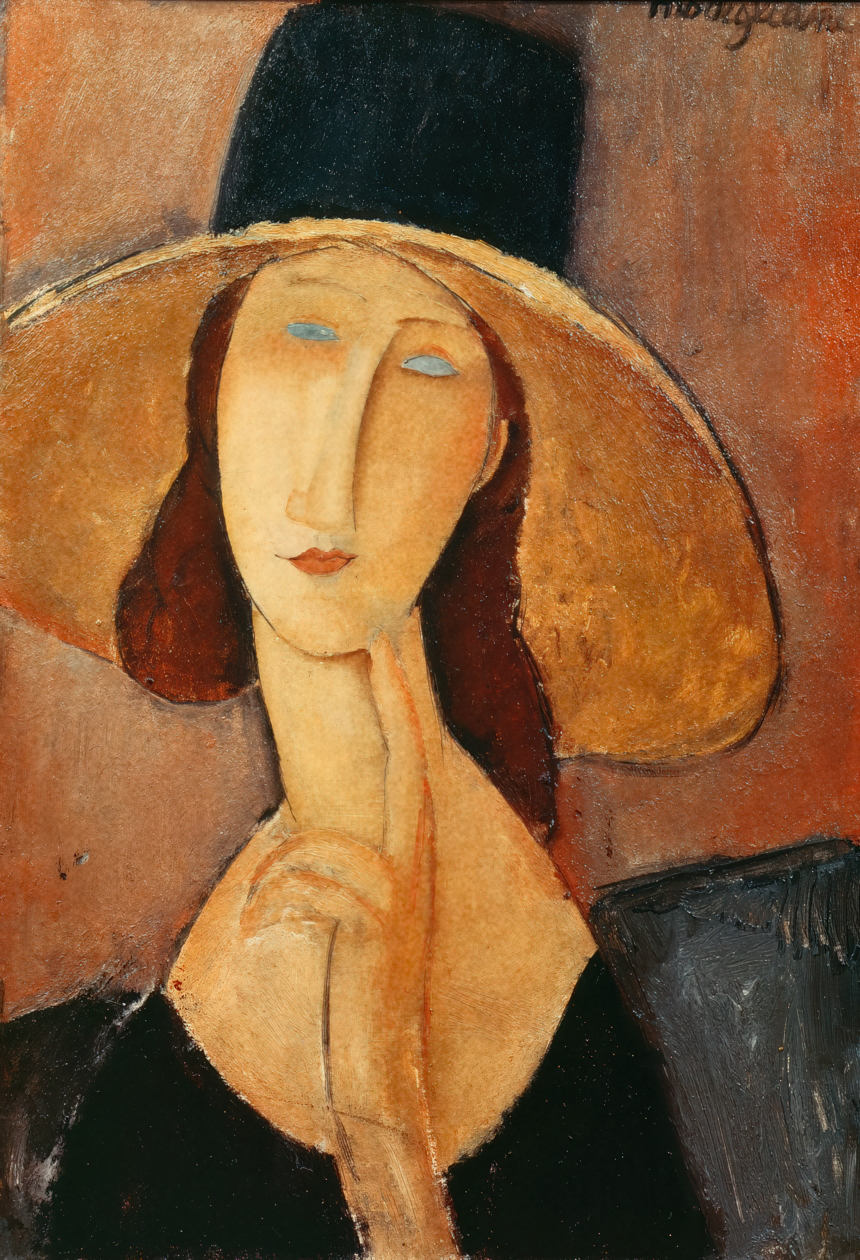
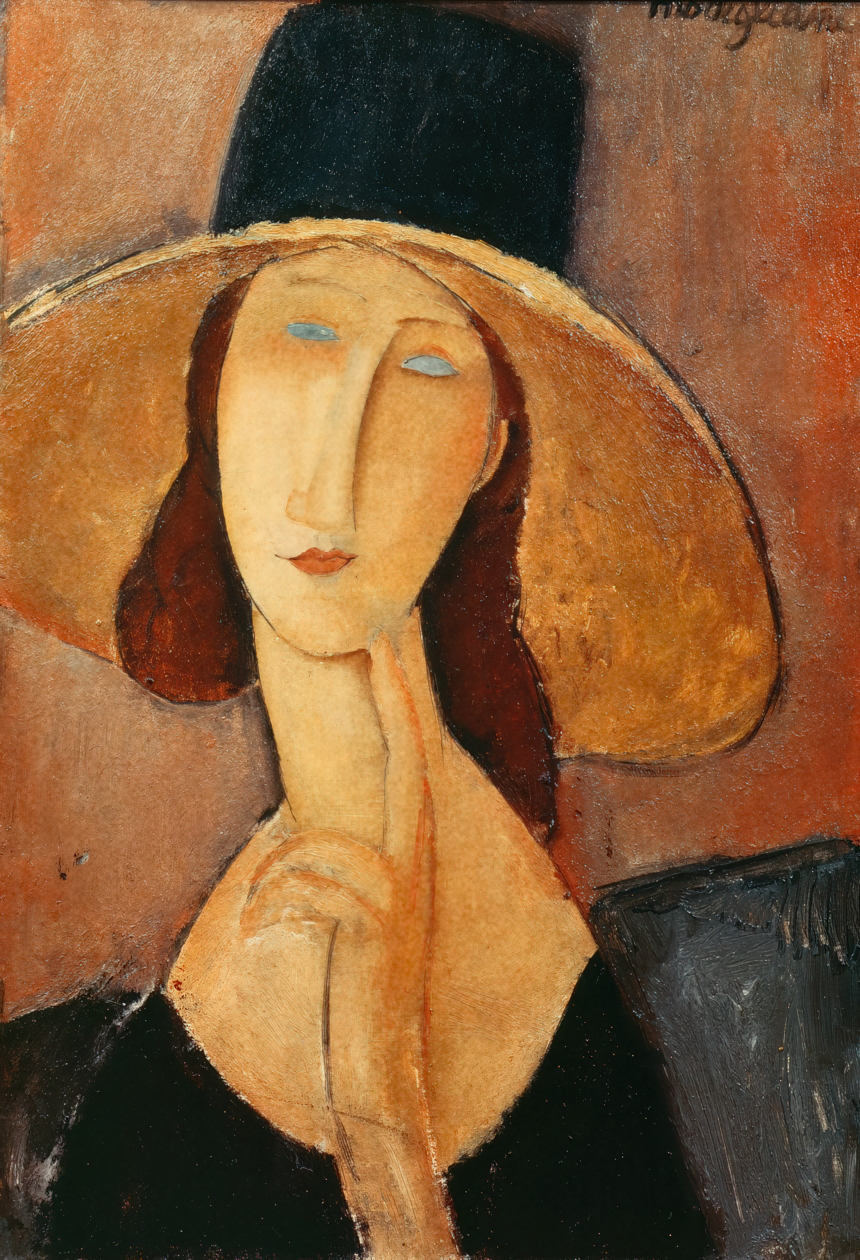
The key features of his work included lengthened necks, almond-shaped eyes, long, narrow noses and oval faces. Whilst many of his models would naturally possess some of these aesthetic qualities, Modigliani would always extend these attributes further. The combination of these alterations brought about a sculptural look to his paintings, which was unsurprising for a painter who also worked for many years as a sculptor too.
This page explores why Modigliani adopted elongated proportions, tracing their roots in sculpture, non-Western art and Renaissance precedents. We also examine how this style evolved over the course of his career and became central to his most famous paintings.
- Artist: Amedeo Modigliani
- Style Feature: Elongated Faces & Figures
- Period: 1914-1920
- Mediums: Oil painting, drawing, sculpture
- Key Influences: African art, archaic sculpture, El Greco
Sculptural Origins of Modigliani's Style
Modigliani was proficient as a sculptor from an early age. It would greatily impact his paintings, with his interest in that medium building later on in his career. This knowledge of sculpture impacted his natural instincts as an artist, becoming aware of volume, planes and surface detail more so than if he had always solely focused on oil painting.
It would then be a natural progression for his portraits to resemble sculptured figures. Smooth, continuous and elongated forms gave a distinct look to his work. There is a balance to how he forms his faces, and his full length figures are also beautifully structured. Sadly, however, his technically impressive works were stylistically hard to accept during his era, and it would only be later on that critics and the public started to truly understand and accept his approach.
African Art and Mask Influence
Modigliani was highly knowledgeable on sculpture from a variety of different civilisations. Not only did he admire early Greek and Cycladic sculpture, but he also encountered African masks and sculptures in Paris early in his career. He found similarities between them in terms of reduced detail, and would incorporate elements of them into his own sculptures and, later, his paintings too.
Museums and other public collections in Paris were adorned with such items and he spent many an hour admiring them, before attempt to purchase some himself from local specialist stores. Colonial pasts in Europe made all of this possible. He would essentially study, collect and sketch different aspects before fusing his own approach which became very much his own artistic trademark.
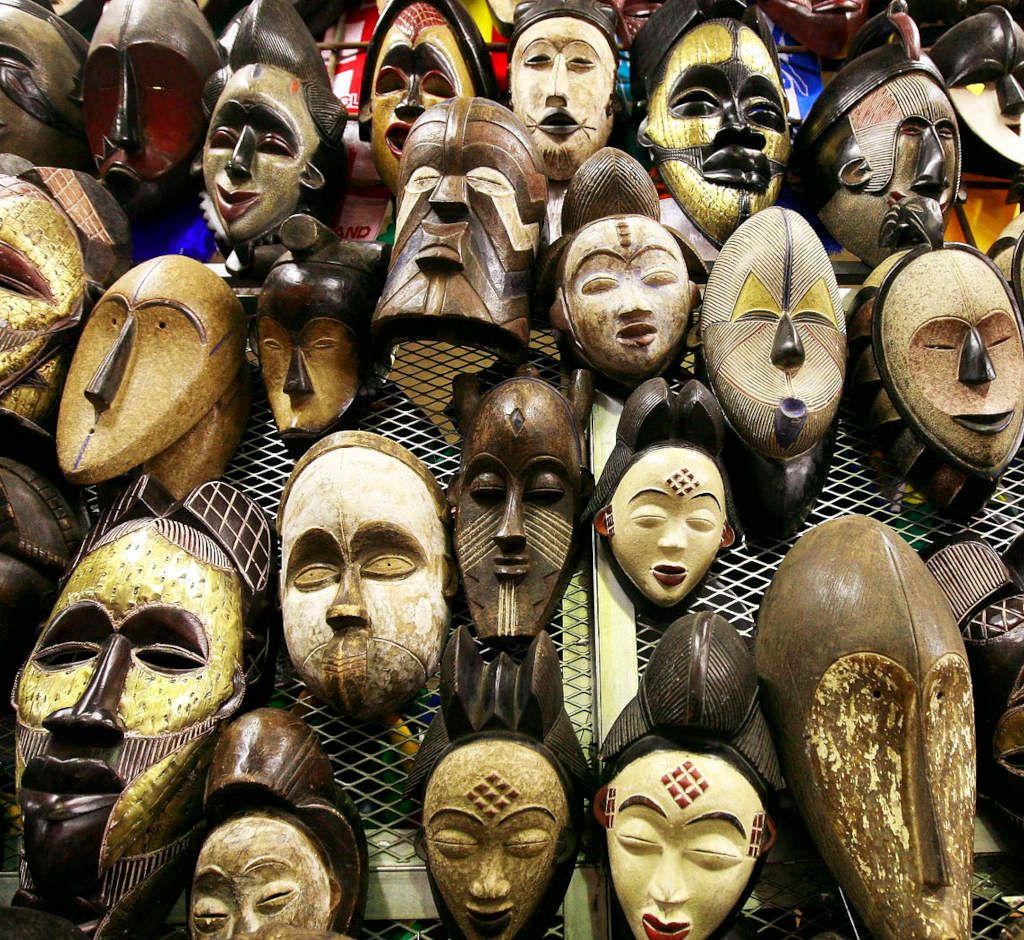
African masks with elongated facial proportions that influenced Modigliani
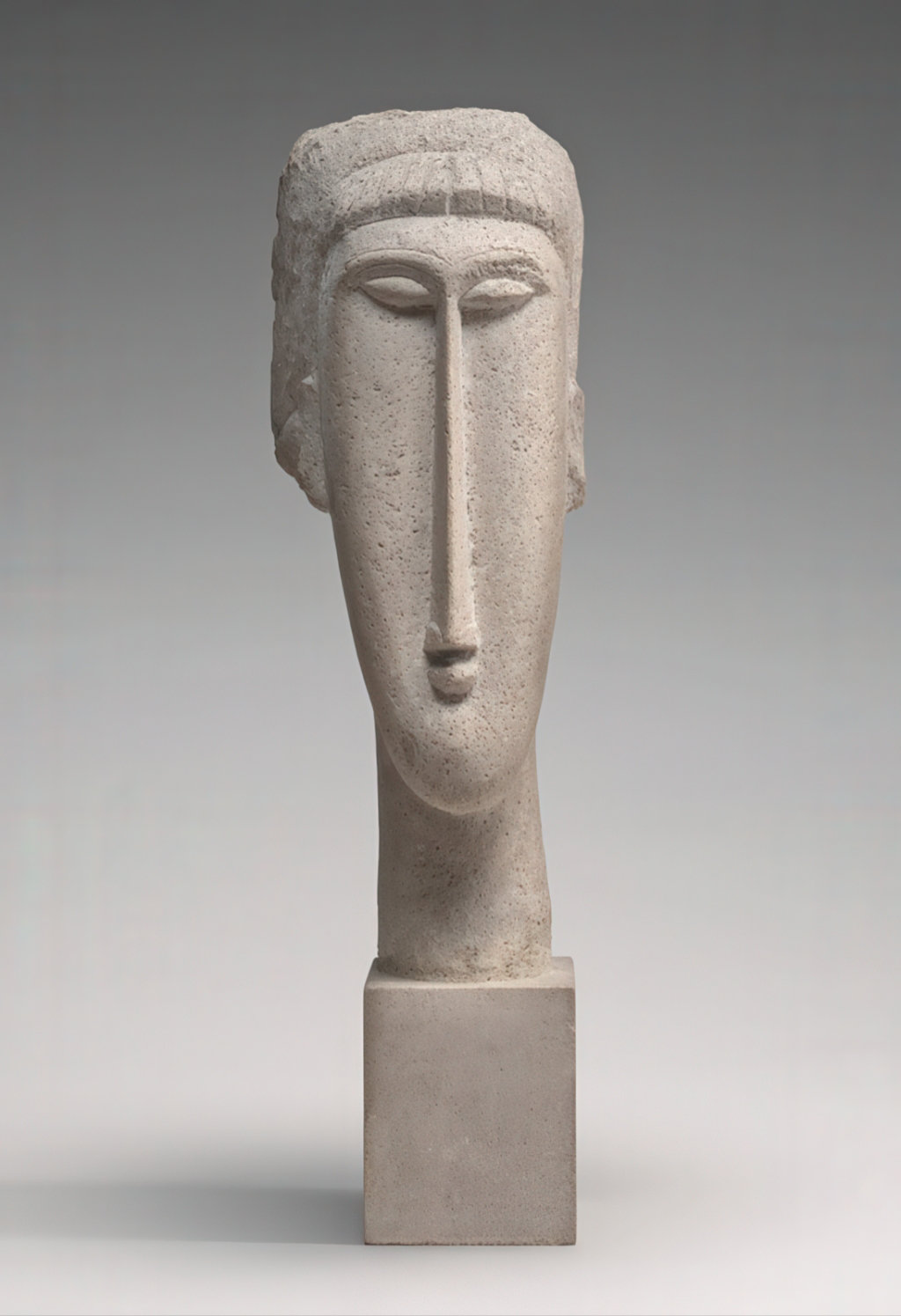
Modigliani stone head sculpture showing elongated facial structure
Renaissance and El Greco Connections
Modigliani was by no means the first to elongate his portraits - not even just in his native Europe. Instead, this technique can be traced back to the Renaissance era when El Greco was particularly adept at working in this manner - or Mannerism, as it was known. He approached art as a means to depict things through his own emotions and did not seek to replicate.
El Greco worked with Christian themes for much of his work, and this elongation format worked well in connecting the spiritual with the real world. He would also narrow the head to increase this distortion as well as lowering the view point, so we would look directly up towards the figures. This combination created an strong atmosphere and unworldly feeling.
Between Modigliani and El Greco, we can see how this method can serve different artistic purposes, be it to represent personality, or spirituality. Ultimately, both of their careers would stand the test of time, and if anything have grown in success in the centuries that have followed, as wider tastes now exist in the present day.
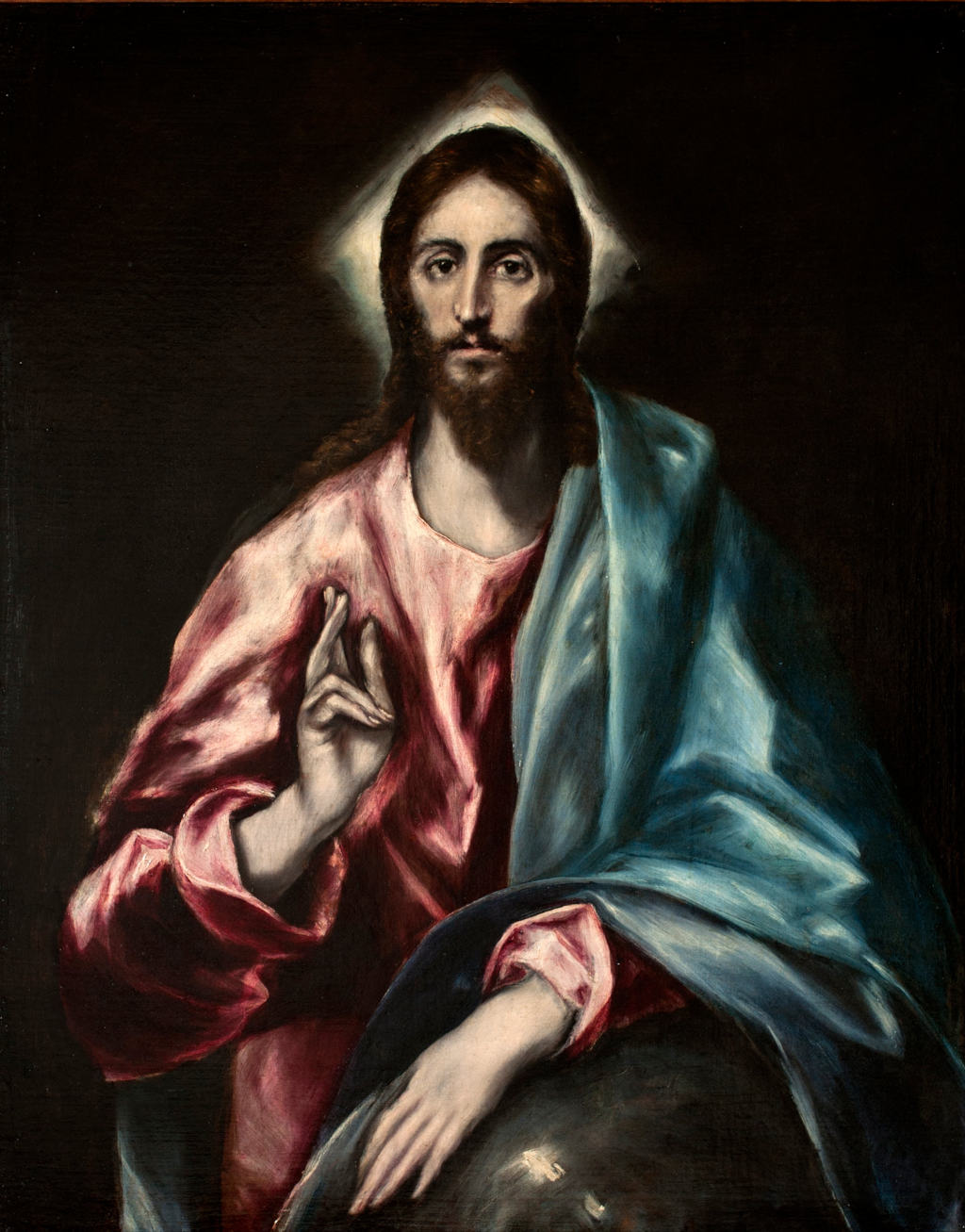
El Greco painting with elongated figures, an artistic precedent for Modigliani
Why the Eyes Are Often Blank
Modigliani once claimed that he would not feature eyes with pupils in his work until he truly understood the souls of his models. In reality, he left eyes blank even with people he intimately, as seen in Portrait of Jeanne Hebuterne with a Large Hat. The use of blank eyes helps to create an impression of insular mood and self-reflection.
This was a key part of his use of portraiture to loosely represent someone, rather than aiming for aesthetic accuracy. They also left the viewer curious, and create a sense of intrigue. The idea for this would surely have come from his interest in African sculptures and masks, both of which typically avoid using details in the eyes.
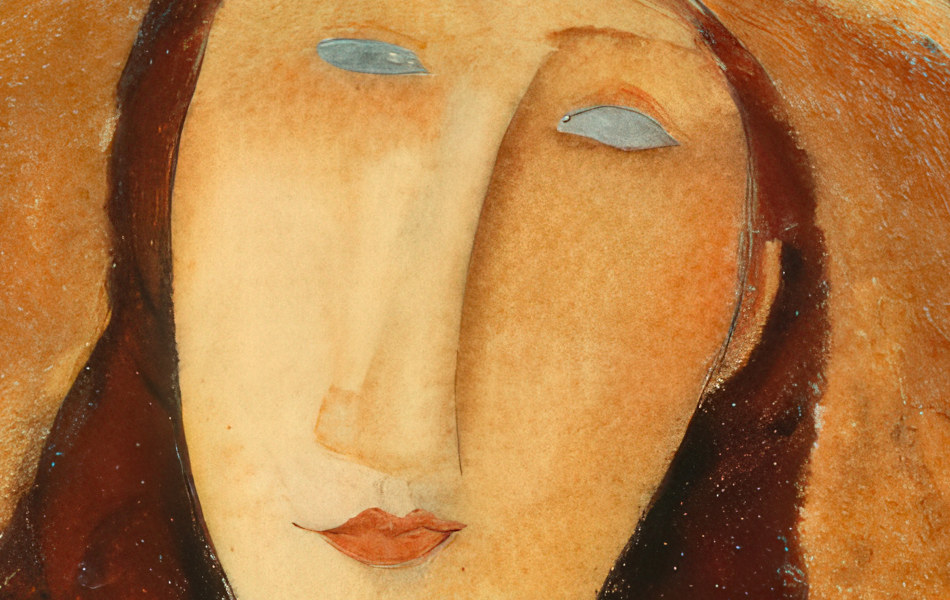
Elongated oval face and almond-shaped eyes in Modigliani's portrait of Jeanne Hébuterne
Why did Modigliani elongate faces and necks?
Modigliani's principle reason for elongated form in his portraits was to create a sense of harmony and balance with his paintings to match that found in his sculptures. It was an adaptation of the human body in order to best match his artistic needs. He would not include much detail in his works, making shape and proportion key. Lengthened forms helped everything to flow more smoothly and also reflected the features of art that inspired him.
The timeline below marks out the transition in his work, as elongation started to develop in his mind as an idea, before then starting to appear in much of his work. This movement away from precise replication of reality also helped the artist to create a particular atmosphere within his paintings, and ultimately create a look that was all his own - many can identify a Modigliani painting because of this.
Timeline of Elongation in Modigliani's Style
- 1909-1912 - Discovery of African art and archaic sculpture
- 1911-1914 - Caryatid drawings and stone heads
- 1915-1917 - Transition into painted elongation
- 1917-1919 - Peak expression (nudes and Jeanne Hébuterne)
- 1919-1920 - Softer, more introspective elongation
Further Reading
- Nu Couché (1917-18)
- Portrait of Jeanne Hébuterne in a Large Hat
- Amedeo Modigliani: Complete Biography
References
- Doris Krystof, Amedeo Modigliani, Taschen, 2015, PP81
- Mason Klein, Modigliani Unmasked, Yale University Press, 2017