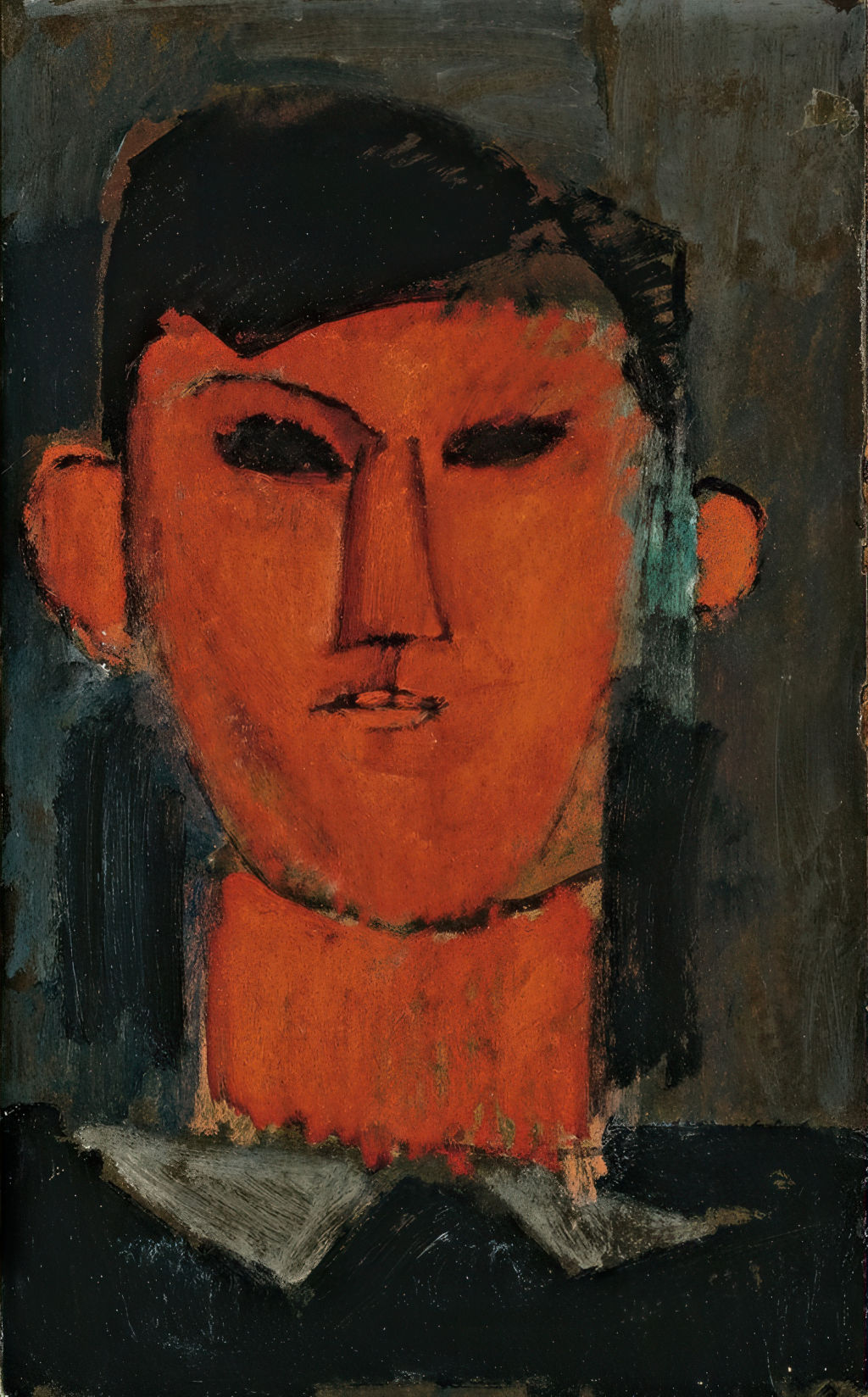


 by Tom Gurney
Tom Gurney BSc (Hons) is an art history expert with over 20 years experience
Published on June 19, 2020 / Updated on December 17, 2025
Email: tomgurney1@gmail.com / Phone: +44 7429 011000
Italian artist, Amedeo Modigliani, painted Nu Couché in 1917.
Created during the final and most daring phase of Modigliani's short but impactful career, Nu Couché belongs to a short series of highly controversial reclining nudes.
Just as the artist had intended, these would transform the traditional female nude from the likes of Titian, and later Manet, into a distinctly modern subject, ready for the 20th century.
Stripped of mythological disguise and idealised narrative, the figure confronts the viewer with a directness that proved shocking to contemporary audiences - as the model gazes directly at us.
Alternative names for the painting are those of Reclining Nude and Red Nude.
This painting is one of the most reproduced paintings in the world, with the original having been sold at Christies for $170 million in 2015.
This page examines the painting's meaning, stylistic innovations and controversial reception, from its role in the 1917 Paris scandal to its later elevation as one of the defining images of modern art.
By exploring its composition, technique, symbolism and legacy, we can better understand why Nu Couché continues to captivate viewers more than a century after it was painted.
- Artist:Amedeo Modigliani
- Title:Nu Couché
- Date:1917
- Medium:Oil on canvas
- Movement:Modern Art / School of Paris
- Subject:Reclining female nude
- Significance:One of the most controversial and influential modern nudes
Description
As promised by the title, this painting captures a beautiful nude woman reclining on a dark red bed sheet, with her head resting upon a pillow. The pose is relaxed and natural.
The model reclines on her back, with her arms folded behind her head - this gives an enticing, erotic atmosphere but also suggests a relaxed environment. Crucially, her gaze is directly at us, making her posture related to us specifically.
She appears both vulnerable but confident, exposed but also aware of her beauty. With her torso exposed, the background serves very much a secondary purpose. Tones of dark red and blue set the scene, and also help the carefully crafted flesh tones to stand out. Her lips are delivered in a bold red, underlining her confident sexuality.
The use of colour is modern and bold, with detail also kept to a mimimum - this keeps the focus on the female body, and its curves. Modigliani practiced his drawings of anatomy frequently, and enjoyed capturing the human form with as few strokes of his pencil as possible - we see similar here, albeit with a wider palette of oils.
Notice too how the artist avoids any backstory or context to this piece - it appears to simply the celebration of the female body, and the model's sexuality. Unlike traditional nude paintings, which Modigliani is known to have studied and highly respected, there are no themes of mythology, no disconnect between model and viewer, nor any moral tale to learn from.
Style and Technique
The style and technique found in Nu Couché is entirely typical of Amedeo Modigliani. It can be summarised in the following features:
- Elongated proportions inspired by African masks and sculpture, with some similarity to the work of El Greco and the Mannerist era.
- Smooth contour lines, typical of 20th century art
- Background delivered in a warm palette of earthy tones
- No real use of perspective, another feature of 20th century art
- Elements of sculpture within painting, reflecting the artist's use of both mediums
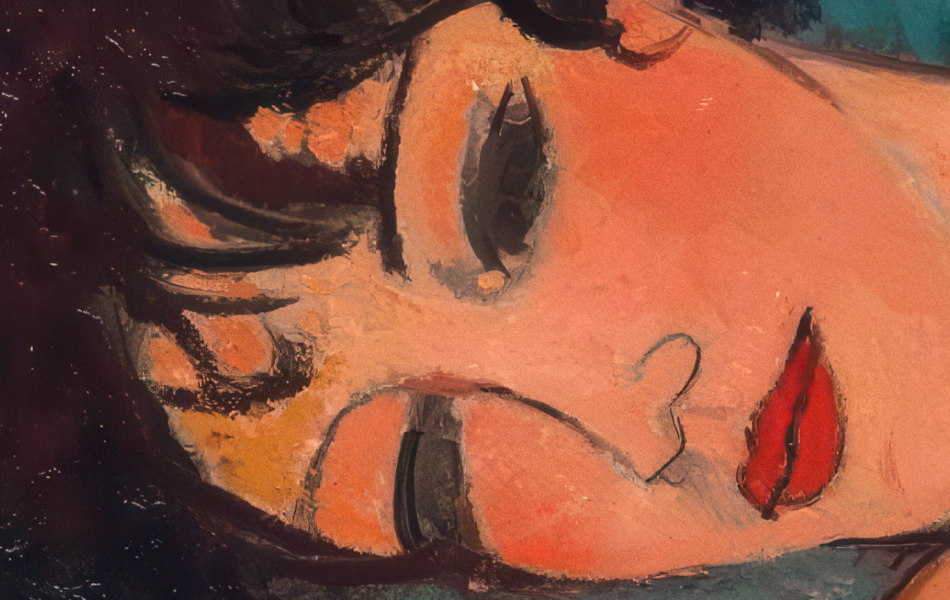
Nu Couche Modigliani Detail Face of Model
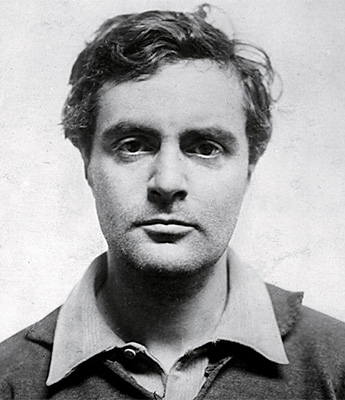
When I know your soul, I will paint your eyes.
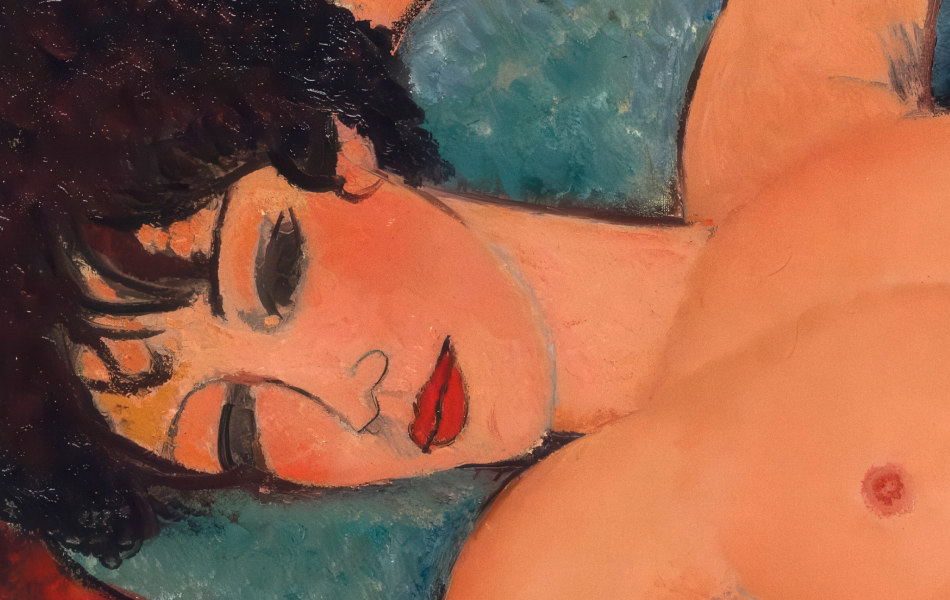
Nu Couche Modigliani Detail Head and Chest of Reclining Woman
To do any work, I must have a living person. I must be able to see him in front of me.
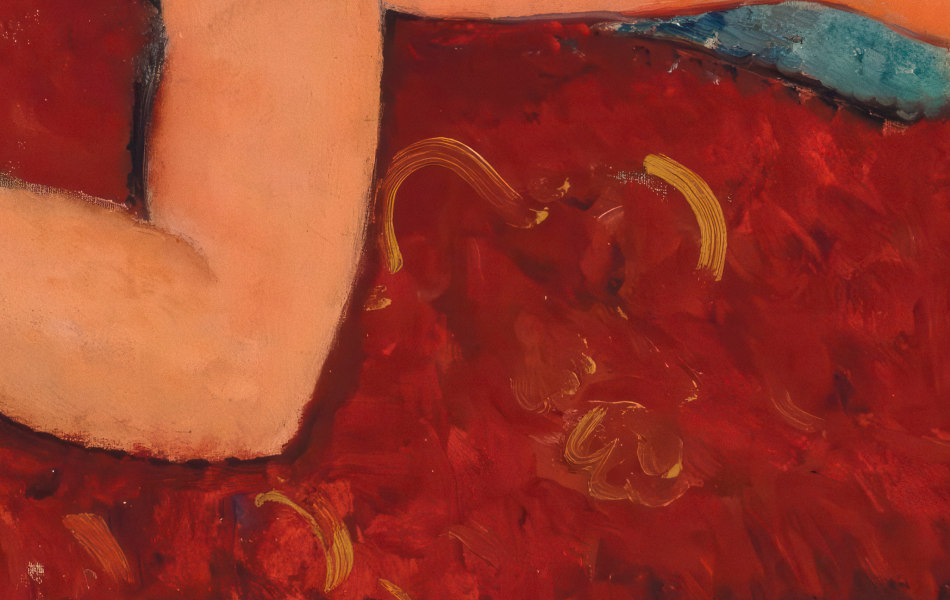
Nu Couche Modigliani Detail Arm and Background
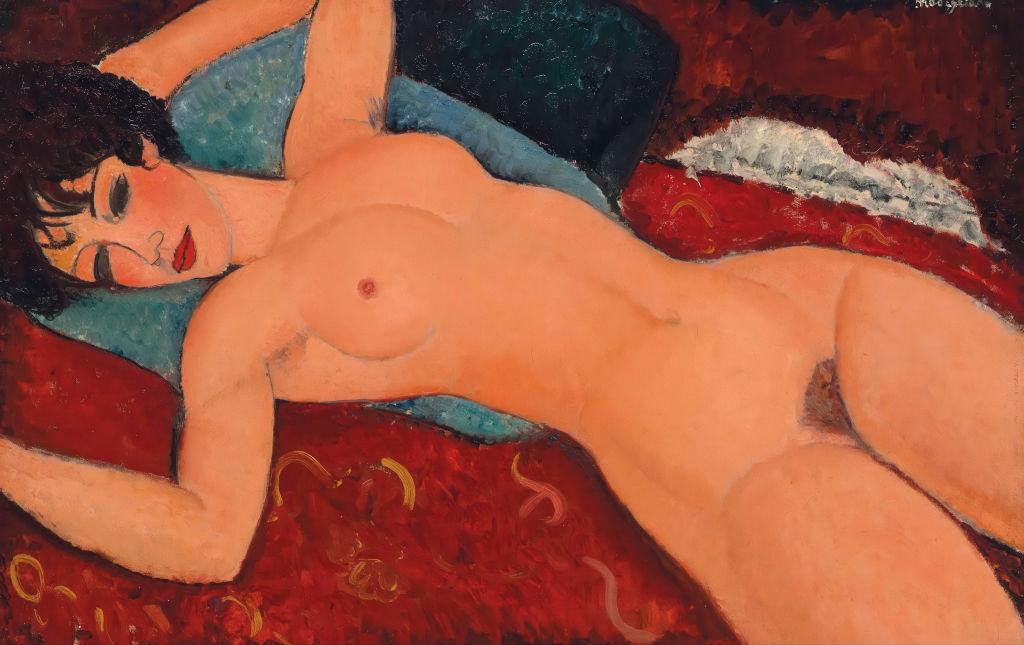
Nu Couché Meaning
The model's deep gaze brings her personality to life - at first it is about sexualisation and aesthetic, but once the female reclining nude looks directly at us, we are now a part of her world. This is the first difference to classical nude painting, where an anonymity or disconnect would normally exist.
One can also argue that the power shifts from us to her, by looking directly at us the model gains a confident look and is no-longer as vulnerable as first suggested. It is now her luring us in. The surrounding detail, or lack of it, also is an intentional choice by Modigliani in order to avoid a replicating portrait, but rather an idealised form of a confident, sexualised woman.
Ownership
The painting was created for Léopold Zborowski, a Polish art dealer. This painting was one of many in a series of nude paintings.
Exhibitions
Sadly, Modigliani only had one art exhibition during his lifetime, in 1917, at the Galerie Berthe Weill, in Paris. It is reported that Nu Couche was one of the paintings that he most wanted to display.
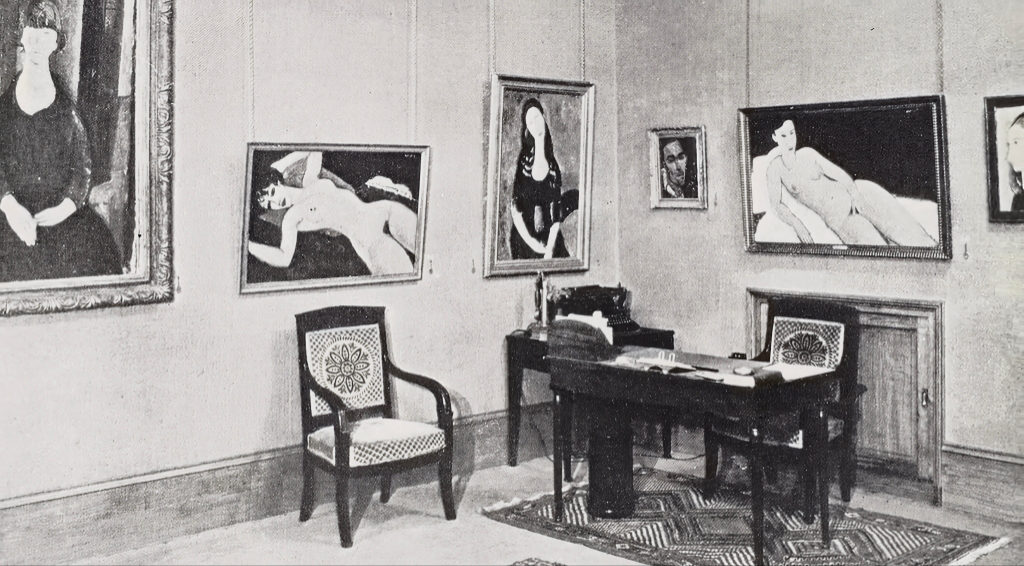
Nu Couche, Amedeo Modigliani, Hanging on Office Wall alongside some of his other works
Inspiration for Nu Couché
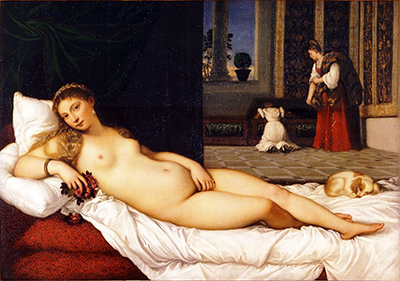
Nu Couche is a piece of modernist art, in which Modigliani drew inspiration from painters such as Picasso and Matisse, and works such as Titian's Venus of Urbino.
Modigliani's Nude Paintings
The glorification of the naked body, as depicted in Nu Couche, is made highly desirable in this provocative pose. The heightened sexuality is also further enhanced in the redness of the sheet that the nude is reclining upon. Modigliani produced a series of nude paintings for his patron in late 1917, though had already covered this genre earlier in his career.
The artist found this a natural progression from his regular drawn musings - quick sketches capturing the curves of the human body. His paintings would similarly feature relatively little detail and were more about celebrating shape and line. His other nude paintings from around this time included variations in model, their poses and also facial expressions.
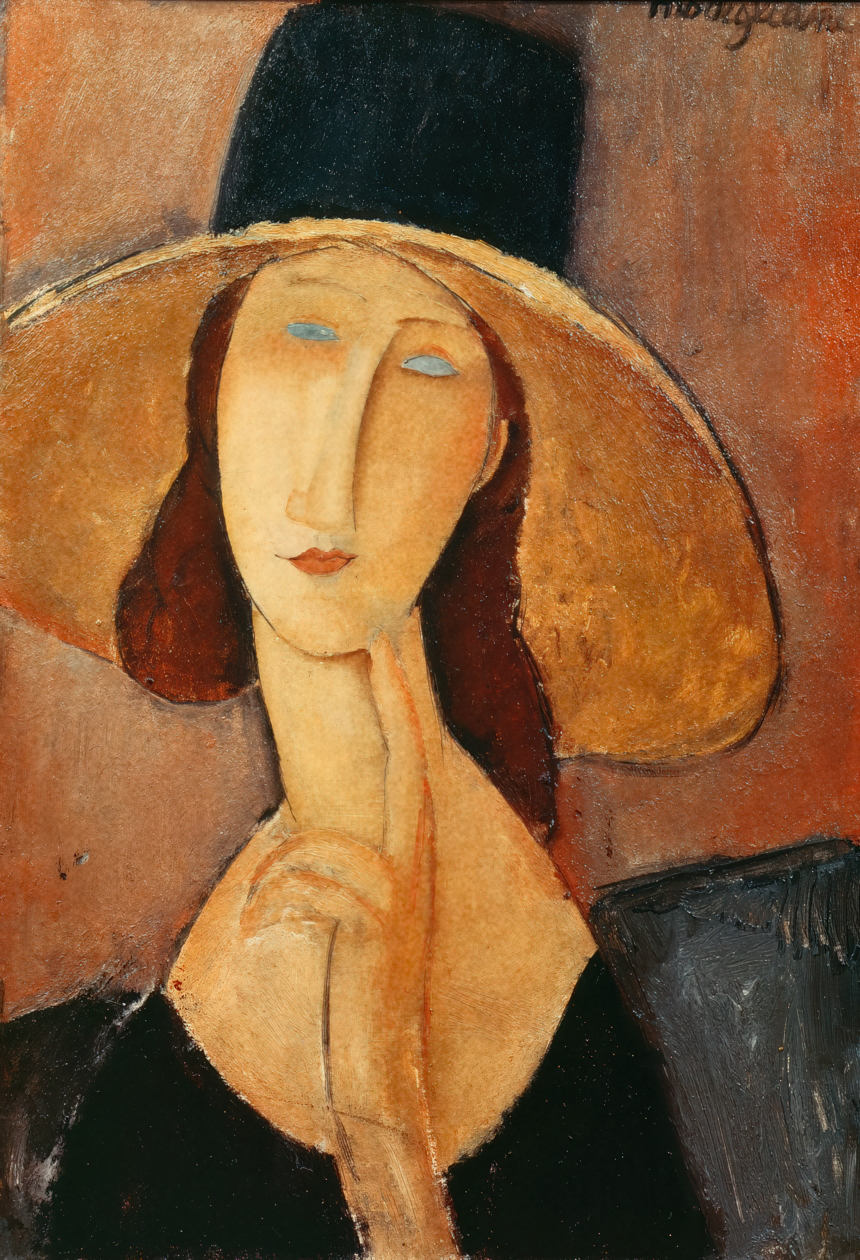
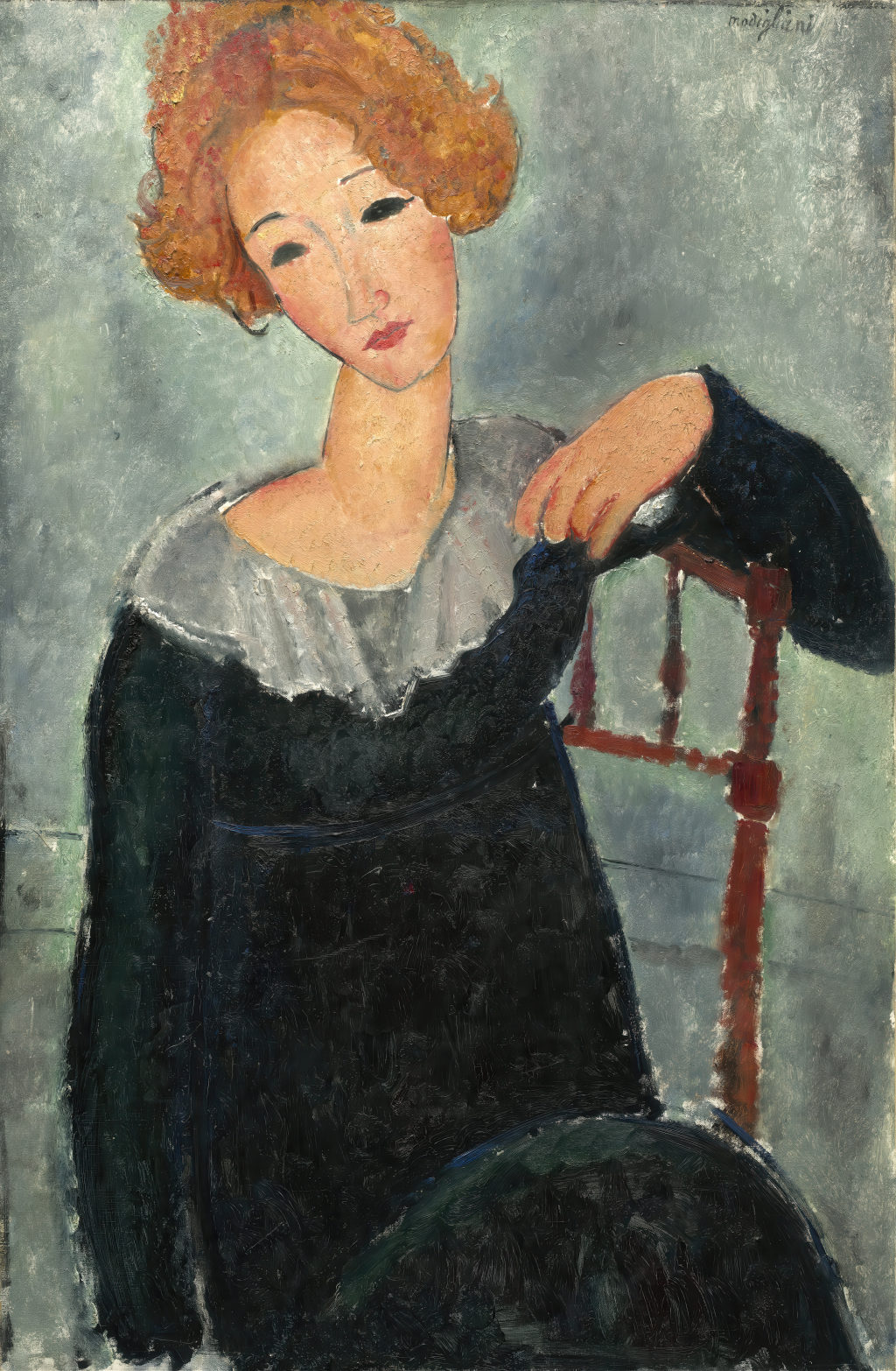
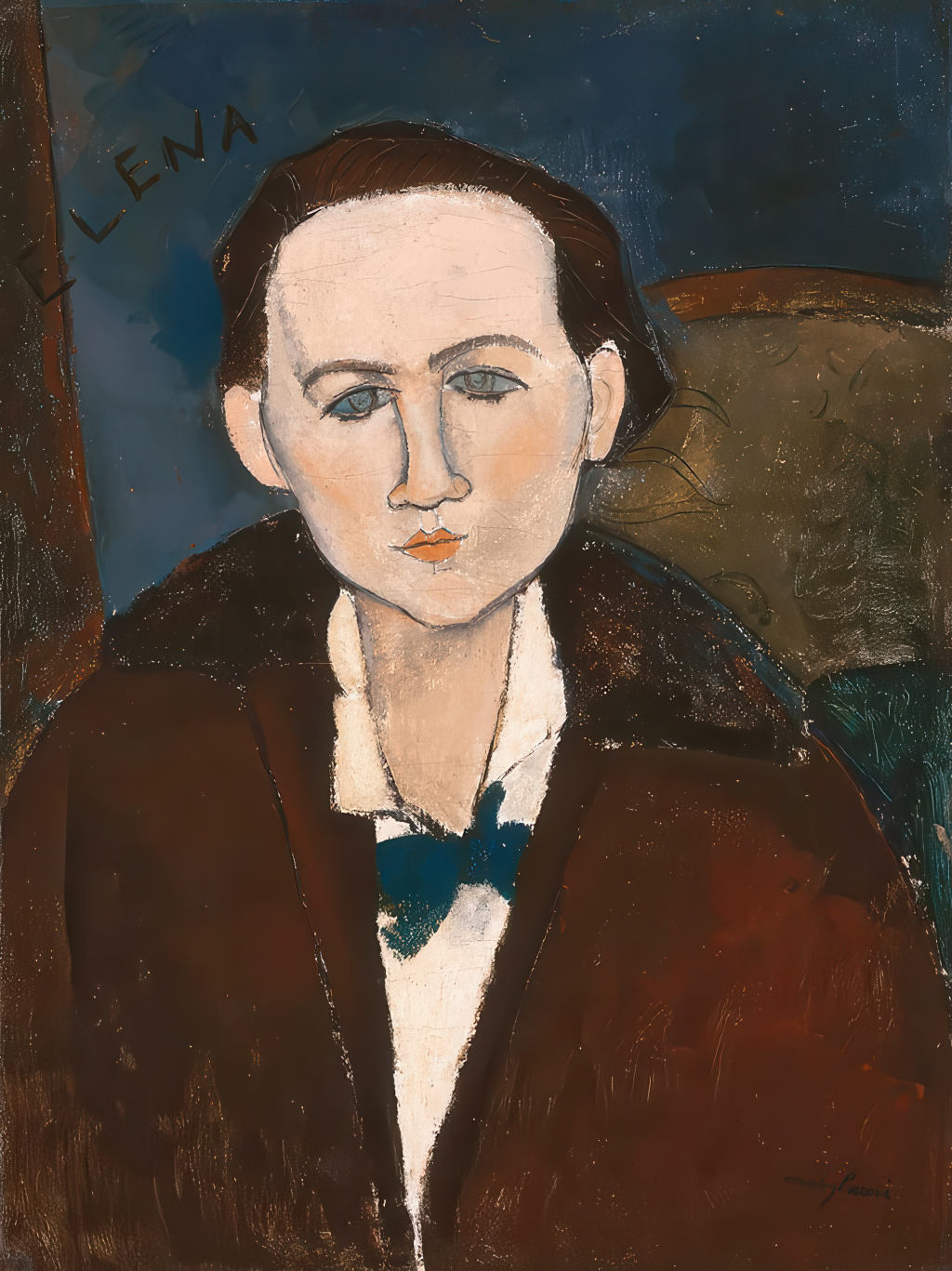
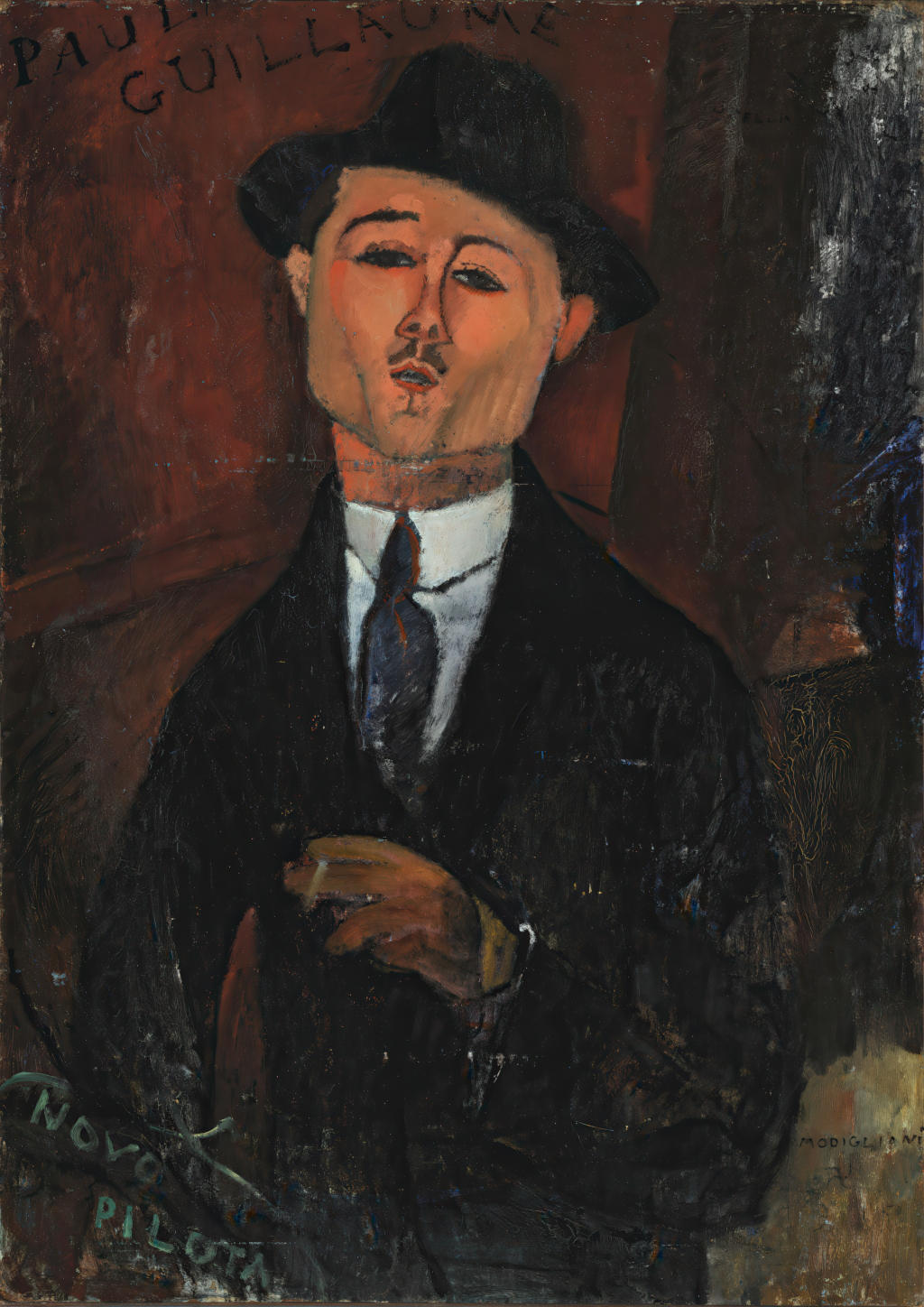
Modigliani is perhaps most famous for his nude figurative paintings, even though it is just a small section of his oeuvre. There were more standard three-quarter-length portraits within his career, often making use of the same models several times over. Despite struggling for professional success, Amedeo stuck closely to his own inspirations and avoided selling out for a more comfortable path.
Critical Reception
Modigliani was an artist too controversial to gain acceptance within his own lifetime, but this followed soon after his death. Nu Couché fitted into this scenario, and was immediately dismissed by the majority of critics. Despite nude art having been around for centuries, including from highly regarded artists such as Titian and Michelangelo, Modigliani's own take on this genre was considered without enough moral or artistic backing.
Later, however, works such as Nu Couché would help to refresh and modernise the nude painting genre, encouraging other artists to contribute their own work to this particular creative niche. It was no-longer a style purely for the Renaissance and Baroque eras, but could be taken in new directions. Sadly, however, rather than just provoking poor reviews, Modigliani's actually saw his first, and only, exhibition shut down due to protests.
Controversy around Nu Couché
When the painting was exhibited, it caused a huge outcry and scandal. This was perhaps due to the fact that one of the nude paintings in the exhibition was could be seen from a public street. The police was called, and the exhibition closed shortly afterwards. Three years later, and the artist passed away, aged only 35.
The exhibition itself took place at the Galerie Berthe Weill in Paris and despite the city being famous for its love of new creative ideas, the show didn't even last its first day. It was deemed unacceptable that nudity could be delivered without a mythological or moral cause, and the directness of the gaze was also too much for society at that time.
Modigliani's Legacy
Amedeo Modigliani left a strong artistic legacy, despite struggling professionally within his own lifetime. Nu Couché, along with his other nude paintings, helped to re-invent this genre, and modernise it for new audiences. He would also add another layer of innovation within the Paris art scene of the early 20th century, with his unique style of portraiture.
This painting represents an artist close to the end of his development, as his creativity pushed itself to the limit, just as his health continued to worsen. Just as it was controversial then, this figurative piece continues to provoke discussion today about the nude genre. He aimed for intimacy, allure and sexuality within this work, and the gaze of his model still captures us today.
What I seek is not the real nor the unreal, but the subconscious - the mystery of what is instinctive in the human race.
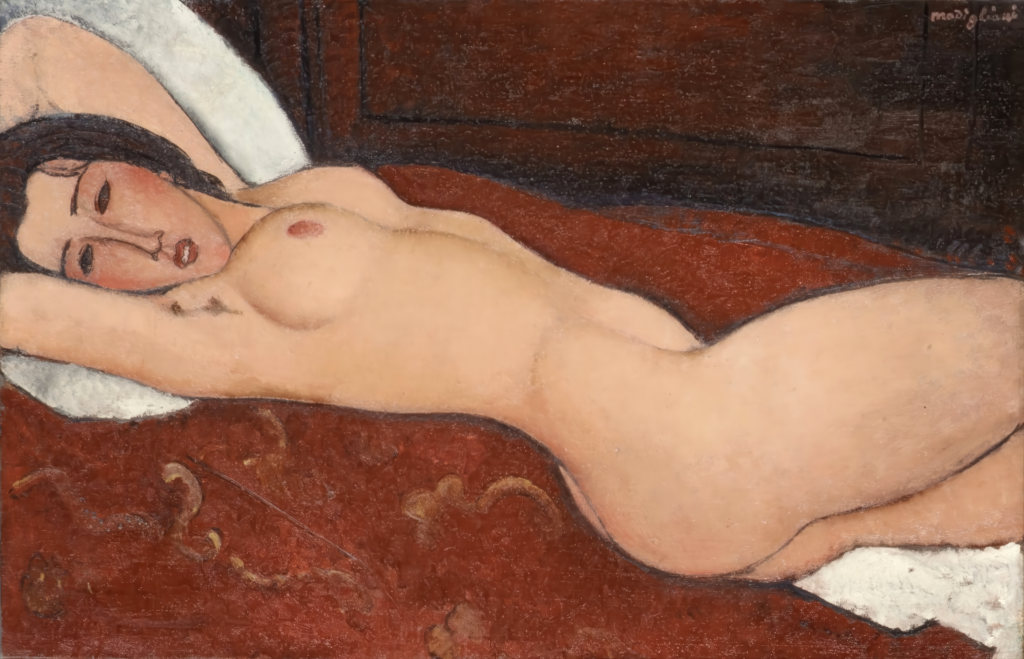
Related Paintings
FAQs
References
- Doris Krystof, Amedeo Modigliani, Taschen, 2015
- Werner Schmalenbach, Modigliani, Prestel, 2018
- Mason Klein, Modigliani Unmasked, Yale University Press, 2017
- Nu couché (Wikipedia)
- Nu couché (Christie's Auction)