

 by Tom Gurney
Tom Gurney BSc (Hons) is an art history expert with over 20 years experience
Published on October 6, 2016 / Updated on March 11, 2026
Email: tomgurney1@gmail.com / Phone: +44 7429 011000
The Poppy Field near Argenteuil (1873) by Claude Monet
The Poppy Field near Argenteuil (French: Les Coquelicots) is one of the most beloved landscapes painted by Claude Monet during his years living in Argenteuil.
Created in 1873, the painting captures a quiet summer afternoon in the countryside northwest of Paris and stands today as one of the defining works of early Impressionism and a work that Monet was particularly proud of.
This painting holds great importance within Monet's career, but also in the rise of the Impressionists more generally. It was first exhibited at the First Impressionist Exhibition in 1874, offering a calm, rural setting to complement other contributions to this event made by Monet.
The Blooming Poppy Field was actually one of the first known paintings that Monet made “en plein-air” (literally: made outdoors) and as we can see from the disproportionately large patches of color in the foreground, the visual impression here became his priority rather than the proportions and the defined lines so dear to the Academics.
In this article we will examine The Poppy Field near Argenteuil in detail, discuss its technical qualities and significance within Monet's oeuvre. We will place it within the context of the First Impressionist Exhibition, as well as identify the figures in this painting.
- Artist: Claude Monet
- Title: Poppy Field near Argenteuil (Les Coquelicots)
- Year: 1873
- Medium: Oil on canvas
- Dimensions: 50 cm x 65 cm
- Location Painted: Argenteuil, France
- Current Location: Musée d'Orsay, Paris
- Alternative Names: Blooming Poppies, Poppy Field, Coquelicots
- Art Movement: Impressionism
- Subject: Landscape with figures
- Exhibited: First Impressionist Exhibition, 1874
Description
The composition The Poppy Field near Argenteuil (1873) is beautifully simple. The work shows a gently sloping meadow filled with vibrant red poppies beneath a bright summer sky. Colours are key in this work, with the bright wave of red poppies contrasting against the darker green of trees which line the horizontal.
In the foreground a woman and child walk through the flowers, while another pair appears further up the hill, creating a subtle rhythm within the composition. The figures are widely believed to represent Monet's wife Camille Monet and their young son Jean.
Poppies were always likely to be popular with Monet for several reasons. They were in great abundance within Giverny where he lived and worked for many years and would therefore naturally be involved in many of his landscape paintings. Poppies also offered an excellent opportunity to use bright reds that complemented the artist's impressionist style perfectly, sitting against his usual palette of purples, greens and blues.
There is no connection, between the two couples of figures except for a long, bright stripe of blooming red poppies which are highlighting the scene with their warm and intense color, in clear contrast with the dry color of the grass. The horizon is marked by a jagged line of dark green trees, scratching against the even light of a sky dotted by many white clouds. This even light is reflected by the field grass and gives to the whole painting a quiet and yet translucent vibe.
Key Use of Colour
The striking element to this work is the combination of colour. Vivid reds, cool greens, nature is presented beautifully and respectfully. Indeed, this is a celebration of the environment Monet discovered during his time in Argenteuil, France.
These tones were then delivered with brisk, loose brushwork which shocked critics at the First Impressionist Exhibition which followed a year after this painting was finished. His details become increasingly blurred as we move towards the background, helping to form perspective in our minds.
The work is simplified, allowing it to feel natural, not contrived. One can imagine looking out across this scene ourselves, at that precise moment that the artist himself was here. Crucially, the paintings that followed soon after continued to use a similar palette, suggesting that Monet was pleased with this finished work.
Composition
Whilst simplistic, the composition is carefully planned. The figures help to provide the feeling of perspective, which runs from the bottom right up to the centre of the work. The flowers also merge into bands of red as we push towards the horizon.
The repetition of pairs of figures in the foreground and background also leads us to consider whether they are known to each other, whilst also leading the eye across the canvas. Detail is restricted by the artist, but we are still able to identify everything in the scene because of how Monet worked so cleverly.
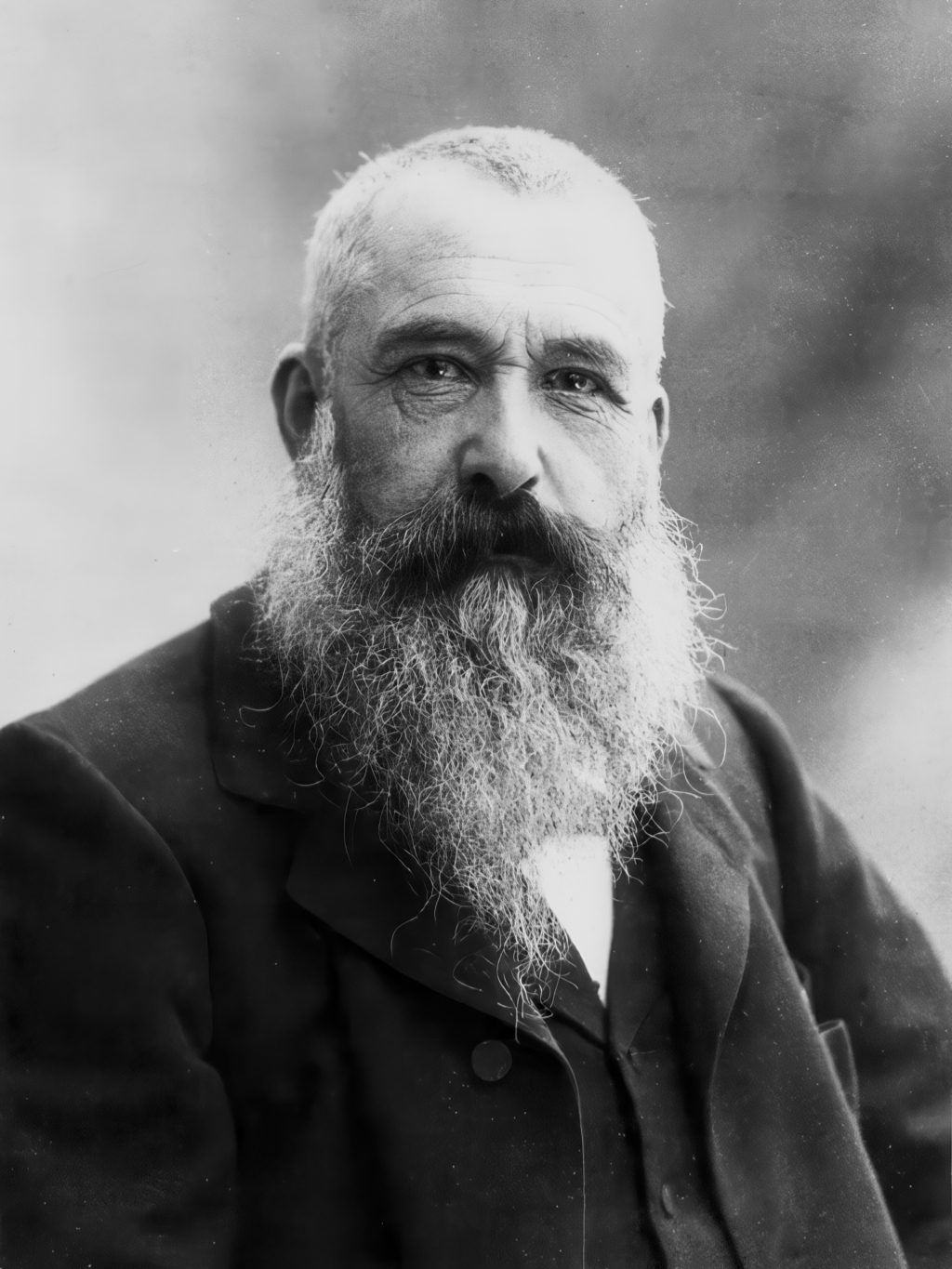
The richness I achieve comes from nature, the source of my inspiration.
Monet in Argenteuil
Claude Monet settled in Argenteuil in 1871 after returning from exile in England during the Franco-Prussian War.
The artist remained here until 1878, and he would use this period very productively. The open countryside, with the Seine running past offered Monet an almost endless set of possibilities for his work. The Poppy Field near Argenteuil (1873) would become one of his most famous contributions from this period.
Monet spent much of this time working on his skills as an en plein air artist - working outdoors. The artwork shown in this page demonstrates Monet experimenting with colour and form, with loose brushwork and a desire to capture a fleeting moment in time.
Groundbreaking Technique
And in fact, in the Blooming Poppy Field painting made by Monet the main character is the color of natural light. As in many other impressionist paintings, what matters to the artist isn't the subject of the painting itself, what is important is capturing the moment through a sketch-like technique that allows the artist to focus on the impressions coming from the environment around him, rather than focusing on a fixed, commissioned subject.
This new approach to painting was revolutionary and quite contentious to critics like Leroy: what matters to Monet is to seize the impression of a scene, without any regard for the traditional canon of the aesthetics and proportions. What the eyes can catch in a flash of light is what we can see on the canvas.
Monet's style is well-known for being unique and ground-breaking, however Poppy Field (Coquelicots or Wild Poppies, near Argenteuil, 1873) is for sure one of the first expressions of what was bound to become the style of an entire movement: Impressionism.
If Monet was the leading figure of the Impressionist movement, Blooming Poppy Field was certainly one of its leading masterpieces.
Large Image of The Poppy Field near Argenteuil (1873) by Claude Monet
 Claude Monet.jpg)
Provenance
The following provenance records trace the ownership history of The Poppy Field near Argenteuil from its creation in 1873 to its current location in the Musée d'Orsay, Paris.
Early Ownership
- 1873 - Held in the gallery of Durand-Ruel, Paris, probably acquired directly from Claude Monet.
- Late 19th century - Collection of Ernest Duez, Paris.
- Later held in the collection of Jean-Baptiste Faure, Paris.
Durand-Ruel and Moreau-Nélaton
- 1901 - Returned to the gallery of Durand-Ruel, Paris; acquired on 12 November.
- 1903-1906 - Collection of Étienne Moreau-Nélaton, Paris; acquired on 20 May.
Donation to the French State
- 1906 - Accepted by the French State as part of the Moreau-Nélaton donation to the National Museums.
- 1907 - Entered the Musée des Arts Décoratifs, Paris (loan and deposit restrictions applied).
Museum Collections
- 1906 - Officially assigned to the Louvre Museum, Paris.
- 1907-1934 - Displayed at the Musée des Arts Décoratifs, Paris.
- 1934-1947 - Transferred to the Louvre Museum, Paris.
- 1947-1986 - Exhibited at the Louvre Museum, Galerie du Jeu de Paume, Paris.
- 1986-Present - Held at the Musée d'Orsay, Paris.
Acquisition Details
- Acquisition Method: Donation
- Acquisition Date: 1906
- Donor: Étienne Moreau-Nélaton
Location of The Poppy Field near Argenteuil (1873)
Today The Poppy Field near Argenteuil (1873) is held in the permanent collection of the Musée d'Orsay in Paris.
Visitors to the Musée d'Orsay can see the painting alongside many other masterpieces of Impressionism, including works by Renoir, Degas and Pissarro, alongside further work by Monet himself.
Musée d'Orsay,
Esplanade Valéry Giscard d'Estaing,
75007,
Paris,
France
The Lasting Appeal of Monet's Poppy Fields
The enduring popularity of this painting lies in its celebration of everyday beauty. Rather than depicting grand historical subjects, Monet chose a simple moment: a walk through a field on a warm summer day - it is perhaps this that has helped the public to warm to this piece so passionately.
The vibrant colour of the poppies, the expansive sky and the relaxed movement of the figures combine to create a sense of peaceful harmony between people and nature. For many, it is the ideal choice to hang from their own walls and bring a relaxed, natural atmosphere to their homes.
More than a century after it was painted, The Poppy Field near Argenteuil remains one of the most recognisable images of Impressionism and a perfect example of Monet's ability to transform an ordinary landscape into a timeless work of art - its inclusion in the First Impressionist Exhibition also underlines its historical significance.
Large Detailed Image of the Painting
Large Image of Poppy Field (Near Argenteuil), 1873 by Claude Monet