

 by Tom Gurney
Tom Gurney BSc (Hons) is an art history expert with over 20 years experience
Published on June 19, 2020 / Updated on November 5, 2025
Email: tomgurney1@gmail.com / Phone: +44 7429 011000
Jean-François Millet's The Gleaners: Meaning, Realism and Rural Dignity
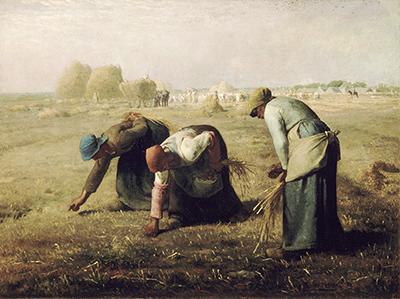
The Gleaners by Jean-François Millet is one of the defining paintings of 19th-century Realism. Completed in 1857, it shows three peasant women bending low across a harvested field, gathering the leftover stalks of grain after the main crop has been collected.
The subject may seem quiet, but Millet gives it great visual and social weight. The women are not treated as picturesque rural decoration. Their bent backs, strong hands and repeated gestures make their labour feel physical, necessary and dignified.
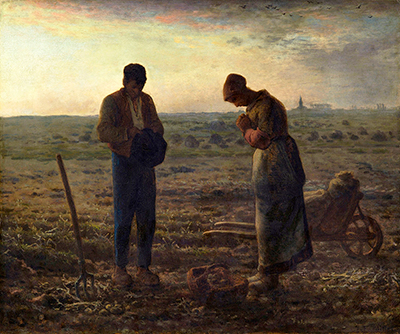
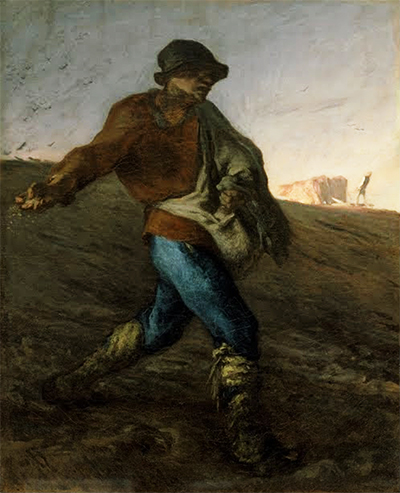
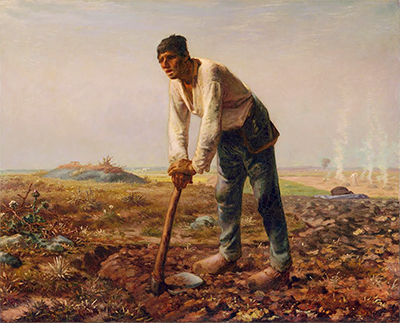
This is why The Gleaners remains central to understanding Millet's art. Like The Angelus, The Sower and Man with a Hoe, it transforms rural labour into a serious subject for modern painting.
- Artist:Jean-François Millet
- Title:The Gleaners
- French Title:Des glaneuses
- Date:1857
- Medium:Oil on canvas
- Movement:Realism / Barbizon School
- Subject:Peasant women gleaning after the harvest
- Location:Musée d'Orsay, Paris
- Significance:One of Millet's greatest images of rural labour
What is happening in The Gleaners?
The painting shows three women collecting leftover grain from a field after the harvest. This practice, known as gleaning, was traditionally associated with the rural poor. It allowed those with very little to gather what remained after landowners and labourers had taken the main crop.
Millet places the women in the foreground, making them the true subject of the painting. Behind them, distant stacks of grain and working figures suggest abundance, but the gleaners themselves are reduced to the slow, repetitive effort of survival.
This contrast gives the painting its emotional power. The background contains wealth and harvest, while the foreground shows poverty and endurance.
Composition and Meaning
The composition is built around the repeated curve of the three women's bodies. Each figure bends in a slightly different position, creating a rhythm across the foreground. Their gestures are humble, but Millet makes them monumental.
The low viewpoint increases their scale and presence. Rather than looking down on the gleaners, the viewer is brought close to their level. This gives the women a sculptural seriousness rarely granted to peasant subjects in earlier academic painting.
The warm light of the field softens the scene, but Millet does not sentimentalise it. The work remains grounded in physical labour, social inequality and rural hardship.
The Gleaners and Realism
The Gleaners is a major example of Realism because it treats ordinary working people as worthy of serious art. Millet was not painting mythological heroes, aristocrats or biblical figures. He was painting the rural poor.
This made the work controversial in its own time. In the political climate after the 1848 revolutions, large images of peasants could be read as socially charged. Millet's figures were quiet, but their scale and dignity gave them unexpected force.
This is one reason the painting remains so important today. It shows how Realist art could address modern social conditions without becoming simple propaganda.
Millet, Barbizon and Rural France
Millet was closely associated with the Barbizon School, a group of artists who worked around the village of Barbizon near the Forest of Fontainebleau. Many Barbizon painters focused on landscape, but Millet brought special attention to the people who worked within that landscape.
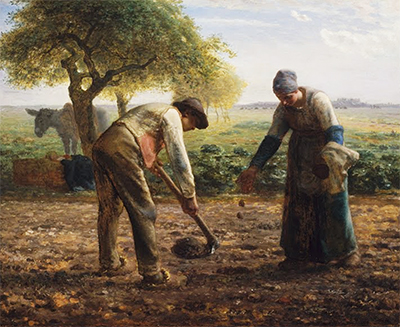
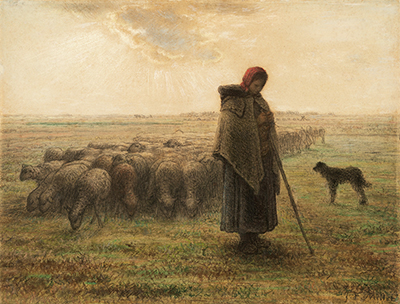
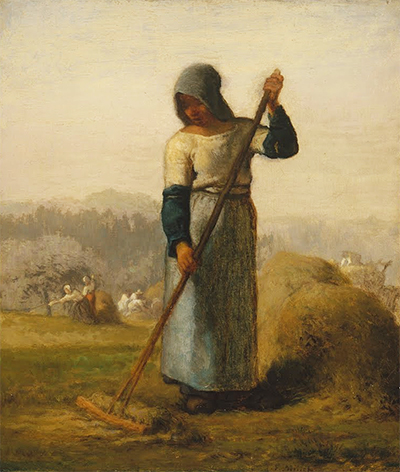
His art often links the human figure to the rhythms of the land. This can also be seen in Millet's peasant life paintings, where sowers, shepherdesses, harvesters and labourers become symbols of endurance and rural identity.
Why The Gleaners is Important
The Gleaners is important because it gives dignity to an overlooked subject. Millet presents poor rural women not as background figures, but as the centre of the painting's moral and visual meaning.
The work also influenced later artists who admired Millet's seriousness and sympathy for working people. Vincent van Gogh, in particular, deeply admired Millet and returned repeatedly to themes of sowers, diggers, peasants and rural labour.
For a wider view of Millet's most important works, see the main Jean-François Millet paintings page.
FAQs
The Gleaners shows three poor peasant women collecting leftover grain after the harvest. The painting is about rural labour, poverty, dignity and survival.
The Gleaners is held in the Musée d'Orsay in Paris.
The painting was controversial because it gave monumental importance to poor rural workers at a time when images of peasants could carry strong social and political meaning.
The Gleaners is associated with Realism and the Barbizon School.