 by Tom Gurney
Tom Gurney BSc (Hons) is an art history expert with over 20 years experience
Page Created on August 31, 2026 / Page Updated on November 6, 2026
Email: tomgurney1@gmail.com / Phone: +44 7429 011000
Still Life: Fish: Introduction
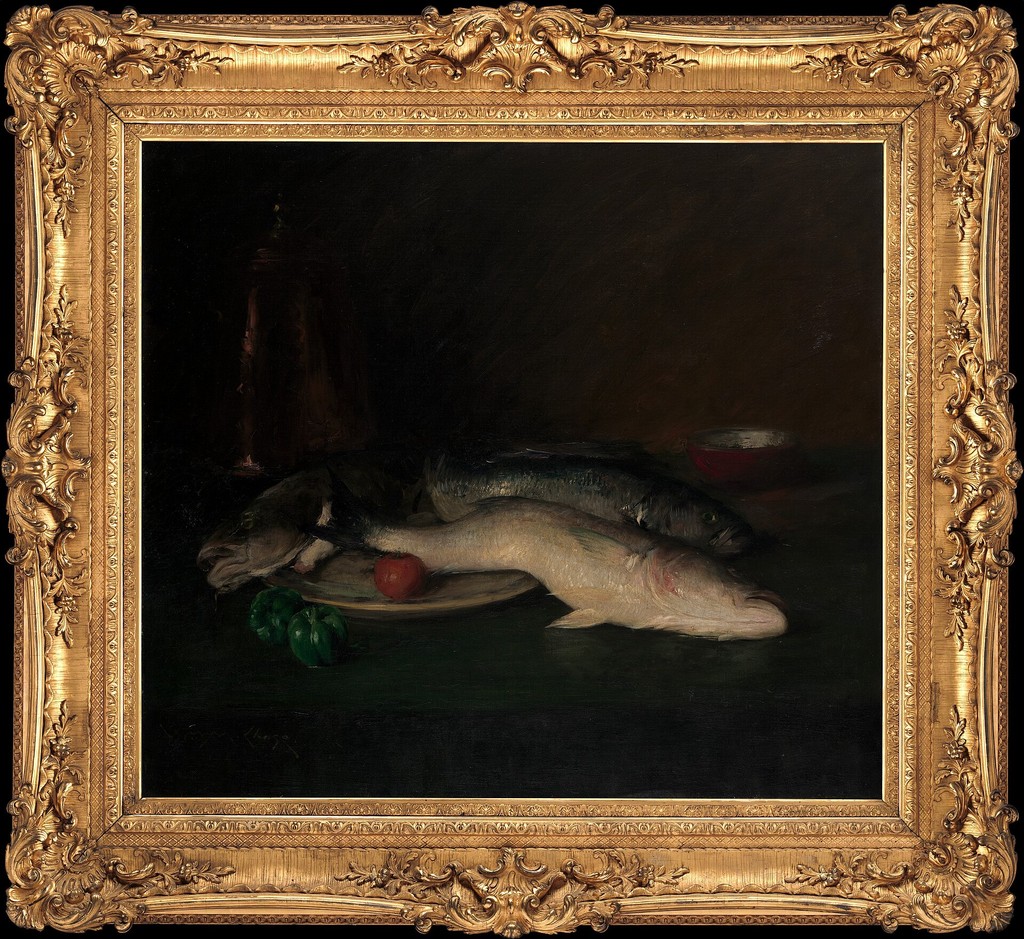
In Still Life: Fish, William Merritt Chase turns a modest tabletop subject into an exercise in weight, lustre and controlled contrast. Three fish press across the lower half of a broad, dark canvas. Their overlapping bodies emerge gradually: pale flesh, silvered scales and small flashes of red and green hold the eye while the surrounding room seems to recede. The picture rewards slow looking because its apparent directness is carefully organised.
At a Glance
- ArtistWilliam Merritt Chase
- Dateby 1908
- Mediumoil on canvas
- Dimensions101.9 × 114.5 cm
- CollectionMetropolitan Museum of Art, New York
- Accession08.139.2 [1]
William Merritt Chase in context
Keying Up – The Court Jester
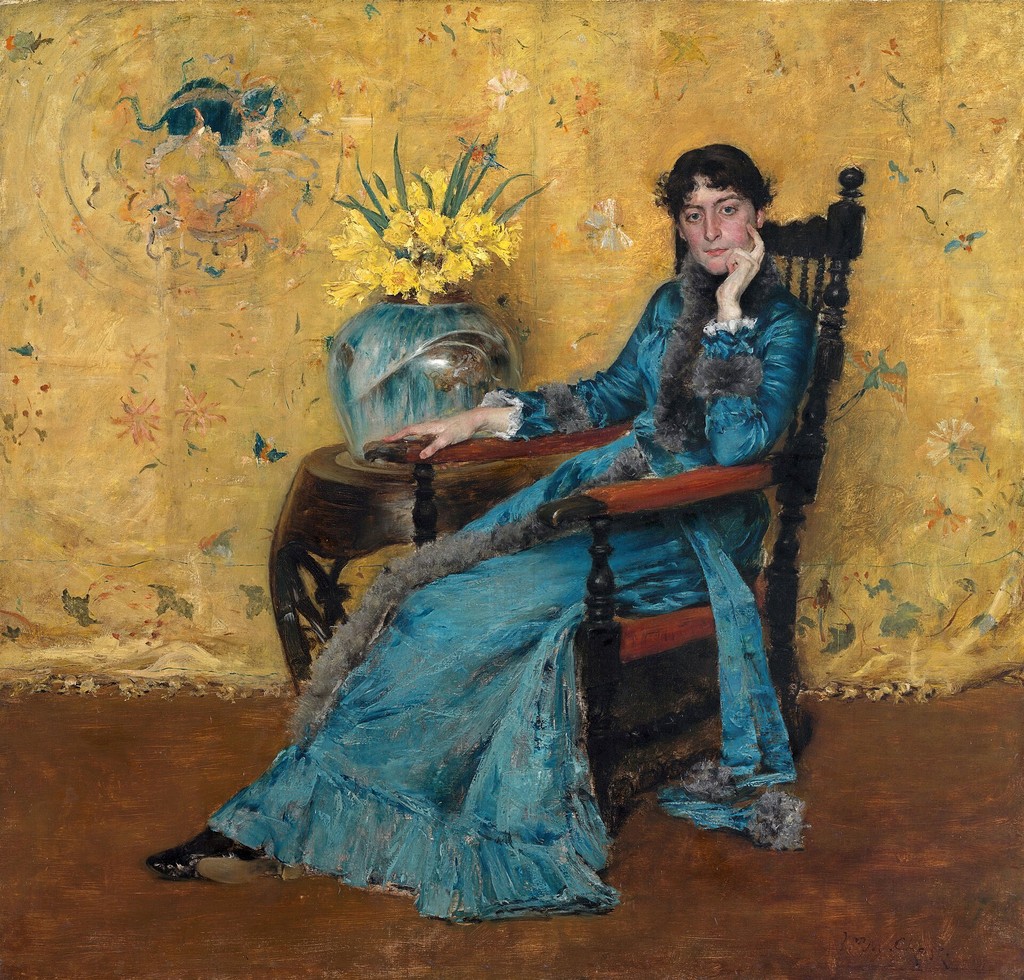
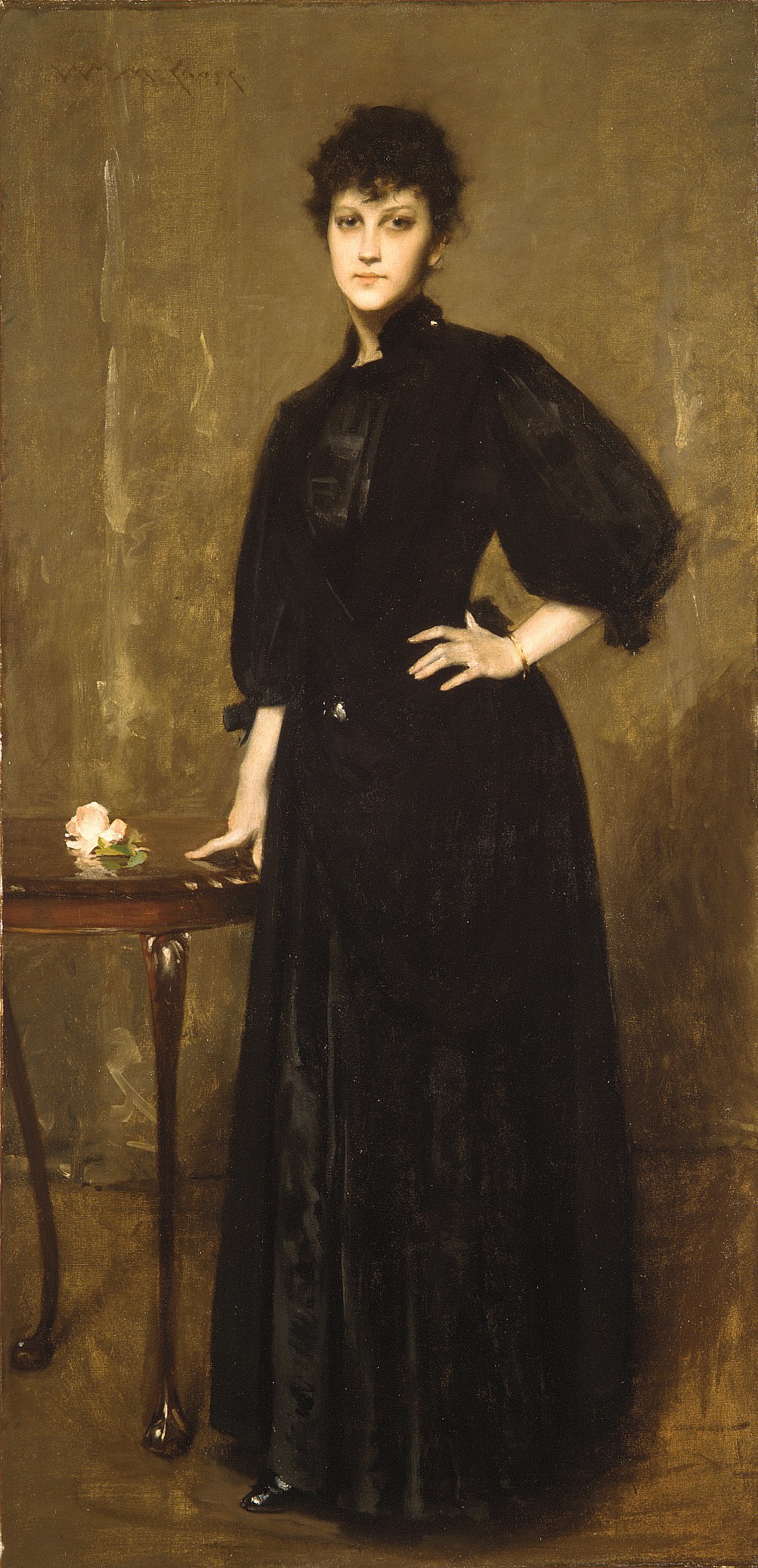
1875Portrait of Dora Wheeler
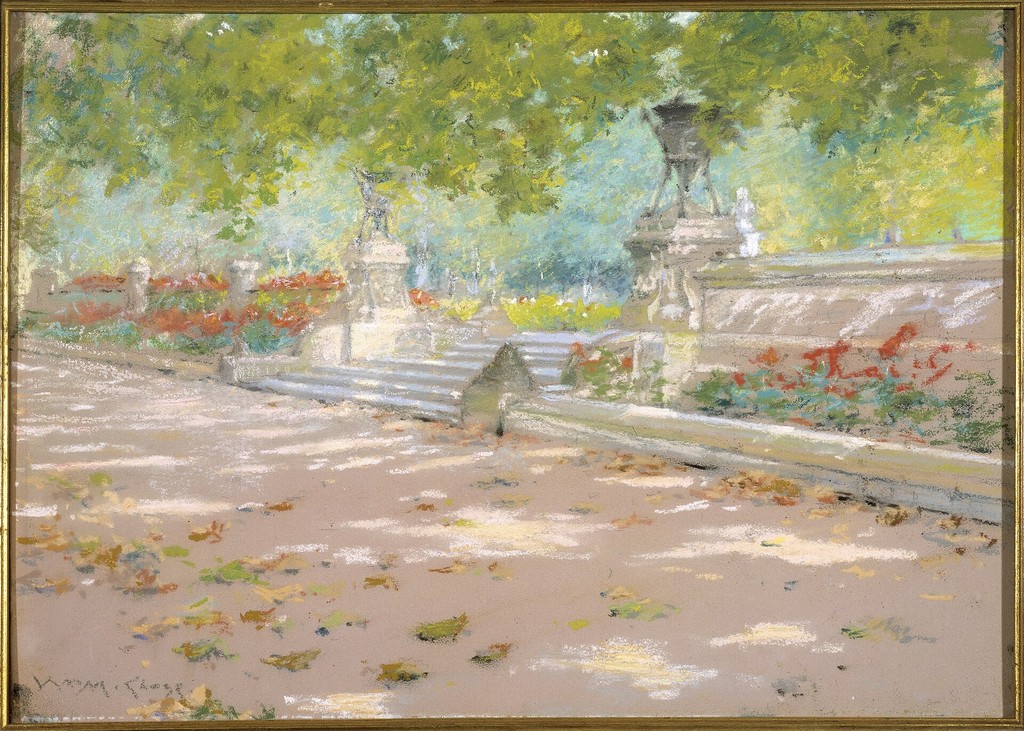
1882–83Terrace, Prospect Park
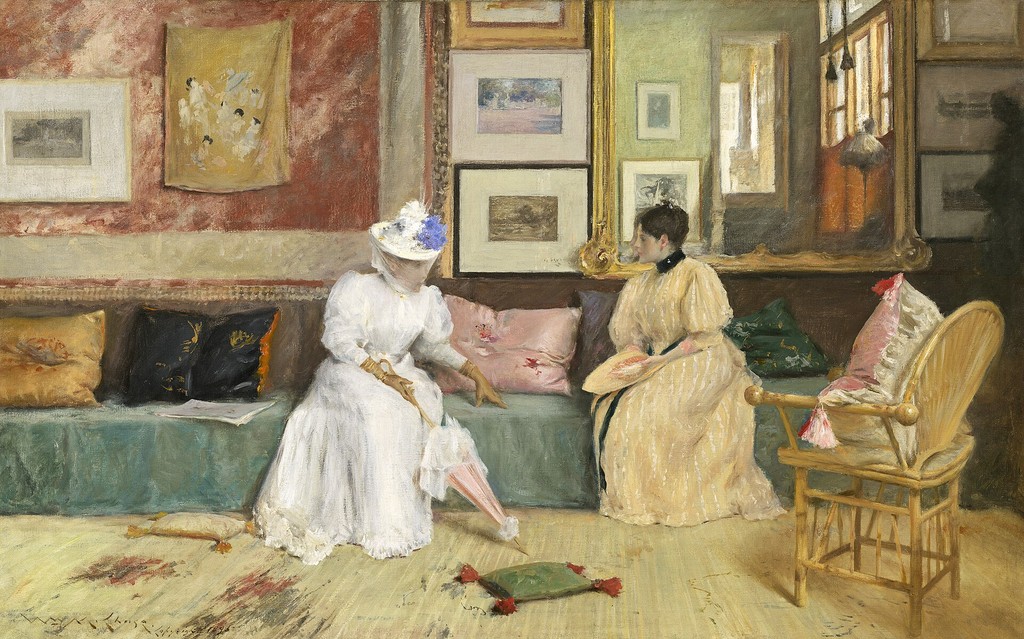
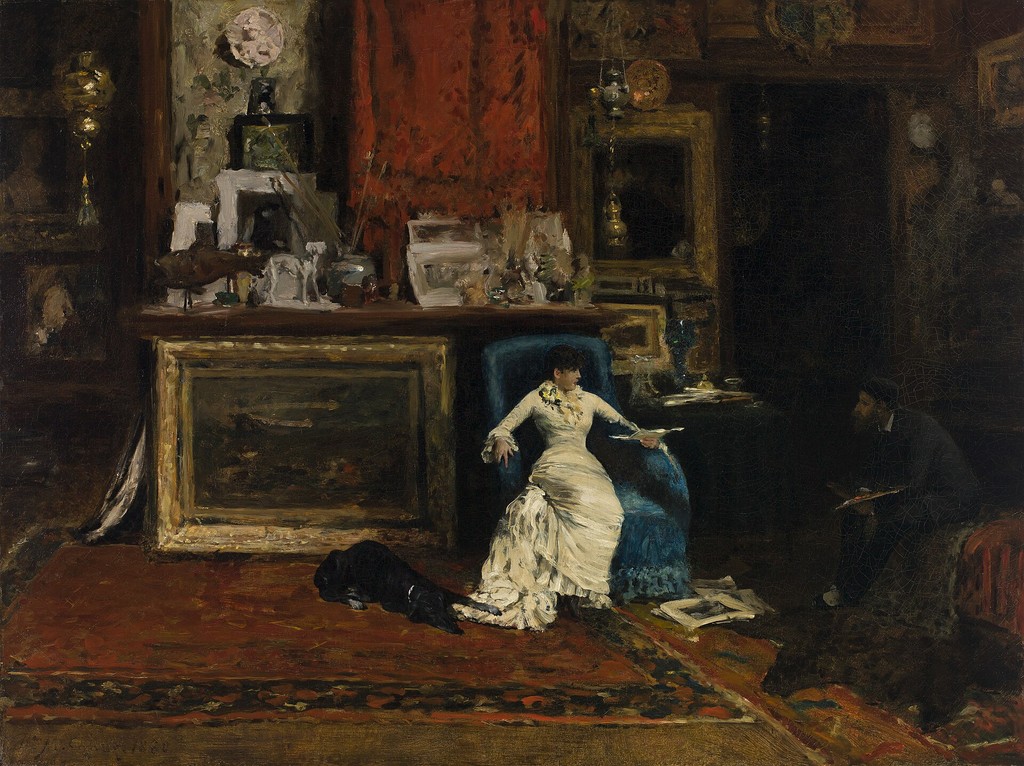
c. 1887A Friendly Call
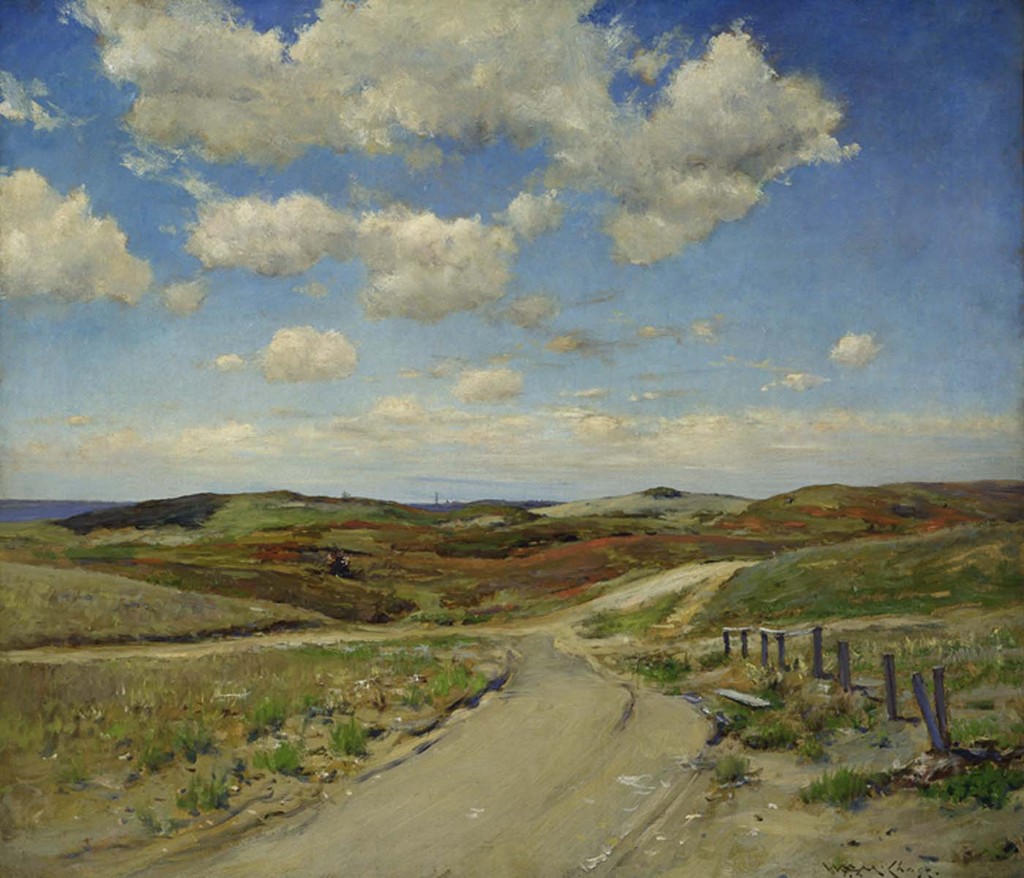
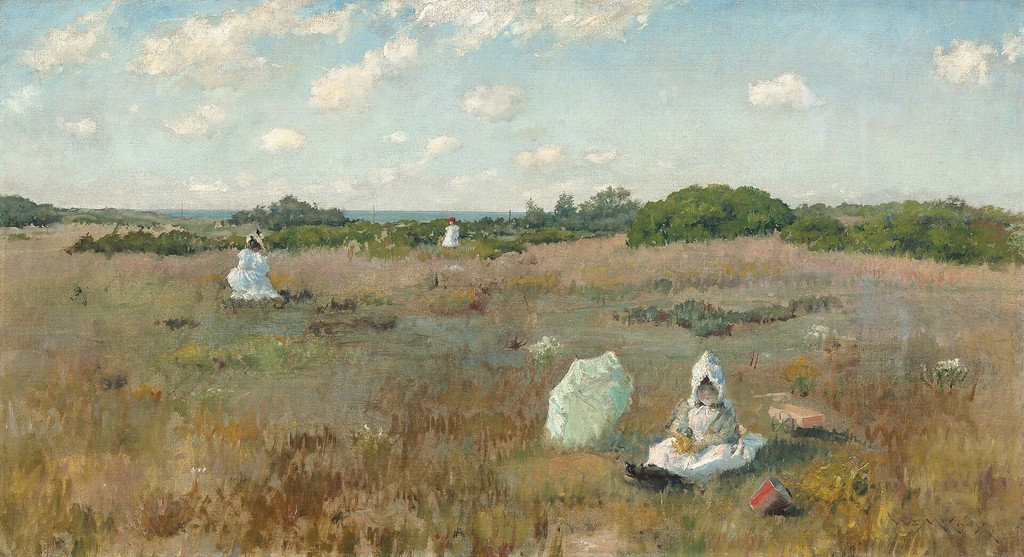
1895Shinnecock Hills
c. 1895Still Life: Fish
by 1908Contents
- Introduction
- The Exact Painting at the Met
- A Table Crowded into Darkness
- Broad Strokes, Wet Highlights and Tonal Control
- Munich as a Working Resource
- Speed as Practised Knowledge
- Three Related but Separate Fish Paintings
- A Still Life within a Plural Career
The Exact Painting at the Met
The title is deceptively easy to confuse with other works. This is the Metropolitan Museum of Art’s Still Life: Fish, dated by 1908, not a securely dated painting from 1908. The Met records it as oil on canvas, measuring 101.9 × 114.5 cm, and identifies it by accession number 08.139.2. It entered the collection through the George A. Hearn Fund in 1908. The museum identifies the three fish as a striped bass and salmon on a plate, with a weakfish lying directly on the tabletop; a bowl occupies the shadowed background. [1]
Those details establish the object before interpretation begins. Chase returned to fish repeatedly, and several canvases carry very similar titles. The recurrence belongs within his broader still-life painting, but it does not make the individual objects interchangeable. Date, dimensions, collection and accession number are essential parts of this picture’s identity.
A Table Crowded into Darkness
The still life is concentrated in a low horizontal band. Chase places the pale weakfish diagonally across the foreground, its head approaching the right edge while its body swings back towards the plate. Behind it, darker fish cross and partly conceal one another. Their overlap prevents the viewer from reading the arrangement as a neat inventory. Instead, the group forms a dense, irregular mass whose contours must be disentangled.
Space is deliberately compressed. The tabletop rises behind the fish without a strongly marked back edge, and the dark ground above it supplies few measurements of distance. A small bowl near the upper right is present but subdued; its light rim and reddish side barely separate from the brown-black field. At the left, another vertical form dissolves almost completely. These muted objects suggest depth without opening a room around the display.
The result is neither a clinical specimen table nor a plentiful market scene. Chase brings the fish close to the picture plane and leaves generous darkness above them. That imbalance intensifies their physical presence. The foreground body seems heavy enough to push towards us, while the obscured fish behind it recede by tone and overlap rather than by geometric perspective.
Broad Strokes, Wet Highlights and Tonal Control
The surface alternates between breadth and precision. Long strokes follow the fish bodies, giving their forms sweep and direction. Shorter touches catch scales, fins and the ridges around the eyes. Chase does not describe every detail equally: the pale foreground fish receives the fullest modelling, while the upper fish is assembled from broken grey-green and silver notes. What looks spontaneous is also selective.
Highlights make the fish appear moist. Cream and silvery paint gathers along the foreground belly; cooler glints skip across the darker backs. These accents are not scattered at random. They sit against adjoining half-tones, so brightness rises gradually before meeting the deepest surrounding darks. A restrained red note near the centre and green forms at the lower left interrupt the limited palette without competing with the fish.
This controlled tonal contrast gives the picture its drama. The darkest field is not empty black but a range of browns, greens and softened shadows. Because Chase limits the highest lights to the central group, illumination seems to cling to flesh and scales. The eye moves from the broad pale body to smaller reflective passages, then back into the surrounding dark.
Munich as a Working Resource
Chase’s dark palette and forceful handling connect the painting to his study in Munich during the 1870s. There he absorbed an approach built around strong light–dark structure, vigorous brushwork and sustained engagement with European old-master painting. He returned to New York in 1878, but those resources did not disappear when he later adopted lighter colour for parks and open-air landscapes. [2] The fuller story of that formation appears in From Munich to Tenth Street.
The Met relates this fish painting both to Chase’s Munich manner and to his knowledge of seventeenth-century Spanish still life, also noting the example of the French painter Antoine Vollon. [1] Influence here should not be mistaken for direct copying. Chase uses inherited devices—a low-key setting, concentrated illumination and palpable paint—to solve a modern problem of pictorial impact. The canvas is historical in its resources but specific in its arrangement and touch.
Speed as Practised Knowledge
The Met dates Chase’s renewed production of large fish still lifes from 1904 and notes that he often made them during summer teaching trips to Europe. [1] A surviving account attached to a different painting helps explain how teaching and execution could meet. The Brooklyn Museum’s separate Still Life, Fish of 1912 was painted as a demonstration in Bruges. Its record describes Chase working quickly, wet into wet, establishing a light preparation and brightest passage before developing darks and lights together. [3]
That later demonstration does not document every stroke in the Met canvas. It does, however, show that speed could be structured, observed and taught. Rapid handling depended on decisions rehearsed over years: where to place the principal light, how to mass a silhouette, when to leave a passage broad and when to sharpen an accent. In the Met picture, the economy of description is evidence of selection rather than carelessness. Chase’s authority as a teacher rested partly on making such choices visible, just as the presentation of his practice mattered within The Tenth Street Studio.
Three Related but Separate Fish Paintings
Comparison clarifies what belongs uniquely to the Met work. The National Gallery of Art’s An English Cod is a distinct oil of 1904, accession 2014.136.5. A large, light-bellied cod lies over a decorated plate beside a brass-coloured vessel, with four smaller fish distributed across the table. Its main body twists across a nearly square canvas, and the vessel adds a metallic counterweight. [4] Chase shares a dark setting and loose, visible handling across both works, but the Met arrangement is wider, more tightly overlapped and less dependent on a single vessel.
The Brooklyn Museum painting is later again: Still Life, Fish, 1912, accession 13.54. There, an upturned skate or ray carries the strongest light, while the documented Bruges demonstration gives the object its particular history. [3] Neither the Brooklyn work nor An English Cod supplies a missing date for the Met painting. They reveal a recurring subject through changed groupings, formats and circumstances.
Seen together, the three canvases show repetition as investigation. Chase retained fish, shadow and sweeping brushwork while altering the shapes that carried the light. He did not simply reproduce one successful design. The Met canvas derives its force from the close interlock of three bodies and the way its pale foreground fish presses against darker forms behind.
A Still Life within a Plural Career
Chase worried that his reputation might narrow to fish painting, even though these works were commercially valuable. [2] The anxiety makes sense only against the range of his practice. His paintings and artworks move between park scenes, landscapes, interiors, still lifes and portraiture. The fish canvases are not an eccentric appendix to that career. They concentrate habits visible elsewhere: staging, tonal orchestration, attention to surface and an alertness to what paint can make physically persuasive.
Still Life: Fish also complicates any account that treats Chase simply as an Impressionist. Its dark field and old-master inheritance coexist with the modernity of its broad touch and frank subject. The painting’s achievement lies in that coexistence. A commonplace arrangement becomes compelling through placement, light and material handling, without requiring an elaborate story or invented symbolism.
Researched works directory
This searchable evidence census contains 208 distinct records assembled from public collection data and a reproducible Wikidata snapshot. It is not a catalogue raisonné, not a claim of complete oeuvre coverage, and it keeps works with repeated titles as separate objects.
| Name | Date | Medium |
|---|---|---|
| A City Park | 1887 | Painting |
| A Corner of My Studio | Date unknown | Painting |
| A Dutch Landscape | 1884 | Painting |
| A Friendly Call | 1895 | Painting |
| A Gray Day | 1886 | Painting |
| A Modern Magdalen | 1888 | Painting |
| A Spanish Gypsy | 1905 | Painting |
| Albert Harkness (1822–1907) | 1908 | Painting |
| Alice | 1892 | Painting |
| An Afternoon Stroll | 1895 | Painting |
| An English Cod | 1904 | Painting |
| At the Seaside | 1890 | Painting |
| August B. Loeb | 1905 | Painting |
| Baron Hugo von Habermann | 1875 | Painting |
| Beach | 1895 | Painting |
| Bessie Potter | 1895 | Painting |
| Big Copper Kettle and Fish (Fish) | Date unknown | Painting |
| Bildnis Hugo von Habermann | 1875 | Painting |
| Brass Kettle and Catfish | Date unknown | Painting |
| Carmencita | 1890 | Painting |
| Courtyard in Venice | 1877 | Painting |
| Crucifixion | 1875 | Painting |
| Der japanische Holzschnitt | 1888 | Painting |
| Dieudonnée | 1899 | Painting |
| Dorothy | 1902 | Painting |
| Dr. Eduardo San Giovanni | 1906 | Drawing |
| Duveneck Painting "The Turkish Page | 1876 | Painting |
| Edward Everett Hale (1822-1909) | 1884 | Painting |
| Edward Guthrie Kennedy | 1895 | Painting |
| Edward Steichen | 1903 | Painting |
| Female Figure Study (front view) | Date unknown | Painting |
| Female Figure Study (side view) | Date unknown | Painting |
| First Touch of Autumn | 1898 | Painting |
| Fish | 1910 | Painting |
| Fish and Still Life | 1906 | Painting |
| Fish and Still Life | 1908 | Painting |
| Florence | 1907 | Painting |
| For the Little One | 1896 | Painting |
| Garden of the Orphanage, Haarlem, Holland | 1883 | Painting |
| Gathering Autumn Flowers | 1894 | Painting |
| Gathering Flowers, Shinnecock, Long Island | 1897 | Drawing |
| Girl at a Bureau | Date unknown | Painting |
| Girl in a Japanese Costume | 1890 | Painting |
| Girl in Ciociaro costume | 1876 | Painting |
| Girl in White | 1890 | Painting |
| Girl with Doll | 1910 | Painting |
| Gray Day on the Bay | 1886 | Painting |
| Gray Day on the Lagoon | 1913 | Painting |
| Harbor Scene, Brooklyn Dock | 1886 | Painting |
| Harriet Hubbard Ayer | 1880 | Painting |
| Head of a Man | 1875 | Painting |
| Hide and Seek | 1888 | Painting |
| I Think I'm Ready Now | 1883 | Painting |
| Idle Hours | 1894 | Painting |
| In the Park (A By-path) | 1889 | Painting |
| In the Studio Corner | 1881 | Painting |
| In Venice | 1877 | Painting |
| James Abbott McNeill Whistler | 1885 | Painting |
| John Butler Talcott | 1900 | Painting |
| Just Onions (Onions; Still Life) | Date unknown | Painting |
| Keying Up" - The Court Jester | 1875 | Painting |
| Keying Up: The Court Jester | 1875 | |
| L'Éventail de plumes | Date unknown | Painting |
| Lady in Black | 1888 | Painting |
| Lady Playing Guitar | Date unknown | Painting |
| Landscape- Shinnecock, Long Island | 1896 | Painting |
| Long Island Landscape after a Shower of Rain (After the Shower) | 1889 | Painting |
| Lydia Field Emmet | 1892 | Painting |
| Man Wearing Gold Rimmed Glasses | 1892 | Painting |
| Marine | 1888 | Painting |
| Monkeying with Literature | 1877 | Painting |
| Moses Swaim | Date unknown | Painting |
| Mother and Child (The First Portrait) | 1887 | Painting |
| Mrs. Charles Scott | Date unknown | Painting |
| Mrs. Chase | 1890 | Painting |
| Mrs. Chase in Prospect Park | 1886 | Painting |
| Mrs. William Clark | 1915 | Painting |
| Mrs. William Merritt Chase | 1890 | Painting |
| My Little Daughter Dorothy | 1894 | Painting |
| My Palette | 1875 | Painting |
| Myra Reynolds | 1898 | Painting |
| Near the Beach, Shinnecock | 1895 | Painting |
| Near the Beach, Shinnecock | Date unknown | Painting |
| North River Shad | 1910 | Painting |
| Nude | 1901 | Painting |
| Open Air Breakfast | 1888 | Painting |
| Outskirts of Madrid | 1882 | Painting |
| Pablo de Sarasate: Portrait of a Violinist | 1875 | Painting |
| Park Bench | 1890 | Painting |
| Peace, Fort Hamilton | 1888 | Painting |
| Pink Azalea—Chinese Vase | 1885 | Painting |
| Portrait Head | 1882 | Painting |
| Portrait of a Boy in Van Dyck Costume | 1875 | Painting |
| Portrait of a Child | 1884 | Painting |
| Portrait of a Lady in Black | 1895 | Painting |
| Portrait of a Lady in Black (Annie Traquair Lang) | 1911 | Painting |
| Portrait of a Lady in Pink | Date unknown | Painting |
| Portrait of a Man | 1874 | Painting |
| Portrait of a Man | 1875 | Painting |
| Portrait of a Woman | Date unknown | Painting |
| Portrait of Artist Beck Wenzell | 1900 | Painting |
| Portrait of Baroness Ida-Gro van Dahlerup | 1907 | Painting |
| Portrait of Dora Wheeler | 1882 | Painting |
| Portrait of Lavinia Borden Cook | Date unknown | Painting |
| Portrait of Louis Betts | Date unknown | Painting |
| Portrait of Master Otis Barton and his Grandfather | 1903 | Painting |
| Portrait of Miss D. | Date unknown | Painting |
| Portrait of Mrs. C. (Lady with a White Shawl) | 1893 | Painting |
| Portrait of Mrs. George B. Ely (Caroline Boies Ely) | Date unknown | Painting |
| Portrait of My Daughter Alice | 1895 | Painting |
| Portrait of My Father (David Hester Chase) | Date unknown | Painting |
| Portrait of My Mother (Sarah Swaim Chase) | 1892 | Painting |
| Portrait of William Francklyn Paris | Date unknown | Painting |
| Portrait of William Gurley Munson | 1868 | Painting |
| Ready for the Ride | 1877 | Painting |
| Red Snapper | Date unknown | Painting |
| Robert Frederick Blum | Date unknown | Painting |
| Roland | 1902 | Painting |
| Roses | 1883 | Drawing |
| Seaside Flowers | 1897 | Painting |
| Selbstbildnis | 1875 | Painting |
| Selbstporträt | 1915 | Painting |
| Self-Portrait | 1909 | Drawing |
| Self Portrait | 1914 | Painting |
| Self-Portrait | 1915 | Painting |
| Self-portrait dressed as Johan Claesz Loo by Frans Hals | 1903 | Painting |
| Seventeenth Century Lady | 1895 | Painting |
| Shell Beach at Shinnecock | 1892 | Painting |
| Shinnecock Hills | 1892 | Painting |
| Shinnecock Hills | 1893 | Painting |
| Shinnecock Hills | 1895 | Painting |
| Shinnecock Hills | 1895 | Painting |
| Shinnecock Hills Landscape | 1890 | Painting |
| Shinnecock Studio Interior | 1892 | Drawing |
| Sketch for a Picture--Columbus before the Council of Salamanca (A) (Christopher Columbus before the Council of Salamanca) | 1876 | Painting |
| Sketch for a Picture--Columbus before the Council of Salamanca (B) (Christopher Columbus before the Spanish Council) | 1876 | Painting |
| Sketch of a Child:Helen | 1898 | Painting |
| St. Jerome | 1875 | Painting |
| Still Life | 1912 | Painting |
| Still Life | Date unknown | Painting |
| Still Life | Date unknown | Painting |
| Still Life | Date unknown | Painting |
| Still Life (Brass Bowl) | Date unknown | Painting |
| Still Life (Brushes, Books and Pottery) | 1904 | Painting |
| Still Life: Fish | 1900 | Painting |
| Still Life: Fish | 1903 | Painting |
| Still Life: Fish | 1908 | Painting |
| Still Life: Fish | 1912 | Painting |
| Still-life: Fish and Bowl | 1895 | Painting |
| Still Life (Fruit and Copper Pot) | Date unknown | Painting |
| Still Life (Fruit and Pottery) | Date unknown | Painting |
| Still Life--Striped Bass | 1907 | Painting |
| Still Life with Fish | 1800 | Painting |
| Still Life with Fish | 1910 | Painting |
| Still Life with Fish | 1912 | Painting |
| Still Life with Fish | Date unknown | Painting |
| Still life with fruit | 1871 | Painting |
| Still Life with Hummingbird | 1870 | Painting |
| Still Life with Watermelon | 1869 | Painting |
| Studio Interior | 1882 | Painting |
| Study Head | Date unknown | Painting |
| Study of a Girl in Japanese Dress | 1895 | Painting |
| Study of a Young Woman | 1883 | Painting |
| Study of Flesh Color and Gold | 1888 | Drawing |
| Summer at Shinnecock Hills | 1891 | Painting |
| Sunlight and Shadow, Shinnecock Hills | 1893 | Painting |
| Tenth Street Studio | 1880 | Painting |
| Terrace at the Mall | 1890 | Painting |
| Terrace, Prospect Park | 1887 | Drawing |
| The Antiquary Shop | 1879 | Painting |
| The Apprentice (Boy with Apple) | 1876 | Painting |
| The Big Brass Bowl | Date unknown | Painting |
| The Blue Kimono | 1915 | Painting |
| The Boat Harbor (Gowanus Pier) | 1888 | Painting |
| The Coast of Holland | 1884 | Painting |
| The Emerald Lady | Date unknown | Painting |
| The Family Cow (Calf's Head) | 1869 | Painting |
| The Keynote | 1915 | Painting |
| The Kimono | 1895 | Painting |
| The Mirror | 1900 | Painting |
| The Model | 1888 | Drawing |
| The Moorish Warrior | 1878 | Painting |
| The Old Road to the Sea | 1893 | Painting |
| The Patrician | 1875 | Painting |
| The Song | 1907 | Painting |
| The Stately Model | 1898 | Painting |
| The Tenth Street Studio | 1880 | Painting |
| The Tow Path | 1880 | Painting |
| The Turkish Page (Unexpected Intrusion) | 1876 | Painting |
| The Whistling Boy | 1875 | Painting |
| The Wounded Poacher | 1878 | Painting |
| The Yield of the Waters | 1878 | Painting |
| The Young Orphan | 1884 | Painting |
| Thomas E. Kirby | 1900 | Painting |
| Thomas Moran | Date unknown | Painting |
| Under a French Sky | 1882 | Painting |
| Venetian Lace Making | Date unknown | Drawing |
| View from Central Park | 1889 | Painting |
| View near Polling | 1875 | Painting |
| William A. Clark | 1915 | Painting |
| William Andrews Clark | 1915 | Painting |
| William Nimick Frew | 1915 | Painting |
| William Rockhill Nelson | 1907 | Painting |
| Wind-Swept Sands | 1894 | Painting |
| Woman in White | 1902 | Painting |
| Woman Seated | 1885 | Drawing |
| Woman Standing in a Landscape | Date unknown | Painting |
| Worthington Whittredge | 1890 | Painting |
Frequently Asked Questions
It is the Metropolitan Museum of Art canvas numbered 08.139.2. The work is dated by 1908, measures 101.9 × 114.5 cm and was acquired through the George A. Hearn Fund in 1908. [1]
The Met identifies a striped bass and salmon on a plate and a weakfish directly on the table. [1] Their bodies overlap so closely that species are less immediately legible than the contrasting weight, colour and sheen of the group.
The darkness concentrates attention on the illuminated fish and reflects tonal resources Chase developed through Munich training and engagement with old-master painting. It is an active range of brown, green and black, not a featureless void. [1][2]
No source consulted here establishes that circumstance for the Met canvas. A documented demonstration concerns Brooklyn’s separate 1912 painting. That account is useful evidence of Chase’s practised method, but it should not be transferred wholesale to accession 08.139.2. [3]
The National Gallery of Art’s 1904 painting centres a cod draped over a decorated plate, accompanied by four smaller fish and a brass-coloured vessel. The Met work uses three more tightly overlapping fish in a wider canvas and subordinates its background bowl. They are related treatments, not alternate titles for one object. [1][4]
Discussion
Use this evidence-led guide as a starting point for close looking rather than a final verdict.
Share an observation about Still Life: Fish or a source that adds useful context.
Reader Insights
Which visible detail most changes your reading of Still Life: Fish?
How do medium, scale, setting and current museum evidence shape the encounter?
What remains uncertain once documented fact is separated from visual inference?
Join the Conversation
Add your reading below, keeping observations specific and evidence clear.
References
- Still Life: Fish — Metropolitan Museum of Art, accessed 31 August 2026, accessed 31 August 2026.
- William Merritt Chase (1849–1916) — Metropolitan Museum of Art, accessed 31 August 2026, accessed 31 August 2026.
- Still Life, Fish — Brooklyn Museum, accessed 31 August 2026, accessed 31 August 2026.
- An English Cod — National Gallery of Art, accessed 31 August 2026, accessed 31 August 2026.