


 by Tom Gurney
Tom Gurney BSc (Hons) is an art history expert with over 20 years experience
Published on June 19, 2020 / Updated on November 25, 2025
Email: tomgurney1@gmail.com / Phone: +44 7429 011000
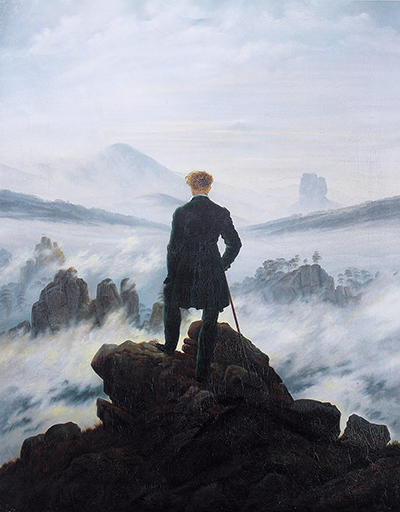
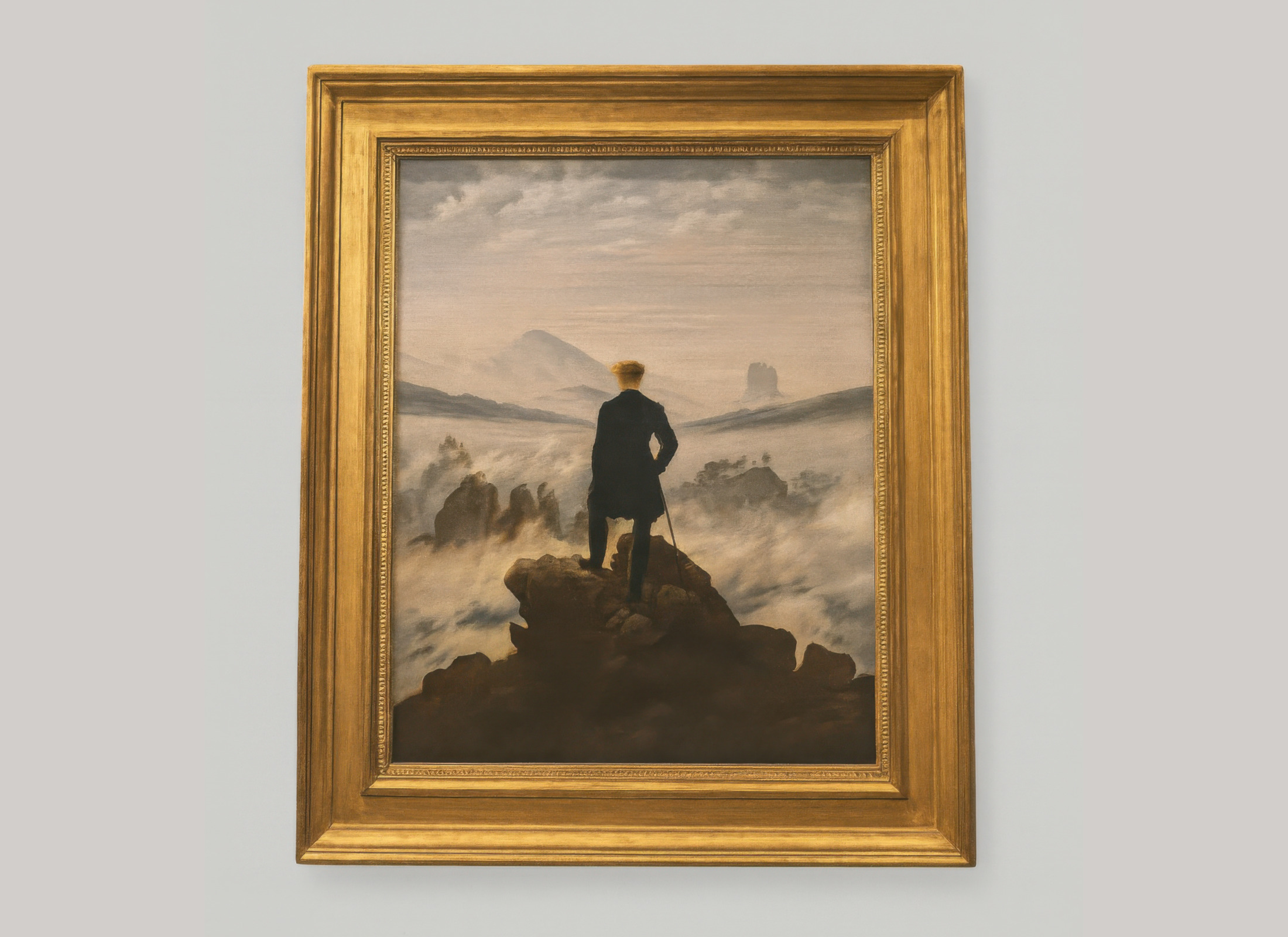
Wanderer above the Sea of Fog, or Der Wanderer über dem Nebelmeer, to give it it's original German title, is the most famous painting from the career of German Romanticist painter, Caspar David Friedrich.
It was finished in 1818 and now resides at the Kunsthalle Hamburg in Hamburg, Germany.
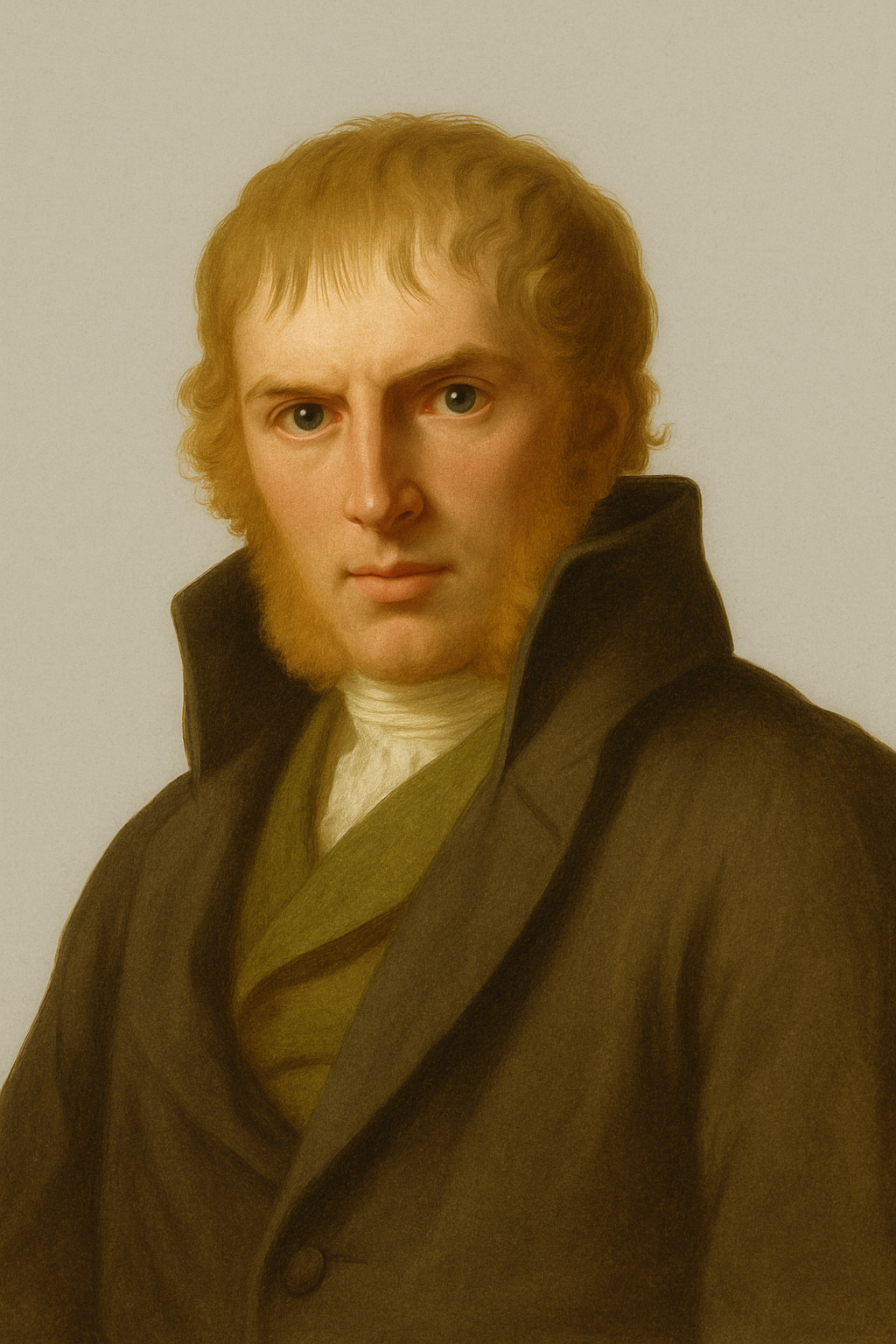
Close your physical eye, so that you may see your picture first with the spiritual eye.
Friedrich's Masterpiece
The style of this painting is instantly recognisable as the work of Friedrich, with a foreground figure superimposed against a stunning landscape scene. This style of composition helps the viewer to feel very much a part of the painting which was one of the strengths of this famous German painter.
Landscape scenes of Germany continued throughout his career but not always with a figure in the foreground, despite that though, it remains very much a signature of his career.
It is common for artists to become famous for just one artwork, despite having produced so much during their lifetime and Friedrich can be considered inseparable to Wanderer above the Sea of Fog. It has also been promoted to be considered one of the finest contributions to the entire Romanticist movement.
In this memorable artwork there is a flurry of mist that drifts across the landscape as the key figure stands tall, looking down on this mountainous setting. He is smartly dressed, suggesting he holds a powerful position but the way in which his back is turned to the viewer, and that we cannot see his face, leaves a mysterious element to this painting.
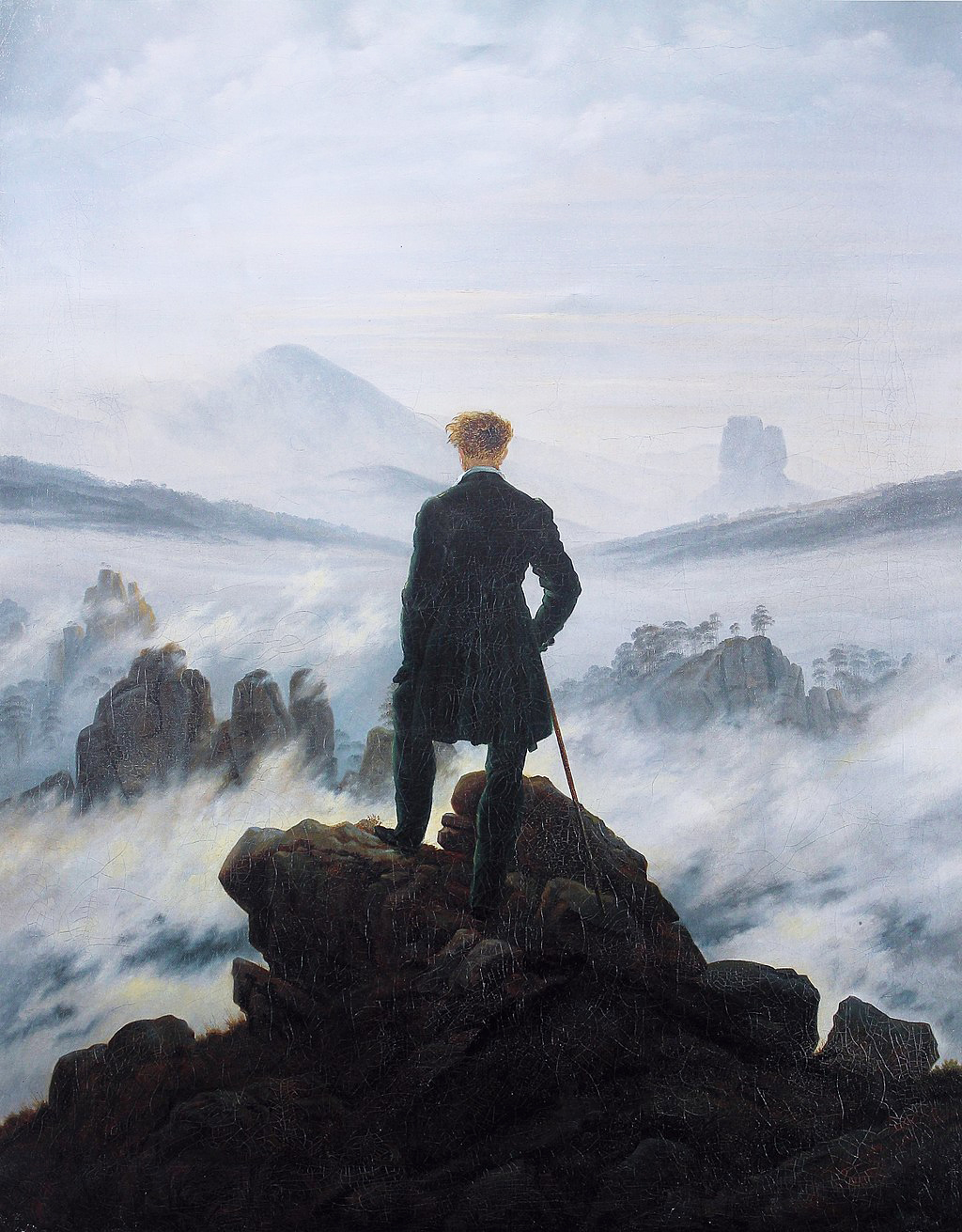
Large Image of The Wanderer above the Sea of Fog
The Mystery Figure
Who is he? What is he doing? The viewer is left to debate what appears before their eyes. We have included a larger image of the painting at the bottom of this page so that you can appreciate even more of the detail added by artist Friedrich.
The figure in this scene is dressed in a smart overcoat, coloured dark green (you may not be able to make out this colour in the photograph), and holds a brown walking stick in his right hand. This suggests age and experience, but he holds it at an angle which oozes strength and confidence.
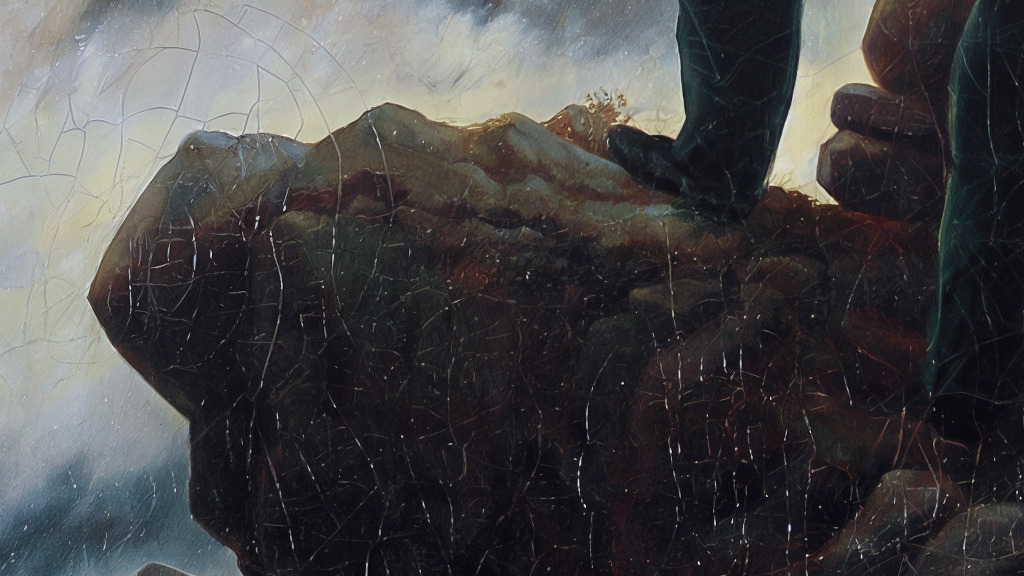
His hair is untidy, suggesting that the wind has unsettled an otherwise groomed individual. He cares not, for his focus is entirely taken by the mass of fog that sweeps across the landscape in front of him. The rocks on which he stands are darkened, allowing the rest of the scene to drift into the correct perspective, with a greater brightness.
It also helps to focus the eye on the gentleman in the foreground. He also wears a shirt below his coat and also solid boots which give a picture of comfort and confidence within these challenging conditions.
Composition
Artist Friedrich separates the scene into three or four sections, altering the level of brightness on each one in order to build this sense of perspective. Beyond the initial foreground where the dark figure stands in awe, there is then immediately in front of him another section of rock with trees that dots out from above the clouds.
The artist believed that in having this figure stand with his back to us, looking outwards into the world, that we, the viewer, could also easily imagine ourselves doing exactly the same. By providing more of an identity to the figure, this would have been more difficult. It is also significant how the gentleman is lifted upwards, looking down on the scenery from a position of strength, where as an upwards gaze would have balanced the painting very differently.
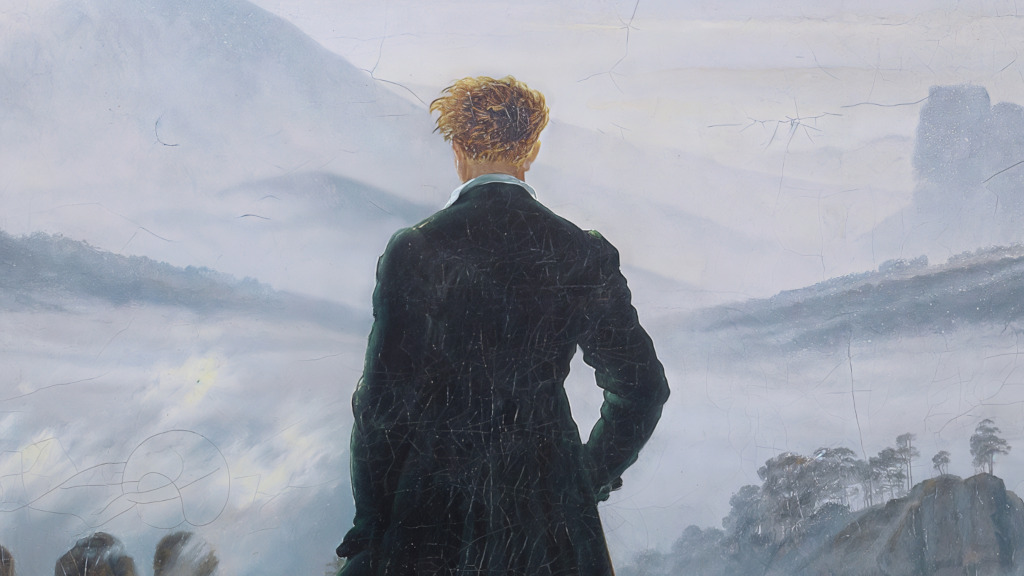
The striking figure provides a vertical structure, prominently placed in the centre of the composition. Its dark colour also helps to draw in our attention straight away. The lighter tones of the clouds around provide a strong contrast, with small elements of the background then peeking out as we track our eyes across the rest of the painting.
There is also an interesting contrast between the softness of the clouds and the harsh, sharp edges of the rock formations, which was intended by the artist to carry a symbolic meaning. There is also a clear use of diagonals that bring structure to the piece, most notably in the rocks stood on by the standing figure, but also in elements of far distant background.
Environment
There is some vegetation, but generally the scene is of a relatively barren environment, deep into the tall mountains. This section dots jutting shapes vertically up to the sky right across the canvas. Most are partially covered by fog, but a few rocks of the left hand side can be seen without any impediment.
The sea of fog, in line with the title of the piece, is the main focal point across the background, mixing inside and out of all other elements of the scene. The fog is carefully applied by Friedrich as a means to separating different parts of the composition, with this transparent format helping them to fuse together smoothly. This fog is not simply meteorological; it becomes a philosophical veil, separating the wanderer from the material world and inviting contemplation of the spiritual.
Friedrich's use of spirituality within his work is achieved here with the way in which the mist appears entirely set in, perhaps even hanging statically. It also helps us to determine that perhaps this scene is from early morning or late afternoon. Romanticism used landscape art but combined it with imagination and symbolism in ways that many would miss on viewing an artwork on first inspection.
The artist's scene is a combination of inspirations, fused together into an idealised form, just as was the case with many other Romanticism landscape painters. Scholars have noted similarities to the Elbe Sandstone Mountains and the Riesengebirge between Germany and the Czech Republic, but the final setting is intentionally non-specific.
Overall, the environment serves as a mirror of the wanderer's inner mind. While his body stands firmly on the rock, his surroundings dissolve into fog, distance and a real sense of mystery. Friedrich creates an environment that engages both the senses and the imagination, encouraging viewers to ponder their own place within the immense world around them.

Alternatives Names of the Painting
Perhaps due to the perils of translations, this German painting is sometimes given different names in English, beyond the generally accepted name of Wanderer above the Sea of Fog which we have defaulted to. Others have referred to this piece as Wanderer above the Mist or Mountaineer in a Misty Landscape. Whatever the disagreement, the image itself remains the artist's signature artwork and also a key highlight in the achievements of the European Romanticist movement.
Romanticism Movement
Other notable members of the group included the likes of Eugene Delacroix, who gifted us the likes of Liberty Leading the People, Death of Sardanapalus and Christ on the Sea of Galilee, as well as British landscape painter JMW Turner who is most famous for The Fighting Temeraire.
Location
Whilst being a major highlight in the collection of the Kunsthalle Hamburg in Germany, Wanderer above the Sea of Fog stands alongside several highly significant paintings including the likes of Madonna by Edvard Munch, Jacob Restaurant by Max Liebermann, Revolution of the Viaduct by Paul Klee, Phryne before the Areopagus by Jean-Léon Gerome and Nana by Edouard Manet.
You will also find contributions from the Old Masters, such as Francisco de Goya, Rembrandt van Rijn, Peter Paul Rubens, Jacob Isaacksz van Ruisdael and Giovanni Battista Tiepolo.
Hamburger Kunsthalle,
Glockengießerwall 5,
20095 Hamburg,
Germany
Timeline of Caspar David Friedrich's Key Paintings
This concise timeline charts the creation years of Caspar David Friedrich's most important paintings, allowing you to see at a glance how his artistic output developed across the Romantic era. By mapping masterpieces such as The Sea of Ice, Wanderer above the Sea of Fog, and Chalk Cliffs on Rügen onto a single visual line, the chart reveals patterns in Friedrich's most productive periods and highlights the remarkable consistency of his vision throughout his career.