

 Artemisia Gentileschi.jpg)
 by Tom Gurney
Tom Gurney BSc (Hons) is an art history expert with over 20 years experience
Published on June 19, 2020 / Updated on September 6, 2026
Email: tomgurney1@gmail.com / Phone: +44 7429 011000
Judith Slaying Holofernes, Naples by Artemisia Gentileschi
Artemisia Gentileschi's Naples version of Judith Slaying Holofernes, now in the Museo e Real Bosco di Capodimonte, is one of the defining images of her career. It shows Judith and her maidservant at the instant they kill Holofernes, the Assyrian general whose army threatens Bethulia. The scene is violent, compressed and physically demanding. Artemisia does not make Judith's victory graceful. She makes it hard, bloody and collective. [1]
This page focuses on the Naples/Capodimonte painting. Artemisia painted more than one version of Judith Slaying Holofernes, and the Florence version in the Uffizi has its own object record, dating questions and reception history. The two canvases are close enough to invite comparison, but they should not be treated as interchangeable. The Naples canvas has its own museum setting, early-date significance, exhibition history and place within Artemisia's development as a painter of violent biblical drama. [1][2]
The painting has often been connected to Artemisia's biography, especially the 1612 rape trial of Agostino Tassi. That connection is understandable, but it cannot be the whole reading. Judith was a major biblical subject in Baroque art, and Artemisia's version belongs to a religious, artistic and theatrical culture that understood the heroine as a figure of deliverance, courage and divine justice. The painting's force comes from the way Artemisia made that inherited story feel terrifyingly present.
Image reference: Museo e Real Bosco di Capodimonte.
At a Glance
- ArtistArtemisia Gentileschi
- TitleJudith Beheading Holofernes / Judith Slaying Holofernes
- VersionNaples/Capodimonte version
- DateNational Gallery exhibition material: about 1612-13 [2]
- MediumOil on canvas [1]
- CollectionMuseo e Real Bosco di Capodimonte, Naples [1]
- SubjectJudith and her maidservant killing Holofernes
- Key comparisonFlorence/Uffizi version
- Related Judith pageJudith and Her Maidservant
- Main themesBiblical deliverance, collaboration, Caravaggism and bodily force
Contents
- The Story of Judith and Holofernes
- Which Judith Version Is This?
- Object Identity and Dating
- Capodimonte and Naples
- A Darker, Closer Violence
- Judith and Abra
- Holofernes and the Body
- Caravaggism and Artemisia
- Relationship to the Florence Version
- How to Read the Naples Judith Today
The Story of Judith and Holofernes
The story of Judith comes from a biblical text included in Catholic tradition. Bethulia, Judith's city, is threatened by the Assyrian army led by Holofernes. Judith, a widow, goes into the enemy camp beautifully dressed and pretends to seek alliance or favour. Holofernes invites her to a banquet. After he drinks heavily and falls asleep, Judith takes his sword and cuts off his head. She returns with the head as proof of victory, and her people are delivered from the siege.
The story was powerful because it joined violence to virtue. Judith could be understood as a heroine of courage, faith and political deliverance. In Renaissance and Baroque art, she often appeared as a figure through whom tyranny, threat and divine protection could be made visible. [5] Artemisia's Naples painting keeps that moral seriousness, but it refuses to make deliverance clean.
Artemisia chooses the most difficult instant: not Judith before the decision, and not Judith after the triumph, but the killing itself. Holofernes has not yet become a trophy or a symbol. He is a living body resisting death. Judith and her maidservant are not delicately removed from the violence; they are physically involved in it. The painting asks what sacred victory looks like when it is carried out by human bodies in a dark room.
Which Judith Version Is This?
Artemisia's Judith paintings can be confusing because several closely related subjects survive. The Naples painting is the Capodimonte version discussed here. National Gallery exhibition material presented this Naples canvas as about 1612-13 and brought it into comparison with the Florence version, described there as about 1613-14. [2] Those comparison dates are useful, but the page identity should remain simple: this article follows the Naples/Capodimonte object.
The Florence/Uffizi painting is a separate version with its own page, object record and reception history. The two works show the same climactic subject, but their dating, collection settings and source records need separate treatment. A reader moving between the two pages should be able to understand both the shared subject and the different object identities.
Object Identity and Dating
The safest way to approach the Naples Judith is to begin with what can be named securely: it is the Capodimonte painting in Naples, and major museum sources present it as Artemisia Gentileschi's treatment of Judith beheading Holofernes. [1][2] That sounds straightforward, but it matters because the fame of the subject can blur individual paintings into one general image.
The date also needs careful language. National Gallery exhibition material described the Naples version as about 1612-13. [2] The word "about" is important. It signals a scholarly estimate, not a day-by-day record of execution. The date makes the painting especially important for Artemisia's early development, but it should not be turned into unsupported certainty.
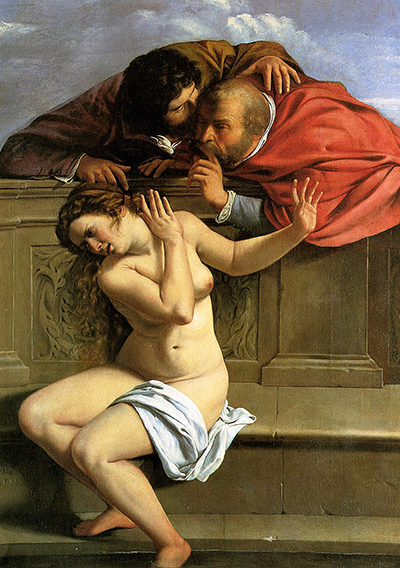
If the Naples canvas belongs around 1612-13, it stands close to Artemisia's first public emergence as a professional painter. Susanna and the Elders was signed and dated in 1610; the Tassi trial took place in 1612; Artemisia then moved into a Florentine career in which she gained access to circles rarely open to women artists. [4] The Naples Judith therefore shows not a late summary, but an artist already able to turn an inherited Baroque subject into something astonishingly direct.
Capodimonte and Naples
Today the painting belongs to the Museo e Real Bosco di Capodimonte in Naples. Capodimonte's own presentation foregrounds the work as Artemisia's Giuditta decapita Oloferne, and the museum's display/news context confirms the painting's continuing importance within the collection. [1][3]
The Naples setting matters even when the painting is discussed in relation to Artemisia's earlier Roman and Florentine years. Artemisia later settled in Naples in 1630 and worked there for much of the rest of her life, running a successful studio and producing major religious and courtly works. [4] Capodimonte therefore holds a Judith that belongs to the wider story of her art in Naples as well as to the earlier history of the subject.
That setting keeps the picture anchored as an artwork with a public and institutional life. The scene is intimate, but the painting is not merely a private psychological emblem. It belongs to a museum collection, an exhibition history and a modern conversation about Artemisia as one of the most forceful history painters of the seventeenth century.
A Darker, Closer Violence
The Naples Judith is a painting of proximity. The figures are pressed close together, and the action takes place in a darkness that makes the bodies feel even more concentrated. Holofernes lies on the bed, Judith leans into the act, and the maidservant restrains him with force. The viewer is not given a broad view of the tent, the army camp or the city that will be saved. The painting reduces the story to the moment of killing.
That reduction is one source of its power. Artemisia does not distract the viewer with secondary narrative detail. The body of Holofernes, the hands of the women, the blade, the sheets and the blood carry the meaning. The moral stakes of the story are present, but they are forced through the physical reality of the scene.
The darkness is not only atmospheric. It gathers attention around the bodies and prevents the background from relieving the pressure. In Baroque painting, darkness can work like a theatrical curtain, making lit forms appear with heightened force. Here it also traps the scene. The viewer feels close to the bed because there is almost nowhere else to look.
The painting's violence is graphic, but not loose. Artemisia organises it tightly. The arms of Judith and her maidservant create lines of force; Holofernes's body twists against them; the bed catches the event. The horror of the image depends on its order. Without that order, the painting would be only gruesome. With it, the scene becomes a disciplined act of pictorial control.
Judith and Abra
One of Artemisia's greatest choices is to make Judith and her maidservant act together. Judith may hold the sword and carry the name of the story, but the act depends on two women. The maidservant holds Holofernes down, adding her body weight and determination to Judith's strike. She is not a passive attendant waiting for the severed head. She is a participant in the deed.
This makes the scene less like a single heroic gesture and more like coordinated work. Judith is still the central figure, but she is not alone. The painting recognises that the act requires more than symbolic courage. It requires leverage, timing and trust between the two women.
The collaboration also makes the painting feel more believable. Decapitating Holofernes is not easy. Artemisia treats the scene as a difficult physical task that requires nerve. The maidservant's presence turns heroic virtue into shared labour, and that shared labour is one of the painting's most radical visual facts.
Holofernes and the Body
Holofernes is not an abstract tyrant in Artemisia's painting. He is heavy, alive and resisting. His body makes the scene hard. He twists beneath the women; the bed becomes the place where his power collapses; the violence of his death is registered in the physical pressure required to hold him down.
That weight is essential to the painting's realism. Judith's victory matters because Holofernes is formidable. If he were already helpless, the image would lose its moral and physical tension. Artemisia lets him remain dangerous even as he is being defeated.
The National Gallery's exhibition material described Artemisia's Judith paintings as sparing none of the gore, with blood streaming down white bedsheets while Holofernes writhes beneath the maidservant's weight. [2] That description captures why the Naples version has such modern impact. The blood is not hidden, symbolic or safely contained. It marks the white fabric and makes the event impossible to soften.
The bed deepens the reversal. It is soft, private and domestic in one sense, but it becomes the battlefield of the painting. Holofernes's expected space of command, appetite and sleep turns into the surface on which his authority collapses. The white fabric records the event almost like a witness inside the image.
The Face of Judith
Judith's face is crucial because it prevents the painting from becoming only a study of physical violence. Artemisia does not turn her into a detached executioner, nor into a fragile figure who cannot bear what she is doing. Judith appears concentrated. Her body leans into the act, and her attention stays on the task.
That concentration is one of the painting's most unsettling qualities. Judith does not look theatrical in a simple sense. She does not ask the viewer for applause or pity. She is inside the work of the scene, and her inward focus gives the painting an emotional temperature very different from triumph.
This matters because Judith's traditional meaning could easily become emblematic: the virtuous woman who defeats tyranny. Artemisia keeps that meaning, but she gives it a face and body under pressure. Judith's courage is not announced from outside the action. It is something the viewer sees being performed.
Repetition and Version
Artemisia's return to the Judith subject is sometimes treated as if the artist found one sensational image and repeated it. The Naples and Florence versions suggest something more interesting. Repetition in seventeenth-century painting could be a way to refine, adapt, answer patron demand, revisit a successful invention or test a subject's possibilities.
The Judith story gave Artemisia a structure capable of carrying all of those pressures. It offered a famous biblical heroine, a dramatic nocturnal setting, a moment of extreme action and a subject already charged by the Caravaggesque tradition. Returning to it did not diminish the invention. It allowed Artemisia to measure what could change when the same crisis was painted again.
For the Naples canvas, comparison should be useful but not controlling. The painting does not need to win a contest against the Florence version. It needs to be read for how it establishes the subject's force in Artemisia's career: close bodies, collaborative women, a dangerous male body, darkness, white sheets, blood and a refusal to turn heroism into elegance.
Caravaggism and Artemisia
Artemisia's Judith paintings belong to the Caravaggesque world of close bodies, strong contrasts and dramatic immediacy. She grew up in Rome in the artistic environment shaped by Caravaggio and by her father's response to him. [4] The Naples Judith uses that language with exceptional severity: darkness, lit flesh, compressed figures and a scene captured at maximum tension.
The comparison with Caravaggio is useful but limited. His own Judith Beheading Holofernes had already made the biblical subject shocking. Artemisia's paintings answer that tradition with a more forceful account of the women's physical involvement. Judith and the maidservant do not stand apart from the violence; they enter it bodily.
Smarthistory's discussion of Artemisia's Judith subject emphasises Baroque realism, proximity to the picture plane and strong chiaroscuro. [5] Those features matter because they are the tools by which Artemisia turns the scene into an event the viewer almost shares. The darkness is not only a style label. It is a way of forcing attention onto the decisive bodies.
Yet Artemisia is not only a follower of Caravaggio. The Naples Judith shows her own pictorial intelligence. She takes a dramatic subject already known to Baroque viewers and makes female agency more physically convincing. The painting is Caravaggesque, but its emotional structure is Artemisia's.
Biography Without Reduction
The Naples Judith has often been read through Artemisia's biography. She was raped by Agostino Tassi in 1611, testified during the trial in 1612, and built a career in a society where women artists were rarely granted easy authority. [4] It is impossible to pretend that modern viewers do not bring that knowledge to the painting.
But the painting should not be reduced to private retaliation. The story of Judith long predates Artemisia, and its Baroque meanings included faith, virtue, divine protection and the defeat of tyranny. [5] Artemisia's personal history may intensify the way viewers respond to the image, but it does not replace the subject's religious and artistic context.
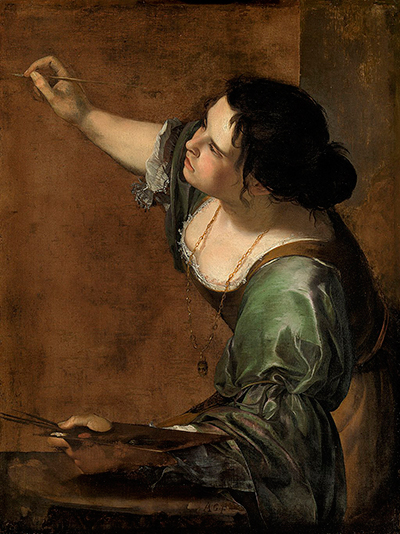
The richer reading keeps biography and painting in dialogue. Artemisia repeatedly painted women under pressure: Susanna threatened by the elders, Judith acting against Holofernes, Saint Catherine bearing the signs of martyrdom, and La Pittura absorbed in artistic labour. The Naples Judith belongs to that broader pattern. It is a painting about a woman performing an act that the story defines as necessary, terrifying and saving.
Relationship to the Florence Version
The Florence and Naples versions are companions, not duplicates. They both show the beheading itself, but their identities differ. The Uffizi painting is tied to Florence, Medici history and Uffizi reception. The Naples painting is the Capodimonte object, frequently framed in exhibition material as the earlier version around 1612-13. [2]
Comparing the two versions can help readers see Artemisia's process of rethinking. The same subject can become more or less compressed, darker or sharper, differently weighted, differently related to patronage and display. The recurrence of Judith is not a failure of invention. It is evidence that Artemisia understood the subject's capacity to bear repeated interpretation.
The Naples page therefore sends readers to the Florence page, but does not lean on it. The point is not to decide which version is more authentic, more violent or more famous. The point is to understand how each painting works and why both matter.
Judith in Artemisia's Career
The Judith subject became one of Artemisia's great artistic territories. The beheading paintings show the climactic act; Judith and Her Maidservant, now in Detroit, shows a later moment when the women prepare to escape. Smarthistory's discussion of that painting describes the suspense of the aftermath, with Judith and the maidservant alert after the killing. [6]
Taken together, these works show that Artemisia did not treat Judith as a single pose or emblem. She explored different moments of the story: the act itself, the aftermath, the danger of discovery and the partnership between the women. This range is part of her originality.
The Naples painting is central because it confronts the most difficult moment directly. It is not the elegant Judith after victory. It is Judith in the terrible work of victory. That distinction helps explain why the painting has become an emblem of Artemisia's art without exhausting its meaning.
Capodimonte, Display and Modern Reception
Capodimonte's continued presentation of the Naples Judith keeps the painting within a living museum context rather than only in art-history books. The museum has highlighted the work in collection storytelling and display news, confirming its place among the works that define the collection's public identity. [1][3]
Modern reception of the painting has also been shaped by exhibitions that centre Artemisia's achievement as a storyteller and history painter. The National Gallery's Artemisia exhibition presented her as one of the greatest storytellers of her time and stressed her ability to transform traditional subjects featuring women of strength, passion and vulnerability. [2] The Judith paintings were central to that argument.
The painting's modern fame can be double-edged. It draws people to Artemisia, but it can also trap her inside the most violent image. The Naples Judith should be understood as one major work within a wider career that includes Susanna, Saint Catherine, La Pittura, Esther, Magdalene and large Neapolitan religious commissions.
How to Read the Naples Judith Today
Begin by identifying the object. This is the Capodimonte/Naples version of Artemisia's Judith Slaying Holofernes, not the Uffizi version. Its identity matters because the painting belongs to a specific collection, source history and exhibition record.
Then look at the collaboration. Judith and the maidservant act together. The story may place Judith in the title, but Artemisia's composition gives the maidservant real agency. The killing is not a theatrical solo. It is a coordinated deed.
Look at the darkness and the bed. The scene is not open, civic or ceremonial. It is enclosed, physical and intimate. The bed, sheets and blood make victory feel bodily rather than symbolic.
Finally, hold biography and history in balance. Artemisia's life gives the painting a powerful resonance, but the work also belongs to biblical narrative, Baroque realism, Caravaggism, Capodimonte's collection and the long tradition of Judith as a figure of deliverance. The Naples Judith is strongest when all of those meanings remain visible.
Related Pages
- Artemisia Gentileschi
- Biography
- Paintings
- Judith Slaying Holofernes, Florence
- Judith Slaying Holofernes, Naples
- Judith and Her Maidservant
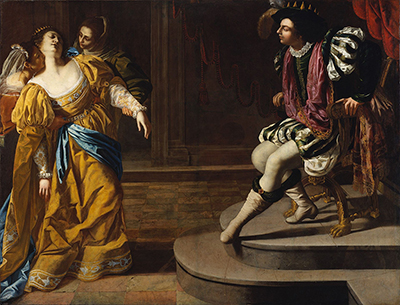
- Jael and Sisera
- Susanna and the Elders
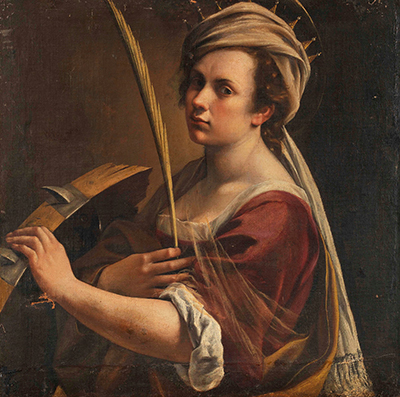
- Self-Portrait as Saint Catherine of Alexandria
- Self-Portrait as the Allegory of Painting
- Caravaggio
- Baroque Artists
Frequently Asked Questions
Discussion
What should readers notice when looking closely at Artemisia Gentileschi's Naples Judith Slaying Holofernes?
Reader Insights
What detail helps you keep the Capodimonte painting distinct from the Uffizi version?
How does Abra's physical role change the way you read Judith's act?
How does the about 1612-13 dating in exhibition material affect your sense of Artemisia's early development?
Join the Conversation
Share your reading of this painting below.
References
- Museo e Real Bosco di Capodimonte, Giuditta decapita Oloferne di Artemisia Gentileschi.
- National Gallery, London, Artemisia exhibition press release.
- Museo e Real Bosco di Capodimonte, Bentornati a Capodimonte.
- National Gallery, London, Artemisia Gentileschi (1593-1654 or later).
- Smarthistory, Dr. Esperanca Camara, Artemisia Gentileschi, Judith Slaying Holofernes.
- Smarthistory, Dr. Beth Harris and Dr. Steven Zucker, Artemisia Gentileschi, Judith and Her Maidservant with the Head of Holofernes.
 Artemisia Gentileschi.jpg)