Ford Madox Brown.jpg)
 by
Tom Gurney
Tom Gurney BSc (Hons) is an art history expert with over 20 years experience
Published on June 19, 2020 / Updated on October 30, 2026
Email:
tomgurney1@gmail.com
/ Phone:
+44 7429 011000
The Convalescent by Ford Madox Brown: Introduction
Emma Madox Brown lies against pale pillows, her loose red hair spreading across the bed. One hand rests on the covering, holding a small bunch of flowers. Her eyes are open, but her gaze passes beside us. Ford Madox Brown brings us close to her face without turning the encounter into a conversation.
The Convalescent portrays Brown’s wife recovering from a dangerous illness in 1872. Hueffer’s family biography records the illness and the making of a duplicate in February 1873. Those two dates introduce a question that the portrait’s quiet appearance cannot answer: how do its surviving versions relate to one another? [1]
Two nearly identical pastels survive, in Birmingham and New York. The Metropolitan Museum identifies its sheet as one of the pair. [2]
At a Glance
- Artist Ford Madox Brown.
- Subject Emma Madox Brown, the artist’s wife, during recovery from illness.
- Date Surviving sheets dated 1872; duplicate recorded in February 1873. Their order remains unresolved. [3] [1]
- Birmingham version Pastel, 47.5 × 43.5 cm; Birmingham Museums Trust, accession 1906P793. Its inscription includes October 1872. Presented by subscribers in 1906. [3]
- New York version Pastel, sheet 46.7 × 44.1 cm; Metropolitan Museum of Art, accession 10.46, Rogers Fund, 1910. [2]
This work across Ford Madox Brown’s career
Manfred on the Jungfrau
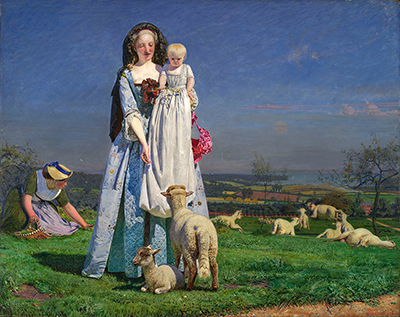
1841; retouched 1861Pretty Baa-Lambs
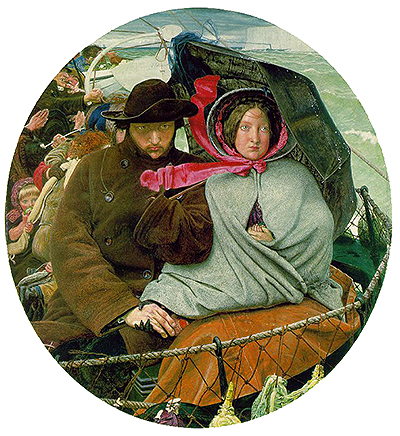
1851–1859The Last of England
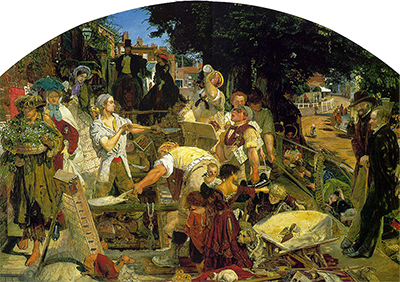
1852–1855Work
1852–1865King René’s Honeymoon
Tate watercolour, 1864The Convalescent by Ford Madox Brown (current article)
1872, with a duplicate made in 1873Manchester Murals
1878–1893Contents
- Looking at Emma
- Recovery and the Artist’s Gaze
- Pastel, Fabric and Flowers
- Two Versions and a Charitable Gift
- A Later Life in a Book
- Emma Among Brown’s Portraits
Looking at Emma
The bed fills almost the entire composition. There is little surrounding furniture to locate Emma in a larger room, and no attendant whose actions explain the scene. Her head, the supporting pillows, her hand and the flowers provide nearly everything we need to look at. The closeness makes small differences in colour and direction unusually conspicuous.
Her hair supplies the strongest dark shape. It rises above the forehead, spreads behind the head and extends across the pillow to the left. Warm reddish strokes catch the light within the deeper brown. Against this mass, the face looks especially pale. Its contours are gently modelled, with shadow beneath the nose, beside the cheek and under the chin. The slightly parted lips and heavy eyelids give the stillness a physical presence without telling us exactly what Emma feels.
The hand introduces another point of attention below the face. Its fingers hold the flower stems near the surface of the bedcover. This small contact matters: the flowers are something she can touch, rather than an ornament displayed elsewhere in the room. Their yellow, purple and green interrupt the much larger field of pale fabric.
Follow the folds around them. The covering rises towards the hand, dips below the wrist and gathers into darker creases at the lower right. Behind Emma’s head, the pillows turn in different directions. Their angles support the reclining pose while giving the otherwise quiet composition a framework of diagonals. The eye can travel from the face down to the hand, then back through the bedding to the head.
Recovery and the Artist’s Gaze
Cathy married the musicologist Franz Hueffer in 1872. [2]
The family’s chronology places the portrait in a difficult autumn. In a July letter reproduced by Hueffer, Brown anticipated Cathy’s marriage in the first week of September. The biographer subsequently describes a dangerous feverish illness that threatened Emma’s life around October. The portrait belongs to the period of recovery, rather than illustrating a doctor’s diagnosis or a particular treatment. [1]
Brown’s comment during Emma’s 1872 illness, quoted by the Metropolitan Museum, calls her “very pictorial and young as ever again” after describing her as thin from fever. The remark records his judgement of her appearance; it does not give us Emma’s own account of the experience. [2]
His remark draws attention to a tension in the portrait. We are looking at someone whose health has been in danger, yet the image also carefully organises her hair, face, hand and bedding into a visually compelling arrangement. Acknowledging that arrangement does not require us to decide whether the portrait expresses one overriding emotion. The observation of a familiar person and the making of a beautiful picture occupy the same space.
Emma began modelling for Brown in 1848; they married in 1853, as MacCulloch’s corrected chronology records. [3]
That long familiarity gives a context for the bedside encounter, although it does not make the image a transparent record of private feeling. Brown’s biography follows the family history more fully.
Pastel, Fabric and Flowers
The handling is easiest to appreciate where the surface changes from skin to cloth. Across the face, transitions of light and shadow are relatively continuous. On the pillows and covering, individual slanting marks become more obvious. Bright strokes pick out folds, while darker passages leave the texture of the drawing conspicuous. Seen together, these different degrees of finish make the face feel settled within a bed that remains visibly worked in pastel.
In the Metropolitan Museum version, short pale strokes cross the forehead, while similarly light marks help shape the bedding. Broad passages establish the pillows, but narrow dark lines articulate their creases. The medium accommodates both a softly modelled likeness and an energetic description of fabric. These are visible effects of the marks; the image alone cannot establish the sequence in which Brown applied them.
MacCulloch identifies pansies, linking them through an 1857 handbook to “You occupy my thoughts.” [3] The Met allows pansies or violets. [2]
The flower-language association offers an affectionate reading of the posy. It is a historical convention applied by the scholar, rather than a surviving explanation by Brown of his choice. The picture leaves room for the gesture of bringing flowers to matter alongside any particular verbal meaning.
The flowers also work without a verbal translation. Their small scale draws us towards the hand; their saturated colour sharpens the paleness around them. Their fragile stems and open petals introduce delicate shapes into the heavy folds. We can recognise these visual relationships without assuming that every colour carries a separate coded message.
Watch: Ford Madox Brown
Choose a film exploring the people, stories and visual details in two of Brown’s best-known paintings.
Pre-Raphaelites: Ford Madox Brown – Work
Curator Tim Barringer explores the figures and stories within Work.
Watch on YouTubeTwo Versions and a Charitable Gift
The quiet bedside image entered a wider network of artistic assistance. Hueffer records Brown’s contribution of The Convalescent to a fund for the widow of a Manchester artist named Holding. Frederic Shields had initiated the effort, and Brown helped seek contributions from fellow artists. The portrait’s history therefore includes a practical act of support beyond the family whose likeness it preserves. [1]
Hueffer subsequently lists a duplicate of the chalk portrait among Brown’s work in February 1873. That entry records an act of repetition, but does not identify the two surviving objects by their present accession numbers. It is evidence to compare with the sheets themselves, rather than a complete modern catalogue of their subsequent movements. [1]
MacCulloch records Fairfax Murray’s purchase of Birmingham’s sheet from Brown’s posthumous studio sale in 1893, and a Boddington-owned version exhibited in 1897 and 1909. Birmingham’s October 1872 inscription complicates identifying it as the retained 1873 duplicate; she leaves priority unresolved. [3]
The dates and measurements listed above consequently describe related objects without settling their order. An inscription can preserve the date associated with a composition, while a written account can document further work. Here the evidence needs to be held together: calling one sheet the original and the other a later copy would make a certainty that the available history does not support.
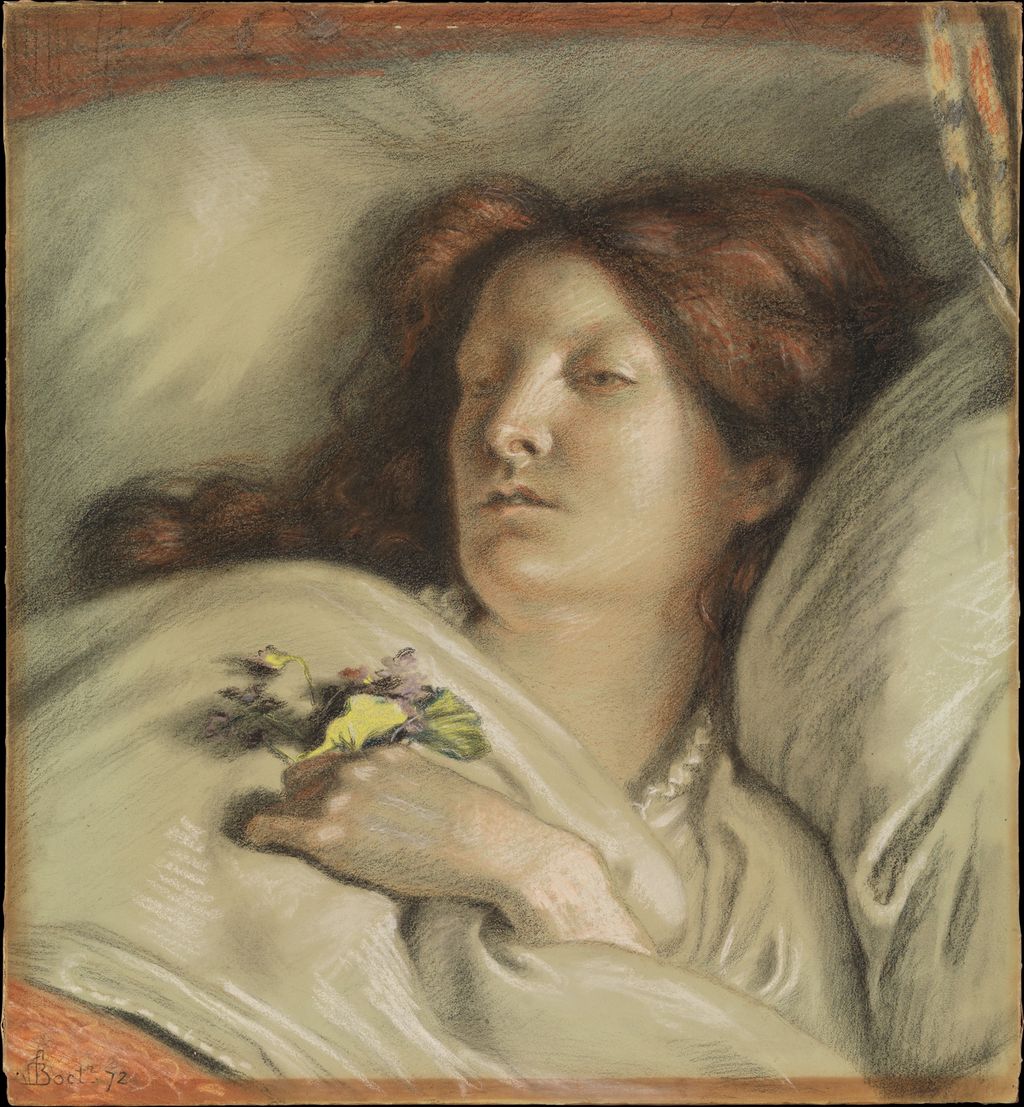
Ford Madox Brown, The Convalescent, 1872. Pastel, Metropolitan Museum of Art, 10.46. This separately identified version retains the dated inscriptions.
Image source
.
CC0 / Public domain
.
A Later Life in a Book
In 1891 Brown supplied the frontispiece for Mathilde Blind’s Dramas in Miniature . The original edition places it opposite the title page and identifies the artist there. Beneath the image are two lines from “The Message,” with a reference to page 25. This is a specific literary setting for the bedside design, rather than another pastel version of Emma’s portrait. [4]
The resemblance is immediately visible in the reclining head, abundant hair, pillows and flowers. Yet the illustration changes the action. The woman raises her hand, lifting a flowering branch towards her face; another figure appears behind the flowers. A horizontal rail crosses the space above the bed. The close view has become an encounter involving a gift, rather than a solitary likeness with a small posy resting on the bedcover.
Blind’s poem is narrated by a nurse recalling a young woman named Nellie Dean. The patient resists religious consolation, while describing the abandonment, poverty and sexual exploitation that have brought her to this ward. A visiting girl distributes flowers, including branches of white thorn. Their scent releases memories of the patient’s childhood and her mother; she tries to rise, then falls back dead. The frontispiece’s caption points specifically to the moment when the scent interrupts her anger and revives memory. [4]
The flowers therefore do different work in the two settings. In the pastel they are held by Emma during recovery. In the book they enter a narrative of remembered tenderness and approaching death. The repeated arrangement of a woman, bedding and flowers can carry both meanings because the surrounding story changes what we understand her to be experiencing.
Emma died in 1890, many years after the illness represented in The Convalescent , as Hueffer’s later account records. [1] Blind’s fictional patient supplies no evidence about Emma’s circumstances. The 1891 book gives the composition another life without revealing a hidden narrative that had governed the portrait from the beginning.
Emma Among Brown’s Portraits
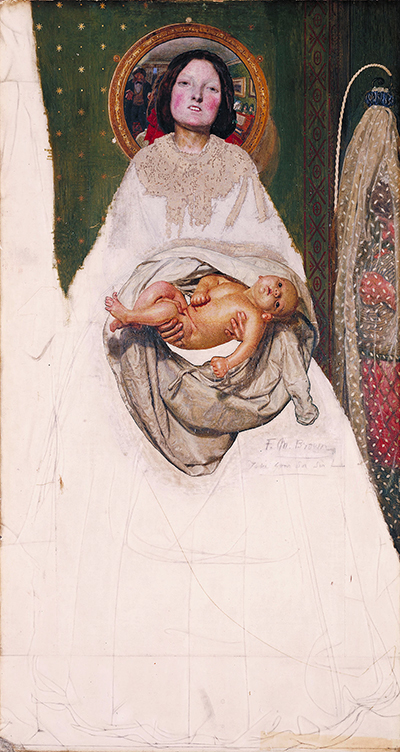
Comparison with Take Your Son, Sir brings out the stillness of the reclining pose. There a standing woman holds a child forward, directing attention towards an encounter beyond the canvas. Here the bedding supports Emma, and her hand rests close to her body. The difference lies in what the figures do and how the surrounding space holds them.
Brown’s Self-Portrait offers a further contrast in address. The painter turns his face towards the viewer, with a palette making his occupation explicit. Emma looks past us, and the bed encloses her. These different arrangements give each portrait its particular kind of presence: one person meets our scrutiny, while the other remains absorbed in an experience we can observe only from outside.
Artworks directory
Explore paintings, drawings, cartoons, illustrations and decorative designs documented in museum collections and specialist research. Distinct versions are listed separately; repeated print impressions are grouped. The coverage includes studies and works without a dedicated article and remains open to further research.
| Name | Date | Medium |
|---|---|---|
| Work (Manchester) | 1852–1865 | Oil on canvas |
| The Last of England (Birmingham) | 1852–1855 | Oil on panel |
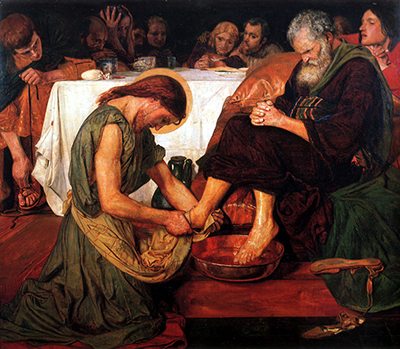
| Jesus Washing Peter’s Feet | 1852–1856 | Oil on canvas |
| Pretty Baa-Lambs | 1851–1859 | Oil on panel |
| Take Your Son, Sir | ?1851–1892 | Oil on canvas |
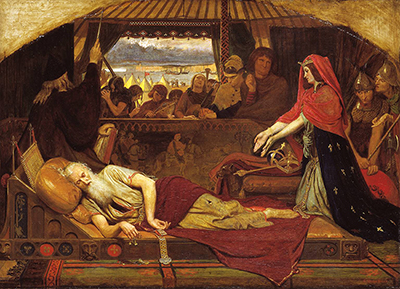
| Lear and Cordelia | 1849–1854 | Oil on canvas |
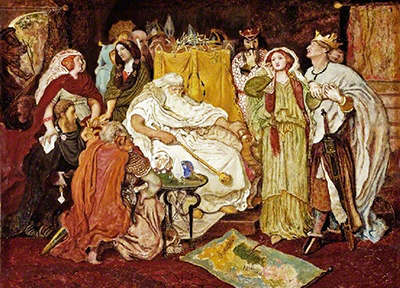
| Cordelia’s Portion | 1867–1875 | Oil on canvas |
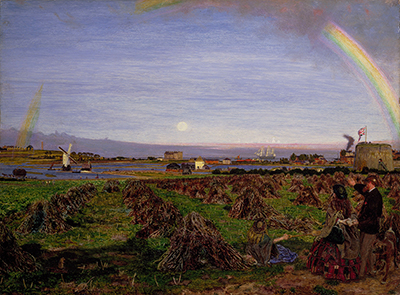
| Walton-on-the-Naze | 1859–1860 | Oil on canvas |
| Chaucer at the Court of Edward III (Tate) | 1856–1868 | Oil on canvas |
| Carrying Corn | 1854–1855 | Oil on mahogany |
| The Hayfield (The Hay Harvest) | 1855–1856 | Oil on mahogany |
| Stages of Cruelty | 1856–1890 | Oil on canvas |
| The Irish Girl | 1860 | Oil on canvas laid on board |
| Romeo and Juliet (Delaware) | 1869–1870 | Oil on canvas |
| The Seeds and Fruit of English Poetry | 1845–1853 | Oil on canvas |
| Self-Portrait | 1877 | Oil on canvas |
| The Bromley Children | Probably 1844 | Oil on canvas |
| The Bromley Family | 1844 | Oil on canvas |
| Byron’s Dream (Manchester) | 1874; worked on into 1875 | Oil on canvas |
| Cartoon for The Baptism of Edwin | 1879–1891 | Pastel, coloured chalks and grey gouache |
| The Coat of Many Colours | 1864–1866 | Oil on canvas |
| The Convalescent (Birmingham) | Dated October 1872 | Pastel |
| Crabtree Watching the Transit of Venus (reduced painting) | 1881–1888 | Tempera on panel |
| Cromwell on His Farm (Lady Lever) | Completed 1874 | Oil on canvas |
| Cromwell Protector of the Vaudois | 1877 | Oil on canvas |
| Dalton Collecting Marsh-Fire Gas (Town Hall mural) | 1886–1887 | Mural on canvas |
| The Establishment of the Flemish Weavers (reduced painting) | 1881; completed 1888 | Tempera on panel |
| The Finding of Don Juan by Haidée (NGV) | 1869–1870; later retouched | Watercolour and gouache over pencil |
| Henry and Millicent Fawcett | 1872 | Oil on canvas |
| Jacob and Joseph’s Coat (Ponce) | c.1868–1871 | Oil on canvas |
| James Leathart | 1863–1864; altered 1869 | Oil on canvas |
| King René’s Honeymoon (Tate watercolour) | 1864 | Graphite, watercolour, gouache and gum arabic on card |
| King René’s Honeymoon Cabinet (collaborative work) | 1861; exhibited 1862 | Oak, inlaid woods, painted panels and metal mounts; Brown designed Architecture |
| Manfred on the Jungfrau | 1841; retouched 1861 | Oil on canvas |
| Millie Smith | 1846 | Oil on paper laid on panel |
| William Michael Rossetti by Lamplight | 1856–1857 | Oil on panel |
| The Traveller (Manchester oil) | 1868–1884 | Oil on panel |
| Waiting: An English Fireside of 1854–55 | 1851–1855 | Oil on panel |
| An English Autumn Afternoon | 1852–1853; finished c.1854 | Oil on canvas |
| Alfred the Great: Sketch of Alfred drawing in the Sand | 1843–1845 | pencil |
| Historical Notes and Sketches of Alfred the Great | 1843–1850 | brown ink writing over pencil |
| Angels watching the Crown of Thorns: Study of clasped Hands | 1846 | black chalk |
| Architecture: Study of Gothic Arches and 14th Century Vaulting | c. 1847 | brown pen and ink over pencil on grey paper |
| The Ascension: Study of Angels and Hands | 1844 | brown pen and ink over pencil |
| The Ascension: Study of a Group of Angels | 1844 | brown pen and ink over pencil |
| The Ascension: Study of a Group of six flying Angels | 1844 | brown pen and ink over pencil |
| The Ascension: Two nude Angels holding onto each other | 1844 | brown brush and ink over pencil |
| The Ascension: Study for a kneeling Apostle | 1844 | black chalk touched with white on brown-toned paper |
| Head of a Child | c. 1844 | black chalk touched with white on brown toned paper |
| The Ascension: Drapery Study of a praying Apostle | 1844 | black chalk |
| The Spirit of Justice: Seated Figure in ecclesiastical Robes, gripping a Staff with left Hand raised in a Blessing | 1844 | black chalk |
| The Ascension: Study for an Apostle | 1844 | black chalk |
| The Spirit of Justice: Body of seated Figure in ecclesiastical Robes holding a Staff and a Book | 1844 | black chalk |
| The Ascension: Study of an Apostle | 1844 | black chalk on toned paper |
| Full-length Sketch of a standing, naked Child | 1844 | black chalk on toned paper |
| The Ascension: Study for Christ | 1844 | brown pen and ink over pencil |
| Caricature: Composite Drawing: A Stunner | 1861–1863 | pencil |
| A Victorian Woman in her Underwear | 1861–1863 | pencil |
| Caricature: Composite Drawing: Bewigged Head | 1861–1863 | pencil |
| Bowed Head of a bearded Man | 1861–1863 | pencil |
| Chaucer at the Court of Edward III: Early compositional Study | 1845 | pencil with brown pen and ink |
| Chaucer at the Court of Edward III: Study for Milton and two Designs for Tombstones | c.1845–c.1846 | pencil with brown frame outline |
| Chaucer at the Court of Edward III: Tracing of the Figure of Milton | c.1845–c.1849 | brown pen and ink with pencil on tracing paper |
| Chaucer at the Court of Edward III: Tracing of a Gothic Arch | c.1845–c.1849 | brown pen and ink with pencil on tracing paper |
| Chaucer at the Court of Edward III: Early compositional Study | 1845 | pencil with brown pen and ink |
| Chaucer at the Court of Edward III: Nude Studies of two Boys | 1845 | pencil, laid down |
| Chaucer at the Court of Edward III: Nude Studies of four Figures | 1845 | pencil |
| Chaucer at the Court of Edward III: Eight early Studies of Figures and Hands | 1845 | pencil |
| Chaucer at the Court of Edward III: Nude Studies for the Figures of Byron, Shakespeare and Burns | 1845 | black chalk |
| Chaucer at the Court of Edward III: Drapery Study for Burns | 1847 | black chalk |
| Chaucer at the Court of Edward III: Study of a right Leg and left Foot for Milton | 1847 | black chalk |
| Chaucer at the Court of Edward III: Study of a left Leg for Shakespeare | 1847 | black chalk |
| Chaucer at the Court of Edward III: Study of Drapery for Milton | 1847 | black chalk |
| Chaucer at the Court of Edward III: Drapery Study for Shakespeare | 1847 | black chalk |
| Chaucer at the Court of Edward III: Study of a Man in a medieval Hood | 1847 | black chalk |
| Chaucer at the Court of Edward III: Study for the Cardinal | 1847 | black chalk |
| Chaucer at the Court of Edward III: Drapery Study in Profile for Courtier | 1847 | black chalk |
| Chaucer at the Court of Edward III: Drapery Study | 1847 | black chalk |
| Chaucer at the Court of Edward III: Female Nude Study of a Muse holding onto a Rail | 1847 | pencil |
| Chaucer at the Court of Edward III: Female Nude: Study of a Muse | 1847 | pencil |
| Chaucer at the Court of Edward III: Nude Study for seated Lady | 1847 | pencil |
| Chaucer at the Court of Edward III: Nude Study of a Woman with right Arm raised | 1847 | pencil |
| Chaucer at the Court of Edward III: Two Studies of Back of a seated Woman's Head | 1847 | pencil |
| Chaucer at the Court of Edward III: Two Studies of a seated Woman in lost Profile Pose and from the Back | 1847 | pencil |
| Chaucer at the Court of Edward III: Nude Study of a Woman | 1847 | pencil |
| Chaucer at the Court of Edward III: Sketch of a Woman supporting another Figure | 1847 | pencil |
| Chaucer at the Court of Edward III: Study of the Heads and Shoulders of two Women | 1847 | pencil |
| Chaucer at the Court of Edward III: Drapery Study for Edward III with Outline of a Child | 1847 | black chalk |
| Chaucer at the Court of Edward III: Foreshortened Study for Head of a Jester | 1847 | pencil |
| Chaucer at the Court of Edward III: Head of Alexander Pope | 1847 | black chalk |
| Chaucer at the Court of Edward III: Two Hand Studies | 1847 | black chalk |
| Chaucer at the Court of Edward III: Study of Head of Milton copied from Sculpture | 1848 | black chalk |
| Chaucer at the Court of Edward III: Nude Studies for the Squire and the Courtier talking to Gower | 1848 | pencil |
| Chaucer at the Court of Edward III: Drapery Study for the Black Prince | 1848 | black chalk with touches of white |
| Chaucer at the Court of Edward III: Three Studies of Hands | 1848 | Black chalk |
| Chaucer at the Court of Edward III: Four Studies of Hands | 1848 | black chalk touched with white |
| Chaucer at the Court of Edward III: Study of a clasped right Hand for one of the Poets | 1848 | black chalk |
| Chaucer at the Court of Edward III: Study of a left Hand for Burns | 1848 | black chalk heightened with touches of white |
| Chaucer at the Court of Edward III: Study of Drapery for Burns | 1848 | black chalk |
| Chaucer at the Court of Edward III: Drapery Study | 1848 | black chalk |
| Chaucer at the Court of Edward III: Drapery Study for the Black Prince | 1851 | black and white chalks on brown-toned paper |
| Chaucer at the Court of Edward III: Study for Squire's Legs | 1851 | black chalk heightened with white |
| Chaucer at the Court of Edward III: Two Head Studies of an old Woman | 1851 | black chalk |
| Costume Study: Five Sketches of Armour and Costume | 1844 | brown pen and ink over pencil |
| Costume Study: Archbishop's Dress | 1845 | brown pen and ink on tracing paper |
| Costume Studies: French and Italian thirteenth and fourteenth-century Costumes (seven Drawings) | 1845 | brown pen and ink on tracing paper |
| Costume Study: Seigneur de Rimini | 1845 | brown pen and ink on tracing paper |
| Dalziels' Bible Gallery: The Death of Eglon | 1863–1865 | engraved woodblock; designed by Brown, engraved by the Dalziel Brothers |
| Dalziels' Bible Gallery: The Death of Eglon | 1881 | wood engraving; designed by Brown, engraved by the Dalziel Brothers |
| Dalziels' Bible Gallery: Elijah and the Widow's Son | 1863–1865 | engraved woodblock; designed by Brown, engraved by the Dalziel Brothers |
| Dalziels' Bible Gallery: Elijah and the Widow's Son | 1881 | wood engraving; designed by Brown, engraved by the Dalziel Brothers |
| Dalziels' Bible Gallery: Joseph’s Coat (Compositional Sketch and four Studies for Jacob's Granddaughter) | 1863–1865 | pencil on paper |
| Dalziels' Bible Gallery: Joseph's Coat | 1863–1865 | engraved woodblock; designed by Brown, engraved by the Dalziel Brothers |
| Dalziels' Bible Gallery: Joseph’s Coat | 1881 | wood engraving; designed by Brown, engraved by the Dalziel Brothers |
| Decorative Sketches: Venus Reclining on a Shell in the Midst of the Sea | 1848–1849 | brown pen and ink over pencil |
| Decorative Design: Ornamental Pattern | 1850 | watercolour and bodycolour over pen and ink, and pencil on two sheets of paper |
| Down Stream: Main Illustration (Last Year's First of May) | 1871 | wood engraving; designed by Brown, print execution by an engraver |
| Down Stream: Tailpiece to the Poem (This Year's First of June) | 1871 | wood engraving; designed by Brown, print execution by an engraver |
| The Establishment of Flemish Weavers in Manchester A.D. 1363: Four Studies of Parts of a Horse | 1879–1882 | black, white and red chalk on rough brown paper |
| Female: Two Studies of young Woman in eighteenth-century Costume | 1849 | pencil |
| Infant's Repast: Study of Mother and Child | 1848 | black and white chalk |
| Infant's Repast: Study of Mother and Child with separate Arm and Leg Studies of the Child | 1848 | black chalk with grey wash |
| King Lear: Sketch of Lear questioning Cordelia | 1844 | brown pen and ink over pencil |
| Alfred the Great: Compositional Sketches | 1843–1845 | pencil |
| King Lear: Sketches of Lear imagining his unfaithful Daughters’ Trial and Lear in the Storm | 1844 | brown pen and ink over pencil |
| Alfred the Great: Compositional Studies and Sketches and Chaucer at the Court of Edward III: Study of Cherubs | 1843–1849 | pencil |
| King Lear: Kent accuses Oswald | 1844 | brown pen and ink with pencil underneath |
| King Lear: Lear recounts his Wrongs to Regan | Undated | Brown pen and ink over pencil |
| King Lear: Cordelia at Lear's Bedside (Lear's Awakening) | 1844 | brown pen and ink over pencil |
| Cordelia Parting from Her Sisters (The Germ) | 1850; reprinted 1901 | Etching; designed by Brown, print execution by an engraver |
| King René's Honeymoon: Study for Architecture | 1861 | brush and brown ink, with watercolour, over pencil on brown paper |
| The Last of England: Cartoon | 1852 | pencil, image edged with brown ink |
| The Last of England: Portrait of Emma Hill | December 1852 | chalks with scratching out on two sheets of paper |
| Lear and Cordelia and The Infant’s Repast: Four Studies of Hands | 1849 | black chalk |
| Lyra Germanica - the Christian Life: Abraham and Isaac | 1868 | wood engraving; designed by Brown, print execution by an engraver |
| Lyra Germanica - the Christian Life: Finished Design for The Entombment | 1867 | black pen and ink |
| Lyra Germanica - the Christian Life: The Entombment | 1868 | wood engraving; designed by Brown, print execution by an engraver |
| Male: Sketch of Man reclining on Steps with Hands bound together | 1844 | brown pen and ink over pencil |
| Male: Academic nude Study, half-length with Moustache and Arms folded | 1846–1849 | black chalk |
| Male: Academic Study of Nude holding a Staff | 1847 | pencil |
| Male: Academic Study of Nude posed as a Sculptor | 1847 | chalk with grey wash |
| Male: Academic Study, three-quarter length Nude, with a Moustache and clenched Fists | 1847 | black chalk |
| Oure Ladye of Saturday Night: Seven Sketches | 1846 | pencil |
| Oure Ladye of Saturday Night: Four Studies for Angel holding Child | 1847 | pencil |
| Oure Ladye of Saturday Night: Study of Angel holding Child | 1847 | black chalk |
| Oure Ladye of Saturday Night: Study of Arm and Hands for Angel holding Bowl of Water | 1847 | black chalk |
| Oure Ladye of Saturday Night: Drapery Study for Angel holding Bowl of Water | 1847 | black chalk |
| Oure Ladye of Saturday Night: Study of Head for Angel holding Bowl of Water | 1847 | black chalk with rubbing and grey wash |
| Oure Ladye of Saturday Night: Study of Child seated on Knees of the Virgin and two separate Studies of the Child's Legs | 1847 | pencil on brown-toned paper |
| Oure Ladye of Saturday Night: Frieze Design | c. 1847 | pencil and black pen and ink |
| Oure Ladye of Saturday Night: Three Studies of Arms and Legs of Child | 1847 | pencil |
| Oure Ladye of Saturday Night: Three Studies of Child's Legs on Virgin's Knees | 1847 | pencil |
| Oure Ladye of Saturday Night: Studies of Right Foot and Left Hand of Child | 1847 | pencil on light brown paper |
| Oure Ladye of Saturday Night: Drapery Study for Virgin | 1847 | black chalk |
| Oure Ladye of Saturday Night: Study for Head of Virgin | 1847 | black chalk with wash |
| Parisina’s Sleep: Study for Prince Azo and Parisina | 1842 | black chalk with pencil side drawing |
| Parisina's Sleep: Study for Head of Prince Azo | 1842 | black chalk with grey wash |
| Parisina's Sleep: Study for the Head of Parisina | 1842 | black and white chalk with grey wash |
| Poets of the Nineteenth Century: The Prisoner of Chillon: Compositional Sketch | 1856 | pencil |
| Profile of a Man's left Eye and Nose | c.1856 | pencil |
| Poets of the Nineteenth Century: The Prisoner of Chillon: Study of a Corpse | 1856 | pencil |
| Designs for Decoration | c.1856 | pencil |
| Poets of the Nineteenth Century: The Prisoner of Chillon | 1857 | wood engraving; designed by Brown, print execution by an engraver |
| Portrait: Head Study of Daniel Casey (three-quarter view) | 1848 | black chalk |
| Portrait: Head Study of Daniel Casey (full-face) | 1848 | black chalk |
| Portrait: Miss Iza Duffus Hardy | 1872 | pastel and coloured chalks on brown paper |
| Portrait: Emma Hill (later Mrs Madox Brown) | 1848 | black chalk |
| Portrait: Emma Hill (later Mrs Madox Brown) | 1852 | pencil |
| Portrait: Mrs Madox Brown (neé Emma Hill) | 9 May 1854 | pencil |
| The Repose in Egypt: Compositional Sketch | 1847 | pencil |
| Study of a Statue of the Discobolus | 1845 | Black chalk |
| William Shakespeare: Study | 1849–1850 | pencil |
| William Shakespeare: Invitation Card | 1850 | wood engraving; designed by Brown, print execution by an engraver |
| The Spirit of Justice: Study for Baron and his Advisor, with Sketches of Erudition and Wisdom | 1844–1845 | brown pen and ink over pencil |
| The Spirit of Justice: Drapery Study for Erudition | 1844–1845 | black chalk |
| Drapery Study and Sketch of Two Legs | Undated | Black chalk |
| The Spirit of Justice: Study for Wisdom | 1844–1845 | black chalk with grey wash |
| The Spirit of Justice: Study for Head of the Baron | 1844–1845 | black chalk |
| The Spirit of Justice: Study for the Head of central Bishop | 1844–1845 | black chalk |
| The Spirit of Justice: Study for the Head of a Bishop | 1844–1845 | black chalk with grey wash |
| The Spirit of Justice: Study for the uplifted left Arm of Justice | 1844–1845 | black chalk |
| The Spirit of Justice: Study for Head of Counsellor in a Coronet | 1844–1845 | black chalk with touches of blue chalk |
| The Spirit of Justice: Study for Head of Counsellor | 1844–1845 | black chalk |
| The Spirit of Justice: Drapery Study for the Central Bishop | 1844–1845 | Black chalk |
| Part of a Drapery Study | 1844–1845 | black chalk |
| The Spirit of Justice: Study for Head of Widow | 1844–1845 | black chalk |
| Stages of Cruelty: Study for the Child (Catherine Madox Brown) | 1857 | black chalk on pale grey paper |
| Stained Glass Design: Cartoon for Zachariah, The High Priest | 1872 | black chalk |
| Stained Glass Design: Cartoon for The Young Milton | 1874 | black chalk |
| Stained Glass Design: Cartoon for St Simon | 1874 | black chalk |
| Sterne's 'Sentimental Journey': Study for Yorick and La Fleur talking to Maria’s Mother | 1842 | brown pen and ink over pencil |
| The Body of Harold brought before William the Conqueror: Eight Sketches of Figure Groups | c.1844 | pencil |
| Sterne's 'Sentimental Journey' : Yorick (Laurence Sterne) and Maria Walking | 1842 | pen and ink, watercolour and bodycolour over pencil |
| Study of Tree Trunk with Roots | c.1847 | black chalk, heightened with white chalk on buff paper |
| Two Studies of Tree Trunks | c.1846 | black chalk |
| Unknown Subject: Compositional Sketch | 1843–1850 | pencil |
| Wycliffe reading his Translation of the Bible: Nude Study for Chaucer | 1847 | pencil |
| Wycliffe reading his Translation of the Bible: Study for Chaucer | 1847 | pencil |
| Wycliffe reading his Translation of the Bible: Nude Study of Gower | 1847 | pencil |
| Wycliffe reading his Translation of the Bible: Study for Gower | 1847 | pencil |
| Wycliffe reading his Translation of the Bible: Nude Study for John of Gaunt and Chaucer's right Hand | 1847 | pencil and black chalk |
| Wycliffe reading his Translation of the Bible: Study of John of Gaunt and Chaucer's Left Hand | 1847 | pencil and black chalk |
| Wycliffe reading his Translation of the Bible: Study for Wycliffe | 1847 | black chalk |
| Wycliffe reading his Translation of the Bible: Nude Study for Wycliffe | 1847 | pencil |
| Wycliffe reading his Translation of the Bible: Drapery Study for Wycliffe | 1847 | black chalk |
| Wycliffe reading his Translation of the Bible: Drapery Study for Chaucer | 1848 | black chalk |
| Wycliffe reading his Translation of the Bible: Study of Legs for John of Gaunt and two Studies of Feet for Wycliffe | 1848 | black chalk |
| Wycliffe Reading his Translation of the Bible: Studies of Hands for John of Gaunt and Gower | 1847 | black chalk |
| Wycliffe reading his Translation of the Bible: Study for Head of Wycliffe | 1847 | pencil |
| Wycliffe reading his Translation of the Bible: Study for Constance and Child | 1847 | pencil |
| Wycliffe reading his Translation of the Bible: Unfinished Study for Head of Constance | 1847–48 | pencil |
| Wycliffe reading his Translation of the Bible: Portrait of Elizabeth Bamford modelling for Constance | 1848 | pencil |
| Wycliffe reading his Translation of the Bible: Study for Head of Constance | 1848 | chalk over pencil |
| Wycliffe reading his Translation of the Bible: Study for Head of Chaucer | 1848 | pencil |
| Wycliffe reading his Translation of the Bible: Study of Monk representing the Catholic Faith | 1848 | black chalk with brown pen and ink, squared up |
| Wycliffe reading his Translation of the Bible: Study of young Woman representing the Protestant Faith | 1848 | black chalk |
| Cathy Madox Brown at the Age of Three (Tate N01356) | 1853 | Graphite on paper |
| King René‘s Honeymoon (Tate N02409) | date not known | Ink on paper |
| Sheepshearing (Tate N02410) | c.1887 | Ink and graphite on paper |
| Studies for ‘Work’ (Tate N02411) | 1855 | Graphite and ink on paper |
| Design for Badge for Gillum’s Homes (Tate N02412) | date not known | Ink and graphite on paper |
| Arkwright’s Mill (Tate N02413) | 1878 | Graphite on paper |
| Study for ‘John Kay’ (Tate N02414) | 1889 | Graphite on paper |
| Study for ‘Southend’ (Tate N02415) | date not known | Graphite on paper |
| ‘Where are you going, my pretty maid?’ (Tate N02416) | date not known | Graphite on paper |
| Section of the Bridgewater Canal (Tate N02417) | 1890 | Ink on paper |
| A Barge on the Bridgewater Canal (Tate N02418) | 1890 | Graphite on paper |
| Study of the Tow-Path on the Bridgewater Canal (Tate N02419) | 1890 | Graphite on paper |
| Our Lady of Good Children (Tate N02684) | 1847–61 | Pastel, watercolour and gold paint on paper |
| Arkwright’s Mill (Tate N02791) | 1881 | Graphite on paper |
| The Bridgewater Canal (Tate N02792) | 1890 | Ink on paper |
| The Bridgewater Canal (Tate N02793) | date not known | Chalk and graphite on paper |
| The Last of England (Tate N03064) | 1864–6 | Watercolour on paper |
| Mauvais Sujet (Tate N03228) | 1863 | Watercolour on paper |
| Study of a Man Painting (Tate N03472) | 1839 | Graphite on paper |
| The Brent at Hendon (Tate N03528) | 1854–5 | Oil paint on board on mahogany |
| Study for the Dean in the ‘Execution of Mary Queen of Scots’ (Tate N04280) | c.1840 | Oil paint on paper |
| Sketch for ‘Jesus Washing Peter’s Feet’ (Tate N04281) | 1852 | Graphite on paper |
| Sketch for ‘Cromwell on his Farm’ (Tate N04282) | c.1853 | Graphite on paper |
| The Coat of Many Colours (Tate N04584) | 1867 | Watercolour and gouache on paper |
| Stages of Cruelty (Tate N04625) | c.1856 | Watercolour on paper |
| Head of a Girl (Tate N04803) | date not known | Oil paint on paper |
| Portrait of Dykes Barry as a Child (Tate N04866) | 1853 | Oil paint on mahogany |
| Jesus Washing Peter’s Feet (Tate N05301) | 1857–8 | Watercolour on paper |
| Platt Lane (Tate N05383) | 1884 | Oil paint on canvas |
| Study of F.G. Stephens for ‘Jesus Washing Peter’s Feet’. Verso: A Head Crowned with Laurels (Tate T00571) | 1852 | Graphite on paper. Verso: graphite on paper |
| Sketch for ‘Jesus Washing Peter’s Feet’ (Tate T01035) | c.1851 | Ink and graphite on paper |
| Chaucer at the Court of Edward III (Sydney) | 1845–1851 | Oil on canvas |
| Wycliffe Reading His Translation of the Bible to John of Gaunt (Bradford) | 1848 | Oil on canvas |
| Work (Birmingham replica) | 1859–1863 | Oil on canvas |
| The Spirit of Justice (Book of Art reproduction) | Published 1846 | Wood engraving after Brown’s cartoon; engraver unknown |
| The Execution of Mary Queen of Scots | 1840–1842 | Oil on canvas |
| The Prisoner of Chillon (Manchester oil) | 1843 | Oil on canvas |
| The Parting of Cordelia from Her Sisters (oil) | 1853 | Oil on canvas |
| Cordelia’s Portion (Lady Lever) | 1866–1872 | Watercolour, gouache and pastel |
| The Ascension | 1844–1845 | Oil on canvas |
| Manfred in the Chamois Hunter’s Hut (oil sketch) | 1840 | Oil on canvas |
| Dr Primrose and His Daughters (The Vicar of Wakefield) | 1840–1841 | Oil on canvas |
| The Body of Harold Brought before William the Conqueror | 1844–1861 | Oil on canvas |
| The Seeds and Fruits of English Poetry (Bedford cartoon) | 1845 | Black chalk on paper |
| Wycliffe Reading His Translation of the Bible (oil sketch) | 1847–1848 | Oil on board |
| Cromwell Discussing the Protection of the Vaudois (Nottingham) | 1877–1878 | Oil on canvas |
| Two Drawings of Men in Hoods | c.1845 | Pencil on paper |
| The Seeds and Fruits of English Poetry: Study of the Right Side | c.1845 | Brown pen and ink with pencil |
| Chaucer: A Man in a Hood with a Liripipe and Two Drapery Studies | 1848 | Oil on canvas |
| The Prisoner of Chillon Entreating His Jailors (Yale watercolour) | 1858 | Watercolour heightened with bodycolour |
| Elijah and the Widow’s Son (Birmingham oil) | 1864 | Oil on panel |
| He That Soweth (Lyra Germanica) | Published 1868 | Wood engraving by the Dalziel Brothers after Brown |
| The Entombment (NGV) | 1871–1878 | Watercolour, gouache, gold paint and gum arabic over pencil |
| The Sower (Morris firm tile) | c.1864–1873 | Tile; design by Brown, workshop execution |
| Childe Harold’s Pilgrimage (Byron illustration) | Published 1870 | Steel engraving by Herbert Bourne after Brown |
| The Two Foscari (Byron illustration) | Published 1870 | Steel engraving by Herbert Bourne after Brown |
| The Corsair (Byron illustration) | Published 1870 | Steel engraving by Herbert Bourne after Brown |
| Sardanapalus (Byron illustration) | Published 1870 | Steel engraving by Herbert Bourne after Brown |
| Don Juan (Byron illustration) | Published 1870 | Steel engraving by Herbert Bourne after Brown |
| Byron’s Dream (roundel title-page design) | Published 1870 | Steel engraving by Herbert Bourne after Brown |
| The Finding of Don Juan by Haidée (Birmingham oil) | 1870–1873 | Oil on canvas |
| The Dream of Sardanapalus (Delaware) | 1871–1872 | Watercolour on paper |
| The Traveller (Once a Week) | Published 1869 | Wood engraving by Joseph Swain after Brown |
| The Infant’s Repast | 1848 | Oil on board |
| Oliver Madox Brown Aged Four (Dwale Bluth frontispiece) | Published 1876 | Etching |
| Oliver Madox Brown as a Young Man (Dwale Bluth frontispiece) | Published 1876 | Etching |
| A Beggar and Other Fantasies: Title-page Illustration | Published 1889 | Photo-engraving after Brown |
| Dramas in Miniature: Title-page Illustration | Published 1891 | Photo-engraving after Brown |
| The Brown Owl: Frontispiece | Published 1892 | Photo-engraving after Brown |
| The Brown Owl: Central Illustration | Published 1892 | Photo-engraving after Brown |
| The Feather: Frontispiece | Published 1892 | Photo-engraving after Brown |
| The Ascension: Study for Christ | 1844 | Pen and ink |
| King Lear: Lear Questions Cordelia (Whitworth) | 1844 | Pencil, pen and brown ink |
| King Lear: France Claims the Dispossessed Cordelia (Whitworth) | 1844 | Pencil, pen and brown ink |
| King Lear: Cordelia Parts from Her Sisters (Whitworth) | 1844 | Pencil, pen and brown ink |
| King Lear: Goneril and Regan Together (Whitworth) | 1844 | Pencil, pen and brown ink |
| King Lear: Goneril Tells Oswald How to Treat Lear (Whitworth) | 1844 | Pencil, pen and brown ink |
| King Lear: Oswald’s Insolence to Lear (Whitworth) | 1844 | Pencil, pen and brown ink |
| King Lear: Lear Rebukes Oswald (Whitworth) | 1844 | Pencil, pen and brown ink |
| King Lear: Kent Trips Oswald (Whitworth) | 1844 | Pencil, pen and brown ink |
| King Lear: Goneril’s Complaint to Lear (Whitworth) | 1844 | Pencil, pen and brown ink |
| King Lear: Lear Curses Goneril’s Infidelity (Whitworth) | 1844 | Pencil, pen and brown ink |
| King Lear: Kent Challenges Oswald (Whitworth) | 1844 | Pencil, pen and brown ink |
| King Lear: Kent in the Stocks (Whitworth) | 1844 | Pencil, pen and brown ink |
| King Lear: Lear Recounts His Wrongs to Regan (Whitworth) | 1844 | Pencil, pen and brown ink |
| King Lear: Lear Parts from Regan and Goneril (Whitworth) | 1844 | Pencil, pen and brown ink |
| King Lear: Lear and the Fool in the Storm (Whitworth) | 1844 | Pencil, pen and brown ink |
| King Lear: Lear Mad on the Beach at Dover (Whitworth) | 1844 | Pencil, pen and brown ink |
| King Lear: Alternative Study: Lear Curses Goneril (Whitworth) | 1844 | Pencil, pen and brown ink |
| King Lear: Lear Imagines His Daughters’ Trial (Whitworth) | 1844 | Pencil |
| King Lear: Alternative Study: Lear in the Storm (Whitworth) | 1844 | Pencil, pen and brown ink |
| The Last of England (Fitzwilliam) | 1860 | Oil on canvas |
| The Convalescent (Metropolitan Museum) | Dated 1872 | Pastel |
| Self-Portrait (Walker drawing) | 1850; retouched 1853 | Black chalk |
| Byron’s Dream (Whitworth) | 1889 | Watercolour over graphite |
| Cordelia Parting from Her Sisters (Cleveland sketch) | 1854 | Pen and oil on paper mounted on panel |
| David and Goliath: Cartoon for Stained Glass Window at Jesus College, Cambridge | 1872 | Charcoal and graphite on Japanese paper |
| The Virgin Swooning (recto) | 1844 | Black chalk on laid paper |
| Two Drapery Studies (verso) | c.1844 | Black chalk |
| Architecture: King René’s Honeymoon (stained glass) | 1862 | Stained glass; designed by Brown, made by Morris, Marshall, Faulkner & Co. |
| The Romans Building a Fort at Mancenion (Town Hall mural) | 1880 | Spirit fresco |
| The Baptism of Edwin (Town Hall mural) | 1879–1880 | Spirit fresco |
| The Expulsion of the Danes (Town Hall mural) | 1880–1881 | Spirit fresco |
| The Establishment of the Flemish Weavers (Town Hall mural) | 1881–1882 | Spirit fresco |
| Crabtree Watching the Transit of Venus (Town Hall mural) | 1882–1883 | Spirit fresco |
| The Proclamation Regarding Weights and Measures (Town Hall mural) | 1883–1884 | Spirit fresco |
| Wycliffe on Trial (Town Hall mural) | 1885–1886 | Spirit fresco |
| Chetham’s Life’s Dream (Town Hall mural) | 1885–1886 | Mural on canvas |
| Bradshaw’s Defence of Manchester (Town Hall mural) | 1892–1893 | Mural on canvas |
| John Kay, Inventor of the Fly Shuttle (Town Hall mural) | 1888–1890 | Mural on canvas |
| The Opening of the Bridgewater Canal (Town Hall mural) | 1891–1892 | Mural on canvas |
Frequently Asked Questions
She is Emma Madox Brown, the artist’s wife, recovering from the dangerous illness recorded in 1872. [1]
One pastel is in Birmingham; the other is in the Metropolitan Museum of Art, New York, accession 10.46. [2]
MacCulloch reads the pansies as affectionate remembrance through an 1857 flower-language handbook; Brown’s intention remains unconfirmed. [3]
Discussion
Look again at the images and ideas explored in The Convalescent by Ford Madox Brown. These editorial prompts invite your observations.
Reader Insights
The cropping brings Emma’s face and hand near, but her gaze does not meet ours. Consider how this combination shapes your position as a viewer. Does the picture feel welcoming, private, or suspended between the two?
Compare the face with the pillow beside it. Notice where transitions become smooth and where separate strokes remain visible. How does the change in handling affect your sense of skin, hair and fabric?
The frontispiece in Blind’s book gives a similar bedside arrangement a different person and outcome. [4] Consider which parts of an image carry a story on their own, and which depend on its title, publication or accompanying words.
Join the Conversation
Share a detail, comparison or question about The Convalescent by Ford Madox Brown below.
References
- Ford Madox Hueffer , Ford Madox Brown: A Record of His Life and Work , London: Longmans, Green, and Co., 1896, pp.271, 275–276, 280–281, 386 and 393–394. The family biography records the 1872 illness and wedding chronology, Holding fund, February 1873 duplicate, 1891 frontispiece and Emma’s later death. View source .
- The Metropolitan Museum of Art , “The Convalescent (A Portrait of the Artist’s Wife),” collection record for accession 10.46. Object details and the museum’s quotation of Brown’s comment during Emma’s illness; accessed 18 October 2026. View source .
- Laura MacCulloch , Ford Madox Brown: Works on Paper and Archive Material at Birmingham Museums and Art Gallery , PhD thesis, University of Birmingham, September 2009, volume one, introduction p. 8; chapter 3, pp. 191–192; catalogue no. 56, pp. 226–227. The catalogue supplies the Birmingham object history and discusses the unresolved version sequence; the illustration chapter distinguishes the later Blind adaptation. View source .
- Mathilde Blind , Dramas in Miniature , London: Chatto & Windus, 1891: original frontispiece by Ford Madox Brown, facing the title page; “The Message,” pp.17–31, particularly p.25 and the final verses. View source .
- Ford Madox Hueffer, Ford Madox Brown: A Record of His Life and Work, 1896; selected career, object and mural passages. View source.
- Laura MacCulloch, Ford Madox Brown: Works on Paper and Archive Material at Birmingham Museums and Art Gallery, 2009, volumeI; catalogue entries. View source.
- Tim Barringer, Ford Madox Brown, Work, MAVCOR, 2014. View source.
- Tate, official historical collection dataset; Ford Madox Brown accession records. View source.
- National Portrait Gallery, Henry Fawcett and Millicent Garrett Fawcett, NPG1603; portrait and frame record. View source.
- Laura MacCulloch, Ford Madox Brown: Works on Paper and Archive Material at Birmingham Museums and Art Gallery, 2009, volumeII; illustration lists, pp1–24. View source.
- Fitzwilliam Museum, The Last of England, M.Add.3. View source.
- Carol Blackett-Ord / National Portrait Gallery, Ford Madox Brown: all known portraits. View source.
- The Whitworth / Art UK, Byron’s Dream, 1889 watercolour. View source.
- Cleveland Museum of Art, Cordelia Parting from Her Sisters, 2013.261. View source.
- Cleveland Museum of Art, David and Goliath: Cartoon for Stained Glass Window at Jesus College, Cambridge, 1872, 2013.247. View source.
- National Gallery of Art, The Virgin Swooning, recto, 1987.73.1.a. View source.
- National Gallery of Art, Two Drapery Studies, verso, object70237. View source.
- Victoria and Albert Museum, Architecture: King René’s Honeymoon, CIRC.516-1953. View source.
- Manchester City Council, The Ford Madox Brown Murals; cycle and individual scenes. View source.
- Splash image, Ford Madox Brown, The Convalescent, 1872. Pastel portrait of Emma Madox Brown. Two nearly identical versions survive in Birmingham and New York.