

 by Tom Gurney
Tom Gurney BSc (Hons) is an art history expert with over 20 years experience
Published on June 19, 2020 / Updated on July 19, 2026
Email: tomgurney1@gmail.com / Phone: +44 7429 011000
A Parisian Beggar Girl by John Singer Sargent: Introduction
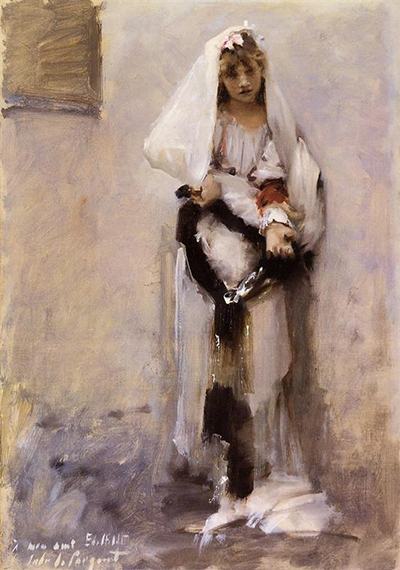
John Singer Sargent's A Parisian Beggar Girl belongs to the young painter's Paris world, but it does not belong to the polished society image that later made him famous. Dated 1877 in the Wikimedia Commons record associated with Terra data, the work asks for a different kind of attention: not admiration for rank, costume, celebrity, or social ease, but a careful encounter with an unnamed girl placed before the viewer as a subject of poverty and public visibility [1].
The painting matters because it widens Sargent's early career. The familiar story of Sargent often moves quickly from Paris training to Salon ambition, then to Portrait of Madame X, London portraiture, Boston murals, travel watercolors, and war art. A Parisian Beggar Girl sits earlier and more quietly. It shows a young artist working inside a city where modern painting, exhibition culture, class difference, and street life could meet in a single figure.
That makes the work difficult in a productive way. The girl is not a named sitter with a family history, commission record, or social position preserved for viewers. She is identified by condition and place: Parisian, beggar, girl. A responsible reading has to hold that fact firmly. The painting should not soften poverty into charm, turn vulnerability into a pretty anecdote, or pretend to know the child's inner life. Its interest lies in how Sargent makes the act of looking itself feel ethically charged.
At a Glance
- ArtistJohn Singer Sargent [2]
- TitleA Parisian Beggar Girl [2]
- Date1877, according to the Wikimedia Commons file associated with Terra object data [1]
- Subjectan unnamed young beggar girl in Paris [2]
- Career momentearly Paris period, during Sargent's formation as a painter [2]
- Primary institutional leadTerra Foundation loan record for the work [1]
- Related Terra leadGirl on the Beach, useful for Sargent's early figure studies and non-society subjects [2]
- Best context linksSargent's biography, paintings, portraits, watercolors, and style-and-technique essays [2]
Contents
- Introduction
- An Early Paris Work
- The Subject And The Problem Of Looking
- Figure, Clothing And Restraint
- Social Subject Beside Society Portraiture
- Terra, Related Early Figure Subjects And Evidence Limits
- How To Look At The Work
- Related Works And Where To Go Next
An Early Paris Work
The date 1877 places A Parisian Beggar Girl at the beginning of Sargent's professional formation. Sargent was born in Florence in 1856 to American parents and trained in Paris, especially with Carolus-Duran. The Sargent biography and style-and-technique essays both stress how important that Paris training was: it gave him direct painting, strong tonal organization, confidence before the model, and entry into the public world of the Salon.
Paris was not only a place of instruction. It was a city of display. Artists studied, copied, competed, exhibited, and learned how images behaved once they entered public view. A young painter working there had to think about subjects as well as surfaces. A figure was never only a figure. It could carry class, gender, nationality, costume, performance, or social tension into the painted image.
In that setting, A Parisian Beggar Girl becomes more than a small early subject. It belongs to the years when Sargent was learning what kinds of people and situations could become serious painting. Later, he would turn elite sitters into unforgettable public presences. Here, the subject comes from a different social register. The girl is not presented through wealth or lineage. The title frames her through need, age, and the urban environment.
That does not make the work simple social documentation. Sargent was a painter, not a reporter. The image is shaped by pose, clothing, surface, light, and selection. But the social condition named in the title changes what selection means. Viewers are asked to notice the craft while also noticing the imbalance between painter, viewer, and subject.
The Subject And The Problem Of Looking
The title is the most important source for the work's ethical frame. A Parisian Beggar Girl gives no proper name. It gives a type, a city, a gender, and an age category. Nineteenth-century art often used poor children, street figures, laborers, and marginal people as subjects for sentiment, picturesque contrast, or moral feeling. Modern viewers need to resist that habit.
The danger is not simply that the girl might be pitied. Pity can become another way of possessing the subject. If the viewer treats the girl as an image of touching poverty, the painting becomes too easy. It asks for a feeling and then lets the viewer leave with that feeling intact. Sargent's work deserves a slower response. The girl is visible, but she is not fully knowable. The painting gives presence without giving biography.
That reserve matters. The subject's anonymity is not a blank space to fill with invention. It is one of the facts of the work. We do not know her name, family, exact circumstances, or future. The title's social label tells us how the image was framed, but not enough to turn her into a story.
A careful viewer can still ask strong questions. How does the figure meet or avoid the viewer's gaze? How does clothing mark need, exposure, or social position? How much space does the girl occupy? Does the painter emphasize body, face, gesture, stillness, or surface? What does the city name "Parisian" add to the act of viewing? Such questions keep attention on the painting without pretending to recover what has not been preserved.
The subject also changes the usual account of Sargent's brilliance. In a society portrait, the painter's skill often intensifies social presence. In A Parisian Beggar Girl, technical skill risks becoming uncomfortable. The better Sargent paints, the more the viewer has to ask what it means for deprivation to become an object of visual pleasure.
Figure, Clothing And Restraint
Because the surviving documentation is modest, close looking should stay disciplined. The safest place to begin is with the title's structure. The work presents a girl, not an adult woman; a beggar, not a commissioned sitter; Paris, not a neutral backdrop. Those terms shape everything that follows.
Clothing is likely central because clothing is one way poverty becomes visible in nineteenth-century figure painting. Sargent would later become famous for satin, velvet, black gowns, uniforms, white sleeves, and theatrical costume. Here, dress carries a different burden. It cannot be read as fashion or elite performance. It marks vulnerability and the public signs by which viewers recognize need.
That difference is important for Sargent's art. The painter who could make a society sitter's dress into a dazzling public event is working here with a figure whose social identity is not glamorous. The question is not whether the paint is beautiful, but how beauty operates when attached to poverty. If the surface becomes too seductive, the viewer may forget the person. If the image becomes only a lesson about hardship, the painting is reduced to message. The work sits between those risks.
Restraint is therefore essential. The article should not claim that Sargent "sympathizes" in a precise emotional sense unless a source says so. It should not claim to know whether the girl is proud, frightened, resigned, or hopeful. Those words would place modern certainty over an unnamed subject. Better to say that Sargent's image asks viewers to read posture, clothing, and presence while accepting what remains withheld.
That refusal to over-explain is not weakness. It is the condition of an ethical reading. The girl is before us, but not ours.
Social Subject Beside Society Portraiture
Sargent's later fame can make A Parisian Beggar Girl feel surprising. The name Sargent often calls up patrons, drawing rooms, grand dresses, public commissions, and portraits that made social identity electric. Yet the portrait and biography essays make clear that his range was always broader. He painted children, performers, artists, military figures, presidents, travel subjects, murals, watercolors, drawings, prints, and war imagery.
The 1877 work helps correct a too-narrow idea of the artist. It shows that Sargent's interest in presence did not depend on elite status. A person could matter pictorially without being famous, wealthy, or named. That does not mean the beggar girl is treated the same way as a commissioned sitter. The difference is exactly the point. A formal portrait preserves identity through name, likeness, status, and often ownership. A Parisian Beggar Girl preserves a figure through a social category and painterly attention.
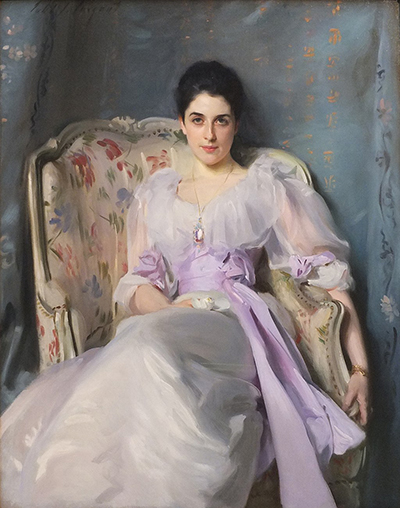
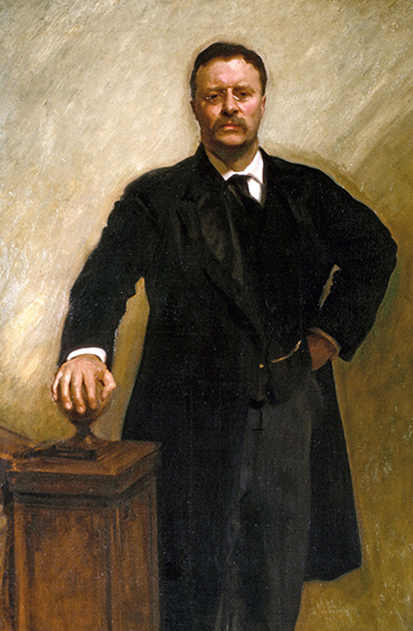
The comparison with Sargent's later public images is useful. In Colonel Ian Hamilton, uniform, medals, sword, and title make authority visible. In Theodore Roosevelt, pose and architecture make political force bodily. In Lady Agnew of Lochnaw, dress and seated ease become aristocratic presence. In A Parisian Beggar Girl, social meaning arrives through lack rather than display. The subject is defined by need, not rank.
That inversion makes the work important. It asks whether Sargent's art of appearance can handle social absence: absence of name, status, protection, and recorded story. The answer is not a simple yes or no. The painting can bring the girl into view, but it cannot restore what the historical record withholds. That tension is why the work should be read carefully rather than used as a sentimental footnote.
Terra, Related Early Figure Subjects And Evidence Limits
The Terra Foundation material gives the work its most important institutional frame. The relevant records include a Terra loan notice for A Parisian Beggar Girl, a Wikimedia Commons file associated with Terra object data, and a Terra collection entry for Girl on the Beach [2], [1], [3].
The related Terra object should not be confused with A Parisian Beggar Girl. Its value is comparative. Girl on the Beach connects Sargent to early figure study, outdoor or non-society subjects, and the process by which observed figures could contribute to larger compositions. [1]
That comparative frame helps without overloading the page. It shows a young Sargent moving among figure problems: how to place a body, how to make clothing and posture speak, how to connect a person to a setting, and how to decide what the painted subject is allowed to reveal. A Parisian Beggar Girl is not the same kind of object as the Cancale study, but both belong to an early career in which Sargent was learning to turn observed people into painted form.
The limited documentation also protects the work from overinterpretation. Some Sargent paintings have extensive provenance, exhibition history, technical study, correspondence, or collection notes. Here, the responsible path is narrower. The ethical and career questions are substantial, but the factual claims must remain modest.
How To Look At The Work
Begin with the title. It tells you that the image is organized around place, social condition, gender, and age. Do not rush past those words.
Then look at the figure as a person whose name has not been preserved in the common object record. The absence of a name is not a reason to invent one. It is part of the historical distance between viewer and subject.
Next, look at clothing and posture. In Sargent, clothing is rarely incidental. It can display rank, fashion, role, costume, profession, or vulnerability. In this work, clothing should be read through social condition rather than glamour.
After that, notice the painter's discipline. Sargent's Paris training gave him the ability to make a figure convincing through tonal relation, pose, and selected detail. Technical skill is part of the work's force, but it should not make poverty feel decorative.
Finally, notice your own looking. The subject is a child marked by need. The viewer's task is not to consume pathos but to hold attention without possession: to see the painting, the social label, the unnamed sitter, and the limits of what can be known.
Related Works And Where To Go Next
For Sargent's early formation, begin with Biography and the main John Singer Sargent essay. They place the work near Paris training, Salon culture, and the larger transatlantic career.
For medium and method, use Paintings and Style and Technique. Those essays explain why Sargent's surfaces, figure placement, clothing, and selective finish matter even when the subject is not a formal portrait.
For other images of movement, urban space, and socially careful looking, compare Street in Venice, Watercolors, and A Gust of Wind. For the portrait tradition that later defined his fame, use Portraits.
Frequently Asked Questions
The Wikimedia Commons file associated with Terra object data dates the work to 1877 [1]. That places it in Sargent's early Paris period, before the major Salon drama of Portrait of Madame X.
The records used here identify the work by title, not by a known sitter name. The title frames her as a Parisian beggar girl, so the article treats her anonymity as an important part of the painting's meaning.
Sargent trained in Paris with Carolus-Duran and entered a competitive art world shaped by study, exhibition, and modern urban subjects. A social figure from Paris belongs to that early environment, not to the later London society portrait world alone.
It is best approached as a figure or social-subject painting rather than a formal commissioned portrait. It uses Sargent's interest in presence, clothing, and pose, but the girl is not preserved as a named sitter in the way many society portraits are.
The title names poverty and youth. Turning that into charm or moral uplift would make the subject easier for the viewer and less truthful to the imbalance built into the image. The painting asks for attention, not a tidy emotional lesson.
It shows Sargent before the later machinery of elite portraiture fully defined him. The painting connects his early technical formation to a difficult social subject and reminds readers that his art of presence could be directed toward people outside high society.
Discussion
A Parisian Beggar Girl asks what it means to look at vulnerability when the sitter's name and story are not recoverable. The strongest response is neither distance nor sentiment, but disciplined attention.
Reader Insights
What is the first detail that shapes your reading of A Parisian Beggar Girl by John Singer Sargent: pose, setting, light, costume, brushwork or historical context?
Which small visual decision begins to matter more after a longer look, and how does it change the mood of the page?
Which comparison helps most: another Sargent portrait, a travel subject, a public commission, or a work by one of his contemporaries?
Join the Conversation
Share a thoughtful comment below about what you notice, question or compare when looking at this page.
References
- Wikimedia Commons, *John Singer Sargent - A Parisian Beggar Girl (1877).jpg* https://commons.wikimedia.org/wiki/File%3AJohn_Singer_Sargent_-_A_Parisian_Beggar_Girl_%281877%29.jpg
- Terra Foundation for American Art, loan record associated with *A Parisian Beggar Girl* https://www.terraamericanart.org/grants/nationalmuseum-2/
- Terra Foundation for American Art, *Girl on the Beach* https://collection.terraamericanart.org/objects/32