

 by Tom Gurney
Tom Gurney BSc (Hons) is an art history expert with over 20 years experience
Published on June 19, 2020 / Updated on July 5, 2026
Email: tomgurney1@gmail.com / Phone: +44 7429 011000
The Castle of the Pyrenees by Rene Magritte
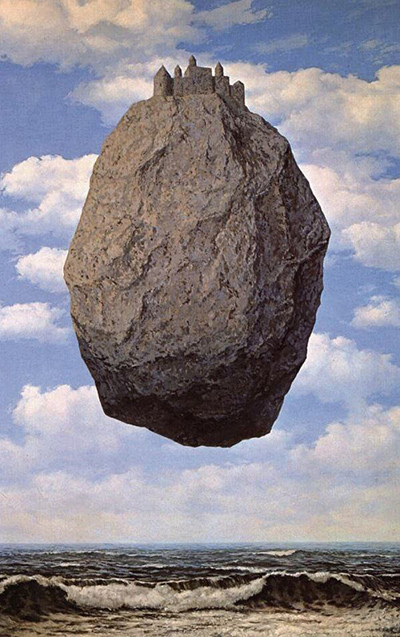
The Castle of the Pyrenees is one of Rene Magritte's most unforgettable late images: a vast rock floats above the sea, and a castle sits on top of it as if the whole mass were both mountain and island. The rock should fall. The castle should need ground. Instead, the entire object hangs in open air. [2]
The painting was completed in 1959 and is associated with the Israel Museum in Jerusalem. It was commissioned by Harry Torczyner, Magritte's friend, lawyer, collector and later author of Magritte: Ideas and Images. [1] [2]
The work matters because it joins two opposite sensations. The rock is heavy, rough and immovable; the image makes it float. The sea below is unstable and moving; the sky around the rock is calm. Magritte does not explain the contradiction. He gives it the clarity of a fact. [5]
At a Glance
- Artist: Rene Magritte [6]
- Title: The Castle of the Pyrenees
- French title: Le Chateau des Pyrenees [3]
- Date: 1959 [3]
- Medium: oil on canvas [3]
- Dimensions: commonly recorded as 200 x 145 cm [3]
- Collection: Israel Museum, Jerusalem [1]
- Commissioned by: Harry Torczyner [2]
Contents
- Why this painting matters
- Museum and collection context
- Historical background
- Visual description
- Looking carefully
- Meaning and interpretation
- Comparison works
Why This Painting Matters
The Castle of the Pyrenees matters because it shows Magritte's late style at its most monumental. A single impossible relation controls the whole picture. The viewer does not need a story. The rock floats; that is enough. [4]
The painting also belongs to Magritte's repeated interest in heavy objects made weightless. Stones, mountains and solid structures recur in his work, but they often refuse their expected behaviour. Here, the contradiction is grander than usual because the rock is not pebble-sized or symbolic. It is a world-sized object that carries architecture. [5]
Museum and Collection Context
The painting is linked to the Israel Museum in Jerusalem, whose official object page identifies the work in its collection environment. The museum page was not readable in this environment, so the factual and interpretive discussion here relies on the official URL together with Torczyner and catalogue scholarship. [1] [3]
That source caution is important. The Castle of the Pyrenees is often reproduced online, and its fame invites simplified readings. The best evidence begins with the commission history and the visible structure of the painting: rock, castle, sea, sky and suspension. [2]
Museum Moment
At its recorded scale of roughly 200 x 145 cm, the painting is large enough for the rock to confront the viewer as a body-sized presence rather than as a small emblem. This matters because the image depends on the viewer believing in the rock's mass even while seeing it suspended in air. [3]
The official Israel Museum page is the key collection reference, but the museum text could not be read through the current tools. For that reason, this page uses the museum URL for holding context and relies on Torczyner and the catalogue raisonne for the commission and object history. [1] [2]
Historical Background
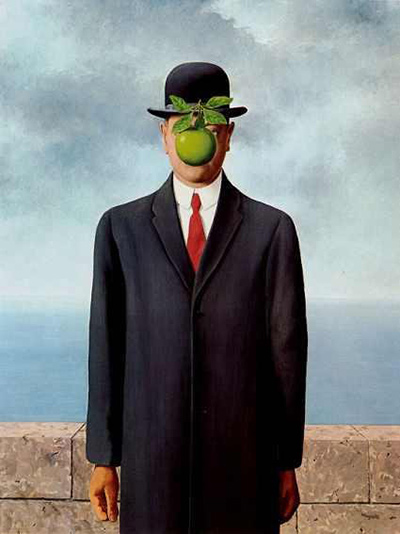
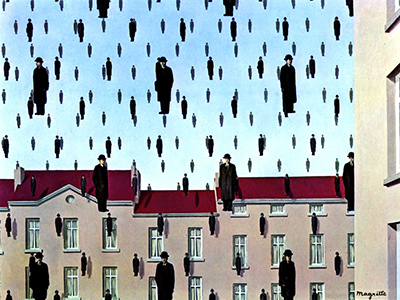
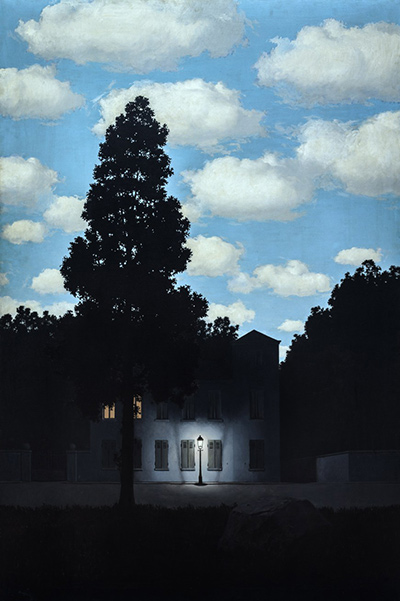
Magritte painted The Castle of the Pyrenees in 1959, in the later period when his images had become exceptionally clear, memorable and iconic. Works such as The Empire of Light, Golconde, The Listening Room and The Son of Man all use simple visual propositions that remain unresolved. [3]
The commission from Harry Torczyner gives the painting a special documentary interest. Torczyner and Magritte discussed the subject through letters and sketches before the final solution emerged. This was not a casual fantasy. It was an idea refined through conversation between painter and patron. [2]
Visual Description
The image shows a huge stone mass suspended above a churning sea. The rock is irregular, rough and dark, with a castle embedded at its summit. The castle appears to be made of the same stone, as if architecture and geology have fused. [2]
Below, the sea is restless. Above and around the rock, the sky is blue with clouds. Magritte places the object in a believable atmosphere, but the central event is impossible. The rock casts no ordinary explanation into the scene. It simply stays in the air. [5]
Looking Carefully
Look first at the bottom of the rock. It tapers downward like a suspended cliff or inverted mountain. This shape makes the mass feel even more precarious because it seems to have been torn from the earth. [4]
Then look at the castle. It is not a separate fairytale palace placed lightly on top. It appears built into the same mineral world as the rock. The castle makes the rock seem inhabited or historical, not merely geological. [2]
Finally, look at the sea. It does not support the rock. It sits far below, moving and restless. The painting's force depends on that gap between sea and stone. [5]
Things You Might Miss
- The old local page suggested that the title came from Jostein Gaarder's book. That is incorrect. Gaarder's novel is later and takes its title from Magritte's painting, not the other way around. [3]
- The painting is not simply about escape or loneliness. Those feelings may arise, but the evidence points first to weight, suspension, solidity and impossible placement. [5]
- The castle makes the rock more than a natural object. It adds human construction to a floating geological mass, as if culture itself had been lifted away from the earth. [2]
Technique and Composition
The composition is strongly vertical. Sea occupies the lower band, sky fills the upper space, and the rock dominates the centre. The object is isolated, but not small. It is large enough to command the entire image. [4]
Magritte's technique remains controlled and precise. The rock is textured, the sea is active and the sky is calm, but no part of the painting becomes expressionistic. The impossible event is made believable by sober handling. [5]
Meaning and Interpretation
The safest interpretation begins with contradiction. The painting asks the viewer to hold two thoughts at once: the rock is heavy, and the rock floats. Magritte does not soften either thought. The mass remains convincingly massive, while the image refuses gravity. [5]
This is why the painting has such force. A floating feather would not surprise us. A floating castle-rock violates the basic rule that weight belongs to the earth. The work turns permanence into suspension. [4]
The sea below deepens the effect. Water usually represents movement and change; stone suggests endurance and stability. Magritte reverses expectation by placing the stable object in the unstable position. [6]
Title Analysis
The title The Castle of the Pyrenees is geographically suggestive rather than descriptive. The Pyrenees evoke mountains, borders and elevated stone, but the painting does not show a normal mountain range. It shows a mountain-like rock detached from land. [2]
This title also gives the image a grandeur that a merely descriptive title would lack. It sounds like a place, but the place cannot be entered. It is a castle, a mountain and an impossibility at once. [5]
Torczyner and the Correspondence
The commission history is unusually valuable because Torczyner later published material that helps explain how seriously the subject was developed. The painting was not simply Magritte inventing a floating rock in isolation; it grew from an exchange in which patron and painter considered alternatives before arriving at the castle-topped mass above the sea. [2]
That exchange also helps explain the painting's strange balance between grandeur and severity. The image is spectacular, but not decorative. The rock is hard, the sea is unsettled and the castle is austere. Magritte gives the impossible object a rigorous presence rather than a fairy-tale softness. [2]
Commission and Patron Context
Harry Torczyner's role matters because he was not only the commissioner but also one of the most important interpreters of Magritte's thought. The painting grew out of an exchange in which Torczyner considered possible subjects and Magritte refined the image. [2]
That history helps the viewer avoid a vague reading. The Castle of the Pyrenees is a carefully built visual proposition, not just a surreal landscape. It was made through discussion, selection and adjustment. [2]
Comparison Works
The Empire of Light is a close comparison because both paintings create one impossible relation inside a controlled landscape. In The Empire of Light, day and night coexist. In The Castle of the Pyrenees, gravity is suspended. [5]
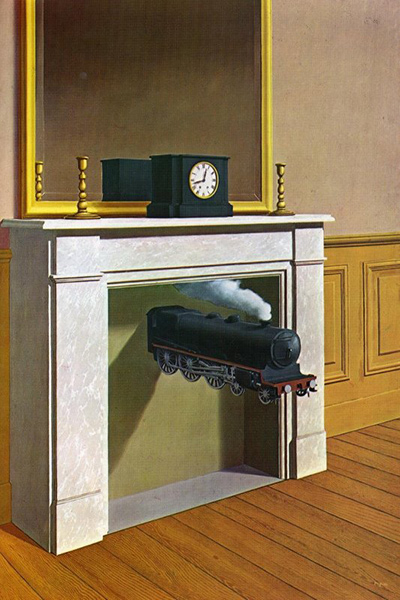
Golconde also matters because it places ordinary human figures in an impossible relation to air and space. The Listening Room changes the scale of an apple inside a room. Time Transfixed changes the function of a fireplace. The Castle of the Pyrenees changes the behaviour of stone. [3]
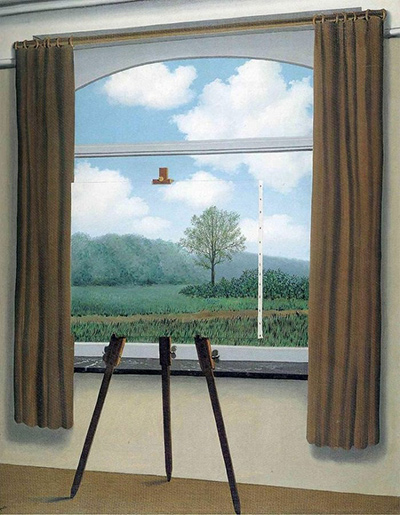
The Human Condition is useful because both paintings challenge the viewer's confidence in how the world should be arranged. Magritte keeps the image clear while making the underlying rule impossible. [6]
Reception and Influence
The Castle of the Pyrenees has become one of Magritte's most frequently reproduced late works because its central image is both simple and monumental. The floating rock is immediately memorable. [4]
Its influence comes from that clarity. Later artists and writers have been drawn to the image because it condenses a difficult idea into a single object: a place that exists, but cannot belong to the world as we know it. [5]
Timeline
- 1959 - Magritte completes The Castle of the Pyrenees. [3]
- 1959 - The work is produced through the Harry Torczyner commission context. [2]
- Later reception - The painting becomes one of Magritte's most reproduced late images. [4]
FAQs
It is associated with the Israel Museum in Jerusalem. [1]
Harry Torczyner commissioned the painting. [2]
It shows a huge rock floating above the sea with a castle built on top of it. [2]
The French title is Le Chateau des Pyrenees. [3]
No. Gaarder's novel is later and takes its title from Magritte's painting, not the other way around. [3]
References
- Israel Museum, Jerusalem, official object page for The Castle of the Pyrenees, accessed July 4, 2026, https://www.imj.org.il/en/collections/199799-0. Page text was not readable in this environment.
- Harry Torczyner, Magritte: Ideas and Images, New York: Harry N. Abrams, 1977.
- David Sylvester and Sarah Whitfield, eds., Rene Magritte: Catalogue Raisonne, Houston and London: Menil Foundation / Philip Wilson, 1993.
- Suzi Gablik, Magritte, London: Thames & Hudson, 1970.
- Patricia Allmer, Rene Magritte: Beyond Painting, Manchester: Manchester University Press, 2009.
- Museum of Modern Art, "Rene Magritte," artist record, accessed July 4, 2026, https://www.moma.org/artists/3692-rene-magritte.