

 by Tom Gurney
Tom Gurney BSc (Hons) is an art history expert with over 20 years experience
Published on June 19, 2020 / Updated on September 6, 2026
Email: tomgurney1@gmail.com / Phone: +44 7429 011000
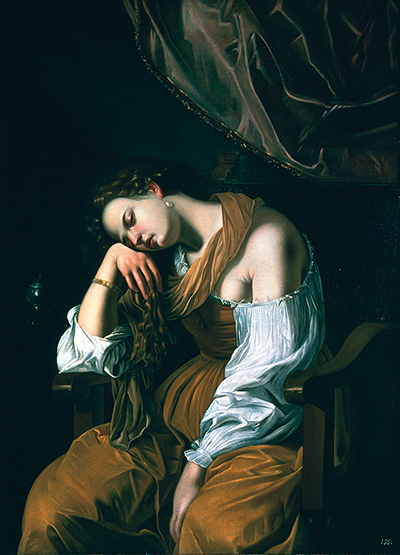
Mary Magdalene as Melancholy by Artemisia Gentileschi
Artemisia Gentileschi's Mary Magdalene as Melancholy belongs to the most inward part of her art. The figure is not shown arguing, resisting, pleading or acting in a public drama. She has withdrawn into a chair, her eyes closed, her head supported by one hand and her body softened by fatigue, reflection and spiritual change. The subject is Mary Magdalene, but the mood is melancholy: a dense, quiet state in which penitence becomes physical. [1][2]
The object treated here is best matched to the painting now in the Kimbell Art Museum, Fort Worth, where it is titled Penitent Mary Magdalene and dated 1625-26. The Kimbell lists Artemisia Gentileschi as the artist, gives the medium as oil on canvas, records the size as 108.8 x 93 cm, and assigns the accession number AP 2024.02. [1]
The known title Mary Magdalene as Melancholy is useful for the painting's emotional reception, but the current object identity follows the Kimbell title. This is not the Pitti/Uffizi St. Mary Magdalen and not the National Gallery of Art's Mary Magdalene in Ecstasy.
Image reference: Kimbell Art Museum, Penitent Mary Magdalene.
At a Glance
- ArtistArtemisia Gentileschi
- Current museum titlePenitent Mary Magdalene. [1]
- Site titleMary Magdalene as Melancholy.
- Date1625-26. [1]
- MuseumKimbell Art Museum, Fort Worth. [1]
- Medium and sizeOil on canvas, 108.8 x 93 cm. [1]
- AccessionAP 2024.02. [1]
- SubjectMary Magdalene in penitence and inward reflection.
- Key objectsOintment jar, small mirror, jewelry and rich clothing. [1]
- Version cautionDistinct from the Pitti/Uffizi St. Mary Magdalen and the NGA Mary Magdalene in Ecstasy.
Contents
- Which Mary Magdalene Is This?
- Melancholy, Penitence and the Body
- Objects in the Shadows
- Light, Color and Nearness
- Provenance, Copies and Rediscovery
- How It Differs from Artemisia's Other Magdalene Paintings
- Artemisia's Women in Solitude
- Where to Go Next
Which Mary Magdalene Is This?
The Kimbell record identifies the painting as Penitent Mary Magdalene, by Artemisia Gentileschi, dated 1625-26. Its visual identity matches the version long circulated under titles such as Mary Magdalene as Melancholy: Mary sits in an ornate high-backed chair, her head inclined, one hand supporting her face and the other resting down into her lap. Her white chemise falls open at the shoulder, an ocher dress and brown veil frame the body, and small objects lie in shadow at the left. [1]
The Kimbell acquisition account adds an important modern history. The museum announced the acquisition in September 2024, describing the painting as a rediscovered original that had been known through copies in Spain and Mexico. That history helps explain why the same composition can appear under different public titles. Some title traditions emphasize Magdalene's penitence. Others emphasize melancholy, sleep-like withdrawal or devotional sadness. [2]
For readers, the safest approach is to keep both facts visible. Mary Magdalene as Melancholy names the emotional reading. Penitent Mary Magdalene names the current Kimbell object. This page follows the Kimbell for object facts while using melancholy as a way to understand the painting's mood.
Melancholy, Penitence and the Body
Melancholy in this painting should not be reduced to a modern medical label. In early modern visual culture, melancholy could suggest brooding inwardness, gravity, spiritual sorrow or a temperament turned away from ordinary social life. Artemisia's Magdalene sits at the edge of that field. She is not simply sad. She is absorbed by an inward change.
Mary Magdalene was traditionally associated with repentance, tears, sensual beauty and the renunciation of worldly life. Artists often gave her objects that recalled her past or her saintly identity: jewels, perfume or ointment vessels, mirrors, loose hair and expensive dress. In the Kimbell painting, those signs are present but muted. The ointment jar and small mirror are not displayed brightly for the viewer. They sit low in the shadows, as if the world they represent has begun to lose its power. [1]
That is why the pose matters so much. Magdalene's body seems heavy. Her head rests on her hand. Her eyes are closed. Her other arm sinks downward instead of rising in a theatrical appeal. Artemisia makes conversion feel like exhaustion and concentration rather than sudden spectacle. The saint's spiritual turn is not announced by a grand gesture. It is held in the weight of the wrist, the droop of the arm and the inward closing of the eyes.
Objects in the Shadows
The Kimbell identifies the ointment jar and small hand mirror as discarded objects associated with Magdalene's former life of luxury and vanity. The jewelry works the same way. A bracelet and pearl earring remain visible, not because Artemisia is celebrating wealth for its own sake, but because the painting needs us to feel what is being left behind. [1]
The mirror is especially important. On the Pitti/Uffizi Magdalene, a mirror is held outward in a clearer symbolic drama of vanity rejected. In the Kimbell painting, the mirror lies lower and darker. It is no longer a shining emblem in the saint's hand. It has been put down. That small difference changes the emotional temperature of the scene. The Pitti painting stages a decision; the Kimbell painting feels like the aftermath of decision, when the body has gone quiet but the conscience is still awake. [4]
The ointment jar also keeps the figure recognizably Magdalene. It points to the saint's devotional identity and to the long iconographic tradition that linked her to perfume, tears and Christ's feet. But Artemisia does not let the object dominate. The painting's center is the body: face, hair, shoulder, arm, lap and folds of fabric.
Light, Color and Nearness
The Kimbell painting is built from warm, close contrasts. The figure emerges from darkness, but not with the hard theatrical violence of the Judith scenes. Light moves across the white chemise, the exposed shoulder, the face and the auburn hair. The ocher dress and brown veil give the image a muted richness, less dazzling than the Pitti Magdalene's yellow satin but still deeply sensual.
This sensuality is not a distraction from the religious meaning. It is how the meaning is made. Artemisia lets the viewer feel the physical presence of the saint: the softness of flesh, the loosened garment, the weight of hair around the fingers, the slackness of a body no longer performing for the outside world. The painting asks viewers to see repentance not as an abstract idea, but as something that passes through posture, touch and breath.
The Kimbell acquisition account places the work after Artemisia's Judith and Her Maidservant with the Head of Holofernes, now in Detroit. The comparison is useful because the two paintings handle aftermath differently. In the Detroit Judith, the women pause after violent action, still alert to danger. In the Kimbell Magdalene, the pause is interior. No one threatens the figure from outside the frame. The pressure has moved into the mind and spirit. [2]
Provenance, Copies and Rediscovery
The Kimbell record gives the painting a significant early history. It was acquired by Fernando Enriquez Afan de Ribera, the third Duke of Alcala and later Viceroy of Naples, while he was serving as ambassador in Rome in 1625-26. It was later displayed in his residence, the Casa de Pilatos in Seville, and was widely copied. [1]
The museum's acquisition account describes the painting as an original that disappeared from view and later reappeared in France in 2001, when it was sold as from the workshop of Artemisia Gentileschi. It entered the Kimbell Art Foundation in 2024 after passing through later private ownership and the art market. The rediscovery history is important because it explains the painting's complicated public identity. A work can be famous through copies and still be difficult to pin down in its original form. [2]
That history also makes caution necessary. The existence of related copies does not mean that every image or title belongs to the Kimbell object. Collection facts, size, date and accession should remain tied to the Kimbell record. Copy traditions can be discussed as reception and afterlife, not as substitutes for the primary object.
How It Differs from Artemisia's Other Magdalene Paintings
The Pitti/Uffizi St. Mary Magdalen presents the saint in a yellow gown with a mirror and an inscription connected to the choice of virtue. It has a more declarative symbolic structure: the mirror, the inscription and the upward turn of the head make conversion legible as a visible decision. [4]
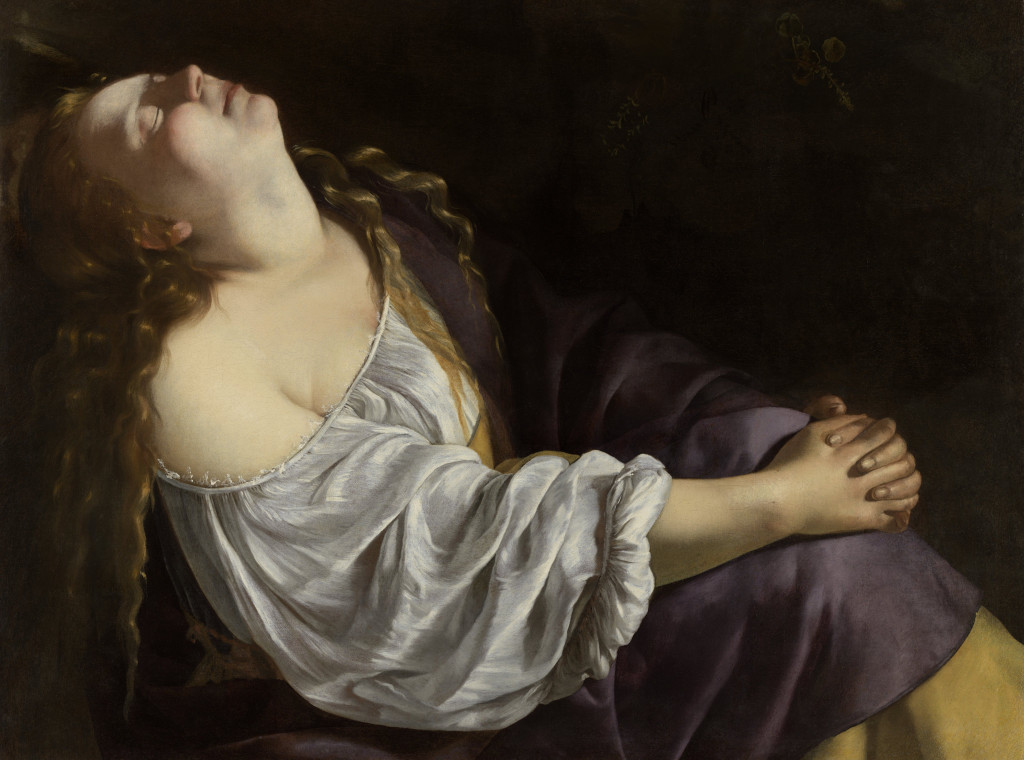
The National Gallery of Art's Mary Magdalene in Ecstasy, by contrast, removes most of the traditional accessories. The NGA article emphasizes that in that version there is no chair and no surrounding array of objects. The figure is close, horizontal, absorbed and physically overtaken by spiritual feeling. [3]
The Kimbell Penitent Mary Magdalene sits between those poles. It keeps the objects of vanity and penitence, but pushes them into shadow. It keeps the body large and near, but does not turn the figure into the ecstatic horizontal presence of the NGA painting. Its distinctive power lies in the seated collapse of thought: a saint withdrawing from the world while the world still clings to her in jewelry, fabric, mirror and memory.
Keeping these three Magdalene routes separate helps readers see Artemisia more clearly. She did not repeat a formula. She returned to a subject and changed its emotional structure each time.
Artemisia's Women in Solitude
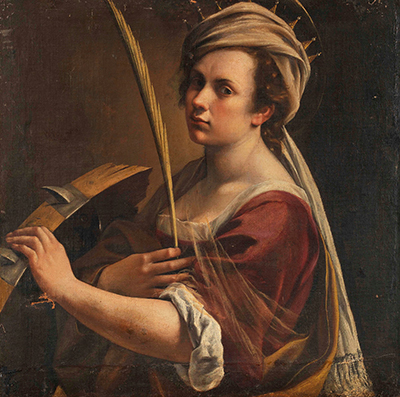
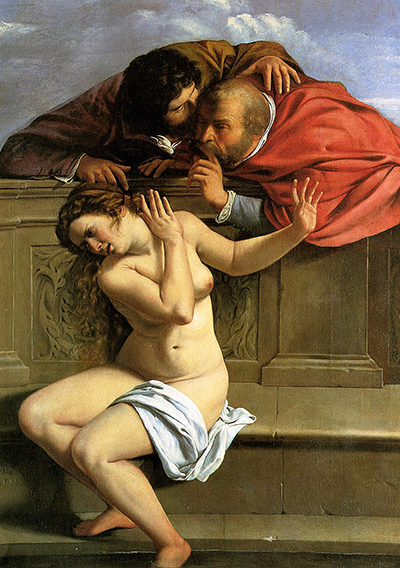
The Kimbell Magdalene also belongs with Artemisia's wider interest in women shown at decisive psychological moments. Susanna and the Elders is a painting of pressure and refusal. Lucretia is a painting of moral extremity. Self-Portrait as Saint Catherine of Alexandria turns saintly identity into a direct confrontation with the viewer. The Magdalene is quieter, but she shares their intensity.
What changes is the direction of the drama. Judith acts. Susanna resists. Lucretia faces death. Magdalene withdraws. Artemisia makes that withdrawal active by giving it so much physical force. The closed eyes are not empty. The slack hand is not passive. The whole figure seems to be undergoing a hard inward labor.
That makes the painting one of Artemisia's most useful works for moving beyond a narrow account of her career. She could paint violence and public courage, but she could also paint silence, fatigue, religious reflection and the strange dignity of a body that has stopped performing for others.
Where to Go Next
For the broader pattern of Artemisia's career, continue with the biography and the paintings hub. For Magdalene comparisons, read Mary Magdalene for the Pitti/Uffizi version and Mary Magdalene in Ecstasy for the NGA object. Together, the three pages show how Artemisia reshaped the same saint through conversion, melancholy and rapture.
For related emotional worlds, Lucretia, Susanna and the Elders and Self-Portrait as Saint Catherine of Alexandria offer strong next steps. Each page shows Artemisia building meaning from a female figure under pressure. The Kimbell Magdalene is different because its pressure is nearly silent, but the silence is part of its force.
Frequently Asked Questions
It covers the Kimbell Art Museum painting titled Penitent Mary Magdalene, accession AP 2024.02, while retaining Mary Magdalene as Melancholy as the public title framing.
No. The Pitti/Uffizi Mary Magdalene is a different painting, with a yellow gown, mirror and inscription connected to the choice of virtue.
No. Mary Magdalene in Ecstasy is the distinct NGA painting. The Kimbell version is seated in a chair and includes objects such as an ointment jar and mirror.
The Kimbell describes it as a rediscovered original that had long been known through copies. Its modern acquisition gives the composition a secure public object route.
Discussion / Reader Insights
Use this space to share close-looking notes on Artemisia Gentileschi's Kimbell Magdalene and its relationship to the Pitti and NGA versions.
What to Look For
- The lowered mirror, ointment jar and jewelry as muted signs of renounced luxury.
- The closed eyes, heavy hand and chair-bound posture as a physical image of inward penitence.
- How the Kimbell object differs from the Pitti/Uffizi and NGA Magdalene paintings.
Join the Conversation
Have you compared the Kimbell Magdalene with the Pitti or NGA versions? Share the source record and the detail that changes your reading.
References
- Kimbell Art Museum, Penitent Mary Magdalene, accession AP 2024.02.
- Kimbell Art Museum, Recently Discovered Painting by Artemisia Gentileschi is Acquired by the Kimbell, September 5, 2024.
- National Gallery of Art, The Exceptional Emotion of Artemisia Gentileschi's Mary Magdalene in Ecstasy.
- Uffizi Galleries, St. Mary Magdalen by Artemisia Gentileschi.
- National Gallery, London, Artemisia Gentileschi artist biography.
 Artemisia Gentileschi.jpg)
 Artemisia Gentileschi.jpg)