

 by Tom Gurney
Tom Gurney BSc (Hons) is an art history expert with over 20 years experience
Published on June 19, 2020 / Updated on July 5, 2026
Email: tomgurney1@gmail.com / Phone: +44 7429 011000
Separation by Edvard Munch: Love, Distance and the Uncut Bond
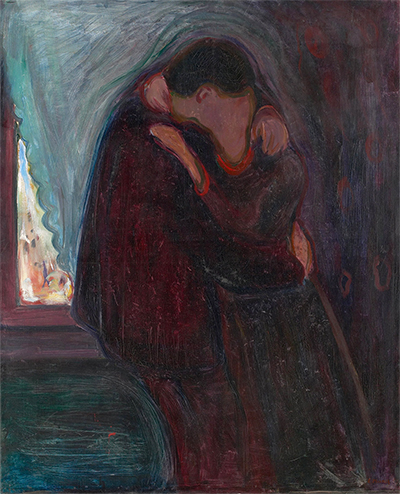
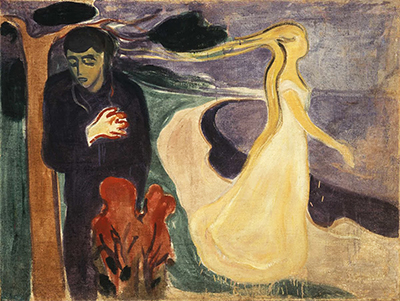
Edvard Munch's Separation is one of the great love-and-loss images in his Frieze of Life. Where The Kiss imagines two bodies fused into a single dark form, Separation pulls a man and woman apart across a shoreline. Yet the picture is not simply about absence. The departing woman remains connected to the man through long strands of hair, memory and pain. [2]
The main version discussed here is the 1896 oil painting in the MUNCH collection, catalogued in the standard literature as approximately 96.5 x 127 cm. Munch did not treat the motif as a one-off invention: he made earlier studies, lithographic versions in 1896, and a later tempera return to the subject in 1906/07. [1]
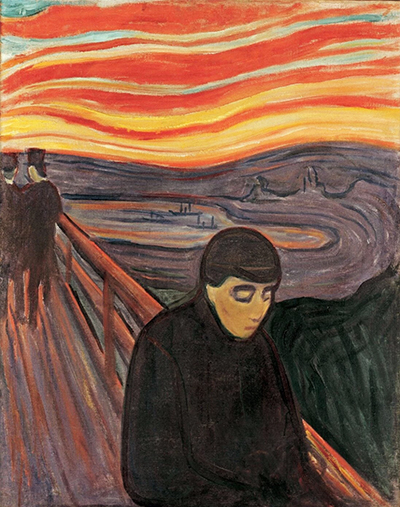
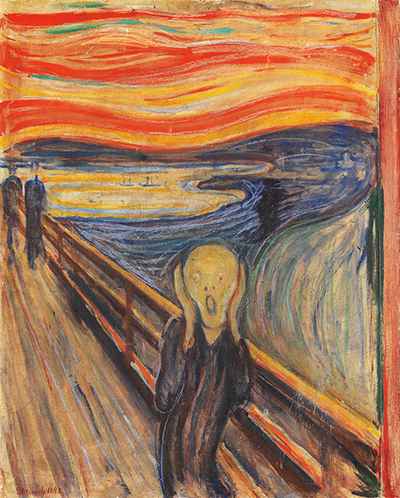
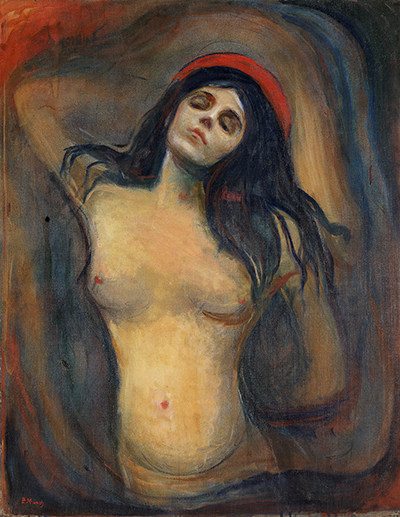
That repetition matters. Separation belongs to the same working method as The Scream, Despair, Vampire and Madonna: Munch returns to a charged human situation, changes the format or medium, and lets the motif gather force across painting and print. [8]
The painting's drama is not loud. A pale woman moves toward the sea, while a dark male figure holds his chest near a red plant or wound-like form. The space between them is the subject, but so is the bond that refuses to break. [3]
At a Glance
- Artist: Edvard Munch
- Title: Separation
- Related title: Losrivelse / Loslosung
- Date: 1896
- Medium: Oil on canvas
- Dimensions: Approx. 96.5 x 127 cm
- Collection: MUNCH, Oslo
- Cluster route: Love, separation and The Frieze of Life
Contents
- Why Separation Matters
- Looking Carefully
- The Hair Motif
- The Heart and Blood-Flower
- Munch's Text
- Versions and Prints
- The Frieze of Life
- Meaning and Interpretation
- Things You Might Miss
- Timeline
Why Separation Matters
Separation matters because it shows that Munch's art of modern feeling is not limited to anxiety. The same artist who made the red-sky world of The Scream also made an equally intense language for love, distance, desire and emotional injury. [8]
MUNCH presents Munch as a central modern artist who worked across painting, graphic art, drawing, sculpture, photography and film, and whose 1890s work belongs to Symbolism before becoming a foundation for Expressionism. Separation sits exactly in that 1890s Symbolist field: not a literal scene, but a visible structure for an inner state. [5]
The painting is also a major internal-link page. It connects The Kiss, Vampire, Madonna, Dance of Life, Melancholy and the future Munch paintings hub. It is the page where love becomes separation rather than embrace. [1]
This makes it a flagship rather than a supporting entry. Without Separation, the cluster would lean too heavily toward anxiety and miss the way Munch built an equally sustained visual language for intimacy, loss and attachment. [2]
Looking Carefully
The composition is simple and direct. Two figures dominate: a pale blonde woman in a white dress moves toward the sea, while a black-clad man stands apart, turned away from her and inward toward his own pain. His head is lowered and his hand reaches toward his chest. [2]
The woman is almost absorbed into the shoreline and light. Her profile and pale dress make her less a portrait than an apparition, memory or idealised presence. The man, by contrast, is darker, heavier and more visibly wounded. Munch separates them by colour, posture and pictorial field. [3]
The shoreline is not only scenery. It cuts through the picture and helps divide the two figures into different worlds. The woman seems to belong to the sea and pale coastal curve; the man belongs to the darker land and the red plant near his body. [2]
The surface matters as much as the scene. Published discussions stress the thin paint, muted intensity and decorative contouring. The image is not naturalist storytelling; it is a Symbolist arrangement of separate colour fields, outlines and repeated emotional signs. [3]
If The Kiss fuses two bodies into one dark mass, Separation splits one emotional bond across the whole canvas. The figures are far enough apart to be separate, but visually entangled enough that the separation hurts. [8]
The Hair Motif
The most important detail is the woman's hair. Long strands extend from her head toward the man, wrapping around his head and chest even as she moves away. The hair turns distance into connection. It is the picture's line of attachment. [2]
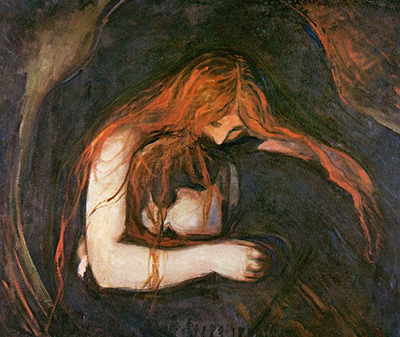
This motif is central to Munch's love imagery. In Vampire, red hair folds around a male figure in a more consuming embrace. In Separation, hair binds across absence. In related attraction motifs, hair becomes a force that links two heads or two bodies even when the figures do not fully unite. [3]
The hair is not merely decorative Art Nouveau line, though it has that surface elegance. It is also psychological structure. It shows that departure does not end attachment, and that memory can feel as physical as touch. [4]
That is the painting's emotional paradox: the woman leaves, but the bond continues. The title names separation; the hair shows connection. [2]
The Heart and Blood-Flower
The man's hand near his chest is one of the painting's clearest signs. It points us toward the heart as the site of pain. Near him, a red plant or blood-flower grows from the ground, visually linking wound, love and organic growth. [3]
Reinhold Heller's reading is important because he connects the bleeding-heart motif not only to abandoned love, but also to artistic creation. The wounded heart becomes the source from which the image grows. That interpretation suits Munch's wider habit of making pain and art-making inseparable. [4]
This does not mean the plant has only one meaning. It can be emotional wound, erotic pain, memory, creative blood, or all of these at once. Munch's symbolism often works by compression rather than fixed code. [8]
The old page treated the red element too bluntly as a simple symbol of blood, love and pain. The stronger reading is more layered: the plant turns suffering into form. It is pain becoming image. [4]
Munch's Text
Munch wrote about a woman whose hair continued to bind the speaker after she moved away toward the sea. The key phrases are the "invisible threads" and the sense that the heart bled because those fibres could not be cut. [7]
The text should not be treated as a neat explanation of the painting. It is better understood as another version of the motif, like the earlier studies and later prints. Munch often tested an emotional image in writing, painting, drawing and print. [8]
That matters because it keeps the page evidence-led without making the painting smaller. The text gives us access to Munch's language of hair, pain and connection, while the painting shows how those ideas become colour, contour and figure. [2]
Versions and Prints
Separation exists as a motif across several works. Published catalogues describe a 1893 mixed-media study, a 1894 oil version, the 1896 oil painting, lithographic versions from 1896, and a later tempera version from 1906/07. [1]
The 1896 printmaking context is important. Munch was developing graphic techniques in Paris at this time, and his prints made major motifs more portable, repeatable and variable. MUNCH's collection context stresses the scale of its holdings and the importance of Munch's bequest for preserving these related works. [6]
The lithographs also change the motif. Some versions move the couple closer to the picture surface, sharpen the decorative force of the hair, or intensify the bleeding-heart detail through colour. This is one reason the future Munch prints page matters for the cluster. [3]
The painted version should therefore be read as the flagship, but not as the whole story. Separation is a family of images in which Munch tests the same emotional structure through different media. [1]
The Frieze of Life
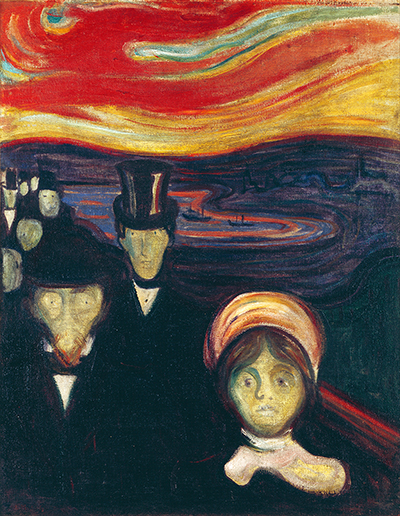
MUNCH records that in 1902 Munch presented a group of images under the title The Frieze of Life. The project organised major human experiences such as love, anxiety, illness and death into a connected cycle rather than isolated subjects. [5]
Separation belongs to the love route of that cycle. It sits near The Kiss, Vampire, Madonna and Dance of Life, but it gives the sequence its wound: love as distance, attachment and loss rather than only desire or embrace. [2]
This is why the page should not isolate the painting from the cluster. Its meaning grows through comparison. The Kiss asks what union looks like; Separation asks why union can continue to hurt after it has ended. [8]
Meaning and Interpretation
The most cautious reading is also the strongest: Separation gives visual form to a bond that cannot be cut cleanly. The woman leaves, the man suffers, but the strands of hair keep the two figures connected across the landscape. [2]
This makes the painting different from a simple scene of rejection. The woman is not only a person walking away; she is also memory, desire, idealisation and absence. The man is not only abandoned; he becomes the site where the image's pain is concentrated. [3]
The gender politics of the image should be handled carefully. Munch often stages love from the male sufferer's perspective, and his images can idealise, fear or mythologise the female figure. A good reading should name that perspective rather than treating it as universal truth. [8]
At the same time, the painting's force is not reducible to biography or misogyny. Its form remains powerful because it turns the emotional residue of separation into visible structure: divided spaces, linking hair, a wounded heart and a shoreline that both separates and binds. [4]
Things You Might Miss
- The woman is not just leaving. Her hair continues to bind the man even as she moves away. [2]
- The shoreline divides the picture. It helps place the figures in different emotional worlds. [2]
- The red plant matters. It connects wound, heart, love and creative blood. [4]
- The motif exists in prints. The 1896 lithographs are part of the work's development, not afterthoughts. [3]
- The painting is a pair with The Kiss. One fuses bodies; the other shows the pain of distance. [8]
- The page belongs to the love route. It should be read beside Vampire, Madonna and Dance of Life. [5]
Timeline
- 1893 - Munch makes an early mixed-media study related to Separation. [1]
- 1894 - An early oil version develops the motif during the wider formation of the love sequence. [3]
- 1896 - Munch paints the main oil version of Separation and develops lithographic versions of the motif. [1]
- 1902 - Munch presents The Frieze of Life as a connected cycle of human experiences. [5]
- 1906/07 - Munch returns to the Separation motif in a later tempera version. [1]
Comparison Works
The first comparison is The Kiss. In that motif, the couple merges into one form; in Separation, the figures are split apart but still bound by hair and memory. Together they define two poles of Munch's love imagery. [8]
The second comparison is Vampire, where hair becomes more possessive and enveloping. In both images, hair is not a passive attribute. It is an active force linking bodies, desire and danger. [3]
The third route is through Madonna and Dance of Life, where love, sexuality, generation and death become parts of a larger cycle. Separation gives that cycle its experience of loss. [2]
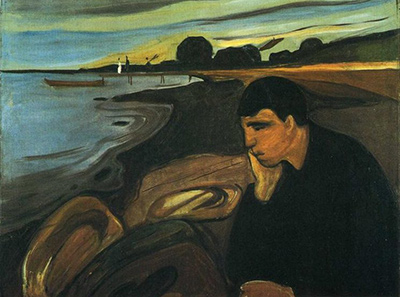
Finally, compare it with Melancholy and Eye in Eye. The shoreline, isolated male figure and attraction/separation motifs show how Munch moves between encounter, longing and abandonment. [3]
FAQs
The main 1896 oil painting is in the MUNCH collection in Oslo. Published catalogues give its dimensions as approximately 96.5 x 127 cm. [1]
The hair is the painting's main sign of attachment. It reaches from the departing woman toward the man, showing that the emotional bond remains even as the figures separate. [2]
Yes. It belongs to Munch's love and separation route within the wider Frieze of Life, a cycle concerned with love, anxiety, illness and death. [5]
Yes. The motif appears in lithographic versions from 1896, and those prints are important to understanding how Munch repeated and varied his major love motifs. [3]
Read The Kiss, Vampire, Madonna and Dance of Life to follow the love and death route through Munch's work. [8]
References
- Gerd Woll, Edvard Munch: Complete Paintings, London: Thames & Hudson, 2009.
- Frank Hoifodt, "Separation," in Mara-Helen Wood, ed., Edvard Munch: The Frieze of Life, London: National Gallery, 1992.
- Arne Eggum, "Loslosung," in Edvard Munch: Love, Fear, Death, Bielefeld: Kunsthalle Bielefeld, 1980.
- Reinhold Heller, Edvard Munch: Life and Work, Munich: Prestel, 1993.
- MUNCH, Edvard Munch, accessed 4 July 2026.
- MUNCH, Our Collection, accessed 4 July 2026.
- eMunch, Edvard Munch's Writings: The English Edition, accessed 4 July 2026.
- Patricia G. Berman, ed., Edvard Munch: The Modern Life of the Soul, New York: Museum of Modern Art, 2006.