


 by Tom Gurney
Tom Gurney BSc (Hons) is an art history expert with over 20 years experience
Published on June 19, 2020 / Updated on November 6, 2025
Email: tomgurney1@gmail.com / Phone: +44 7429 011000
Michelangelo's Lost Head of a Faun
The Head of a Faun is the first Michelangelo sculpture most people know only as a story. A teenage artist, working among ancient marbles in the Medici garden at San Marco, carved the head of an old faun with an open mouth and complete teeth. Lorenzo de' Medici admired it but joked that old creatures do not keep every tooth. Michelangelo immediately knocked one out and hollowed the gum. When Lorenzo returned, the correction delighted him and helped bring the youth into the Medici household.
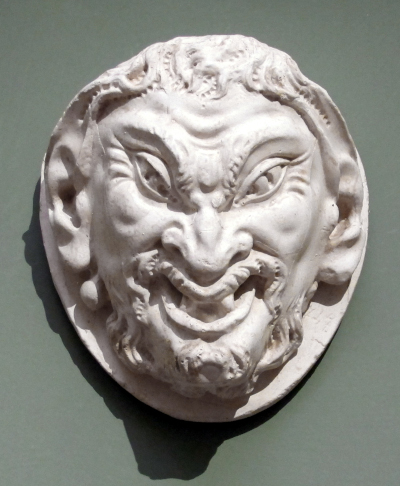
The episode comes from Michelangelo's early biographers, especially Giorgio Vasari and Ascanio Condivi. The sculpture itself is lost, and its appearance cannot be recovered from the later “faun head” once displayed at the Bargello. That object had already been rejected as Michelangelo before it disappeared during the Second World War.
What survives is therefore not a secure object record but a formative narrative. It presents antique study, speed, wit and patronal recognition in one compact scene. Reading it critically does not destroy its value. It reveals how Renaissance biography turned artistic intelligence into a memorable beginning.
At a Glance
- ArtistTraditionally Michelangelo Buonarroti, on the testimony of early biographies
- TitleHead of a Faun
- DateUsually placed around 1489–1490
- MediumMarble
- StatusLost
- SubjectHead of an aged faun or satyr, with open mouth and a deliberately missing tooth
- SettingMedici sculpture garden at San Marco, Florence
- Teacher or supervisorBertoldo di Giovanni
- Patronal encounterLorenzo de' Medici reportedly saw and commented on the carving
- Importance in biographyThe youth's rapid correction demonstrated observational wit and helped secure Medici support
- Major cautionNo reliable image, cast or surviving candidate reproduces the original securely
Contents
- Fauns, Satyrs and the Antique Imagination
- The Medici Garden at San Marco
- Lorenzo's Joke and Michelangelo's Reply
- From Garden Student to Medici Protégé
- Copying Versus Invention
- Can We Know What the Head Looked Like?
- The Bargello Head Was Not the Original
- Early Biography as Evidence
- Why the Head of a Faun Matters
Fauns, Satyrs and the Antique Imagination
Fauns and satyrs belong to the mythological company of nature, wine and unregulated desire. They combine human and animal traits: pointed ears, coarse hair, flattened or expressive features, sometimes horns or goat legs. Renaissance artists encountered them in ancient sculpture, relief, gems and literature.
An aged faun offered a young sculptor an unusually rich exercise. Wrinkles, open mouth, teeth, hair and animal character demanded observation beyond ideal beauty. The face could be comic, disturbing and animated without belonging to a named portrait.
The open mouth was especially difficult. Carving between lips and teeth creates fragile projections and deep shadow. A hollow gum or absent tooth intensifies age through a tiny physical fact.
Michelangelo's later art is filled with expressive heads whose mouths, brows and broken profiles carry psychological force. The faun story makes that interest appear at the beginning. Yet because the object is lost, later works cannot be used to reconstruct it backwards with confidence.
“Faun” and “satyr” are often used loosely in retelling. The important point is the antique rustic creature and the challenge of transforming an old model rather than merely copying an ideal god.
The Medici Garden at San Marco
Lorenzo de' Medici assembled ancient and modern sculpture in a garden near San Marco and supported young artists studying there under Bertoldo di Giovanni, a sculptor connected with Donatello's legacy. The garden was part collection, part workshop and part patronage network.
Michelangelo reached it after early training with Domenico Ghirlandaio, encouraged in biographical accounts by his friend Francesco Granacci. Access placed ancient fragments within reach rather than leaving classical art as a literary abstraction.
Copying in this environment was creative training. A student measured proportions, understood damage and completed forms mentally. Variation could demonstrate that the antique had been absorbed rather than traced.
The garden also brought making into the patron's sight. Lorenzo could observe ability directly and select promising youths for closer support. Art education and social advancement met.
The faun episode perfectly condenses this institution. Antique head, young sculptor, experienced supervisor and discerning patron occupy one scene. Its very neatness is a reason for historical caution: biographies often make institutions memorable through exemplary anecdotes.
Lorenzo's Joke and Michelangelo's Reply
In the familiar story, Lorenzo praised the head but noted that the old faun retained an implausibly perfect set of teeth. Michelangelo took the criticism immediately. Before the patron returned, he removed a tooth and drilled or hollowed the gum as though it had fallen out long before.
The response demonstrates more than obedience. Michelangelo understood that age is structural evidence. A missing tooth changes lip, gum and character; it turns a generic old face into a body with history.
Speed is essential to the anecdote. The young artist does not debate or wait for instruction. He sees the truth in Lorenzo's observation and improves the work before the next encounter. Talent appears as responsiveness.
The story also flatters Lorenzo. The patron recognises quality, notices a naturalistic fault and rewards intelligence. Michelangelo's rise becomes proof of Medici discernment as well as personal genius.
Condivi and Vasari wrote after the event and with strong interests in shaping Michelangelo's life. Their versions should not be treated like a studio diary. But the anecdote may preserve a real memory precisely because its physical detail—the hollowed gum—is so concrete.
From Garden Student to Medici Protégé
Lorenzo reportedly brought Michelangelo into the Medici household after seeing his ability. There the young artist encountered poets, humanists, patrons and one of Florence's greatest collections. This access profoundly shaped his intellectual and social formation.
The faun is therefore positioned as a threshold work. Before it, Michelangelo is a workshop youth among others. After it, he belongs to the orbit of Florence's leading family.
Such thresholds are attractive to biographers because careers rarely offer one visible instant of transformation. Real advancement usually accumulates through family negotiation, recommendations, repeated work and institutional need. The story supplies a dramatic scene for a longer process.
Michelangelo's father, Lodovico, and the Medici household arrangements also mattered. Patronage meant lodging, status and contact, not simply praise. The sculpture's role should be understood within that broader negotiation.
Even if Lorenzo's exact words are literary, the garden did help connect Michelangelo with Medici support. The anecdote symbolises a historically real transition.
Copying Versus Invention
Accounts differ on whether Michelangelo copied an ancient head closely or made his own variation from an antique model. The distinction reflects a central Renaissance question: what does it mean to learn from antiquity?
Exact copying trains eye and hand. It can preserve a damaged original and demonstrate technical equivalence. Invention changes expression, age or pose, proving that the student can work within the antique language independently.
The open mouth and teeth are often presented as Michelangelo's additions. If so, he animated a closed or incomplete model, increasing difficulty. Lorenzo's missing-tooth correction then pushed invention toward greater naturalism.
Because neither original model nor finished copy can be identified securely, these relations cannot be tested. The story nevertheless records the values expected of a gifted Renaissance student: fidelity, emulation, observation and transformation.
It also anticipates Michelangelo's complicated engagement with ancient art. He rarely copied merely to reproduce. Antique bodies became material for new Christian, civic and mythological meanings.
Can We Know What the Head Looked Like?
Only in broad terms. It was a marble head of an old faun with an open mouth and at least one deliberately missing tooth. Pointed ears, rough hair or other satyric features are plausible but cannot be specified from the anecdote alone.
Nineteenth- and twentieth-century illustrations often show a later head once at the Bargello. Repetition has encouraged viewers to treat it as the lost original or a cast. That confidence is misplaced.
No accepted preparatory drawing or early copy supplies a complete view. Later artists created images of Michelangelo carving the faun, but these illustrate the legend rather than document the sculpture.
The absence should remain visible. A blank in the corpus is more accurate than a convenient substitute. Readers can understand the work's subject and biographical role without being given a false face.
The Bargello Head Was Not the Original
A faun head displayed at the Bargello was once connected with Michelangelo's youthful work. It was photographed and cast, and it later disappeared amid wartime upheaval. This has produced the misleading claim that Michelangelo's original survived until the Second World War and was then stolen.
Scholars had questioned and rejected the Bargello object's attribution in the nineteenth century. Its later loss did not restore the old identification. A photograph of that head is evidence for the lost Bargello object, not for the lost Medici-garden sculpture.
This distinction is an important lesson in negative attribution. Once an object is detached from a famous artist on strong grounds, its disappearance can freeze earlier labels and make them harder to correct. Romantic wartime loss adds emotional force.
The Bargello head deserves its own provenance if evidence survives. It should not be made to carry two losses at once.
Early Biography as Evidence
Vasari and Condivi are indispensable because the object does not survive. They had access to Michelangelo, his circle and traditions closer to his youth than ours. Their agreement gives the episode historical weight.
They also wrote narratives. Condivi's biography, produced with Michelangelo's involvement, defended and shaped the artist's reputation. Vasari placed him at the culmination of artistic progress. A precocious triumph over antique copying served both purposes.
Details may be selected for meaning. The complete teeth represent inexperienced imitation; Lorenzo's observation supplies worldly truth; the missing tooth demonstrates instant mastery. The sculpture becomes a moral fable about teachability and genius.
Critical reading asks two questions at once: what event might the story preserve, and what work does the story perform? The answer need not be all fact or all fiction.
Why the Head of a Faun Matters
The lost head matters because it gives Michelangelo's education a physical focus. Antique study was not passive admiration. It involved cutting, changing, damaging and remaking marble under the eyes of teachers and patrons.
The missing tooth embodies a lifelong concern with how bodily truth creates expression. A tiny correction made age credible. Whether every detail occurred exactly as told, generations understood Michelangelo through that act.
The work also reveals the power and danger of biographical images. Later viewers want a sculpture to attach to the story, so the Bargello head is repeatedly promoted after its rejection. Responsible history must allow the story to survive without manufacturing an object.
What remains is a compelling threshold: an unknown-looking marble, a remembered joke, and a young artist entering Medici patronage. Loss prevents connoisseurship, but it does not prevent understanding.
Frequently Asked Questions
Discussion
What details, sources or comparisons stand out to you in Head of a Faun?
Reader Insights
Which formal detail changes how the work reads?
Which documented source or collection history feels most useful?
Which related Michelangelo work should readers compare next?
Join the Conversation
Add a source-led observation, comparison or question for other readers.
References
- Ascanio Condivi, The Life of Michelangelo, first published 1553, in modern critical editions.
- Giorgio Vasari, Life of Michelangelo Buonarroti,” Lives of the Artists, 1568 edition, in modern critical editions.
- Cambridge University Press, excerpt discussing Michelangelo's Medici garden formation and the faun anecdote:, View source.