

 Buy Art Prints Now
from Amazon
* As an Amazon Associate I earn from qualifying purchases.
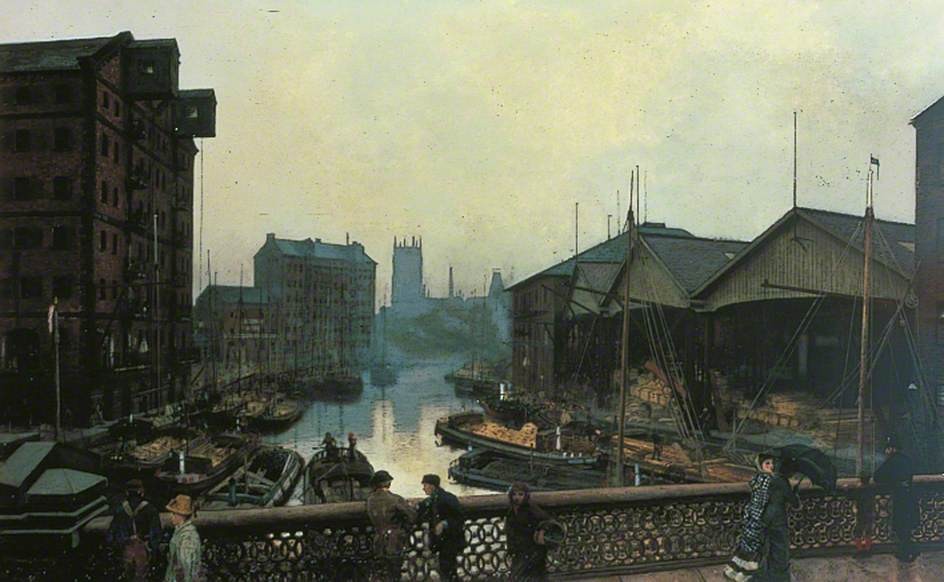
Leeds Bridge — Leeds Art Gallery, public domain.
 by Tom Gurney
Tom Gurney BSc (Hons) is an art history expert with over 20 years experience
Page Created: August 31, 2026 / Page Updated: September 16, 2026
Email: tomgurney1@gmail.com / Phone: +44 7429 011000
John Atkinson Grimshaw: Leeds and Yorkshire: Introduction
Yorkshire gave John Atkinson Grimshaw more than a birthplace. Leeds supplied the streets, river traffic, stone buildings and new illumination that made his urban paintings modern. Headingley and Knostrop offered gardens, old walls and tree-lined roads. Whitby and Scarborough opened a different field of harbours, fishing work, sea mist and moonlight on water. Across these places, Grimshaw learned how an observed setting could be remade through colour and atmosphere without losing its local character.[1][2]
The result is not one simple portrait of the county. Some paintings preserve identifiable structures; others combine remembered buildings and repeated motifs. Industrial activity may be clearly present but visually quiet. Literary titles can transform a family home into an imagined setting. Looking closely at Yorkshire in Grimshaw’s work therefore means holding location, invention and commercial purpose together.
At a Glance
- BirthplaceLeeds, 6 September 1836[1]
- Early neighbourhoodsWortley, followed by Cliff Road in Headingley around 1863[6]
- Principal homeKnostrop Old Hall from about 1870[1]
- First known moonlightA Whitby Harbour subject dated 1867[1]
- Scarborough yearsCastle-by-the-Sea, used by the family from 1876 until debts forced its loss in 1879[1]
- Public collectionLeeds Museums and Galleries holds the largest public collection of his work[3]
Contents
- Introduction
- A Leeds Childhood
- Wortley, Headingley and Early Nature
- Knostrop Old Hall
- Painting Industrial Leeds
- Boar Lane after Dark
- Whitby and the First Moonlights
- Scarborough and Castle-by-the-Sea
- Yorkshire, Memory and Collection
A Leeds Childhood
Grimshaw was born in the centre of an expanding manufacturing town. The Thoresby Society’s local biography places his birthplace on Back Park Street and traces his family’s return to Leeds after childhood moves elsewhere. As a young man he worked as a railway clerk while painting outside working hours. In 1861 he gave up that salary and committed himself to art; the Scarborough Museums chronology records his first known Leeds exhibition in 1862.[1][6]
That history connects his career to the infrastructure that changed Yorkshire during his lifetime. Railways, warehouses, river transport, mills and dense new streets did not always become the main event in his pictures, but they formed the world in which he worked and found buyers. His biography follows the chronology in detail. Here, the crucial point is geographical: Grimshaw did not need to leave the industrial north to establish his first market or develop a distinctive visual language.
Wortley, Headingley and Early Nature
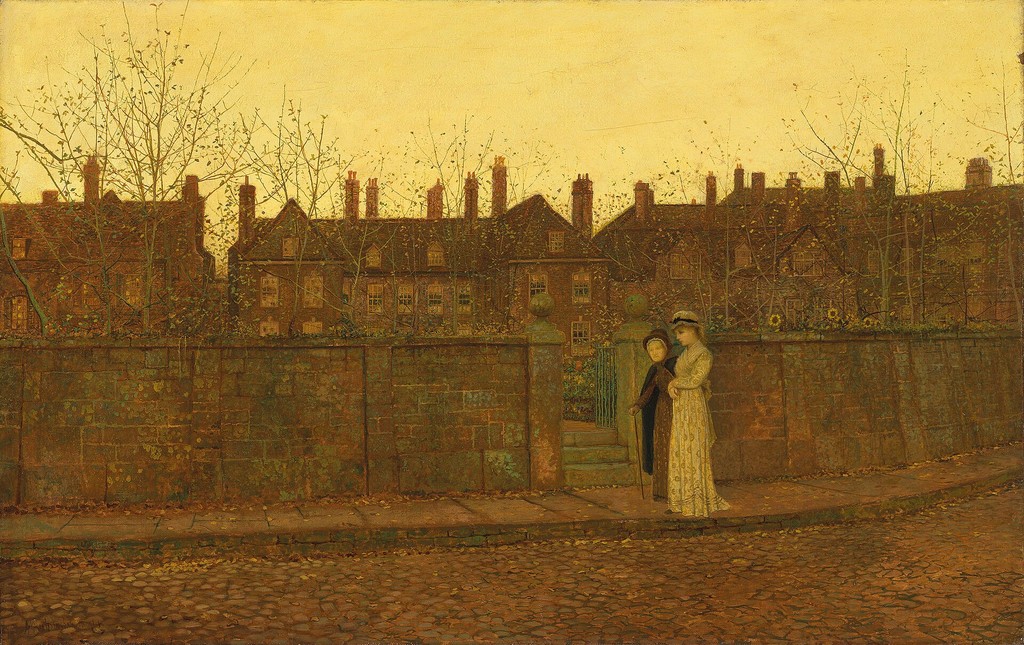
John and Frances Grimshaw first made their married home in Wortley. As his paintings began to sell, they moved around 1863 to Cliff Road in Headingley, then a greener district beyond the dirtier centre. A local account describes nearby walks through Woodhouse Ridge, Meanwood Valley and Adel woods, where natural materials could be collected for study. The high walls, substantial houses, winding lanes and tall trees of the area supplied a vocabulary that returned in later work.[6]
These surroundings suited Grimshaw’s early interest in Ruskinian fidelity to nature and Pre-Raphaelite detail. Leaves, moss, stone and fruit are treated as individual things rather than generic decoration. Yet the Yorkshire landscape was already a mixed environment: villas and roads sat beside woods and valleys. The landscapes and seasons essay explores how this close attention survived even when his pictures became broader in tone and more deliberately atmospheric.
Knostrop Old Hall
From about 1870 Knostrop Old Hall, east of Leeds beside the River Aire, became Grimshaw’s main family home and a recurring source of imagery. Records disagree over whether he initially rented or purchased the house, so ownership should not be stated with false certainty. Its importance is beyond dispute. Rooms, a conservatory, gardens, masonry and the surrounding approaches recur in paintings made over many years.[1][4]
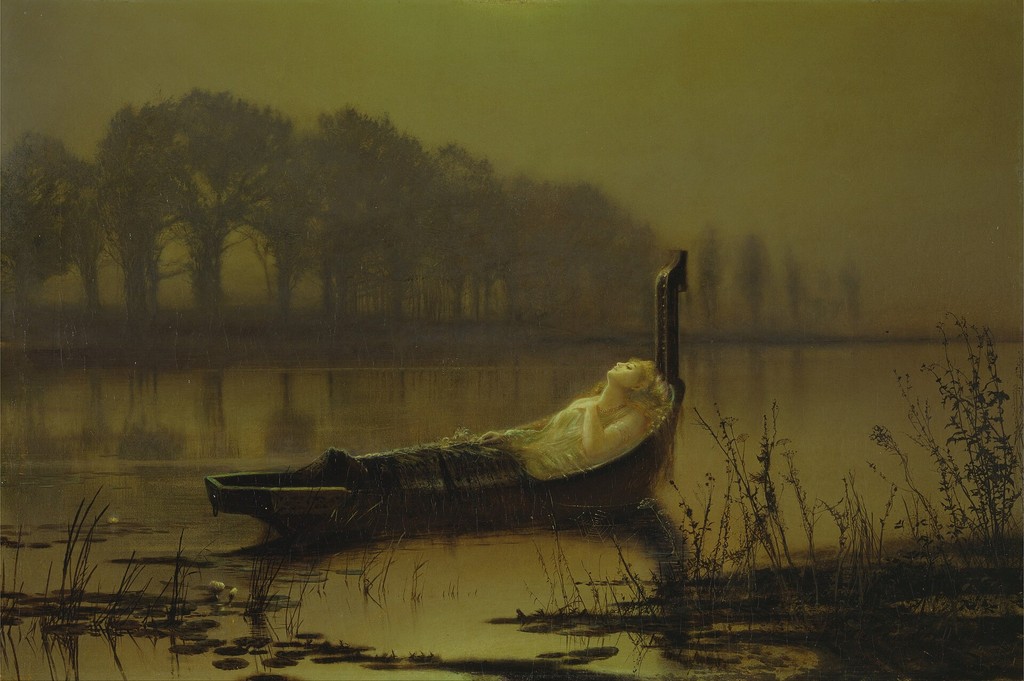
Knostrop allowed domestic observation and imaginative construction to meet. Leeds Libraries connects interiors such as Summer, Spring, Il Penseroso and Dulce Domum with rooms or garden spaces used by the family. The sitters were often women from Grimshaw’s household or circle, while literary titles widened the meaning of an otherwise recognisable Victorian setting. His figures, interiors and literature page examines that strand without treating every painted room as documentary evidence.[4]
The exterior worked similarly. A doorway, wall or stand of trees associated with Knostrop could be reorganised into several compositions. The Scarborough guide describes Silver Moonlight as an invented lane assembled from views and buildings, including aspects of the hall. Such repetition was not topographical copying. It was a flexible method for turning a lived place into different seasonal and nocturnal moods.[1]
Painting Industrial Leeds
Grimshaw’s best Leeds scenes bring atmosphere to working infrastructure. The Leeds Museums learning resource for Leeds Bridge identifies warehouses, factory buildings, boats and lifting equipment around the River Aire. Small figures cross the bridge while commercial structures dominate the skyline. The painting records economic activity selectively: labour is present, but still water and subdued light regulate how the viewer encounters it.[5]
That selectiveness is important. Grimshaw did not paint a complete social history of Victorian Leeds, and quietness should not be mistaken for an absence of difficult work or pollution. Rather, he chose a visual interval in which the city’s industrial forms could be read through reflections, silhouettes and distance. Leeds Museums’ 2025–26 exhibition placed this approach within modernity, stressing his conjunction of moonlight with newer kinds of artificial illumination.[2]
The same tension appears in views of Park Row, the River Aire and Roundhay. Buildings and roads are recognisable enough to carry civic meaning, yet weather and light prevent them from becoming illustrations. Grimshaw’s Leeds is observed, edited and emotionally tuned.
Boar Lane after Dark
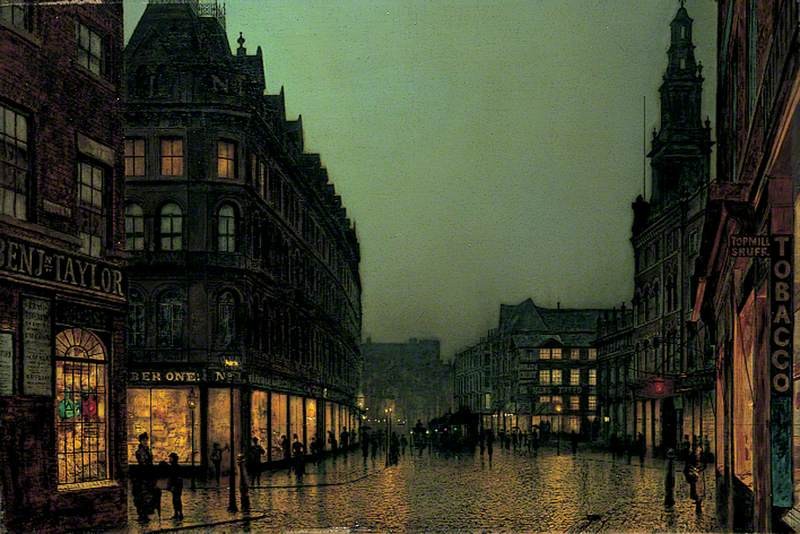
Boar Lane, Leeds concentrates that method in one of Grimshaw’s most familiar city views. Art UK identifies the Leeds Art Gallery painting; the qualified date c.1879 is appropriate because other display records vary between 1879 and 1881.[7] That small cataloguing difference should remain visible rather than being resolved by preference.
In close-looking terms, the street recedes between dark buildings while shopfronts and lamps puncture the evening. Pedestrians and vehicles establish movement, but no single incident controls the composition. Reflected light makes the road itself an active surface. The effect depends on real urban features and careful arrangement at once. The Boar Lane, Leeds close reading keeps the exact object record separate from broader claims about the city.
Leeds Museums describes Grimshaw’s night pictures as “moonlights”, a term that rightly foregrounds natural illumination but does not exhaust what is visible. Shop windows, lamps and other human-made sources help make Boar Lane a modern night street. The achievement lies in balancing these competing lights without dissolving the architecture around them.[2]
Whitby and the First Moonlights
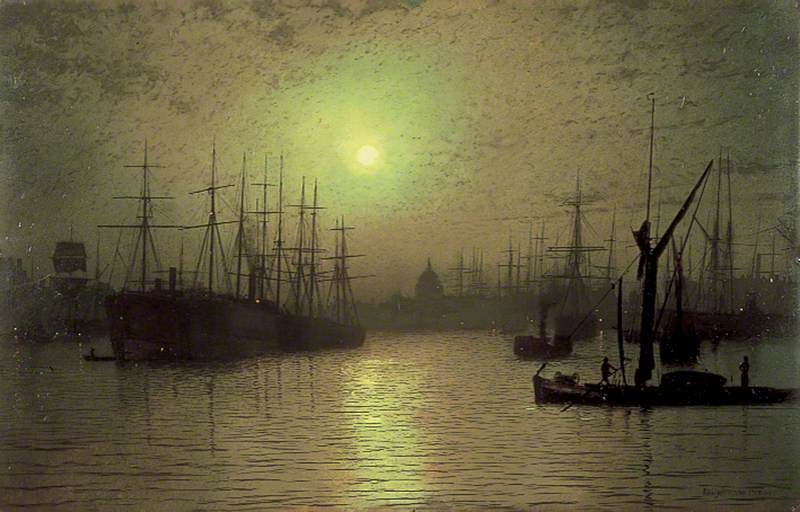
The current Scarborough Museums guide identifies a Whitby Harbour painting of 1867 as Grimshaw’s first known moonlight scene. The date makes the Yorkshire coast central to the development of his signature subject. Water extended the possibilities he had already found in wet roads and river views: one bright source could be repeated, broken and lengthened across a dark surface.[1]
Whitby also joined antiquity to active maritime work. Historic architecture and steep streets stood beside boats, harbour operations and coastal trade. Grimshaw could therefore create an image with an old-world emotional register while retaining evidence of contemporary life. His moonlight and nocturnes guide considers how that balance developed across later cities and ports.
The first-known date does not imply a sudden invention in 1867. Grimshaw’s earlier natural studies had already trained him to distinguish fine changes in tone, while Yorkshire weather offered repeated experience of mist, cloud and low light. Whitby marks the earliest surviving milestone currently documented by the institutional chronology, not necessarily the first time he ever attempted the effect.
Scarborough and Castle-by-the-Sea
In 1876 the Grimshaw family took a second home in Scarborough after a period of acute bereavement. Three young children had died in 1874. The house overlooked the coast and was named Castle-by-the-Sea after a poem by Henry Wadsworth Longfellow. Thomas Jarvis, the brewer who rented it to Grimshaw, became a significant collector; the museum guide notes the possibility that paintings sometimes formed part of the rental arrangement but does not present that as certain.[1]
Scarborough generated subjects grounded in local events and work. Scarborough Lights shows the South Bay and contemporary resort structures. ‘Burning Off’, a Fishing Boat at Scarborough depicts a harbour flare used to warn boats in dangerous conditions. In Sic transit gloria mundi, Grimshaw responded to the 1876 fire that destroyed the Spa Saloon. These works make the coast more than a picturesque escape: it was a resort, a fishing economy and a place of risk.[1]
The museum’s conservation of five Grimshaw paintings in 2021 also changed what can be seen. Cleaning Yew Court, Scalby, near Scarborough, for example, revealed foreground figures previously obscured by accumulated dirt. Conservation is part of the work’s continuing history, restoring information without turning the painting back into an imagined untouched original.[1]
Yorkshire, Memory and Collection
Debt forced Grimshaw to give up Castle-by-the-Sea in 1879 and return fully to Leeds. Yorkshire nevertheless remained a durable source through his final years. Knostrop views, autumn lanes and late snow scenes show that the region did not belong only to an early phase. It remained the setting through which he tested changes in colour, pace and subject.[1]
Leeds Art Gallery opened in 1888, five years before Grimshaw’s death, and organised a retrospective in 1897. Its holdings have since grown into the largest public collection of his work. That scale gives Leeds an unusual responsibility: the city is both a subject within the paintings and the main public centre for comparing their different periods.[1][3]
Recent interpretation has resisted reducing the pictures to nostalgia. The 2025–26 Leeds exhibition placed Grimshaw’s nocturnes beside contemporary painting, neon and photography, inviting viewers to see how illumination alters urban perception across time. That approach suits the Yorkshire works. Their local details matter, but they also ask a wider question: how does a changing place become an image people remember?[2]
Researched works directory
This searchable evidence census contains 88 distinct records assembled from public collection data and a reproducible Wikidata snapshot. It is not a catalogue raisonné, not a claim of complete oeuvre coverage, and it keeps works with repeated titles as separate objects.
| Name | Date | Medium |
|---|---|---|
| A Dead Linnet | 1862 | Painting |
| A House in a Clearing | 1870 | Painting |
| A Moonlit Evening | 1880 | Painting |
| A Moonlit Lane | 1874 | Painting |
| A Mossy Glen | 1864 | Painting |
| A View of Hampstead, London | 1882 | Painting |
| A Wooded Valley | Date unknown | Painting |
| A Yorkshire Home | 1878 | Painting |
| An Autumn Idyll | 1885 | Painting |
| Autumn Glory: The Old Mill | 1869 | Painting |
| Autumn Regrets | 1882 | Painting |
| Baiting the Lines, Whitby | 1884 | Painting |
| Boar Lane, Leeds | 1881 | Painting |
| Bowder Stone, Borrowdale | 1865 | Painting |
| Briggate, Leeds | 1891 | Painting |
| 'Burning Off', a Fishing Boat at Scarborough | 1877 | Painting |
| Canny Glasgow | 1887 | Painting |
| Evening Glow | 1884 | Painting |
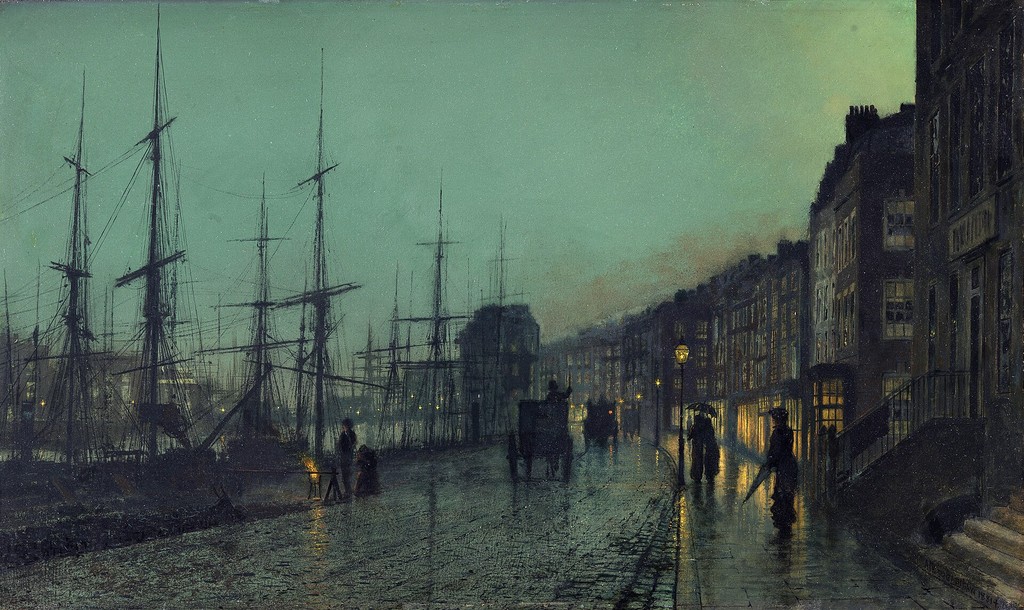
| Evening Scene by the Docks, Hull | Date unknown | Painting |
| Fiamella | 1883 | Painting |
| Glasgow Docks | 1886 | Painting |
| Gloucester Docks | 1885 | Painting |
| Golden Visions | 1870 | Painting |
| Greenwich, Half Tide | 1884 | Painting |
| In Peril (The Harbour Flare) | 1879 | Painting |
| In the golden gloaming | Date unknown | Painting |
| In the Golden Mists of Autumn | 1884 | Painting |
| In the Golden Olden Times | 1870 | Painting |
| Ingleborough from under White Scar, Yorkshire Limestone Strata | 1868 | Painting |
| Iris | 1886 | Painting |
| Knostrop Old Hall at Dusk | 1870 | Painting |
| Leeds Bridge | 1880 | Painting |
| Lights in the Harbour, Scarborough | 1879 | Painting |
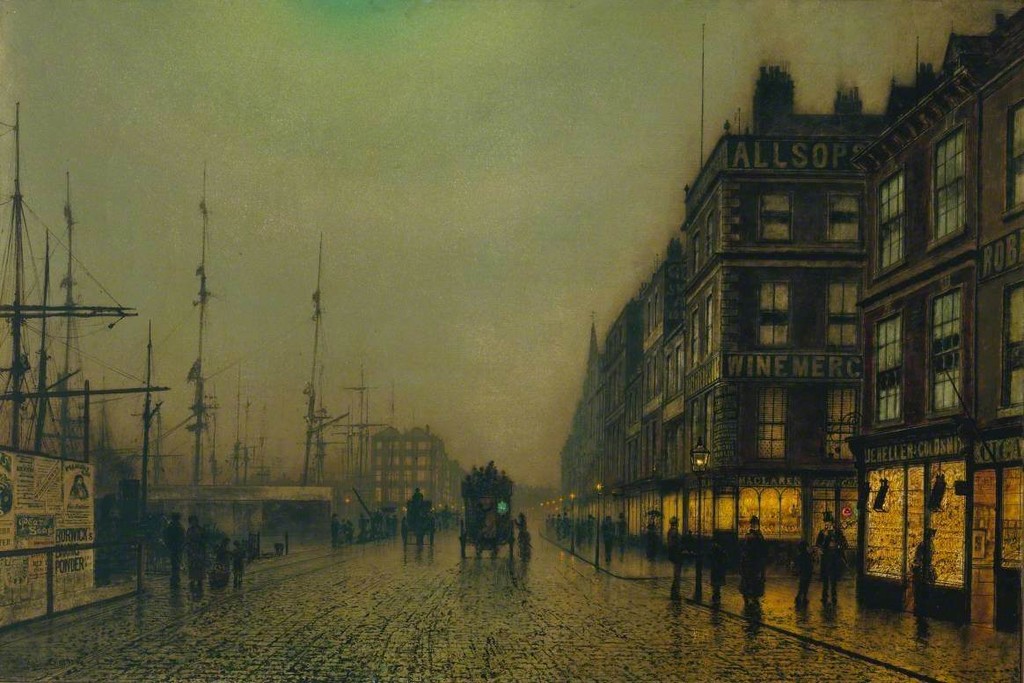
| Liverpool Docks | 1892 | Painting |
| Liverpool Docks by Night | 1892 | Painting |
| Liverpool Docks (panel 1 of 5) | Date unknown | Painting |
| Liverpool Docks (panel 2 of 5) | Date unknown | Painting |
| Liverpool Docks (panel 3 of 5) | Date unknown | Painting |
| Liverpool Docks (panel 4 of 5) | Date unknown | Painting |
| Liverpool Docks (panel 5 of 5) | Date unknown | Painting |
| Liverpool Quay by Moonlight | 1887 | Painting |
| Moonlight Scene near Leeds | 1881 | Painting |
| Night Scene, Rouen | 1893 | Painting |
| Nightfall down the Thames | 1880 | Painting |
| Nightfall in Scarborough Harbour, North Yorkshire | 1884 | Painting |
| November Morning, Knostrop Hall, Leeds | 1883 | Painting |
| Old English House by Moonlight | Date unknown | Painting |
| Park Row, Leeds | 1882 | Painting |
| Princes Dock, Hull | Date unknown | Painting |
| Quai de Paris, Rouen | 1893 | Painting |
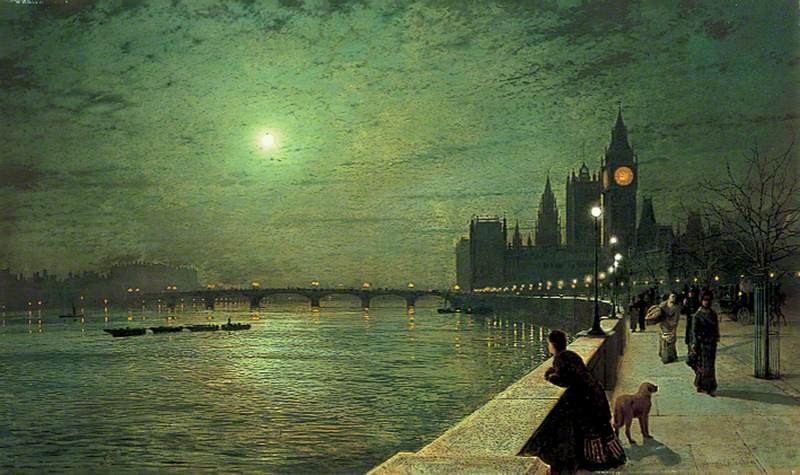
| Reflections on the Thames, Westminster | 1880 | Painting |
| Reflections on the Thames, Westminster, London | 1880 | Painting |
| Roundhay Park Lake | Date unknown | Painting |
| Salthouse Dock, Liverpool | Date unknown | Painting |
| Salthouse Dock, Liverpool, 1884 | Date unknown | Painting |
| Scarborough Lights | 1877 | Painting |
| Shipping on the Clyde | 1881 | Painting |
| Sic transit gloria mundi (The Burning of the Spa Saloon) | 1876 | Painting |
| Silver Moonlight | 1880 | Painting |
| Silver Moonlight | 1886 | Painting |
| Snow and Mist (Caprice in Yellow Minor) | 1892 | Painting |
| Stapleton Park, near Pontefract | Date unknown | Painting |
| Sunday Night, Knostrop Cut, Leeds | 1893 | Painting |
| Thames Moonlight | 1880 | Painting |
| The Custom House, Liverpool, Looking North | Date unknown | Painting |
| The Custom House, Liverpool, Looking South | Date unknown | Painting |
| The Harbour at Whitby by Moonlight | 1879 | Painting |
| The Head of Gertrude Grimshaw | 1874 | Painting |
| 'The Ironbound Shore' | 1869 | Painting |
| The Lady of Shalott | 1875 | Painting |
| The Parable of the Lost Sheep | Date unknown | Painting |
| The Rector's Garden, Queen of the Lilies | 1877 | Painting |
| The Seal of the Covenant | 1868 | Painting |
| The Sun's Farewell | Date unknown | Painting |
| The Thames by Moonlight with Southwark Bridge, London | 1884 | Painting |
| Thro' the Wood | Date unknown | Painting |
| Tree Shadows on the Park Wall, Roundhay, Leeds | 1872 | Painting |
| Under the Beeches | 1892 | Painting |
| Under the Silvery Moonbeams | Date unknown | Painting |
| View of Heath Street by Night | 1882 | Painting |
| View of Scarborough | 1876 | Painting |
| View of Southwark Bridge at Night | 1882 | Painting |
| Whitby | 1878 | Painting |
| Whitby Docks | 1876 | Painting |
| Whitby Harbor | 1874 | Painting |
| Windermere | 1863 | Painting |
| Woodland near Leeds | Date unknown | Painting |
| Yew Court, Scalby, near Scarborough | 1875 | Painting |
Frequently Asked Questions
Yes. He was born in central Leeds on 6 September 1836. Although he spent parts of his childhood elsewhere, he returned to the city and made it the main base of his career.[1][6]
Knostrop Old Hall stood east of central Leeds near the River Aire. Grimshaw made it his principal family home from about 1870. The building was later demolished, but its rooms, gardens and exterior elements survive in his paintings.[1][4]
He painted central streets including Boar Lane and Park Row, river and bridge subjects, suburban roads, Roundhay scenes and views associated with Knostrop. The settings range from recognisable city locations to composites assembled from familiar elements.[2][5]
Scarborough was a second home from 1876 to 1879 and a source of harbour, resort and fishing subjects. It gave him sustained opportunities to study moonlight, warning flares and reflections on coastal water.[1]
He did both. Works such as Yew Court preserve an identifiable building and viewpoint, while lane scenes such as Silver Moonlight combine recurring buildings and landscape elements. Even a recognisable city view is carefully edited through lighting, scale and composition.[1]
Discussion
Use this evidence-led guide as a starting point for close looking rather than a final verdict.
Share an observation about John Atkinson Grimshaw: Leeds and Yorkshire or a source that adds useful context.
Reader Insights
Which work most clearly complicates the familiar label of painter of moonlight?
Where do place, market, family or literary culture most productively alter your reading?
Which source or surviving object would you investigate next?
Join the Conversation
Add your reading below, keeping observations specific and evidence clear.
References
- Scarborough Museums and Galleries, Atkinson Grimshaw: At Home in Yorkshire large-print guide, accessed 31 August 2026.
- Leeds Museums and Galleries, “Exhibition sheds new light on renowned Leeds artist John Atkinson Grimshaw”, accessed 31 August 2026.
- Leeds Museums and Galleries, Collections Development Policy, accessed 31 August 2026.
- Leeds Libraries, “The Portraits of John Atkinson Grimshaw”, accessed 31 August 2026.
- Leeds Museums and Galleries via MyLearning, “Leeds Bridge by John Atkinson Grimshaw”, accessed 31 August 2026.
- The Thoresby Society, “John Atkinson Grimshaw (1836–1893)”, accessed 31 August 2026.
- Art UK, Boar Lane, Leeds, accessed 31 August 2026.