 by Tom Gurney
Tom Gurney BSc (Hons) is an art history expert with over 20 years experience
Published on June 19, 2020 / Updated on November 22, 2026
Email: tomgurney1@gmail.com / Phone: +44 7429 011000
Gaudí’s Furniture: Introduction
The dining chair Antoni Gaudí designed for Casa Batlló brings most of its wood down around the seat. A narrow stem rises to a low, spreading back, leaving an opening above the seat through which you can see the room. A few years earlier, a chair for the principal-floor salon at Casa Calvet rose a full metre and combined carved, turned and gilded wood with iron and fabric. The taller back would have been visible across the salon. The smaller chair leaves the view across a dining table almost clear. Both were made by the same Barcelona workshop, Casas i Bardés. [1] [2]
Gaudí worked at the scale of a hand reaching for the back of a chair or a guest turning towards someone else on a bench. A single house could call for several kinds of seating, each shaped by the work or company its occupants expected there.
At a Glance
- Casa Calvet, around 1900The principal-floor salon chair combines gilded wood, iron and fabric. A separate boardroom commission yielded a carved oak chair, velvet stool and wastepaper basket.
- Casa Batlló, around 1904–06The dining chair, table and two-seat Confident at the Museu Nacional d’Art de Catalunya (MNAC) are carved ash. A corner cabinet of moulded oak and bevelled glass is at the Musée d’Orsay.
- Making the piecesCasas i Bardés executed the named Calvet and Batlló objects. Eduardo Puntí’s workshop made the Sobrellano chapel furniture, for which Llorenç Matamala modelled a winged dragon. Tallers Tomàs Bernat made a documented Colònia Güell bench.
- SurvivalPeriod pieces survive in collections, sometimes on long-term loan. Later editions include documented exhibition copies and pieces made for sale.
Contents
- Casa Calvet and its different kinds of seating
- Around the table at Casa Batlló
- Workshops, carved ornament and worship
- What a museum can recover
- Annotated details
Casa Calvet and its different kinds of seating
Casa Calvet combined residences with premises for the Calvet family’s textile business. The Consell Antoni Gaudí records that the owners commissioned the interior of the new ground-floor offices after seeing Gaudí’s work on the building’s shared spaces. The resulting designs reached from desks and chairs to coat stands, umbrella stands and door hardware. The furniture from the principal residence upstairs belongs to another part of the commission. The catalogue designation saló del pis principal identifies the setting of the taller chair, MNAC 250416-000, around 1900. At 100 × 64 × 59 centimetres it is bigger in all three dimensions than the Batlló dining chair. Its finish also asks the eye to move between surfaces. Gilded detail can pick up the light, turned wood looks different from a carved face, and fabric interrupts the hard surfaces of the frame. [1] [2] [3]
Downstairs, the surviving boardroom chair has a sharply legible outline. Its back widens around a carved motif, then draws in above the shaped seat. The supports narrow towards the floor. The catalogue dates this chair, MNAC 212899-000, to 1900–01 and identifies carved oak. At 94 centimetres high and 53 wide, it has a conspicuous back and a narrow footprint suited to fitting several chairs around a table. A low boardroom stool, or banqueta, measures 50 × 60 × 46 centimetres. Its carpenter had carved oak, metal and velvet to work with. An oak wastepaper basket from the same room, 55 centimetres high, brings the commission down to office routine. The records identify the room for each piece, leaving their precise positions open. [4] [5] [6]
Even upstairs, Gaudí varied the form of seating according to the use it could invite. MNAC 250417-000 is catalogued as a voyeuse from the same salon as the gilded chair. At 30 centimetres wide it would take up considerably less floor space. The name refers to a family of eighteenth-century French chairs for watching card games. On one version a spectator sat astride and leaned on the padded top of the back. Gaudí’s piece brings this historical type into a Barcelona household around 1900. The museum record names carved, turned and gilded wood, iron and fabric. The type gives a clue to the posture the chair invited. Exactly how the Calvet household used it is open. [1] [7] [8]
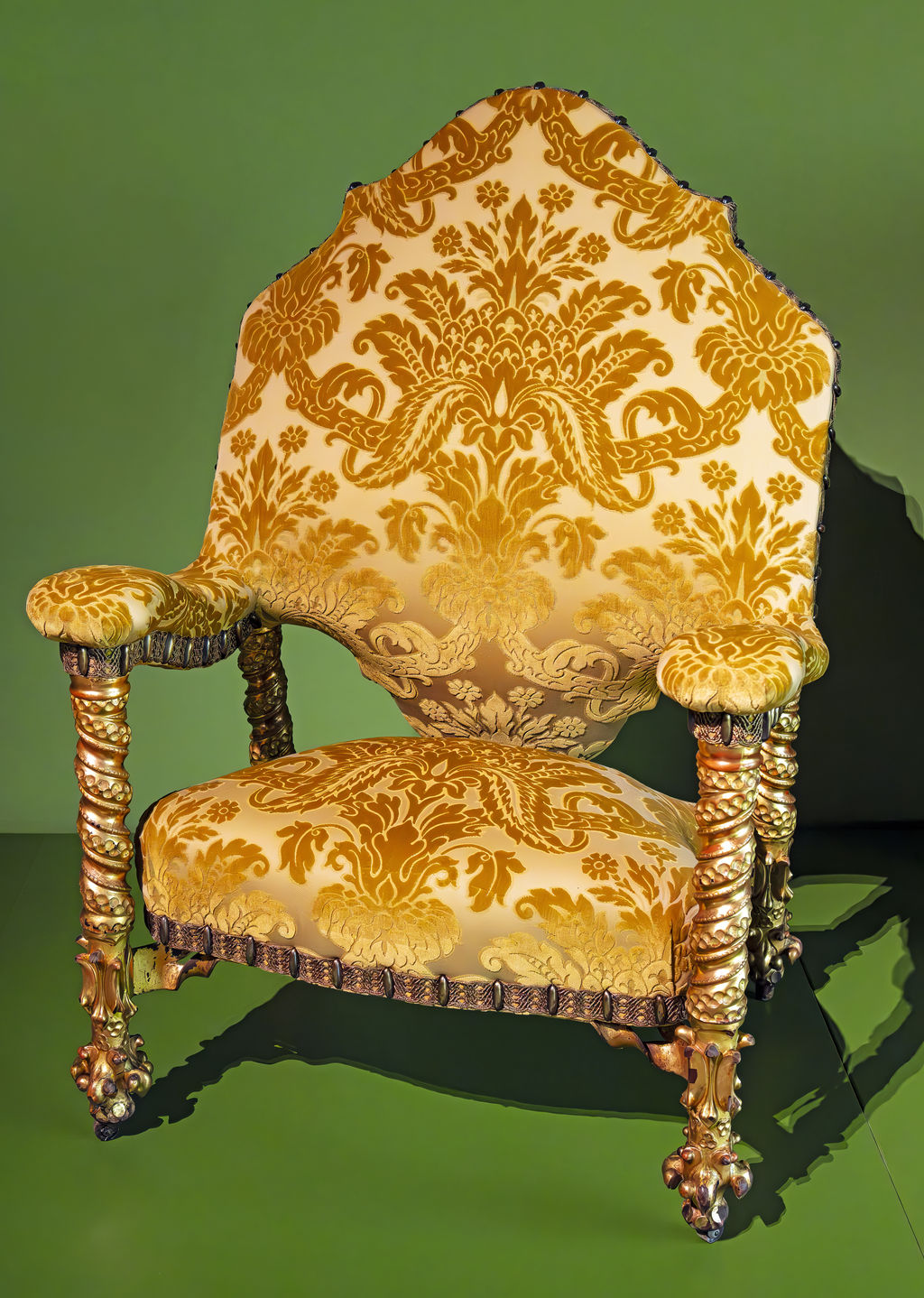
The Casa Calvet principal-floor salon armchair has an upholstered back and a gilt frame. These are features of a formal room in the residence. Didier Descouens. Image source. CC BY-SA 4.0. Resized for the web. This reproduction uses the same CC BY-SA 4.0 licence.
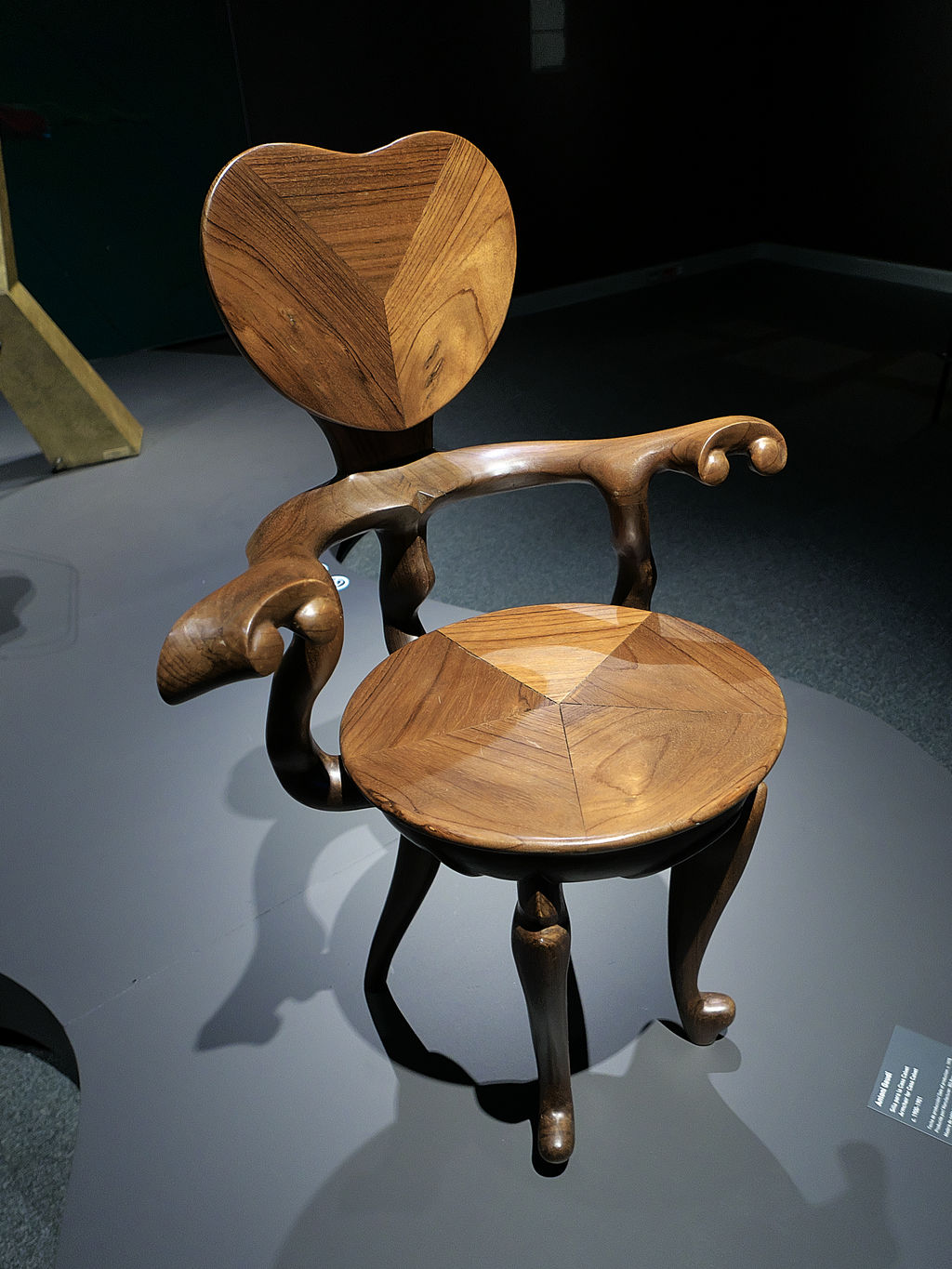
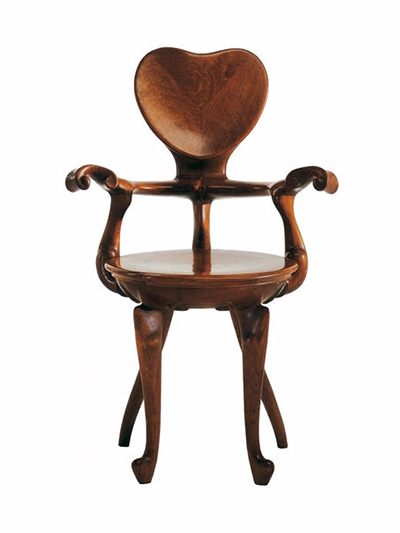
A Casa Calvet oak chair uses the wood itself to shape the sitter’s points of contact, from the curved armrests to the carved seat. Jl FilpoC. Image source. CC BY-SA 4.0. Resized for the web. This reproduction uses the same CC BY-SA 4.0 licence.
Annotated Details from Gaudí’s Furniture
The numbered points identify visible features discussed in this article. Return from each detail to the numbered overview. Each caption identifies the work shown.
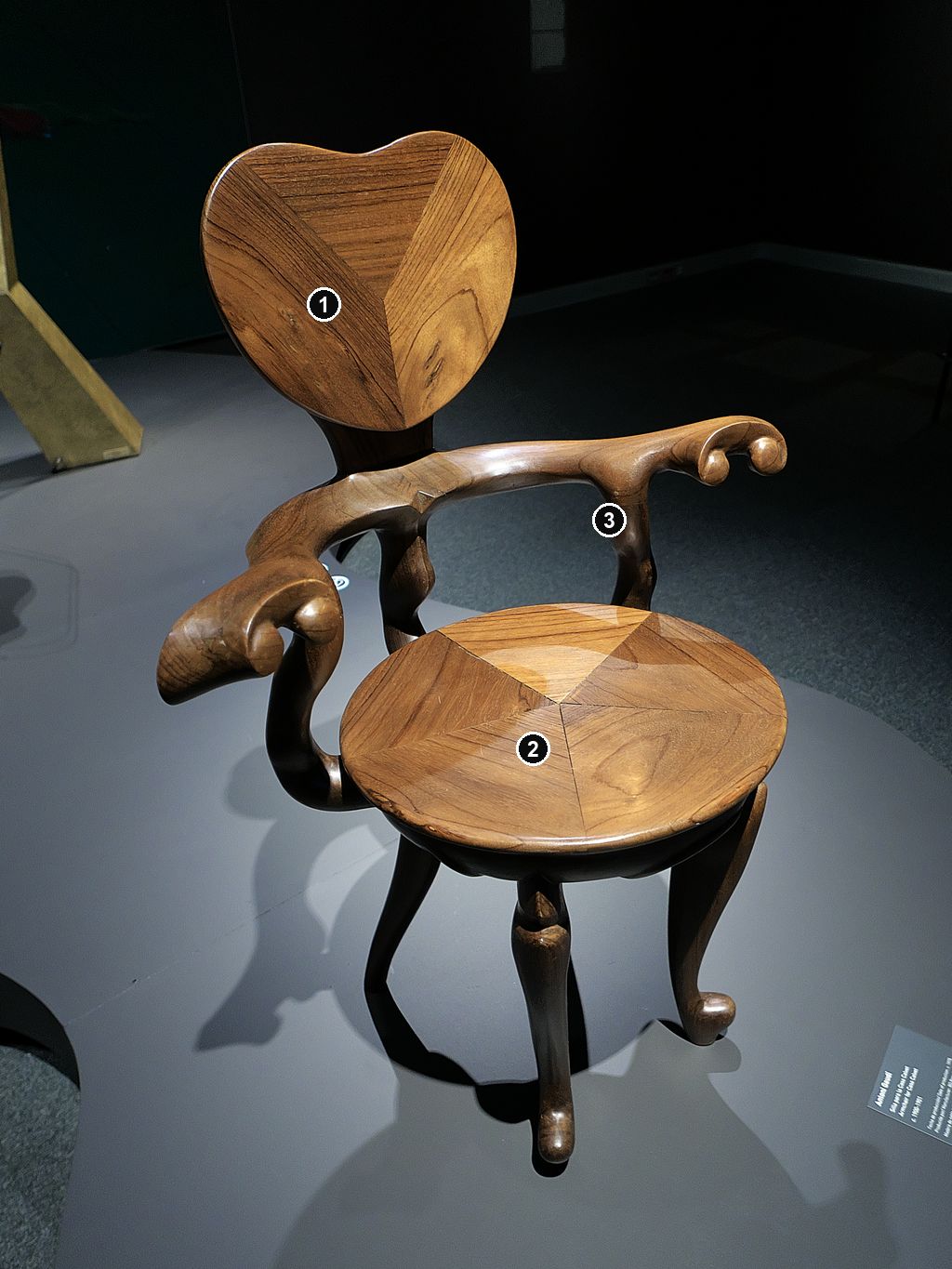
An oak chair for Casa Calvet
A Casa Calvet oak chair uses the wood itself to shape the sitter’s points of contact, from the curved armrests to the carved seat. Jl FilpoC. Image source. CC BY-SA 4.0. Numbered overview and native-pixel detail crops from the full-resolution source image. Overview and crops use the same CC BY-SA 4.0 licence.
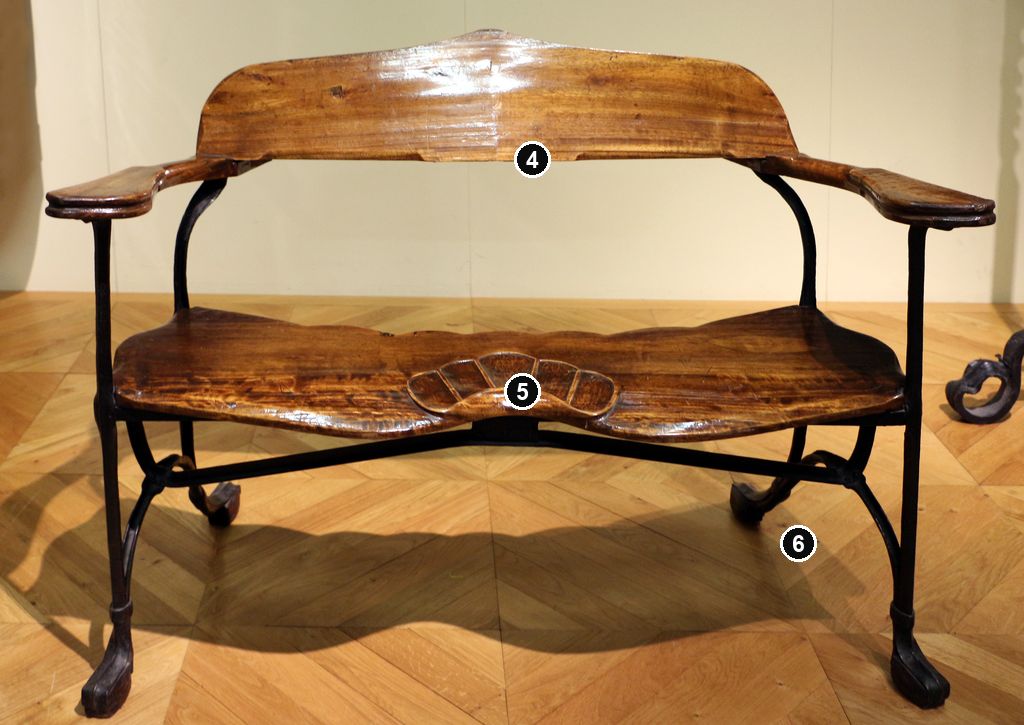
Wood and iron in a Colònia Güell pew
The Colònia Güell pew in the Musée d’Orsay makes the different jobs of wood and iron visible at a glance. Sailko. Image source. CC BY 3.0. Numbered overview and native-pixel detail crops from the full-resolution source image. Overview and crops use the same CC BY 3.0 licence.
Details from GAUDÍ’S FURNITURE
Compare the cropped details with the source images above. Notice how their colours, shapes and positions contribute to the larger compositions.
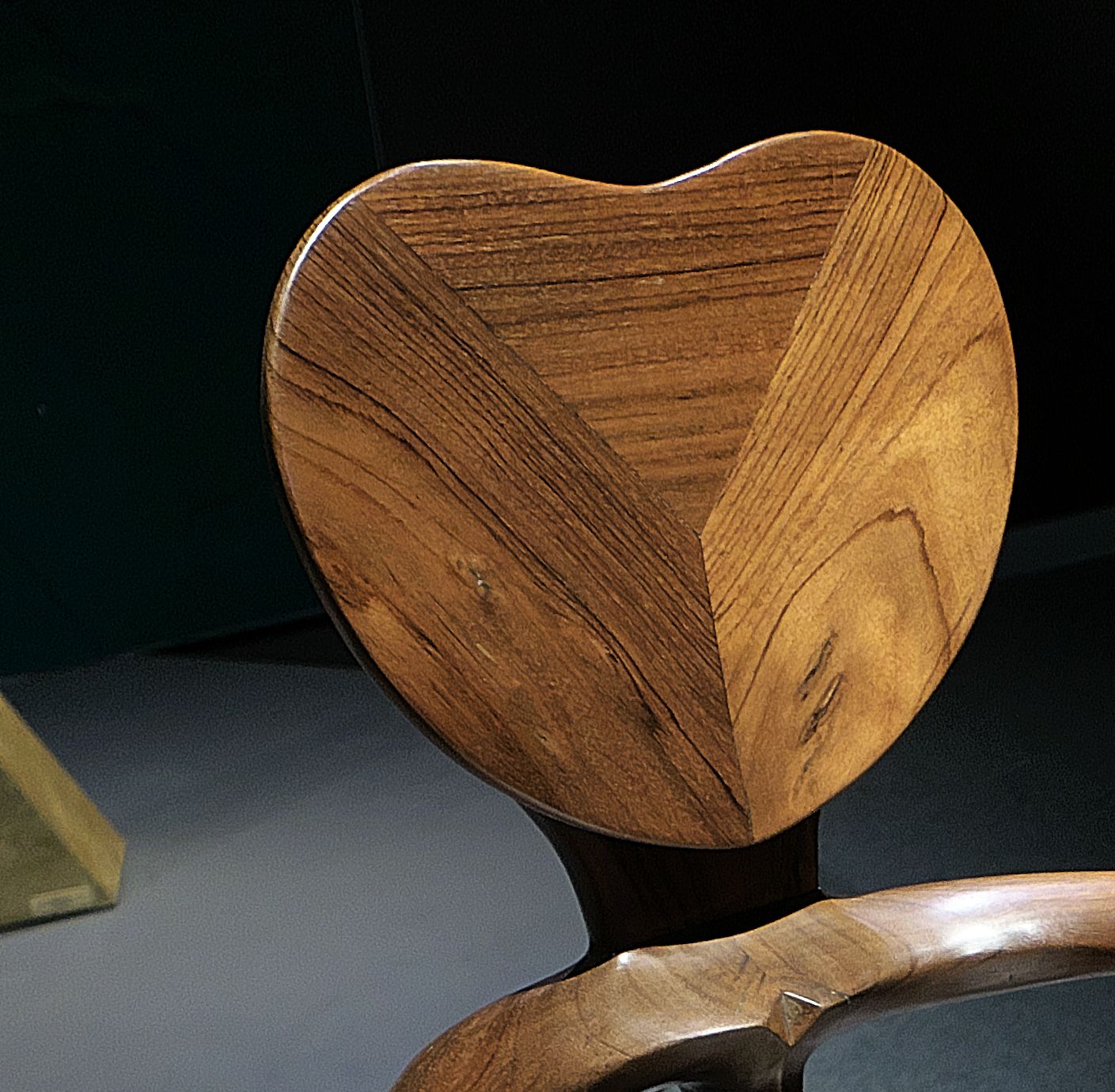
An oak chair for Casa Calvet
Heart-shaped back
A shallow shaping of the back gives the wood a visible change in direction across its grain.
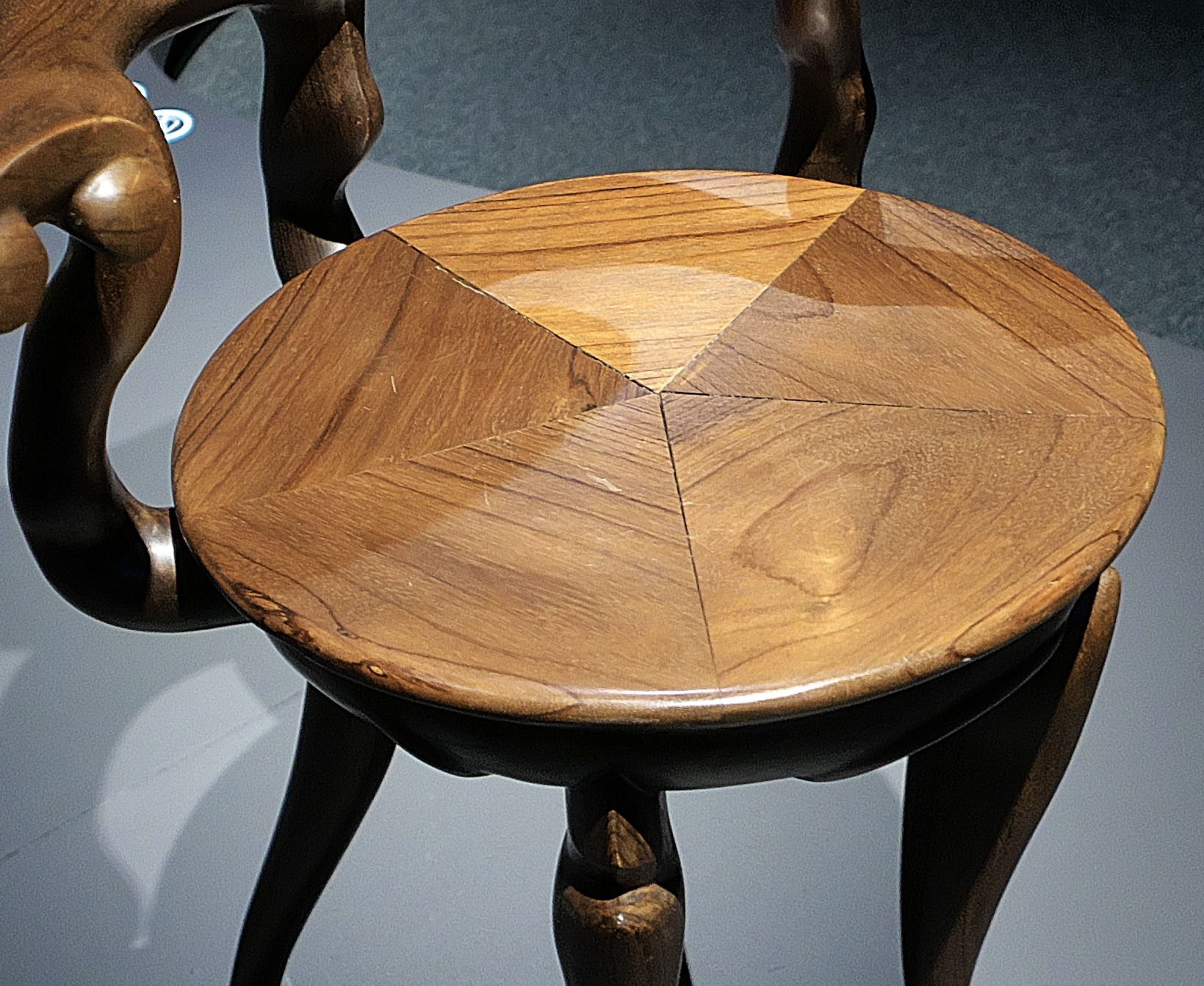
Rounded seat
The seat surface curves towards the supports and keeps the grain visible.
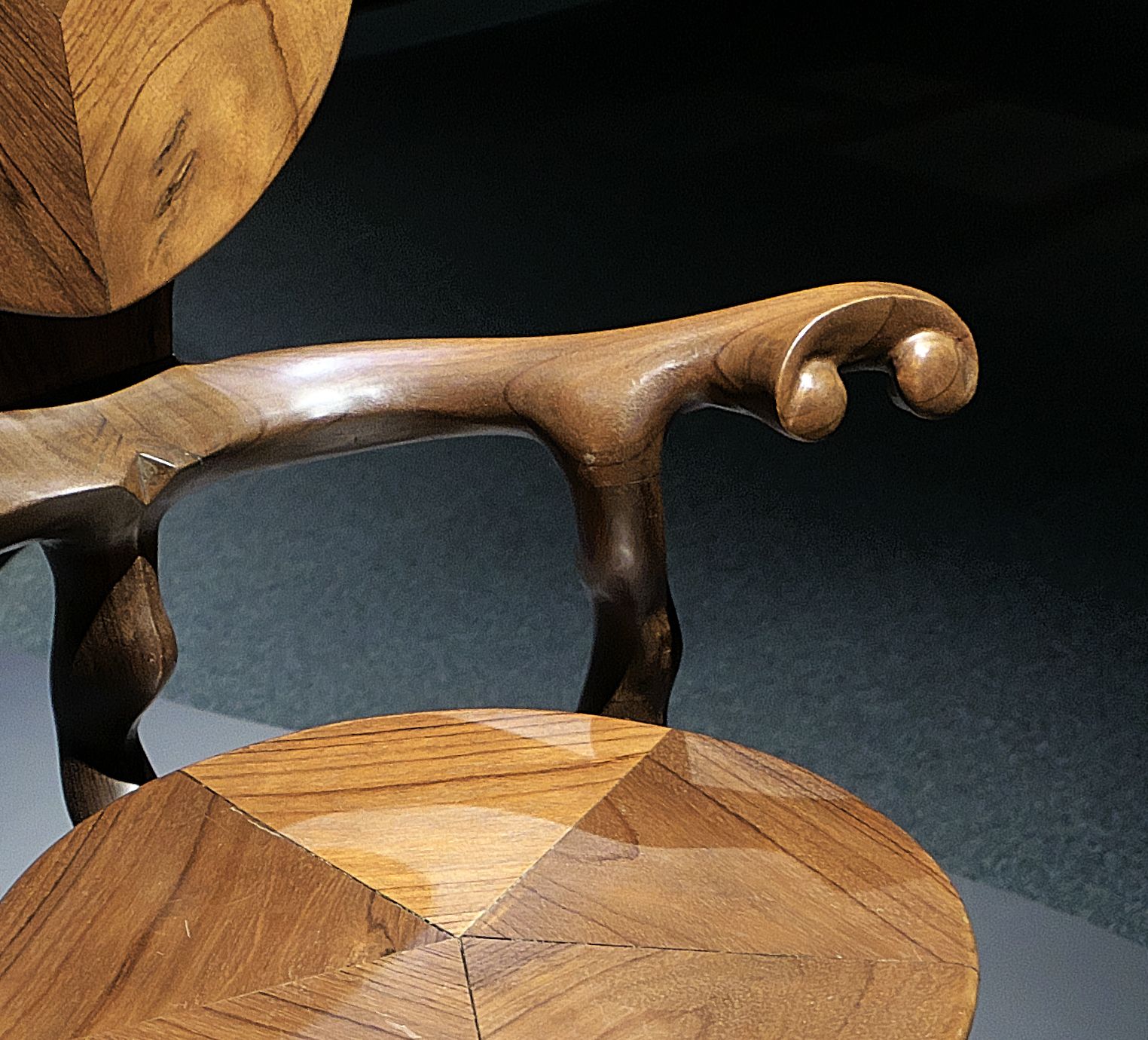
Curved arm
The wooden arm projects into a rounded end over the side of the seat.
Wood and iron in a Colònia Güell pew
Timber back
Wood makes the broad continuous surface across the upper part of the pew.
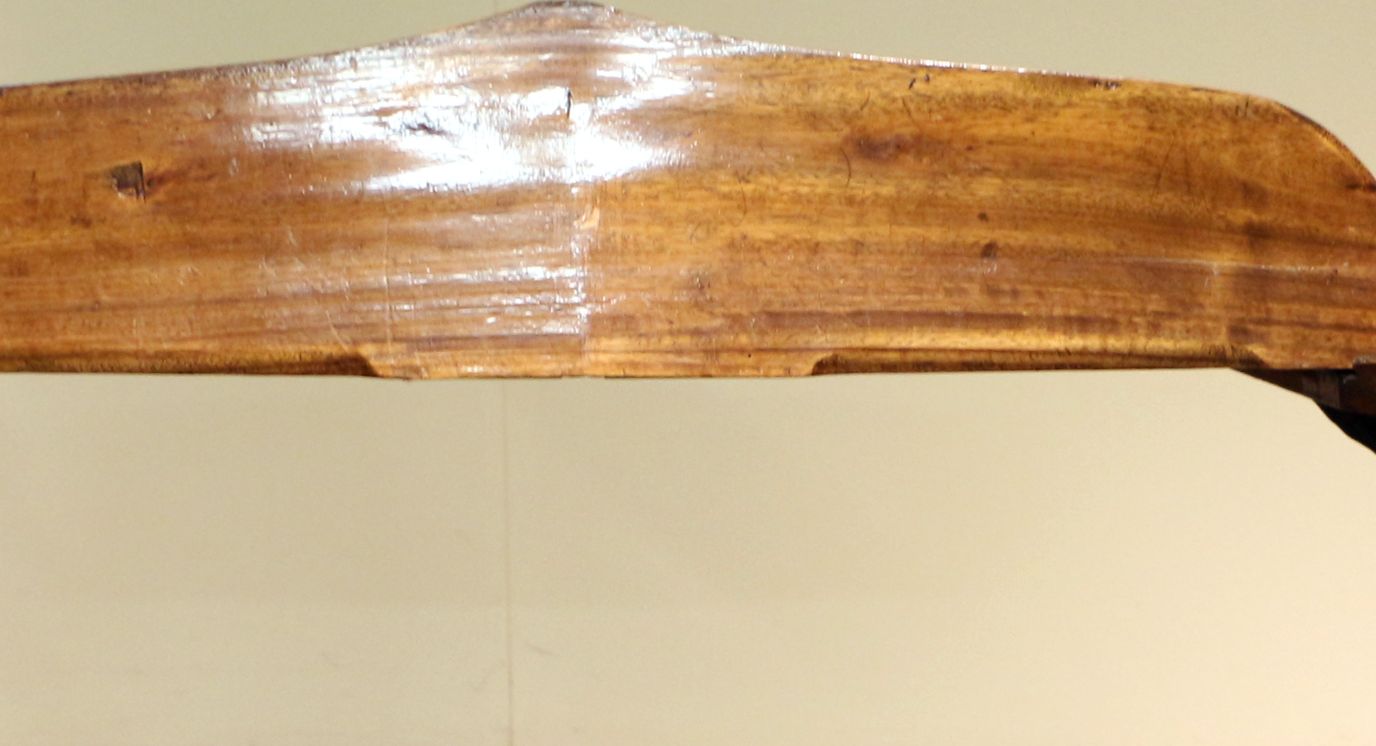
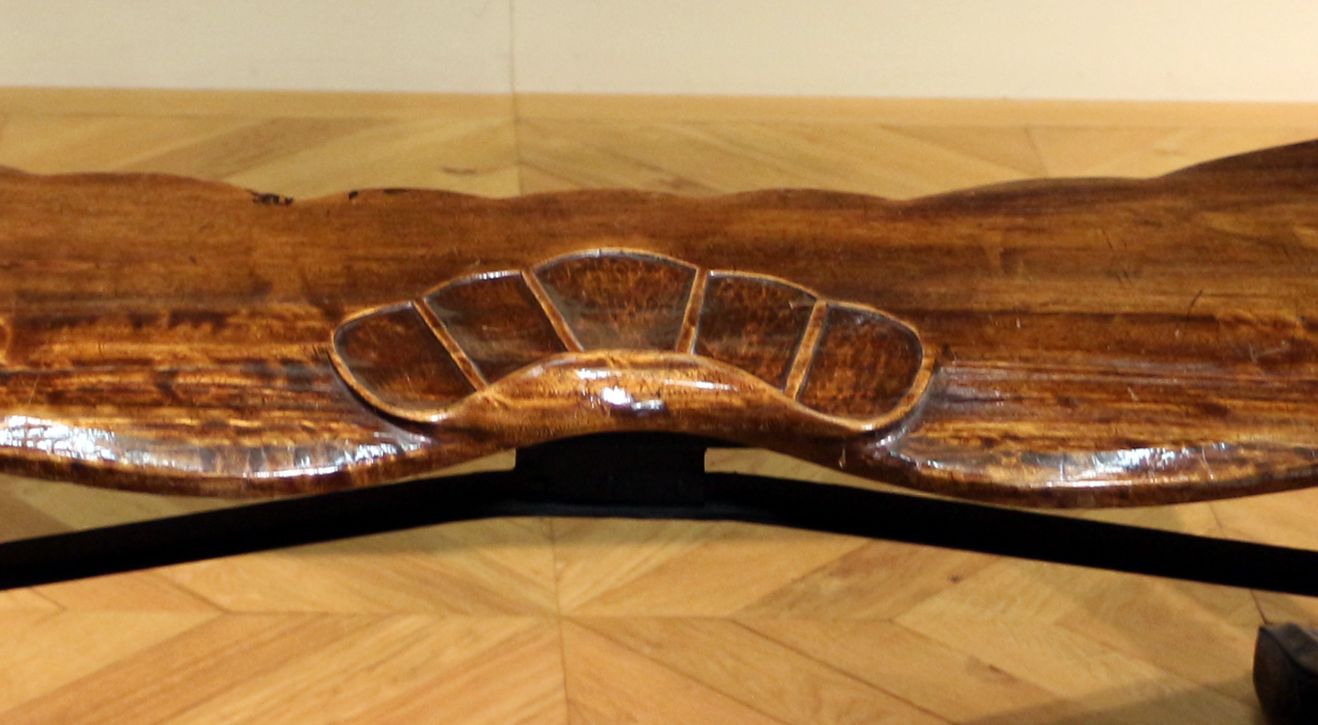
Carved seat
The middle of the wooden seat has a carved pattern at its edge.
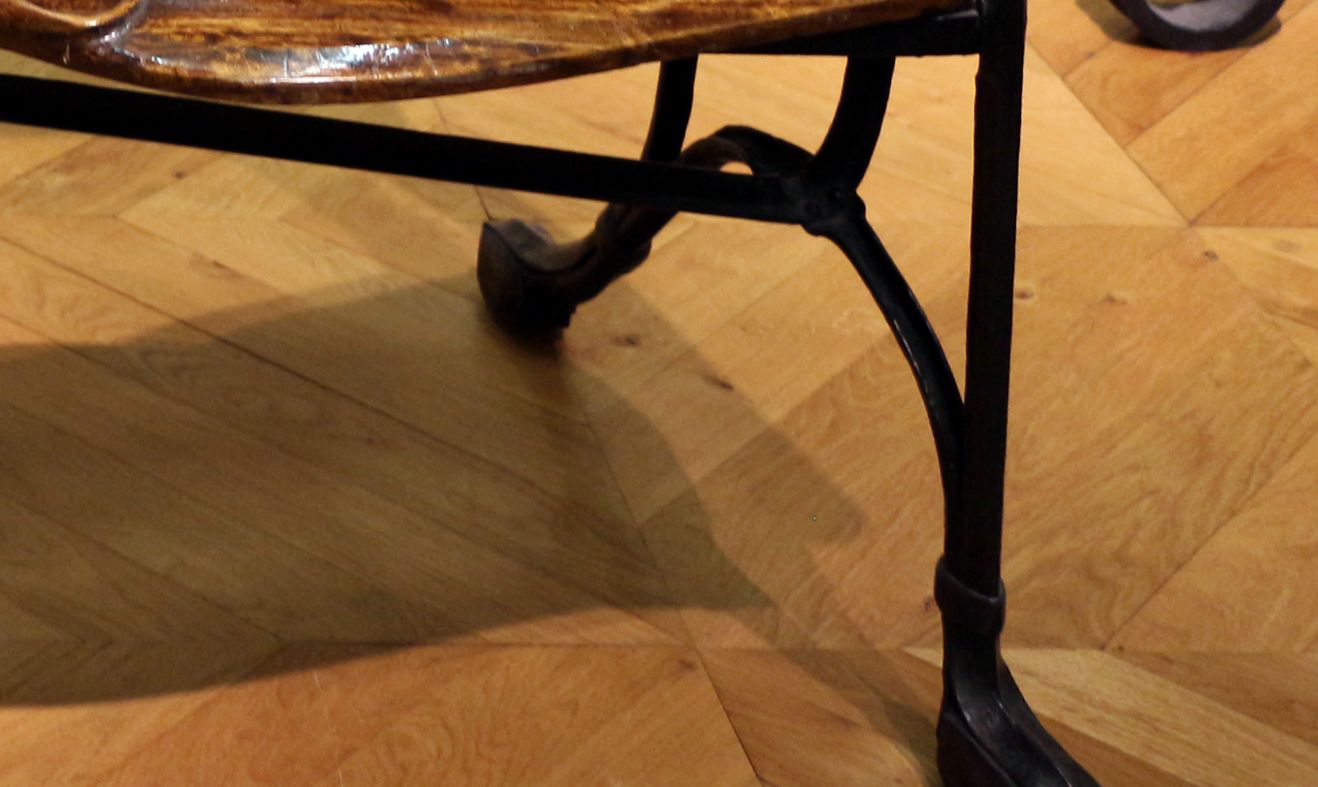
Around the table at Casa Batlló
The furnishings for Casa Batlló came out of Josep Batlló’s commission to remodel an existing building on Passeig de Gràcia. The family’s private dining room on the principal floor opened onto a rear courtyard. People crossed the room on the way outside and passed behind seated diners. The interior design set the route. The shape and size of each piece mattered to how easily people could use it. [2] [9] [10]
The dining chair MNAC 250413-000 measures 75 × 52 × 49 centimetres. The lending foundation catalogues the same chair as CMG000009 and identifies its ash as both joined and carved. The grain and contours make the parts look continuous, a result that depends on the cabinetmaker’s joins as well as the shaping of the surface. The seat dips, the back flares where a hand could take hold, and the legs curve slightly as they meet the floor. Seen from above, the hollows in the wood are more evident. From the side, the seat appears thinner where the edge rolls away. MNAC reads the contours as an early example of furniture designed around the shape of the body. With no upholstery, the shaped wood is what the sitter feels. [2] [11] [12] [13]
The ash dining table, MNAC 250412-000, dates to the same period and came from the same workshop. The foundation’s matching record, CMG000004, also describes its wood as joined and carved. At 76.5 centimetres high, 206 long and 148 wide, it provides a broad shared surface against which the chairs seem small. The back of the chair reaches almost to the level of the tabletop. When someone pulls the chair out, the seat and the opening below the back come into view. Much of the carving a museum visitor can see from several sides came into sight at home when someone shifted a piece to use it. [2] [9] [14] [15]
Gaudí took another approach to sitting together in the Confident, MNAC 156070-000. The piece is also carved ash, but it is 167 centimetres wide and almost 105 high. The two seats are set at different angles, with a raised arm between them. From some viewpoints the wood appears to flow from one support into the next, though the bench is assembled from separate parts. Each back curves around its own sitter and the central arm divides the surface between them. A straight bench gives both people the same view. Here each is directed slightly away from the other. A conversation would involve turning the head or shifting in the seat. The foundation also catalogues a five-seater from the same dining room. The different sizes hint at how many arrangements of people the commission had to accommodate, between solitary chairs, a pair of seats and a longer bench. [11] [12] [16]
Watch films on Gaudí’s architecture
Explore the Sagrada Família, Casa Milà and Casa Batlló, then consider Gaudí’s place in European Art Nouveau.
Gaudí, Sagrada Família
Beth Harris and Steven Zucker look at the façades, branching columns and the Gothic precedents behind the basilica. The film records the building around its 2010 consecration.
Watch on YouTubeThe corner display cabinet from the same dining room, Musée d’Orsay OAO 1385, shows what happens when a piece has a fixed position. It rises 232 centimetres and uses moulded oak with original bevelled glazing. Its footprint belongs to a corner, yet its front bows into the room. The cuts of the panels and the slight convexity led the museum to draw a parallel with the lower levels of the building’s façade. A chair is visible from several directions as a person moves it. The cabinet has a principal face, aimed into the room so the objects behind its glass can be seen. The record follows it from the Batlló family to Pedro and Kiki Uhart in 1983 and to acquisition for the Musée d’Orsay in 2002. Its original glazing still catches the light, but the cabinet’s profile makes most sense when you can imagine the two walls behind it. [10]
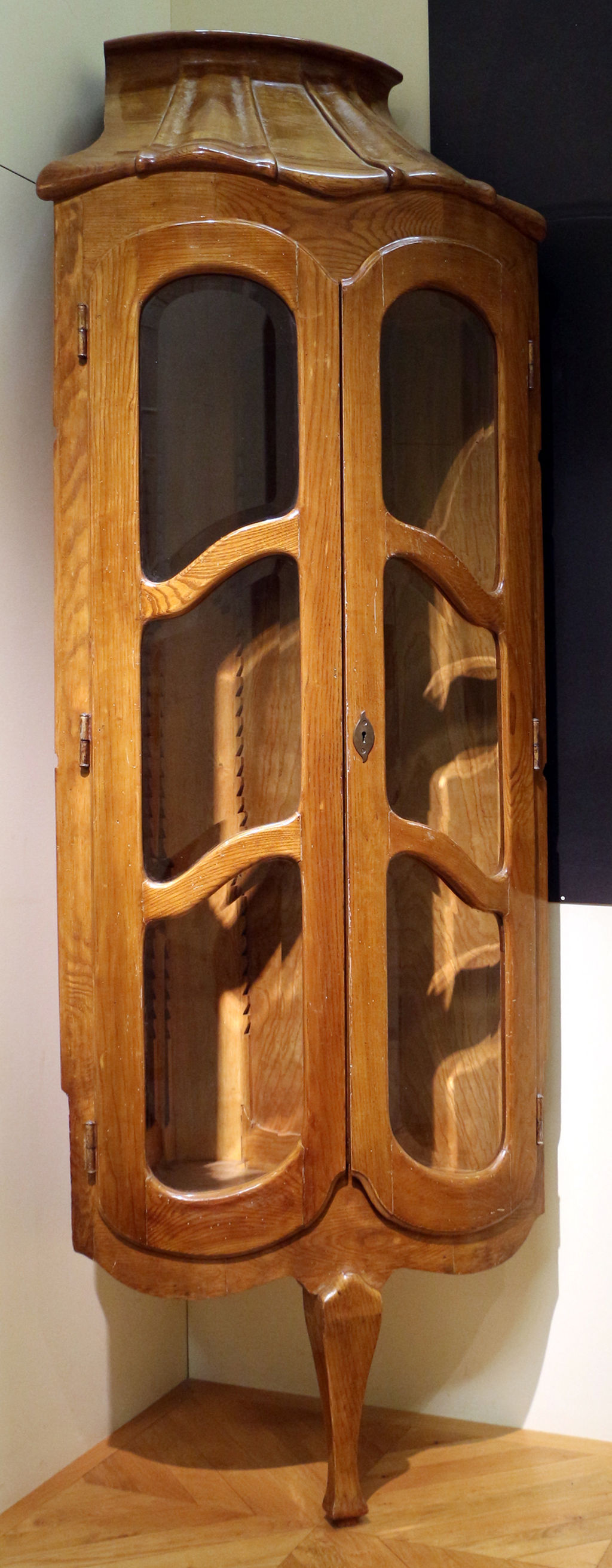
The corner cabinet in the Musée d’Orsay shows how openings and frames could follow the furniture’s contours inside the room. Sailko. Image source. CC BY 3.0. Resized for the web. This reproduction uses the same CC BY 3.0 licence.
Workshops, carved ornament and worship
The same craft workshop could produce furniture with gilded detail for a Calvet salon and chairs whose shape depended on exposed wood for a Batlló dining room. Casas i Bardés appears by name alongside Gaudí in the MNAC records for both. At Colònia Güell the name changes. The museum credits Tallers Tomàs Bernat with its 1914 liturgical bench, MNAC 156072-000, deposited by the Archdiocese of Barcelona in 1991. The broad walnut seat and back are supported on a frame of wrought iron, a visible change of material where a domestic chair might carry its wood all the way down to the floor. The bench is 115.5 centimetres wide. Its 85-centimetre depth gives a sense of the room required by this furnishing in the lower church at Colònia Güell. The site’s account preserves a tradition that wood for benches came from machinery packaging. The MNAC record establishes walnut and wrought iron for this particular survivor. [1] [2] [17] [18]
An earlier commission makes the workshop roles unusually concrete. The chapel and family mausoleum at Sobrellano in Comillas was designed by Joan Martorell and opened in 1881. The Universidad de Cantabria’s study identifies Gaudí’s furniture there as two seats of honour, two kneelers, six benches and a confessional, executed in the workshop of Eduardo Puntí. It credits Llorenç Matamala with preparing a plaster model of the winged dragon under Gaudí’s direction. The dragon was carved on the sides of the benches, where it could catch the eye of someone approaching along the aisle. The seats of honour combined walnut, velvet and metal supports, with greyhounds beneath the arms and eagles holding the López family arms above. Study of medieval furniture helped Gaudí fit the pieces to Martorell’s Gothic Revival chapel. The commission is less clear. Scholars differ over whether it came through Martorell, Eusebi Güell or the López family. The university account describes conservation to stabilise the chapel ensemble after years of wear and travel to exhibitions. [19]
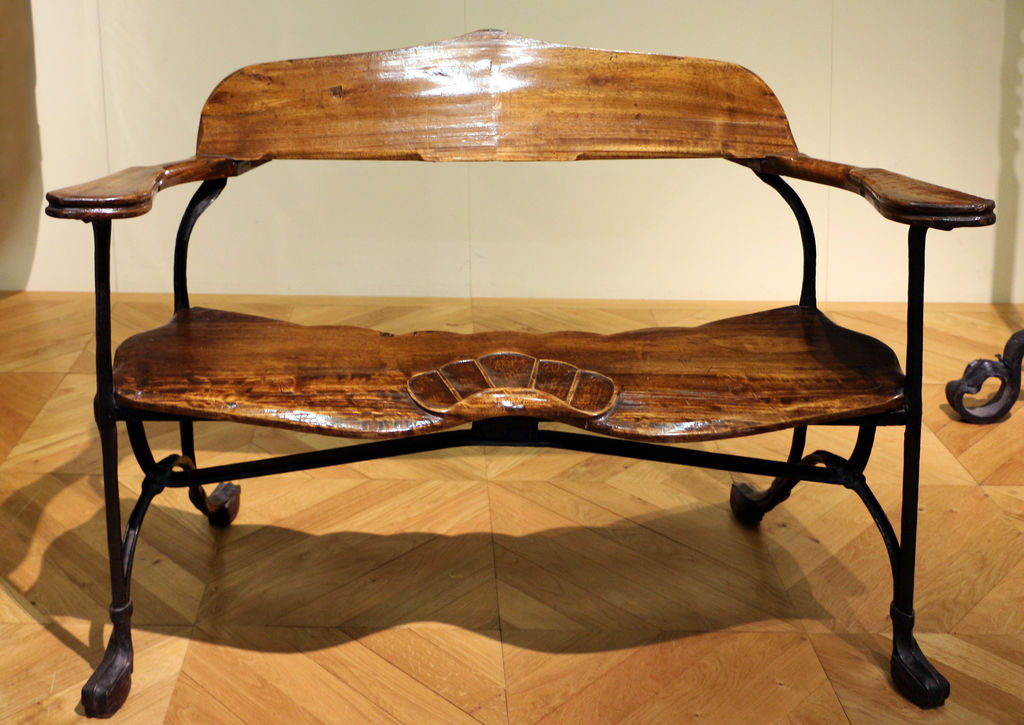
The Colònia Güell pew in the Musée d’Orsay makes the different jobs of wood and iron visible at a glance. Sailko. Image source. CC BY 3.0. Resized for the web. This reproduction uses the same CC BY 3.0 licence.
What a museum can recover
The oak furnishings from the principal-floor entrance hall at Casa Milà show how hard the line between furniture and fittings could be to draw. MNAC dates the ensemble to 1909–11. The foundation identifies a bench chest and wardrobe top within it, CMG000174, as work by Casas i Bardés and dates that element to 1906–10. Rising almost 3.4 metres, it stood as high as a wall in many rooms. Its lower section offered a place to sit while its upper part provided storage. Sections served as a balustrade and incorporated doors to other rooms. The furniture could shape movement as well as accommodate it. In 2019 the Sagrada Família foundation’s extension of its loan agreement with MNAC included sliding doors, bench chests, column cladding and parquet fragments from the Milà collection. The museum recorded restoration, reconstruction and reassembly of the oak unit for its Gaudí exhibition in 2021. The resulting ensemble allows someone to see the relationship between a bench and a passage even after the original hall arrangement was lost. It gives a different kind of evidence from a freestanding chair that survives as an individual object. [20] [21] [22] [23] [24]
Some pieces travelled when their original rooms changed hands or uses. Others were gathered deliberately. The association Amics de Gaudí worked to recover furniture and objects, and helped turn the house where Gaudí had lived at Park Güell into a museum, opened in 1963. The Gaudí House Museum brings together furniture originally made for Casa Calvet, Casa Batlló and the Colònia Güell church. MNAC takes another approach by putting named pieces from different commissions within one collection. Its records distinguish a loan from an acquisition and give the dates for individual objects. The Batlló Confident was lent in 1991, the Calvet boardroom chair in 2004, and the Batlló dining table and its separately catalogued chair in 2014. These are dates in the history of the collection. The original rooms and the dates of making are recorded separately. [2] [4] [11] [14] [23] [25] [26]
Copies have been part of how people encounter the furniture for decades. At the Museum of Modern Art’s 1957–58 Gaudí exhibition in New York, Amics de Gaudí supplied a replica of a Batlló chair. The National Museum of Modern Art, Tokyo, listed a Batlló chair and bench and a Calvet stool as 1984–85 reproductions from Bunri University of Hospitality in its 2023 exhibition checklist. A full-size chair lets visitors gauge the height of the back and see how much space its legs occupy. BD Barcelona began reissuing Gaudí designs in 1975 and specifies varnished solid oak for its Batlló chair. It shares the design’s distinctive outline with the period carved-ash chair at MNAC. The difference in timber shows what can change when a design survives into a second working life. [2] [27] [28] [29] [30]
Browse the buildings and designs
Explore Gaudí’s buildings, landscapes and designed objects, alongside lost works and projects known through documents. The entries identify collaborative and attributed work where relevant.
| Name | Date | Place, use and survival |
|---|---|---|
| Casa Vicens | 1883–85, original house | Summer house with a later enlargement. |
| Güell Pavilions and Estate | 1880s | Estate entrance and service buildings. The site and gardens changed in later campaigns. |
| Palau Güell | 1886–90, main campaign | Restored urban mansion in the Raval. |
| Teresian College | Late 1880s | College and convent adapted from an earlier project. The existing annex chapel is by Gabriel Borrell i Cardona. |
| Casa Calvet | Late 1890s | Textile premises and dwellings. |
| Torre Bellesguard | Early 1900s | House and site works beside traces of an earlier royal residence. |
| Park Güell | c. 1900–14, estate works | Partly realised residential estate, later a public park. |
| Gaudí House Museum | Early 1900s; Gaudí lived here 1906–25 | Estate show house designed by Francesc Berenguer, later Gaudí’s residence. |
| Portal Miralles | Early 1900s | Surviving estate gateway and a length of enclosing wall. |
| Casa Batlló | 1904–06, remodelling | Remodel of an existing residential building. |
| Casa Milà | 1906–12 | Apartment block, later restored. |
| Sagrada Família | Begun 1882; Gaudí from 1883 | Basilica built in successive campaigns under Gaudí and other architects. |
| Sagrada Família Schools | Early 1900s, original school | School subsequently rebuilt and relocated on the site. |
| Plaça Reial Lampposts | 1878 commission; installed 1879 | Municipal street furniture. |
| Sant Pacià Mosaic Pavement | Late 1870s | Tessellated church pavement. |
| Nau Gaudí and the Mataró Workers’ Cooperative | 1883, bleach hall | Mataró. Restored bleach hall and a separate surviving latrine building within a larger scheme. |
| Bodegas Güell | 1890s | Garraf. Winery and service buildings, with drawings credited by the architects’ archive to Gaudí and Francesc Berenguer. |
| Church of Colònia Güell | Begun 1908; lower church opened 1915 | Santa Coloma de Cervelló. Lower church of a partly realised design. |
| Jardins Artigas | Early 1900s | La Pobla de Lillet. Restored riverside garden. |
| Xalet del Catllaràs | Early 1900s | La Pobla de Lillet. Lodge associated with the mines. Research published by the Consell distinguishes Gaudí’s design from decisions made in execution. |
| First Mystery of Glory at Montserrat | Early 1900s, first campaign | Montserrat. Monument to the Resurrection in a larger devotional ensemble, executed in phases. |
| El Capricho de Gaudí | 1880s | Comillas. Summer villa, subsequently restored. |
| Puerta de los Pájaros | Early 1900s, attributed | Comillas. Casa del Moro boundary gate, locally attributed to Gaudí. |
| Casa Botines | 1891 drawings; building work in 1892 | León. Commercial and residential building, later converted to new uses. |
| Episcopal Palace of Astorga | 1889–93 under Gaudí; finished 1913 | Astorga. Palace begun under Gaudí and finished by Ricardo García-Guereta. |
| Gaudí’s Restoration of Mallorca Cathedral | Early 1900s | Palma. Liturgical intervention in an existing cathedral. |
| Bar Torino | 1902, Passeig de Gràcia interior | Barcelona, Passeig de Gràcia. Lost collaborative bar interior. |
| Compañía Trasatlántica Pavilion | 1888, Barcelona exposition | Barcelona, 1888 Universal Exposition. Lost exhibition building. |
| Banner of Misericòrdia | 1900 | Reus. Lost pilgrimage banner designed by Gaudí with a painting by Aleix Clapés. |
| Franciscan Missions in Tangier | Early 1890s | Tangier. Documented unbuilt mission complex. |
| Hotel Attraction and Its Attribution | Posthumous drawings of the 1950s | New York. Unbuilt hotel associated with Gaudí through posthumous drawings. The commission is uncertain. |
| Capilla de Nuestra Señora de los Ángeles | 1922 correspondence; later proposal | Rancagua. The historic proposal was unbuilt. A later Chilean project drew on Gaudí’s Barcelona chapel design. |
Frequently Asked Questions
Gaudí designed the named Casa Calvet and Casa Batlló pieces discussed here, and MNAC credits the Barcelona cabinetmaking workshop Casas i Bardés with their execution. Tallers Tomàs Bernat made the documented 1914 Colònia Güell bench. The Sobrellano chapel ensemble was made at Eduardo Puntí’s workshop and involved a plaster model by Llorenç Matamala. [1] [2] [17] [19]
MNAC in Barcelona catalogues a dining chair and table and the carved-ash Confident. The Musée d’Orsay in Paris holds the original corner cabinet, with its bevelled glass. The Gaudí House Museum also includes period pieces from Casa Batlló. Check the collections’ listings for the objects currently on view. [2] [10] [11] [14] [26]
Look for an object or edition number, the maker, the date of manufacture and documented provenance. MNAC’s 250413-000 is carved ash from the original commission and has been on loan from the Sagrada Família foundation since 2014. The modern BD Barcelona edition is described by its maker as varnished solid oak. The Tokyo exhibition catalogue supplies a separate example of a Batlló chair explicitly dated as a 1984–85 reproduction. [2] [28] [30]
Discussion
Look again at the images and ideas explored in Gaudí’s Furniture. These editorial prompts invite your observations.
Reader Insights
What would you learn from pulling a chair up to its original table that you might miss when seeing it in isolation?
Which surface would tell you most about the making of the Calvet salon chair or the Batlló dining chair, and why?
How does your reading of a piece change when a museum can reconstruct the arrangement around it?
Join the Conversation
Share a detail, comparison or question about Gaudí’s Furniture below.
References
- Museu Nacional d’Art de Catalunya. Cadira del saló del pis principal de la Casa Calvet, 250416-000. View source.
- Museu Nacional d’Art de Catalunya. Cadira del menjador de la Casa Batlló, 250413-000. View source.
- Consell Antoni Gaudí. Casa Calvet. View source.
- Museu Nacional d’Art de Catalunya. Cadira, Casa Calvet boardroom, 212899-000. View source.
- Museu Nacional d’Art de Catalunya. Banqueta de la Casa Calvet, 250427-000. View source.
- Museu Nacional d’Art de Catalunya. Paperera de la Casa Calvet, 250414-000. View source.
- Museu Nacional d’Art de Catalunya. Voyeuse del saló del pis principal de la Casa Calvet, 250417-000. View source.
- Metropolitan Museum of Art. Side chair (voyeuse), attributed to Sulpice Brizard, 69.102.3, and catalogue discussion of the chair type. View source.
- Casa Batlló. The interior, including the family dining room and rear courtyard. View source.
- Musée d’Orsay. Vitrine provenant de la Casa Batlló, OAO 1385. View source.
- Museu Nacional d’Art de Catalunya. Confident, 156070-000. View source.
- Casa Batlló. Casa Batlló furniture, for the chair and bench designs and their construction. View source.
- Fundació Junta Constructora de la Sagrada Família. Chair from the main-floor dining room at Casa Batlló, CMG000009. View source.
- Museu Nacional d’Art de Catalunya. Taula de menjador de la Casa Batlló, 250412-000. View source.
- Fundació Junta Constructora de la Sagrada Família. Dinner table from the main-floor dining room at Casa Batlló, CMG000004. View source.
- Fundació Junta Constructora de la Sagrada Família. Mobiliari, including the original five-seater bench. View source.
- Museu Nacional d’Art de Catalunya. Banc litúrgic, Colònia Güell, 156072-000. View source.
- Colònia Güell. The Gaudí Crypt, section on materials and the tradition of reused wood and iron. View source.
- Universidad de Cantabria, Aula de Patrimonio Cultural. Mobiliario de la capilla-panteón de Comillas, July 2015. View source.
- Museu Nacional d’Art de Catalunya. Mobiliari del distribuïdor del pis principal de la Casa Milà, 250418-CJT. View source.
- Miquel del Pozo and Alba Méndez, Museu Nacional d’Art de Catalunya. Gaudí, the Architect, online exhibition, section on the hall furniture. View source.
- Museu Nacional d’Art de Catalunya. Memòria 2021, section on conservation and restoration. View source.
- Fundació Junta Constructora de la Sagrada Família. Foundation signs agreement with MNAC to display pieces by Gaudí, 2019. View source.
- Fundació Junta Constructora de la Sagrada Família. Bench chest and wardrobe top from the main-floor foyer at Casa Milà, CMG000174. View source.
- Fundació Junta Constructora de la Sagrada Família. Bienes patrimoniales, account of Amics de Gaudí. View source.
- Fundació Junta Constructora de la Sagrada Família. Gaudí House Museum. View source.
- Henry-Russell Hitchcock and Arthur Drexler, Museum of Modern Art. Gaudí, 1957 exhibition catalogue, foreword. View source.
- National Museum of Modern Art, Tokyo. Gaudí and the Sagrada Família, 2023 exhibition checklist, nos. 35–37. View source.
- BD Barcelona. Antoni Gaudí collection, history of the editions. View source.
- BD Barcelona. Batlló Chair, materials and manufacture of the current edition. View source.