


 by Tom Gurney
Tom Gurney BSc (Hons) is an art history expert with over 20 years experience
Published on June 19, 2020 / Updated on August 9, 2026
Email: tomgurney1@gmail.com / Phone: +44 7429 011000
Rembrandt Head of Christ: Introduction
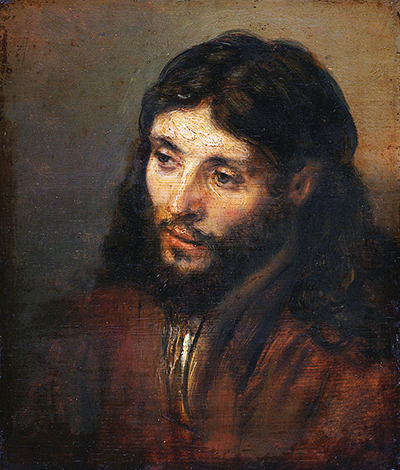
Rembrandt's Head of Christ at Harvard Art Museums is a small painting with a large scholarly shadow. It is not a grand altarpiece, not a narrative scene and not a conventional portrait. The panel shows Christ in half-length close-up, turned slightly away, with the face held between illumination and shadow. Its power depends on restraint: a lowered gaze, parted hair, soft modeling around the eyes and mouth, and a quietness that invites close looking rather than dramatic storytelling.
This article is about the Harvard object, number 1964.172. Harvard Art Museums currently lists the painting as by Rembrandt Harmensz. van Rijn, dates it to about 1648-1656, and identifies it as oil on oak panel measuring 25.5 x 20.4 cm. The record also preserves an earlier attribution to a follower of Rembrandt. That combination makes the painting especially interesting. It belongs to Rembrandt's late religious world, but it also stands near questions of workshop practice, related versions and changing attribution.
Head of Christ should therefore be read with care. Several related heads of Christ are associated with Rembrandt, his studio and later scholarship. Some are in different collections, have different dimensions and carry different histories. The Harvard painting is not a placeholder for all of them. Its own object facts, present attribution and previous attribution give the safest starting point.
Contents
- Introduction
- A Small Panel With A Direct Presence
- The Harvard Object Facts
- Why The Face Matters
- The Wider Head Of Christ Group
- Rembrandt, The Studio And Version Questions
- The Question Of A Living Model
- Religious Intimacy In Late Rembrandt
- Attribution And Trust
- How To Look At Harvard's Head Of Christ
Annotated Details from Head of Christ
These annotated details focus on the Harvard Head of Christ as a study of presence, softness, light and serial workshop context.
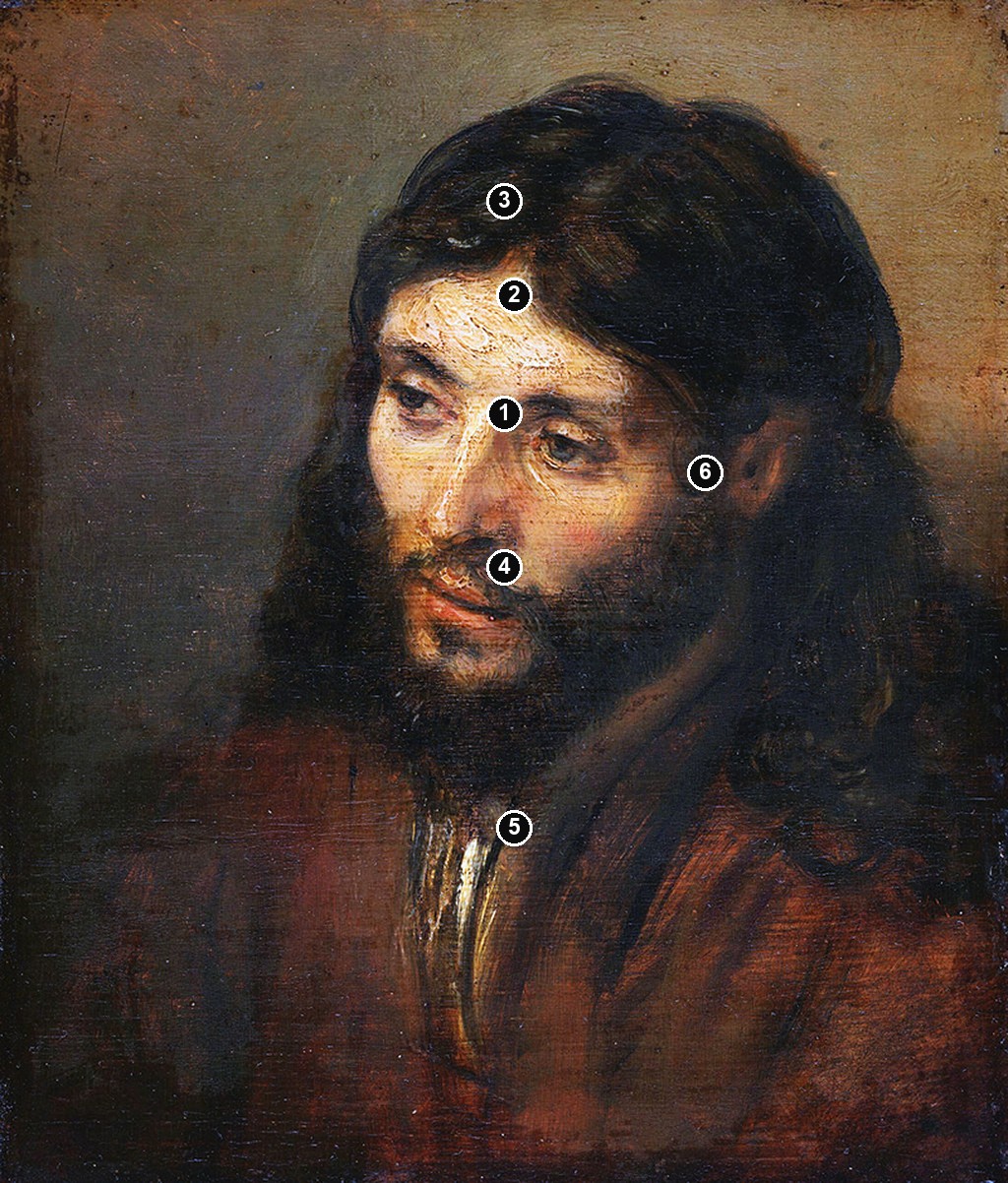
Details from HEAD OF CHRIST
Close looking shows how small changes of light, hair, eyes and surface can carry devotional force without narrative action.
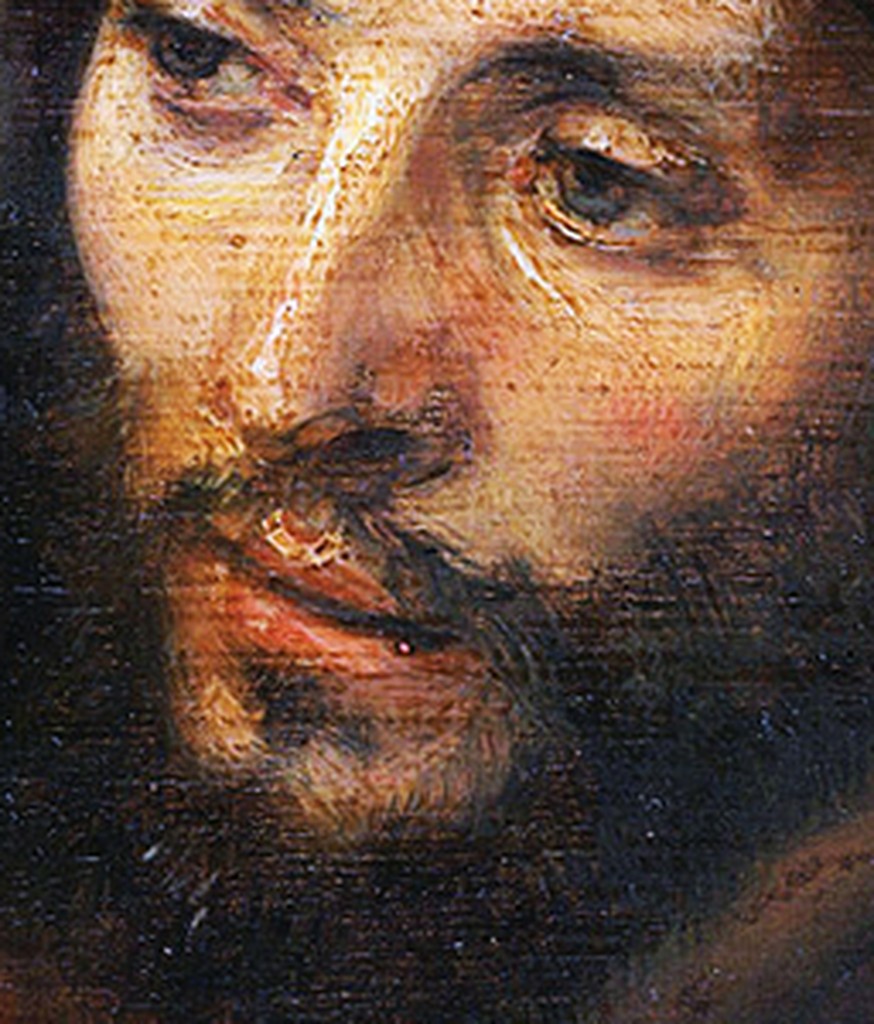
Downcast eyes
The lowered eyes make the head inward and contemplative. The expression depends on restraint rather than drama.
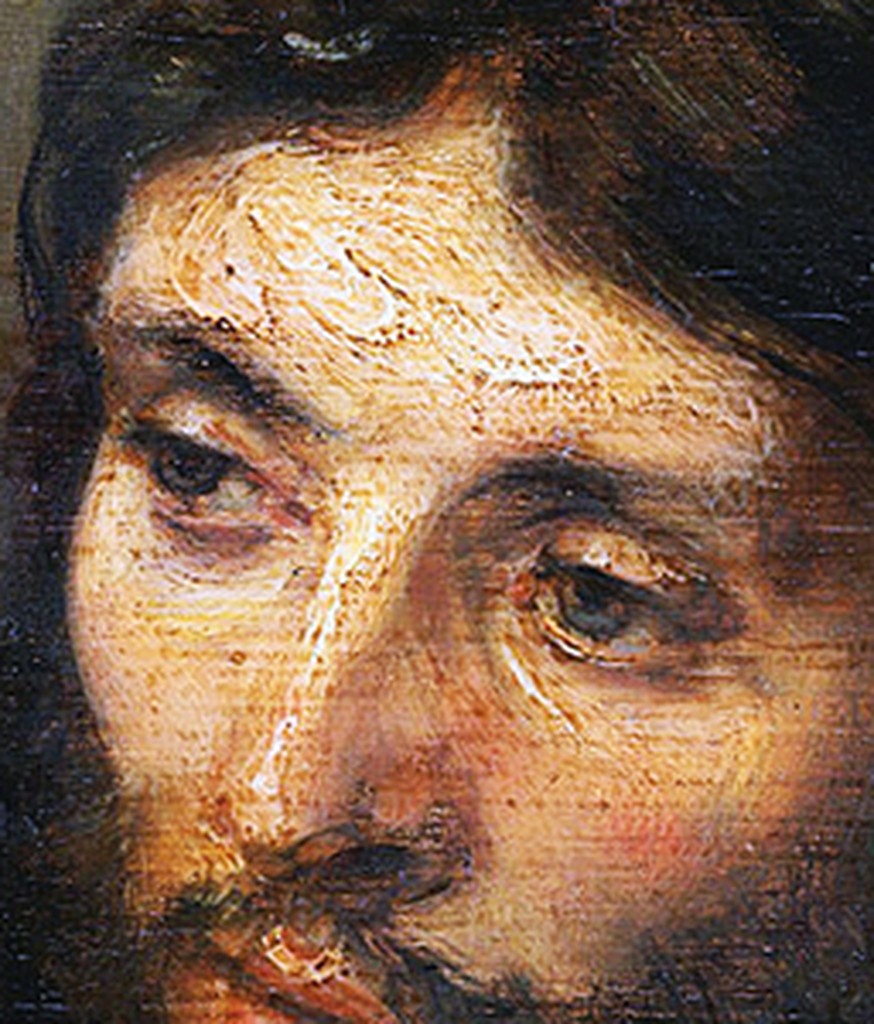
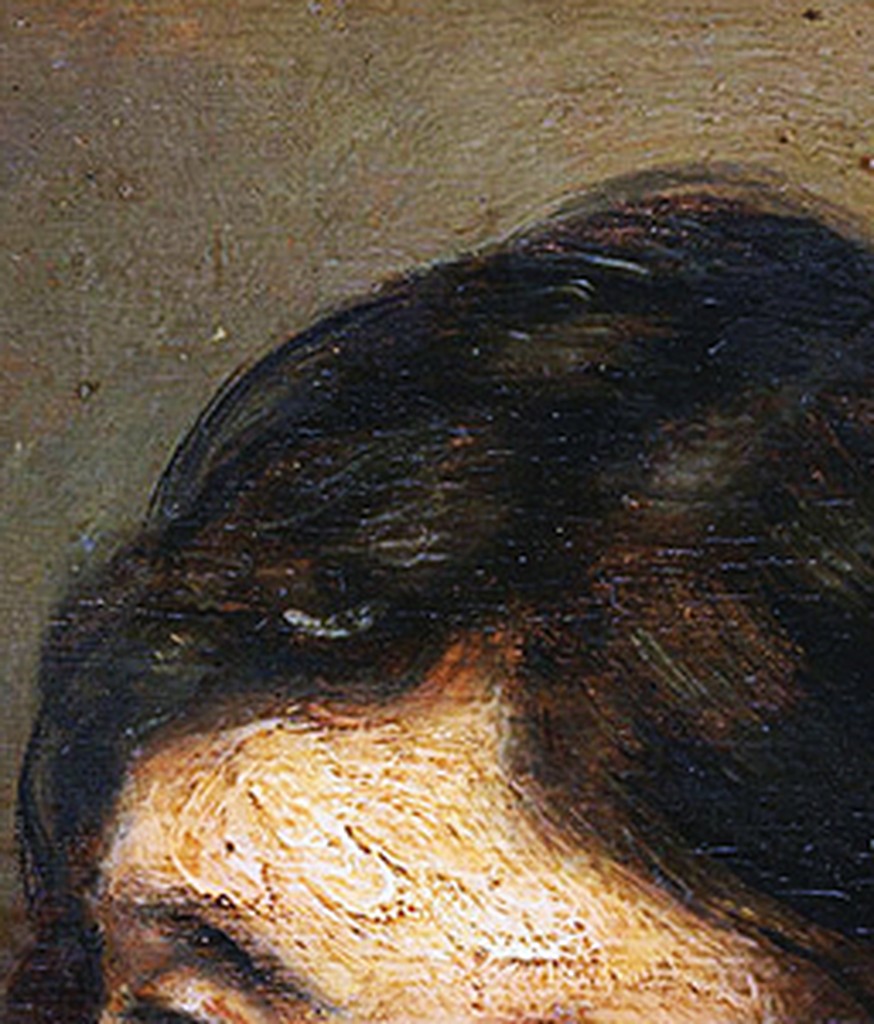
Light on the forehead
A soft light across the brow gives the face form and gravity. It keeps the small head visually alive.
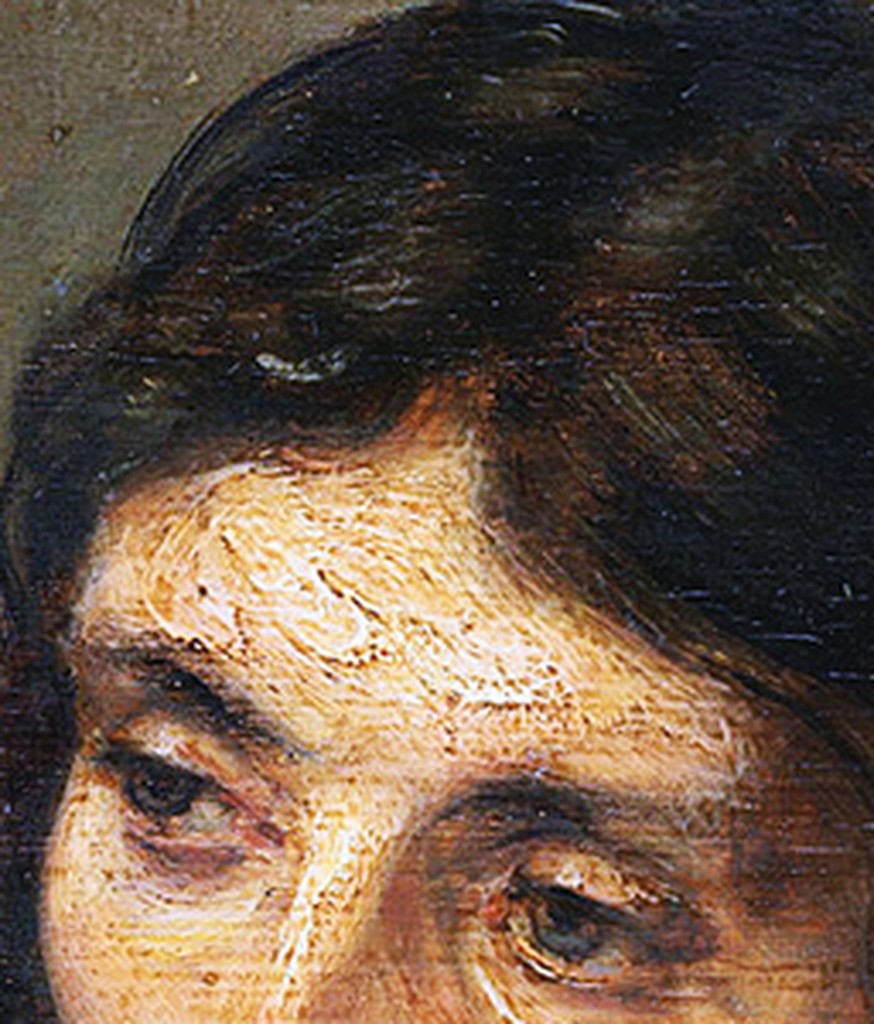
Hair and central parting
The hair frames the face and connects the work to a broader series of Christ heads associated with Rembrandt's circle.
Nose, mouth and beard
The mouth and beard are softly handled. The modelling avoids hard outline and supports the image's devotional quiet.
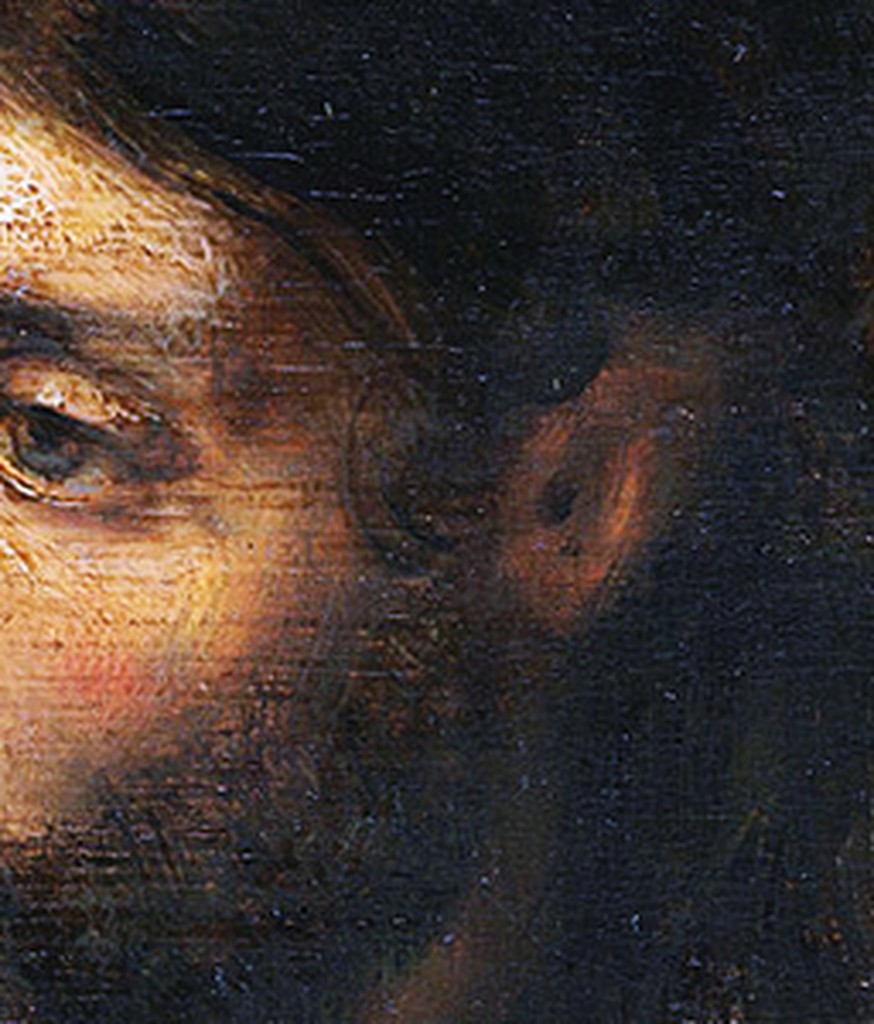
Robe and lower edge
The lower robe area is modest but important. It anchors the head without turning the study into a full narrative scene.

Warm ground
The warm ground surrounds the head and helps create intimacy. The background is active as atmosphere, not empty space.
A Small Panel With A Direct Presence
The Harvard Head of Christ is intimate in scale. At 25.5 x 20.4 cm, it asks for a kind of looking closer to a private devotional object than to a large public history painting. The face fills much of the panel. The body is barely developed by comparison. Light settles on the forehead, nose, cheek, eyelids and lips, while the hair, beard and robe fall into softer darkness.
The painting does not show Christ performing a miracle, teaching a crowd, appearing before judges or rising from the tomb. Instead, it studies the head itself. That concentration changes the viewer's task. The question is not what event is happening, but how a sacred face can be imagined through an ordinary human model, soft flesh, shadow, age, inwardness and paint.
Rembrandt's religious art often works by making biblical figures feel physically and emotionally present. The Harvard panel belongs to that larger impulse. Christ is not distant, jeweled or hieratic. The face is individualized, vulnerable and human. The lowered eyes suggest inward thought rather than direct command. The mouth is neither fully closed nor dramatically open. The hair parts naturally. The light is gentle rather than theatrical.
That humility is one reason the painting can feel modern to viewers. It avoids the polished ideal of a timeless sacred type. It offers a human head touched by divinity, or perhaps a human model used to imagine divinity. The difference matters, and Rembrandt's art often lives in that tension.
The Harvard Object Facts
Harvard Art Museums identifies the painting as Head of Christ by Rembrandt Harmensz. van Rijn. The date is given as c. 1648-1656. The medium is oil on oak panel. The dimensions are 25.5 x 20.4 cm. The object number is 1964.172, and the work belongs to the Harvard Art Museums / Fogg Museum as the Gift of William A. Coolidge.
Those facts should stay attached to the painting whenever it is discussed. The Head of Christ subject can easily lead readers toward other versions, other museums and other scholarship. But the Harvard article must remain tied to this specific panel.
The earlier attribution to a follower of Rembrandt is also part of the object history. It should not be ignored, because it shows that the painting has stood near the boundary between Rembrandt's own hand and the work of artists around him. At the same time, Harvard's current artist line is Rembrandt. The responsible wording is therefore balanced: the work is currently listed by Harvard as Rembrandt, while its record preserves a previous attribution to follower of Rembrandt.
This is not unusual in Rembrandt studies. Many objects connected with him have moved through changing labels as scholars reconsidered style, materials, workshop practice, provenance and comparison with related works. A past attribution does not automatically cancel a current museum attribution. It does, however, remind readers that labels have histories.
Why The Face Matters
The face in the Harvard panel is carefully poised between likeness and ideal. It is not a portrait in the ordinary sense, because it represents Christ. Yet it does not feel like a purely invented emblem. Its strength comes from the impression that a living head has been observed, softened and transformed into a sacred image.
The light does much of the work. It does not blaze from behind Christ or split the scene into obvious drama. Instead, it falls across the features in a way that makes the head turn slowly into visibility. The bridge of the nose, eyelids and cheek carry the viewer's attention, while the shadowed hair and robe hold the figure in quiet depth.
The handling is also important. The painting depends on small transitions rather than spectacle. The tones around the eyes and mouth are tender. The hair is looser and darker. The beard softens the lower face without becoming a decorative pattern. The panel's scale makes every slight adjustment count.
This kind of head study belongs naturally beside Rembrandt's broader interest in faces. He painted and etched old men, apostles, beggars, self-portraits, tronies and biblical figures with an unusual sensitivity to expression. He often made the face a place where age, thought, role and feeling meet. In Head of Christ, that habit is directed toward the central figure of Christian devotion.
The result is not sentimental. The emotion is quiet, almost withheld. Christ seems present and withdrawn at the same time. That balance is one of the painting's deepest effects.
The Wider Head Of Christ Group
The Harvard panel should be seen against the wider group of Head of Christ works associated with Rembrandt and his circle. The Philadelphia Museum of Art's Rembrandt and the Face of Jesus exhibition is a useful reference point because it brought attention to related heads, studio practice and the question of how Rembrandt imagined Christ's face.
This wider group matters because it shows that Head of Christ is not a single simple title. It is a subject shared by related works. Some versions have been attributed to Rembrandt, some connected with his studio, and some discussed through later scholarship. A title alone cannot tell the reader which object is meant.
The Philadelphia route is also important because it connects the subject with Rembrandt's religious imagination in the late 1640s and 1650s. The related heads are often discussed as experiments in representing Christ through a more immediate human presence. They differ from older idealized formulas by giving the face a warmer, more individualized character.
For the Harvard painting, that context helps without replacing the object. It explains why a small head can matter so much. It also explains why the article must avoid borrowing facts from another panel. The Philadelphia Museum of Art's own Head of Christ, for example, has its own object number, dimensions, collection history and physical structure. Those facts do not become Harvard facts simply because the titles are similar.
The safest approach is to read the Harvard painting as one object within a related field. It can belong to a Rembrandt-centered conversation about Christ's face without dissolving into a generic series page.
Rembrandt, The Studio And Version Questions
The studio question is central to Head of Christ. Rembrandt was not an isolated painter working outside teaching, copying and collaboration. He trained pupils, used models, kept works and studies, and operated in a market where his manner was admired and imitated. That environment makes related versions historically plausible and attribution questions unavoidable.
In such a world, resemblance does not automatically prove authorship. A pupil could study a master's work. A follower could repeat a type. A studio work could remain close to Rembrandt's inventions without being entirely by his hand. Later collectors and catalogues could then attach Rembrandt's name more broadly than current evidence supports.
The Harvard record's previous attribution to follower of Rembrandt belongs to this problem. It tells us that the panel has not always been treated in exactly the same way. The current Harvard attribution gives the present museum position. The earlier attribution gives part of the painting's scholarly history.
This is why version discipline is so important. A reader should ask: which Head of Christ, in which collection, with which current artist line, and with which earlier attributions or related works? Without those questions, the subject becomes misleading. One version's evidence is not another version's evidence. One museum's record cannot be transferred onto a different object.
For Rembrandt, this is not a weakness in the subject. It is part of the subject's importance. Head of Christ opens a window onto how the master's religious art, studio environment and later scholarship overlap.
The Question Of A Living Model
One of the most sensitive ideas around the Head of Christ group is the possibility that Rembrandt and his studio used living models when imagining Christ. The Philadelphia exhibition route connects the subject with a 1656 inventory reference to a head of Christ "done from life." That phrase has become important because it suggests a striking departure from a purely inherited ideal type.
The idea is powerful, but it needs careful wording. It does not identify a named sitter for the Harvard panel. It does not prove that this specific face is a portrait of one known person. It also should not be turned into a simple claim that the painting shows a Jewish model unless the evidence is stated with proper caution.
Rembrandt lived and worked in Amsterdam, a city with a significant Jewish community. His biblical art has often been discussed in relation to that environment, and the Head of Christ group has been linked by scholars with a more immediate, humanized conception of Christ's face. But the responsible public claim is modest: the group belongs to a scholarly conversation about living models, Amsterdam's religious setting and Rembrandt's break from conventional ideal types.
For the Harvard panel, the most secure statement is visual and documentary. The face has an individualized, observed quality. The wider exhibition context includes the idea of a head of Christ made from life. The panel's exact sitter, if there was one, is not known.
That uncertainty should not be flattened. It is more interesting to leave the evidence in its real shape: suggestive, historically meaningful and not absolute.
Religious Intimacy In Late Rembrandt
The Harvard Head of Christ belongs naturally with Rembrandt's late religious mood. From the 1640s into the 1660s, his art often turns away from public spectacle toward inward concentration. Late apostles, biblical figures and devotional subjects frequently ask the viewer to consider silence, fatigue, mercy, recognition and spiritual presence.
This does not mean that all late Rembrandt religious works are quiet. He could still create drama. But many of the most moving works from the later decades depend on restraint. A face, a hand, a gesture or a small exchange can carry the emotional weight of the subject.
Head of Christ fits that world. The painting does not narrate an episode from the Passion or the ministry of Christ. It offers the face as a site of meditation. The viewer is left with the human features, the softened light and the question of recognition.
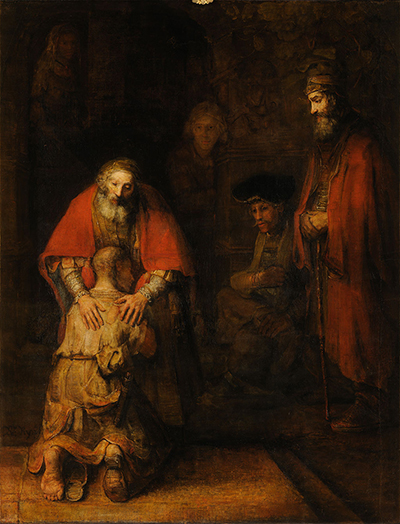
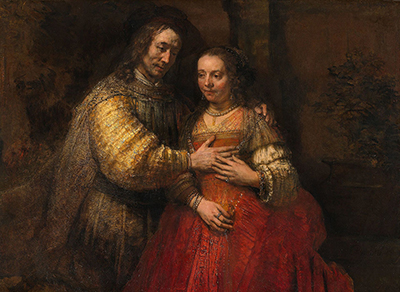
That question connects the panel with other late religious works. In St Matthew and the Angel, Supper at Emmaus, The Jewish Bride and The Return of the Prodigal Son, Rembrandt's art often finds spiritual meaning through touch, listening, recognition and inward attention. Harvard's Head of Christ is smaller and simpler, but it shares the same seriousness.
The painting's modest scale also matters spiritually. It does not overpower the viewer. It waits. The panel creates a devotional encounter through nearness rather than grandeur.
Attribution And Trust
How should a reader respond to the earlier attribution to follower of Rembrandt? The best response is neither alarm nor indifference. It is careful attention.
Museum records are not timeless verdicts. They are current statements based on evidence, scholarship and institutional judgment. When a record preserves an earlier attribution, it gives readers part of the object's history. That history can show how opinions changed, how close the painting sits to workshop practice, and why Rembrandt attribution has to be read object by object.
Harvard's present artist line is Rembrandt. That is the current collection authority for this object. The previous follower attribution remains important because it prevents an oversimplified story. The object has an attribution history, but Harvard's current record does not reject the Rembrandt attribution.
This is a good example of how to read Rembrandt more generally. The question is not whether every uncertainty destroys trust. The question is what kind of uncertainty is being recorded. A previous attribution is evidence of scholarly movement. A current attribution is the museum's present position. A related series is context. A different version is a different object.
Once those distinctions are kept clear, the painting becomes more legible rather than less.
How To Look At Harvard's Head Of Christ
Begin with the scale. This is a small panel, so its intimacy is part of its meaning. Imagine the work not as a distant museum icon, but as an object made for close attention.
Then look at the direction of the head. Christ is not facing the viewer frontally. The slight turn and lowered gaze make the encounter indirect. The viewer sees thought rather than address.
Next, follow the light. Notice how softly it finds the forehead, eyelids, nose, cheek and mouth. The light does not describe everything equally. It lets the head emerge from darkness and keeps the expression subdued.
After that, consider the boundary between type and person. The long hair and beard identify the sacred subject. The modeling of the face gives it human presence. The painting works because neither side fully cancels the other.
Finally, remember the object history. Harvard currently lists the work as Rembrandt, while preserving a previous attribution to follower of Rembrandt. The wider Head of Christ group includes related works and studio questions. Looking well means holding the beauty of the panel together with that documented complexity.
Why This Painting Matters
Harvard's Head of Christ matters because it brings several Rembrandt questions into one small object. It is a devotional image, a study of a humanized sacred face, a late religious work, a panel tied to a wider group, and an object with a recorded attribution history.
It also teaches a broader lesson about Rembrandt. Fame can make the artist's work seem settled and obvious. In reality, Rembrandt's art often asks for exactness: exact object, exact museum, exact medium, exact attribution, exact relationship to related works. The more familiar the title, the more those details matter.
This panel is not every Head of Christ. It is Harvard Art Museums object 1964.172. Its quiet power depends on a face emerging from shadow. Its scholarly interest depends on the way that face stands between Rembrandt, his studio, devotional imagination and later attribution history.
The painting's deepest effect may be that it refuses to become a simple category. It is small but serious, human but sacred, current Rembrandt but with a previous follower attribution, one object but part of a wider family of images. That tension is exactly why it deserves close attention.
Frequently Asked Questions About Rembrandt's Head Of Christ
Harvard dates the painting to about 1648-1656.
The painting is oil on oak panel and measures 25.5 x 20.4 cm.
Harvard currently lists the artist as Rembrandt Harmensz. van Rijn. The same record preserves an earlier attribution to follower of Rembrandt, so the painting should be discussed with that history visible.
The subject belongs to a wider group of related heads associated with Rembrandt, his studio and later scholarship. That is why each version needs its own object facts and attribution history.
No known sitter is securely identified for the Harvard panel. The wider Head of Christ discussion includes the idea of living models and a 1656 inventory reference to a head of Christ made from life, but that does not name a sitter for this object.
Discussion
What feels most important in Rembrandt Head of Christ: Rembrandt's light, the figure's expression, the material surface, the historical source, or the way the work sits beside his other paintings and prints?
Reader Insights
Begin with one detail in Rembrandt Head of Christ, then move outward to light, gesture, surface and the surrounding space.
Connect the work to Rembrandt's biography, workshop, medium and the museum record rather than reading it as an isolated image.
Which detail changes the interpretation most once you know the date, subject, attribution history or present collection?
Join the Conversation
Have a thought or observation about Rembrandt Head of Christ? Share it below. Thoughtful responses may be added to this section as the Rembrandt pages develop.
References
- Harvard Art Museums, Head of Christ, object 1964.172: https://harvardartmuseums.org/collections/object/228065
- Philadelphia Museum of Art, Rembrandt and the Face of Jesus: https://www.philamuseum.org/exhibitions/rembrandt-and-the-face-of-jesus
- Rembrandt Database, mission and scope: https://rembrandtdatabase.org/about/mission-and-scope.html
- National Gallery of Art, Washington, Issues of Attribution: Rembrandt and Workshop: https://www.nga.gov/research/publications/dutch-paintings-seventeenth-century/issues-attribution-rembrandt-workshop
- RKD, Rembrandt RKDartists data route: https://data.rkd.nl/artists/66219

 Rembrandt.jpg)