


 by Tom Gurney
Tom Gurney BSc (Hons) is an art history expert with over 20 years experience
Published on June 19, 2020 / Updated on November 19, 2026
Email: tomgurney1@gmail.com / Phone: +44 7429 011000
Introduction
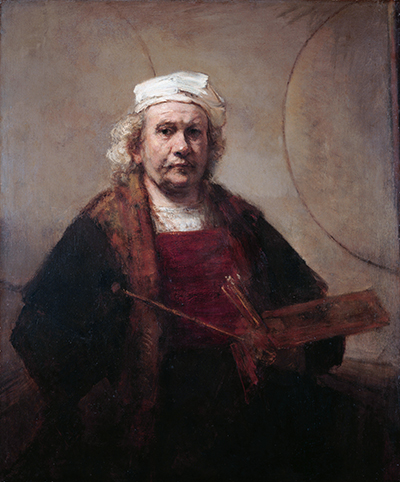
In the painting at Kenwood, Rembrandt stands before a pale wall with a white cap on his head and a painter’s equipment gathered at his side. The long mahlstick runs diagonally across his chest. Behind him, two arcs emerge from the quiet expanse of wall, one faint near his cap and the other sweeping towards the right edge. The cap and the lit side of the face immediately catch the eye. The palette takes longer to disentangle from the dark sleeve and the other tools. Rembrandt gives us enough to recognise his occupation, then lets the paint itself show us how he practised it. [1]
Almost four decades earlier, in a small panel now in the Rijksmuseum, he arranged the encounter differently. Light picks out the edge of his cheek and the curls around his head, while much of the face remains in shadow. In the years between these pictures he drew himself in pen and wash, etched his face with his mouth open as if shouting, leaned on a stone sill in Renaissance dress and painted himself in the guise of the Apostle Paul. The repeated face makes these works unusually rewarding to compare. So do the choices that change from one to the next, from the position of a light to the cut of a sleeve or the presence of a tool. [2] [3]
The Rijksmuseum puts the total at around eighty across painting, drawing and etching. That figure gives a sense of how often Rembrandt returned to the subject. It also invites a question about what is being counted. A painted portrait, a study of expression, a copperplate revised several times and a studio copy can all preserve his likeness. Each has a different history, and each gives a different kind of evidence about what Rembrandt was doing when he used his own face. [2]
At a Glance
- MediaPaintings, drawings and prints
- Career spanLeiden experiments through late Amsterdam paintings
- ExamplesSelf-Portrait, Frowning and Self-Portrait with Two Circles
Light and expression in the Leiden years
The Rijksmuseum’s Self-portrait of about 1628, an oil on panel just under twenty-three centimetres high, rewards close viewing. The bust turns towards the right of the picture, where a strip of light catches the outline of the face. The eyes sit in the shadow cast across the brow. Curls at the edge of the head break into fine, bright strands. Rembrandt made some of those marks by dragging the blunt end of his brush through wet paint. A movement that took paint away could suggest a hair catching the light more sharply than a stroke laid on top. The light coming from behind makes the hair remarkably legible and leaves the viewer to work out the face. [2] [3]
The decision to obscure the eyes is especially striking in a picture of oneself. With the features held back, small differences in tone carry much of the likeness. The light along the cheek gives the head volume, and the brighter curls make the field of shadow seem deeper. In a painting small enough to take in with a glance, Rembrandt makes recognition happen gradually. The Rijksmuseum’s account of his early career recalls Constantijn Huygens’s admiration for his ability to depict the passions. The early self-portraits show some of the groundwork for that achievement, including the study of how much a face can communicate when part of it is difficult to see. [2] [3]
The etched Self-portrait with Open Mouth, as if Shouting of 1630 isolates a different problem. The mouth makes an abrupt dark opening and the brow tightens above it. The expression depends on the coordination of these parts of the face, down to the compressed skin around the eyes. The Rijksmuseum’s impression RP-P-OB-24 is a first state. It has an irregular plate edge, some ink deliberately left on the surface to give the paper a tone, and a damaged area retouched in brown pen. That retouch belongs to this sheet’s history. The date and monogram at upper left were on the plate. Even an image this small contains traces of several distinct acts of making. [4]
The Rijksmuseum connects the etching with Karel van Mander’s advice to artists to practise expressions in a mirror. Rembrandt’s pupil Samuel van Hoogstraten later described the mirror as a place where an artist could both perform an emotion and watch it. The momentary appearance of the shout makes sense in that setting. Mouth, brow and gaze could be studied, repeated and varied. Such practice could serve a painter of biblical and historical scenes, where a gesture or an expression has to carry part of the story. The phrase as if shouting is exact in its own way. The print gives the action visual force while leaving the occasion open. [4] [5]
The drawn likeness and the etched lovelock
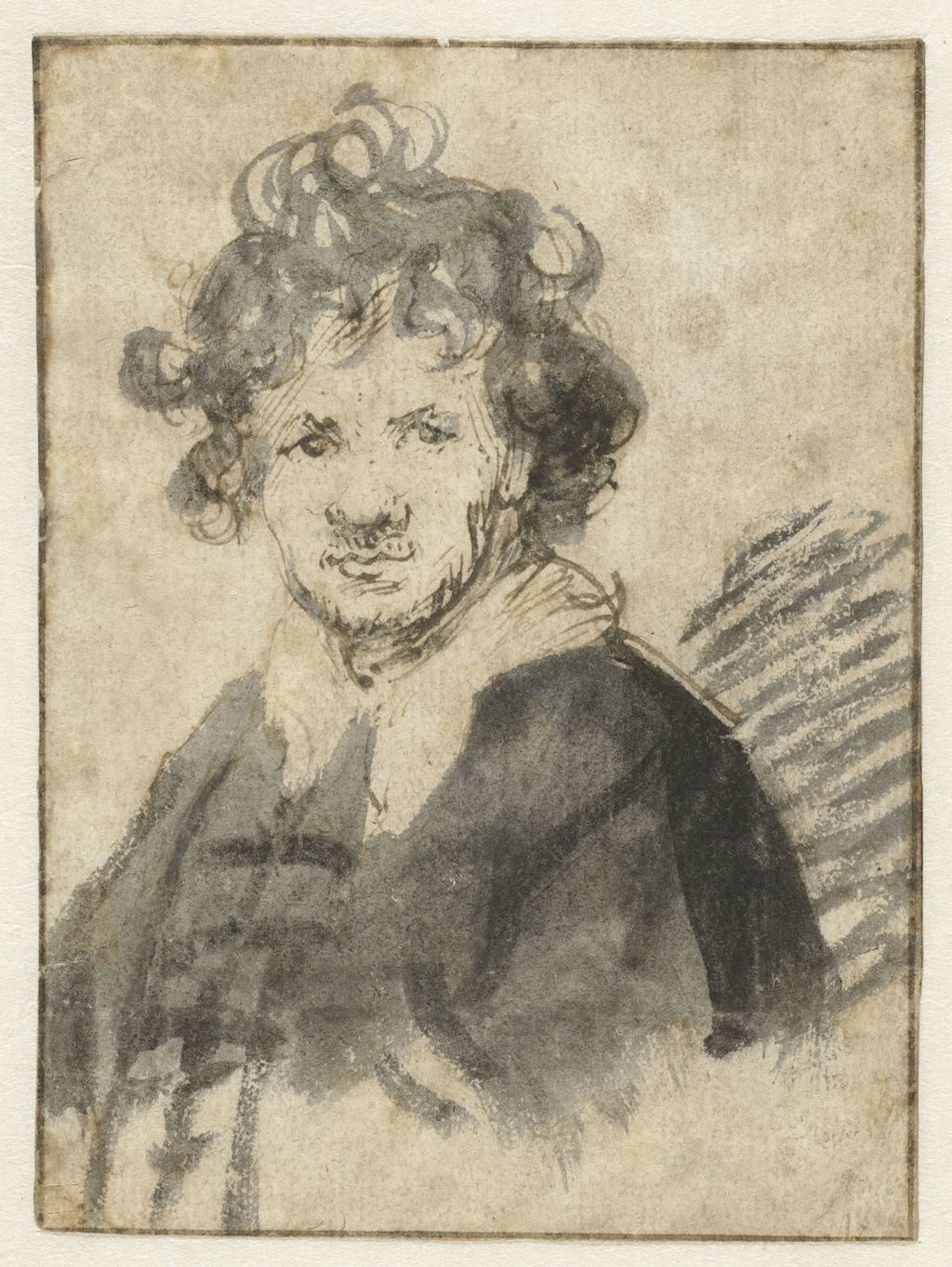
In Self-portrait with Tousled Hair, made in Leiden about 1628–29, Rembrandt used pen and brown ink with grey wash on a sheet less than thirteen centimetres high. A fine line gives the features their first definition. The wash lets him spread shadow over an area of the face or coat without filling it with hatching. The eyebrows draw slightly together, and there are traces of a young beard and moustache. Short ornamental fastenings run down the cloak. Peter Schatborn, in the Rijksmuseum’s drawing catalogue, points out that this kind of fastening would have carried military associations for contemporary viewers. A small drawing with an apparently informal expression can still contain a deliberate choice of dress. [5]
Schatborn compares the Amsterdam sheet with a second pen-and-wash self-portrait in the British Museum, Gg,2.253. In the London drawing, the raised eyebrows and partly open mouth give the face the appearance of speech, and deep shadow covers one side. The resemblance in handling supports dating the sheets close together, although scholars have proposed different dates. The two drawings make a particularly useful pair because the materials and general format are so similar. A slight alteration around the eyes and mouth is enough to change how each figure seems to address the viewer. [5]
There is another comparison within the Rijksmuseum. Its rare etching of 1629, RP-P-OB-723, resembles the Amsterdam drawing closely enough that the drawing was long thought to be a preparatory study for it. Schatborn notes that more recent scholars have questioned the direct connection. One conspicuous difference is the long curl that drops behind the shoulder in the print. This fashionable lovelock lent the young artist something of the appearance of an aristocratic dandy. The two objects can be read together even with their precise relationship unresolved. In the print, a change to the hair changes the social character of a recognisable head. [5]
Tronies, studio copies and the count of self-portraits
A tronie is a head or bust study in which an expression, a type or a conspicuous costume supplies much of the subject. An artist’s own features could furnish the starting point. The name therefore bears on the picture’s purpose, while the question of who made it belongs to attribution. An expression study can preserve a good likeness and qualify as a self-portrait in a broad survey. A catalogue interested in portraits made to represent the artist as an individual may draw its boundaries more tightly. Volume IV of the Rembrandt Research Project’s A Corpus of Rembrandt Paintings, devoted to the self-portraits, examines authenticity alongside the functions these works could serve. [6]
The two versions of the young Rembrandt wearing a gorget show how much can depend on identifying a particular panel. A gorget is a piece of armour that protects the throat. Its polished surface frames the lower part of the face and gives the sitter a military air. The Mauritshuis acquired its version in the eighteenth century through the collection of Stadtholder William V, and the painting was long prized as an early self-portrait. A very similar picture in the Germanisches Nationalmuseum in Nuremberg was for years regarded as the copy. Both preserved the familiar face and striking armour. The problem was how the two paintings had been made. [7]
The discovery of a preparatory drawing beneath the paint of the Mauritshuis version prompted a direct comparison. The museum now catalogues its picture as a contemporary studio copy and identifies the Nuremberg painting as Rembrandt’s original. A later restoration and re-examination supported the distinction. The precise identity of the copyist remains open. Gerrit Dou, who worked with Rembrandt in Leiden, has been suggested. The case rests on comparing the two works and their execution. An underdrawing is a piece of evidence specific to that comparison, and here it helped researchers ask how a painter in the studio had obtained such a close match. [7]
This is one reason the Rembrandt Database records paintings formerly attributed to him alongside accepted works and gives the holding institution’s current attribution. The older labels are part of the history of how an object was understood. The gorget copy, for example, still shows that the young Rembrandt’s likeness was a subject worth repeating in his workshop. In a count of autograph self-portraits, the original and the studio copy have different standing. In an account of how his public image took shape, both paintings matter. [6] [7] [8]
Renaissance dress and the Amsterdam audience
During Rembrandt’s move from Leiden to Amsterdam in the early 1630s, he began giving the costume and bearing of his etched figure greater prominence. In Self-Portrait in a Soft Hat and Embroidered Cloak of 1631, an elaborate collar and cloak present him as a man of means with something of a courtier’s air. The Morgan Library & Museum’s impression RvR 8 is catalogued as the tenth of eleven states. By then the collar had acquired additional folds and a lace pattern, and the signature had been added at upper right. The care spent revising the collar suggests how much the plate’s character depended on such details. [2] [9]
Another kind of costuming appears in Self-Portrait with Saskia of 1636. On the Morgan’s third-state impression, Rembrandt wears a feathered hat with a notched rim and Saskia wears a veil. He occupies the foreground, with Saskia further back, and the old-fashioned clothes give this image of a married couple the air of a scene staged for the plate. A collector could acquire a recognisable image of the artist and his wife in a form that also showed his ability to vary the depth, light and character of two figures within a small space. [9]
By 1639 the ambition of the presentation is explicit in Self-portrait, Leaning on a Stone Sill. The Rijksmuseum impression RP-P-OB-37 shows Rembrandt turning towards us with his elbow planted on a parapet. The sleeve projects into the foreground, and the sill sets a firm boundary between the sitter’s space and ours. This particular impression is from the first of two states and has black chalk retouching on the paper. The chalk belongs to the impression, while the position of the body, the sill and the inscribed date belong to the plate. [10]
The 1640 oil painting Self Portrait at the Age of 34, now in the National Gallery in London, reworks the poised figure and parapet on a much larger scale. Warm tones give substance to the sleeve resting at the front, and the dark cap defines the head against the background. His clothes evoke the early sixteenth century. The gallery relates the pose and presentation to portraits by Titian, Raphael and Dürer. Titian’s portrait then known as Ariosto offered the conspicuous precedent of a richly clad arm meeting a stone ledge. Raphael’s portrait of Baldassare Castiglione was in Amsterdam in 1639, and Rembrandt made a sketch of it at the sale. These were paintings he could actively study and adapt. [11] [12]
The etching and the oil are separate works that share a compositional idea. In each, Rembrandt uses the portrait conventions of admired predecessors to give standing to a working painter in Amsterdam. The sixteenth-century dress makes that claim visible, much as the unusually commanding sleeve does. There was an audience for images of artists. The National Gallery notes that Charles I owned a Rembrandt self-portrait among his collection of artists’ likenesses. The evidence of collecting helps explain why a carefully staged self-portrait could have a public life, even when the original buyer or intended destination of an individual work remains unknown. [11] [13]
Watch: Rembrandt’s life and work
Explore Rembrandt’s early career, etchings and paintings, and see his work alongside that of other Baroque artists.
Rembrandt | A Life of Art
Curators introduce Rembrandt’s early career and trace how he developed his handling of light and shade.
Watch on YouTubeAt work in the 1648 window etching
In Self-Portrait Etching at a Window, Rembrandt is seated at a work surface with a tool in his hand. The opening beside him is light, and closely spaced strokes build the darkness of his hat, coat and surroundings. His hand remains at the work, while his eyes turn outward. The Art Institute of Chicago identifies the object under his hand as a plate propped on a folded cloth over several books. That small pile raises the work into a usable position and gives the foreground enough depth to make the pose convincing. Chicago’s 1648 impression, 2004.88, is printed on ivory laid paper from a plate worked in etching, drypoint and burin. [14]
Etching uses acid to bite lines exposed through a protective coating on the plate. Drypoint scratches directly into the metal and can raise a burr that holds ink along the groove. A burin cuts a line into the plate. These methods give the printmaker choices about how crisp an edge should be and how densely a shadow should print. Each pull from the inked plate produces a separate impression. A state records an alteration to the plate itself. Two pulls from the same state can still differ in tone because of the paper, the amount of ink left on the surface or the wear of the burr. [9] [14]
Chicago describes its sheet as an impression of the finished print. The Morgan holds impressions from the first and second states, while the Rijksmuseum’s RP-P-1962-9 is a second-state impression on Japanese paper. Washington’s National Gallery of Art records its sheet 1943.3.7134 under White and Boon as state five of five. The Rijksmuseum lists its own sheet as state two of five under Bartsch and state two of nine under New Hollstein. The catalogues describe the sequence at different levels of detail. An accession number identifies the individual sheet, and a state number is most informative when it travels with the catalogue that assigned it. [9] [14] [15] [16]
The image appears to catch a brief pause, yet those surviving impressions give it a much longer timescale. The artist at the window looks up for as long as it takes to meet our eye. The plate through which he created that effect went through successive revisions and could be printed more than once. Compare the desk with the sill of 1639. Both set a horizontal surface between the figure and the viewer. In 1648 its contents make it a place to work, as particular to the artist’s occupation as the earlier parapet was to the portrait tradition he was invoking. [10] [14] [15]
The Frick and Washington paintings of 1658 and 1659
In the Frick Collection’s large Self-Portrait of 1658, Rembrandt wears a golden pleated jerkin, a red sash and a dark outer garment. One hand holds a silver-tipped cane. The sash broadens the figure at the waist, and the pale linen and gold fabric gather the light at the chest. The canvas gives the folds, fastenings and layers of clothing room to register individually. Historical and fanciful elements in the dress lend the figure ceremonial weight. The Frick also calls attention to the dense layers, broken surfaces and glazes with which Rembrandt constructed the effect. The grand scale allows him to display the range of his brushwork as well as the figure’s bearing. [17]
Washington’s 1659 Self-Portrait, sometimes called Self-Portrait with Beret and Turned-Up Collar, brings the hands together low in the picture. The body angles away and the face turns towards the viewer. A dark beret and raised collar frame the head, and a quieter passage of light picks out the shoulder. Arthur K. Wheelock Jr. relates this arrangement to Raphael’s Castiglione, particularly the clasped hands and the contained turn of the body. The resemblance is easier to see if we follow the arms downwards. They complete the pose within the figure’s own outline. The stone ledge that supported the elbow in the 1639 print and the 1640 painting has disappeared. [12]
Wheelock’s catalogue also explains why the painting’s appearance has changed for modern viewers. When discoloured varnish was removed in 1992, pinks and other flesh tones regained their visibility. The removal of some old overpaint restored a clearer sense of volume to the torso. Around the eyes, a greenish grey preparatory layer does some of the work of shadow. Across the brighter parts of the face, short, thick strokes build the flesh, and lines scratched into the wet paint pick out strands of hair and moustache. Examination of the beret revealed lighter paint beneath the dark surface. Rembrandt may have begun with a white beret. [12]
The Washington painting dates from the year after the auction of Rembrandt’s house following his insolvency. The documentary chronology establishes the circumstances in which he was working. The painting supplies evidence about what he did with his materials, his pose and the image of Castiglione that he had studied twenty years earlier. Its conservation history offers a particular reason to keep those kinds of evidence distinct. Generations of viewers encountered a darker, more uniform surface and often read its gloom as a quality of the sitter. The restored range of colour and modelling makes it easier to see how much of that impression could come from the object’s condition. [12]
Rembrandt in the guise of the Apostle Paul
The Rijksmuseum’s Self-portrait as the Apostle Paul of 1661, SK-A-4050, asks the viewer to recognise two identities in one figure. Rembrandt turns his familiar face towards us beneath a pale wrapped headdress. A sword protrudes from the cloak at his breast, and he holds a manuscript. The sword and manuscript are customary attributes of Paul, the former associated with his martyrdom and the latter with his writings. They anchor the role in details visible within the painting. The sword is partly concealed, and the manuscript stays low in the composition, leaving the face to command our attention. [18]
The title’s as matters. At the stone sill, old-fashioned costume places Rembrandt in the company of earlier painters and their sitters. In the Paul painting, the objects point to a named biblical personage. The likeness allows him to give the figure an individual presence, while the attributes establish who is being represented within the scene. This is a different use of costume from the gorget that lends a young head a military character or the embroidered cloak that helps an etched figure assume social distinction. [7] [9] [10] [18]
Painting tools and the two circles at Kenwood
In Kenwood’s Self-Portrait with Two Circles, usually dated to about 1665, the palette, brushes and mahlstick identify the figure as a painter. The white cap is made of broad, overlapping strokes. The red garment beneath the dark outer clothing holds its colour across the centre of the canvas, while the palette and tools remain less fully defined. The degree of finish changes as the eye moves over the figure. Even in reproduction, the pale wall leaves room to register the shape of the cap, the falling hair and the wide silhouette of the coat. The tools establish a profession, and the changes in paint handling make the act of painting present across the surface. [1] [19]
Only segments of the two circles are visible. The larger sweep on the right approaches the picture’s edge, and the second curve is much fainter near the head. Uta Neidhardt, writing for the CODART Canon, relates them to the story of Giotto demonstrating his skill by drawing a perfect circle freehand. The association suits a painting in which an artist appears with the implements of his craft. Another proposal links the arcs to the two hemispheres of a world map. Their incomplete forms leave both suggestions open. In the composition, the right-hand arc has a clear effect even without an agreed subject. It gives the expanse of wall a direction of its own and holds its place beside the broad, dark figure. [1] [19] [20]
Kenwood and the window etching both identify Rembrandt through work, down to a stick or a tool that an artist would handle. The print builds a particular task out of small objects, including the support beneath the plate and the books below it. At Kenwood he gathers his equipment and stands facing us. The late canvas also brings to mind the Frick portrait, in which the long object in his hand is a cane and the costume lends the sitter much of his authority. In these images, identifying what Rembrandt holds can be the first step towards understanding the kind of portrait he has made. [1] [14] [17]
The folded hands and painted skin of 1669
In the National Gallery’s Self Portrait at the Age of 63, Rembrandt directs the strongest light onto the forehead, the nose and the flesh around the eyes. A full turn of the brush gives volume to the fold beneath his right eye. Thicker patches mark the forehead, and greys, pinks, yellows and whites build up the complexion. The hands, folded low, are much less distinct. Their treatment was a choice made during painting. X-radiography shows an earlier arrangement in which the hands were open and held what appears to have been a brush. The completed pose leaves more of the viewer’s attention available for the head. [13]
The painting belongs to the year of Rembrandt’s death, which gives its title and date a particular resonance. The paint also records a series of decisions about how to render ageing skin. A raised stroke can form the lower lid, a spot of dense paint can give the forehead a blemish, and a thin layer can let another colour show through. These effects depend on variations of pressure, loading and opacity that belong to the work of painting. The face’s age is visible in the resulting image. The picture leaves the artist’s thoughts about that age open to interpretation. [13]
The early Rijksmuseum panel and the 1669 canvas are far apart in date and scale. In the panel, a hard-to-see face emerges from shadow while scratches catch the light in the curls. In the late canvas, light makes the skin legible down to the individual strokes that raised its ridges and folds. Between those two pictures, the changing place of hair, clothing, gesture and tools gives the series much of its variety. A long curl could furnish an etched portrait with fashionable distinction. A sword and manuscript could turn the face towards sacred history. Even in the last year of his life, an apparent brush could be painted out and the whole balance of a portrait altered. Across four decades, Rembrandt kept finding new things for the same face to do. [2] [3] [5] [13] [18]
Rembrandt artworks
Different impressions of the same print can appear as separate records.
| Name | Date | Medium |
|---|---|---|
| The Night Watch | 1642 | Painting |
| The Return of the Prodigal Son | 1660s | Painting |
| The Anatomy Lesson of Dr Nicolaes Tulp | 1632 | Painting |
| The Jewish Bride | c. 1665–69 | Painting |
| Self-Portrait with Two Circles | c. 1665 | Painting |
| Christ in the Storm on the Sea of Galilee | 1633 | Painting |
| Bathsheba at Her Bath | 1654 | Painting |
| The Hundred Guilder Print | c. 1648–49 | |
| The Three Trees | 1643 | |
| Aristotle with a Bust of Homer | 1653 | Painting |
| The Abduction of Ganymede | 1635 | Painting |
| Ahasuerus and Haman at the Feast of Esther | 1660 | Painting |
| The Anatomy Lesson of Dr Jan Deijman | 1656 | Painting |
| Judith at the Banquet of Holofernes | 1634 | Painting |
| Artist in His Studio | c. 1628 | Painting |
| The Artist’s Mother, Head and Bust, Three-Quarters Right | 1628 | |
| The Artist’s Mother, Head Only, Full Face | 1628 | |
| Balaam and the Ass | 1626 | Painting |
| The Baptism of the Eunuch | 1626 | Painting |
| Beggar in a High Cap, Standing and Leaning on a Stick | c. 1629 | |
| Beggar with a Clenched Hand, Leaning on a Stick | c. 1629 | |
| Belshazzar’s Feast | c. 1636–38 | Painting |
| The Blinding of Samson | 1636 | Painting |
| Bust of a Bearded Young Man with a Skullcap | 1663 | Painting |
| Christ Presented to the People | 1655 | |
| The Circumcision | c. 1625 | |
| The Conspiracy of Claudius Civilis | c. 1661–62 | Painting |
| Danaë | Begun 1636 and later revised | Painting |
| The Descent from the Cross | 1632–33 | Painting |
| Descent from the Cross by Torchlight | 1654 | |
| The Descent from the Cross, Second Plate | 1633 | |
| Diana Bathing with Her Nymphs, with Actaeon and Callisto | 1634 | Painting |
| Ephraim Bueno, Jewish Physician | 1647 | |
| Portrait of Frederick Rihel on Horseback | c. 1663 | Painting |
| Flora | 1634 | Painting |
| The Goldweigher’s Field | 1651 | |
| Head of Christ | 1645–50 | Painting |
| The Holy Family with Angels | 1645 | Painting |
| Homer Dictating His Verses | 1663 | Painting |
| Jacob Blessing the Sons of Joseph | 1656 | Painting |
| Jacob Wrestling with the Angel | 1659–60 | Painting |
| Joseph and Potiphar’s Wife | 1655 | Painting |
| Juno | c. 1662–65 | Painting |
| Landscape with a Stone Bridge | c. 1638 | Painting |
| Head of an Old Man with Curly Hair | 1659 | Painting |
| A Man in Armour | Possibly 1655 | Painting |
| Minerva in Her Study | 1635 | Painting |
| Moses with the Tablets of the Law | 1659 | Painting |
| Old Man with a Gold Chain | c. 1631 | Painting |
| Peter and John at the Gate of the Temple | c. 1629 | |
| Philosopher in Meditation | 1632 | Painting |
| The Polish Rider | c. 1655 | Painting |
| Portrait of a Woman with a Lapdog | c. 1665 | Painting |
| Portrait of Gerard de Lairesse | 1665–67 | Painting |
| Portrait of Jan Six | c. 1654 | Painting |
| Portrait of Maerten Soolmans | 1634 | Painting |
| Portrait of a Woman, Probably Maria Trip | 1639 | Painting |
| Portrait of Oopjen Coppit | 1634 | Painting |
| Portrait of Titus | c. 1662 | Painting |
| Rembrandt and Saskia in the Parable of the Prodigal Son | c. 1635 | Painting |
| The Raising of Lazarus | c. 1630–32 | Painting |
| The Rest on the Flight into Egypt | c. 1626 | |
| Self-Portrait as the Apostle Paul | 1661 | Painting |
| Self-Portrait (Cologne) | c. 1668 | Painting |
| Rembrandt’s Self-Portrait, Frowning | 1630 | |
| Self-Portrait in a Cap, Wide-Eyed and Open-Mouthed | 1630 | |
| Self-Portrait in a Fur Cap | 1630 | |
| Self-Portrait in a Fur Cap, in an Oval Border | c. 1629 | |
| Self-Portrait in a Soft Hat and Embroidered Cloak | 1631 | |
| Self-Portrait, Bending Forward | c. 1628 | |
| Self-Portrait with a Broad Nose | c. 1628 | |
| Self-Portrait with Beret and Turned-Up Collar | 1659 | Painting |
| Self-Portrait with Plumed Cap and Lowered Sabre | 1634 | |
| The Shipbuilder and His Wife | 1633 | Painting |
| Simeon’s Hymn of Praise | c. 1640 | |
| Simeon in the Temple | c. 1669 | Painting |
| St Jerome Kneeling | c. 1628–29 | |
| Saint Matthew and the Angel | 1661 | Painting |
| The Stoning of Saint Stephen | 1625 | Painting |
| A Stout Man in a Large Cloak | c. 1629 | |
| The Supper at Emmaus | 1648 | Painting |
| Susanna and the Elders | 1647 | Painting |
| The Syndics of the Drapers’ Guild | 1662 | Painting |
| The Mill | 1645/1648 | Painting |
| The Woman Taken in Adultery | 1644 | Painting |
| Lucretia (1664) | 1664 | Painting |
| Lucretia (1666) | 1666 | Painting |
| Anatomische les van Dr. Jan Deijman (fragment) | 1656 | Painting |
| Isaac and Rebecca, Known as ‘The Jewish Bride’ | c. 1665 - c. 1669 | Painting |
| Johannes Wtenbogaert | 1633 | Painting |
| Man in Oriental Dress | 1635 | Painting |
| Musical Company | 1626 | Painting |
| Portrait of Ephraim Bueno | 1645 - 1647 | Painting |
| Portrait of Haesje Jacobsdr van Cleyburg | 1634 | Painting |
| Portrait of Oopjen Coppit | 1634 | Painting |
| Self-portrait | c. 1628 | Painting |
| Still Life with Peacocks | c. 1639 | Painting |
| Tobit and Anna with the Kid | 1626 | Painting |
| Young Woman in Fantasy Costume | 1633 | Painting |
| A Polish Nobleman | 1637 | Painting |
| A Woman Holding a Pink | 1656 | Painting |
| A Young Man Seated at a Table (possibly Govaert Flinck) | c. 1660 | Painting |
| Man with a Sheet of Music | 1633 | Painting |
| Philemon and Baucis | 1658 | Painting |
| Portrait of a Gentleman with a Tall Hat and Gloves | c. 1656/1658 | Painting |
| Portrait of a Lady with an Ostrich-Feather Fan | c. 1656/1658 | Painting |
| Portrait of a Man in a Tall Hat | c. 1663 | Painting |
| Saskia van Uylenburgh, the Wife of the Artist | probably begun 1634/1635 and completed 1638/1640 | Painting |
| The Circumcision | 1661 | Painting |
| Bellona | 1633 | Painting |
| Flora | ca. 1654 | Painting |
| Hendrickje Stoffels (1626–1663) | mid-1650s | Painting |
| Herman Doomer (ca. 1595–1650) | 1640 | Painting |
| Man in a Turban | 1632 | Painting |
| Man with a Magnifying Glass | early 1660s | Painting |
| Portrait of a Man | 1632 | Painting |
| Portrait of a Man Holding Gloves | 1648 | Painting |
| Portrait of a Man, probably a Member of the Van Beresteyn Family | 1632 | Painting |
| Portrait of a Woman | 1633 | Painting |
| Portrait of a Woman, probably a Member of the Van Beresteyn Family | 1632 | Painting |
| Portrait of a Young Woman with a Fan | 1633 | Painting |
| The Standard Bearer (probably Floris Soop, 1604–1657) | 1654 | Painting |
| The Toilet of Bathsheba | 1643 | Painting |
| Woman with a Pink | early 1660s | Painting |
| Lieven Willemsz van Coppenol (born about 1599, died 1671 or later) | Painting | |
| Portrait of a Man | ca. 1655–60 | Painting |
| Self-Portrait | 1660 | Painting |
| A Cap | c. 1629 - c. 1630 | Drawing |
| A Cow in a Shed | c. 1640 | Drawing |
| A Syndic of the Drapers’ Guild, Jacob van Loon, Seated | c. 1661 - c. 1662 | Drawing |
| Abraham Casting Out Hagar and Ishmael | c. 1650 | Drawing |
| Actor in the Role of Pantalone Engaged in Conservation | c. 1634 - c. 1636 | Drawing |
| Bedroom with Saskia in a Canopy Bed | c. 1638 | Drawing |
| Beheading of John the Baptist | c. 1640 - c. 1641 | Drawing |
| Boaz and Ruth | c. 1645 | Drawing |
| Boy Walking with a Stick | c. 1635 - c. 1640 | Drawing |
| Christ Appearing to Mary Magdalene as a Gardener (Noli me tangere) | c. 1645 | Drawing |
| Christ Healing a Leper | c. 1650 - c. 1655 | Drawing |
| Christ Washing the Disciples’ Feet | c. 1640 - c. 1650 | Drawing |
| Cottage with White Paling among Trees | c. 1648 | Drawing |
| Daniel in the Lions’ Den | c. 1650 | Drawing |
| David Hearing the News of Uriah’s Death | c. 1650 | Drawing |
| Five Studies of Haman’s Head | c. 1655 - c. 1660 | Drawing |
| Four Men Standing, Wearing Hats | c. 1650 | Drawing |
| Indian Archer | c. 1656 - c. 1658 | Drawing |
| Inn on the Amstelveenseweg | c. 1652 | Drawing |
| Jacob and his Sons | c. 1641 | Drawing |
| Jael Killing Sisera | c. 1658 - c. 1659 | Drawing |
| Jahangir | c. 1656 - c. 1658 | Drawing |
| Joseph in Prison Interpreting the Dreams of the Butler and the Baker | c. 1650 - c. 1655 | Drawing |
| Longhouse Farmstead with a Haystack in a Polder Landscape | c. 1652 | Drawing |
| Man Helping a Rider to Mount a Horse | c. 1640 - c. 1641 | Drawing |
| Nude Woman Lying on a Pillow | c. 1661 - c. 1662 | Drawing |
| Nude Woman Seated by a Stove | c. 1661 - c. 1662 | Drawing |
| One of the Three Kings Adoring the Virgin and Child | c. 1635 - c. 1640 | Drawing |
| Recumbent Lion | c. 1660 | Drawing |
| Saskia in Bed | c. 1635 | Drawing |
| Seated Actor in the Role of Capitano | c. 1634 - c. 1636 | Drawing |
| Self-portrait with Tousled Hair | c. 1628 - c. 1629 | Drawing |
| Shah Jahan | c. 1656 - c. 1658 | Drawing |
| Shah Jahan and his Son | c. 1656 - c. 1658 | Drawing |
| Small Study of the Head of the Sick Woman | c. 1647 - c. 1648 | Drawing |
| Standing Man with a Pouch | c. 1629 - c. 1630 | Drawing |
| Standing Man with a Stick, Facing Left | c. 1629 - c. 1630 | Drawing |
| Standing Man with a Stick, Facing Right | c. 1629 - c. 1630 | Drawing |
| Standing Man with Outstretched Arm | c. 1636 - c. 1641 | Drawing |
| Studies for the Sick Woman in the ‘Hundred Guilder Print’ | c. 1648 | Drawing |
| Studies of the Mourning Magdalen and the Virgin | c. 1635 - c. 1636 | Drawing |
| Study of a Man, Seen from Behind | c. 1629 - c. 1630 | Drawing |
| Study of a Woman’s Legs | c. 1628 - c. 1629 | Drawing |
| Susanna and the Elders | c. 1650 - c. 1655 | Drawing |
| The Actor Willem Bartholsz Ruyter as a Peasant | c. 1638 | Drawing |
| The Actor Willem Bartholsz Ruyter as King Ahasuerus on his Throne | c. 1635 - c. 1640 | Drawing |
| The Angel Appearing to Joseph in his Dream | c. 1650 | Drawing |
| The Annunciation to the Shepherds | c. 1650 | Drawing |
| The Entombment, over a Sketch of an Executioner | c. 1640 - c. 1641 | Drawing |
| The Pancake Woman | c. 1635 | Drawing |
| The Swijgh Utrecht Tower in Amsterdam | c. 1650 - c. 1655 | Drawing |
| Three Orientals Conversing | c. 1645 | Drawing |
| Three Scribes | c. 1628 - c. 1629 | Drawing |
| Three Women and a Child by a Door | c. 1645 | Drawing |
| Tobias and the Angel Taking Leave of Raguel | c. 1650 - c. 1655 | Drawing |
| Two Horses at a Halting-place | c. 1637 | Drawing |
| View of the Amstel from the Blauwbrug | c. 1645 - c. 1650 | Drawing |
| View of the Amstelveenseweg outside Amsterdam | c. 1660 - c. 1662 | Drawing |
| View of the Nieuwezijds Voorburgwal | c. 1647 | Drawing |
| Walking Man with a High Cap | c. 1655 - c. 1660 | Drawing |
| Winter View with a Waterway, Cottages and Two Boats | c. 1650 | Drawing |
| Woman with a Urinating Child | c. 1658 - c. 1660 | Drawing |
| Young Woman Seated by a Window (Saskia?) | c. 1638 | Drawing |
| A Landscape with Farm Buildings among Trees | c. 1650/1655 | Drawing |
| Beggar Man and Woman | c. 1630/1631 | Drawing |
| Beggar Woman Leaning on a Stick | 1628/1630 | Drawing |
| Bust of an Elderly Man in a Flat Cap | 1635/1637 | Drawing |
| Cottages and Barn beside a Road | c. 1650 | Drawing |
| Esther before Ahasuerus | 1655/1660 | Drawing |
| Figures on the Anthoniesdijk Entering Houtewael [verso] | c. 1650 | Drawing |
| God the Father Supported by Angels | 1655/1660 | Drawing |
| Head of an Old Man (recto) | c. 1631 | Drawing |
| Jan Cornelisz Sylvius, the Preacher | 1644/1645 | Drawing |
| Joseph Recounting His Dreams | early 1640s | Drawing |
| Seated Old Man | 1630 | Drawing |
| Self-Portrait | c. 1637 | Drawing |
| View of Diemen | c. 1655 | Drawing |
| View of Houtewael near the Sint Anthoniespoort [recto] | c. 1650 | Drawing |
| View over the Amstel from the Rampart | c. 1646/1650 | Drawing |
| Woman Seated on the Ground with Two Children | 1635/1640 | Drawing |
| Cottage among Trees | ca. 1650 | Drawing |
| Cottage near the Entrance to a Wood | 1644 | Drawing |
| Elsje Christiaens Hanging on a Gibbet | 1664 | Drawing |
| Group of Farm Buildings | ca. 1648–52 | Drawing |
| Houses by the Water | ca. 1652 | Drawing |
| Nathan Admonishing David | 1650–55 | Drawing |
| Old Man in Profile | 1620–69 | Drawing |
| Old Man Leaning on a Stick | 1632–35 | Drawing |
| Potiphar's Wife Accusing Joseph Before her Husband | 1620–69 | Drawing |
| Satire on Art Criticism | 1644 | Drawing |
| Seated Man Wearing a Flat Cap | 1635–40 | Drawing |
| St. Peter and St John Healing the Paralytic | 1606–69 | Drawing |
| Study Sheet with Three Women and a Boy | ca. 1638–39 | Drawing |
| The Last Supper, after Leonardo da Vinci | 1634–35 | Drawing |
| The Wedding Night of Tobias and Sarah | 1640–49 | Drawing |
| Two Cottages | ca. 1636 | Drawing |
| Two Studies of a Woman Reading | 1635–40 | Drawing |
| Woman Reading | 1606–69 | Drawing |
| The Annunciation to the Shepherds | c. 1655 | Drawing |
| Elsje Christiaens Hanging on a Gibbet | 1664 | Drawing |
| A blind hurdy-gurdy player and family receiving alms | 1648 | Print impression |
| A cavalry fight | 1629 | Print impression |
| A Polander with a Stick | c. 1631 | Print impression |
| A scholar in his study | c. 1652 | Print impression |
| A Scholar in his Study (‘Faust’) | c. 1652 | Print impression |
| A standing hurdy-gurdy player | c. 1631 | Print impression |
| Aanbidding der herders: nachtstuk | 1650 - 1654 | Print impression |
| Abraham Francen | c. 1657 | Print impression |
| Abraham Francen, apothecary | c. 1657 | Print impression |
| Arnout Tholinx | c. 1656 | Print impression |
| Bald headed man in profile right: the artist's father (?) | 1630 | Print impression |
| Bald man with open mouth, looking down: bust | c. 1631 | Print impression |
| Bald Old Man with a Short Beard | c. 1635 | Print impression |
| Bearded man with short wavy hair: bust | c. 1631 | Print impression |
| Bearded Old Man with High Forehead | c. 1629 | Print impression |
| Bedelaar met een houten been | 1628 - 1632 | Print impression |
| Bedelaar met een stok | 1631 | Print impression |
| Beggar in a high cap, standing and leaning on a stick | c. 1629 | Print impression |
| Beggar in a High Hat, Leaning on a Stick | c. 1629 | Print impression |
| Beggar leaning on a stick, facing left | c. 1630 | Print impression |
| Beggar Man and Woman | c. 1629 | Print impression |
| Beggar Man and Woman behind a Bank | c. 1630 | Print impression |
| Beggar seated warming his hands at a chafing dish | c. 1630 | Print impression |
| Beggar Warming his Hands | c. 1630 | Print impression |
| Beggar with a clenched hand, leaning on a stick | c. 1629 | Print impression |
| Beggar with a Cottage and Two Figures in the Background | c. 1629 | Print impression |
| Beggar with a Crippled Hand, Leaning on a Stick | c. 1629 | Print impression |
| Beggar with a Wooden Leg | c. 1630 | Print impression |
| Beggar Woman with a Gourd | c. 1629 | Print impression |
| Beggar, Seated in an Armchair | c. 1629 | Print impression |
| Bust of an old man with a fur cap and flowing beard, nearly full face | c. 1631 | Print impression |
| Bust of an old man with flowing beard and white sleeve | c. 1630 | Print impression |
| Christ and the woman of Samaria among ruins | 1634 | Print impression |
| Christ before Pilate: large plate | 1635 | Print impression |
| Christ Crucified between the Two Thieves | c. 1641 | Print impression |
| Christ Crucified between the two Thieves: 'The Three Crosses' | 1653 | Print impression |
| Christ crucified between the two thieves: an oval plate | c. 1641 | Print impression |
| Christ Disputing with the Doctors | 1630 | Print impression |
| Christ disputing with the Doctors: small plate | 1630 | Print impression |
| Christ Healing the Sick (‘Hundred Guilder Print’) | c. 1648 | Print impression |
| Christ Preaching | c. 1657 | Print impression |
| Christ preaching ('La Petite Tombe') | c. 1657 | Print impression |
| Christ Preaching, known as La petite tombe | c. 1657 | Print impression |
| Christ Presented to the People (Ecce Homo) | 1655 | Print impression |
| Christ presented to the people: oblong plate | 1655 | Print impression |
| Christus en de schriftgeleerden: kleine plaat | 1630 | Print impression |
| Clump of trees with a vista | 1652 | Print impression |
| Cottage and Boundary Post on the Spaarndammerdijk | c. 1650 | Print impression |
| Cottage and boundary post on the Spaarndammerdijk ('L'Obelisque') | c. 1650 | Print impression |
| Cottage and Farm Buildings with a Man Sketching | c. 1641 | Print impression |
| Cottage beside a canal with a view of Ouderkerk | c. 1641 | Print impression |
| Cottages beside a Canal: View of Ouderkerk aan de Amstel | c. 1641 | Print impression |
| David in gebed | 1652 | Print impression |
| Diana at the bath | c. 1631 | Print impression |
| Driekoningen: een nachtstuk | 1649 - 1653 | Print impression |
| Een student aan tafel bij kaarslicht | c. 1642 | Print impression |
| Farmhouse among Trees | 1652 | Print impression |
| Geleerde in zijn werkkamer (Faust) | 1650 - 1807 | Print impression |
| Girl with a basket | c. 1642 | Print impression |
| Goudsmid | 1655 | Print impression |
| Grotesque profile: man in a high cap | c. 1629 | Print impression |
| Head of a Man in a Fur Cap, Crying Out | c. 1629 | Print impression |
| Head of a man in a high cap | c. 1629 | Print impression |
| Head of a Man in a High Hat | c. 1629 | Print impression |
| Head of an Old Man in a High Fur Hat | c. 1629 | Print impression |
| Hieronymus geknield in gebed, de blik naar beneden gericht | 1635 | Print impression |
| Honderd Gulden prent | 1753 - 1810 | Print impression |
| Jacob's ladder | 1655 | Print impression |
| Jan Antonides van der Linden | 1665 | Print impression |
| Jan Asselijn, painter | 1645 - 1649 | Print impression |
| Jan Lutma, goldsmith | 1656 | Print impression |
| Jan Six | 1647 | Print impression |
| Johannes Lutma | 1656 | Print impression |
| Johannes Wtenbogaert | 1635 | Print impression |
| Jongeman, zittend en staand | 1644 - 1648 | Print impression |
| Jozef vertelt zijn dromen | 1638 | Print impression |
| Kruisiging: kleine plaat | 1633 - 1637 | Print impression |
| Landscape with a cow drinking | c. 1650 | Print impression |
| Landscape with a farm building and the 'house with the tower' | c. 1650 | Print impression |
| Landscape with a farmhouse along a road beside a canal | c. 1652 | Print impression |
| Landscape with a Fisherman (‘The Milkman’) | c. 1650 | Print impression |
| Landscape with sportsman and dogs | c. 1648 | Print impression |
| Landscape with Sportsman and Dogs (‘Het jagertje’) | c. 1648 | Print impression |
| Landschap met drinkende koe | 1648 - 1652 | Print impression |
| Lieven Willemsz van Coppenol | c. 1658 | Print impression |
| Lieven Willemsz. van Coppenol, writing master: the larger plate | c. 1658 | Print impression |
| Lieven Willemsz. van Coppenol, writing master: the smaller plate | c. 1658 | Print impression |
| Loflied van Simeon | 1637 - 1641 | Print impression |
| Male nude, seated and standing | c. 1646 | Print impression |
| Man Crying Out | c. 1629 | Print impression |
| Man drawing from a cast | c. 1641 | Print impression |
| Man Drawing from a Plaster Cast | c. 1641 | Print impression |
| Man in a Close Cap | 1630 | Print impression |
| Man in a Square Cap, in Profile to the Right | c. 1629 | Print impression |
| Man in cap bound around his chin | c. 1631 | Print impression |
| Man with square beard and curly hair: bust | c. 1631 | Print impression |
| Man, tekenend naar een gipsmodel | 1639 - 1643 | Print impression |
| Medea: or the marriage of Jason and Creusa | 1648 | Print impression |
| Naked woman on a mound | c. 1631 | Print impression |
| Old Bearded Man, with Mouth Half Open | c. 1629 | Print impression |
| Old beggar woman with a gourd | c. 1629 | Print impression |
| Old Man in a Fur Coat and Tall Hat | c. 1629 | Print impression |
| Old man in meditation, leaning on a book | c. 1645 | Print impression |
| Old Man Lost in Meditation, Leaning on a Book | c. 1645 | Print impression |
| Old Man Shading his Eyes with his Hand | c. 1639 | Print impression |
| Old Man with a Flowing Beard and White Sleeve | c. 1630 | Print impression |
| Old Man with a Fur Cap and Flowing Beard | c. 1631 | Print impression |
| Old Man, Seen from Behind | c. 1629 | Print impression |
| Old Woman Seated in a Cottage, with a String of Onions | c. 1629 | Print impression |
| Old woman seated in a cottage, with a string of onions on the wall | c. 1629 | Print impression |
| Old Woman Sleeping | c. 1636 | Print impression |
| Oude bedelares met kalebas | 1628 - 1632 | Print impression |
| Peasant family on the tramp | c. 1652 | Print impression |
| Pieter Haaringh: hands and hat | 1655 | Print impression |
| Polander leaning on a stick | c. 1631 | Print impression |
| Portrait of Abraham Francen | c. 1657 | Print impression |
| Portrait of Lieven Willemsz van Coppenol, known as ‘The Smaller Plate’ | c. 1658 | Print impression |
| Portret van de apotheker Abraham Francen | 1655 - 1807 | Print impression |
| Portret van de schrijfmeester Lieven Willemsz. van Coppenol: grote plaat | 1658 | Print impression |
| Portret van predikant Cornelis Claesz. Anslo | 1641 | Print impression |
| Portret van Rembrandt | 1638 | Print impression |
| Profile of a Man in a High Hat | c. 1629 | Print impression |
| Ragged Peasant with his Hands behind him | c. 1630 | Print impression |
| Ragged peasant with his hands behind him, holding a stick | c. 1630 | Print impression |
| Rembrandt’s Mother | 1628 | Print impression |
| Rest on the Flight into Egypt at Night | 1642 - 1646 | Print impression |
| Rest on the flight into Egypt: a night piece | c. 1644 | Print impression |
| Rondtrekkende boerenfamilie | 1650 - 1654 | Print impression |
| Saint Jerome Reading in an Italianate Landscape | c. 1653 | Print impression |
| Schatpenning | 1633 - 1637 | Print impression |
| Self-portrait Bare-headed | c. 1629 | Print impression |
| Self-portrait etching at a window | 1648 | Print impression |
| Self-portrait in a cap and dark cloak: bust | c. 1631 | Print impression |
| Self-portrait in a cap and scarf with the face dark: bust | 1633 | Print impression |
| Self-portrait in a Fur Cap | c. 1629 | Print impression |
| Self-portrait in a Soft Cap | c. 1634 | Print impression |
| Self-portrait in a soft hat and a patterned cloak | 1631 | Print impression |
| Self-portrait in a Soft Hat and Patterned Cloak | 1631 | Print impression |
| Self-portrait in a velvet cap with plume | 1638 | Print impression |
| Self-portrait leaning forward: bust | c. 1629 | Print impression |
| Self-portrait wearing a soft cap: full face, head only | c. 1634 | Print impression |
| Self-portrait with a Broad Nose | c. 1628 | Print impression |
| Self-portrait with bushy hair: bust | c. 1631 | Print impression |
| Self-portrait with cap pulled forward | c. 1630 | Print impression |
| Self-portrait with long bushy hair: head only | c. 1631 | Print impression |
| Self-portrait with Long, Bushy Hair | c. 1631 | Print impression |
| Self-portrait, Bending Forward | c. 1628 | Print impression |
| Self-portrait, frowning: bust | 1630 | Print impression |
| Self-portrait, Leaning Forward | c. 1629 | Print impression |
| Sheet of Slight Studies, One of Two Peasants | c. 1651 | Print impression |
| Sheet of studies of men's head: old man in fur coat and high cap | c. 1629 | Print impression |
| Sheet of studies of men's heads: man crying out, three quarters left: bust | c. 1629 | Print impression |
| Sheet of studies of men's heads: old bearded man nearly in profile to right: mouth half open | c. 1629 | Print impression |
| Sheet of studies of men's heads: old man seen from behind, profile right: half-figure | c. 1629 | Print impression |
| Sheet of Studies with a Tree and the Upper Part of Rembrandt’s Head in a Velvet Cap | c. 1644 | Print impression |
| Sheet of Studies, with a Self-portrait, a Beggar Couple, and Heads of an Old Man and Old Woman | 1632 | Print impression |
| Sheet of Studies, with a Woman Lying Ill in Bed | c. 1639 | Print impression |
| Sheet of studies, with a woman lying ill in bed: busts of two male figures | c. 1639 | Print impression |
| Sheet of studies: head of the artist | 1632 | Print impression |
| Sheet of studies: head of the artist, a beggar couple, heads of an old man and old woman, etc. | 1632 | Print impression |
| Sick woman with a large white headdress (Saskia) | c. 1645 | Print impression |
| Sick Woman with a White Headdress (Saskia) | c. 1645 | Print impression |
| Sleeping Puppy | c. 1640 | Print impression |
| Small Grey Landscape | c. 1640 | Print impression |
| St Jerome beside a pollard willow | 1648 | Print impression |
| St Jerome Kneeling | c. 1628 | Print impression |
| St Jerome kneeling in prayer, looking down | 1635 | Print impression |
| St Jerome reading in an Italian landscape | c. 1653 | Print impression |
| St Peter and St John at the gate of the temple: roughly etched | c. 1629 | Print impression |
| Star of the Kings | c. 1651 | Print impression |
| Straatmuzikanten | 1632 - 1637 | Print impression |
| Strolling Musicians | c. 1635 | Print impression |
| Study of the Head of a Woman | c. 1635 | Print impression |
| The Adoration of the Shepherds | c. 1657 | Print impression |
| The adoration of the shepherds: a night piece | c. 1657 | Print impression |
| The Adoration of the Shepherds: Nocturne | c. 1657 | Print impression |
| The Artist Drawing from a Model | c. 1639 | Print impression |
| The artist drawing from the model | c. 1639 | Print impression |
| The artist's mother seated at a table, looking right: three quarter length | c. 1631 | Print impression |
| The Baby Walker | c. 1646 | Print impression |
| The beheading of St John the Baptist | c. 1631 | Print impression |
| The Blindness of Tobit | c. 1629 | Print impression |
| The blindness of Tobit: a sketch | c. 1629 | Print impression |
| The circumcision | c. 1625 | Print impression |
| The circumcision: small plate | c. 1630 | Print impression |
| The Entombment | c. 1654 | Print impression |
| The Flight into Egypt | c. 1628 | Print impression |
| The Flight into Egypt, on a Plate by Segers | c. 1653 | Print impression |
| The flight into Egypt: a sketch: St Joseph | c. 1628 | Print impression |
| The flight into Egypt: altered plate from Seghers | c. 1653 | Print impression |
| The good Samaritan | 1633 | Print impression |
| The great Jewish bride | 1635 | Print impression |
| The Hundred Guilder Print | c. 1648 | Print impression |
| The Hundred Guilder Print: the ass, the camel and the wheelbarrow | c. 1648 | Print impression |
| The Hundred Guilder Print: the central piece with Christ preaching | c. 1648 | Print impression |
| The Hundred Guilder Print: the central piece with Christ preaching, the plate arched | c. 1648 | Print impression |
| The Hundred Guilder Print: the figures leaning on the wall in the centre left | c. 1648 | Print impression |
| The Hundred Guilder Print: the man seen on the back in the lower left corner | c. 1648 | Print impression |
| The Hurdy-gurdy Player | c. 1631 | Print impression |
| The monk in the cornfield | c. 1646 | Print impression |
| The Presentation in the Temple | c. 1654 | Print impression |
| The presentation in the temple in the dark manner | c. 1654 | Print impression |
| The presentation in the temple: oblong print | c. 1640 | Print impression |
| The Rest on the Flight into Egypt | c. 1644 | Print impression |
| The Skater | c. 1639 | Print impression |
| The sleeping herdsman | c. 1644 | Print impression |
| The small lion hunt (with two lions) | c. 1629 | Print impression |
| The Small Lion Hunt, with One Lion | c. 1629 | Print impression |
| The Spanish gypsy 'Preciosa' | c. 1642 | Print impression |
| The Star of the Kings: a night piece | c. 1651 | Print impression |
| The Three Crosses | 1653 | Print impression |
| The Tribute Money | c. 1634 | Print impression |
| The Triumph of Mordecai | c. 1641 | Print impression |
| The Virgin with the Instruments of the Passion | c. 1642 | Print impression |
| Thomas Haaringh | c. 1655 | Print impression |
| Thomas Haringh (‘Old Haring’) | c. 1655 | Print impression |
| Three heads of women, one lightly etched | c. 1637 | Print impression |
| Three oriental figures (Jacob and Laban?) | 1641 | Print impression |
| Three Studies of Old Men’s Heads | c. 1630 | Print impression |
| Titus | c. 1656 | Print impression |
| Two Beggars | c. 1629 | Print impression |
| Two tramps, a man and a woman | c. 1634 | Print impression |
| View of Amsterdam from the Kadijk | c. 1641 | Print impression |
| View of the Diemerdijk with a milkman and cottages | c. 1650 | Print impression |
| View of the Huis Te Vraag Inn on the Sloterweg | c. 1652 | Print impression |
| Vlucht naar Egypte: nachtstuk | 1651 | Print impression |
| Vrouw in een deuropening, pratend met een man met kinderen | 1641 | Print impression |
| Woman bathing her feet at a brook | 1658 | Print impression |
| Woman in a Fur-trimmed Cloak | 1631 | Print impression |
| Woman with a High Headdress | c. 1630 | Print impression |
| Woman with a high headdress wrapped around the chin: bust | c. 1630 | Print impression |
| Zelfportret met gepluimde fluwelen baret | 1638 | Print impression |
| A Bald Man in Profile (The Artist's Father?) | 1630 | Print impression |
| A Peasant Calling Out: "tis vinnich kout" (It's biting cold) | 1634 | Print impression |
| A Peasant in a High Cap, Standing Leaning on a Stick | 1639 | Print impression |
| A Peasant Replying: "Dats niet" (That's nothing) | 1634 | Print impression |
| Abraham and Isaac | 1645 | Print impression |
| Abraham Caressing Isaac | c. 1637 | Print impression |
| Abraham Casting Out Hagar and Ishmael | 1637 | Print impression |
| Abraham Entertaining the Angels | 1656 | Print impression |
| Abraham's Sacrifice | 1655 | Print impression |
| Adam and Eve | 1638 | Print impression |
| Bald Old Man with a Short Beard in Profile | c. 1635 | Print impression |
| Bearded Man in a Velvet Cap with a Jewel Clasp | 1637 | Print impression |
| Bearded Man, in a Furred Oriental Cap and Robe: the Artist's Father | 1631 | Print impression |
| Beggar Man and Beggar Woman Conversing | 1630 | Print impression |
| Beggar Seated on a Bank | 1630 | Print impression |
| Beggar with His Left Hand Extended | 1631 | Print impression |
| Beggar Woman Leaning on a Stick | 1646 | Print impression |
| Beggars Receiving Alms at the Door of a House | 1648 | Print impression |
| Bust of a Man Wearing a High Cap, Three-Quarters Right (The Artist's Father?) | 1630 | Print impression |
| Bust of an African Woman | c. 1630 | Print impression |
| Bust of an Old Bearded Man, Looking Down, Three Quarters Right | 1631 | Print impression |
| Canal with a Large Boat and Bridge | 1650 | Print impression |
| Canal with an Angler and Two Swans | 1650 | Print impression |
| Christ and the Woman of Samaria: an Arched Print | 1658 | Print impression |
| Christ Appearing to the Apostles | 1656 | Print impression |
| Christ at Emmaus: the Larger Plate | 1654 | Print impression |
| Christ at Emmaus: the Smaller Plate | 1634 | Print impression |
| Christ Carried to the Tomb | c. 1645 | Print impression |
| Christ Disputing with the Doctors: a Sketch | 1652 | Print impression |
| Christ Driving the Money Changers from the Temple | 1635 | Print impression |
| Christ Preaching (The Hundred Guilder Print) | c. 1649 | Print impression |
| Christ Returning from the Temple with His Parents | 1654 | Print impression |
| Christ Seated Disputing with the Doctors | 1654 | Print impression |
| Clement de Jonghe | 1651 | Print impression |
| Cornelis Claesz Anslo | 1641 | Print impression |
| Cottage beside a Canal | c. 1645 | Print impression |
| Cottage with a White Paling | 1648 | Print impression |
| Cottages and Farm Buildings with a Man Sketching | c. 1645 | Print impression |
| David and Goliath | 1655 | Print impression |
| David in Prayer | 1652 | Print impression |
| Death Appearing to a Wedded Couple from an Open Grave | 1639 | Print impression |
| Ephraim Bonus | 1647 | Print impression |
| Faust | c. 1652 | Print impression |
| Jacob Haaringh ('Young Haaringh') (Pieter Haaringh) | 1655 | Print impression |
| Jan Asselijn | c. 1647 | Print impression |
| Jan Cornelisz. Sylvius | 1633 | Print impression |
| Jan Lutma | 1656 | Print impression |
| Jan Uytenbogaert | 1635 | Print impression |
| Jews in the Synagogue | 1648 | Print impression |
| Joseph Telling His Dreams | 1638 | Print impression |
| Joseph's Coat Brought to Jacob | c. 1633 | Print impression |
| Landscape with a Cottage and a Large Tree | 1641 | Print impression |
| Landscape with a Cottage and Hay Barn: Oblong | 1641 | Print impression |
| Landscape with a Cow | c. 1650 | Print impression |
| Landscape with a Hay Barn and a Flock of Sheep | 1652 | Print impression |
| Landscape with a Milkman | c. 1650 | Print impression |
| Landscape with a Road beside a Canal | c. 1652 | Print impression |
| Landscape with a Square Tower | 1650 | Print impression |
| Landscape with a View toward Haarlem (The Goldweigher's Field) | 1651 | Print impression |
| Landscape with an Obelisk | c. 1650 | Print impression |
| Landscape with Sportsman and Dog | c. 1653 | Print impression |
| Landscape with Three Gabled Cottages beside a Road | 1650 | Print impression |
| Landscape with Trees, Farm Buildings and a Tower | c. 1651 | Print impression |
| Lieven Willemsz van Coppenol: the Larger Plate | 1658 | Print impression |
| Lieven Willemsz van Coppenol: the Smaller Plate | c. 1658 | Print impression |
| Man at a Desk Wearing a Cross and Chain | 1641 | Print impression |
| Man Crying Out, Three-Quarters Left | c. 1630/1631 | Print impression |
| Man in a Broad-Brimmed Hat | possibly 1638 | Print impression |
| Man in a Coat and Fur Cap Leaning against a Bank | c. 1630 | Print impression |
| Man in an Arbor | 1642 | Print impression |
| Nude Man Seated and Nude Man Standing, with a Woman and Baby in the Background | c. 1646 | Print impression |
| Nude Man Seated before a Curtain | 1646 | Print impression |
| Nude Man Seated on the Ground with One Leg Extended | 1646 | Print impression |
| Nude Seated on a Bench with a Pillow (Woman Bathing Her Feet at a Brook) | 1658 | Print impression |
| Old Bearded Man in a High Fur Cap, with Eyes Closed | c. 1635 | Print impression |
| Old Man Seen from Behind, Profile to Right | c. 1631 | Print impression |
| Old Man with a Divided Fur Cap | 1640 | Print impression |
| Old Man with Beard, Fur Cap, and Velvet Cloak | c. 1632 | Print impression |
| Peasant with His Hands behind His Back | 1631 | Print impression |
| Peter and John Healing the Cripple at the Gate of the Temple | 1659 | Print impression |
| Portrait of a Boy in Profile | 1641 | Print impression |
| Reclining Female Nude | 1658 | Print impression |
| Return of the Prodigal Son | 1636 | Print impression |
| Saint Francis beneath a Tree Praying | 1657 | Print impression |
| Saint Jerome beside a Pollard Willow | 1648 | Print impression |
| Saint Jerome in a Dark Chamber | 1642 | Print impression |
| Saint Jerome Reading in an Italian Landscape | c. 1653 | Print impression |
| Saint Peter in Penitence | 1645 | Print impression |
| Samuel Menasseh ben Israel | 1636 | Print impression |
| Saskia with Pearls in Her Hair | 1634 | Print impression |
| Self-Portrait (?) with Plumed Cap and Lowered Sabre | 1634 | Print impression |
| Self-Portrait in a Cap and Scarf with the Face Dark | 1633 | Print impression |
| Self-Portrait in a Cap, Open-Mouthed | 1630 | Print impression |
| Self-Portrait in a Cap: Laughing | 1630 | Print impression |
| Self-Portrait in a Flat Cap and Embroidered Dress | c. 1642 | Print impression |
| Self-Portrait in a Heavy Fur Cap | 1631 | Print impression |
| Self-Portrait Leaning on a Stone Sill | 1639 | Print impression |
| Self-Portrait with Raised Sabre | 1634 | Print impression |
| Self-Portrait with Saskia | 1636 | Print impression |
| Self-Portrait, Frowning | 1630 | Print impression |
| Sheet of Studies including a Woman Lying Ill in Bed | c. 1641/1642 | Print impression |
| Sheet of Studies including Head of the Artist, a Beggar Couple, Heads of an Old Man and Old Woman | c. 1632 | Print impression |
| Sheet of Studies with the Head of the Artist, a Beggar Man, and Woman and Child | 1651 | Print impression |
| Sheet with Two Studies: a Tree, and the Upper Part of a Head of the Artist Wearing a Velvet Cap | c. 1642 | Print impression |
| Six's Bridge | 1645 | Print impression |
| Small Gray Landscape: a House and Trees beside a Pool | c. 1640 | Print impression |
| Student at a Table by Candlelight | c. 1642 | Print impression |
| Studies of the Head of Saskia and Others | 1636 | Print impression |
| The Adoration of the Shepherds: with the Lamp | c. 1654 | Print impression |
| The Agony in the Garden | c. 1657 | Print impression |
| The Angel Appearing to the Shepherds | 1634 | Print impression |
| The Angel Departing from the Family of Tobias | 1641 | Print impression |
| The Artist's Mother in a Cloth Headdress, Looking Down | 1633 | Print impression |
| The Artist's Mother Seated at a Table, Looking Right | c. 1631 | Print impression |
| The Artist's Mother Seated, in an Oriental Headdress | 1631 | Print impression |
| The Artist's Mother with Her Hand on Her Chest | 1631 | Print impression |
| The Artist's Mother, Head and Bust | 1628 | Print impression |
| The Baptism of the Eunuch | 1641 | Print impression |
| The Bathers | 1651 | Print impression |
| The Blind Fiddler | 1631 | Print impression |
| The Blindness of Tobit: the Larger Plate | 1651 | Print impression |
| The Card Player | 1641 | Print impression |
| The Circumcision in the Stable | 1654 | Print impression |
| The Crucifixion: Small Plate | c. 1635 | Print impression |
| The Death of the Virgin | 1639 | Print impression |
| The Descent from the Cross by Torchlight | 1654 | Print impression |
| The Descent from the Cross: a Sketch | 1642 | Print impression |
| The Flight into Egypt: a Night Piece | 1651 | Print impression |
| The Flight into Egypt: Altered from Seghers | c. 1653 | Print impression |
| The Flight into Egypt: Crossing a Brook | 1654 | Print impression |
| The Flight into Egypt: Small | 1633 | Print impression |
| The Goldsmith | 1655 | Print impression |
| The Golf Player | 1654 | Print impression |
| The Hog | 1643 | Print impression |
| The Holy Family | c. 1632 | Print impression |
| The Image Seen by Nebuchadnezzar | 1655 | Print impression |
| The Large Lion Hunt | 1641 | Print impression |
| The Little Jewish Bride (Saskia as Saint Catherine) | 1638 | Print impression |
| The Omval | 1645 | Print impression |
| The Pancake Woman | 1635 | Print impression |
| The Persian | 1632 | Print impression |
| The Phoenix or the Statue Overthrown | 1658 | Print impression |
| The Presentation in the Temple with the Angel: Small Plate | 1630 | Print impression |
| The Quacksalver | 1635 | Print impression |
| The Raising of Lazarus: Small Plate | 1642 | Print impression |
| The Rest on the Flight: Lightly Etched | 1645 | Print impression |
| The Shepherd and His Family | 1644 | Print impression |
| The Ship of Fortune | 1633 | Print impression |
| The Stoning of Saint Stephen | 1635 | Print impression |
| The Three Trees | 1643 | Print impression |
| The Virgin and Child with the Cat and Snake | 1654 | Print impression |
| The Windmill | 1641 | Print impression |
| Thomas Haaringh (Old Haaringh) | c. 1655 | Print impression |
| Three Heads of Women, One Asleep | 1637 | Print impression |
| Turbaned Soldier on Horseback | c. 1632 | Print impression |
| View of Amsterdam from the Northwest | c. 1640 | Print impression |
| Virgin and Child in the Clouds | 1641 | Print impression |
| Woman at a Door Hatch Talking to a Man and Children (The Schoolmaster) | 1641 | Print impression |
| Woman at the Bath with a Hat beside Her | 1658 | Print impression |
| Woman Reading | 1634 | Print impression |
| Woman Sitting Half Dressed beside a Stove | 1658 | Print impression |
| Woman with the Arrow | 1661 | Print impression |
| Young Man in a Velvet Cap (Petrus Sylvius?) | 1637 | Print impression |
| Jan Uytenbogaert, "The Goldweigher" | Print impression | |
| A Man Making Water | 1630 | Print impression |
| A Peasant Calling Out: "T is vinnich kout" | 1634 | Print impression |
| A Peasant Replying: "Dats niet" | 1634 | Print impression |
| Bust of an Old Man with a Flowing Beard: the Head Bowed Forward: Left Shoulder Unshaded | 1630 | Print impression |
| Bust of an Old Man with Flowing Beard: the Head Inclined Three-Quarters Right | 1630 | Print impression |
| Canal with a Large Boat and a Bridge | 1650 | Print impression |
| Christ Before Pilate: the large plate | 1636 | Print impression |
| Christ between his Parents, Returning from the Temple | 1654 | Print impression |
| Christ Crucified Between Two Thieves; oval plate | ca. 1641 | Print impression |
| Christ Preaching, called La Petite Tombe | ca. 1657 | Print impression |
| Christ Presented to the People | 1655 | Print impression |
| Clement de Jonghe, Printseller | 1651 | Print impression |
| Cornelis Claesz Anslo, Mennonite Preacher | 1641 | Print impression |
| Cottage Beside a Canal with a View of Ouderkerk (counterproof) | ca. 1641 | Print impression |
| Cottages and a Hay Barn on the Diemerdijk with a Flock of Sheep | 1652 | Print impression |
| Descent from the Cross | 1633 | Print impression |
| Ephraim Bueno, Jewish Physician | 1647 | Print impression |
| Flight into Egypt: Altered from Tobias and the Angel by Hercules Segers | ca. 1653 | Print impression |
| Jan Asselijn, Painter (Krabbetje) | ca. 1647 | Print impression |
| Jan Cornelis Sylvius | 1633 | Print impression |
| Jan Cornelisz. Sylvius, preacher | 1646 | Print impression |
| Jews in a Synagogue | 1648 | Print impression |
| Landscape with a Cottage and a Haybarn | 1641 | Print impression |
| Landscape with a shepherd and a dog | ca. 1653 | Print impression |
| Lieven Willemsz van Coppenol with his Grandson | ca. 1658 | Print impression |
| Man at Desk, Wearing Cross and Chain | 1641 | Print impression |
| Man Crying Out, Three-Quarters Left: Bust | ca. 1629 | Print impression |
| Man in a Cloak and Fur Cap, Leaning against a Bank | ca. 1630 | Print impression |
| Nude Man Seated and Another Standing, with a Woman and a Baby Lightly Etched in Background | ca. 1646 | Print impression |
| Old Man with Divided Fur Cap | 1640 | Print impression |
| Panorama near Bloemendael Showing the Saxenburg Estate | 1651 | Print impression |
| Pieter Haaringh ('Young Haaringh') | 1655 | Print impression |
| Polander Standing with Arms Folded | 1630–40 | Print impression |
| Portrait of Lieven Willemsz van Coppenol, Writing Master (the larger plate) | 1658 | Print impression |
| Rembrandt with Raised Sabre | 1634 | Print impression |
| Rembrandt's Wife and Five Other Heads | 1636 | Print impression |
| Ruth and Naomi, or a scene from Cervantes's "La Gitanilla" | ca. 1642 | Print impression |
| Self-Portrait, Leaning on a Stone Wall | 1639 | Print impression |
| Sheet of Studies with a Woman Lying Ill in Bed, etc. | ca. 1641/42 | Print impression |
| Sheet with Two Studies: A Tree and the Upper Part of a Head of Rembrandt Wearing a Velvet Cap | ca. 1642 | Print impression |
| St. Jerome in a Dark Chamber | 1642 | Print impression |
| St. Jerome in Prayer | 1635 | Print impression |
| St. Jerome Reading | 1634 | Print impression |
| Studies of the Heads of Saskia and Others | 1636 | Print impression |
| Study from the Nude: Man Seated on Ground, with One Leg Extended | 1646 | Print impression |
| The Artist's Mother: Head and Bust Three Quarters Right | 1628 | Print impression |
| The Flute Player | 1642 | Print impression |
| The Fourth Oriental Head | ca. 1635 | Print impression |
| The Raising of Lazarus: The Larger Plate | ca. 1632 | Print impression |
| The Remonstrant Preacher Johannes Uytenbogaert | 1635 | Print impression |
| The Rest on the Flight into Egypt; lightly etched | 1645 | Print impression |
| The Star of Kings: A Night Piece | ca. 1651 | Print impression |
| The Stoning of St. Stephen | 1635 | Print impression |
| The Supper at Emmaus | 1654 | Print impression |
| The Synagogue | 1648 | Print impression |
| View of the Diemerdijk with a Milkman and Cottages ('Het Melkboertje') | ca. 1650 | Print impression |
| Young Man in a Velvet Cap (Ferdinand Bol) | 1637 | Print impression |
| Cornelis Claesz Anslo, Preacher | Print impression | |
| Ephraim Bonus, Jewish Physician | Print impression | |
| The Beheading of John the Baptist | Print impression | |
| The Presentation in the Temple: Oblong Plate | Print impression | |
| A Cavalry Fight | 1629 | Print impression |
| A scholar in his study | c. 1652 | Print impression |
| A standing hurdy-gurdy player | c. 1631 | Print impression |
| Abraham Francen, apothecary | c. 1657 | Print impression |
| Bald man with open mouth, looking down: bust | c. 1631 | Print impression |
| Bedelaar met een houten been | c. 1630 | Print impression |
| Bedelaar met een stok | 1631 | Print impression |
| Beggar in a high cap, standing and leaning on a stick | c. 1629 | Print impression |
| Beggar seated warming his hands at a chafing dish | c. 1630 | Print impression |
| Beggar with a clenched hand, leaning on a stick | c. 1629 | Print impression |
| Christ before Pilate: large plate | 1635 | Print impression |
| Christ crucified between the two thieves: an oval plate | c. 1641 | Print impression |
| Christ disputing with the doctors: small plate | 1819 | Print impression |
| Christ Healing the Sick (‘Hundred Guilder Print’) | c. 1648 | Print impression |
| Christ preaching ('La Petite Tombe') | c. 1657 | Print impression |
| Christ Presented to the People (Ecce Homo) | 1655 | Print impression |
| Christ presented to the people: oblong plate | 1655 | Print impression |
| Girl with a Basket | c. 1642 | Print impression |
| Grotesque profile: man in a high cap | c. 1629 | Print impression |
| Head of a man in a fur cap, crying out | c. 1629 | Print impression |
| Head of a man in a high cap | c. 1629 | Print impression |
| Jan Antonides van der Linden | 1665 | Print impression |
| Johannes Lutma | 1656 | Print impression |
| Landscape with a cow drinking | c. 1650 | Print impression |
| Landscape with a farm building and the 'house with the tower' | c. 1650 | Print impression |
| Landscape with sportsman and dogs | c. 1648 | Print impression |
| Lieven Willemsz van Coppenol | c. 1658 | Print impression |
| Lieven Willemsz. van Coppenol, writing master: the larger plate | c. 1658 | Print impression |
| Lieven Willemsz. van Coppenol, writing master: the smaller plate | c. 1658 | Print impression |
| Male nude, seated and standing | c. 1646 | Print impression |
| Man drawing from a cast | c. 1641 | Print impression |
| Medea: or the marriage of Jason and Creusa | 1648 | Print impression |
| Naked woman on a mound | c. 1631 | Print impression |
| Old man shading his eyes with his hand | c. 1639 | Print impression |
| Old woman sleeping | c. 1636 | Print impression |
| Peasant family on the tramp | c. 1652 | Print impression |
| Polander leaning on a stick | c. 1631 | Print impression |
| Ragged peasant with his hands behind him, holding a stick | c. 1630 | Print impression |
| Self-portrait in a cap and dark cloak: bust | c. 1631 | Print impression |
| Self-portrait in a soft hat and a patterned cloak | 1631 | Print impression |
| Self-portrait leaning forward: bust | c. 1629 | Print impression |
| Self-portrait wearing a soft cap: full face, head only | c. 1634 | Print impression |
| Self-portrait with cap pulled forward | c. 1630 | Print impression |
| Self-portrait with long bushy hair: head only | c. 1631 | Print impression |
| Self-portrait, frowning: bust | 1630 | Print impression |
| Sheet of studies of men's head: old man in fur coat and high cap | c. 1629 | Print impression |
| Sheet of studies of men's heads: man crying out, three quarters left: bust | c. 1629 | Print impression |
| Sheet of studies of men's heads: old man seen from behind, profile right: half-figure | c. 1629 | Print impression |
| Sheet of studies, with a woman lying ill in bed | c. 1639 | Print impression |
| Sick woman with a large white headdress (Saskia) | c. 1645 | Print impression |
| St Jerome Reading in an Italian Landscape | c. 1653 | Print impression |
| The Adoration of the Shepherds | c. 1657 | Print impression |
| The adoration of the shepherds: a night piece | c. 1657 | Print impression |
| The Adoration of the Shepherds: Nocturne | c. 1657 | Print impression |
| The artist drawing from the model | c. 1639 | Print impression |
| The beheading of St John the Baptist | c. 1631 | Print impression |
| The blindness of Tobit: a sketch | c. 1629 | Print impression |
| The circumcision: small plate | c. 1630 | Print impression |
| The Entombment | c. 1654 | Print impression |
| The flight into Egypt: a sketch: St Joseph | c. 1628 | Print impression |
| The flight into Egypt: altered plate from Seghers | c. 1653 | Print impression |
| The good Samaritan | 1633 | Print impression |
| The Hundred Guilder Print | c. 1648 | Print impression |
| The Hundred Guilder Print: the central piece with Christ preaching, the plate arched | c. 1648 | Print impression |
| The Hundred Guilder Print: the figures leaning on the wall in the centre left | 1753 - 1810 | Print impression |
| The Hundred Guilder Print: the man seen on the back in the lower left corner | 1753 - 1810 | Print impression |
| The Monk in the Cornfield | c. 1646 | Print impression |
| The presentation in the temple in the dark manner | c. 1654 | Print impression |
| The presentation in the temple: oblong print | c. 1640 | Print impression |
| The Rest on the Flight into Egypt | c. 1626 | Print impression |
| The rest on the flight into Egypt: a night piece | c. 1644 | Print impression |
| The sleeping herdsman | c. 1644 | Print impression |
| The Small Lion Hunt, with Two Lions | c. 1629 | Print impression |
| The Spanish Gypsy Preciosa | c. 1642 | Print impression |
| The Star of the Kings: a night piece | c. 1651 | Print impression |
| The strolling musicians | c. 1635 | Print impression |
| The Three Crosses | 1653 | Print impression |
| The tribute money | c. 1634 | Print impression |
| The triumph of Mordecai | c. 1641 | Print impression |
| Thomas Haaringh | c. 1655 | Print impression |
| Two Tramps, a Man and a Woman | c. 1634 | Print impression |
| View of Amsterdam from the Kadijk | c. 1641 | Print impression |
| View of the Diemerdijk with a milkman and cottages | c. 1650 | Print impression |
| Woman with a high headdress wrapped around the chin: bust | c. 1630 | Print impression |
| Zelfportret met gepluimde fluwelen baret | 1638 | Print impression |
| Abraham Entertaining the Angels | 1656 | Print impression |
| Abraham Francen | c. 1657 | Print impression |
| Bald Old Man with a Short Beard in Profile | c. 1635 | Print impression |
| Beggar Leaning on a Stick, Facing Left | c. 1630 | Print impression |
| Beggar Man and Woman behind a Bank | c. 1630 | Print impression |
| Beggar with a Wooden Leg | c. 1630 | Print impression |
| Beggars Receiving Alms at the Door of a House | 1648 | Print impression |
| Bust of a Man Wearing a High Cap, Three-Quarters Right (The Artist's Father?) | 1630 | Print impression |
| Bust of an Old Man with Flowing Beard and White Sleeve | c. 1630 | Print impression |
| Christ and the Woman of Samaria Among Ruins | 1634 | Print impression |
| Christ at Emmaus: the Larger Plate | 1654 | Print impression |
| Christ Crucified between the Two Thieves (The Three Crosses) | 1653 | Print impression |
| Christ Disputing with the Doctors: a Sketch | 1652 | Print impression |
| Christ Driving the Money Changers from the Temple | 1635 | Print impression |
| Christ Preaching (The Hundred Guilder Print) | c. 1643/1649 | Print impression |
| Clement de Jonghe | 1651 | Print impression |
| Clump of Trees with a Vista | 1652 | Print impression |
| Cornelis Claesz Anslo | 1641 | Print impression |
| Cottage with a White Paling | 1648 | Print impression |
| Diana at the Bath | c. 1631 | Print impression |
| Ephraim Bonus | 1647 | Print impression |
| Faust | c. 1652 | Print impression |
| Jacob Haaringh (Young Haaringh) (Pieter Haaringh) | 1655 | Print impression |
| Jacob's Ladder | 1655 | Print impression |
| Jan Asselijn | c. 1647 | Print impression |
| Jan Cornelisz. Sylvius | 1646 | Print impression |
| Jan Lutma | 1656 | Print impression |
| Jan Six | 1647 | Print impression |
| Jews in the Synagogue | 1648 | Print impression |
| Landscape with a Cottage and a Large Tree | 1641 | Print impression |
| Landscape with a Cottage and Hay Barn: Oblong | 1641 | Print impression |
| Landscape with a Hay Barn and a Flock of Sheep | 1652 | Print impression |
| Landscape with a Milkman | c. 1650 | Print impression |
| Landscape with a View toward Haarlem (The Goldweigher's Field) | 1651 | Print impression |
| Landscape with Trees, Farm Buildings and a Tower | c. 1651 | Print impression |
| Lieven Willemsz van Coppenol: the Larger Plate | 1658 | Print impression |
| Lieven Willemsz van Coppenol: the Smaller Plate | c. 1658 | Print impression |
| Nude Seated on a Bench with a Pillow (Woman Bathing Her Feet at a Brook) | 1658 | Print impression |
| Old Beggar Woman with a Gourd | c. 1630 | Print impression |
| Old Man in Meditation, Leaning on a Book | c. 1645 | Print impression |
| Old Man with Beard, Fur Cap, and Velvet Cloak | c. 1632 | Print impression |
| Peter and John Healing the Cripple at the Gate of the Temple | 1659 | Print impression |
| Reclining Female Nude | 1658 | Print impression |
| Return of the Prodigal Son | 1636 | Print impression |
| Saint Jerome in a Dark Chamber | 1642 | Print impression |
| Self-Portrait (?) with Plumed Cap and Lowered Sabre | 1634 | Print impression |
| Self-Portrait Etching at a Window | 1648 | Print impression |
| Self-Portrait in a Fur Cap | 1630 | Print impression |
| Self-Portrait in a Velvet Cap with Plume | 1638 | Print impression |
| Self-Portrait Leaning on a Stone Sill | 1639 | Print impression |
| Self-Portrait, Frowning | 1630 | Print impression |
| Sleeping Puppy | c. 1640 | Print impression |
| The Adoration of the Shepherds: with the Lamp | c. 1654 | Print impression |
| The Artist's Mother Seated at a Table, Looking Right | c. 1631 | Print impression |
| The Artist's Mother Seated, in an Oriental Headdress | 1631 | Print impression |
| The Artist's Mother with Her Hand on Her Chest | 1631 | Print impression |
| The Blind Fiddler | 1631 | Print impression |
| The Circumcision in the Stable | 1654 | Print impression |
| The Descent from the Cross: a Sketch | 1642 | Print impression |
| The Flight into Egypt | 1651 | Print impression |
| The Flight into Egypt: a Night Piece | 1651 | Print impression |
| The Great Jewish Bride | 1635 | Print impression |
| The Holy Family | c. 1632 | Print impression |
| The Raising of Lazarus: Small Plate | 1642 | Print impression |
| The Ship of Fortune | 1633 | Print impression |
| The Skater | c. 1639 | Print impression |
| The Small Lion Hunt (with One Lion) | c. 1629 | Print impression |
| The Stoning of Saint Stephen | 1635 | Print impression |
| The Three Trees | 1643 | Print impression |
| The Virgin and Child with the Cat and Snake | 1654 | Print impression |
| The Windmill | 1641 | Print impression |
| Three Heads of Women, One Lightly Etched | c. 1637 | Print impression |
| Three Oriental Figures (Jacob and Laban?) | 1641 | Print impression |
| Virgin and Child in the Clouds | 1641 | Print impression |
| Young Man in a Velvet Cap (Petrus Sylvius?) | 1637 | Print impression |
| A Peasant in a High Cap, Standing Leaning on a Stick | 1639 | Print impression |
| A Scholar in His Study ('Faust') | ca. 1652 | Print impression |
| Abraham and Isaac | 1645 | Print impression |
| Abraham Casting out Hagar and Ishmael | 1637 | Print impression |
| Abraham's Sacrifice | 1655 | Print impression |
| Bearded Man in a Velvet Cap with a Jewel Clasp | 1637 | Print impression |
| Beggar Man and Beggar Woman Conversing | 1630 | Print impression |
| Bust of an Old Bearded Man Looking Down, Three-Quarters Right | 1631 | Print impression |
| Canal with an Angler and Two Swans | 1650 | Print impression |
| Christ and the Woman of Samaria: an Arched Print | 1658 | Print impression |
| Christ Appearing to the Apostles | 1656 | Print impression |
| Christ at Emmaus: The Smaller Plate | 1634 | Print impression |
| Christ Carried to the Tomb | ca. 1645 | Print impression |
| Christ Presented to the People | 1655 | Print impression |
| Christ Returning from the Temple with His Parents | 1654 | Print impression |
| Christ Seated Disputing with the Doctors | 1654 | Print impression |
| Clement de Jonghe, printseller | 1651 | Print impression |
| Cottage and Boundary Post on the Spaarndammerdijk ('L'Obelisque') | ca. 1650 | Print impression |
| Cottage beside a Canal with a View of Ouderkerk | ca. 1641 | Print impression |
| Cottages and Farm Buildings with a Man Sketching | ca. 1645 | Print impression |
| David and Goliath | 1655 | Print impression |
| David in Prayer | 1652 | Print impression |
| Death Appearing to a Wedded Couple from an Open Grave | 1639 | Print impression |
| Descent from the Cross by Torchlight | 1654 | Print impression |
| Ephraim Bueno, Jewish Physician | 1647 | Print impression |
| Jan Asselijn, Painter (Krabbetje) | ca. 1646 | Print impression |
| Jan Lutma, goldsmith | 1656 | Print impression |
| Jan Uytenbogaert (The Gold Weigher) | 1639 | Print impression |
| Joseph Telling His Dreams | 1638 | Print impression |
| Joseph's Coat Brought to Jacob | ca. 1633 | Print impression |
| Landscape with a Farmhouse Along a Road Beside a Canal | ca. 1652 | Print impression |
| Landscape with a Square Tower | 1650 | Print impression |
| Landscape with Three Gabled Cottages Beside a Road | 1650 | Print impression |
| Man at a Desk Wearing a Cross and Chain | 1641 | Print impression |
| Man in a Coat and Fur Cap Leaning against a Bank | ca. 1630 | Print impression |
| Nude Man Seated before a Curtain | 1646 | Print impression |
| Old Man with a Divided Fur Cap | 1640 | Print impression |
| Portrait of a Boy, in Profile | 1641 | Print impression |
| Saint Francis beneath a Tree, Praying | 1657 | Print impression |
| Saskia with Pearls in Her Hair | 1634 | Print impression |
| Self-Portrait in a Flat Cap and Embroidered Dress | ca. 1642 | Print impression |
| Self-Portrait with Saskia | 1636 | Print impression |
| St. Jerome beside a Pollard Willow | 1648 | Print impression |
| Student at a Table by Candlelight | ca. 1642 | Print impression |
| Studies of the Head of Saskia and Others | 1636 | Print impression |
| The Agony in the Garden | ca. 1652 | Print impression |
| The Angel Appearing to the Shepherds | 1634 | Print impression |
| The Artist's Mother Seated at a Table Looking Right: Three-Quarter Length | ca. 1631 | Print impression |
| The Artist's Mother: Head and Bust, Three-Quarters Right | 1628 | Print impression |
| The Baptism of The Eunuch | 1641 | Print impression |
| The Blindness of Tobit | 1651 | Print impression |
| The Blindness of Tobit: The Larger Plate | 1651 | Print impression |
| The Circumcision | ca. 1625 | Print impression |
| The Crucifixion: Small Plate | ca. 1635 | Print impression |
| The Death of the Virgin | 1639 | Print impression |
| The Flight into Egypt: Crossing a Brook | 1654 | Print impression |
| The Goldsmith | 1655 | Print impression |
| The Golf-Player | 1654 | Print impression |
| The Image Seen by Nebuchadnezzar | 1655 | Print impression |
| The Old Bearded Man in a High Fur Cap, with Eyes Closed | ca. 1635 | Print impression |
| The Omval | 1645 | Print impression |
| The Pancake Woman | 1635 | Print impression |
| The Persian | 1632 | Print impression |
| The Raising of Lazarus: The Larger Plate | ca. 1632 | Print impression |
| The Stoning of St. Stephen | 1635 | Print impression |
| Thomas Haaringh (Old Haaringh) | ca. 1655 | Print impression |
| Turbaned Soldier on Horseback | ca. 1629 | Print impression |
| View of Amsterdam from the Northwest | ca. 1640 | Print impression |
| Woman at the Bath with a Hat beside Her | 1658 | Print impression |
| Woman Bathing Her Feet at a Brook | 1658 | Print impression |
| Woman Sitting Half-Dressed beside a Stove | 1658 | Print impression |
| Young Man in a Velvet Cap (Ferdinand Bol) | 1637 | Print impression |
| Jan Uytenbogaert | Print impression | |
| A cavalry fight | 1629 | Print impression |
| A scholar in his study | c. 1652 | Print impression |
| Abraham Francen, apothecary | c. 1657 | Print impression |
| Bald man with open mouth, looking down: bust | c. 1631 | Print impression |
| Bedelaar met een stok | 1631 | Print impression |
| Christ before Pilate: large plate | 1635 | Print impression |
| Christ preaching ('La Petite Tombe') | c. 1657 | Print impression |
| Christ presented to the people: oblong plate | 1655 | Print impression |
| Girl with a basket | c. 1642 | Print impression |
| Head of a man in a fur cap, crying out | c. 1629 | Print impression |
| Jan Antonides van der Linden | 1665 | Print impression |
| Landscape with a Cow Drinking | c. 1650 | Print impression |
| Landscape with a farm building and the 'house with the tower' | c. 1650 | Print impression |
| Landscape with sportsman and dogs | c. 1648 | Print impression |
| Lieven Willemsz. van Coppenol, writing master: the larger plate | c. 1658 | Print impression |
| Lieven Willemsz. van Coppenol, writing master: the smaller plate | c. 1658 | Print impression |
| Male nude, seated and standing | c. 1646 | Print impression |
| Man drawing from a cast | c. 1641 | Print impression |
| Medea: or the marriage of Jason and Creusa | 1648 | Print impression |
| Naked Woman on a Mound | c. 1631 | Print impression |
| Old man shading his eyes with his hand | c. 1639 | Print impression |
| Peasant family on the tramp | c. 1652 | Print impression |
| Polander leaning on a stick | c. 1631 | Print impression |
| Ragged peasant with his hands behind him, holding a stick | c. 1630 | Print impression |
| Self-portrait in a cap and dark cloak: bust | c. 1631 | Print impression |
| Self-portrait in a soft hat and a patterned cloak | 1631 | Print impression |
| Self-portrait with cap pulled forward | c. 1630 | Print impression |
| Self-portrait with long bushy hair: head only | c. 1631 | Print impression |
| Sheet of studies of men's heads: man crying out, three quarters left: bust | c. 1629 | Print impression |
| The Adoration of the Shepherds | c. 1657 | Print impression |
| The adoration of the shepherds: a night piece | c. 1657 | Print impression |
| The Adoration of the Shepherds: Nocturne | c. 1657 | Print impression |
| The artist drawing from the model | c. 1639 | Print impression |
| The beheading of St John the Baptist | c. 1631 | Print impression |
| The circumcision: small plate | c. 1630 | Print impression |
| The Entombment | c. 1654 | Print impression |
| The flight into Egypt: a sketch: St Joseph | c. 1628 | Print impression |
| The flight into Egypt: altered plate from Seghers | c. 1653 | Print impression |
| The good Samaritan | 1633 | Print impression |
| The Hundred Guilder Print | c. 1648 | Print impression |
| The presentation in the temple: oblong print | c. 1640 | Print impression |
| The rest on the flight into Egypt: a night piece | c. 1644 | Print impression |
| The Sleeping Herdsman | c. 1644 | Print impression |
| The Star of the Kings: a night piece | c. 1651 | Print impression |
| The strolling musicians | c. 1635 | Print impression |
| The Three Crosses | 1653 | Print impression |
| The tribute money | c. 1634 | Print impression |
| The triumph of Mordecai | c. 1641 | Print impression |
| View of Amsterdam from the Kadijk | c. 1641 | Print impression |
| View of the Diemerdijk with a milkman and cottages | c. 1650 | Print impression |
| Woman with a high headdress wrapped around the chin: bust | c. 1630 | Print impression |
| Abraham Francen | c. 1657 | Print impression |
| Beggar in a High Cap, Standing and Leaning on a Stick | c. 1630 | Print impression |
| Beggar Seated Warming His Hands at a Chafing Dish | c. 1630 | Print impression |
| Christ and the Woman of Samaria Among Ruins | 1634 | Print impression |
| Christ at Emmaus: the Larger Plate | 1654 | Print impression |
| Christ Crucified between the Two Thieves (The Three Crosses) | 1653 | Print impression |
| Christ Driving the Money Changers from the Temple | 1635 | Print impression |
| Clement de Jonghe | 1651 | Print impression |
| Diana at the Bath | c. 1631 | Print impression |
| Faust | c. 1652 | Print impression |
| Jacob Haaringh (Young Haaringh) (Pieter Haaringh) | 1655 | Print impression |
| Jacob's Ladder | 1655 | Print impression |
| Jan Asselijn | c. 1647 | Print impression |
| Jan Lutma | 1656 | Print impression |
| Jan Six | 1647 | Print impression |
| Landscape with a Cottage and a Large Tree | 1641 | Print impression |
| Landscape with a View toward Haarlem (The Goldweigher's Field) | 1651 | Print impression |
| Landscape with Trees, Farm Buildings and a Tower | c. 1651 | Print impression |
| Nude Seated on a Bench with a Pillow (Woman Bathing Her Feet at a Brook) | 1658 | Print impression |
| Old Woman Sleeping | c. 1635/1637 | Print impression |
| Self-Portrait (?) with Plumed Cap and Lowered Sabre | 1634 | Print impression |
| Self-Portrait Etching at a Window | 1648 | Print impression |
| Self-Portrait Wearing a Soft Cap: Full Face, Head Only | c. 1634 | Print impression |
| Sick Woman with a Large White Headdress (Saskia) | c. 1641/1642 | Print impression |
| The Adoration of the Shepherds: with the Lamp | c. 1654 | Print impression |
| The Blindness of Tobit: a Sketch | c. 1629 | Print impression |
| The Great Jewish Bride | 1635 | Print impression |
| The Presentation in the Temple in the Dark Manner | c. 1654 | Print impression |
| The Return of the Prodigal Son | 1636 | Print impression |
| The Small Lion Hunt (with Two Lions) | c. 1632 | Print impression |
| The Spanish Gypsy "Preciosa" | c. 1642 | Print impression |
| The Three Trees | 1643 | Print impression |
Frequently Asked Questions
The Rijksmuseum has a small oil on panel from about 1628. Light catches the edge of the cheek while much of the face remains in shadow. [2]
A work may be a likeness, a character study employing his features or a workshop copy. Judgments about attribution and which kinds of likeness to count affect the total. [6]
In the 1648 Self-Portrait Etching at a Window, he sits at a work surface holding a tool. The window provides the light. [14]
The 1661 canvas makes his familiar face part of a biblical role. The sword and manuscript identify Paul without disguising the painter’s likeness. [18]
Discussion
Compare how Rembrandt changed costume, expression and pose over his career.
Reader Insights
What differences come from the medium rather than the sitter’s age?
How does costume change the role Rembrandt presents?
Join the Conversation
Share a detail, comparison or question about Rembrandt’s Self-Portraits below.
References
- English Heritage, Portrait of the Artist, c. 1665, Kenwood, The Iveagh Bequest, collection record. View source.
- Rijksmuseum, Rembrandt van Rijn, museum story, including the section on his self-portraits. View source.
- Rijksmuseum, Self-portrait, c. 1628, oil on panel, SK-A-4691. View source.
- Rijksmuseum, Zelfportret met open mond, alsof hij schreeuwt, 1630, etching, RP-P-OB-24. View source.
- Peter Schatborn, Self-portrait with Tousled Hair, c. 1628–29, RP-T-1961-75, in Drawings by Rembrandt and His School in the Rijksmuseum, 2017. View source.
- Ernst van de Wetering, ed., A Corpus of Rembrandt Paintings, vol. IV, The Self-Portraits, Rembrandt Research Project, 2005. View source.
- Mauritshuis, Rembrandt?, research on the studio version of Portrait of Rembrandt with a Gorget, c. 1629. View source.
- The Rembrandt Database, Mission and Scope. View source.
- The Morgan Library & Museum, Celebrating Rembrandt: Etchings from the Morgan, exhibition catalogue labels. View source.
- Rijksmuseum, Self-portrait, Leaning on a Stone Sill, 1639, RP-P-OB-37. View source.
- National Gallery, London, Self Portrait at the Age of 34, 1640, NG672. View source.
- Arthur K. Wheelock Jr., Rembrandt van Rijn, Self-Portrait, 1659, accession 1937.1.72, in Dutch Paintings of the Seventeenth Century, National Gallery of Art, Washington. View source.
- National Gallery, London, Self Portrait at the Age of 63, 1669, NG221. View source.
- Art Institute of Chicago, Self-Portrait Etching at a Window, 1648, 2004.88, collection record. View source.
- Rijksmuseum, Self-portrait, Etching at a Window, 1648, RP-P-1962-9. View source.
- National Gallery of Art, Washington, Self-Portrait Etching at a Window, 1648, 1943.3.7134. View source.
- The Frick Collection, Self-Portrait, 1658, in Rembrandt and His School: Masterworks from the Frick and Lugt Collections. View source.
- Rijksmuseum, Self-portrait as the Apostle Paul, 1661, SK-A-4050. View source.
- Uta Neidhardt, Self-Portrait with Two Circles, CODART Canon, Kenwood, inv. 88028836. View source.
- Anna Eavis, Kenwood House, essay on the history of the collection and Self-Portrait with Two Circles. View source.
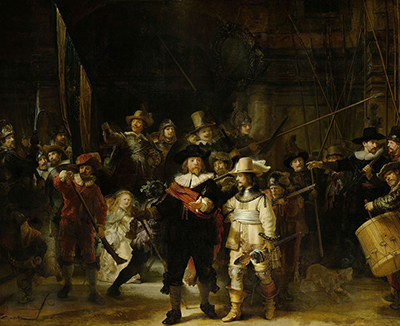
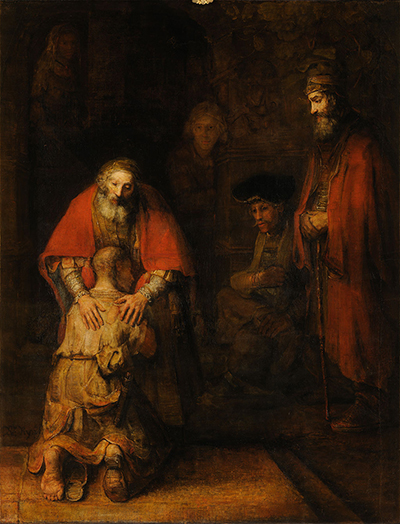
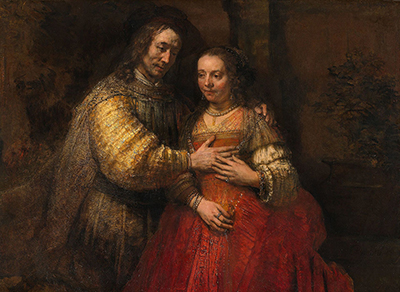
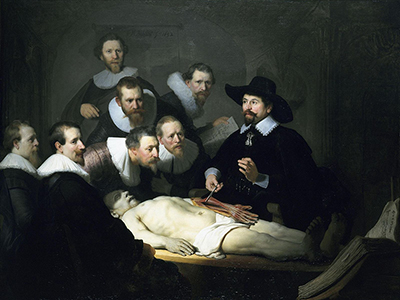
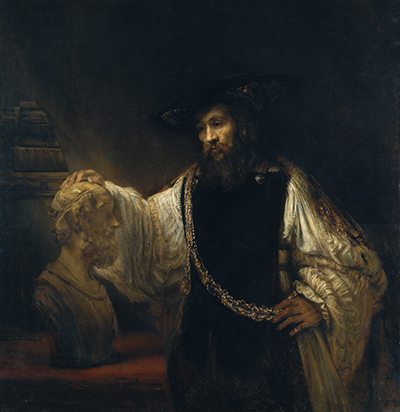
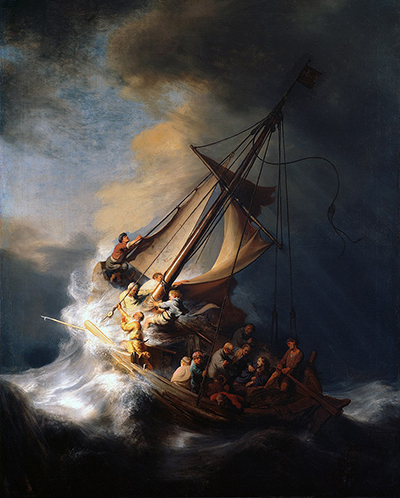
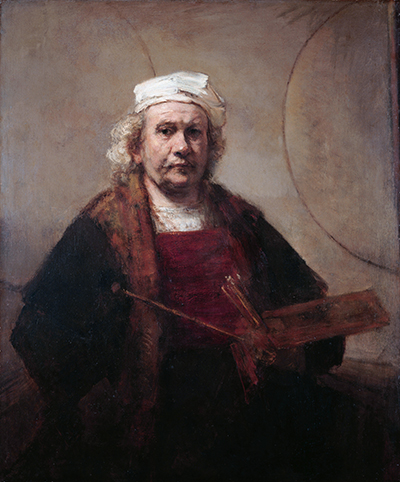
 Rembrandt.jpg)