


 by Tom Gurney
Tom Gurney BSc (Hons) is an art history expert with over 20 years experience
Published on June 19, 2020 / Updated on August 9, 2026
Email: tomgurney1@gmail.com / Phone: +44 7429 011000
Rembrandt Quotes: Introduction
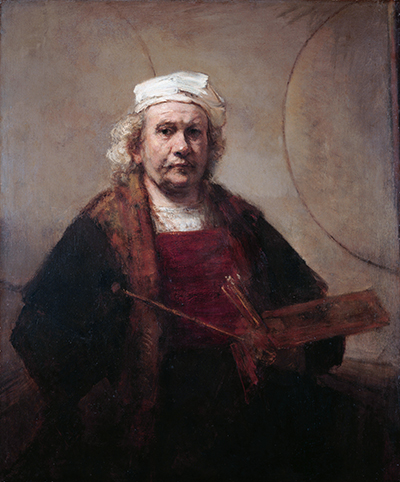
Rembrandt van Rijn is one of the most quoted artists on the internet, but he is not one of the easiest artists to quote well. The problem is not a lack of interest. It is almost the opposite: his fame has attracted dozens of neat sayings that sound plausible, circulate widely, and often arrive with no traceable source.
That matters because Rembrandt's real surviving words are more interesting than the polished aphorisms usually attached to his name. They belong to letters, albums, records, early biographies and the testimony of people who looked at his work closely. Some are direct words by Rembrandt. Some are remarks by contemporaries. Some are later reactions by artists such as Vincent van Gogh. Others are common attributions that should be enjoyed, if at all, with caution.
This page separates those categories. It is a guide to the words that can be connected to Rembrandt with reasonable confidence, and to the famous lines that should not be repeated as fact unless a stronger source appears.
die meeste ende die naetuereelste beweechgelickheijt
Contents
- Introduction
- Did Rembrandt Leave Many Quotes?
- Rembrandt On Natural Movement And Emotion
- Rembrandt On Viewing A Painting
- The Grossmann Album Motto
- Houbraken And The Question Of Finish
- Vondel On Cornelis Anslo
- Van Gogh On Rembrandt
- Common Rembrandt Quotes To Treat With Caution
- How To Read Rembrandt Quotations
Did Rembrandt Leave Many Quotes?
Rembrandt did not leave behind a large body of theory in the way some later artists did. There is no Rembrandt treatise setting out his views on painting, no long manifesto about light, and no tidy book of sayings written for students. The surviving record is much more fragmentary.
The most valuable direct evidence includes a small group of letters, especially letters to Constantijn Huygens, the secretary to Stadholder Frederik Hendrik. There is also a short inscription connected with Burchard Grossmann's album amicorum, or friendship book. Beyond those, Rembrandt appears in legal, financial and household records, but those documents often record official transactions rather than his personal voice.
This is why a careful Rembrandt quotes page has to do more than list memorable lines. It has to ask what kind of evidence each line represents. A letter by Rembrandt is different from a notarial document. A statement reported by Arnold Houbraken decades later is different again. A Van Gogh letter about Rembrandt is powerful reception history, but it is not a quote by Rembrandt.
Rembrandt On Natural Movement And Emotion
The best-known direct Rembrandt quotation comes from his letter of 12 January 1639 to Constantijn Huygens. Rembrandt was writing about two Passion paintings made for the stadholder: one showing the dead Christ laid in the tomb and the other showing Christ rising from the dead.
In old Dutch, Rembrandt explained that these works had taken so long because he had tried to observe "die meeste ende die naetuereelste beweechgelickheijt" in the figures. The phrase is often translated around the idea of the greatest and most natural movement, or the most natural emotion.
This is one of the rare places where Rembrandt seems to describe a goal inside his own painting. It should be handled carefully. He was not writing a general theory of all art. He was explaining the delay in a specific commission, and he was doing so to a powerful intermediary whose favour mattered. Even so, the line is invaluable because it matches so much of what viewers notice in his best work: gesture, inner feeling, bodily tension, and emotion made visible without becoming merely theatrical.
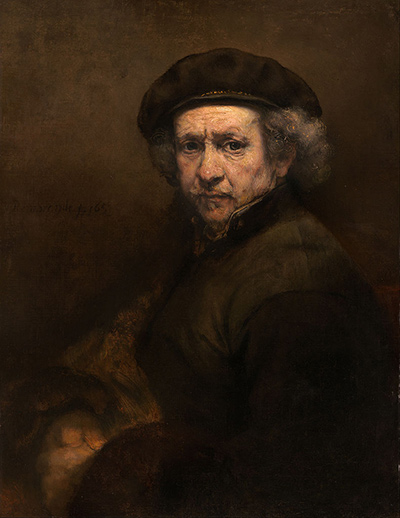
The phrase also helps explain why Rembrandt is hard to reduce to one technical trick. His drama is not only light and shadow. It is the way a figure turns, hesitates, reaches, recoils or falls silent. In that sense, the Huygens letter belongs beside later pages on Rembrandt's biography, paintings and style. It gives a small but direct glimpse of an artist thinking about how movement and feeling become paint.
Rembrandt On Viewing A Painting
op een starck licht
Rembrandt to Constantijn Huygens, 27 January 1639, in a practical note about viewing a picture [3]
A second Huygens letter, dated 27 January 1639, is shorter but unusually practical. Rembrandt asked that a picture be hung in strong light and that viewers should be able to stand well back from it. The line is sometimes pulled into broad claims about how every Rembrandt should be seen, but the original context is narrower.
It is still a wonderful clue. Rembrandt understood that a painting did not end at the edge of the canvas. It needed a room, light, distance and a viewer's movement. A work that looks rough or unresolved at close range may gather force when seen from farther back. That is especially relevant to discussions of Rembrandt's later paint handling, where thick passages, dragged strokes and broken surfaces often resolve into flesh, cloth or light only when the viewer stops inspecting them like a miniature.
This does not mean Rembrandt wanted all close looking to stop. His prints and drawings reward close study intensely. The point is more precise: for at least one large painting sent through Huygens, Rembrandt cared about lighting and viewing distance as part of the work's effect.
The Grossmann Album Motto
A pious mind considers honour to be good.
KB, National Library of the Netherlands, translation of Rembrandt's 1634 Grossmann album motto [4]
Another direct Rembrandt wording survives in a very different setting. In 1634, Rembrandt contributed to the album amicorum of Burchard Grossmann, a visitor who collected inscriptions and drawings from notable people he met. The KB, National Library of the Netherlands, translates Rembrandt's short life-wisdom statement as: "A pious mind considers honour to be good."
It is a compact moral motto rather than an artistic theory. That makes it useful in a different way. It places Rembrandt inside the social world of albums, acquaintances and written exchange. It also reminds us that early modern artists did not only speak through finished paintings. They signed, inscribed, negotiated, gifted, joked, petitioned and took part in the social customs of their time.
The Grossmann album is also a promising visual source for a later page design because the inscription and drawing belong to a physical album object. For the article itself, however, the central point is simple: this is one of the short direct wordings that can be tied to Rembrandt through a named album and a Dutch national collection.
Houbraken And The Question Of Finish
Many famous Rembrandt sayings come not from Rembrandt's letters, but from Arnold Houbraken, the early eighteenth-century biographer of Dutch artists. Houbraken wrote after Rembrandt's death and mixed biography, anecdote, criticism and inherited studio lore. He is valuable, but he has to be read as an early source, not as Rembrandt speaking in the first person.
One Houbraken-associated line says that a work is finished when the master has achieved his intention for it. This is often shortened online into something like "A painting is finished when the artist says it is finished." The simplified version is catchy, but it loses the source problem and the historical edge.
Houbraken used the idea while criticising Rembrandt's rough or partly finished handling. To some classicising viewers, Rembrandt's late surfaces could look stubborn, coarse or unfinished. To modern viewers, the same passages can seem radical and alive. The quote therefore belongs less in a motivational list and more in a discussion of Rembrandt's late style, finish, surface and artistic independence.
The safest wording is to call it a Houbraken-attributed anecdote about Rembrandt. It should not be treated as a secure direct sentence from Rembrandt's own hand.
Vondel On Cornelis Anslo
Not all useful Rembrandt quotations are by Rembrandt. Some of the best lines around him come from people responding to his portraits and prints. A fine example is Joost van den Vondel's quatrain on Cornelis Claesz Anslo, the Mennonite preacher whom Rembrandt depicted in drawing, etching and painting.
In the British Museum's summary of the Anslo print, the poem challenges Rembrandt to paint Cornelis's voice. The point is brilliant: Anslo's visible likeness is only part of the man; to know him fully, one would have to hear him.
This is not a Rembrandt quote, but it belongs on a Rembrandt quotes page because it captures something central to his portraiture. The strongest portraits are never just face records. They imply speech, thought, social presence and inward life. Vondel's line also gives a useful bridge to Rembrandt's etchings and to the future discussion of how portraiture can suggest what cannot literally be shown.
Van Gogh On Rembrandt
Vincent van Gogh is one of the most powerful later witnesses to Rembrandt's reputation. His letters are not evidence for Rembrandt's own words, but they are evidence for how deeply Rembrandt affected later artists.
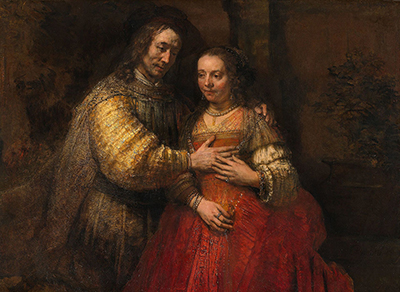
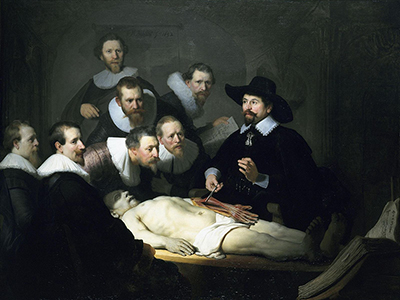
In October 1885, after seeing old Dutch paintings, Van Gogh wrote to Theo about hands by Rembrandt and Frans Hals, including hands in The Syndics and The Jewish Bride. He admired the way they seemed alive without being finished in the polished academic sense. This belongs naturally beside Rembrandt's late paintings, where hands, faces and sleeves can appear both materially rough and psychologically exact.
Van Gogh returned to Rembrandt again and again. In an 1884 letter, he connected The Jewish Bride with emotional intensity and with writing by Francois Coppee and Thore. In 1889, he wrote of Rembrandt's tenderness in gazes, naming Pilgrims at Emmaus, The Jewish Bride and other works. These passages tell us as much about Van Gogh as they do about Rembrandt, but that is their value: they show how Rembrandt became a living resource for another artist trying to think through feeling, touch, finish and human presence.
Van Gogh's words are best used in a reception section, and they should always be labelled as Van Gogh speaking about Rembrandt.
Common Rembrandt Quotes To Treat With Caution
Some of the most popular Rembrandt quotes online remain unverified in the current source checks. They may appear on quote sites, posters, blogs and commercial products, but that is not the same as a source.
The line "Life etches itself onto our faces..." is a good example. It sounds suitable for Rembrandt because it fits modern ideas about his self-portraits and late faces. It has even been repeated in some art writing. But no strong primary, early-biographical or scholarly source has yet been identified for it. If used at all, it should be labelled as an unsourced quote commonly attributed to Rembrandt.
The same caution applies to "Choose only one master - Nature," "Without atmosphere a painting is nothing," "Painting is the grandchild of nature," and "A painting is not made to be sniffed." Some of these may have roots in early anecdotes or later criticism, but the clean source has to be shown before they can be treated as reliable Rembrandt words.
This does not mean readers must never encounter them. A responsible quote article can include a caution section because many visitors arrive searching for exactly these lines. But it should not pretend that a line is secure just because it is famous.
How To Read Rembrandt Quotations
The safest way to read Rembrandt quotations is to sort them into four groups.
First are direct Rembrandt words: letters, inscriptions and documents where the wording can be tied closely to him. The Huygens letters and the Grossmann album motto belong here.
Second are documentary records. These are essential for biography, especially for Rembrandt's house, debts, family, studio and burial, but they often preserve legal or clerical language rather than his own voice.
Third are early accounts and anecdotes. Houbraken and later writers can preserve valuable memories and attitudes, but they need source labels and caution.
Fourth are reception quotes. Van Gogh, Vondel, Thore, modern scholars and museum writers can tell us how Rembrandt was understood by others. These voices are often worth quoting, but they should not be misfiled as Rembrandt's own statements.
Read this way, the scarcity of direct Rembrandt quotes becomes a strength rather than a disappointment. It pushes us back to documents, paintings, prints and careful looking. Rembrandt may not have left many polished sayings, but the few surviving words have the grain of real historical contact.
Short Rembrandt Quotes With Stronger Sources
The following lines are the best starting points for reliable Rembrandt quotation:
- "die meeste ende die naetuereelste beweechgelickheijt" - Rembrandt to Constantijn Huygens, 12 January 1639. Usually translated around the greatest and most natural movement or emotion.
- "op een starck licht" - Rembrandt to Constantijn Huygens, 27 January 1639, in a practical note about viewing a picture.
- "A pious mind considers honour to be good" - KB translation of Rembrandt's 1634 Grossmann album motto.
Short quotes around Rembrandt by others include:
- Vondel's challenge to paint Cornelis Anslo's voice, a contemporary response to Rembrandt's portraiture.
- Van Gogh's comments on living hands, tenderness and the emotional force of Rembrandt's paintings.
- Houbraken's anecdote about finish and intention, if clearly labelled as an early-biographical attribution.
Why The Real Quotes Matter
The real Rembrandt quotes do not sound like motivational slogans. They are practical, social and historically specific. He writes to a patron's secretary about delayed paintings. He asks for a picture to be seen in strong light. He leaves a moral motto in a visitor's album. Later writers, from Vondel to Van Gogh, supply the larger resonance.
That is a better portrait of Rembrandt than a page of unsourced aphorisms. It shows an artist negotiating work, thinking about effect, participating in the written culture around him and leaving behind just enough words to sharpen, rather than replace, the evidence of the art itself.
Why Translation Matters
Several of the strongest Rembrandt-related quotations do not begin in modern English. The Huygens letters are in seventeenth-century Dutch, the Grossmann album motto comes through an album tradition, and some early reception material reaches readers through later editions or translations. Even a small change in wording can shift the meaning.
That is why this page avoids making every translated phrase sound final. "Movement," "emotion" and "affect" are not identical words, but each can be used to explain why Rembrandt's Huygens letter matters. The safest approach is to keep the original wording visible where it is short enough, explain the sense in plain English, and name the source that carries the text.
Good Rembrandt quotation is therefore a small act of interpretation. It asks not only whether he said something, but where the wording survives, who copied or translated it, and whether the quote is being used in the same context in which it first appeared.
Frequently Asked Questions About Rembrandt Quotes
No strong source has yet been identified for that line in the current Rembrandt research. It should be treated as an unsourced quote commonly attributed to Rembrandt unless a primary or scholarly source is found.
The idea is connected with an anecdote reported by Arnold Houbraken, but the common modern wording is too simplified. It is safer to describe it as a Houbraken-attributed statement about Rembrandt's approach to finish.
No. Van Gogh's letters are quotes about Rembrandt, not by Rembrandt. They are valuable because they show how deeply Rembrandt's paintings affected another major artist.
Discussion
Which route through Rembrandt Quotes helps most: close looking, technical evidence, documentary context, museum attribution, or links to individual Rembrandt works?
Reader Insights
Treat Rembrandt Quotes as a route through Rembrandt's wider practice, not as a detached side topic.
Look for moments where museum records, technical study or attribution history alter the simplest version of the story.
Which comparison would help most next: a secure Rembrandt, a workshop work, a print, a drawing or a late painting?
Join the Conversation
Have a thought or observation about Rembrandt Quotes? Share it below. Thoughtful responses may be added to this section as the Rembrandt pages develop.
References
- Koninklijke Verzamelingen, Rembrandt letter to Constantijn Huygens, 12 January 1639, object G001-18.
- DBNL / J. A. Worp edition, Constantijn Huygens, Briefwisseling. Deel 2: 1634-1639, Rembrandt letter dated 12 January 1639: https://www.dbnl.org/tekst/huyg001jawo04_01/huyg001jawo04_01_1062.php
- DBNL / J. A. Worp edition, Constantijn Huygens, Briefwisseling. Deel 2: 1634-1639, Rembrandt letter dated 27 January 1639: https://www.dbnl.org/tekst/huyg001jawo04_01/huyg001jawo04_01_1074.php
- KB, National Library of the Netherlands, Album amicorum II of Burchard Grossmann: https://collecties.kb.nl/en/collections/friendship-books/celebrities-friendship-books/album-amicorum-ii-burchard-grossmann
- Museum Rembrandthuis, Joshua Rifkin, Rembrandt and Burchard Grossmann the Younger: Some Context, Some Speculations: https://www.rembrandthuis.nl/en/kronieken/rembrandt-and-burchard-grossmann-the-younger-some-context-some-speculations/
- British Museum, Cornelis Claesz Anslo, museum no. 1842,0806.147: https://www.britishmuseum.org/collection/object/P_1842-0806-147
- Houbraken Translated / RKD Studies, Arnold Houbraken, De groote schouburgh, volume 1, page 259: https://houbraken-translated.rkdstudies.nl/1-240-289/page-250-259/
- Vincent van Gogh Letters, letter 430 to Theo van Gogh, February 1884: https://vangoghletters.org/en/let430
- Vincent van Gogh Letters, letter 535 to Theo van Gogh, October 1885: https://vangoghletters.org/en/let535
- Vincent van Gogh Letters, letter 784 to Theo van Gogh, 2 July 1889: https://vangoghletters.org/en/let784
 Rembrandt.jpg)