


 by Tom Gurney
Tom Gurney BSc (Hons) is an art history expert with over 20 years experience
Published on June 19, 2020 / Updated on December 12, 2025
Email: tomgurney1@gmail.com / Phone: +44 7429 011000
Gian Lorenzo Bernini executed the Blessed Soul, a notable bust, around 1619.
The Blessed Soul by Gian Lorenzo Bernini is also known as Anima Beata in Latin. The bust is a pendant piece, accompanying Damned Soul which is believed to have been produced in the same year.
This sculpture came about in the early years of Bernini's rise in Rome, and is interesting both in it's own right, but also in how it serves alongside its companion piece, Damned Soul. Together, they display Bernini's impressive handling of facial features and the range of moods that he could already accomplish. The Baroque era was all about expression and emotion, and in two pieces, Bernini managed to capture emotion and spirit in opposing states.
Description
In Blessed Soul, Gian Lorenzo depicts a redeemed soul that raises its head and looks towards heaven. The facial expression represent its emotions after realising it has been blessed, having seen God's grace. Bernini attempts to capture this inner strength and delight in the exterior of this marble sculpture.
The parted lips and large eyes are an indication of the innocence that Gian Lorenzo wanted to portray, and even at this early age he was able to contort the face and body to produce all manner of different finishes to his work.
Summary of Blessed Soul (Anima Beata)
- Artist: Gian Lorenzo Bernini
- Title: Blessed Soul (Anima Beata)
- Date: circa 1619
- Medium: Marble
- Dimensions: Bust (size varies among early copies)
- Companion Piece: Damned Soul (Anima Dannata)
- Location: Palazzo di Spagna, Rome (Spanish Embassy to the Holy See)
- Theme: Salvation, grace, Baroque expression
The Sculpture Dissected Piece-by-Piece
Whilst this sculpture works elegantly as a whole, we can also cut it down into individual elements in order to learn more about Bernini's qualities at this early point in his career. It is remarkable that he was able to work to such a high level, whilst still in his very early twenties, suggesting much of his success was also down to natural talent.
The eyes are open, but relaxed with softened features - this helps to portray an atmosphere of wonder or curiosity, rather than fear or anger. Similarly the mouth is also put into a much more relaxed position than in comparison to Damned Soul. The hair is used to frame the facial features, and serves more of a supporting role though is intricately delivered. The muscular balance is also softened throughout the piece, giving a lighter and more feminine finish to this sculpture.
High Resolution Images of the Sculpture's Key Details
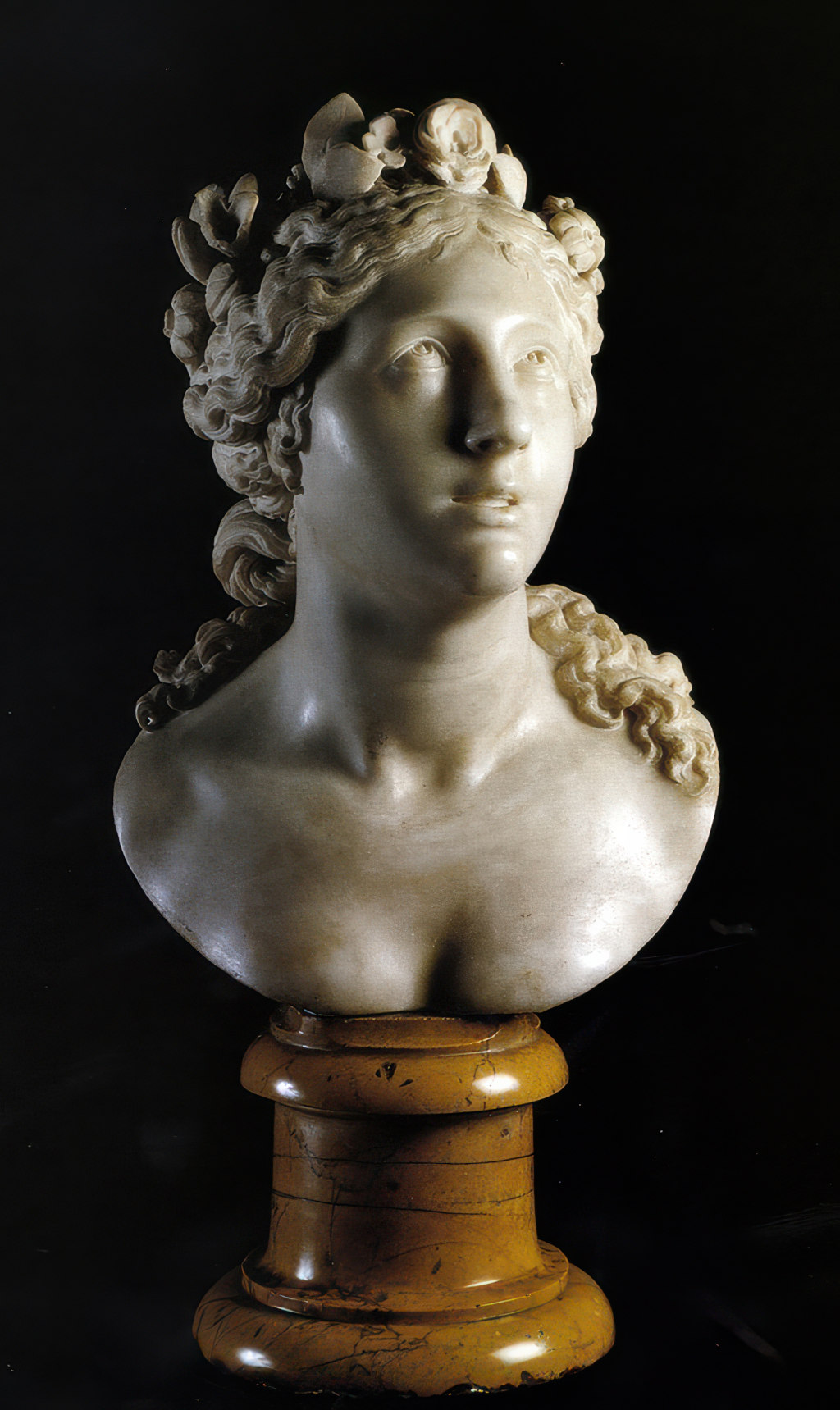
Blessed Soul (Anima Beata) by Gian Lorenzo Bernini, circa 1619 — Early Baroque sculpture expressing spiritual joy and salvation
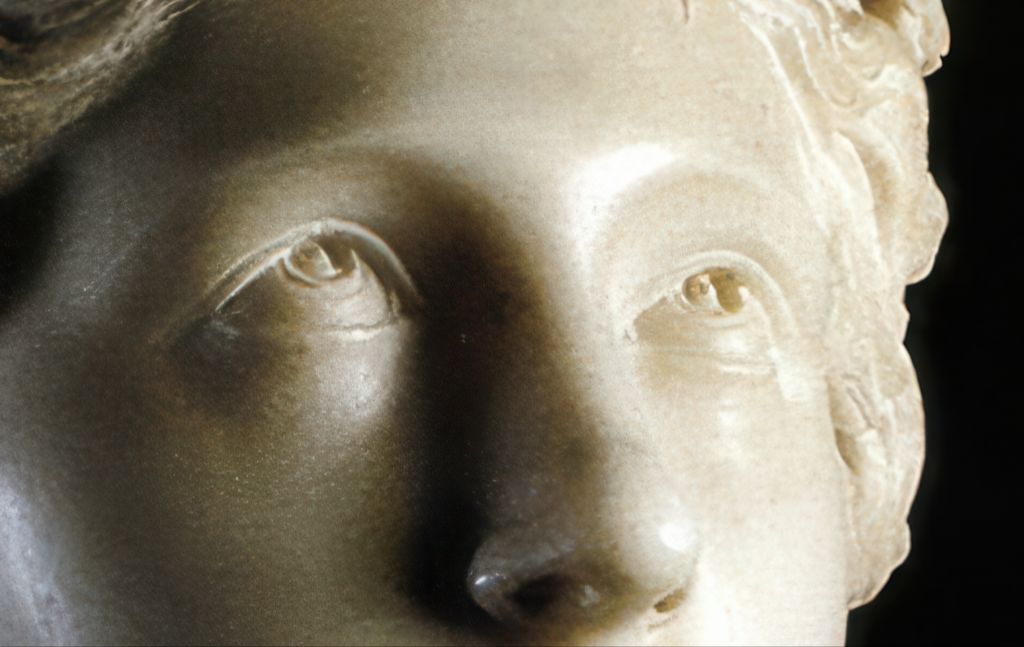
Widened eyes express the soul's moment of divine revelation
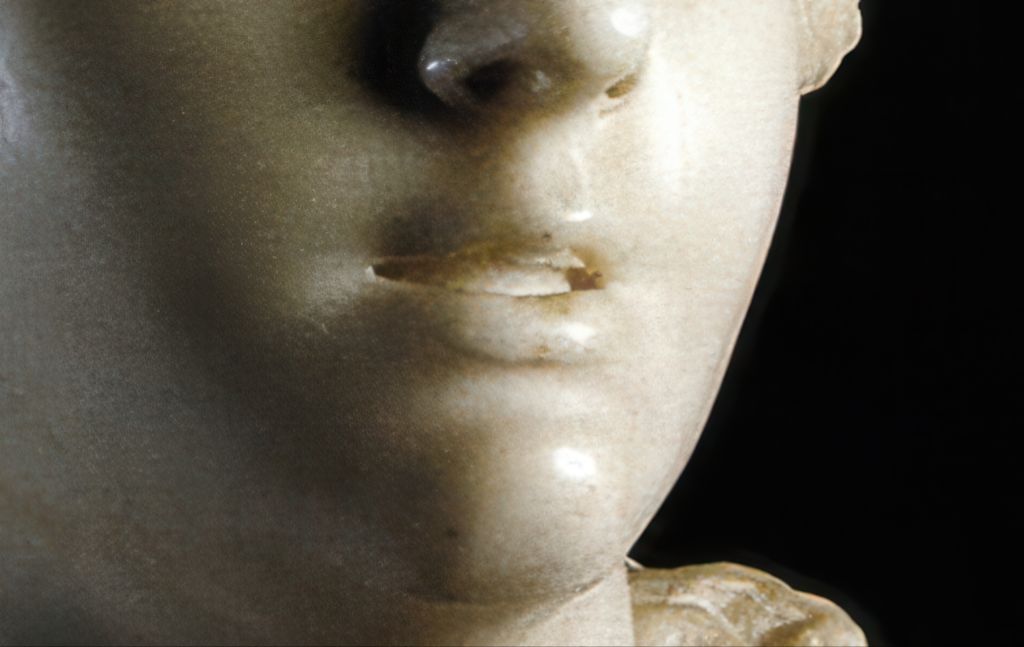
Softly parted lips suggest a breath of wonder, contrasting the scream of the companion Damned Soul
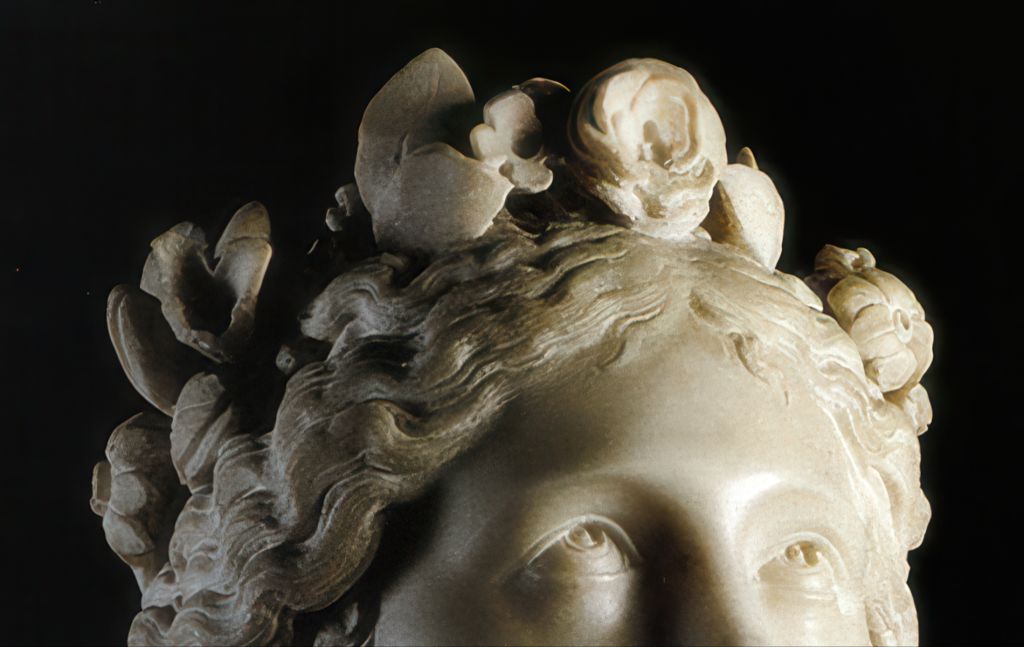
Gentle curls frame the face, guiding the viewer's gaze upward while reinforcing the sculpture's sense of lightness
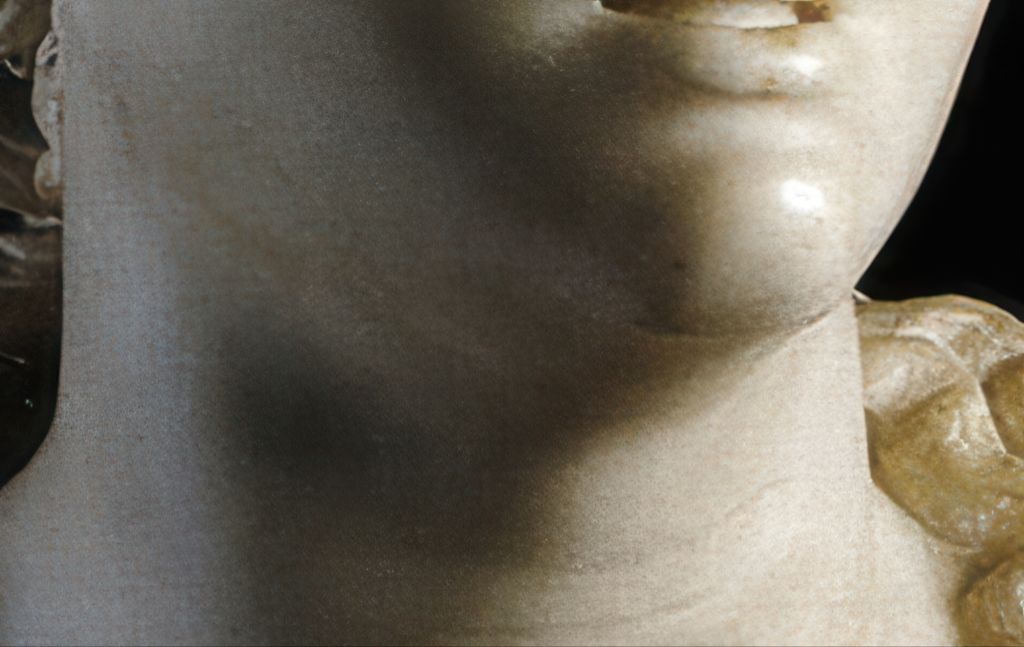
Upward tilt of the head creates a visual dialogue with heaven, central to the sculpture's emotional impact
Technique
Bernini's Blessed Soul features a softened touch, with a smoother finish than found in some of his later works. He also adorns the eyelids and cheeks with subtle variations which increase the lifelike qualities of this sculpture. In order to reinforce the upbeat atmosphere in this piece, and to contrast with Damned Soul, we find an upward motion across the whole work. Bernini was attempting to capture emotion, in a moment, and achieves this successfully in both pieces.
Paired Souls: The Relationship with the Damned Soul
Whilst the precise dates for the two sculptures is not known, they are both dated to around 1619. With both original prototypes lost, it is unlikely we will ever have a more accurate timeline on Bernini's early work. They were certainly produced as companion pieces, that we do know, and for a period were displayed opposing each other. Their different emotions are entirely intentional and help to underline the qualities of Baroque sculpture.
Every facial detail and expression is altered, from the hair, to the eyes, to the mouth and neck - all for the purpose of capturing a particular moment. They are almost, in a sense, mirror images of each other.
Historical Context to this Piece
To fully understand the scenario into which Bernini's Blessed Soul arrived, we must delve into Rome in the early 1600s. This era was dominated by the Counter-Reformation and art was intended at this time to strengthen one's religious commitment, to move them emotionally. The use of art was important in this subtle diversion from merely illustrating doctrine, as may have happened previously.
Bernini's twin sculptures, showing blessing and damnation, are fine examples of this in action. Saved souls were radiant and uplifted, as taught at the time, and the sculptor captured this moment in his work. One can point directly to scripture for potential influences on his work, such as:
Commission and Patronage
Blessed Soul is believed to have been commissioned by Cardinal Pedro Foix de Montoya. Having worked together previously, this underlines the progress that Bernini was making in establishing his artistic reputation among a number of influential figures in Rome. The Blessed Soul by Gain Lorenzo Bernini was originally housed in the church of San Giacomo degli Spagnuoli.
Once installed here, the sculpture was treated as sacred, and had the emotional impact on its congregation that was intended. It was later moved to the Palazzo di Spagna in Rome, where it remains today.
Location
The Blessed Soul by Gian Lorenzo Bernini is located at the Palazzo di Spagna in Rome, Italy. The building is not typically open to the general public.
The two sculptures are believed to be on display in the Sala de Embajadores (Hall of the Ambassadors), which serves for formal ceremonies rather than everyday use. This is a highly decorative room, and the two sculptures have taken up different positions here since first arriving in the Embassy building. Originally, they would sit opposite each other. Sadly, this room is not open to the public typically, giving only a lucky few the opportunity to see these works in person.
Address and Map of the Palazzo di Spagna
Palazzo di Spagna (Monaldeschi Palace),
Piazza di Spagna,
57 VA,
00187 Roma RM,
Italy
Why the Blessed Soul Matters in Bernini's Career
There are several aspects to this sculpture which make it significant within Bernini's overall career.
Firstly, we can see how confident he was in capturing emotion in his work at such an early age. This helps us to better understand his natural talent, prior to his experience building in later decades. His Damned Soul also provides similar evidence, particularly when the two pieces are studied together as a whole.
This relationship between humanity and the divine was a key ingredient to the earlier Renaissance in Italy, and Bernini would continue it into the Baroque era through works such as this - here he takes a theme from religious scripture, one assumes, and combines it with humanistic qualities to help achieve the objective of strengthening one's moral path.
Throughout his career, Gian Lorenzo held with high regard the Baroque style as evident in most of his sculptures. He utilised the same style in the Blessed Soul, and it adds to the list of many Baroque arts completed by the artist leading to veneration in the arts community. The material utilised to create the Blessed Soul by Gian Lorenzo Bernini is marble.
He is fond of using marble in some of his previous works, and the results have been beautiful pieces recognised throughout the world. This is the reason Gain Lorenzo is a notable figure in art, and many artists followed in his footsteps specifically in producing notable sculptures.
Scholars have placed this, and its pendant companion piece, as middle points in his artistic development between earlier works such as Goat Amalthea (pre-1615) and items from his mature period such as Proserpina (1621–1622) and Apollo and Daphne (1622-1625). It is a transition from experiment to technical mastery, and it is impressive to see how far along this path he is already.
Influence on Later Artists
Bernini's influence is well established, but we can pinpoint specific works and how they made their own individual mark. Massimiliano Soldani-Benzi was part of the next generation of Baroque sculptors and he produced his own versions of both Blessed Soul and Damned Soul. They became critical once Bernini's original prototypes were lost. Experts in the sculpture of this era will also find countless examples of contrasting sets of sculptures, similar to Bernini's, and most of them arrived after as a direct result of his work.
Copies, Variants and Lost Originals
As with Bernini's sister piece, Damned Soul, no universally accepted original prototype for Blessed Soul survives. And again, there is discussion around what the original piece would have been made of, such as terracotta, wax or perhaps a more developed marble study. The level of involvement of Bernini with his studio is also up for debate.
The version normally mentioned by academics is the early copy found in Rome, at the Palazzo di Spagna. There are, however, other copies in existence. In Florence a sculpture is believed to be from a close follower, and featured slightly softened features. There are also several more versions in private Italian collections, dating from the 17th to 19th centuries.
We must remember that Bernini inspired many later sculptors, and that these alternative versions were not intended to deceive, but rather pay homage to the original master, and potentially learn from the experience of copying his work.
Conclusion
The Blessed Soul, from circa 1619, is a significant sculpture from Gian Lorenzo Bernini. It helps to display his technical ability in displaying emotion accurately, and is a fine example of Italian Baroque sculpture from the early 17th century. Bernini showed artists of later generations how to capture a moment in time in marble, and his legacy was continued through his studio and beyond.
Its impact is strengthened through its sister piece, Damned Soul, and the two offer very different, but equally powerful, displays of human emotion. Their role in shaping sculpture through the 17th century has led to them being the subject of countless academic studies, all these years later.
The Blessed Soul by Gian Lorenzo may not be one of the artist's finest works, but it has inspired other artists to create sculptures. On this theme, Gian Lorenzo inspired notable artists like Massimiliano Soldani-Benzi. Massimiliano created two busts similar to Gian Lorenzo's to represent the psychological states of a redeemed and condemned soul.
This was to depict two identical but opposite busts created by the original artist. So, most people have come to learn about the Blessed Soul and Damned Soul together as the two art pieces are related to each other.
FAQs
References
- Harvard University Art Museums Bulletin, Vol. 6, No. 3, Sketches in Clay for Projects by Gian Lorenzo Bernini, Ivan Gaskell, Henry Lie (Spring, 1999)
- Wikipedia
- Gian Lorenzo Bernini: the sculptor of the Roman baroque, Wittkower, Rudolf
- Bernini and His World: Sculpture and Sculptors in Early Modern Rome, Livio Pestilli