



 by Tom Gurney
Tom Gurney BSc (Hons) is an art history expert with over 20 years experience
Published on June 19, 2020 / Updated on November 18, 2026
Email: tomgurney1@gmail.com / Phone: +44 7429 011000
Sculptures
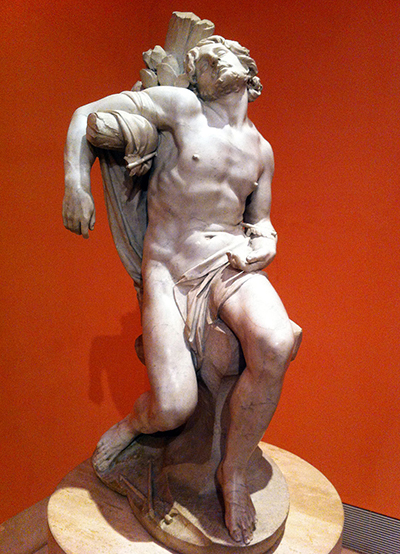
In Bernini’s David, the sling is drawn across the body and the face is turned towards a figure the sculptor has left outside the marble. In Apollo and Daphne, Apollo’s outstretched hand comes up against the very body the viewer has been following through the room. The two statues were made close together. Work on Apollo and Daphne paused while Bernini carved David. The difference between the sculptures is a good place to begin. In one, the action is about to cross the space between a visible figure and an invisible opponent. In the other, the encounter takes place within the marble, and moving beside it helps the viewer see what has changed. [1][2]
At a Glance
- Early patronCardinal Scipione Borghese
- Borghese marblesDavid, Apollo and Daphne, The Rape of Proserpina
- Other commissionsPortraits, tombs, chapel ensembles and fountains
Bernini made sculptures to occupy very different spaces. A bust had to hold its own against the people who knew its sitter. A fountain reached viewers approaching from several streets. An altar group communicated from across a rail or through an architectural opening. The best way to understand the range of these works is to give each its intended subject, scale and setting before asking what they have in common.
Early groups and the Borghese marbles
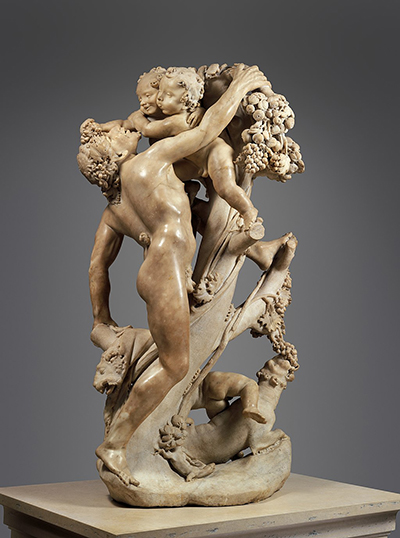
The Metropolitan Museum of Art credits Gian Lorenzo and Pietro Bernini for A Faun Teased by Children, carved around 1616–17. The tree and the bodies make up one crowded structure. A child above the faun gives the group an upward pull, while the other children gather around the trunk below. The effect is one of several beings moving in close quarters. The museum’s attribution also makes the group evidence for a sculptor learning to work alongside another person. An account of its accomplishment can begin with the visible arrangement and leave the division of labour open. [3]
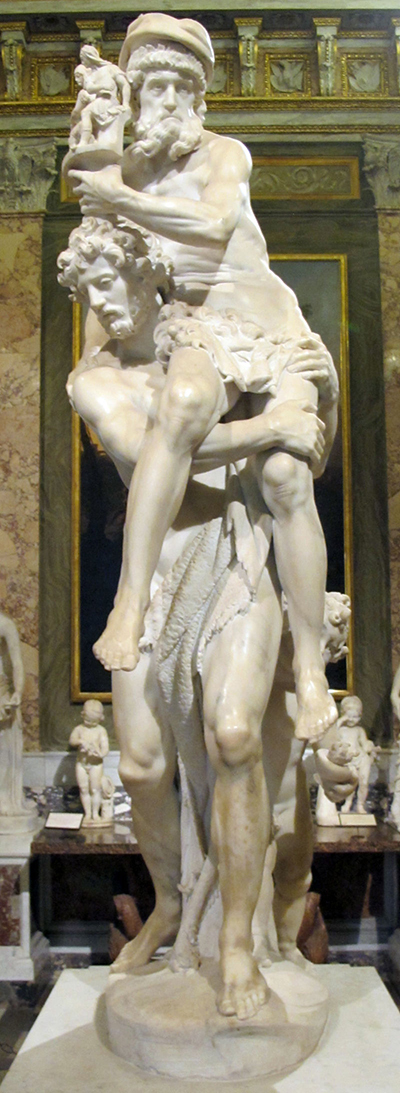
The group of Aeneas, Anchises and Ascanius, now in the Galleria Borghese, makes the stacking of figures part of a different story. Aeneas carries his father. His son keeps beside him at a lower level. The eye has to travel from the weight borne by the central figure down to the youngest and then back up towards Anchises. Flight from Troy takes the form of a family that has to move together at different speeds. The three ages of the body offer a second way to read the group alongside Virgil’s story. [4]
In the Rape of Proserpina, the two main figures are bound together through opposing actions. Pluto grips Proserpina, while she pushes against his face and turns away. Her fingers are visible at one point of their struggle and his at another. A visitor can compare the pressure of a hand against a cheek with the way another hand presses into a thigh. Cerberus occupies the lower part of the group. Looking from the heads towards the ground reveals how many of the work’s clues depend on seeing all the way down to the base. Its transfer from Scipione Borghese to Ludovico Ludovisi also matters when imagining its early audience. The patrons and rooms changed during the sculpture’s history. [5]
The original setting of Apollo and Daphne supplied an especially deliberate sequence. The Galleria Borghese documents the placement near a wall where visitors would first approach Apollo’s right side. From there the change in Daphne’s body unfolds across a succession of views. Stone seems to become hair, skin, bark and foliage as different textures catch the light. The late eighteenth-century move to the centre of the room placed it among important ancient sculptures and made its earlier viewing sequence harder to recover. The museum links the uneven degree of finish to the position Bernini originally intended. Present museum access and historical access each tell us something about how the work can be seen. [2]
When the subject is a likeness
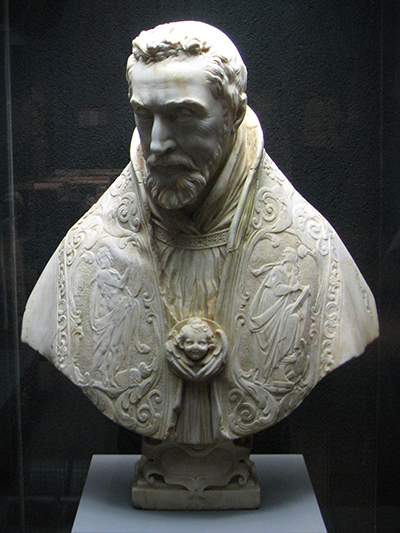
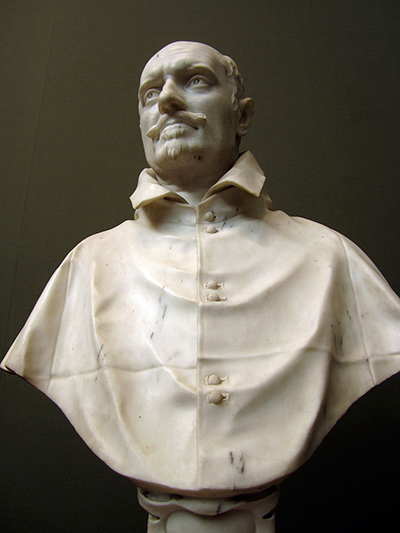
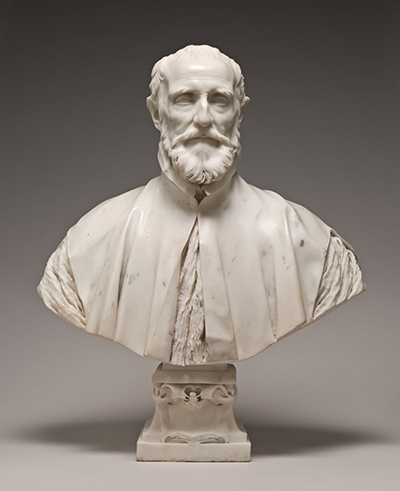
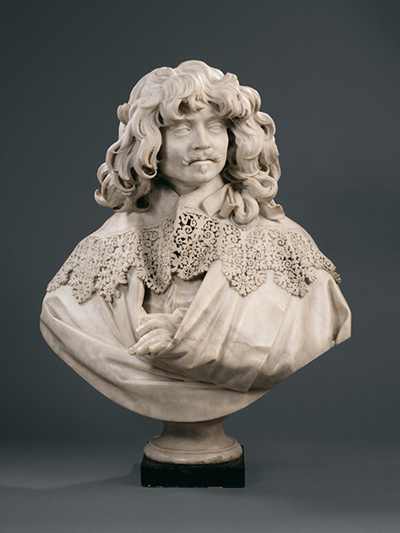
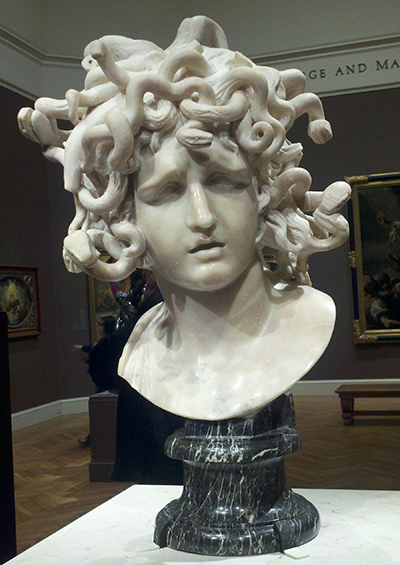
A portrait bust gives the head most of the responsibility for creating an encounter. The shoulders allow the head to belong to a body and give the artist a way to suggest an action already under way. Change the turn of the head slightly and the figure may seem to have heard someone enter. Change the weight or direction of the folds and the same head can appear to move more quickly or inhabit a more formal pose.
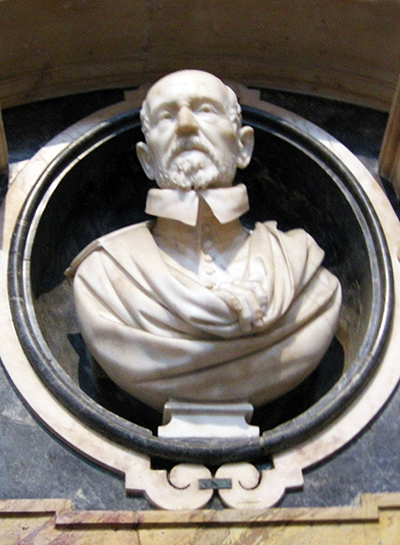
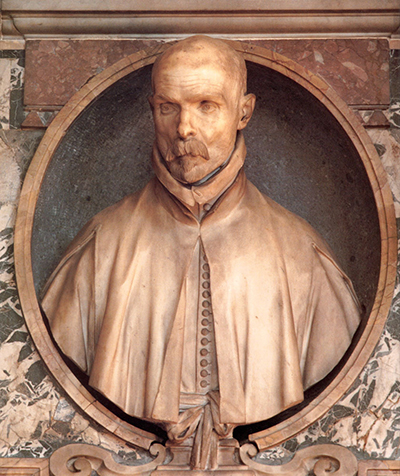
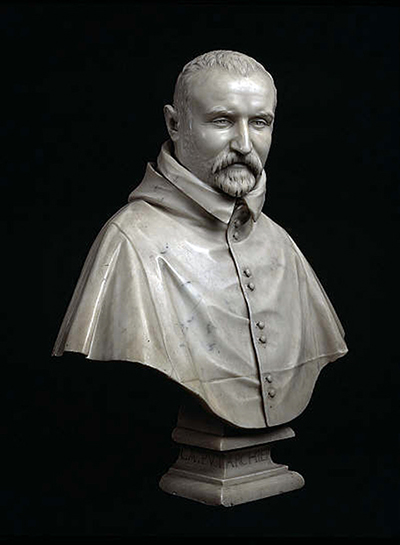
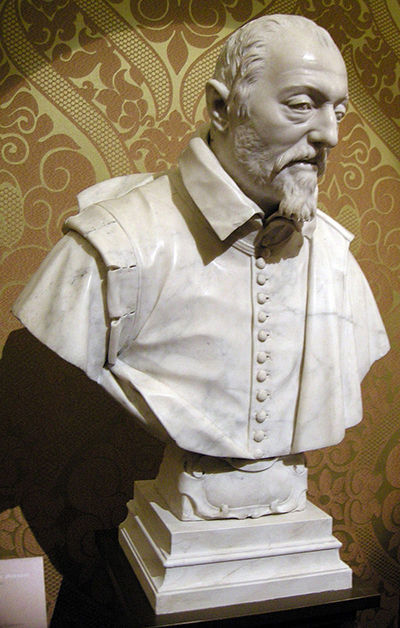
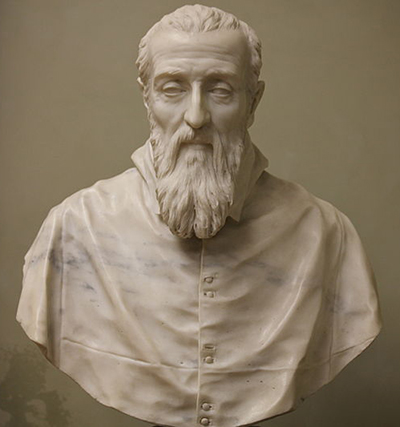
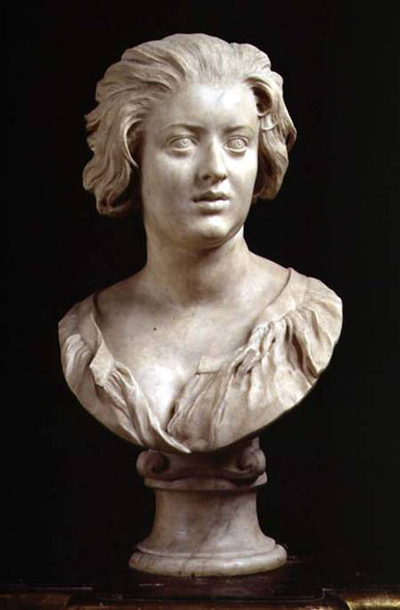
The two busts of Scipione Borghese allow that comparison on a single named sitter. The Galleria Borghese preserves both marbles. They are close enough for a visitor to compare the position of the face, shoulders and garments directly. A second version gives material evidence of a second act of carving, even where early accounts of why the work was repeated need qualification. Looking across both heads also helps a visitor distinguish features of the sitter from decisions made by the sculptor. [6]
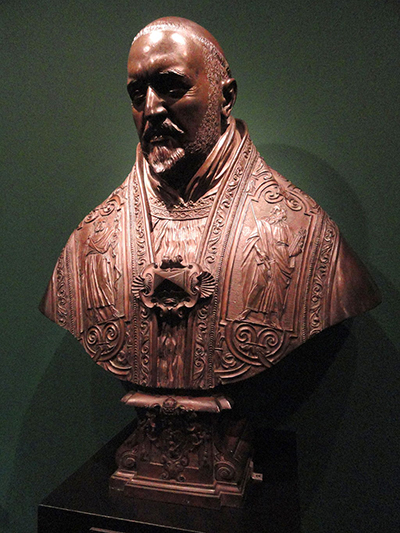
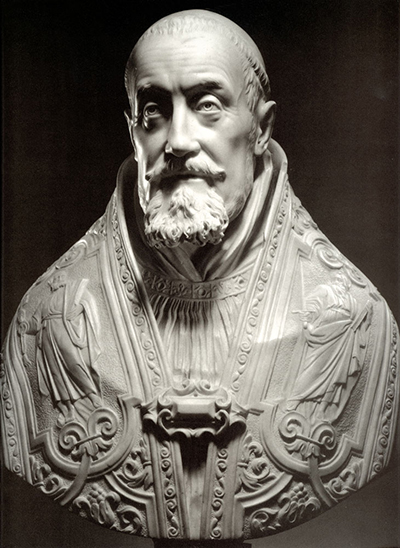
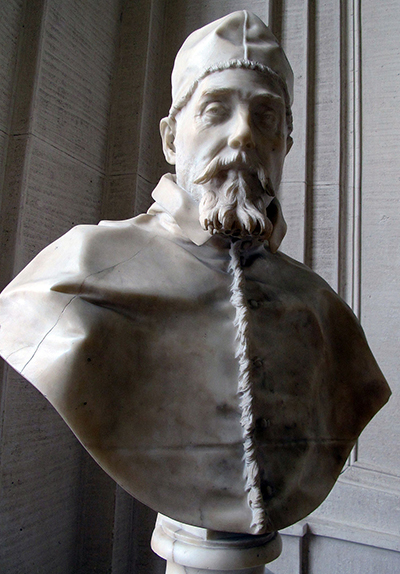
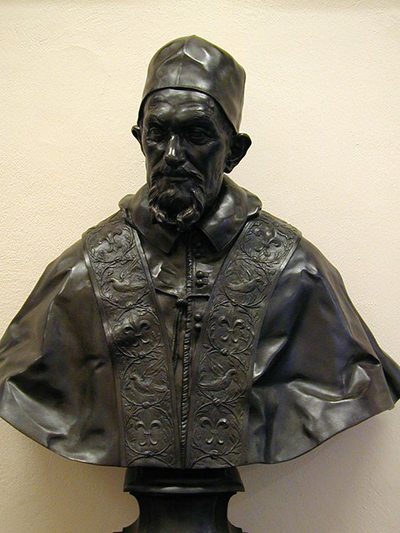
The Borghese Pope Paul V raises a different kind of question. Its carefully rendered papal clothing announces the office on a marble only 35 centimetres high. The museum offers two possible date ranges, one during the pope’s lifetime and one after his death. A close view of the fabric can reveal how Bernini differentiated lace and embroidered cloth, but the surface does not settle which payment record belongs to the work. Together with another marble bust of the pope at the Getty, the Borghese object shows why the date, commission and ownership of each version have to be established individually. [7][8]
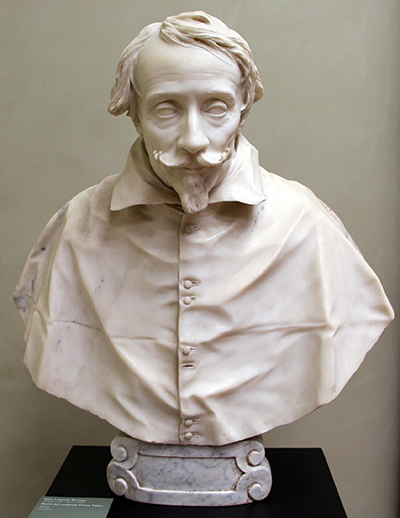
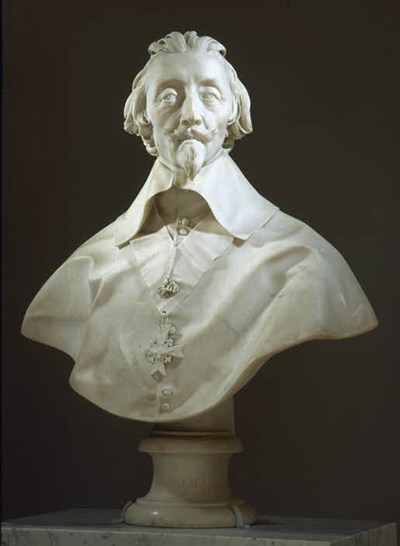
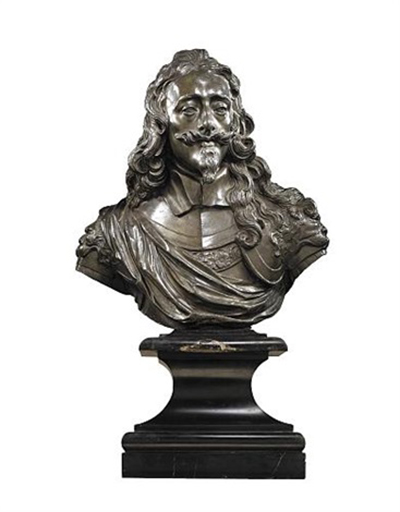
Distance could make portraiture dependent on painting. Charles I sent a likeness in three views by Van Dyck, and Bernini worked in Rome. The finished bust reached the English court and was destroyed in the Whitehall fire of 1698. The painted profiles and the face turned towards the viewer now supply evidence about a lost work. The Louvre’s Richelieu bust survives. The Louvre and the National Gallery give differing accounts of the relationship between Bernini’s work and Philippe de Champaigne’s painted portraits. It is possible to follow the marble’s documented passage to Paris and to explain why a multiple view would matter to the sculptor while leaving the exact model for the commission open. [9][10][11]
Versailles records that Louis XIV gave Bernini thirteen sittings for his portrait. Set beside the absent-sitter commissions, the encounter shows one advantage of having the king in the room. Chantelou records Bernini arranging for him to look towards a particular person before marking the pupils on the marble. The resulting turn of attention can be read as a choice made with the sitter present. [12][13]
Sculptures with more than one maker
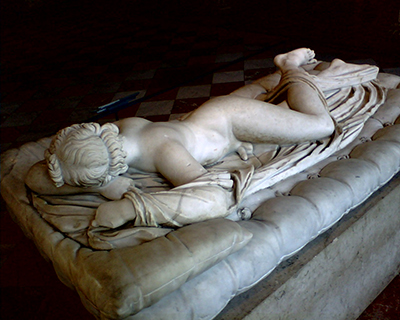
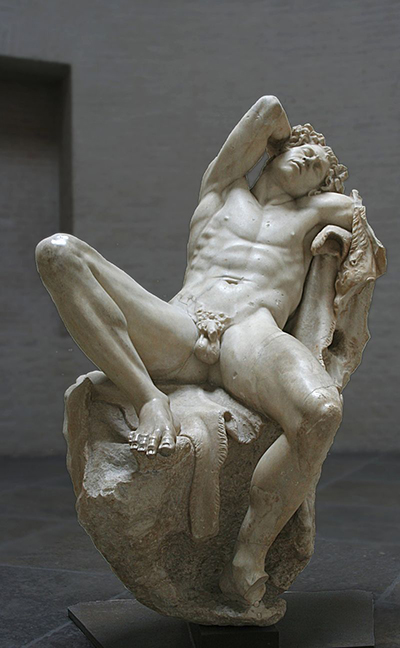
The material an artist inherited could already be centuries old. The Sleeping Hermaphroditus in the Louvre is a Roman figure on a mattress and pillow carved by Bernini in 1620. The Louvre separately identifies repairs to several features of the body by D. Larique. That distribution of work matters when looking at the object. The visible folds in the mattress let the eye infer the figure’s weight and softness beneath it. Bernini’s intervention helps establish the effect of the ancient body, and the carved mattress can be studied as a specific contribution in its own right. [14]
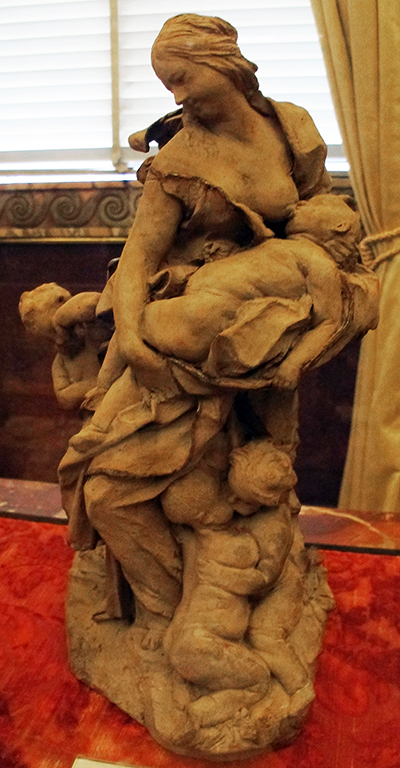
A marble memorial could divide design and execution differently. At Santa Maria in Aracoeli, Bernini was paid for the memorial to Carlo Barberini. He made a clay study for the right-hand allegory, now at Harvard. The Met catalogue identifies Andrea Bolgi as the carver of that figure in marble and Stefano Speranza as the carver of its companion. Moving from an earlier drawing to the study and finished memorial makes the distinction visible. The figure’s design becomes clearer as the plaque changes shape and the sculpture has to allow space for the neighbouring heraldry. [15]
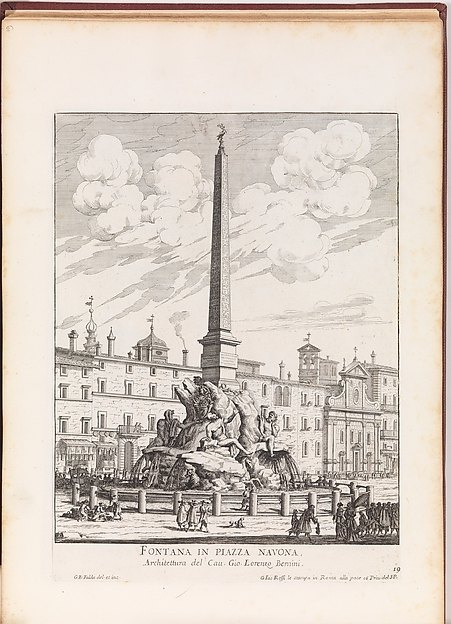
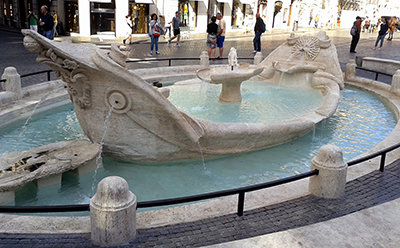
In the Four Rivers Fountain, Bernini’s overall arrangement accommodates the work of four sculptors. In the municipal account, Antonio Ercole Raggi carved the Danube, Claude Poussin the Ganges, Giacomo Antonio Fancelli the Nile and Francesco Baratta the Río de la Plata. Their figures occupy distinct positions around the travertine base beneath a granite obelisk brought from the area of the Circus of Maxentius. The river figures can be distinguished by features such as the Ganges’ oar and the armadillo beside the Río de la Plata. The changing spaces between stone, water and figure give each sculptor’s work a different background as a visitor passes around the fountain. The individual credits explain something that a single name on the monument would conceal: a large commission could depend on sculptors working on distinct figures within one design. [16]
An unfinished group and a revised monument
Truth in the Galleria Borghese was carved for Bernini himself. The museum dates the figure to 1646–52 and records the proposed subject as Truth unveiled by Time. She sits on rock with the sun in her hand and one foot near the globe. Time was to appear in flight as a separate figure, so the marble viewers see today represents only part of the intended action. The museum’s catalogue records that Bernini’s heirs sold the block reserved for the companion. Surviving drawings can therefore clarify a sculptural relationship whose other half never reached the exhibition room. [22]
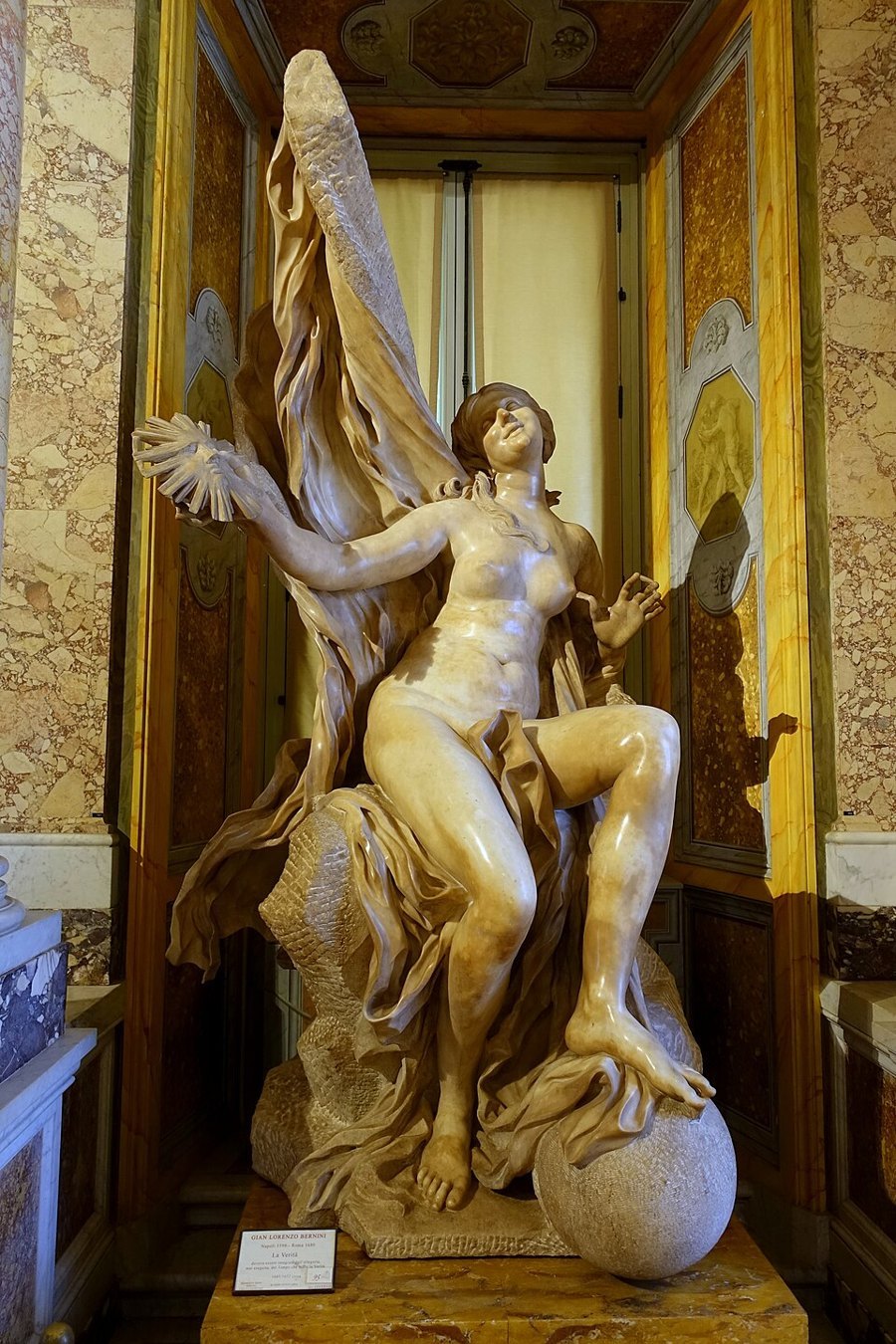
The sculpture rewards attention to where the face and gesture are directed. Her raised attribute can be understood on its own, but a second body overhead would have supplied a point against which to read her tilt and movement. A museum can place the surviving figure where its carving is easily seen, while the drawings recover something of the vertical space the artist meant to occupy. The history of the unused block is especially valuable because it gives a material indication of the scale of the abandoned half of the project. [22]
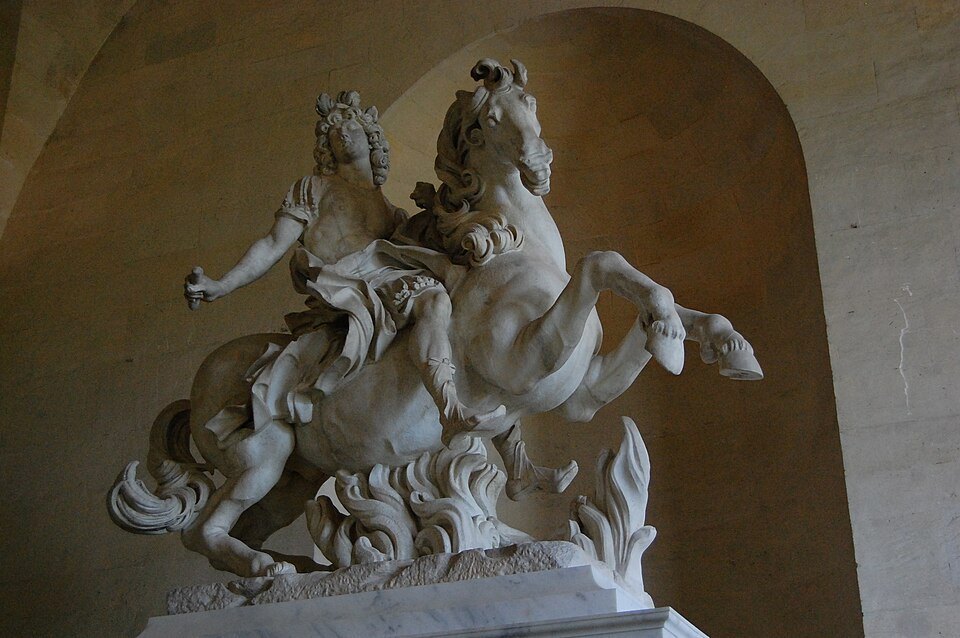
The Versailles monument for Louis XIV presents a different kind of survival. The marble horse and rider reached France, but Girardon’s workshop changed the subject to the Roman hero Marcus Curtius. The Versailles catalogue publishes an early description of the rider’s new helmet and the transformation of the support into flames. A marble support integral to the group could be changed to carry the narrative of the leap. What remains records the way a later sculptor worked within a large, already carved mass and exploited the existing movement of the horse. [23]
Models whose subjects survived in other materials
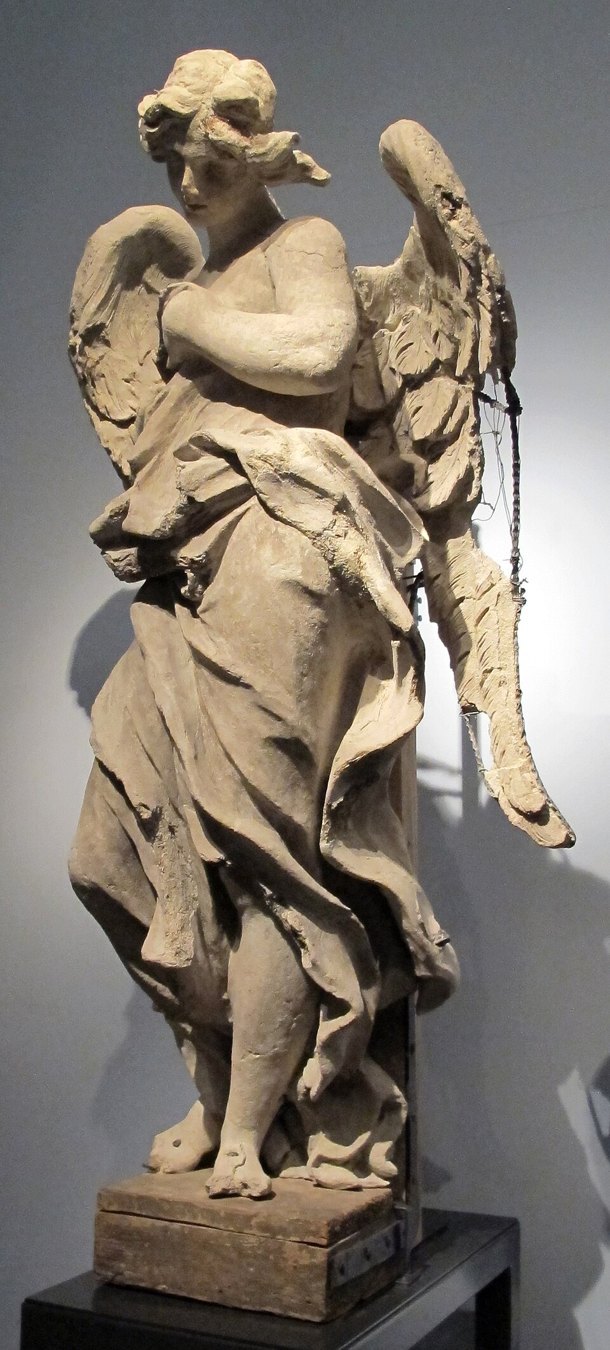
A small object can preserve a different stage of a commission. The Louvre’s terracotta of the angel carrying the Crown of Thorns is catalogued as a sketch for a figure planned for the Ponte Sant’Angelo. It concentrates the encounter between the angel’s hands, face and the object it carries. The marble destination eventually changed. The design and its particular setting thus have separate histories, recoverable through the sculptural record and the placement of the finished statue. [24]
The Vatican’s models for the Cathedra Petri document a larger intermediate stage. The museum’s German catalogue identifies clay and straw on supporting frameworks of iron and willow. The full-scale figures in the apse combine with the surrounding decoration in marble, stucco and gilded bronze. The models preserve form before it acquired the surface that viewers encounter in the basilica. The sketches in Paris and the Vatican models answer questions at different scales, including how the hands relate to a small object and how a large figure’s contours hold together when read from below. [24][25]
The chapel and the monument
The Cornaro Chapel in Santa Maria della Vittoria lets visitors see how a sculptural group can become part of a room. Teresa’s heavily worked garments gather in broad folds. The smaller movements of the angel draw attention towards her face. The side walls place the carved members of the Cornaro family in relation to the encounter. The central marble receives light from above, and the bright rays of its setting make that light seem to belong to the subject. A small model preserved by the Hermitage gives a separate view of the group’s arrangement, while the finished chapel determines its distance and height for the visitor. [17][18]
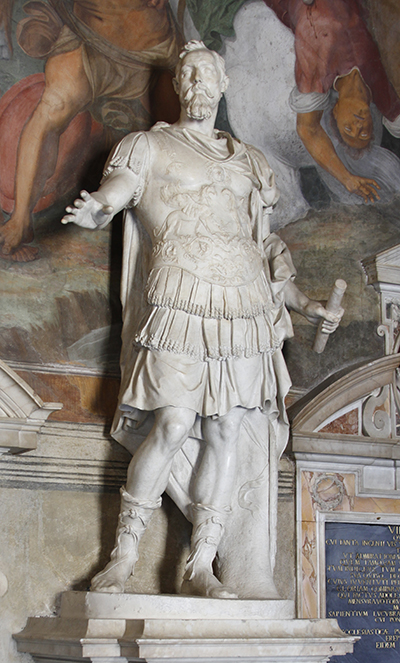
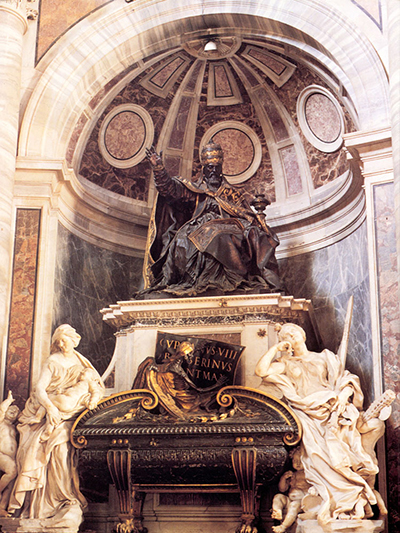
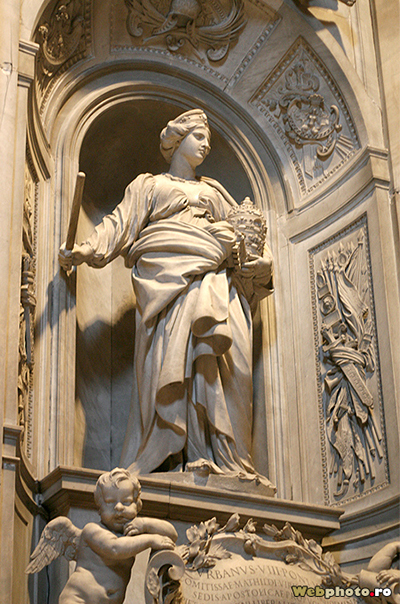
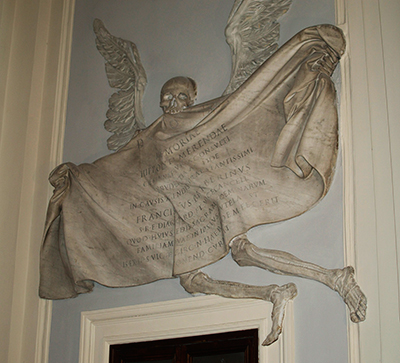
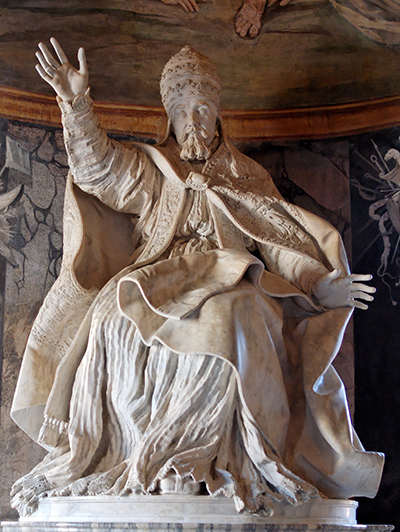
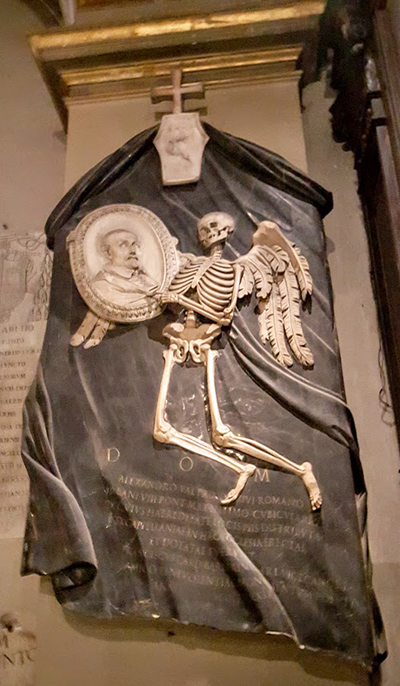
Two monuments to Urban VIII help explain a distinction between figure and setting. The marble civic statue now at the Capitoline Museums presents the seated pope with a raised hand and an open gesture on the other side. The figure stands in a public hall. Its broad silhouette and lifted hand can be read from across the room. The basilica tomb combines the pontiff with personifications and a figure of Death in different materials. It gives a viewer more to read beneath the pope himself, including movement around the sarcophagus and the inscription. Comparing the two makes the civic figure’s expansive gesture and the tomb’s distribution of attention easier to see. [19][20]
Bernini’s choice of medium could shape the character of a commission. Stone let him place very different surfaces side by side, as at the edge of a sleeve or a lock of hair. Bronze on the scale of the Cathedra required large preparatory models, some of which survive. The Vatican Museums identify these as part of the process of producing the bronze figures. The material evidence brings the artist and the founder into the same history, and it lets us connect the shape of a finished monument with stages of work that its completed surface can no longer show. [21]
The sculptures are best encountered at the scale each asks of its viewer. Look low on the Borghese groups for a child, an animal or an emerging root, and allow time for the main figures to change their relationship as you move. Compare the upper contours of two busts before concentrating on their faces. A fountain or a chapel rewards a longer view that includes the environment around it. Those movements give the objects room to show how they work and offer a starting point for comparing works across Bernini’s career.
Sculptures catalogue



Related videos
Choose from five films: close studies of Bernini’s works alongside wider context on his methods and career.
Bernini, David
Study the twisting pose and the viewer’s involvement in Bernini’s David.
Watch on YouTubeRead the exhibition catalogue
Explore the models and their relationship to the finished sculpture.
Bernini: Sculpting in Clay. C. D. Dickerson III, Anthony Sigel and Ian Wardropper. Metropolitan Museum of Art, 2012
Photographs and X-rays show details of the terracottas and explain how models served the sculptor and his assistants. Read free at The Met.
Discussion
David looks beyond the marble, while Apollo reaches towards another figure within it.
Reader Insights
How does each pose direct your attention?
Which of the busts suggests a movement that is about to begin?
How does a chapel affect the way you see sculpture compared with a gallery?
Join the Conversation
Share a detail, comparison or question about Bernini’s Sculptures below.
References
- Galleria Borghese. David. View source
- Galleria Borghese. Apollo e Dafne. View source
- The Metropolitan Museum of Art. Bacchanal: A Faun Teased by Children, 1976.92. View source
- Galleria Borghese. Aeneas, Anchises and Ascanius. View source
- Galleria Borghese. Rape of Proserpine. View source
- Galleria Borghese. Bust of Scipione Borghese. View source
- Galleria Borghese. Bust of Pope Paul V, CCXLVIII. View source
- J. Paul Getty Museum. Bust of Pope Paul V. View source
- Royal Collection Trust. Van Dyck, Charles I (1600–1649), RCIN 404420. View source
- Musée du Louvre. Le cardinal de Richelieu (1585–1642). View source
- The National Gallery, London. Philippe de Champaigne and studio, Triple Portrait of Cardinal de Richelieu, NG798. View source
- Château de Versailles. Genius and Majesty: Louis XIV by Bernini, 2025. View source
- Chantelou, Paul Fréart de. Journal du voyage du cavalier Bernin en France. Edited by Ludovic Lalanne. Paris, 1885, entries for 12 August and 5 October, pp. 93–95 and 200–201. View source
- Musée du Louvre. Hermaphrodite endormi. View source
- Dickerson, C. D., III, and Anthony Sigel. “Allegorical Figure.” In Bernini: Sculpting in Clay, cat. 2, especially pp. 118–119. View source
- Roma Capitale. The Fountain of the Four Rivers. View source
- Roma Capitale. Bernini’s locations, entry on Santa Maria della Vittoria. View source
- State Hermitage Museum. Ecstasy of Saint Teresa, terracotta, Н.ск-619. View source
- Musei Capitolini. Statue of Pope Urban VIII. View source
- Lavin, Irving. “Bernini at St Peter’s.” In St. Peter’s in the Vatican, 2005. View source
- Vatican Museums. Modelli della Cattedra di San Pietro. View source
- Galleria Borghese. La Verità, Italian object record CCLXXVIII.
- Alexandre Maral and Cyril Pasquier. Louis XIV sous les traits de Marcus Curtius, Versailles, French object record and archival excerpts.
- Musée du Louvre. Ange portant la couronne d’épines, terracotta, RF 2312.
- Vatican Museums. Modelle der Cathedra Petri, German catalogue.






