


 by Tom Gurney
Tom Gurney BSc (Hons) is an art history expert with over 20 years experience
Published on June 19, 2020 / Updated on November 18, 2026
Email: tomgurney1@gmail.com / Phone: +44 7429 011000
Portrait of Giovanni Battista Gaulli
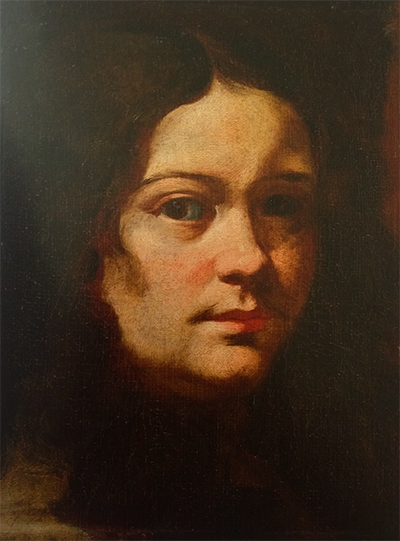
A young man turns towards the viewer. Dark hair surrounds his face and merges with the background, leaving the eyes and mouth to carry much of the expression. The title Portrait of Giovanni Battista Gaulli follows the identification used when the oil painting was shown under Gian Lorenzo Bernini’s name at the Galleria Borghese in 2017–18. The exhibition checklist records a private collection. The identification of the young man and the attribution to Bernini have both been questioned. A different picture, held by the National Galleries of Scotland, depicts the older Bernini and was painted by Gaulli. The two works are often brought together by the names of their artists and sitters. [1][2][3]
At a Glance
- Location or statusPrivate collection
- WorkOil portrait exhibited under Bernini’s name. The proposed sitter and attribution remain uncertain.
The work in Bernini’s career
Apollo and Daphne
1622–25Ecstasy of Saint Teresa
1647–52St Peter’s Square
1656–67Portrait of Giovanni Battista Gaulli
Date discussed in the articleA face emerging from the dark
The head is seen at a slight turn. The eye nearer the light has a clear lower edge, while the other is surrounded by shadow. The nose divides the two areas without producing a hard line down the face. Small changes in tone near the bridge and side of the nose give it projection and help explain the angle from which it is seen. The eyes still look out with enough directness to make their attention apparent. The turn therefore supplies the sense of movement while the gaze holds the viewer in front of the painting. [1]
The paint becomes warmer across the cheek and mouth. That warmth has a visible shape because it lies between the pale surface of the forehead and the dark area below the chin. The mouth is closed, with a narrow difference of colour between the lips. A stronger outline would draw attention to the mouth independently of the eyes. As it stands, the mouth can be read as part of an expression that is chiefly determined higher in the face. The rose colour of the cheek also makes it possible to follow the turn downward even where the contour against the hair is difficult to distinguish. [1]
There is little information about clothing in the illustrated view. A muted area at the bottom gives some indication of the shoulder, and a dark passage connects the figure to the lower edge. This leaves the hair and forehead as the most continuous indication of the angle of the head. The line of the hair breaks near the middle and curves around the temples. Where its dark mass meets the ground, the border largely disappears. The distinction between a visible feature and a disappearing edge is part of the painting’s account of how the head occupies space. [1]
The attribution and the sitter
The paintings in the Borghese exhibition included works put forward as evidence of Bernini’s activity with the brush. Its checklist places this portrait under his name and lists it as item 73. The checklist also identifies the medium as oil on canvas. These details establish the work’s public presentation in that exhibition. They leave open the question of what evidence connects this face to the painter Giovanni Battista Gaulli. A convincing identification of the sitter would require another likeness or documentary evidence that could be tied to this canvas. [1][3]
Writing about the exhibition, Kristina Herrmann Fiore noted that the attribution to Bernini had been advanced by scholars including Alessandro Angelini, Francesco Petrucci and Tomaso Montanari. She questioned whether the stylistic comparisons were sufficient to identify the author or sitter or establish the date. Her objections concern different propositions. A portrait may resemble known works by an artist without naming its subject. Conversely, a recognisable sitter could have been painted by more than one artist. The exhibition title gives a useful way to find the work, while the available evidence calls for qualified wording about both names. [1][3]
Gaulli’s portrait of Bernini in Scotland
The National Galleries of Scotland records a separate work in which the relationship is reversed. Giovanni Battista Gaulli, also called Baciccio, painted Gian Lorenzo Bernini as an older man. The Scottish gallery connects that painting to the engraved frontispiece of Filippo Baldinucci’s biography and to the official image of Bernini in the Accademia di San Luca. It thus supplies a documented history for the use of Gaulli’s portrait. The younger sitter on the privately held canvas has a clean-shaven face, long dark hair and a different relation to the surrounding space. Those features help distinguish the two images even before their collection records are consulted. [1][2]
The two paintings also ask different questions of someone looking at them. For the Scottish portrait, a visitor can ask how the likeness of a known sitter passed into publication and into another institution. The answer depends in part on comparing the painting with the portrait used in the biography. For the exhibited canvas the questions come earlier in the process. The face can be described in detail, but linking it to an individual and identifying the painter are separate tasks. The documented history of the Scottish portrait cannot be transferred by reversing the roles of painter and sitter. [1][2][3]
How Gaulli represented himself
A useful comparison is the self-portrait preserved at Palazzo Rosso in Genoa. Its authorship and subject are supported by an early record of the painting. The Musei di Genova traces it to the holdings of the painter Domenico Parodi, from whose collection Gerolamo Ignazio Durazzo acquired paintings and sculptures after Parodi’s death in 1742. Among the objects described was a portrait of Giovanni Battista Gaulli painted by Gaulli himself. The entry names both sitter and maker. It is evidence for the Genoese canvas and gives viewers an identified likeness to set beside the proposed Gaulli in the privately held painting. [6]
In the Genoese picture the head turns towards the viewer, but the figure is shown at greater length, with diagonal folds of clothing leading up towards the face. The mouth, eyes and angle of the head are part of a pose carried by the whole upper body. The Genoa museum draws attention to the framing, pose and light application of paint as sources of the picture’s immediacy. In the privately held picture, where much of the body recedes into darkness, the gaze and the transition from cheek to shadow have to suggest movement on their own. The comparison helps explain how a similar impression of attentiveness can arise from two different arrangements. Differences of age, viewpoint and lighting complicate any attempt to use resemblance alone to name the younger man. [6]
A separate portrait tradition came from the self-portrait collection in Florence. The Lombardy catalogue records a print of Gaulli by Pietro Campana after Giovanni Domenico Campiglia, drawn from the Uffizi series. The same plate had already been used in a publication devoted to the Florentine collection before reappearing in a larger anthology of painters’ portraits. The printed likeness thus went through a painted original, an intermediary design and an engraved plate, as well as successive publications. A reader encountering such a print can trace the name through the series and its catalogue. Details of modelling or the distance between the figure and the edges of the picture depend on the stages by which the image was made. [7]
A drawing that passed under Bernini’s name
The Louvre records a documented case in which collectors associated a work by Gaulli with Bernini. Its drawing of The Deluge was mounted in Pierre-Jean Mariette’s collection under Bernini’s name and was described as a Bernini when the collection was sold in 1775. It subsequently entered the French royal collection. The Louvre now catalogues the sheet as the work of Gaulli and records the older name and mount in its provenance. The label is valuable evidence of how the drawing was understood in the eighteenth century. Its survival lets a viewer distinguish the history of the attribution from the history of the sheet itself. The drawing involves a different medium and subject from the privately held portrait, so the parallel is about the circulation of the two artists’ names. [8]
Gaulli’s image of Bernini in two biographies
Arnold van Westerhout’s print made Gaulli’s image of Bernini available beyond the people who could see the painting. The Biblioteca Nazionale Braidense records the print on the first plate leaf of Filippo Baldinucci’s biography, published in Florence in 1682. The Met catalogues a separate impression by Westerhout after Gaulli, with a plate size of 22.7 by 16.5 centimetres. Its dimensions give an idea of the scale on which a reader could study the face. The plate turns the sitter’s form into a pattern of light and dark marks within an oval frame, giving the likeness a regular boundary and making it suitable for placement at the opening of a volume. [9][10]
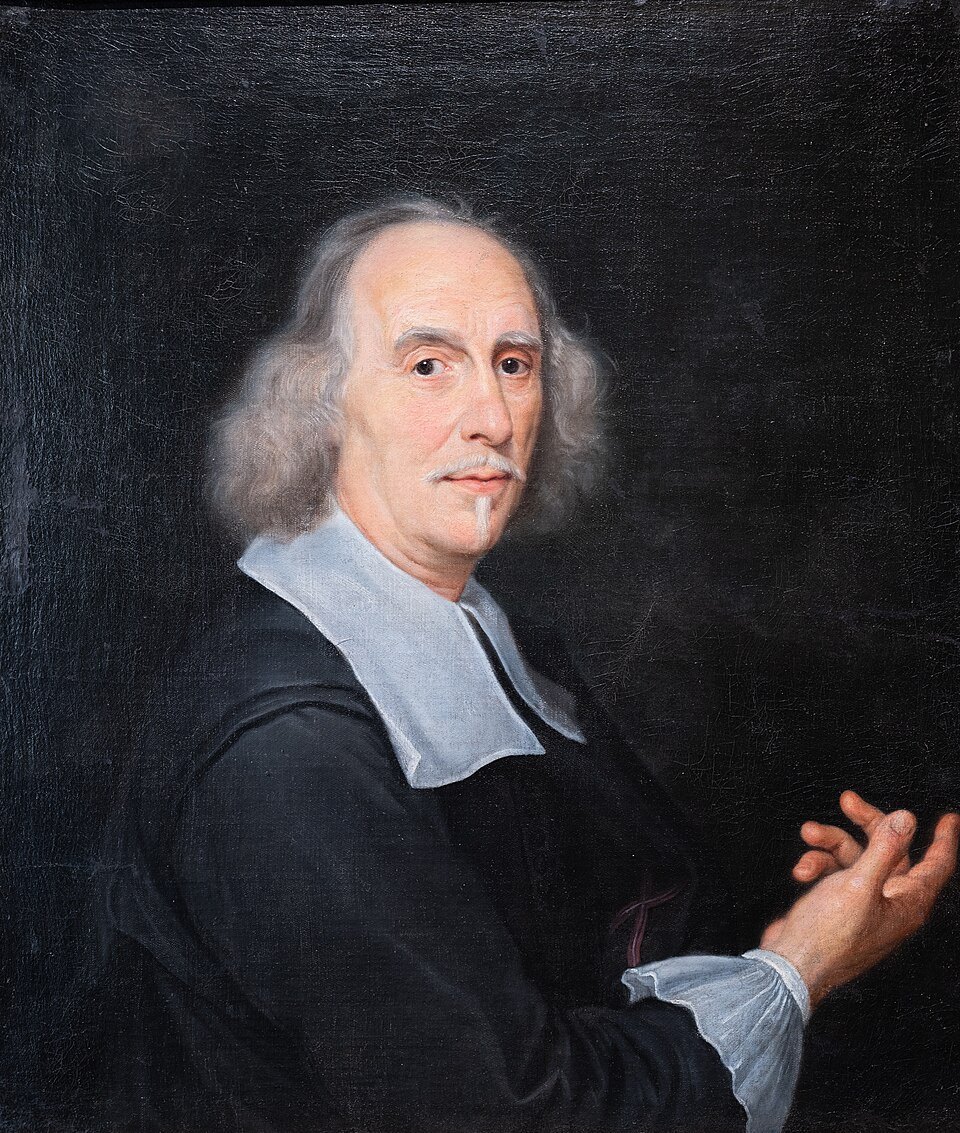
A German-language description at the Werner Oechslin Library documents an impression with both names in the 1713 Roman biography by Bernini’s son Domenico. The inscription identifies Gaulli as the painter and Westerhout as the maker of the print. The image therefore introduced Bernini to readers of two distinct accounts of his life, published a generation apart. The survival of the names on the print and of copies still bound into the books gives that portrait a traceable history of use. Evidence of comparable specificity, such as an early named inventory or a securely identified reproduction, would help resolve the identity of the young man on the privately held canvas. [9][10][11]
What the painters’ association helps explain
Gaulli’s connection with Bernini provides a reason to study the attribution. The Metropolitan Museum of Art discusses the association in connection with Gaulli’s Portrait of a Woman. It cites an early biographical account in which Gaulli learned from Bernini to let a sitter move and talk during the sitting. That account helps explain a shared interest in the impression of momentary attention. On the privately held canvas, the slight turn and outward gaze can be studied in light of that interest. A convincing account of a pose is evidence of what the painting achieves. It is a less specific guide to which of two closely associated artists applied the paint. [1][3][4]
Gaulli’s work included formal portraits as well as larger decorative commissions. The Met holds his portrait of Clement X, whom Bernini also represented in sculpture. The same sitter could give each artist a distinct problem in a different medium. That documented overlap puts the exhibition’s proposal in context. It also makes the different kinds of evidence particularly important here. A museum record can identify a portrait in a collection, a reproduction can preserve an arrangement of features, and contemporary documents can explain the circumstances in which a likeness was made or circulated. For the privately held picture, the published exhibition record and the visible features support a close reading of the painting while the individual attribution and identification remain open. [1][2][3][5]
Discussion
The face is sharply lit against hair that merges with the background.
Reader Insights
What can the handling of light suggest about the painter’s training?
What evidence would be needed to identify the sitter as Gaulli?
How would you distinguish this disputed picture from Gaulli’s documented portrait of Bernini?
Join the Conversation
Share a detail, comparison or question about Portrait of Giovanni Battista Gaulli, Attributed to Gian Lorenzo Bernini below.
References
- Galleria Borghese. Bernini, 2017–18 exhibition dossier. Checklist item 73, Ritratto di Giovanni Battista Gaulli. View source
- National Galleries of Scotland. Gian Lorenzo Bernini (1598–1680). Object record for the distinct portrait painted by Gaulli. View source
- Herrmann Fiore, Kristina. “La mostra di Bernini: le luci e le ombre”. Discussion of the private-collection picture’s attribution and sitter. View source
- Metropolitan Museum of Art. Portrait of a Woman. Collection record and account of Gaulli’s approach to portrait sittings. View source
- Metropolitan Museum of Art. Pope Clement X (1590–1676). Gaulli’s painted likeness and the context of his association with Bernini. View source
- Musei di Genova. Giovanni Battista Gaulli, Autoritratto. Palazzo Rosso painting and the Parodi–Durazzo purchase record.
- Lombardia Beni Culturali. Raccolta di 324 ritratti di pittori eccellenti. Campana’s engraving of Gaulli after Campiglia and its publication history.
- Musée du Louvre. Le Déluge. Gaulli drawing and its earlier attribution to Bernini.
- Biblioteca Nazionale Braidense. Filippo Baldinucci, Vita del cavaliere Gio. Lorenzo Bernino. Florence, 1682, with the portrait after Gaulli.
- Metropolitan Museum of Art. Gian Lorenzo Bernini. Print by Westerhout after Gaulli, accession 1980.1124.5.
- Stiftung Bibliothek Werner Oechslin. Domenico Bernini, Vita del cavalier Gio. Lorenzo Bernino. Rome, 1713, copy G13c and the inscriptions on the portrait plate.








