


 by Tom Gurney
Tom Gurney BSc (Hons) is an art history expert with over 20 years experience
Published on June 19, 2020 / Updated on November 18, 2026
Email: tomgurney1@gmail.com / Phone: +44 7429 011000
Bernini’s Life and Career
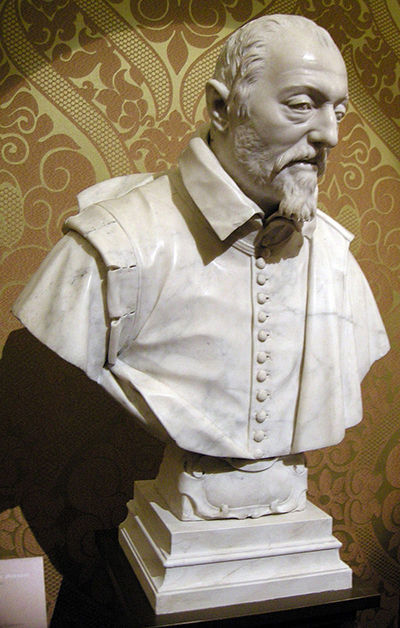
In June 1665, Gian Lorenzo Bernini presented a design for the Louvre to Louis XIV at Saint-Germain-en-Laye. That same day, the king asked him to make his portrait. Paul Fréart de Chantelou records the two commissions in one diary entry. The drawings had barely left the architect’s hands before he was considering how much of the king’s time he could ask for as a sculptor. Bernini was in his sixties, and he could already look back on decades of work for successive popes. The French visit placed him in a court where his reputation had preceded him and where he still had to negotiate the circumstances in which he could work. [1][2]
At a Glance
- Lifespan1598–1680
- Early trainingWorkshop of Pietro Bernini
- Paris visit1665
- DiedRome
Bernini’s career began in the workshop of his father Pietro. It grew through commissions from collectors, religious houses, civic authorities and royal patrons. Each brought its own demands. A villa sculpture could be made for one room and move to another collection. A commission at St Peter’s might require resolving a problem inherited from previous architects. The patrons who offered these opportunities also gave different shapes to his working life. [3][4]
From Naples to Pietro’s workshop in Rome
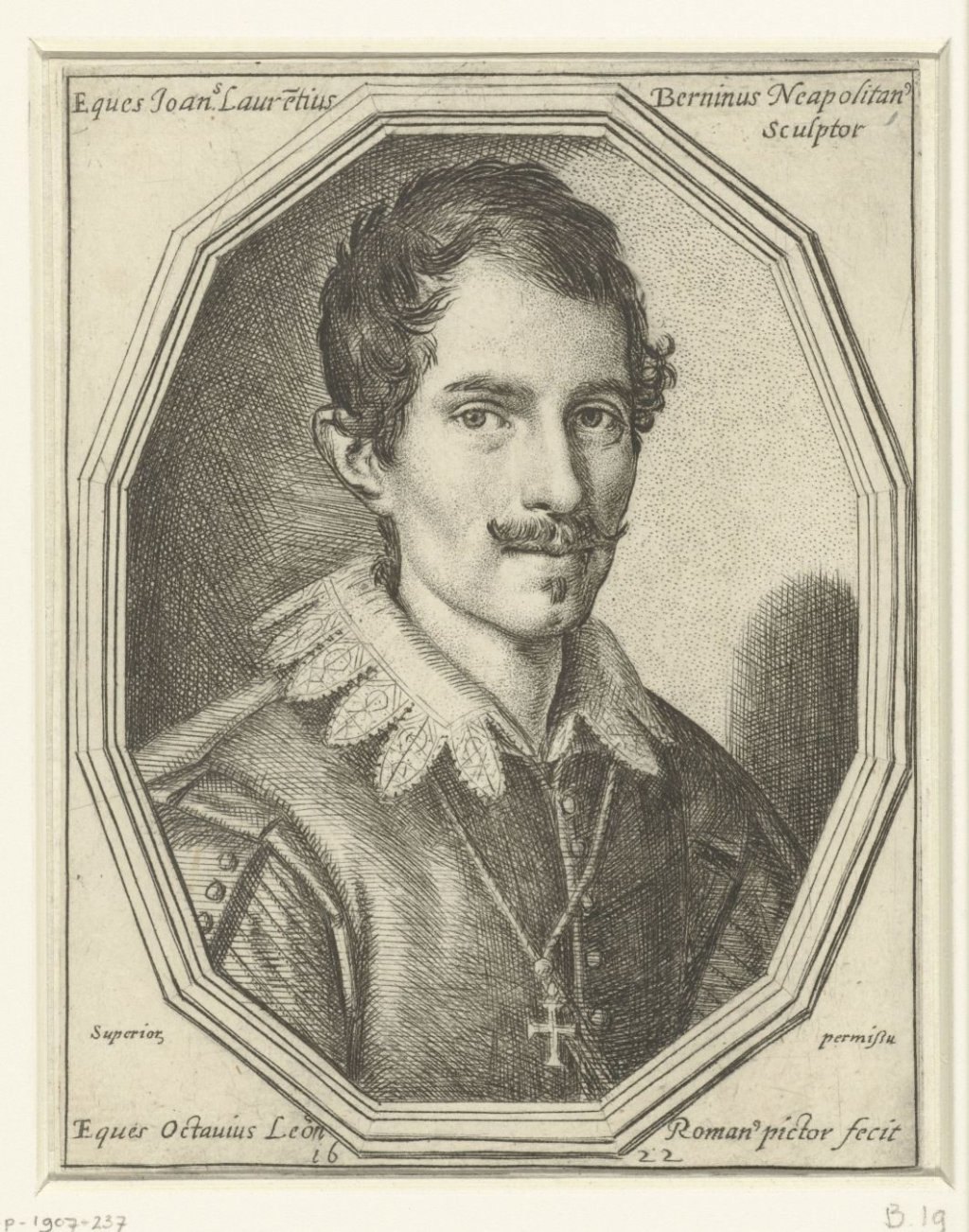
Born in Naples in 1598, Gian Lorenzo was the son of the sculptor Pietro Bernini. His father moved to Rome in 1605 or 1606. Gian Lorenzo grew up there and acquired experience in Pietro’s workshop. The young artist’s early biographers present his talent as something recognised almost as soon as he began to work. Surviving sculpture gives a more concrete picture of what he was learning. Pietro’s figures of Spring and Autumn, made around 1616–17 with Gian Lorenzo’s assistance, combine upright supports and carved human forms. They required the workshop to bring vegetation, figures and architectural elements together in a single design. [3][4][5][7]
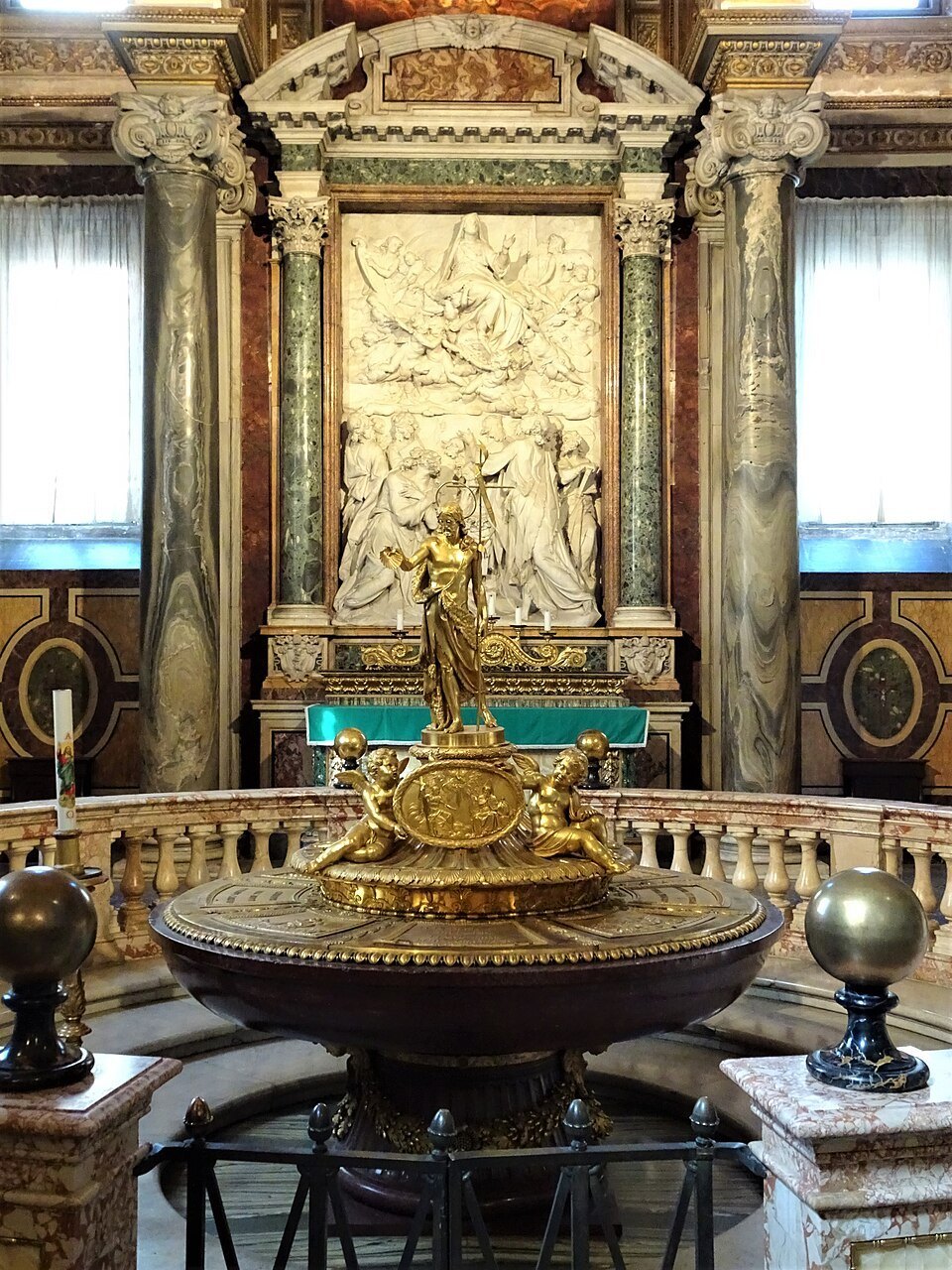
The Metropolitan Museum of Art attributes A Faun Teased by Children to father and son. Its compact arrangement of climbing and twisting figures shows ideas being worked out within a shared practice. A title that lists both artists allows for different contributions without demanding that every lock of hair or passage of flesh be assigned to one hand. For the young Gian Lorenzo, collaboration was part of the process of acquiring experience. Later in life, he would have to decide where to intervene in person and where to leave work to someone with specialist skills. [6][7]
Bernini’s early Roman commissions also show the limits of putting all his work under one patron’s name. The Vatican Museums and the Spanish Embassy place the two marble heads known as the Blessed Soul and the Damned Soul in 1619. Their contrasting expressions develop an interest in the face that Bernini could pursue through a format close to portraiture. The works also point beyond the Borghese household to Spanish patronage and collecting in Rome. [8]
The Borghese commissions
Cardinal Scipione Borghese offered Bernini opportunities to work at a larger scale. In the group of Aeneas, Anchises and Ascanius, the three generations escape Troy together. The lower figure, the weight borne by Aeneas and the older man high above him give the story a shape visitors can follow through the marble. Bernini’s position as a young sculptor working in a family practice matters here. The collection’s catalogue discusses attribution and the possible relation to Pietro’s work, questions that belong alongside the work’s place in the Borghese villa. [9]
In the next major groups, the relationship between a sculpture and its patron proved flexible. The cardinal commissioned the Rape of Proserpina, which passed to Ludovico Ludovisi. Apollo and Daphne stayed in the Borghese collection, where it was first placed to take advantage of a particular direction of approach. The patron’s villa was part of how the work was meant to be understood. It gave Bernini a chance to make the viewer’s movement part of the revelation of Daphne’s transformation. [10][11]
The order of the work is especially revealing. The Galleria Borghese records a pause in the carving of Apollo and Daphne while Bernini made David. Cardinal Montalto had commissioned the same subject in March 1623. His death in June halted that project, and Scipione took up the commission soon afterwards. A single date on a gallery label can disguise the fact that a sculptor’s commitments overlapped and that a patron could change in the course of an undertaking. The survival of the works in one collection makes these successive and sometimes competing commitments unusually easy to study. [11][12]
Urban VIII and St Peter’s
The election of Maffeo Barberini as Urban VIII in 1623 gave Bernini a more sustained role at the centre of papal patronage. His relationship with the Barberini family already had a history. The Palazzo Barberini exhibition on that relationship traced it through the work of both generations of Berninis and through commissions made during Urban’s pontificate. In 1629 Bernini succeeded Carlo Maderno as architect of St Peter’s, taking responsibility for a building whose earlier stages were already largely in place. [3][13]
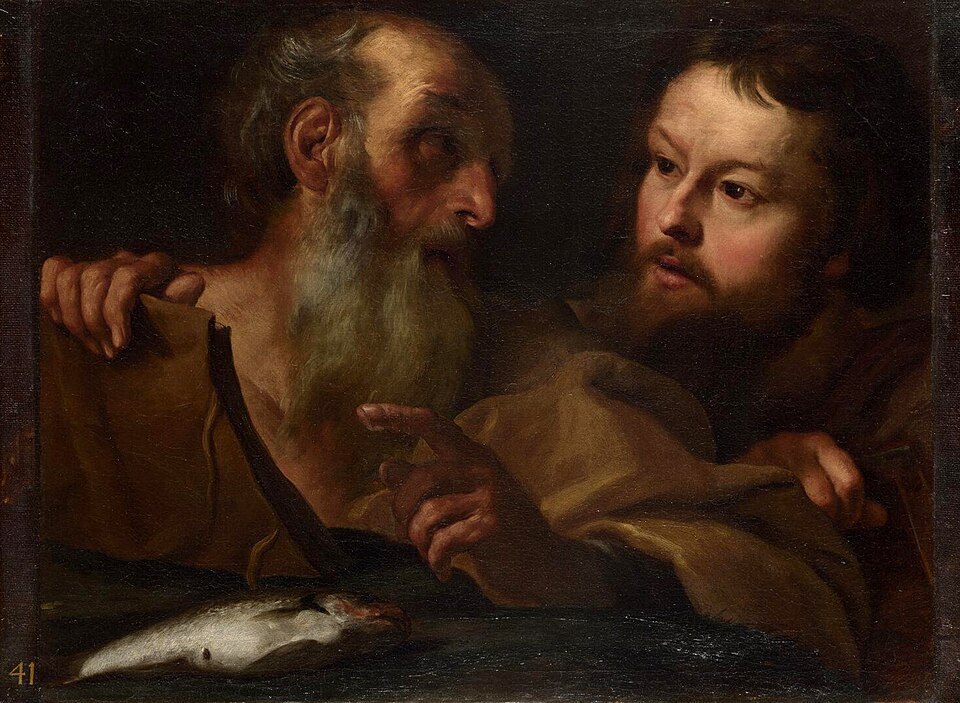
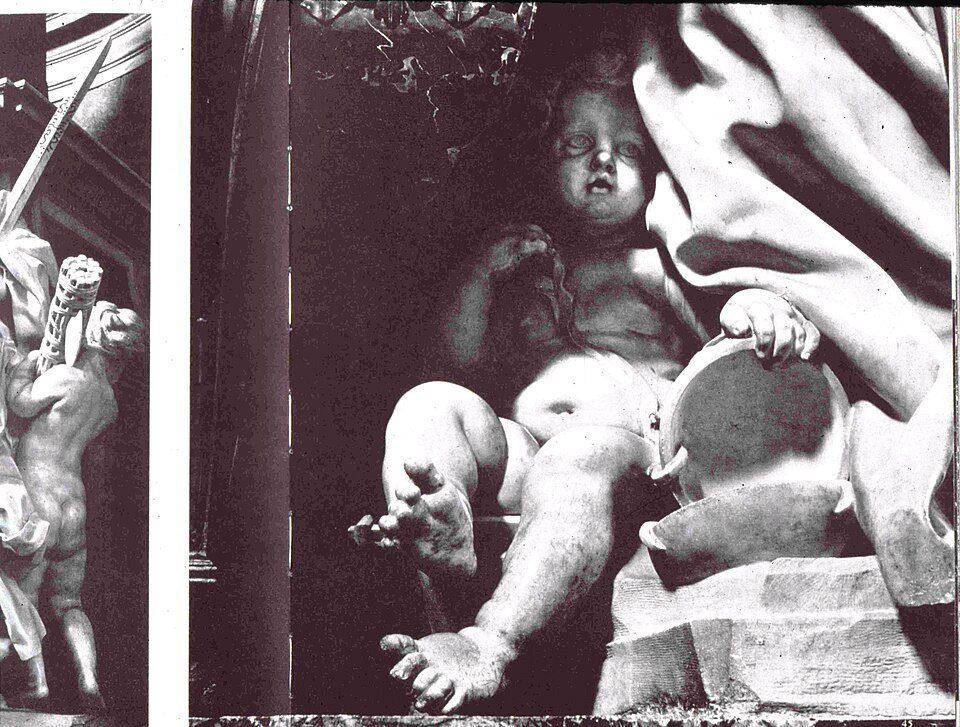
The Baldachin marked the altar above Saint Peter’s traditional burial site and gave a focus to the space beneath the dome. For Bernini, a sculpture in bronze was also a project in architecture, with the handling of the crossing and its piers placing the monument within a much larger plan. A ceremonial canopy rising from the floor depended on casting and assembly, as well as on decisions about what a person approaching the altar would see. The demands of the project were far removed from those of work in a villa. [14][15]
A separate set of Barberini commissions shows how civic, ecclesiastical and family obligations could overlap. At Santa Maria in Aracoeli, the Roman Senate commissioned a memorial to Carlo Barberini and later an inscription honouring Urban VIII. Bernini developed a design for Carlo’s memorial and made a clay study for one of its figures. Andrea Bolgi and Stefano Speranza carved the two allegories. Farther up the Capitoline Hill, the civic statue of Urban VIII represented the pope in a public hall. His burial monument at St Peter’s answered to a different setting and purpose. The patronage of one family produced work for more than one audience. [16][17][18]
The bell towers brought more difficult consequences. Work began on the project in 1638, and the built tower was eventually dismantled. Sarah McPhee’s study reconstructs the decisions through documents and drawings, setting the performance of the foundations alongside the ambitions of the pope, the history of the façade and the responses of officials and other architects. Bernini was publicly associated with a conspicuous failure. The records make the episode an example of the pressures of building at the Vatican, where an architect could be accountable for choices made within a much larger institution. [19]
Work beyond the permanent commissions
Bernini’s appointment at St Peter’s was one of several responsibilities that tied his workshop to the city. He acquired offices connected with the conduits of Rome’s fountains and the supply of water. Treccani records his appointment to supervise the reservoirs of the Acqua Felice in October 1623 and his succession to his father’s post as architect of the Acqua Vergine in 1629. The offices help explain how the sculptor of the villa groups came to work on public fountains. He took part in a system with officials, conduits and particular requirements at each site. An unexecuted Trevi project belongs to that history alongside the fountains he saw completed. [3]
The same workshop could turn its effort to things that lasted for a day or an evening. Bernini made designs for canonisation celebrations and an elaborate temporary structure for Carlo Barberini’s funeral. Accounts of his private theatrical productions record scenic effects that involved the audience closely. In a comedy inspired by a flooding of the Tiber, the apparent advance of water made the spectators feel exposed to the event they were watching. That production gives some idea of the backstage work for which Bernini was known in his lifetime. The conditions of a play and a church were different. What the theatre documents is his experience of coordinating the effects of a room, the movements of people and the objects in front of them. [3][29]
Costanza Piccolomini and Bernini’s household
The years of the great Barberini projects also include an episode of violence in Bernini’s private life. He had a relationship with Costanza Piccolomini, the wife of Matteo Bonucelli, a sculptor who worked with him. Bernini commissioned a servant to assault her. The Italian cultural-property catalogue, drawing on Sarah McPhee’s archival research, records that the servant was banished, Costanza was confined for several months and Bernini continued working for the pope. Those different consequences give a clearer account of power in Bernini’s Rome than the familiar story of jealousy on its own. Franco Mormando, discussing the surviving petition, dates approval of Costanza’s release to early April 1639. [26][27]
The portrait of Costanza, now in the Bargello, is often reproduced as an unusually intimate likeness. Her name appears in different forms in the literature. McPhee’s research follows her beyond her relationship with the sculptor, through records of her involvement in Rome’s art market. The life recovered from those documents gives the viewer grounds for seeing her as someone who knew the trade and its people. It also makes clear how little a portrait can tell us on its own about what happened between the person who made it and the woman who sat for it. [26][28]
Bernini married Caterina Tezio in 1639. Mormando identifies a letter of January 1641 from Antonio Ferragallo to Mazarin describing a model of Costanza’s portrait in Bernini’s studio. The letter helps trace the life of a work after its making, including the way a clay likeness remained within the artist’s household and studio. The finished marble, the model described by a visitor and the records of Costanza’s own life answer different biographical questions. [27][28]
Commissions under Innocent X
Urban’s death in 1644 changed the setting of Bernini’s work. Innocent X came from the Pamphilj family. Bernini continued to receive commissions for very different kinds of projects in the ensuing years. One was the Cornaro Chapel in Santa Maria della Vittoria, for Cardinal Federico Cornaro. The chapel brings Teresa of Ávila and the angel together above its altar. Wall sculptures of members of the patron’s family occupy either side of the encounter. Their presence ties a devotional subject to the use of the chapel as a place of family commemoration. [3][20]
Another project was the Four Rivers Fountain in Piazza Navona for Innocent X. It used an ancient obelisk and the personifications of rivers at the base. The municipal account assigns each river sculpture to a named carver. Bernini coordinated the work of those sculptors through the design of the monument and its relation to the square. The Cornaro Chapel and the fountain were made for different patrons and had very different audiences. Together they show the range of work Bernini undertook during the Pamphilj pontificate. [20][21]
The change of pontificate also left Bernini with work whose meaning depended on his own circumstances. The Borghese Gallery connects its marble Truth with the setbacks of the mid-1640s. It was conceived as part of a group in which Time would reveal Truth, and the figure of Time was never made. The sculpture stayed with Bernini and his family. The distinction between an independent work and a commission matters here: the statue had a long life in the sculptor’s household before entering the museum. The surviving figure also gives the biographer something more specific than a general claim that his fortunes recovered. [3][30]
Alexander VII and the court of France
Alexander VII, elected in 1655, commissioned the design of St Peter’s Square as well as the Cathedra in the basilica. One project dealt with how a crowd could gather and approach the church. The other placed bronze figures, a historic chair and a window into a single ensemble at the opposite end of the nave. The chair’s monument was completed in 1666. At Sant’Andrea al Quirinale, a separate commission from Cardinal Camillo Pamphilj with Alexander’s approval, Bernini used a much smaller church to coordinate sculpture, painted altarpiece and dome. [22][23][24]
In 1665, permission from Alexander VII allowed Bernini to respond to Louis XIV’s invitation to France. The visitor’s entourage and the care of his reception reflect the importance of the encounter to the two courts. Chantelou, assigned to accompany him, records discussions with the king and Colbert, visits with the sculptor and his thoughts on the work as it developed. His diary also shows Bernini arranging his time around building designs and a portrait whose likeness could be judged by the sitter. [1][2]
The diary entry for 11 June records Bernini working on drawings and discussing clay studies before the portrait had been formally requested. On 20 June he presented a Louvre plan and elevation. The search for marble occupied the next day. Bernini initially told the king how many hours he thought he would need from him. Versailles records thirteen sittings, while the assistant Giulio Cartari carried out the preliminary roughing of the block. The finished bust was presented on 5 October and eventually installed in the Diana Room at Versailles. The surviving sculpture gave the visit a durable public result alongside the unrealised architectural proposals. [1][2]
A life written for several audiences
Bernini’s death in 1680 was followed quickly by attempts to set the order of his career in print. The French account by Pierre Cureau de La Chambre appeared in 1681 and was followed by Filippo Baldinucci’s Italian biography in 1682. Domenico Bernini’s longer life of his father appeared in 1713. These publication dates establish when the accounts became available to readers. The extent to which the writers shared material, and the order in which that material was assembled, have remained subjects of research. [31][32]
The technical passages show what was at stake beyond the story of an exceptional artist. Baldinucci printed a discussion of the dome at St Peter’s as well as a catalogue of works. The family biography does not contain those same two documents. The dome passage gives the reader space to consider judgments about a building as part of the artist’s public reputation. Such a section had a different purpose from an account of a surprise encounter with a pope or an early display of talent. Within a single early biography, the form of the evidence changes with the claim the author wants to make. [31][32]
The connection with Christina of Sweden also deserves care. Baldinucci’s biography carries her name as dedicatee, and Baldinucci’s son later described her role in securing information from Bernini’s family. Franco Mormando gives greater weight to the family’s part in organising the account and argues that Domenico may have prepared material much earlier than the date of his own publication. That possibility explains why agreement between the two famous Italian lives may be weaker corroboration than it first appears. Agreement with an independently dated financial or building record is a different matter. [31][32][33]
Chantelou’s French account has a narrower frame. Thomas Kirchner’s study of the diary considers how observations of pictures and sculpture were made legible for its readers. The dated entries concern work, opinion and conversation as seen by a member of the household assigned to accompany the visitor. The entries can preserve who heard a remark and on what occasion it was made. Their restricted setting provides detail the full-length lives sometimes spare, while leaving most of Bernini’s earlier Roman career beyond the writer’s direct observation. [34]
A documented afterlife for the royal monument
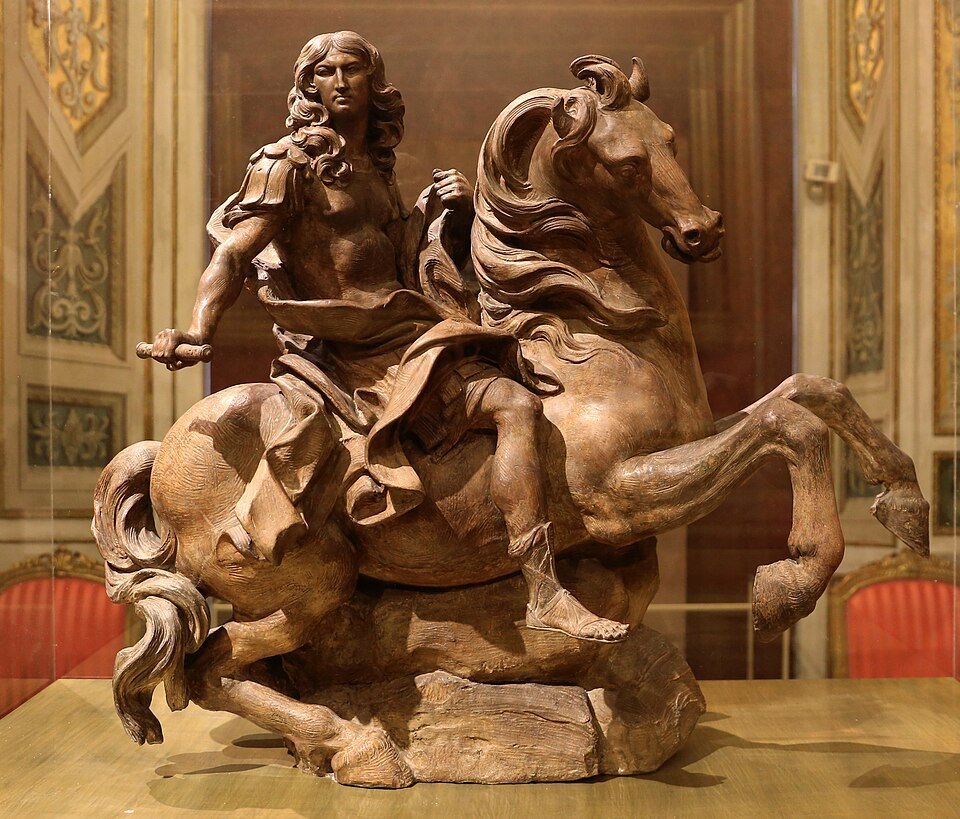
The equestrian statue commissioned for Louis XIV outlasted its original identity. The Versailles catalogue records François Girardon’s alterations to make the rider the Roman Marcus Curtius. A payment in January 1688 covered sculptors who worked under Girardon on the figure’s head. Nicodemus Tessin recorded a helmet and the conversion of the rocky support into flames, changes that equipped the pose for the story of a Roman leaping into an abyss. The surviving marble therefore belongs to the history of both courts. Bernini’s Roman workshop supplied the large figure, while French sculptors made a later subject intelligible within it. [35]
Late work and the accounts of his life
Back in Rome, Bernini continued work on church interiors and monuments. In the Altieri Chapel of San Francesco a Ripa, the commemoration of the recently beatified Ludovica Albertoni gave him a late opportunity to think about how a single figure would be seen within the limits of a chapel. The visible work depends on the distance between the visitor and the marble, the way fabric surrounds the figure and the placement of illumination. It carries concerns that had occupied Bernini in more elaborate settings into a composition of striking concentration. [20][25]
Bernini died in Rome in 1680. Two early biographies helped establish the terms in which his career has been remembered. Filippo Baldinucci’s appeared shortly after his death, and his son Domenico published another in 1713. Both bring readers close to the people who shaped the artist’s reputation. Their dates and circumstances give readers a reason to check a story against the records of the commission it describes. Chantelou provides another kind of access, through one season of daily observations at the French court, while the archives, sculptures and surviving studies trace decisions made over much longer periods. [1][4][5]
Bernini’s life is unusually legible in the places where he worked. The Borghese marbles retain the effects of commissions made while he was establishing a reputation in a collector’s villa. The Vatican projects record the responsibilities of a sculptor and architect working across pontificates. A portrait bust at Versailles shows how attentive he could be to an individual sitter within that much larger career. Seeing how each work came about helps explain how he remained able to work at these different scales.
See the Equestrian Statue of Constantine at the Scala Regia and Blessed Ludovica Albertoni in the Altieri Chapel for two different ways Bernini placed sculpture within an architectural approach.
Related videos
Choose from five films: close studies of Bernini’s works alongside wider context on his methods and career.
The Dawn of Genius: Gian Lorenzo Bernini
A short introduction to Bernini’s early career and sculpture.
Watch on YouTubeBernini in context
Late Renaissance in Italy
mid to late 16th centuryBaroque Rome
17th centuryPietro Bernini
1562–1629Gian Lorenzo Bernini
1598–1680Francesco Borromini
1599–1667Giuliano Finelli
1601–53Apollo and Daphne
1622–25St Peter’s Baldachin
1624–33Ecstasy of Saint Teresa
1647–52St Peter’s Square
1656–67Four stages of Bernini’s career
From Naples to Rome
Bernini trained with his father Pietro. His early Roman portraits were already being made for specific settings, including church memorials.
Gallery sculpture
Scipione Borghese gave Bernini the opportunity to make large marble groups that reward a visitor moving around them.
From the basilica to the piazza
Bernini directed work on the crossing of St Peter’s under Urban VIII. Under Innocent X, the Four Rivers Fountain became a focus of Piazza Navona.
Architecture and portraiture
Commissions under Alexander VII reshaped the approach to St Peter’s. In 1665 Bernini travelled to France and made the bust of Louis XIV.
Discussion
Bernini’s 1665 trip to France placed architectural design and portraiture side by side.
Reader Insights
What did the Louvre plans require from Louis XIV that the portrait sittings did not?
Which earlier Roman commission helps explain why the court sought Bernini out?
How does Chantelou’s diary change the story told by the early biographies?
Join the Conversation
Share a detail, comparison or question about Gian Lorenzo Bernini’s Biography below.
References
- Chantelou, Paul Fréart de. Journal du voyage du cavalier Bernin en France. Edited by Ludovic Lalanne. Paris, 1885. Entries for 11, 20 and 21 June and 5 October 1665. View source
- Château de Versailles. Genius and Majesty: Louis XIV by Bernini, 2025. View source
- Dizionario Biografico degli Italiani. “Bernini, Gian Lorenzo.” Dizionario Biografico degli Italiani. View source
- Bernini, Domenico. The Life of Gian Lorenzo Bernini. Translated and edited by Franco Mormando. Pennsylvania State University Press. View source
- Baldinucci, Filippo. The Life of Bernini. Translated by Catherine Enggass, with an introduction by Maarten Delbeke and Steven F. Ostrow. Pennsylvania State University Press. View source
- The Metropolitan Museum of Art. Bacchanal: A Faun Teased by Children, 1976.92. View source
- White, Veronica. “Gian Lorenzo Bernini (1598–1680).” The Metropolitan Museum of Art, 2003. View source
- Vatican Museums. Las Ánimas de Bernini. View source
- Galleria Borghese. Aeneas, Anchises and Ascanius. View source
- Galleria Borghese. Rape of Proserpine. View source
- Galleria Borghese. Apollo e Dafne. View source
- Galleria Borghese. David. View source
- Gallerie Nazionali di Arte Antica. Bernini e i Barberini, 2026. View source
- Fabbrica di San Pietro. The Tomb of Saint Peter. View source
- Lavin, Irving. “Bernini and the Crossing of Saint Peter’s.” In Visible Spirit, 2007. View source
- Dickerson, C. D., III, and Anthony Sigel. “Allegorical Figure.” In Bernini: Sculpting in Clay, cat. 2, pp. 118–119. View source
- Ministero dell’Interno. In viaggio con Bernini, section on Santa Maria in Aracoeli. View source
- Musei Capitolini. Statue of Pope Urban VIII. View source
- McPhee, Sarah. Bernini and the Bell Towers: Architecture and Politics at the Vatican. Yale University Press. View source
- Roma Capitale. Bernini’s Locations. View source
- Roma Capitale. The Fountain of the Four Rivers. View source
- Fabbrica di San Pietro. The Square. View source
- Fabbrica di San Pietro. The Cathedra of Saint Peter. View source
- Roma Capitale. The Church of Sant’Andrea al Quirinale. View source
- Lavin, Irving. “Bernini’s Death and the Redemption of Man.” In Visible Spirit, 2009. View source
- Ministero della Cultura. Ritratto di Costanza Bonarelli, record 0900349873. View source
- Mormando, Franco. Bernini Updates 2, discussion of Costanza Piccolomini. View source
- McPhee, Sarah. Interview on Costanza Piccolomini. Getty, Art + Ideas. View source
- Lavin, Irving. “Bernini and the Theater.” In Visible Spirit, 2007. View source
- Galleria Borghese. Allegory of Truth. View source
- Maarten Delbeke and Steven F. Ostrow. Introduction to The Life of Bernini, publisher’s excerpt discussing the structure and genesis of the biographies.
- Baldinucci, Notizie sull’architettura, Storia della critica d’arte, 2018, pp. 89–135.
- Franco Mormando. Introduction to The Life of Gian Lorenzo Bernini, critical edition and English translation.
- Thomas Kirchner. Die Lesbarkeit der Bilder, in Bernini in Paris, 2006.
- Alexandre Maral and Cyril Pasquier. Louis XIV sous les traits de Marcus Curtius, Château de Versailles, catalogue and archival documents.










