


 by Tom Gurney
Tom Gurney BSc (Hons) is an art history expert with over 20 years experience
Published on June 19, 2020 / Updated on November 18, 2026
Email: tomgurney1@gmail.com / Phone: +44 7429 011000
Paintings
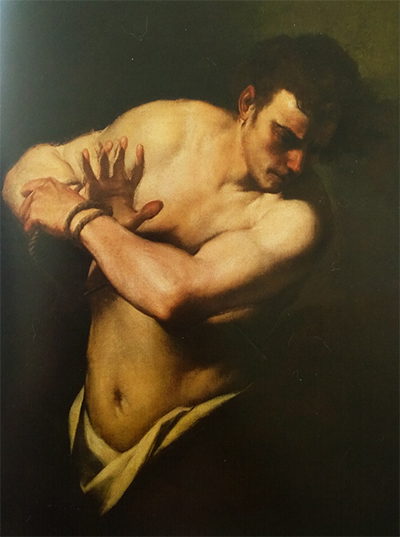
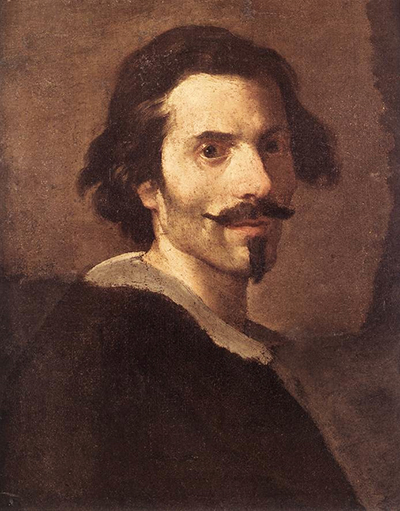
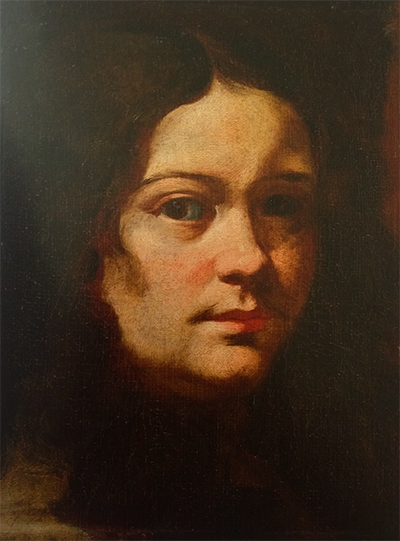
In his paintings, Gian Lorenzo Bernini often brings a face close and gives it very little surrounding space. The two apostles in Saints Andrew and Thomas almost fill their canvas. In his Borghese self-portraits, clothing and background leave the eyes free to hold the viewer’s attention. These works give a sense of what painting offered Bernini alongside sculpture. He could use the edge of the canvas, the direction of the light and the relation between one patch of colour and another to control how soon a face or gesture caught the eye. The surviving paintings also have different kinds of evidence behind them, from a seventeenth-century inventory to attributions made when works entered modern museums. [1][2][3]
At a Glance
- Documented early workSaints Andrew and Thomas
- Key collectionGalleria Borghese, Rome
- SubjectsSelf-portraits, other likenesses and religious figures
Saints Andrew and Thomas
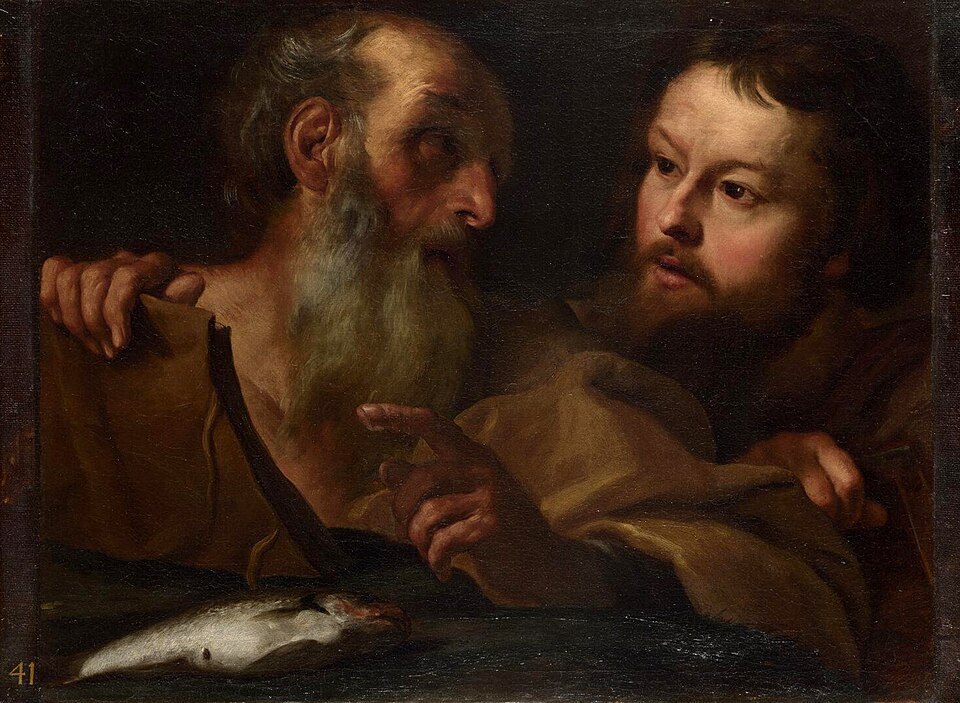
The National Gallery in London calls Saints Andrew and Thomas Bernini’s earliest documented painting. A Barberini inventory dated 1 June 1627 records it. The painting remained with the family until 1967, when the National Gallery acquired it through the London dealers P. & D. Colnaghi. That early record establishes an upper limit for the date of the picture. The circumstances of its making are more open. The gallery leaves room for a commission, a gift or another form of acquisition by the family. [1]
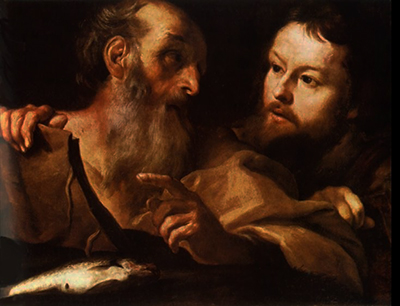
The canvas measures 61.5 by 78.1 centimetres. Andrew, the older man, directs attention to a passage in his book. Thomas looks towards him with a carpenter’s square in his hand. The fish on the ledge identifies Andrew, a fisherman. The two men’s bodies take up most of the picture, so there is little room between the object nearest the viewer and the exchange at the centre. The light on the pointing finger makes it seem especially close. Andrew’s book and Thomas’s square belong to the traditional imagery of the two apostles, while the difference in their expressions conveys the idea that one man is explaining something the other is just beginning to grasp. [1]
The National Gallery connects the close framing and striking lights and darks with the example of Caravaggio, whose work remained influential in Rome in the 1620s. The light has a specific job here. It picks out the features through which the conversation can be read, from the finger near the book to the younger man’s response. In marble a sculptor must anticipate the light a work will receive in its setting. On this canvas the highlights are part of the image and the direction of the light stays fixed as the viewer moves. The effect still depends on many of the same observations about which details carry an expression. [1]
Another painting in the National Gallery, by Andrea Sacchi, also shows two saints at half length in a canvas of nearly the same size. Both paintings belonged to the Barberini collection. Those similarities have prompted suggestions that the two were conceived as companions. Evidence cited by the National Gallery places the Barberini acquisition of the Sacchi much later, probably in 1661. The idea of comparing them remains productive because they share a scale, format and collecting history. The evidence for their original relationship remains uncertain. [1]
Two self-portraits at the Galleria Borghese
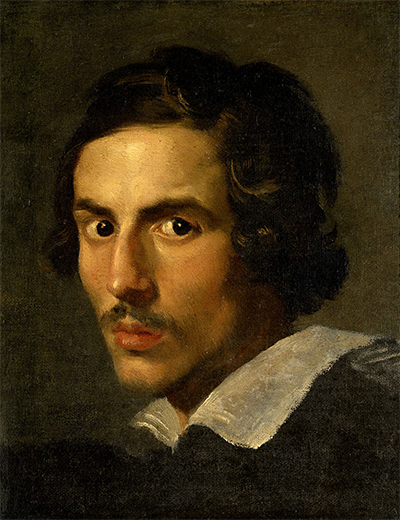
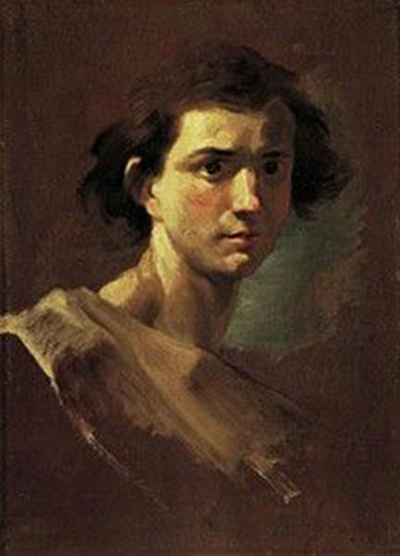
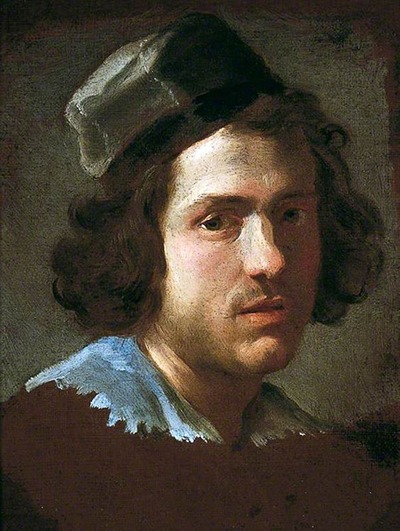
The Galleria Borghese dates its Self-portrait as a Young Man to about 1623, when Bernini was about twenty-five. The painting is oil on canvas laid down on panel and measures 39 by 31 centimetres. At that size the eyes and brows can dominate the picture without needing to be seen from far away. The museum notes a likeness between the young man’s tense gaze and the expression of Bernini’s marble David. It presents this as a basis for comparison and dating. Looking at the two together shows how a concentrated look can be adapted to different ends. In the sculpture it belongs to a body preparing to act. In the portrait it has to convey the character of the whole picture within the outline of the head and shoulders. [2]
The gallery acquired the younger portrait in 1919 from Alvise De Ruggieri’s collection. It had been attributed to Andrea Sacchi. Pietro D’Achiardi had already proposed Bernini in 1908, and Corrado Ricci accepted that attribution when the painting entered the collection. The museum treats the work as a core example of Bernini’s painting. Its catalogue also preserves the earlier name, giving readers a way of seeing how the attribution took shape. The fact that Sacchi comes up in the discussion of both this portrait and the two apostles speaks to the sorts of comparisons scholars have made among painters working in the same Roman circles. [1][2]
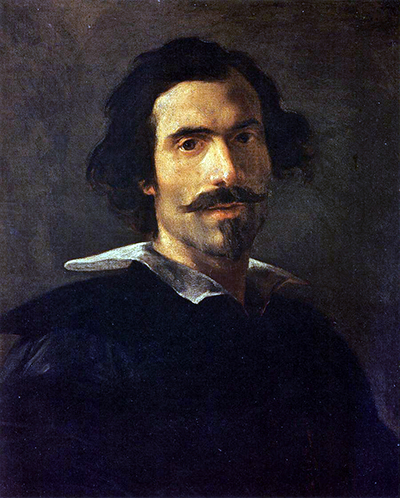
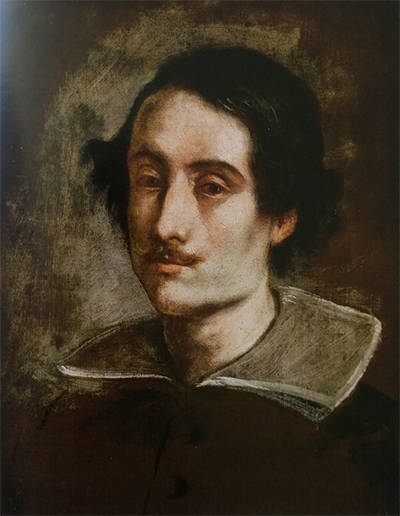
The Self-portrait at a Mature Age, inventory 545, is larger at 53 by 43 centimetres. The Galleria dates it to about 1635–40. Bernini turns his body and directs his attention back towards the viewer, leaving more room for the line of his shoulders to lead into the picture. The museum connects the later dating with the style and with the apparent age of the sitter. Its record notes that proposals have ranged much more widely. Here the attribution was already in place before Baron Otto Messinger donated the painting in 1911 and has remained accepted, while the date has continued to invite discussion. [3]
The two paintings also show how the same artist can vary a simple arrangement. A subdued field behind the head keeps the face prominent in both. The younger self-portrait brings its expression close to the boundaries of the canvas. In the later work the direction of the body makes a larger contribution to the viewer’s sense of being addressed. The shift is visible without identifying a particular incident in Bernini’s life to explain either expression. Start with the amount of room the painter allows the shoulders, then look at where the light falls on the forehead and cheeks. The small decisions become easier to see once the two canvases are treated as separate objects with separate dates. [2][3]
Portrait of a Young Boy and the limits of identification
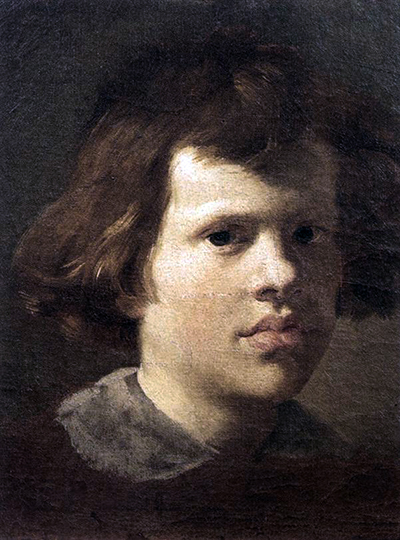
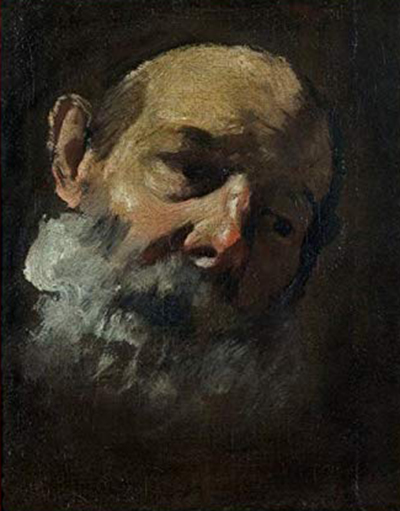
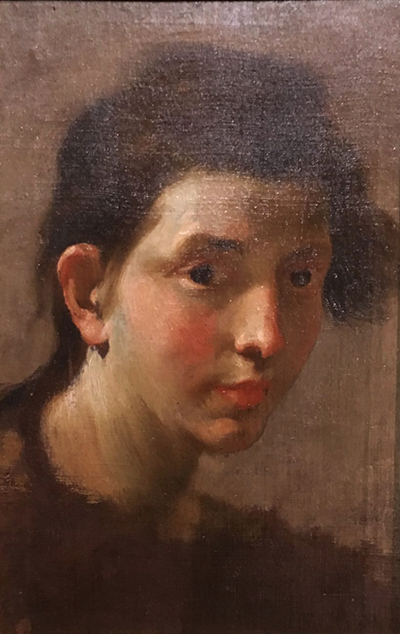
The Portrait of a Young Boy, inventory 555, offers a different example of how a name entered the catalogue. The Galleria bought it from Prince Chigi in 1919. The acquisition record described an unknown seventeenth-century artist. The work was subsequently assigned to Pier Francesco Mola, and Antonio Muñoz published the attribution to Bernini in 1920. The gallery traces both the acceptance of the new attribution and the persistence of the earlier one in some scholarship. It also compares the greenish setting with the backdrops of the two self-portraits. A shared colour and treatment can invite comparison while leaving room for the separate histories of each painting. [2][3][4]
The boy’s identity remains open. The catalogue observes that the picture gives little evidence of his social position or family. Its modern acquisition from a member of the Chigi family supplies one point in the ownership history. The sitter’s name would need independent evidence. The same distinction applies to the mature self-portrait. Other works owned by Messinger came from the Chigi collection, but the Borghese record identifies that provenance for this painting as a possibility. In the boy’s portrait, the spare treatment that focuses attention on the face also leaves few of the accessories that might have helped establish a name. [3][4]
Paintings made, collected and commissioned
Bernini’s house provides a second way into his relationship with painting. Franco Mormando’s reconstruction brings together estate and household inventories made between 1681 and 1771. A record made soon after the sculptor’s death and one compiled for a later generation capture different stages in the history of the collection. Works could pass to individual heirs, enter the house during their lifetimes, or be described differently on successive lists. The inventories therefore provide a chronology of ownership as well as possible leads to lost pictures. The painter’s name in a modern exhibition title and the owner’s name in a family inventory answer different questions. [5]
The Four Seasons now in the Musée des Beaux-Arts in Bordeaux offer an unusually clear instance of Bernini as patron. The museum identifies the painter as Gaspard Dughet and traces the frescoes to Bernini’s Roman palace. The cycle presents landscape on the scale of a room. Trees and terrain carry the seasonal distinctions, with the changes easiest to see in the wintry scene. Removed from their original setting, the paintings can now be studied at close range as museum objects. Their history also gives an idea of the kind of painted surroundings Bernini chose to live with, distinct from the close study of faces in his own small easel pictures. [6]
An inventory can provide firmer evidence when the subject, scale and owner can be checked together. Mormando discusses a painted Saint Sebastian recorded in Cardinal Francesco Barberini’s 1649 inventory and a picture of the same subject in Bernini’s own estate. The latter had different recorded dimensions from the painting discussed in connection with the Barberini entry. The duplication matters because the saint can be recognised by a familiar repertory of attributes. Matching the composition alone would leave unanswered whether the surviving painting had belonged to the cardinal, to the painter’s household, or had a different history altogether. [5][7]
How portraits acquire names
The Borghese exhibition brought paintings together that ordinarily have to be considered in separate collections. Its loan list made the difference between a named sitter and an attributed identity visible. It included a portrait named for the painter Giovanni Battista Gaulli alongside portraits whose sitters the exhibition left open or proposed tentatively. With several small portraits in one room it became possible to compare the paint around the eyes, the position of the collar and the angle of the shoulders directly. A dated record connecting a particular canvas with a sitter would supply a separate kind of evidence for an identification. [8]
The Musée Fabre’s Portrait of a Man shows several stages in that process. The catalogue records the possibility of a Bernini self-portrait alongside a proposed attribution to his circle. The questions concern both the identity of the painter and the face in the portrait. In Frankfurt, the Städel’s chalk drawing attributed to Bernini offers the reverse situation. An inscription on the back of the mount describes Bernini portrayed by himself, while the museum titles the sheet by the figure’s appearance and angle. A collector’s description can preserve a history of what people recognised in a face long after the drawing or painting was made. Its evidentiary value depends in part on when it was written and what the writer could have known. [9][10]
The two records give readers a way to use the titles in the following table. A description identifies the object; a proposed name opens a question about the sitter. A picture with an early inventory connection can anchor a comparison, but resemblance takes on more weight when it can be tested alongside scale, support and provenance. Looking across portrait records in different collections is especially important for Bernini, whose sitters can recur in oil, chalk and carved marble. [5][8][9][10]
Selected paintings and collection records
| Painting | Collection and identifier | Dating and evidence |
|---|---|---|
| Saints Andrew and Thomas | National Gallery, London, NG6381 | Before 1627, documented in a Barberini inventory. [1] |
| Self-portrait as a Young Man | Galleria Borghese, 554 | About 1623, dated by comparison with other works and the artist’s apparent age. [2] |
| Self-portrait at a Mature Age | Galleria Borghese, 545 | About 1635–40, the gallery’s preferred range. [3] |
| Portrait of a Young Boy | Galleria Borghese, 555 | Attributed to Bernini by the gallery. The sitter remains unidentified. [4] |
Each of these records gives a distinct point of departure for looking. In the London painting, follow the finger to the book and look for the response in Thomas’s face. In the young self-portrait, notice how close the eyes come to commanding the entire canvas. In the later painting, compare where the shoulders turn with where the sitter looks. In the boy’s portrait, consider how little context a face needs to sustain attention. Seen together, the works show Bernini using painted light and framing to concentrate an encounter within the space of a canvas. [1][2][3][4]
Paintings catalogue
 Gian Lorenzo Bernini.jpg)
Discussion
Bernini’s painted apostles occupy almost the entire width of their canvas.
Reader Insights
How do their hands and eyes guide your reading of the picture?
How does the use of light change between the apostles and a self-portrait?
What evidence would help resolve a disputed identification of a sitter?
Join the Conversation
Share a detail, comparison or question about Gian Lorenzo Bernini’s Paintings below.
References
- National Gallery, London. Saints Andrew and Thomas, NG6381. View source
- Galleria Borghese. Self-portrait as a Young Man, inv. 554. View source
- Galleria Borghese. Self-portrait at a Mature Age, inv. 545. View source
- Galleria Borghese. Portrait of a Young Boy, inv. 555. View source
- Franco Mormando. Bernini’s painting collection: a reconstructed inventory raisonné, Journal of the History of Collections, 34, 2022, pp. 33–50.
- Musée des Beaux-Arts de Bordeaux. Bordeaux et l’Italie, French museum guide discussing Dughet’s Four Seasons.
- Franco Mormando. Bernini Updates 3, discussion of the two inventory entries for Saint Sebastian.
- Galleria Borghese. Bernini, exhibition press kit and checklist, Rome, 2017.
- Musée Fabre. Portrait d’homme, collection record.
- Städel Museum. Männliches Porträt im Dreiviertelprofil nach rechts, collection record 13675 Z.








