

 by Tom Gurney
Tom Gurney BSc (Hons) is an art history expert with over 20 years experience
Published on July 26, 2026 / Updated on September 6, 2026
Email: tomgurney1@gmail.com / Phone: +44 7429 011000
Eastern Bluebird: Introduction
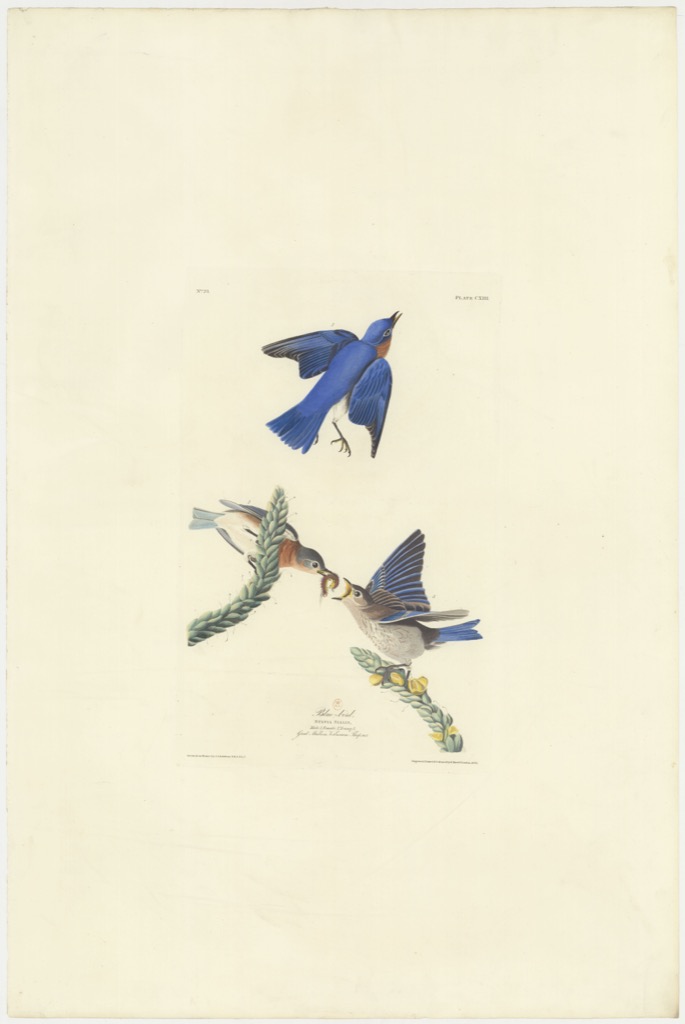
John James Audubon's Eastern Bluebird is a bright, approachable plate from The Birds of America. The historic plate title is Blue-bird, but the modern species name is Eastern Bluebird, Sialia sialis. That difference is useful rather than confusing. Audubon's title preserves nineteenth-century naming, while the current name connects the image to the familiar bluebird still seen across eastern North America. [1], [4]
The plate shows three birds on Great Mullein: a male, a female and a young bird. That grouping gives the image an unusually clear family and life-stage structure. Audubon is not showing one isolated adult as a symbol of spring color. He is showing the species through difference: the saturated blue and warm breast of the male, the softer gray-blue tones of the female, and the speckled, less finished look of the young bird. [1], [4]
Eastern Bluebird is one of the cluster's gentler Audubon subjects. It is not an extinction memorial like Passenger Pigeon, nor a contested search story like Ivory-billed Woodpecker. Its power is quieter: a common bird, a named plant, a large-format print and a continuing modern association with open fields, nest boxes, recovery and backyard birdwatching.
At a Glance
- Public titleEastern Bluebird
- Historic titleBlue-bird [1]
- SeriesThe Birds of America, Plate CXIII [1], [2]
- Catalogue referenceBirds of America, no. 113 / Livraison 23 [1]
- Date1831 [1], [3]
- Maker lineJohn James Audubon; engraved, printed and colored by Robert Havell [1]
- Historic scientific wordingSylvia sialis [2], [3]
- Current species nameEastern Bluebird, Sialia sialis [4]
- Plant named in plateGreat Mullein, Verbascum thapsus [1], [2]
- Image statusBnF/Gallica public-domain route via Commons [1]
Contents
- Introduction
- Annotated Details
- Object Facts
- What the Plate Shows
- Great Mullein and Open Country
- Historic Title and Modern Name
- The Bird Behind the Image
- Place in The Birds of America
- How to Read the Plate Today
- Conservation and Recovery Context
- Why This Plate Matters
Annotated Details from Eastern Bluebird
These annotated details follow Audubon's Eastern Bluebird through the flying male, blue wing and tail, feeding exchange, young bird, female bird, mullein stems and yellow flowers.
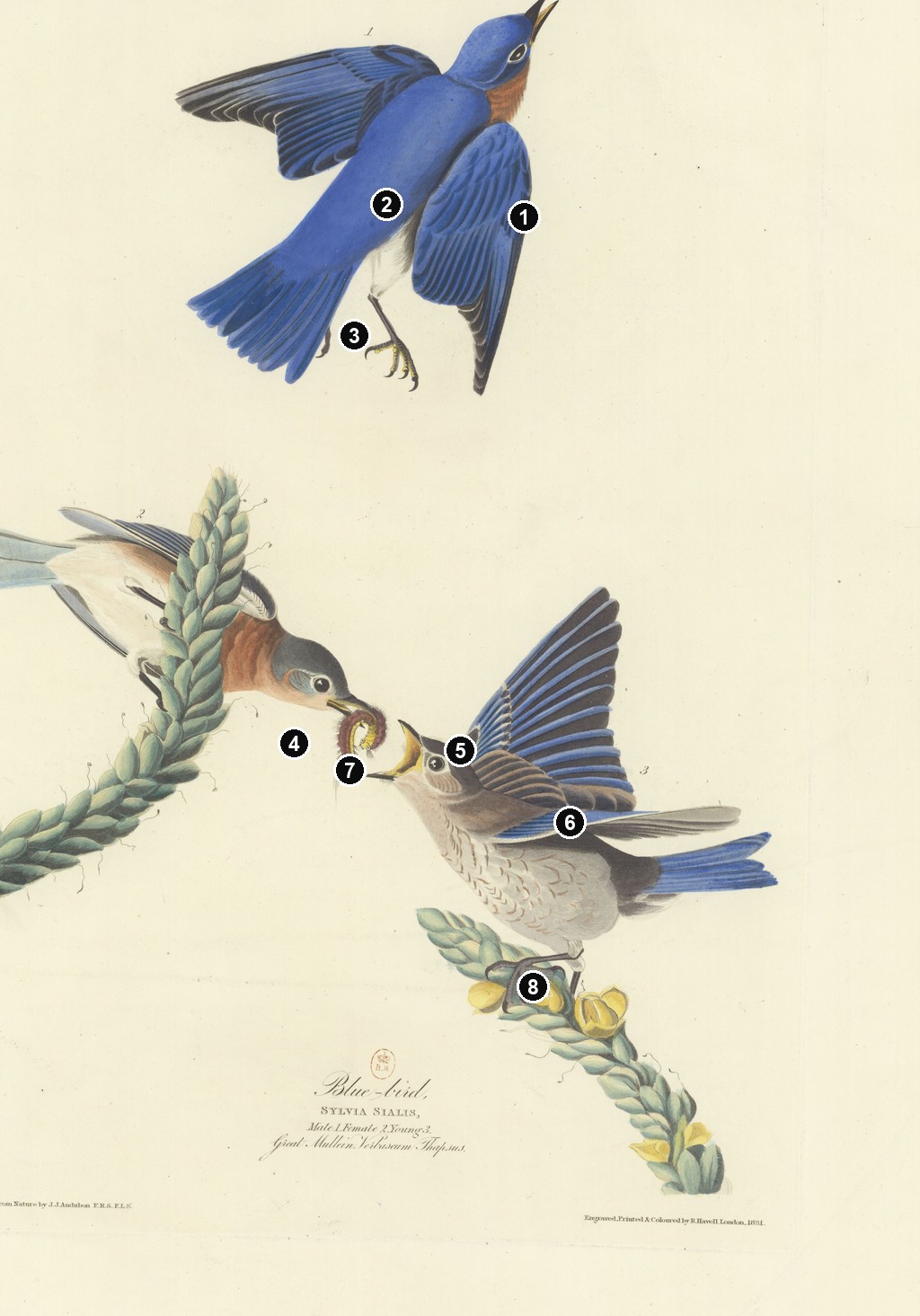
Details from EASTERN BLUEBIRD
Close looking shows how a small bird plate uses white space, repeated blue forms and a feeding moment to create movement across a large sheet.
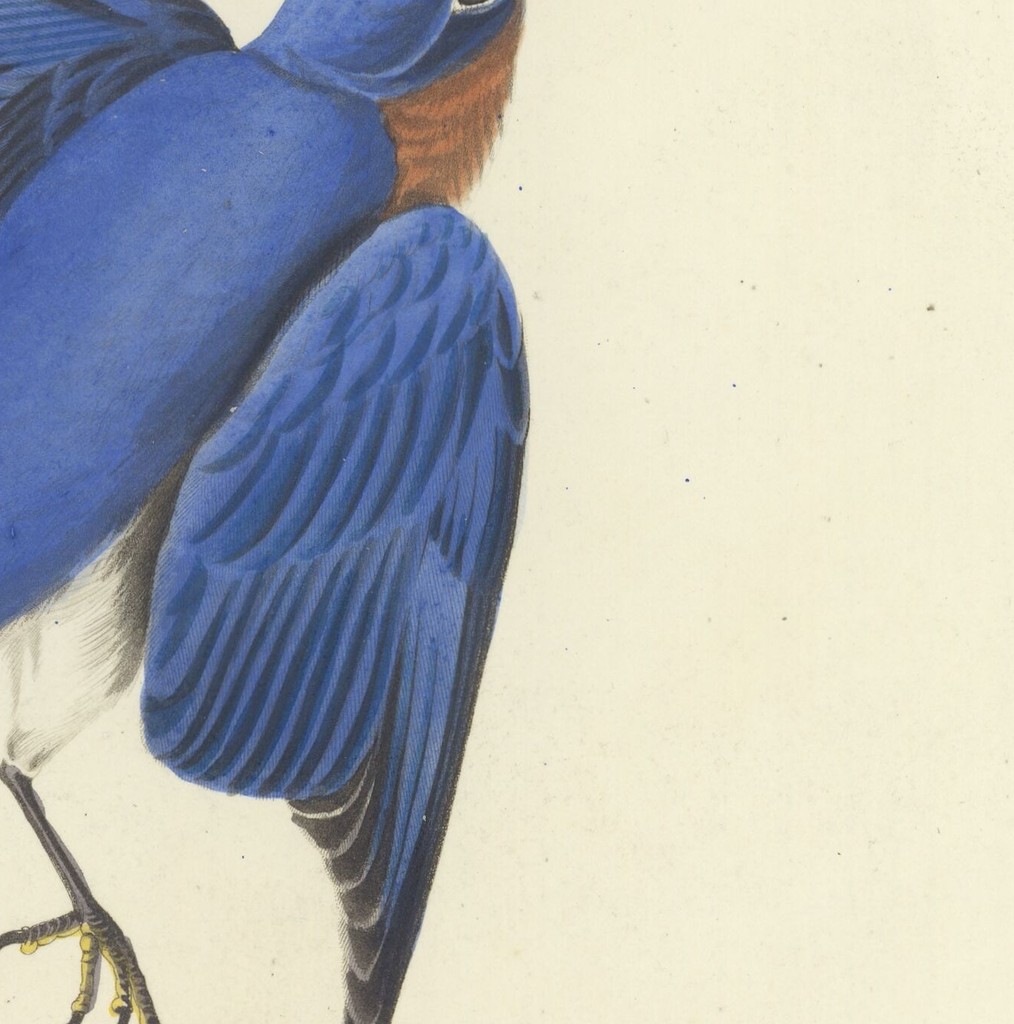
Folded dark wing
The folded dark wing drops beside the blue body. Its darker feathers give the flying male a crisp edge against the pale paper.
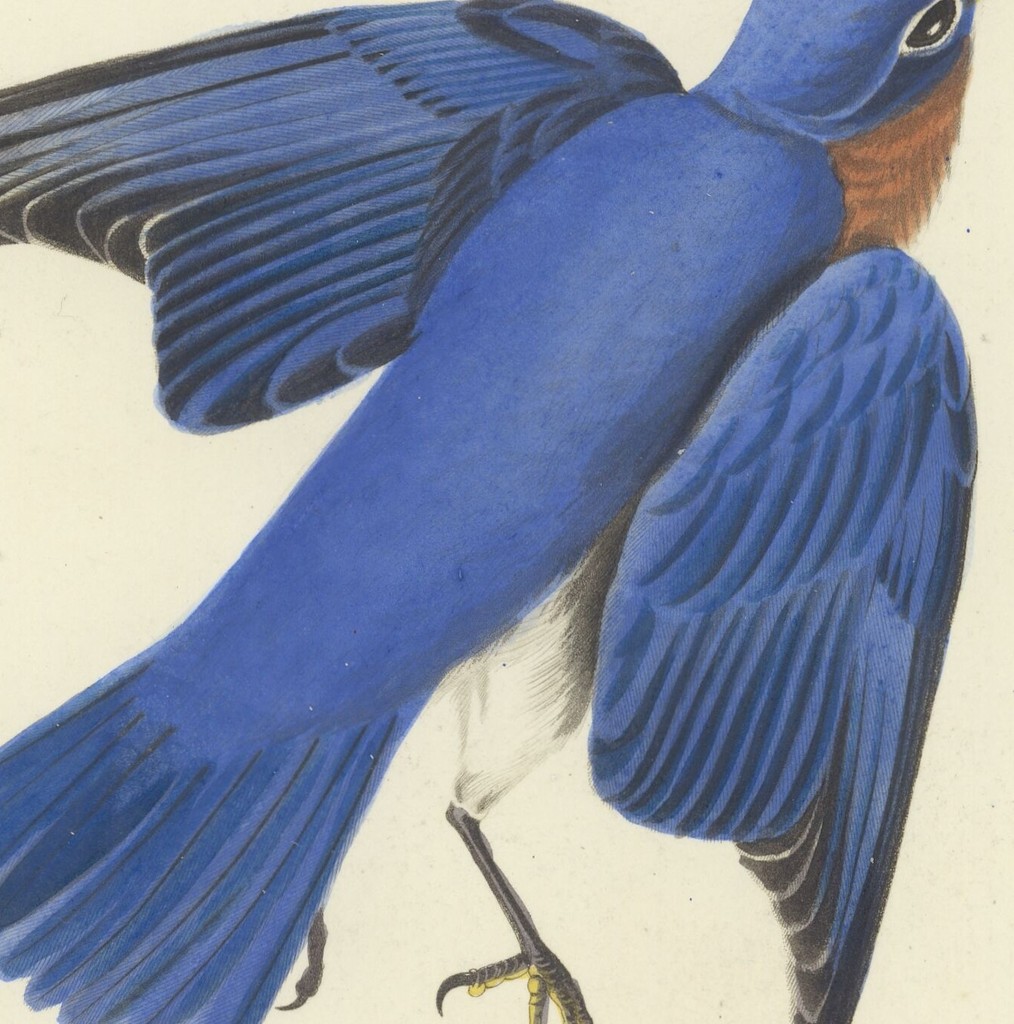
Spread upper wing
The spread upper wing shows blue feathers fanning out from the body. Audubon gives the small bird a crisp silhouette.
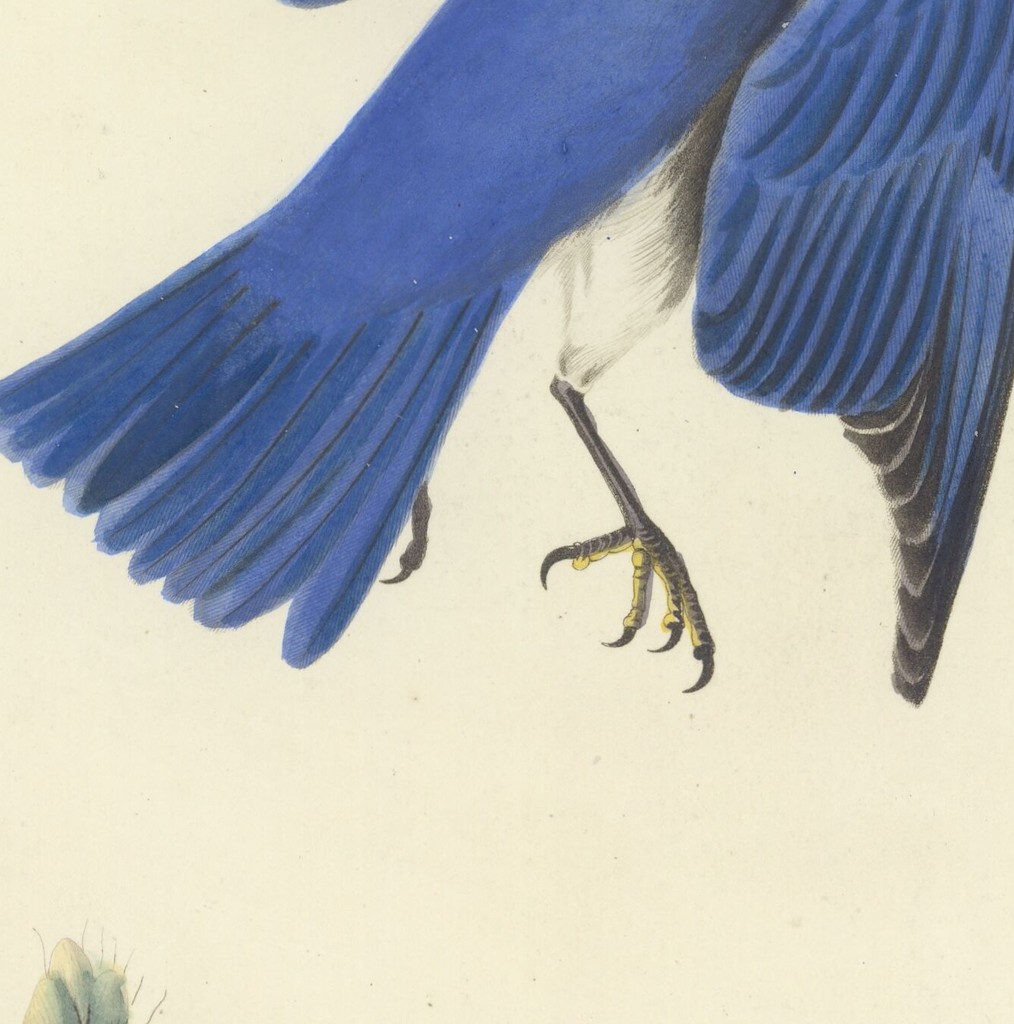
Blue tail fan
The blue tail fans downward and left. It extends the bird's flight path and keeps the top figure from feeling static.
Pale female bird
The paler bird on the left turns toward the feeding action. Its quieter colour separates it from the bright male above.
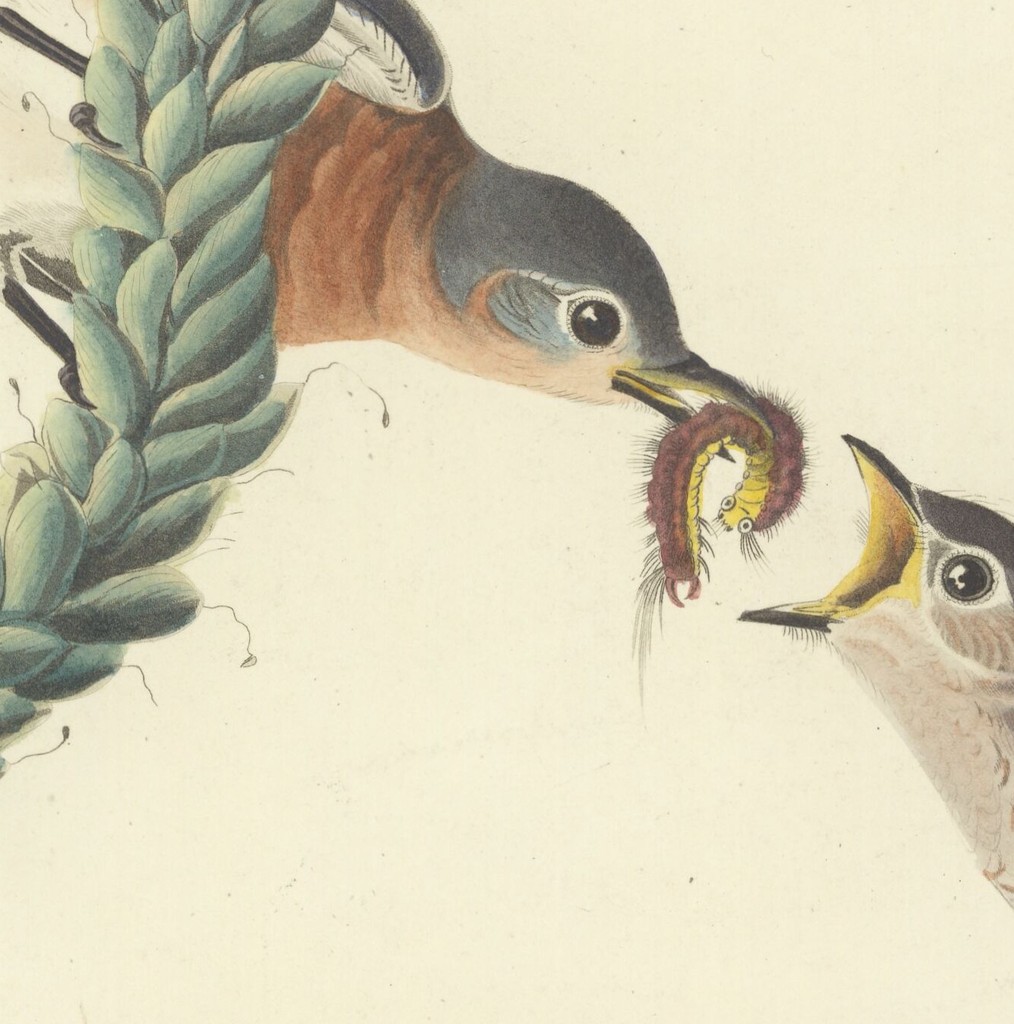
Caterpillar exchange
The small caterpillar between the bills is the plate's narrative centre. A tiny green shape links adult, young bird and plant.
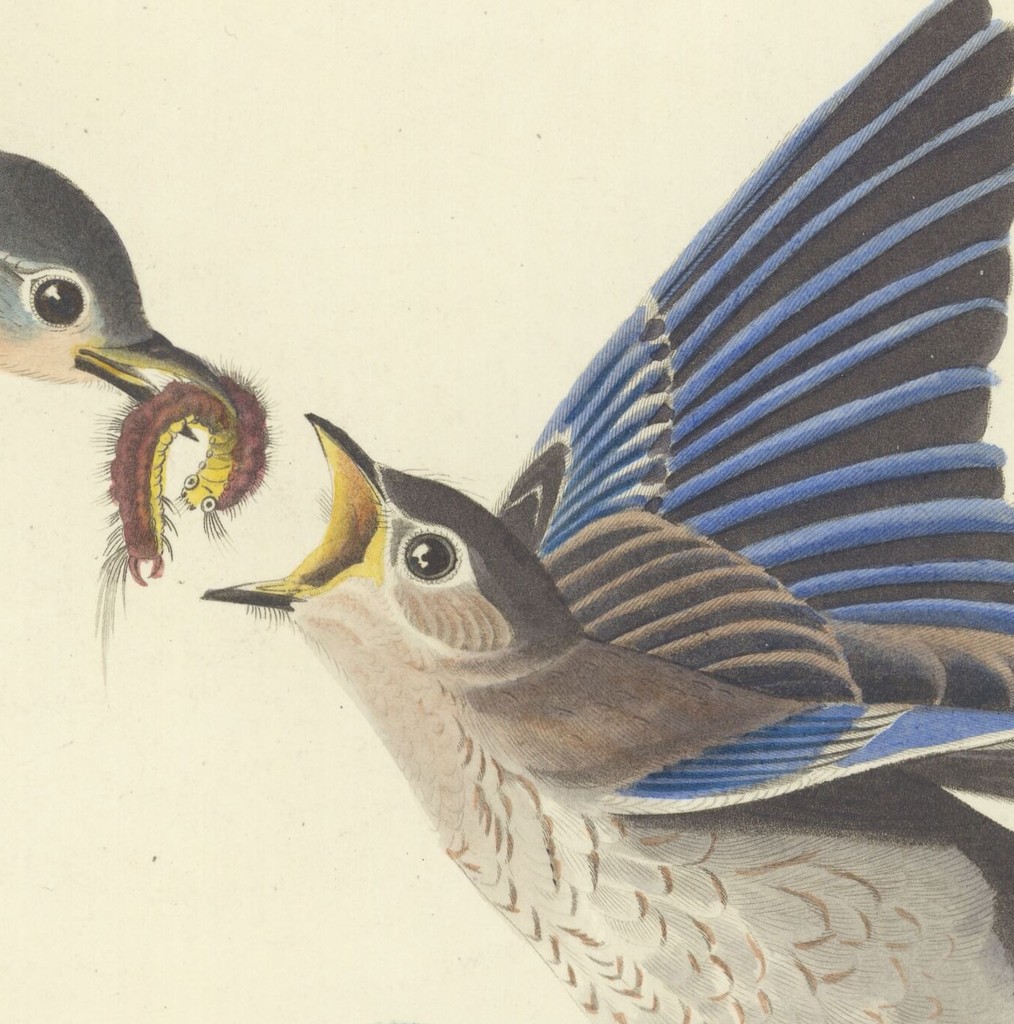
Young bird and open bill
The young bird opens its bill while one wing lifts behind it. The pose turns feeding into a lively exchange rather than a still perch.
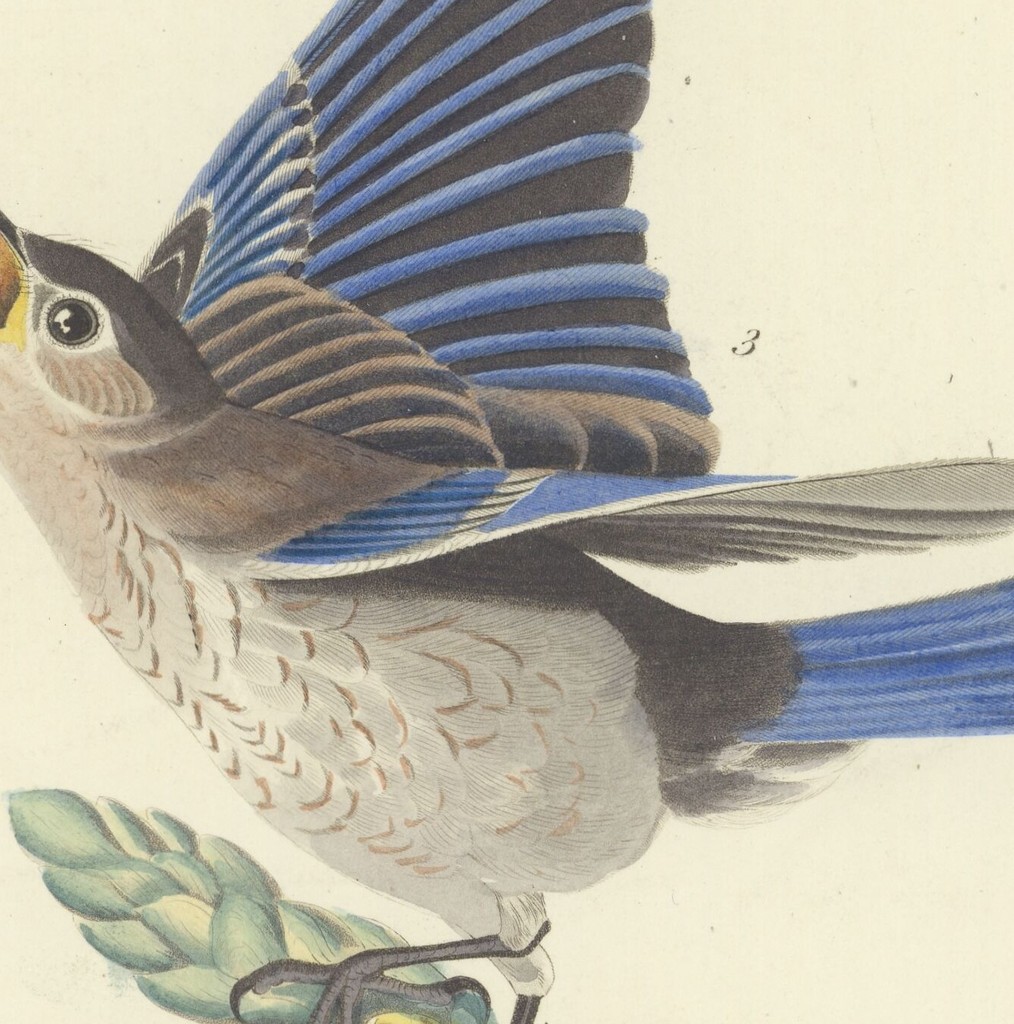
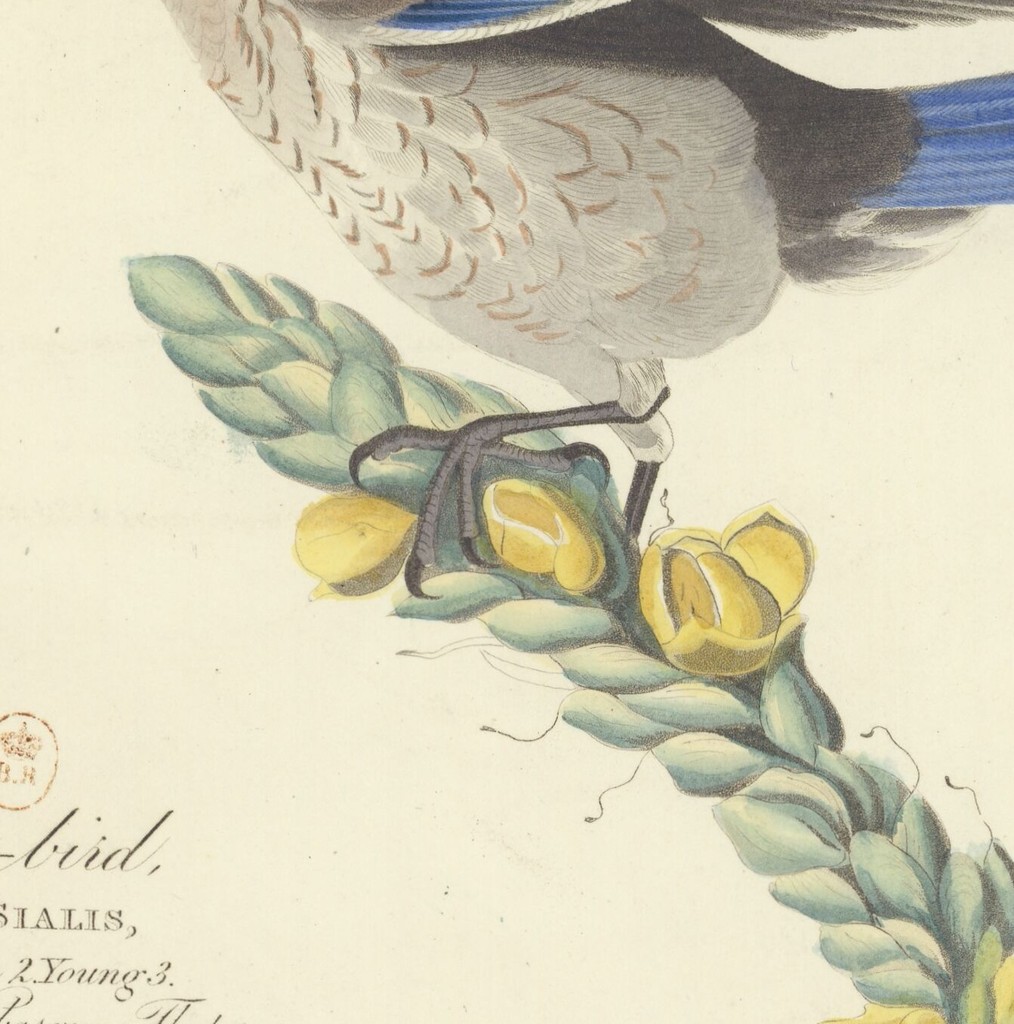
Great mullein stalk
The thick mullein stalk bends through the lower group. Its pale green leaves act as both perch and botanical subject.
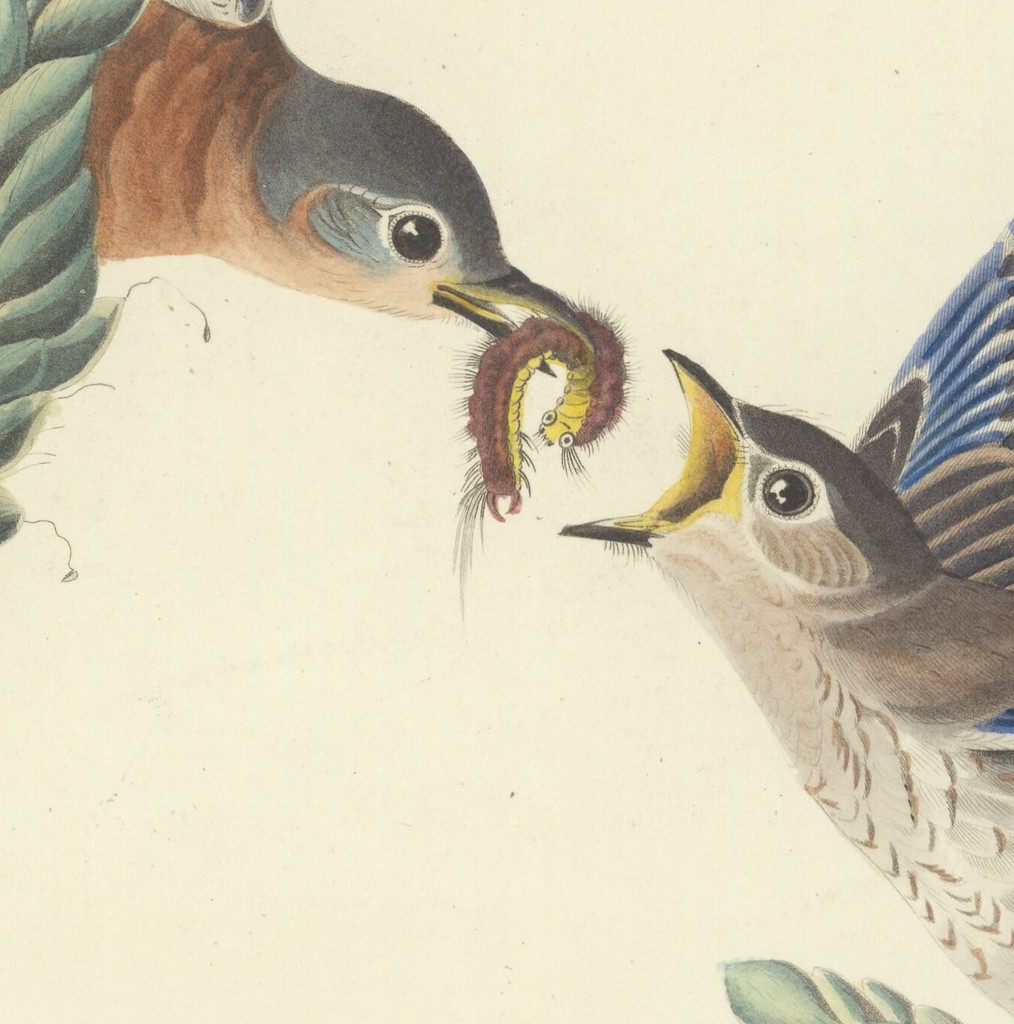
Yellow flowers and perch
Yellow flowers and lower leaves complete the plant detail. Their warm colour sits beneath the blue birds and softens the open page.
Object Facts
The Bibliotheque nationale de France / Gallica route records the plate as The Birds of America, Livraison 23, Plate CXIII, Blue-bird, Male 1., Female 2., Young 3., with Great Mullein. The record identifies John James Audubon as designer and Robert Havell as engraver, gives the date as 1831, and records the dimensions as about 65 by 100 centimetres. [1]
The same route identifies the print with the Bibliotheque nationale de France, Department of Prints and Photography, and the Gallica identifier btv1b53143990w. Commons records the file as public domain in France and the United States, with a Public Domain Mark route for reuse. This makes BnF/Gallica the current leading public-domain image source for the article. [1]
Boston Public Library / DPLA provides a useful backup record for the same subject. It identifies the title as Blue-bird Sylvia sialis. Male, 1. Female, 2. Young, 3. Great mullein. Verbascum thapsus, Plate 113, and notes the set number 23 and Plate CXIII. Harvard Art Museums provides strong metadata as well, including the title Blue-bird, date 1831, medium, Whatman watermark and inscriptions, but Harvard's image terms make it a metadata route here rather than the production image source. [2], [3]
What the Plate Shows
Audubon places three bluebirds around a tall Great Mullein plant. The male, female and young bird are arranged at different heights, with their bodies turned in different directions. The plant's vertical structure gives the plate its architecture. Its leaves and flowering stem create a natural ladder for the birds. [1], [2]
The historic title makes the numbered figures explicit: male, female and young. This is central to the image. The male's blue is strongest, especially on the head, back, wings and tail. The female is quieter, with softer blue and gray tones. The young bird is less bright and more mottled, a visual cue that it belongs to a different stage of life.
Cornell describes male Eastern Bluebirds as brilliant royal blue on the back and head with warm red-brown on the breast. Females are grayer, with blue in the wings and tail. The plate uses that contrast as visual structure. It lets readers see why bluebirds are both familiar and easy to misremember: the famous blue is real, but it changes with sex, age, posture and light. [4]
The Great Mullein matters too. Audubon's plate title identifies the plant as Verbascum thapsus. Its tall stem and broad leaves anchor the birds in a plant world rather than on a generic branch. The plant also gives the image a roadside or old-field feeling, which suits the Eastern Bluebird's modern association with open country, field edges and scattered trees.
Great Mullein and Open Country
Great Mullein gives the plate more than height. It helps establish the kind of open, disturbed or edge habitat where bluebirds can be imagined moving between perch and ground. Cornell describes Eastern Bluebirds as birds of open country with trees and sparse ground cover. The plate's tall plant, exposed perches and open spacing all harmonize with that modern habitat picture. [4], [5]
The plant also changes the mood of the image. Audubon could have placed the birds on a flowering ornamental branch or a dense woodland spray. Instead, he gives them a sturdy vertical plant associated with roadsides, old fields and open ground. That choice makes the birds feel close to ordinary rural space rather than hidden deep in forest.
For a small species, this is useful design. The Great Mullein enlarges the bluebirds' world without making the birds seem small. The eye follows the plant upward, then pauses on each figure: male, female and young. Audubon turns a botanical support into a way of reading family, age and movement.
Historic Title and Modern Name
Audubon's plate uses Blue-bird and the older scientific wording Sylvia sialis. Modern sources use Eastern Bluebird, Sialia sialis. A reader does not need a long taxonomy lesson, but the distinction should be made early and plainly. [1], [4]
The difference reflects the history of ornithology. Audubon's plate belonged to a period when bird classification was still changing, and names carried older taxonomic assumptions. Modern bird guides place Eastern Bluebird in the thrush family, Turdidae, and use Sialia sialis. The subject is the same familiar eastern bluebird, but the naming system has shifted. [4]
This is one reason the page title can be Eastern Bluebird while the article still respects the historic plate title. Searchers and modern bird readers look for Eastern Bluebird. Art history requires Blue-bird. The best reading keeps both names active without pretending they are identical kinds of evidence.
The Bird Behind the Image
Cornell describes Eastern Bluebirds as birds of open country with trees, sparse ground cover and nest sites. Their original habitats probably included open pine savannas, beaver ponds, forest openings and mature open woods. Today they are often found along pastures, agricultural fields, suburban parks, backyards, golf courses and nest-box trails. [5]
That modern habitat context makes Audubon's plate feel less remote than many images from The Birds of America. Eastern Bluebirds still perch visibly on wires, fences and open branches before dropping to the ground for insects. Cornell describes them as ground foragers that often watch from a perch, then flutter or drop down after prey. In fall and winter they also eat many fruits and berries. [4], [5]
Nesting context is also important. Eastern Bluebirds use natural cavities, old woodpecker holes and nest boxes. Cornell notes that the male displays at a nest cavity by bringing material in and out and fluttering his wings, while the female builds the nest. The modern success of nest-box efforts has become part of the species' public story. [5]
Place in The Birds of America
Eastern Bluebird belongs to The Birds of America, Audubon's great large-format publication of North American birds. The BnF/Gallica record places the print in Livraison 23 and identifies it as Plate CXIII. The BPL/DPLA record likewise notes set number 23 and Plate 113, while Harvard records the series title as The Birds of America: Elephant Folio, plate 113. [1], [2], [3]
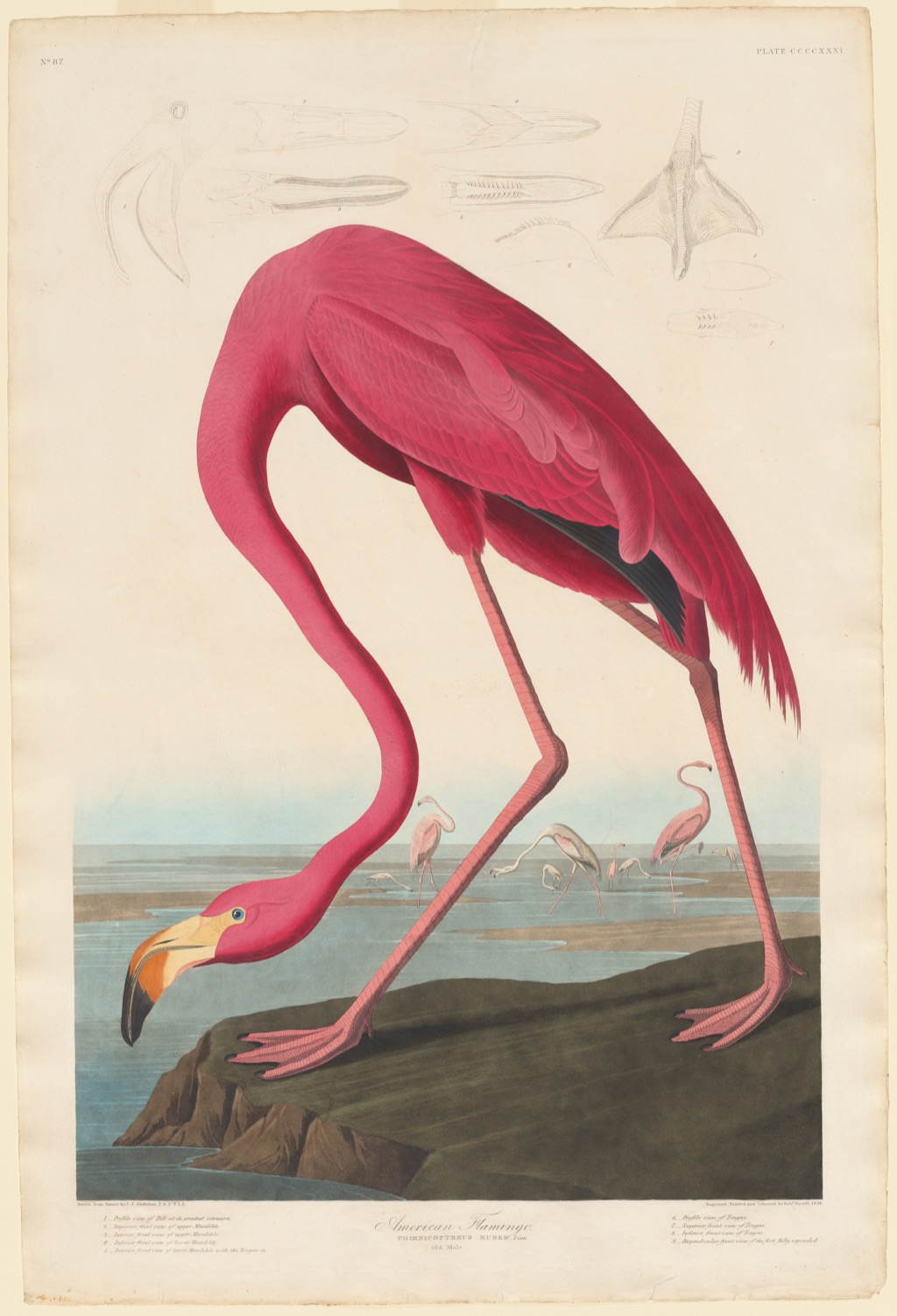
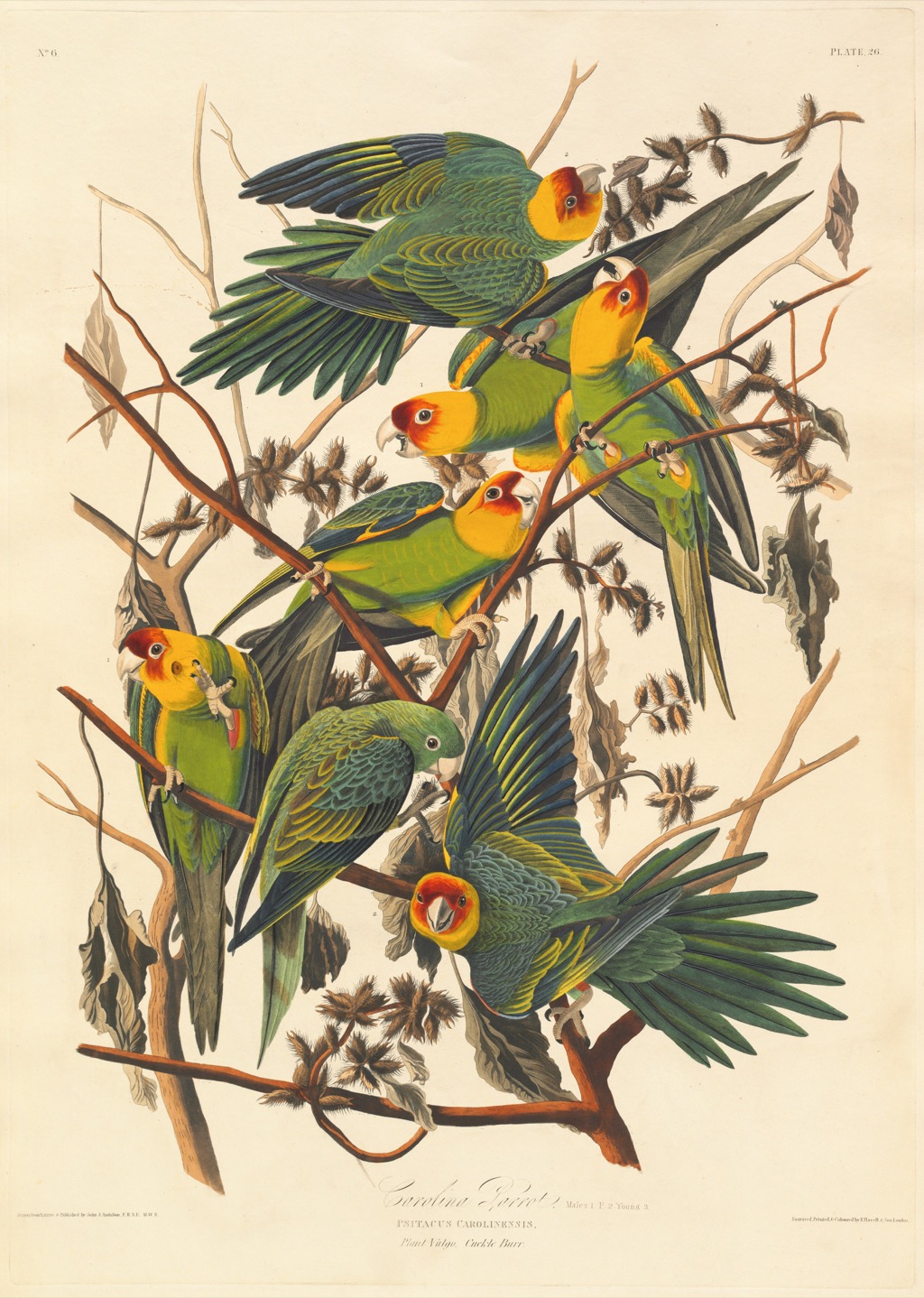
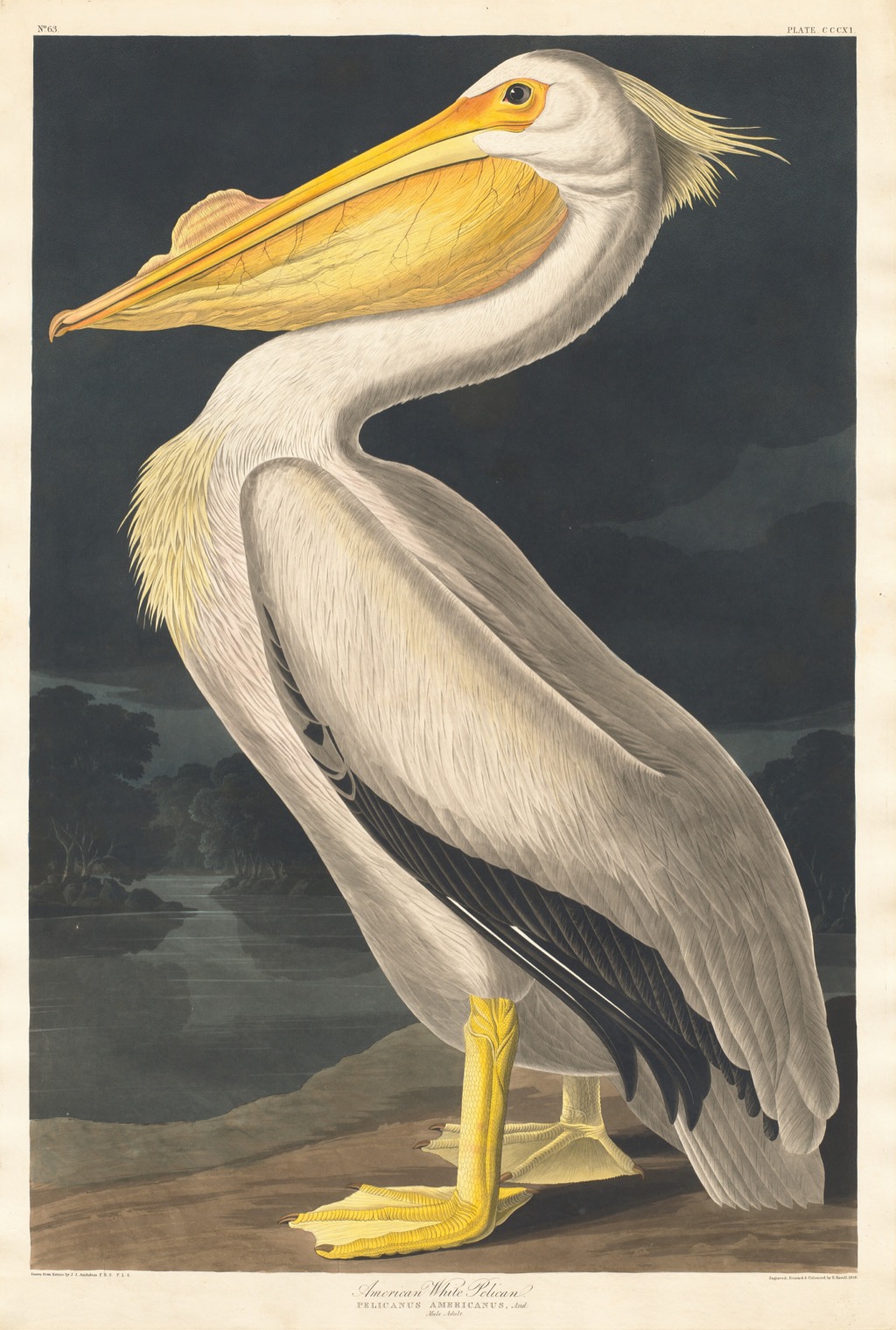
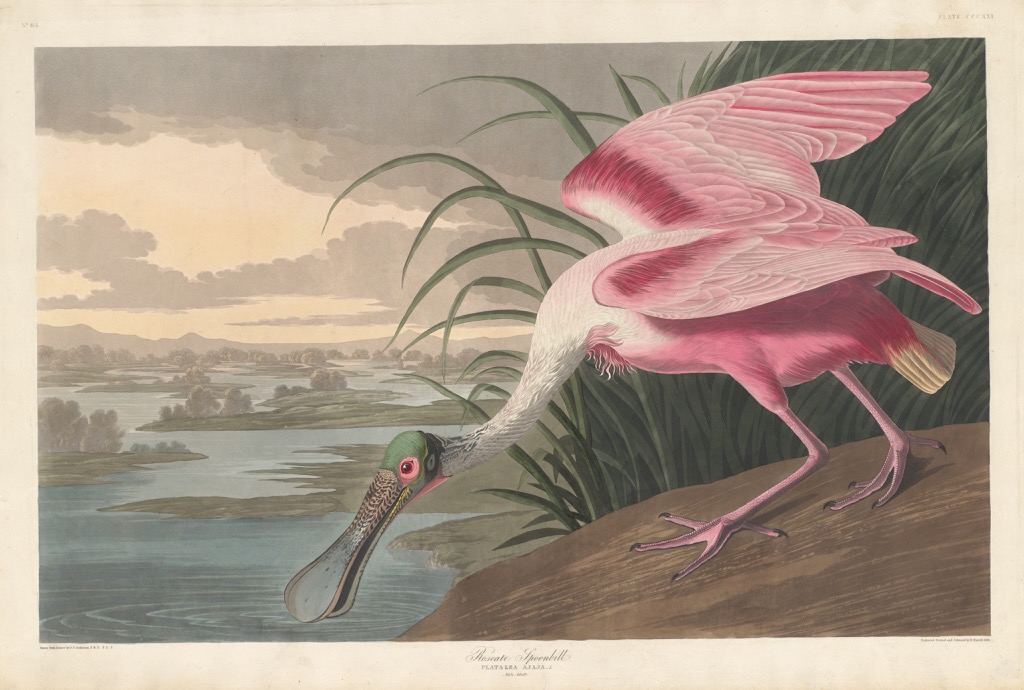
The plate shows how Audubon used the huge format for small birds as well as large ones. Bluebirds do not need the monumental scale of a pelican, flamingo or heron. Instead, the large sheet gives room for multiple figures, plant structure and life-stage comparison. The page becomes a study of variation rather than a single dramatic portrait.
Within the Audubon cluster, Eastern Bluebird sits naturally beside Cardinal Grosbeak and Ruby-throated Hummingbird because all three connect Audubon's art to familiar colorful birds and garden or backyard interest. It also provides a gentler counterpoint to Passenger Pigeon, where a once-common bird now carries the weight of extinction.
For the larger publication story, readers should continue to The Birds of America. For Audubon's wider print and drawing practice, John James Audubon Works gives the plate a broader art-historical frame.
How to Read the Plate Today
A first reading begins with color. The male's blue is the immediate attraction, but the plate becomes richer when the viewer compares him with the female and young bird. Audubon turns a familiar color into a lesson in difference.
A second reading begins with the plant. Great Mullein is tall, textured and emphatically vertical. It gives the small birds a stage without overwhelming them. The plant also keeps the image rooted in a specific botanical setting rather than leaving the birds suspended in blank space.
A third reading begins with modern familiarity. Many readers know Eastern Bluebirds from nest boxes, open fields or backyard birding. Audubon's plate can therefore feel close to ordinary experience even though it is a nineteenth-century print from an elite publication.
A fourth reading begins with conservation balance. Eastern Bluebird is not a lost species, but its modern recovery story still shows how bird populations can be shaped by habitat, nest sites, introduced competitors and human care. The plate now belongs to that longer story of attention.
Conservation and Recovery Context
Eastern Bluebird is listed by Cornell as Low Concern, and its life-history account notes population increases between 1966 and 2019. That should not make the species page complacent. Cornell also notes that bluebird numbers fell in the early twentieth century as introduced competitors such as European Starlings and House Sparrows made nest holes harder to hold. [4], [5]
The recovery story is part of why this bird remains so familiar today. Bluebird trails and nest-box campaigns helped give the species more nesting opportunities, turning ordinary human attention into a practical conservation tool. This is a recovery and stewardship context, not an extinction story. [5]
That context gives Audubon's plate a modern afterlife. The image is an 1831 print, but readers may arrive with experiences of nest boxes, field edges, backyard sightings or seasonal return. Those memories connect naturally to art history without turning the print into a modern conservation poster.
Why This Plate Matters
Eastern Bluebird matters because it widens the emotional range of the Audubon cluster. It is bright, calm and familiar, yet still precise. It connects historic printmaking to a living bird that many readers can recognize. It also shows how a compact plate can carry taxonomy, sex and age, plant setting, modern species context and publication history.
The image also matters because it demonstrates Audubon's sensitivity to small birds. His reputation often rests on spectacle: huge waterbirds, dramatic predators, extinct species and giant folio scale. Eastern Bluebird works differently. Its interest lies in relation, comparison and clarity.
For readers interested in the broader tradition of bird art, the site's bird drawings section offers another route. Eastern Bluebird belongs there as an image where a familiar species becomes a carefully staged work of natural history, botanical setting and hand-colored printmaking.
Frequently Asked Questions
Discussion
Eastern Bluebird connects Audubon's historic Blue-bird plate to a familiar living species, Great Mullein and a modern recovery story.
Use the prompts below to think about color, life stages and the way a small bird can command a large folio sheet.
Reader Insights
How does comparing male, female and young change the idea of a blue bird?
What does Great Mullein add to the structure of the plate?
How does the modern nest-box story affect your reading of an 1831 print?
Join the Conversation
Share your reading of Audubon's Eastern Bluebird and its balance of historic naming, family grouping and modern familiarity below.
References
- BnF/Gallica via Wikimedia Commons, The Birds of America, Livraison 23, Plate CXIII, Blue-bird, Gallica btv1b53143990w, accessed 26 July 2026.
- Boston Public Library / DPLA via Wikimedia Commons, Blue-bird Sylvia sialis, DPLA identifier 5279cfa030acab74591d0d2a6e7679a1, accessed 26 July 2026.
- Harvard Art Museums, Blue-bird, object M10304, accessed 26 July 2026.
- Cornell Lab of Ornithology, All About Birds, Eastern Bluebird overview, accessed 26 July 2026.
- Cornell Lab of Ornithology, All About Birds, Eastern Bluebird life history, accessed 26 July 2026.
- Biodiversity Heritage Library, The Birds of America, accessed 26 July 2026.
- Yale Beinecke Library, The Double Elephant Folio, accessed 26 July 2026.