

 by Tom Gurney
Tom Gurney BSc (Hons) is an art history expert with over 20 years experience
Published on July 26, 2026 / Updated on September 6, 2026
Email: tomgurney1@gmail.com / Phone: +44 7429 011000
Ruby-throated Hummingbird: Introduction
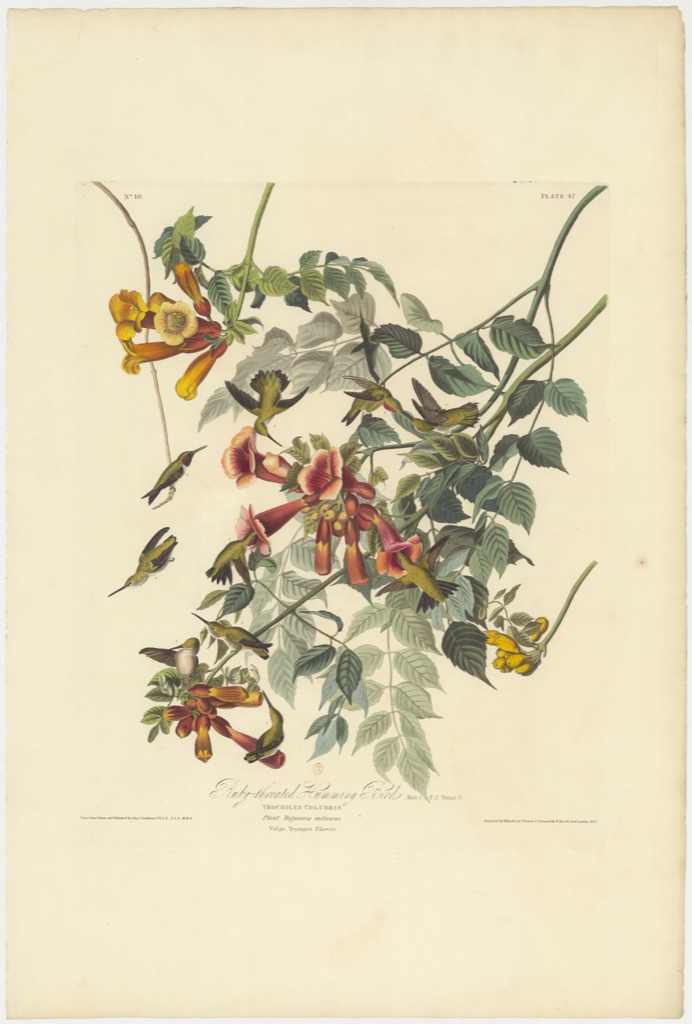
John James Audubon's Ruby-throated Hummingbird is one of the most delicate plates in The Birds of America. The subject is tiny, fast and jewel-like, yet the plate gives it the dignity of a large folio page. Hummingbirds move around trumpet-shaped flowers, so the image is not only about a bright throat. It is about scale, motion, plant life and the challenge of making a very small bird visible on monumental paper. [1], [2]
The public title uses the modern common name Ruby-throated Hummingbird. Historic records often use Ruby-throated Humming Bird, with the bird name split into two words. Amon Carter Museum of American Art records the work under that historic title, with Trochilus colubris in the title line, while modern species sources use Ruby-throated Hummingbird, Archilochus colubris. [2], [4], [6]
This page treats the plate as an artwork first. The living bird matters, because hummingbirds are now familiar to many readers through gardens, feeders and migration stories. But Audubon's image is also a nineteenth-century hand-colored print, shaped by plate numbering, publication logistics, engraving, aquatint and the visual problem of showing quickness in still form.
At a Glance
- Public titleRuby-throated Hummingbird
- Historic titleRuby-throated Humming Bird [1], [2]
- SeriesThe Birds of America, Plate XLVII [1], [3]
- Catalogue referenceBirds of America, no. 47 / Livraison 10 [1], [3]
- DateNGA: 1828; Amon Carter: ca. 1827-1830 [2], [3]
- Maker lineJohn James Audubon; engraved, printed and colored by Robert Havell Jr. [2], [3]
- MediumHand-colored engraving and aquatint [2], [3]
- Current species nameRuby-throated Hummingbird, Archilochus colubris [4], [6]
- Plant named in inscriptionTrumpet-flower, Bignonia radicans [2]
- Image statusBnF/Gallica public-domain route via Commons [1]
Contents
- Introduction
- Annotated Details
- Object Facts
- What the Plate Shows
- Scale on a Giant Page
- Throat, Flower and Flight
- The Bird Behind the Image
- Migration and Distance
- Place in The Birds of America
- Printmaking and Delicacy
- Why This Plate Matters
Annotated Details from Ruby-throated Hummingbird
These annotated details follow Audubon's Ruby-throated Hummingbird through trumpet flowers, tiny hovering birds, red throat, compound leaves, repeated flight positions and the printed plate title.
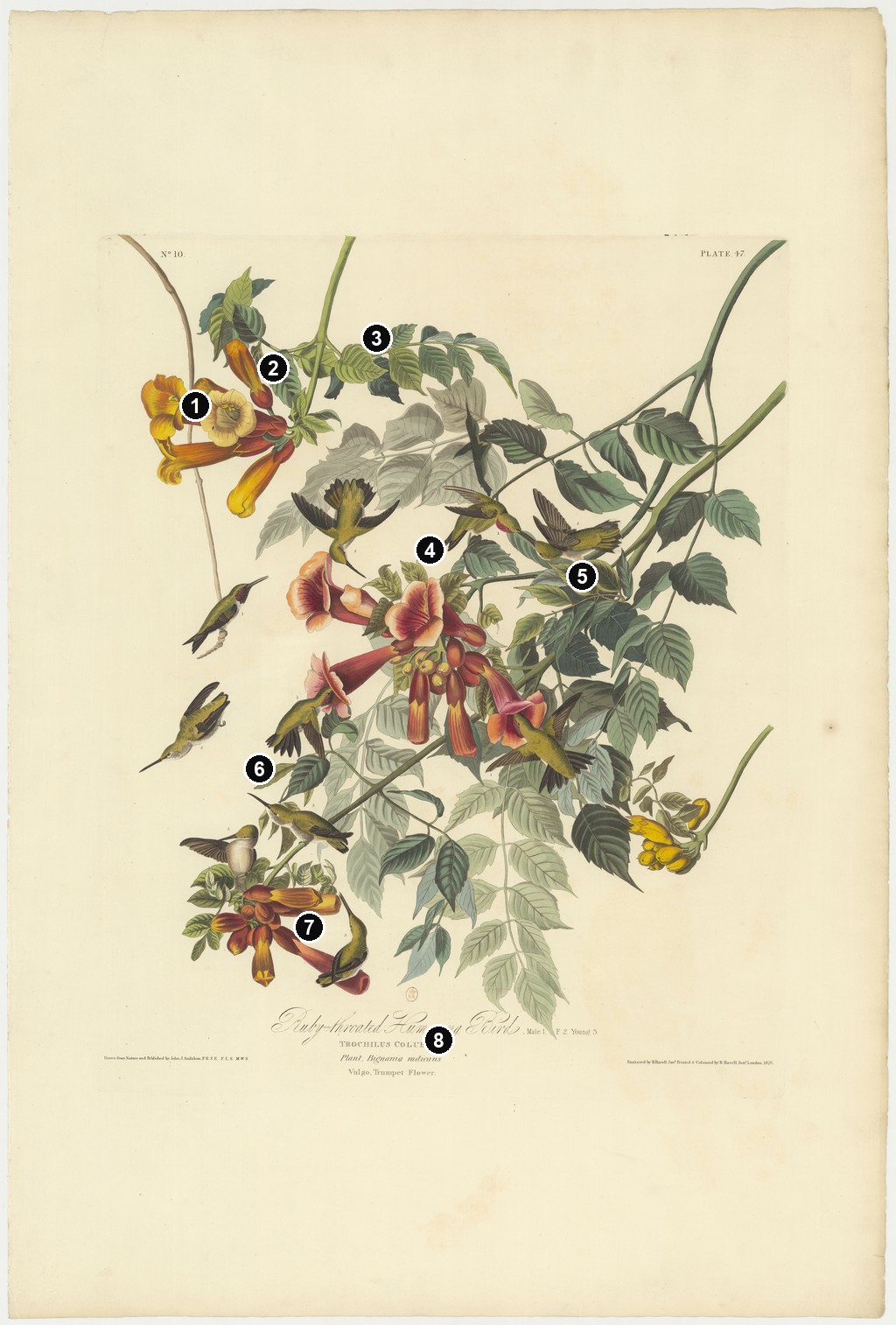
Details from RUBY-THROATED HUMMINGBIRD
Close looking shows how a very small bird holds a double-elephant folio page through flower contact, open air, repeated bodies and carefully organized plant structure.
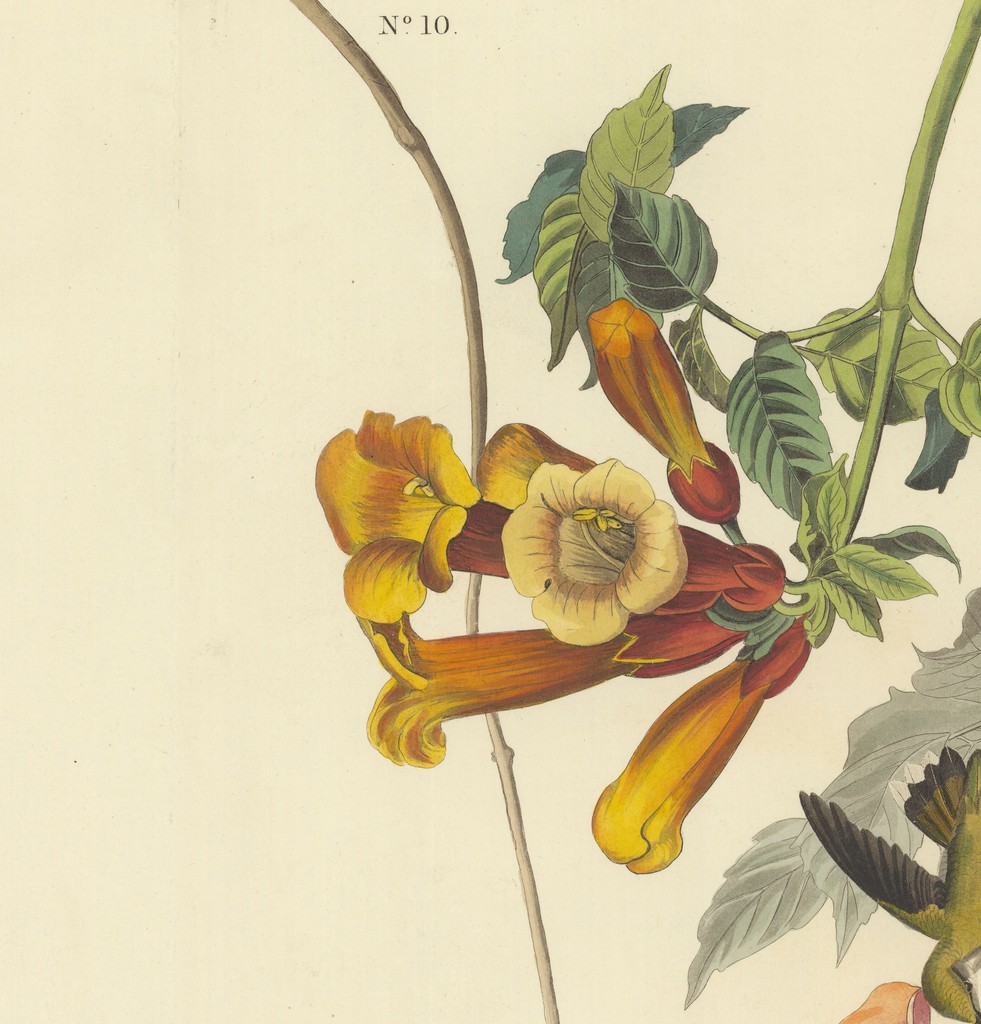
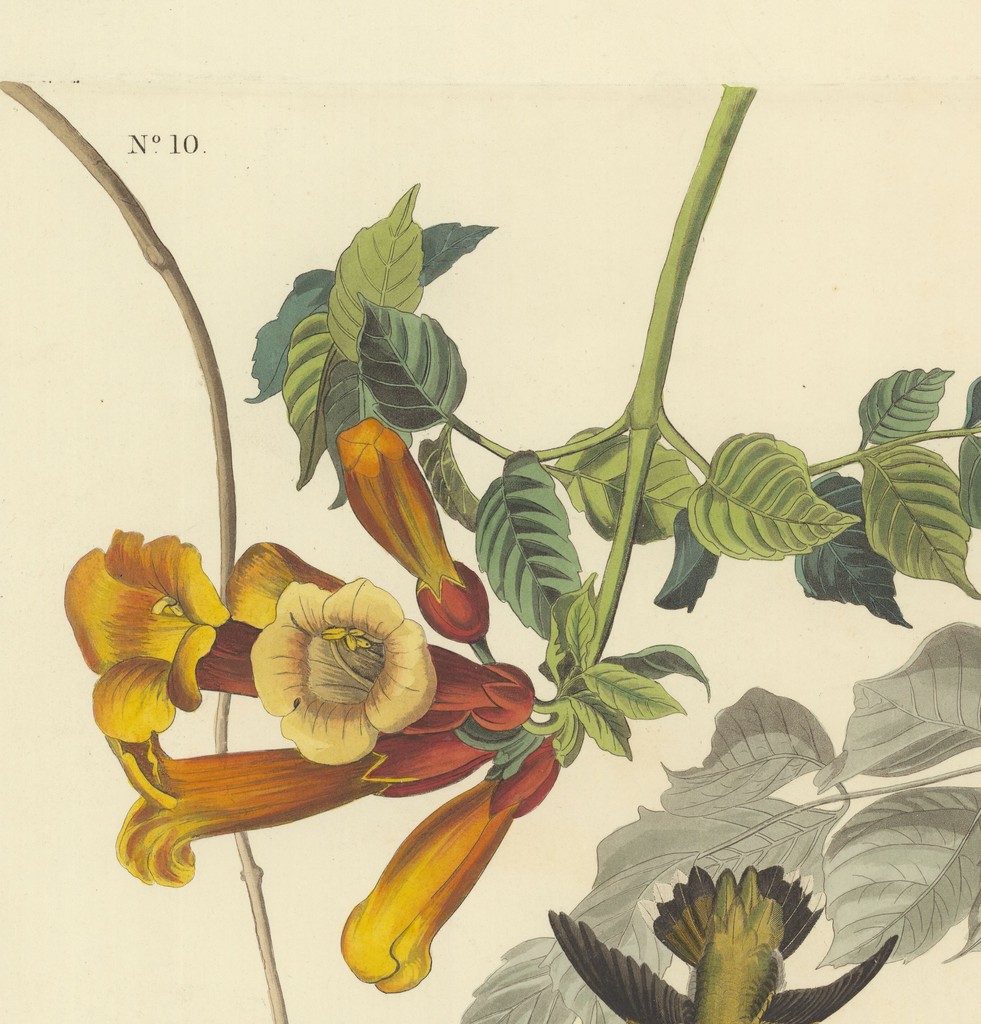
Trumpet flower cluster
The flared trumpet flowers give the birds a clear feeding setting. Their orange and red tubes make the small hovering bodies easier to find on the large sheet.
Male ruby throat
The male's red throat is small but decisive. Audubon places the bright mark close to the flower, so colour and feeding behaviour reinforce each other.
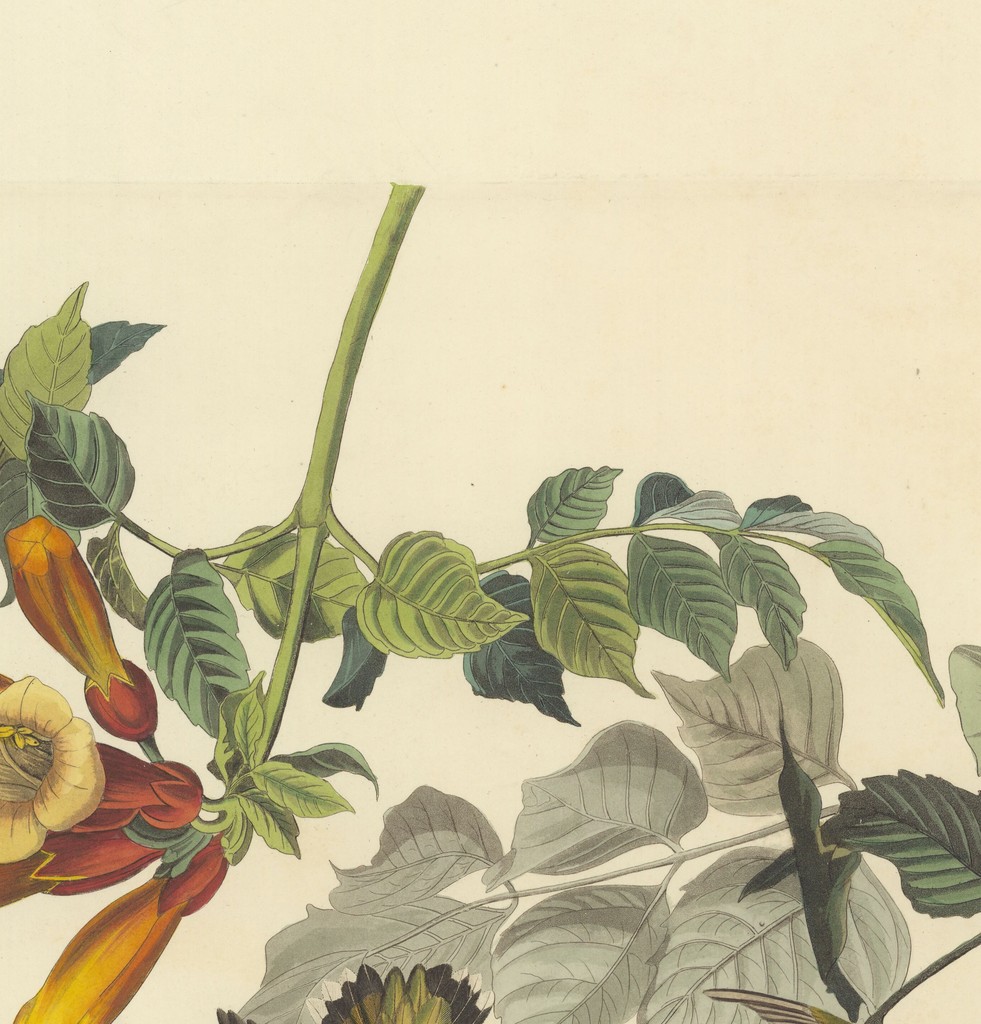
Vine and compound leaves
The vine and compound leaves build the plate's framework. They let the eye travel between birds instead of isolating each figure as a separate specimen.
Central hovering bird
The central bird hangs below the leaves with wings spread. The pose turns still print into a study of suspended motion.
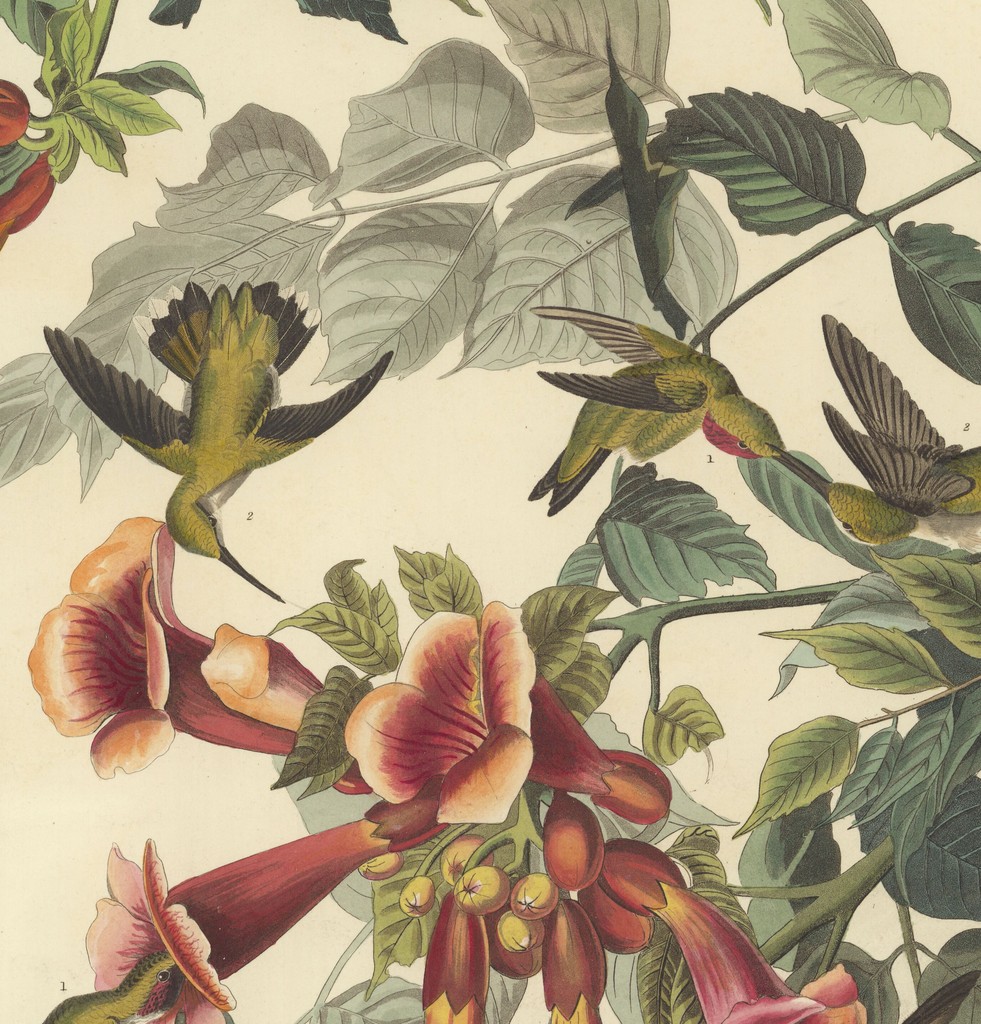
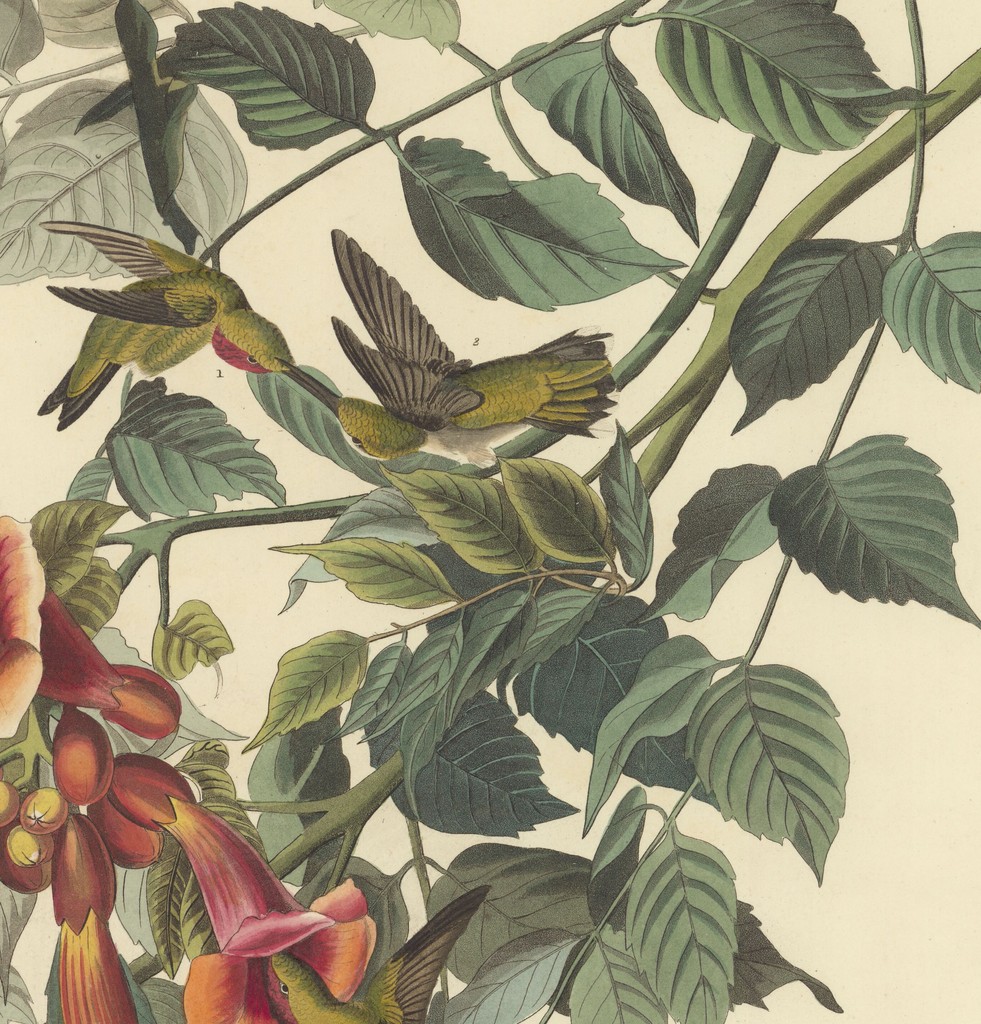
Right-side crossing birds
Two small birds on the right cross the leafy structure at different angles. Their repeated positions suggest quick movement around the plant.
Lower left flight
The lower left bird cuts across a wide area of pale paper. Open space is part of the image because hovering needs room.
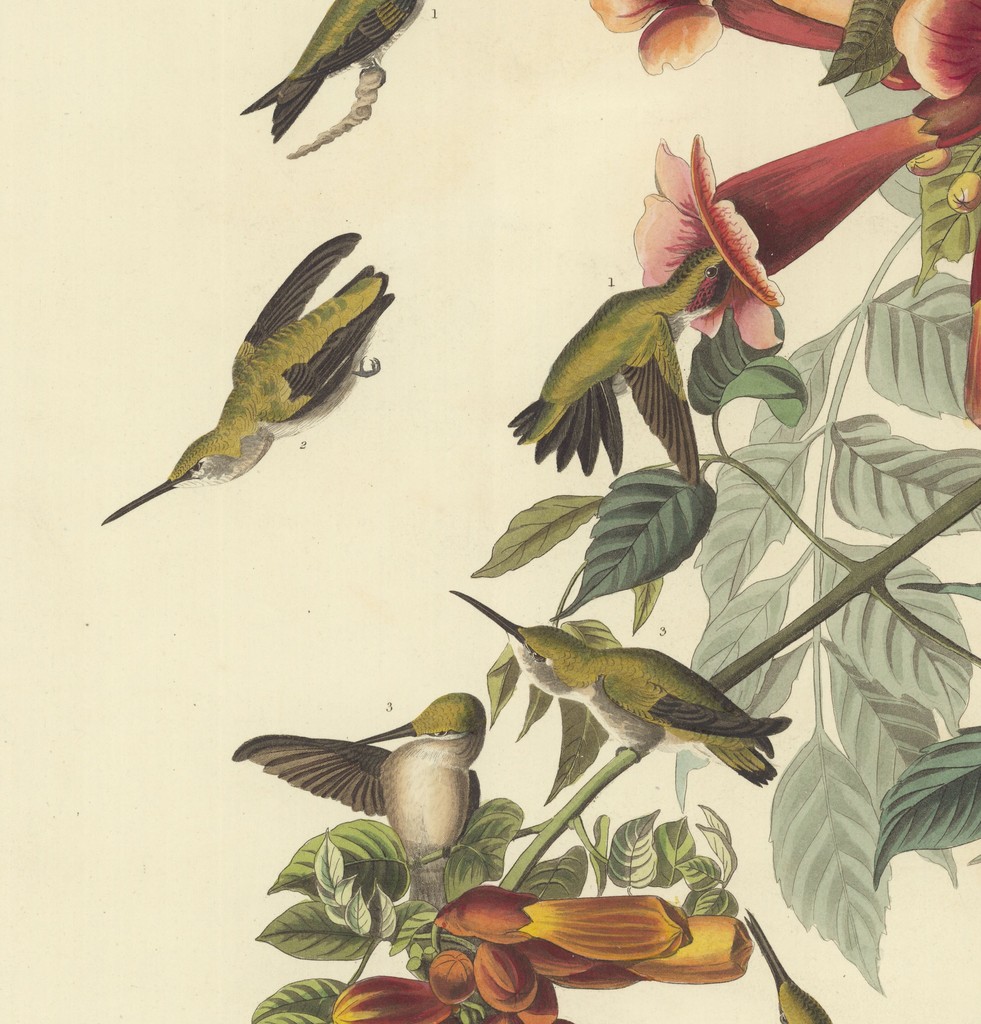
Lower flower and bird
A lower bird and flower cluster repeat the feeding relationship at another scale. The plate becomes a rhythm of approaches, turns and blossoms.
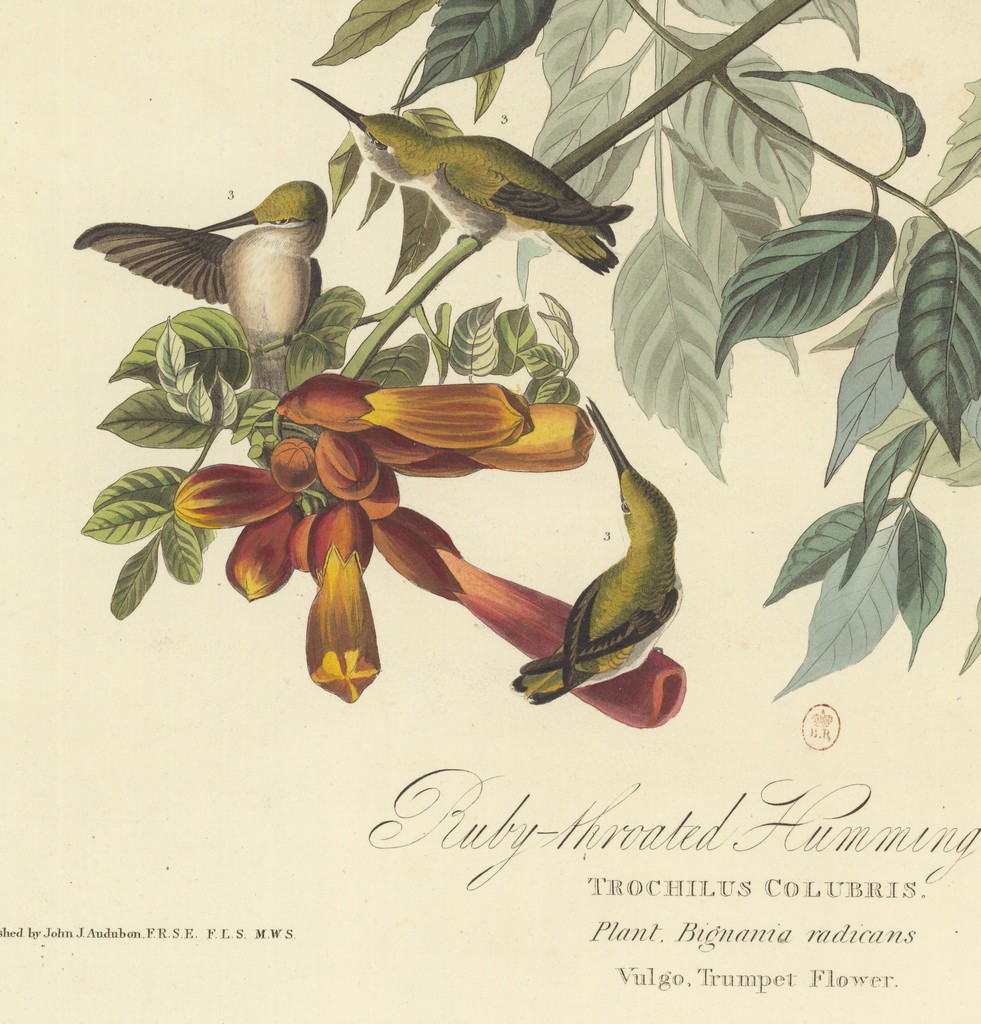
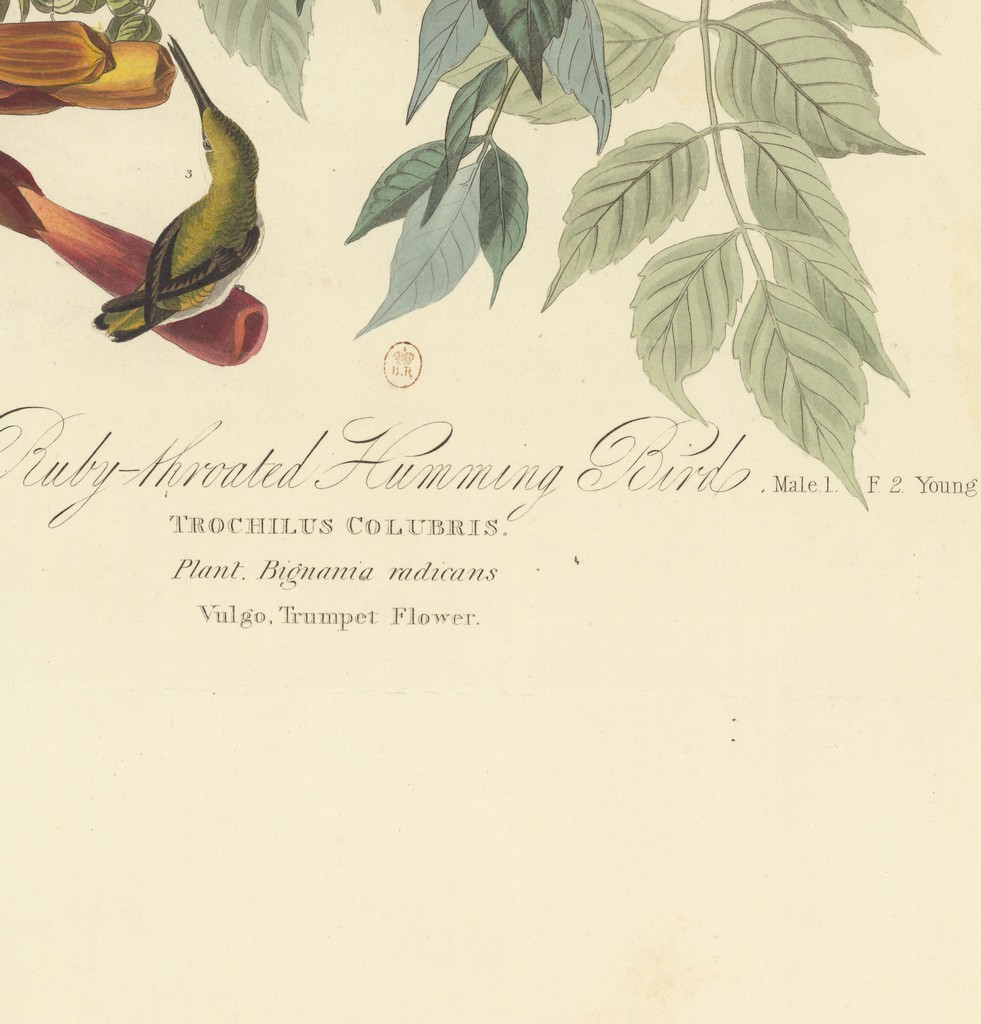
Printed title and plant name
The printed title and plant identification keep the image anchored as a nineteenth-century object, not just a decorative bird-and-flower scene.
Object Facts
The BnF/Gallica file route records the image as The Birds of America, Livraison 10, Plate 47, Ruby-throated Humming Bird, with male, female and young birds and a plant identified as trumpet flower. It gives the Gallica identifier btv1b531440094 and links the file to the Bibliotheque nationale de France, Department of Prints and Photography. Commons records the source file at 8082 by 11948 pixels and marks the work with public-domain and Public Domain Mark information. [1]
Amon Carter Museum of American Art provides the strongest object-record anchor for this page. Its collection record gives the title Ruby-Throated Humming Bird, Trochilus colubris. Linn., credits John James Audubon and Robert Havell Jr., lists the medium as engraving and aquatint with applied watercolor, records the accession number 1982.50, and states public domain. The museum dates the object circa 1827-1830. [2]
The National Gallery of Art provides a parallel institutional record for Ruby-throated Humming Bird, dated 1828, by Robert Havell after John James Audubon. NGA identifies the medium as hand-colored engraving and aquatint on Whatman wove paper, gives accession 1945.8.47, lists the catalogue raisonne entry as Birds of America, no. 47, and states that the object's media is free and in the public domain. [3]
The image shown here comes from the BnF/Gallica scan because it combines a high-resolution file, institutional provenance and explicit public-domain metadata. Amon Carter and NGA remain important object records, especially for accession, medium and date comparison, while the Gallica identifier keeps the reproduced plate traceable to a stable library source. [1], [2], [3]
What the Plate Shows
The plate shows hummingbirds moving around flowering vines. The birds do not dominate the sheet through size. They hold it through motion, color and repeated position. The viewer's eye moves from the flowers to the hovering birds, then back through the stems and leaves. This creates a lively circuit rather than a single fixed portrait.
The historic title identifies male, female and young. That grouping matters because the male's red throat is only one part of the species. Cornell notes that the adult male has an iridescent throat that can look dark when the light is not catching it, while female and young birds do not present the same full red gorget. Audubon's grouping therefore makes difference visible: display, age and sex are part of the plate's structure. [4]
The flowers are not neutral decoration. Amon Carter records the inscription as trumpet-flower, Bignonia radicans, and Cornell describes Ruby-throated Hummingbirds taking nectar from red or orange tubular flowers, including trumpet creeper. The plant gives the birds a reason to hover, approach and turn. [2], [5]
Scale on a Giant Page
The Ruby-throated Hummingbird creates the opposite problem from Audubon's largest birds. A flamingo, pelican or heron tests whether a large body can fit inside the double-elephant folio. A hummingbird tests whether a small body can command it. The page could easily overwhelm the subject.
Audubon's answer is to make scale part of the drama. The open paper gives room for hovering and flight. The plant gives the birds a vertical structure and a readable setting. The plate is not a tiny bird lost in a huge format; it is a small world expanded until the viewer can spend time inside it.
The object measurements make that contrast concrete. NGA records a sheet of 100 by 67.6 centimetres, while Amon Carter records a sheet height just over 39 inches. Cornell and Smithsonian describe the bird itself at only a few inches long. A reader can therefore see the central tension of the plate: the printed support is enormous, but the living subject is almost weightless by comparison. [2], [3], [5], [6]
This makes the plate an important counterweight within The Birds of America. The publication is famous for its large folio scale, but small birds show a different kind of ambition. Audubon wanted life-size presence, and with hummingbirds he also needed enough surrounding movement, foliage and color to hold attention. The result feels intimate without becoming minor.
Throat, Flower and Flight
The male's throat gives the bird its modern common name, but the plate should not be reduced to that single flash of color. Cornell describes the Ruby-throated Hummingbird as green-backed, tiny and precise in flight, with the male's throat shifting in appearance according to light. Smithsonian likewise notes the species' red and green coloring and the difference between male and female throat color. [4], [6]
Flowers are equally central. Cornell's life-history account describes nectar feeding from tubular flowers and also notes that Ruby-throated Hummingbirds catch insects in midair or take small prey from spider webs and foliage. Smithsonian similarly treats nectar and tiny insects as part of the diet. The plate's blossoms therefore do real explanatory work, but they do not exhaust the bird's natural history. [5], [6]
This balance keeps the image from becoming merely ornamental. The flower explains one feeding behavior, the small insects noted by modern sources broaden the diet, and the hovering body joins both kinds of action. Audubon gives the bird the familiar flower-world that viewers expect, while modern natural history reminds readers that a hummingbird is not only a nectar symbol. It is an agile forager whose tiny scale depends on intense movement, energy and repeated contact with both flowers and small prey.
The flight is the hardest thing for a print to show. Cornell describes ruby-throats as precision flyers that can hang in midair and adjust position up, down, sideways and backward. Audubon's plate cannot move, but its several bird positions suggest hovering, approach and sudden change. The still image becomes a record of potential motion. [5]
The plate's composition uses that problem well. No single bird has to carry the whole idea of motion. Instead, the viewer reads movement through repeated bodies, angled bills, splayed tails, flower contact and the changing gaps between bird and plant. The print turns a behavior that happens almost too quickly to follow into a sequence of positions that can be studied slowly.
The Bird Behind the Image
The living species is now identified as Ruby-throated Hummingbird, Archilochus colubris. Cornell lists it in the hummingbird family, Trochilidae, and describes it as eastern North America's only breeding hummingbird. Smithsonian gives the same scientific name and says it is the only North American hummingbird species breeding east of the Great Plains. [4], [6]
Modern habitat descriptions help explain why this plate feels close to garden and edge-country experience. Cornell places the species in deciduous woodlands, old fields, forest edges, meadows, orchards, stream borders and backyards. Smithsonian similarly mentions open woodlands, fields, orchards, parks and flower-rich suburban spaces. [5], [6]
Those habitats also explain why the plate can reach readers who may not know Audubon in detail. A hummingbird near flowers is not an exotic abstraction for many viewers in eastern North America. It is a seasonal sight, often glimpsed at a feeder, a garden edge or a flowering vine. That familiarity becomes a doorway into the art, while the object remains anchored in Audubon's nineteenth-century publication, its plate number, and its printed maker line.
Size claims need care because the bird is tiny and easily romanticized. Cornell gives a length of about 2.8 to 3.5 inches and a weight of about 0.1 to 0.2 ounces. Smithsonian gives a similar length range and a weight around five grams. Those measurements sharpen the visual problem Audubon solved: a bird that small had to be made legible without being made false. [5], [6]
Migration and Distance
Ruby-throated Hummingbird migration is impressive, but it should be stated carefully. Cornell's overview describes birds leaving eastern North America for Central America by early fall. Its life-history material notes that many individuals cross the Gulf of Mexico in a single flight, while others use coastal or overland routes. [4], [5]
That nuance matters. It is tempting to turn the species into a single heroic migration story, but not every bird follows exactly the same route. The source-backed reading is stronger: this tiny bird can make an extraordinary water crossing, and the species also uses varied migratory pathways.
Migration also makes the flower setting less static. Flowers, feeders, insects and safe resting places become part of a seasonal chain rather than isolated details. Smithsonian's page includes practical habitat-help language around native flowers, while Cornell's conservation notes mention risks around feeders, windows and cats. Those modern concerns should not be pushed back onto Audubon as if he were making a conservation campaign, but they do show why a flower-and-bird image still feels alive to present-day readers. [5], [6]
The migration story changes how the plate can be read. Audubon shows a moment of feeding and suspension around flowers. Modern viewers can hold that stillness beside a much wider annual movement between breeding territories, stopover food sources and wintering grounds. The flower is a local detail and part of a larger seasonal map.
Place in The Birds of America
Ruby-throated Hummingbird is plate 47 in The Birds of America. The broader publication appeared between 1827 and 1838 and became famous for its double-elephant folio format and 435 hand-colored plates. Biodiversity Heritage Library provides a public-domain route into the publication, while institutional summaries from Natural History Museum and Yale Beinecke help frame the folio scale and publication ambition. [7], [8], [9]
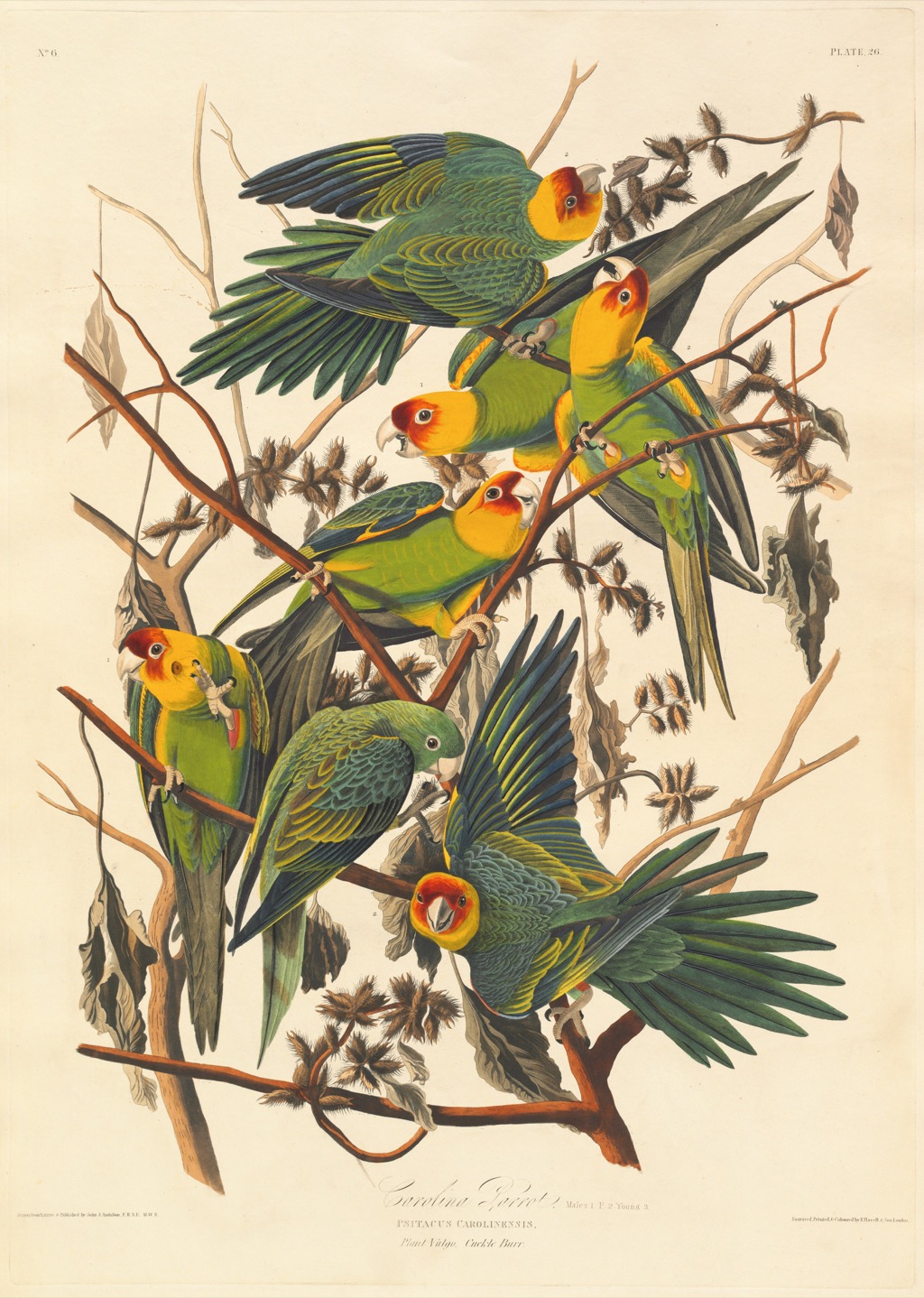
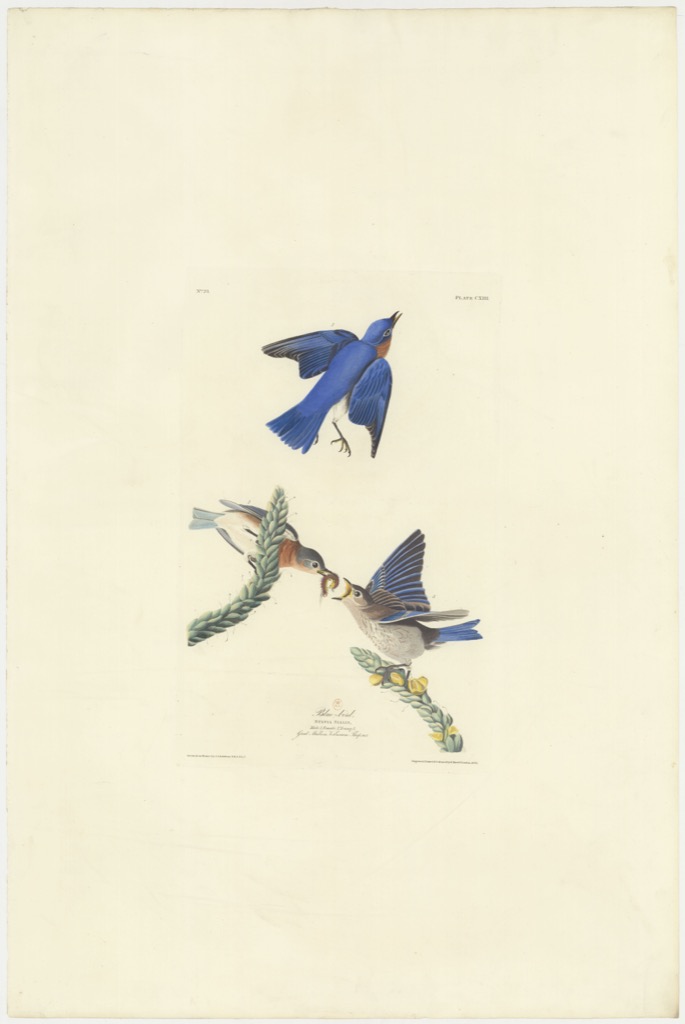
Within the Audubon cluster, the page belongs with the smaller, familiar, color-rich plates. Eastern Bluebird uses family grouping, a named plant and backyard memory. Cardinal Grosbeak uses a bright perched pair and familiar red color. Ruby-throated Hummingbird uses tiny scale, flowers and suspended flight.
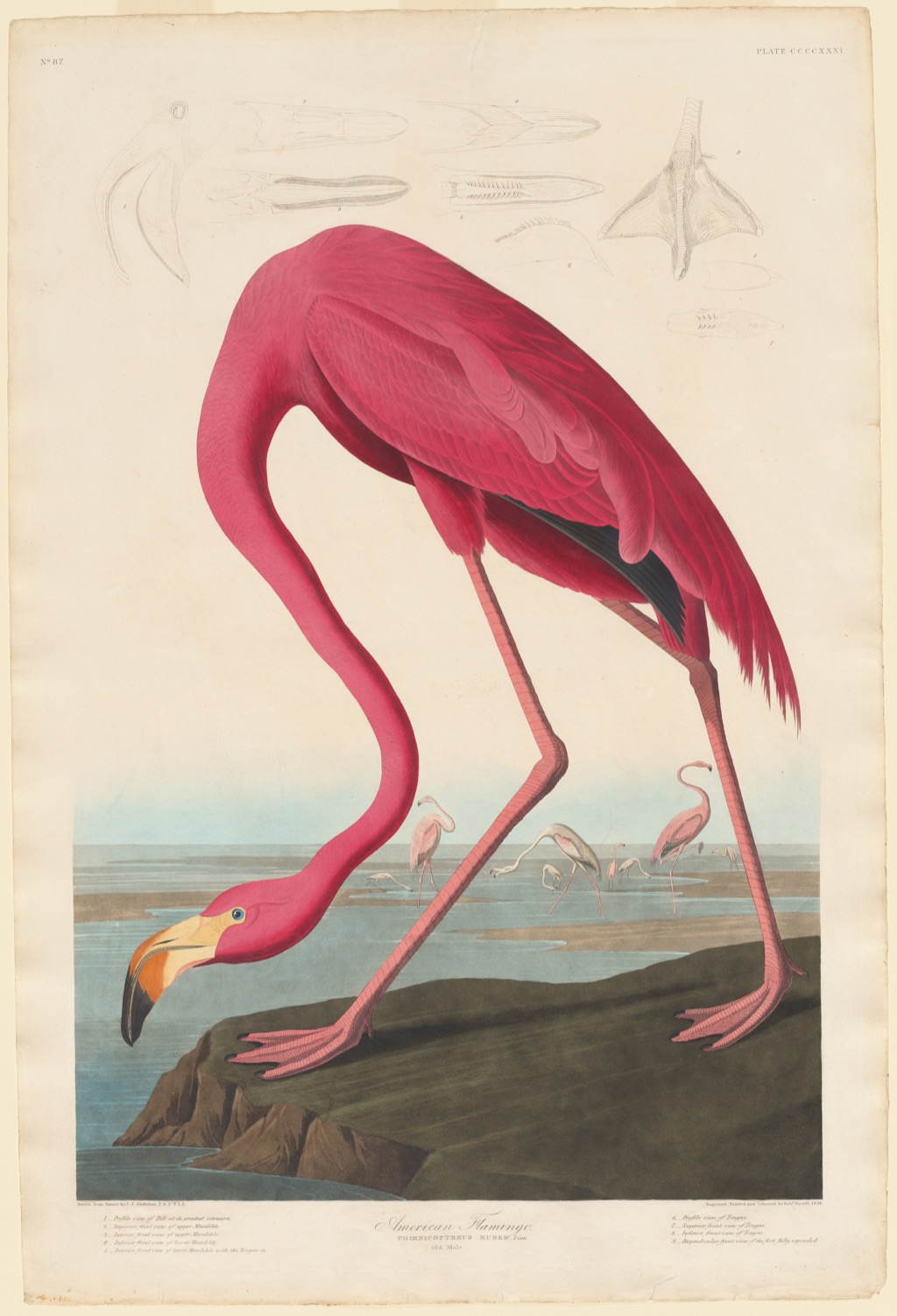
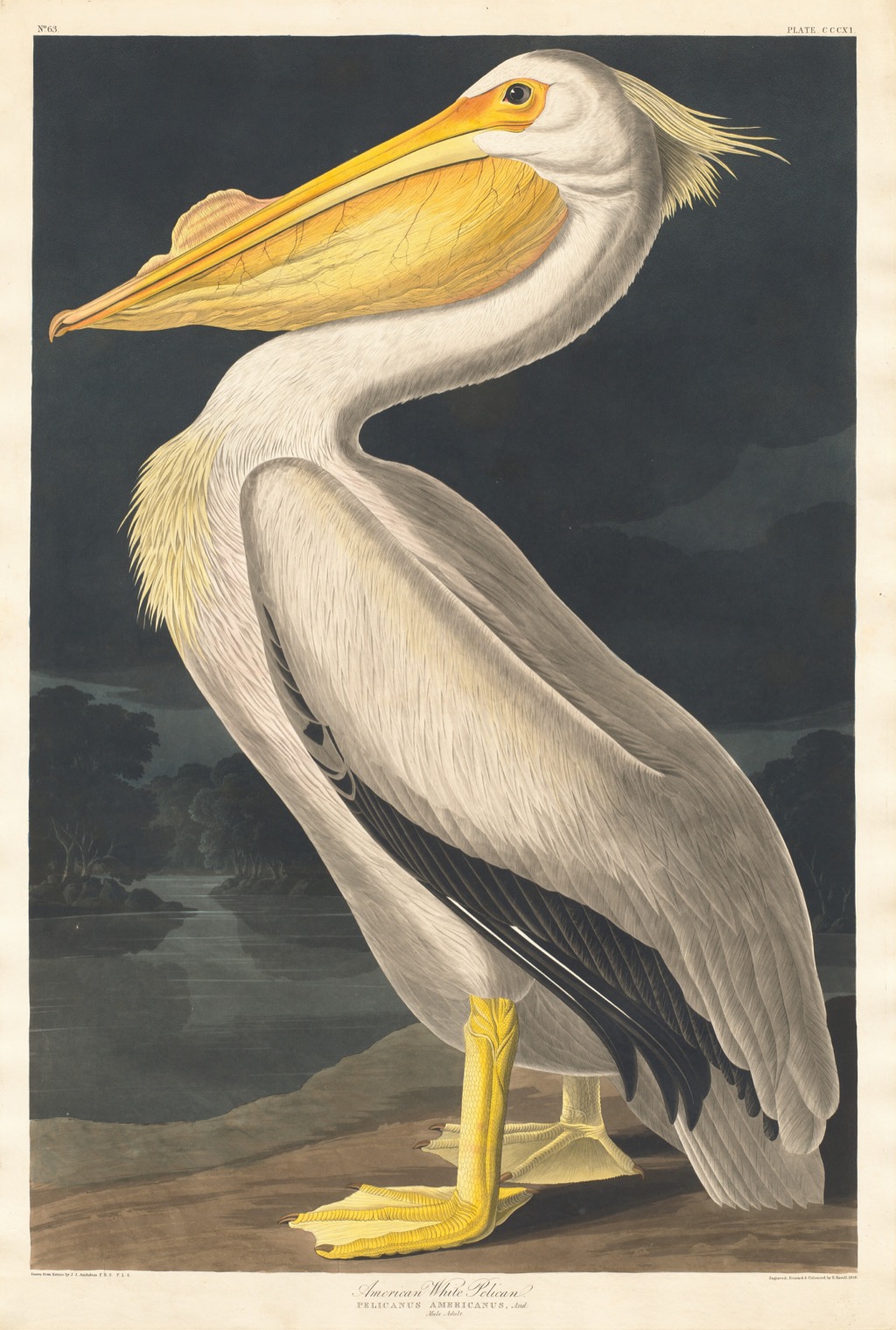
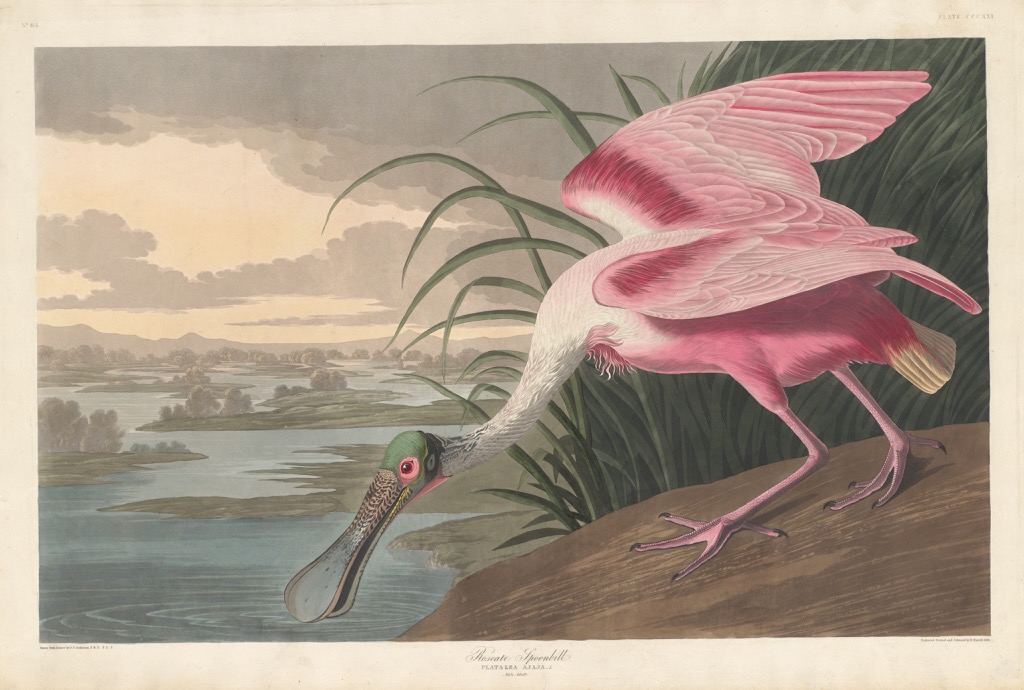
The page also connects outward to larger spectacle. American Flamingo, American White Pelican and Roseate Spoonbill show how Audubon handled dramatic bodies and broad color. The hummingbird shows that intensity could be concentrated rather than massive.
Printmaking and Delicacy
The plate depends on precision. Engraving gives the flowers, leaves and small bodies their structure. Aquatint helps carry softer tonal passages. Hand coloring supplies the brilliant throat, green plumage and warm flowers. Amon Carter and NGA both identify the work through engraving, aquatint and hand coloring, keeping the image attached to its printed-object history. [2], [3]
The maker line matters for that reason. Audubon's name dominates the project, but the finished folio plate also depends on Havell's translation into print and on color work that could keep the tiny birds alive on paper. A hummingbird plate is a test of control as much as imagination.
This is especially clear in the leaf and flower passages. The birds are small enough that careless surrounding detail would either swallow them or make them seem pasted onto the page. Instead, the foliage spreads around them in a way that lets the eye find each bird. The plant gives complexity, but the printmaker's control keeps that complexity from becoming visual noise.
That is why the image rewards more than a quick decorative glance. Plate number, title, medium, date, maker line and institutional record all matter. They turn the hummingbird from a floating motif into a specific nineteenth-century object from a famous printed publication.
How to Look at Ruby-throated Hummingbird
Begin with the plant. It gives the whole plate a structure and explains the birds' movement. Then look at the male's throat, but notice how its effect depends on surrounding color and posture. The famous red throat is not a flat badge. It is a light-sensitive, angle-dependent visual event.
Next, compare the birds. The male, female and young bird make the image a study of variation. Audubon shows a species through difference rather than through a single ideal specimen. Then look at the open space. Hummingbirds need air because hovering is central to their visual identity.
Finally, bring in the modern bird. The Ruby-throated Hummingbird is a living species associated with flowers, feeders, insects, woodland edges and migration. The plate becomes richer when that current natural history is connected to the older print without making the print behave like a modern field guide.
Why This Plate Matters
Ruby-throated Hummingbird matters because it shows Audubon solving the small-bird problem with unusual grace. The double-elephant folio did not only glorify large birds. It could also make tiny birds feel vivid, mobile and worth sustained looking.
The plate is also one of the cluster's strongest garden and pollinator-adjacent subjects. It connects nineteenth-century natural history art to a bird many readers still watch at flowers or feeders. That familiarity should not make the artwork feel slight. Audubon and Havell turn a tiny bird into a carefully organized printed scene.
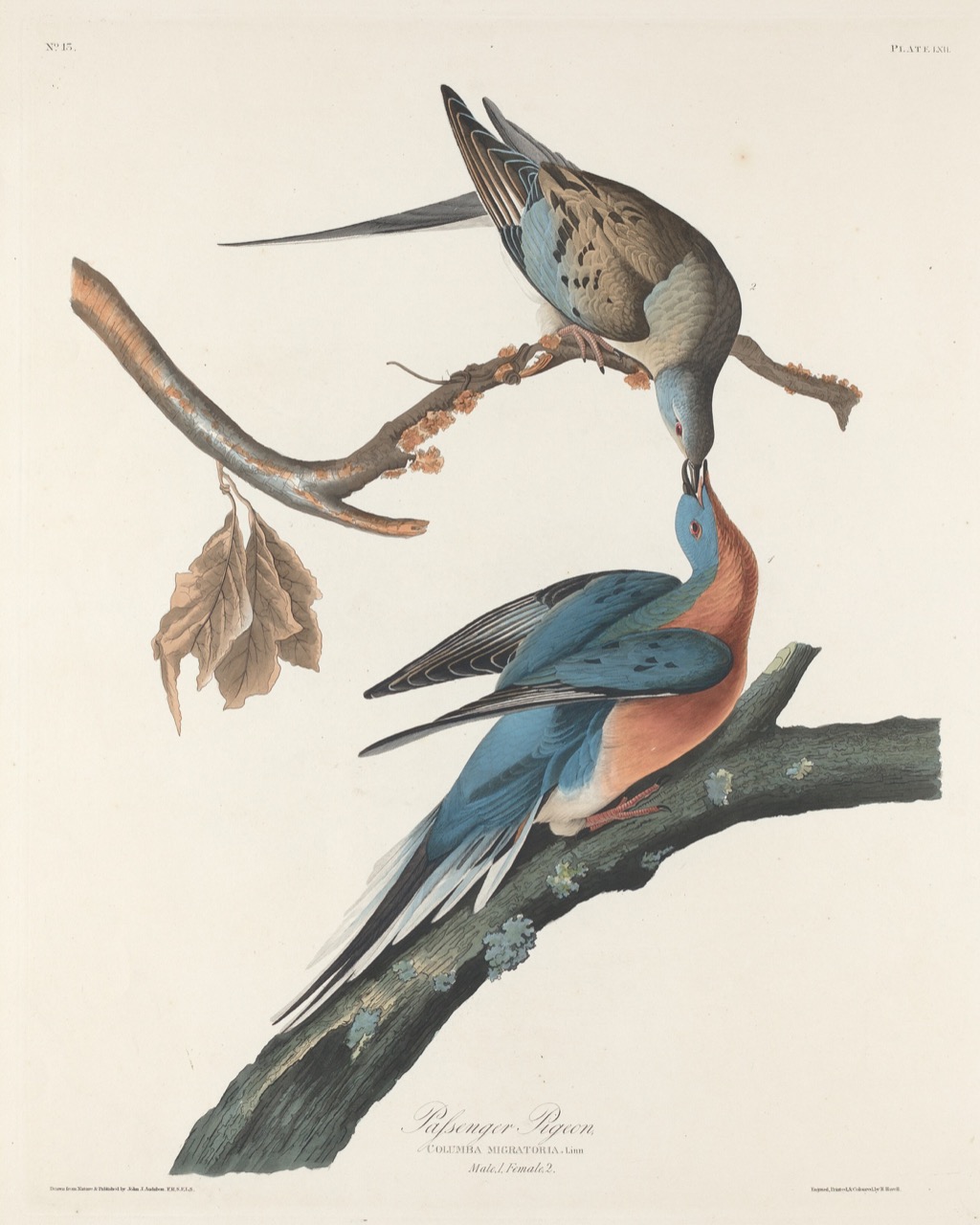
It also broadens the Audubon cluster's emotional range. The page is not an extinction memorial like Passenger Pigeon, not a cautionary survival-status page like Ivory-billed Woodpecker, and not a large display of water-bird scale. It is a study of quickness made still, and that makes it one of the best pages for readers who arrive through nature, gardens, migration and close looking.
For wider context, readers can continue to The Birds of America for the publication story or John James Audubon Works for the broader career frame. The site's bird drawings section offers another route into the long tradition of bird imagery.
Frequently Asked Questions
Discussion
Ruby-throated Hummingbird turns a tiny, quick bird into a full folio image of flower contact, scale and suspended movement.
Use the prompts below to think about how Audubon and Havell make delicacy feel substantial.
Reader Insights
How does the large sheet help rather than overwhelm such a small bird?
What do the trumpet-shaped blossoms explain about feeding, motion and composition?
Where does the still print most strongly suggest hovering or sudden movement?
Join the Conversation
Share your reading of Audubon's Ruby-throated Hummingbird and the way the plate balances tiny scale, bright color and migration memory below.
References
- BnF/Gallica via Wikimedia Commons, The Birds of America, Livraison 10, Plate 47, Ruby-throated Humming Bird, Gallica btv1b531440094, accessed 26 July 2026.
- Amon Carter Museum of American Art, Ruby-Throated Humming Bird, Trochilus colubris. Linn., accession 1982.50, accessed 26 July 2026.
- National Gallery of Art, Ruby-throated Humming Bird, accession 1945.8.47, accessed 26 July 2026.
- Cornell Lab of Ornithology, All About Birds, Ruby-throated Hummingbird overview, accessed 26 July 2026.
- Cornell Lab of Ornithology, All About Birds, Ruby-throated Hummingbird life history, accessed 26 July 2026.
- Smithsonian's National Zoo and Conservation Biology Institute, Ruby-throated hummingbird, accessed 26 July 2026.
- Biodiversity Heritage Library, The Birds of America, accessed 26 July 2026.
- Natural History Museum, London, The Birds of America overview, accessed 26 July 2026.
- Yale Beinecke Library, The Double Elephant Folio, accessed 26 July 2026.