

 by Tom Gurney
Tom Gurney BSc (Hons) is an art history expert with over 20 years experience
Published on July 26, 2026 / Updated on September 6, 2026
Email: tomgurney1@gmail.com / Phone: +44 7429 011000
Osprey and Weakfish: Introduction
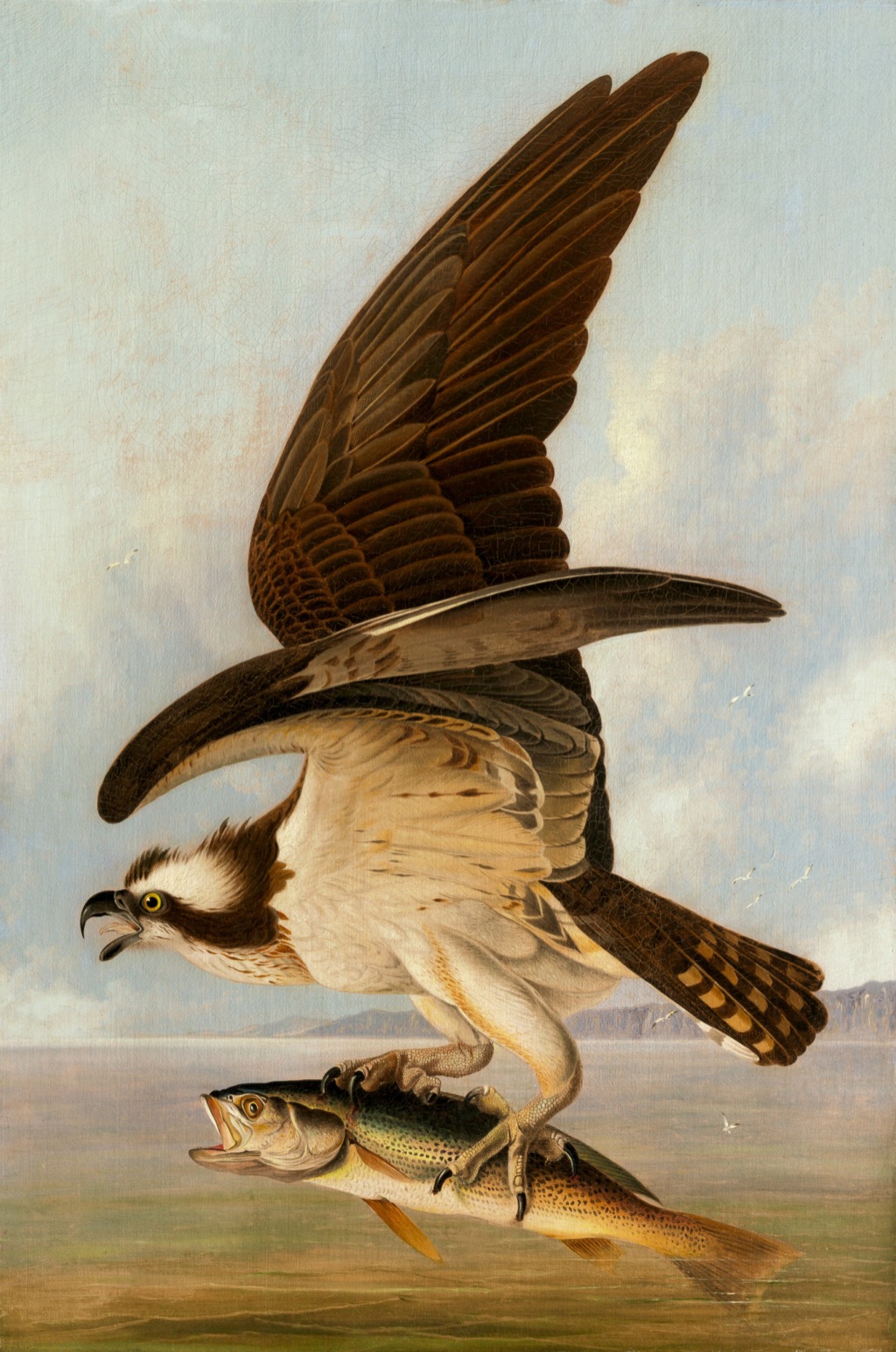
John James Audubon's Osprey and Weakfish is one of his most dramatic predator-prey images. A large fish-hunting bird surges out of the water with a weakfish gripped in its talons, wings raised, beak open and body straining forward. The painting is not a plate from The Birds of America. It is an oil painting, but it belongs naturally beside Audubon's bird prints because it shows the same ambition: to make natural history feel immediate, physical and alive.
The modern bird identification is Osprey, Pandion haliaetus. The fish is weakfish, Cynoscion regalis, also known in fisheries sources as squeteague or gray seatrout. Those names matter because the painting depends on a precise relationship between hunter and prey. Audubon was not merely painting a generic sea bird with a generic fish. He was arranging an encounter between a raptor famous for catching live fish and a coastal species of the eastern United States.
Osprey and Weakfish is a good reminder that Audubon's art was not limited to the printed folio. He was also a painter of action, weather, water and animal force. Here the drama is concentrated in one instant: the bird has already struck, the fish is still alive in the grip, and the waterline below them confirms how recently the capture occurred.
At a Glance
- ArtistJohn James Audubon [1]
- Date1829 [1]
- Mediumoil on canvas on hardboard [1]
- Dimensions101.6 x 66.7 cm, or 40 x 26 1/4 in. [1]
- CollectionNational Gallery of Art, accession 2005.32.1 [1]
- SubjectOsprey, Pandion haliaetus, and weakfish, Cynoscion regalis [2], [4]
Contents
- Introduction
- Annotated Details
- Object Facts
- What the Painting Shows
- Osprey: The Bird Behind the Image
- Weakfish: The Prey Behind the Image
- Relation to The Birds of America
- How to Read the Painting Today
- Why This Artwork Matters
Annotated Details from Osprey and Weakfish
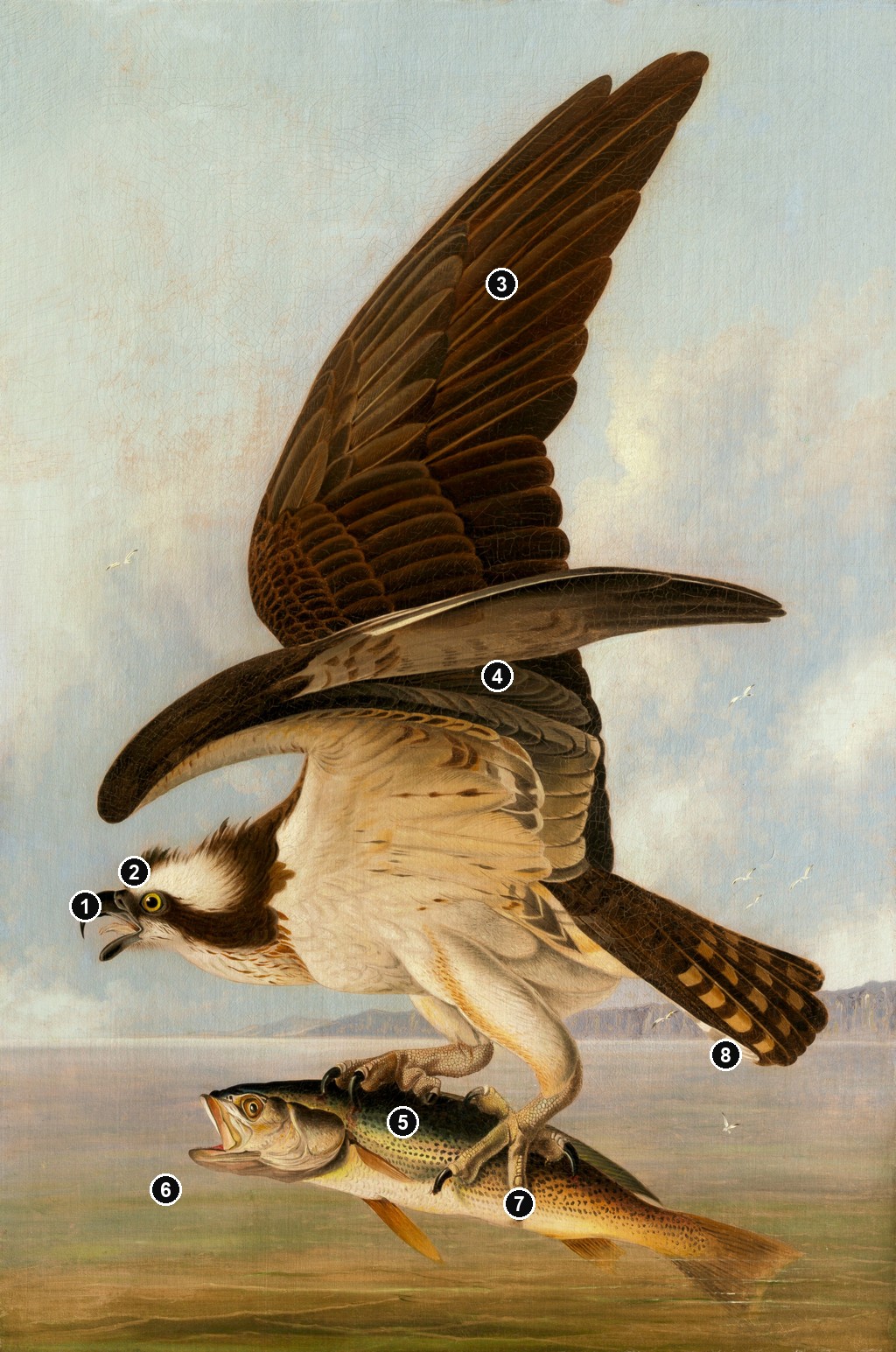
These annotated details follow Audubon's Osprey and Weakfish through the bird's head, raised wing, layered flight feathers, gripping talons, fish and low coastal setting.
Details from OSPREY AND WEAKFISH
Close looking shows how the plate uses a predator-prey moment to combine natural history, action and a carefully staged coastal horizon.
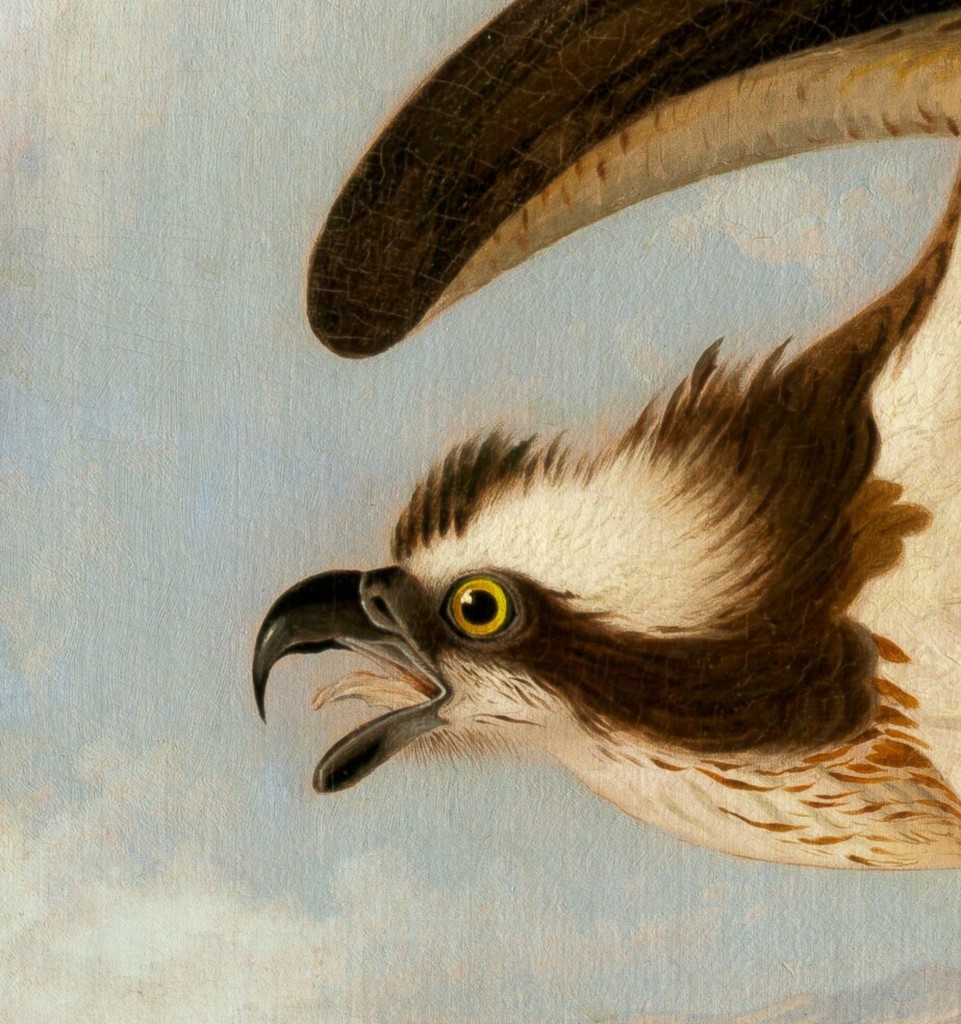
Open hooked bill
The open hooked bill sharpens the bird's predatory character. It gives the otherwise frozen pose a sense of sound and effort.
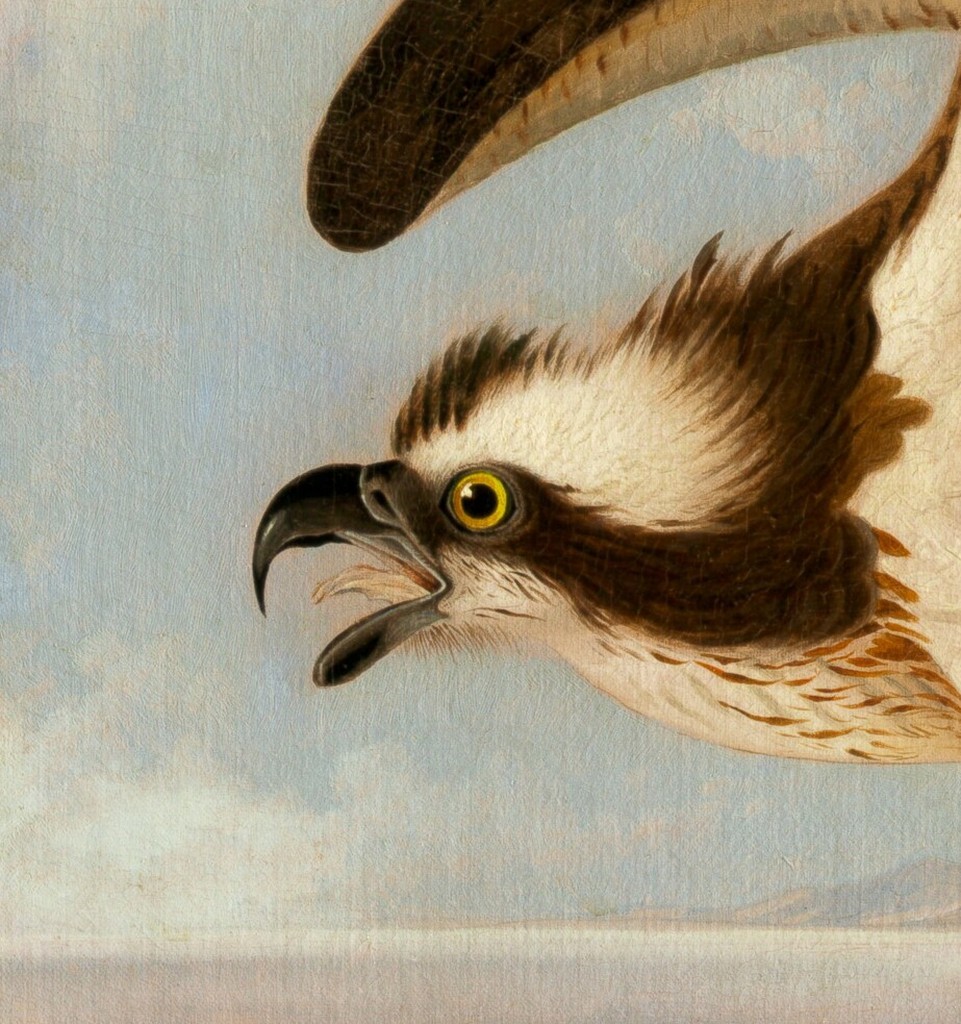
Bright eye and head pattern
The yellow eye stands inside the dark head stripe and white crown. This small point gives the large bird an intense focus.
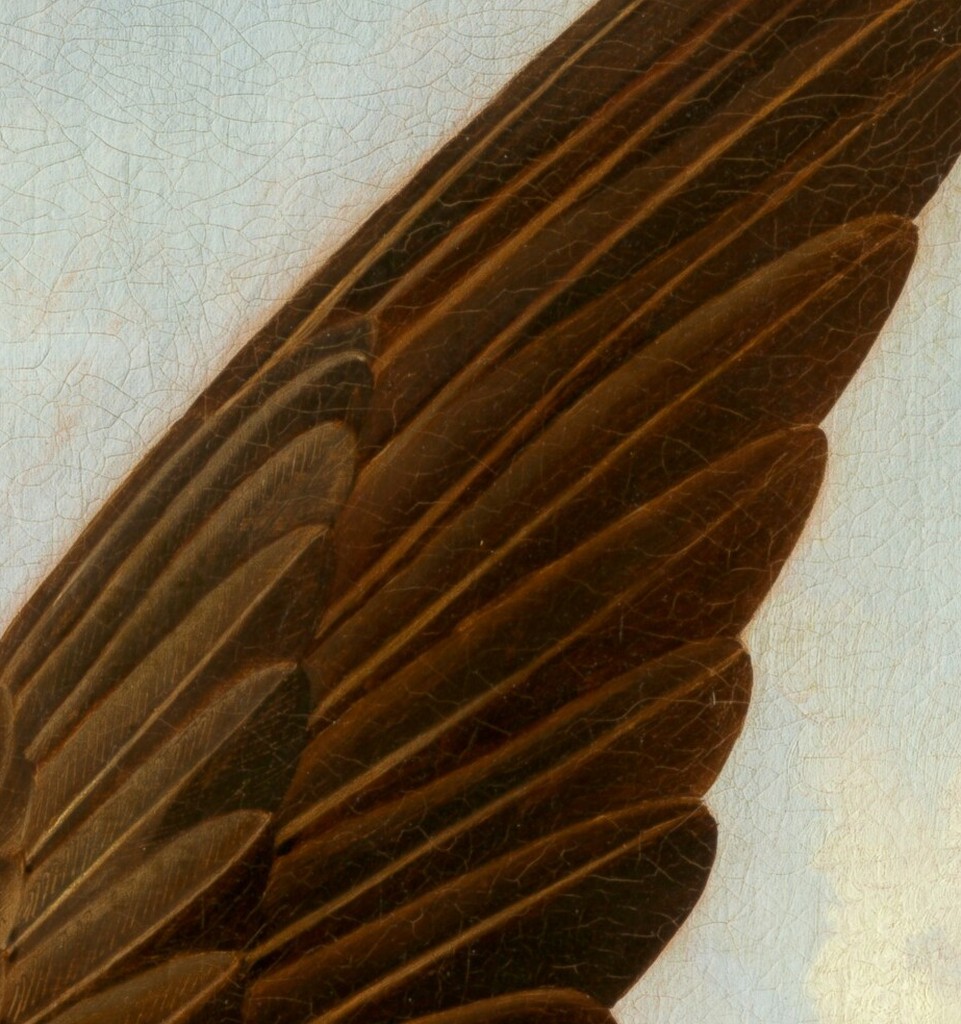
Raised dark wing
The raised wing dominates the upper plate. Its dark feathers make a strong triangular mass against the pale sky.
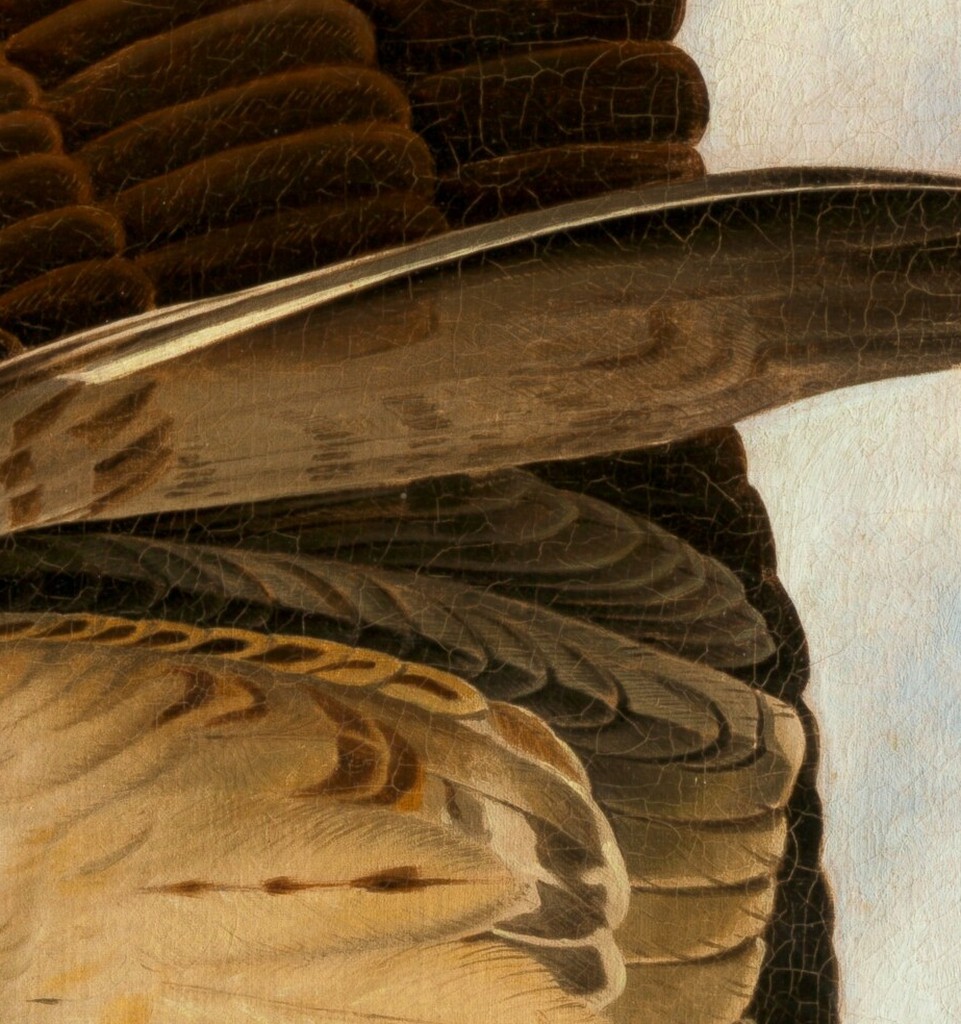
Long horizontal wing
The lower wing stretches across the body like a bar. It stabilizes the composition while the upper wing rises sharply behind it.
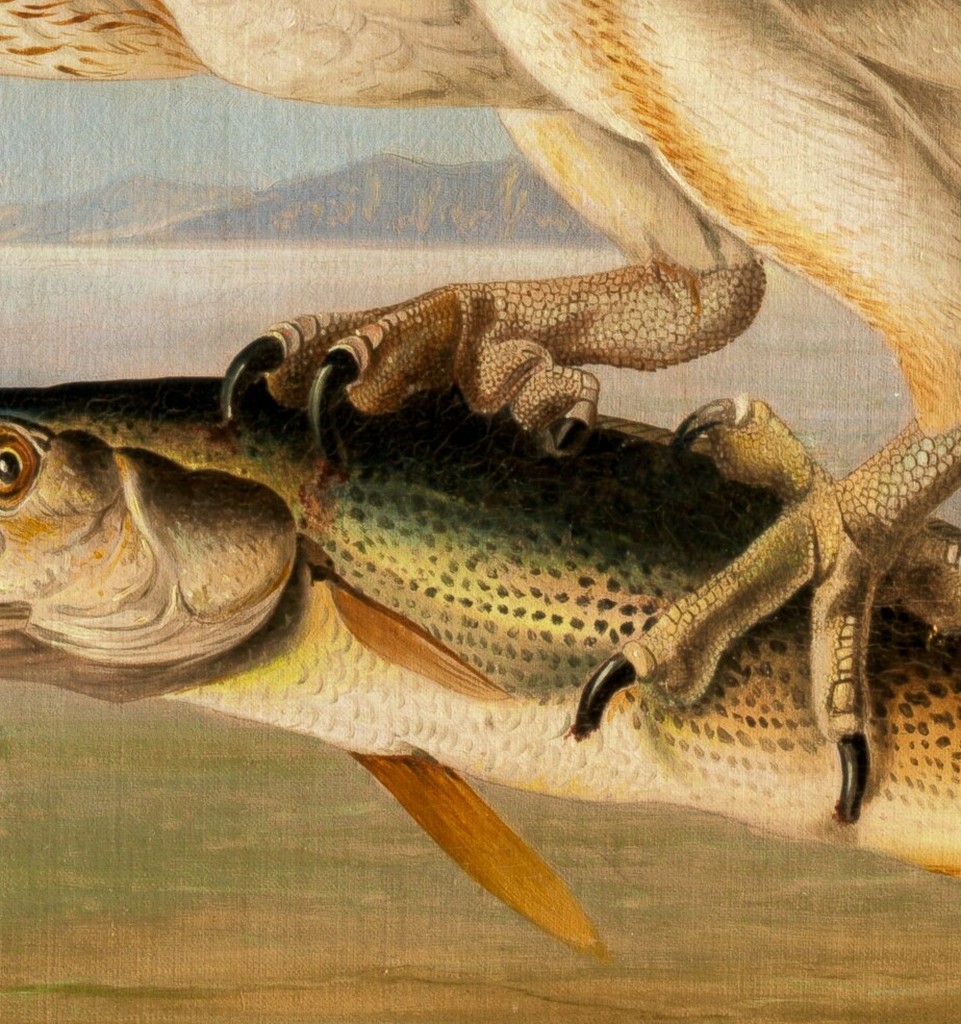
Gripping talons
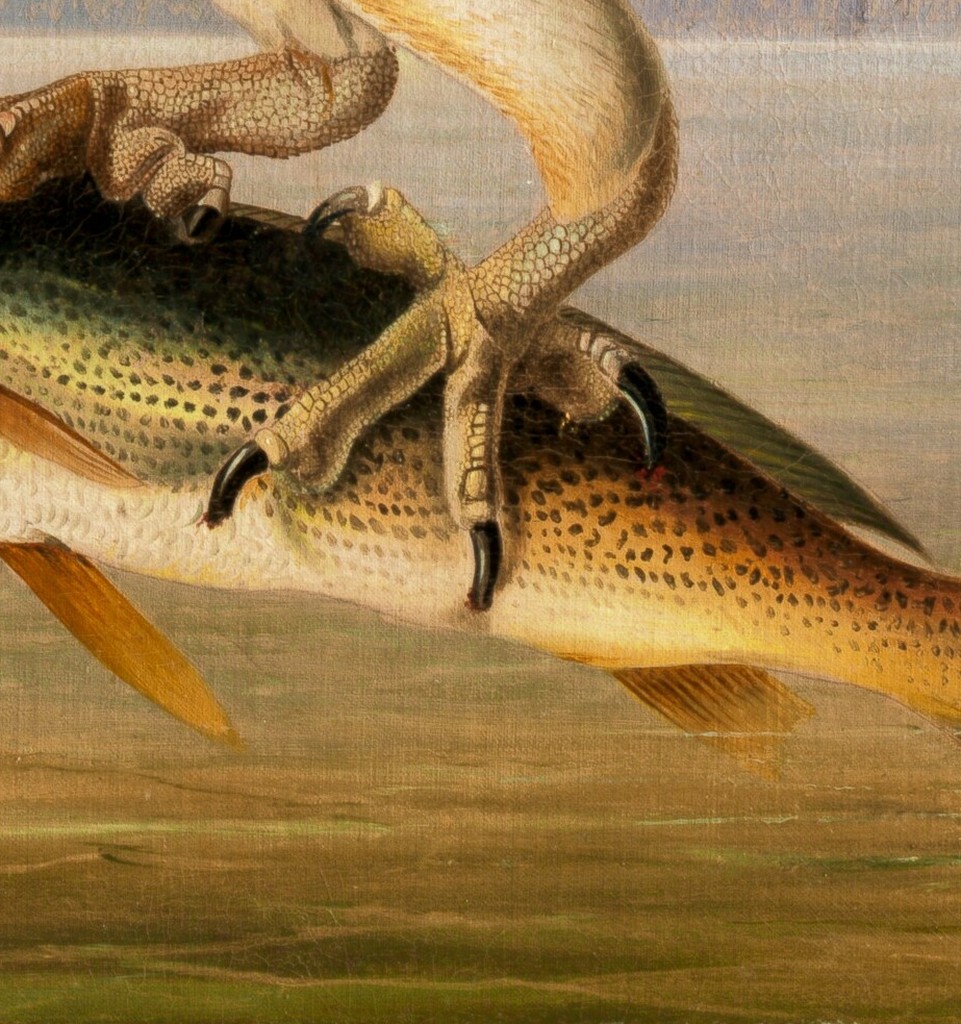
The talons connect bird and fish at the plate's dramatic centre. Audubon makes the capture readable through the pressure of claw on body.
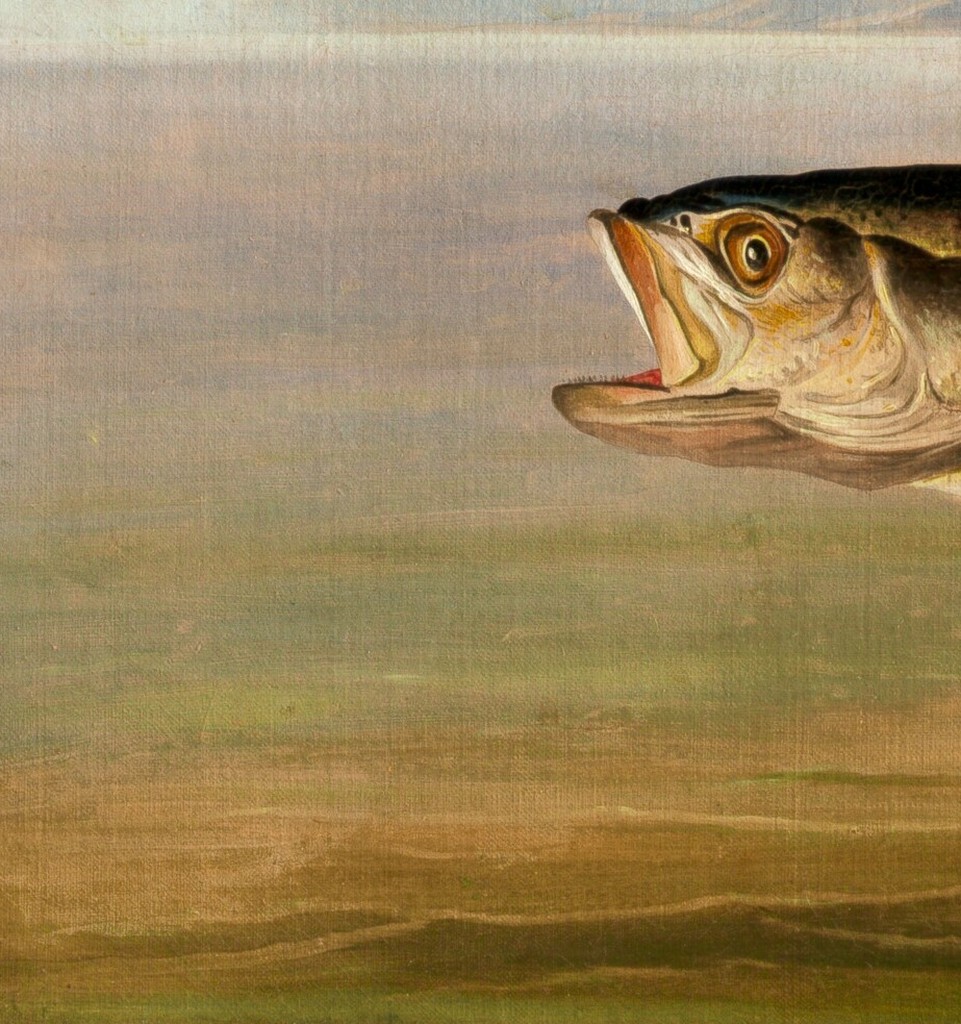
Weakfish head
The fish's open mouth and round eye echo the bird's head above. Predator and prey are linked visually as well as narratively.
Spotted fish body
Dark spots and a warm lower edge describe the fish as a substantial body, not just a prop beneath the bird.
Tail and coastal distance
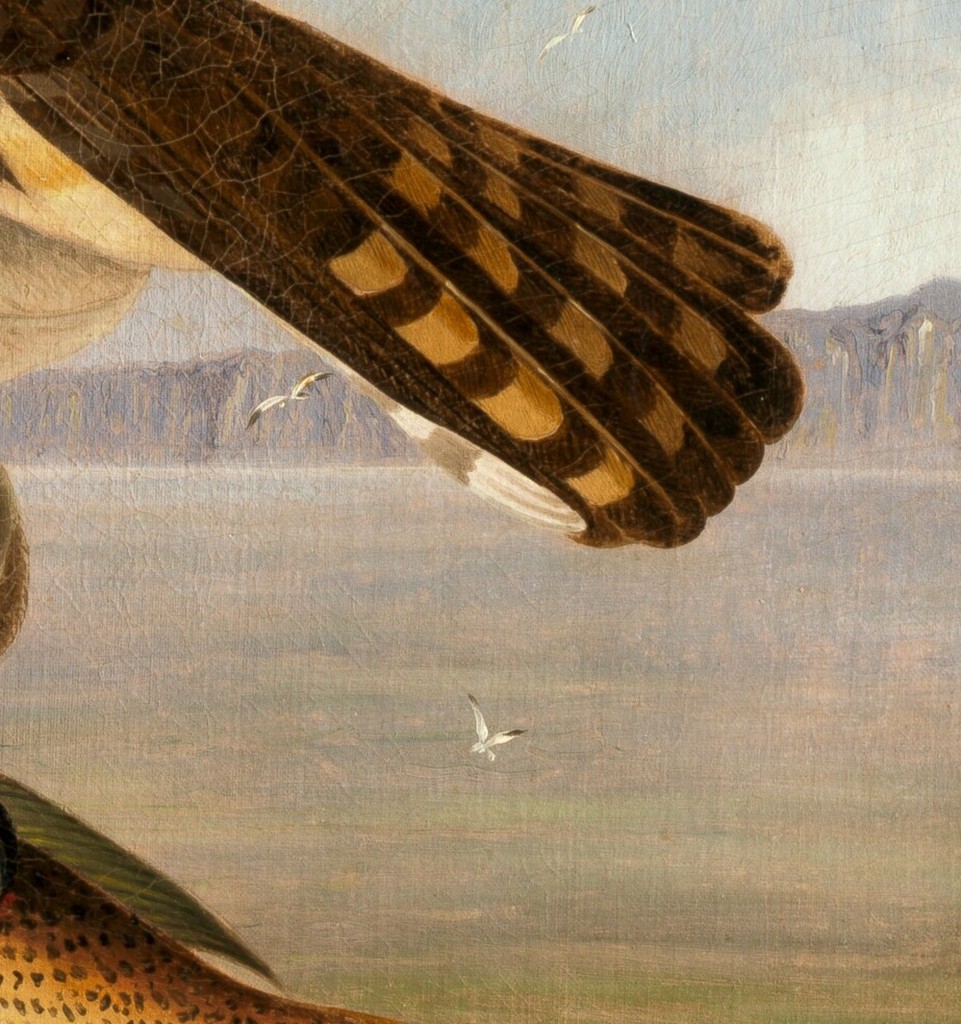
The barred tail overlaps low land, water and tiny white birds. The detail keeps the capture tied to a coastal habitat while closing the bird's long silhouette.
Object Facts
The National Gallery of Art records Osprey and Weakfish as an 1829 oil on canvas on hardboard by John James Audubon. The accession number is 2005.32.1. The overall dimensions are 101.6 by 66.7 centimetres, or 40 by 26 1/4 inches. The work entered the National Gallery as a gift of Richard M. Scaife.
The NGA record states that the object's media is free and in the public domain, making it the primary institutional path for illustrated use. The object history is unusually rich. The provenance begins with Audubon and passes by bequest to his widow, Lucy Bakewell Audubon, before moving through later owners, museum deposits, galleries and finally the National Gallery.
The painting has also appeared in exhibitions connected to Audubon and American natural history art, including twentieth- and twenty-first-century shows on Audubon, shorebirds and the artist-naturalist tradition. That history helps confirm that the work is not simply a side image beside the better-known bird plates. It has its own place in Audubon's reputation as a painter of living animal drama.
What the Painting Shows
The National Gallery's description makes the action vivid. A bird in flight grips a shimmering green-and-white fish in its talons. Both animals face left. The bird's wings are lifted high, its dark brown feathers contrasted with cream-white undersides. Its head is low, its hooked beak open, and its yellow eye is sharply visible.
The fish is equally important. Its mouth gapes, its eye is open, and its tail still touches the water below. The body is described as emerald green fading to tan and pale yellow, with light and dark speckles along its length. The fish is not a passive object in the composition. It is a living creature caught at the moment of transition from water to air.
The setting is coastal and atmospheric. Water runs across the lower part of the painting, meeting the horizon low in the composition. The distant cliffs are soft mauve, the sky is blue with clouds, and small white birds with black wingtips fly far away. The background gives scale, but Audubon keeps the main drama close.
The result is a painting about tension. The osprey's wings pull upward, the fish hangs downward, and the whole composition seems to move left across the surface. Even the fish's tail dipping into the water keeps the viewer aware of the instant just before and just after the capture.
Osprey: The Bird Behind the Image
Cornell's All About Birds identifies the Osprey as Pandion haliaetus, a fish-eating raptor associated with shorelines and open water. Cornell describes Ospreys as distinctive among North American raptors for their diet of live fish and their ability to dive into water to catch them. That modern species account explains why Audubon's painting feels so specific: the action is exactly the kind of hunting moment that defines the bird.
Ospreys hunt by searching over water and diving with feet outstretched. Cornell notes their yellow eyes, strong talons and concentration while hunting. The painting emphasizes those same features. Audubon's bird has the hooked beak, pale head markings, dark wings and forceful talons that make the species recognizable, but he also intensifies the animal's effort through pose.
The habitat context also fits. Cornell says Ospreys use shallow, fish-filled water, including rivers, lakes, reservoirs, lagoons, swamps and marshes. They can only dive to limited depth, so fish near the surface are especially important. Audubon's low waterline and still-visible fish tail make the catch feel credible within that shallow-water hunting world.
Weakfish: The Prey Behind the Image
The fish in the title is weakfish, Cynoscion regalis. NOAA Fisheries describes weakfish, also known as squeteague or gray seatrout, as a sciaenid species native to eastern United States coastal waters, ranging from Cape Cod to Florida. NOAA also notes seasonal migration, with northward movement along the coast in spring and a return southward in autumn to overwinter in warmer waters.
That context matters because it keeps the fish from becoming merely a decorative victim. Weakfish are coastal fish with their own biology, range and fishery history. NOAA reports spawning primarily from April to July and records maximum sizes up to 95 centimetres in fisheries literature. A fish of that scale makes a plausible dramatic prize for a large Osprey.
The identification also supports the painting's Atlantic character. Osprey and Weakfish is not a generic bird-of-prey scene placed in an invented landscape. It brings together two species tied to eastern American waters. The bird belongs above shorelines and fish-filled shallows; the weakfish belongs to the coastal and estuarine world below.
Relation to The Birds of America
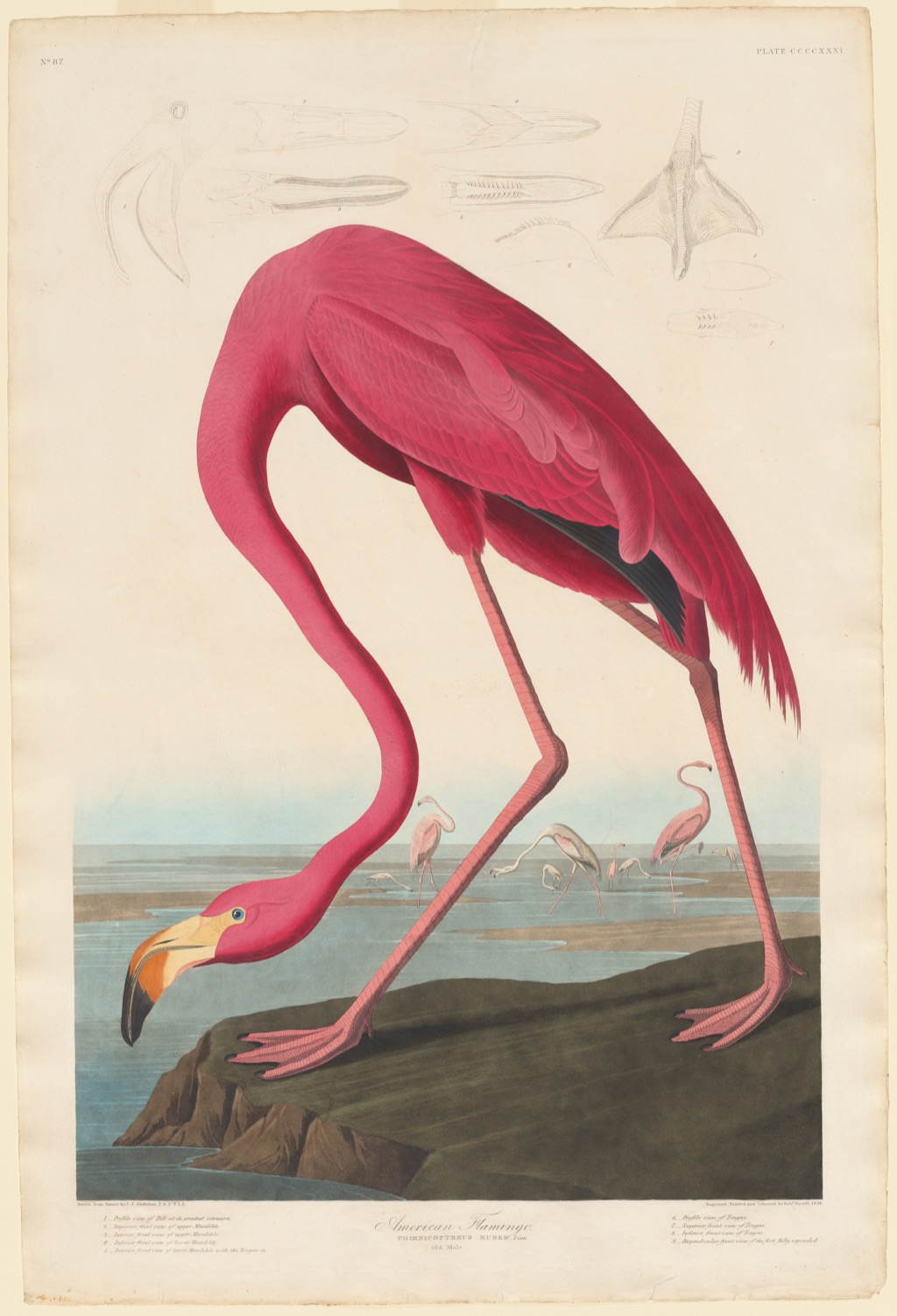
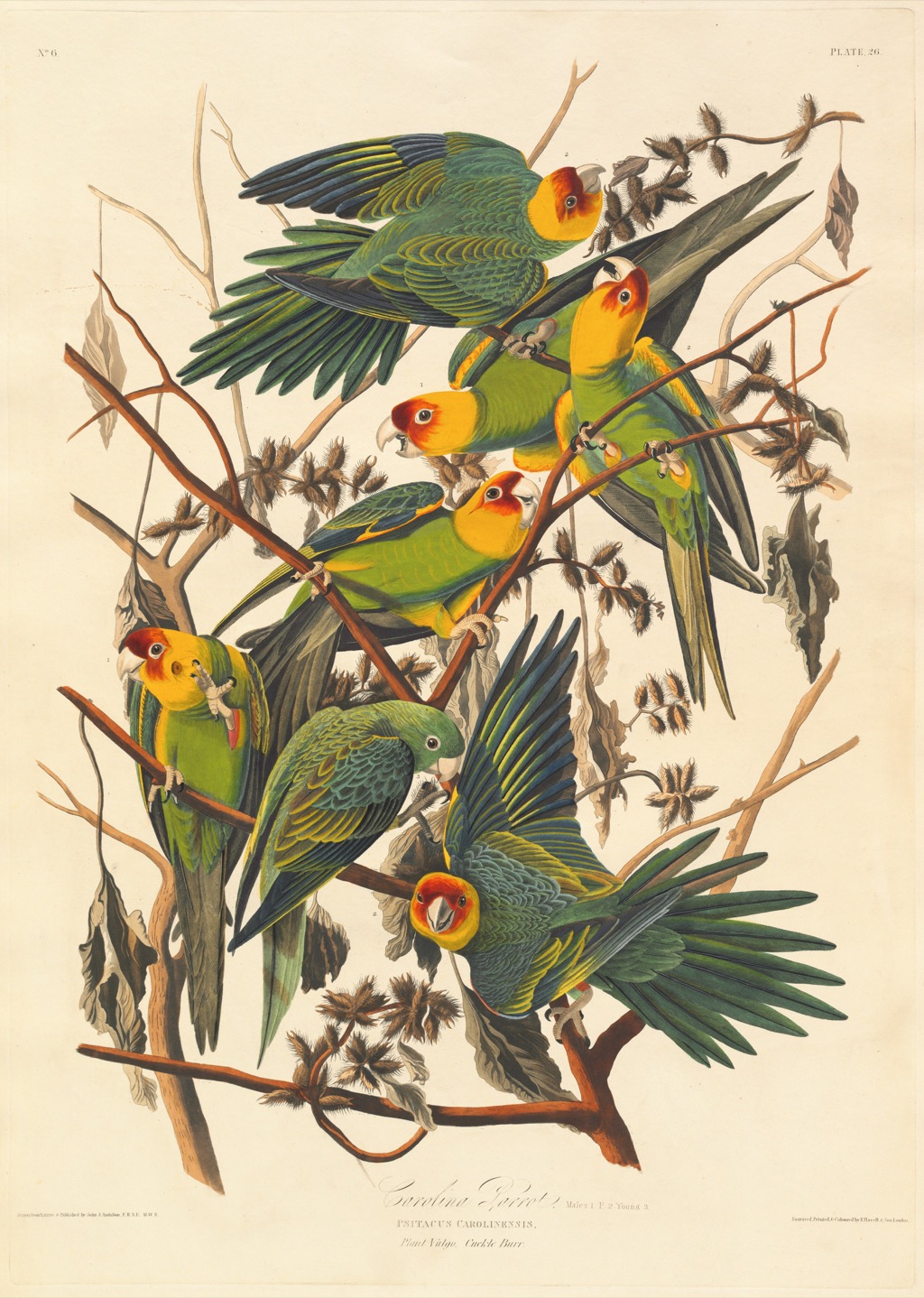
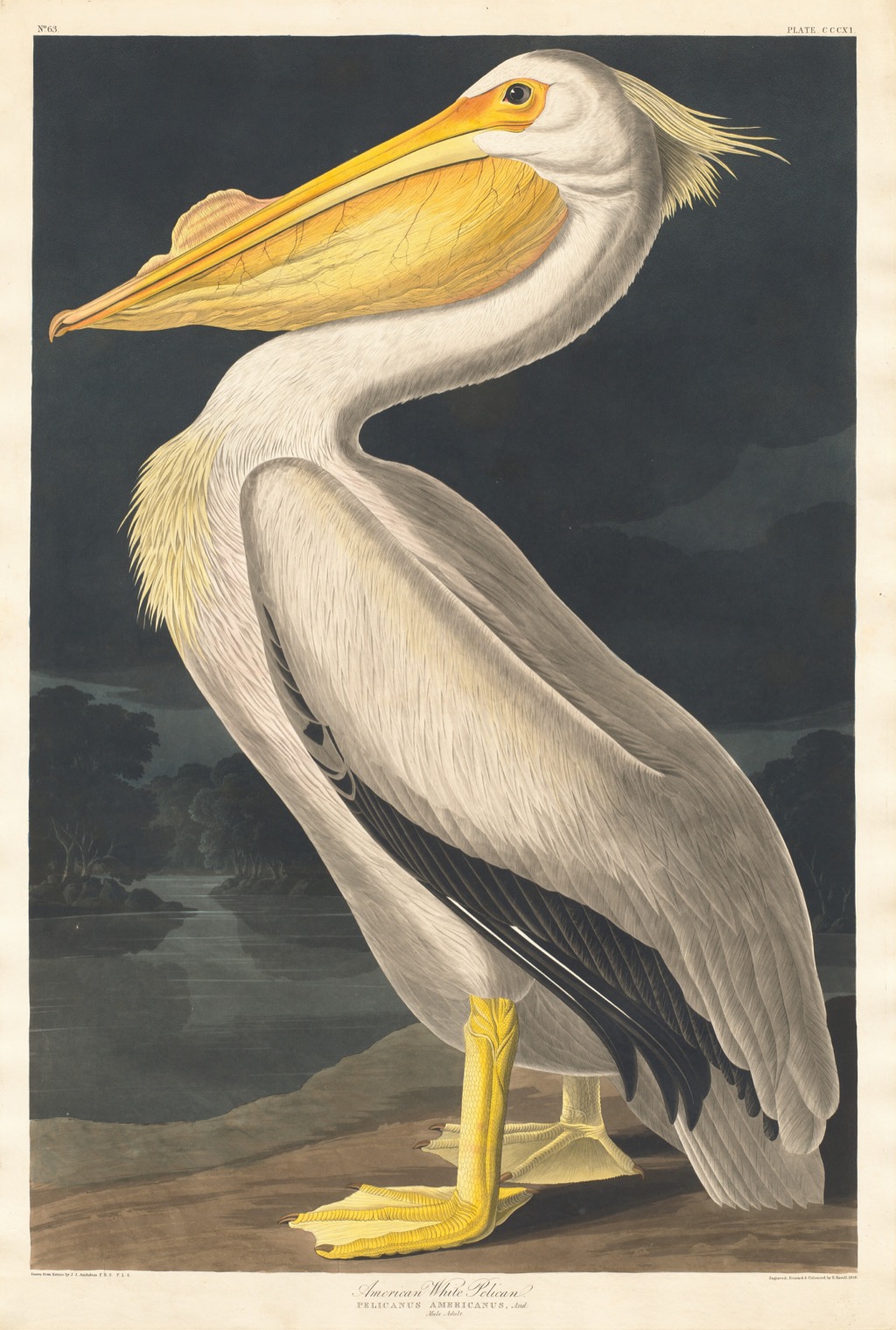
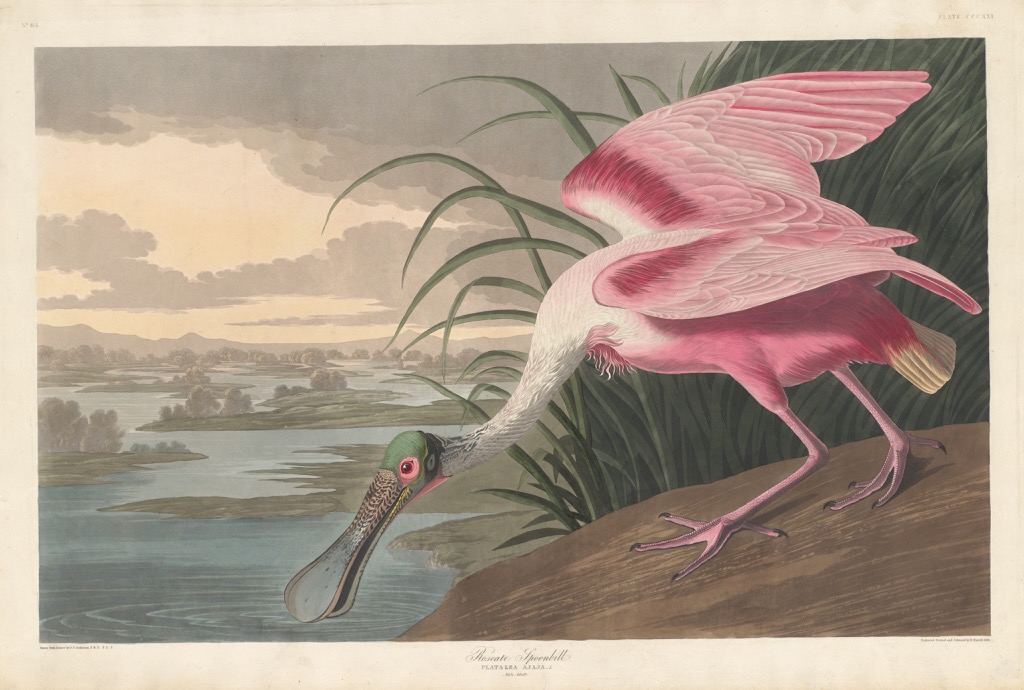
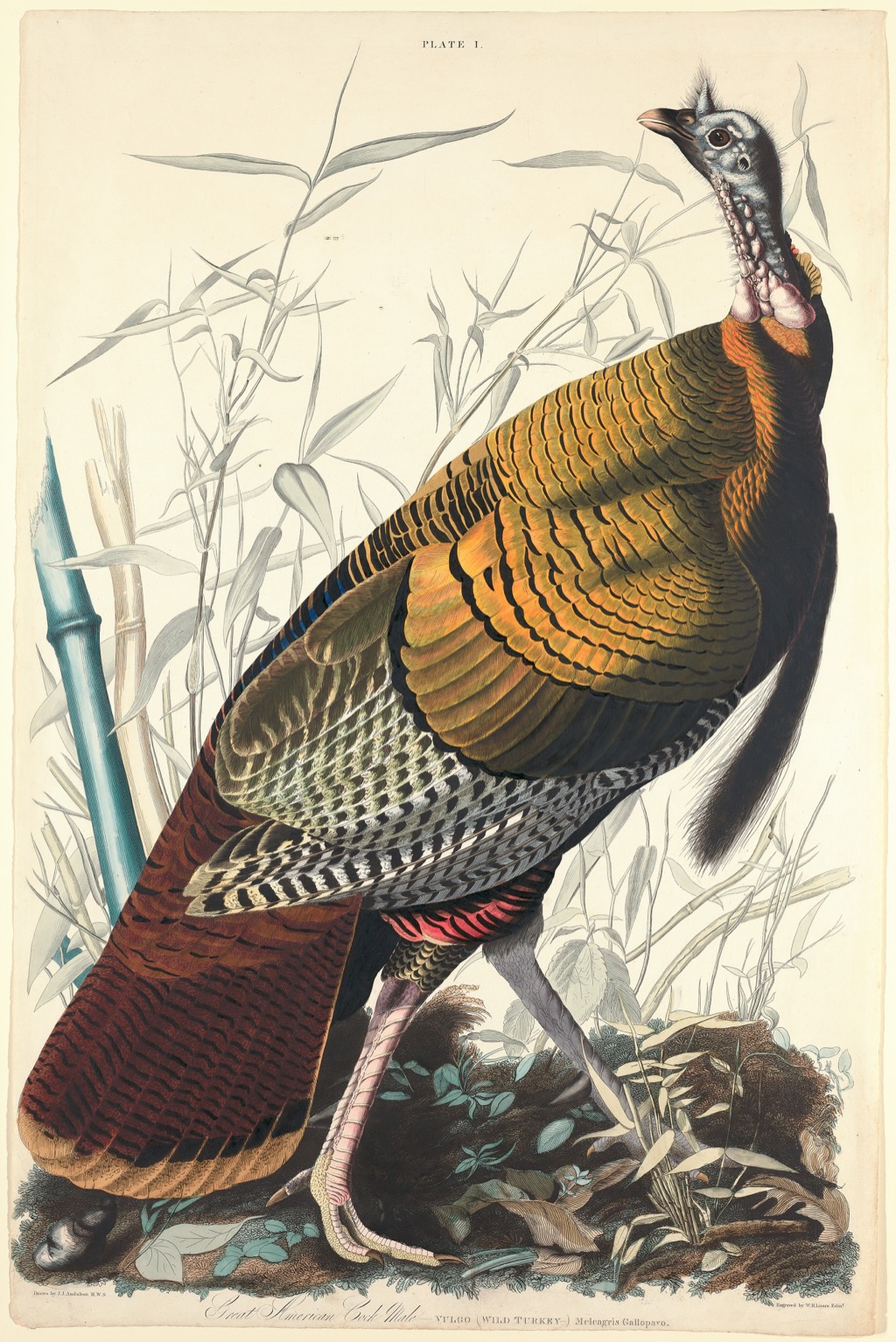
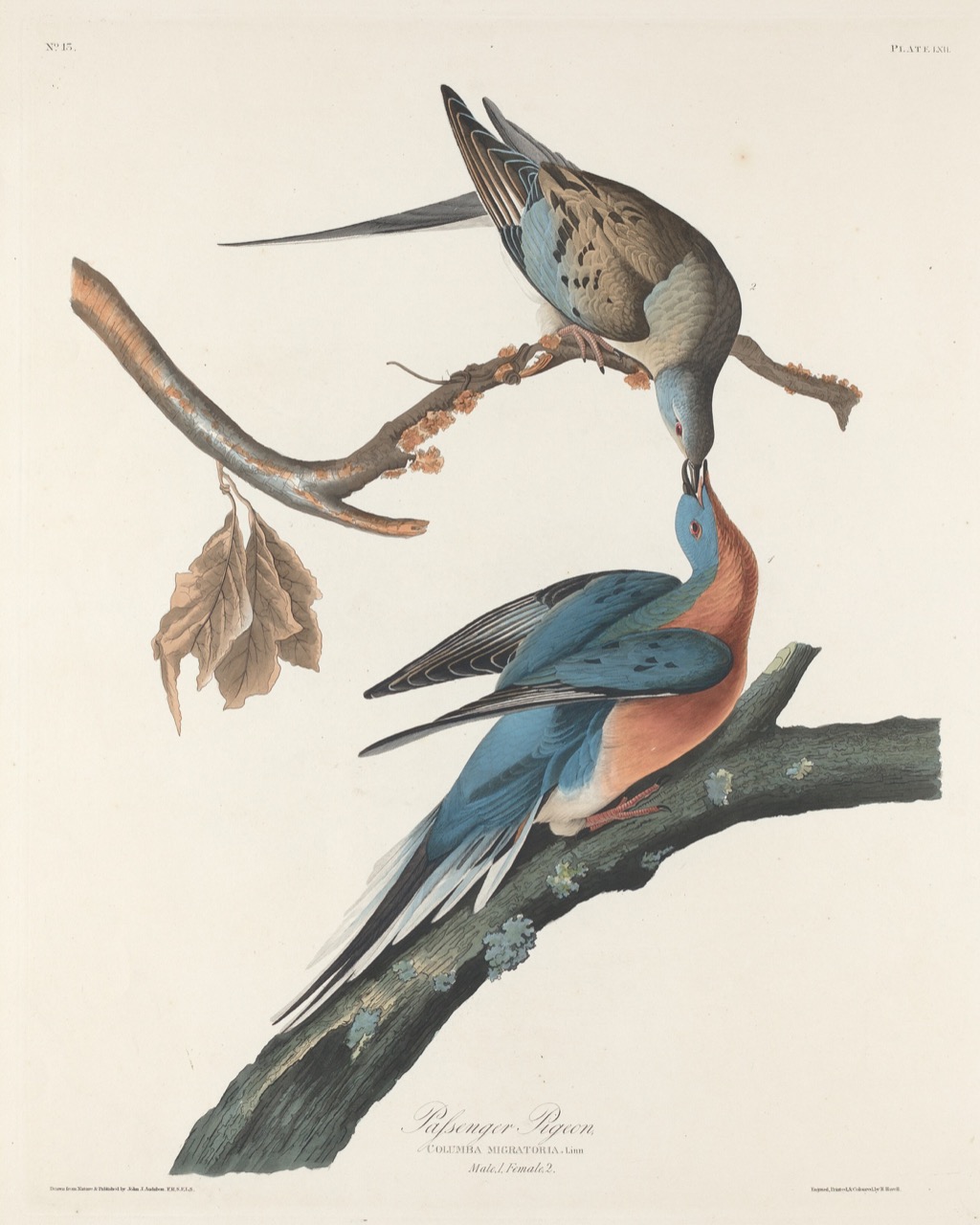
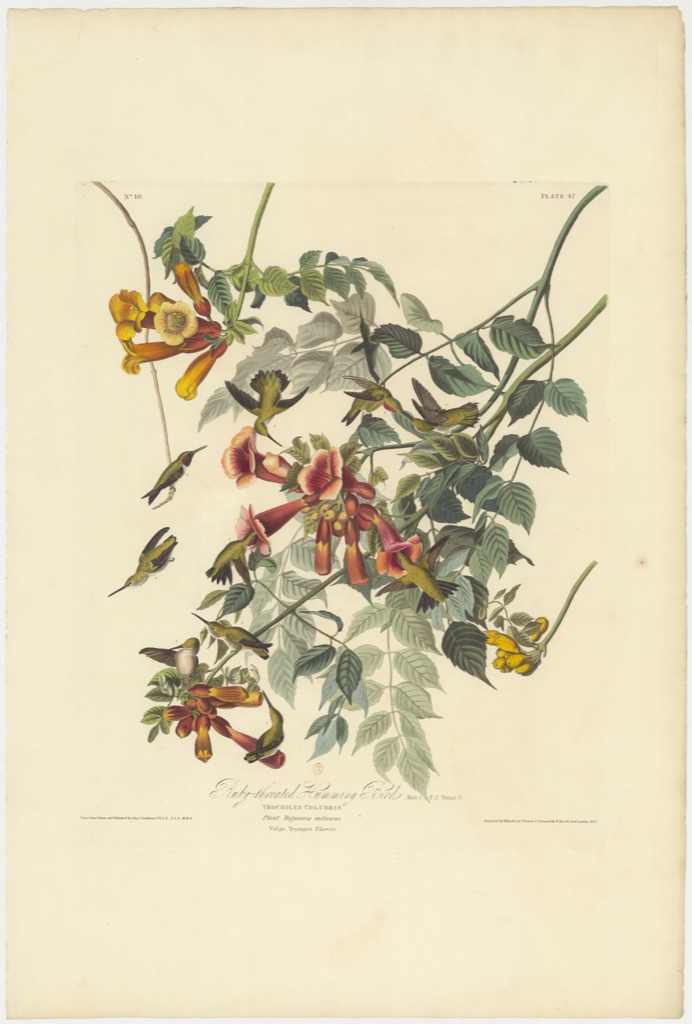
Osprey and Weakfish is not one of Audubon's printed plates from The Birds of America. That distinction should remain clear. The page belongs in the Audubon cluster because it shows a related side of his practice: oil painting, predator-prey action and close attention to bird behaviour outside the plate sequence.
Even so, the painting speaks to the same artistic problem as The Birds of America: how to make animals appear alive on a flat surface. In many bird plates, Audubon solved that problem through branching poses, feeding plants, nests, water and grouped figures. In Osprey and Weakfish, he solves it through one violent upward movement.
The image therefore connects naturally to The Birds of America for the broader publication story and to John James Audubon Works for Audubon's paintings, drawings and prints. It also belongs beside John James Audubon Biography because it reveals the artist's long fascination with field observation, animal action and the theatrical possibilities of natural history.
How to Read the Painting Today
A first reading begins with the talons. The bird's feet are the hinge of the whole picture: they bind air to water, bird to fish, life to death. Audubon makes the grip the physical centre of the drama.
A second reading begins with the eye. The Osprey's yellow eye and the fish's open eye both matter. The bird's eye suggests focus; the fish's eye suggests shock and immediacy. The painting asks viewers to look at both predator and prey, not only at the victorious bird.
A third reading begins with the water. The fish's tail still touches it, and the low horizon keeps the action close to the surface. The painting is not about a bird safely aloft after the hunt. It is about the instant when the catch has just broken free from its element.
A fourth reading begins with medium. This is oil paint, not a hand-colored engraving. The shimmering fish, hazy landscape and cloudy sky all give the work a painterly atmosphere that differs from the clean plate logic of The Birds of America. Audubon here is closer to marine drama and animal painting than to strict folio illustration.
Why This Artwork Matters
Osprey and Weakfish matters because it shows Audubon at his most physical. The painting is about force, balance and survival. It captures a predator-prey event with enough natural-history specificity to support modern species discussion and enough visual intensity to stand as a work of American art.
It also broadens the Audubon cluster. Many readers know Audubon through printed birds on branches or in wetlands. This painting shows a different mode: a single oil canvas built around collision, weight and speed. The Osprey is not posed for identification alone. It is doing what Ospreys do.
For readers interested in Audubon's wider bird imagery, the site's bird drawings section offers another route into natural history illustration. Osprey and Weakfish belongs there in spirit, but it remains distinct: a painting where one hunting moment carries the whole image.
Frequently Asked Questions
Discussion
Osprey and Weakfish asks readers to look at animal action, species identity and painting technique in one concentrated scene.
Use the prompts below to think through Audubon's predator-prey drama without treating the image as a standard Birds of America plate.
Reader Insights
Where does your eye go first: the talons, the Osprey's head, the fish or the waterline?
How does the oil painting's atmosphere differ from Audubon's hand-colored printed plates?
How does knowing the bird and fish species change the drama of the scene?
Join the Conversation
Share your reading of Osprey and Weakfish, its action and its place in Audubon's work below.
References
- National Gallery of Art, Osprey and Weakfish, accessed 26 July 2026.
- Cornell Lab of Ornithology, All About Birds, Osprey overview, accessed 26 July 2026.
- Cornell Lab of Ornithology, All About Birds, Osprey life history, accessed 26 July 2026.
- NOAA Fisheries, Weakfish: Age Determination Methods for Northwest Atlantic Species, accessed 26 July 2026.
- Biodiversity Heritage Library, The Birds of America, accessed 26 July 2026.