

 Buy Art Prints Now
from Amazon
* As an Amazon Associate I earn from qualifying purchases.
Image reference [image]
 by Tom Gurney
Tom Gurney BSc (Hons) is an art history expert with over 20 years experience
Published on August 14, 2026 / Updated on August 14, 2026
Email: tomgurney1@gmail.com / Phone: +44 7429 011000
John William Waterhouse Exhibitions and International Reception: Introduction
John William Waterhouse built his reputation through exhibitions. From his first accepted Royal Academy picture in 1874 to works shown after his death in 1917, public display governed the rhythm of his career: paintings were conceived for crowded galleries, reviewed in newspapers, bought by collectors and museums, and sometimes sent abroad to represent British art. The familiar image of Waterhouse as a solitary painter of private dreams misses this highly public professional life.
His exhibition history also complicates the idea that his fame is a recent product of posters and the internet. Waterhouse was elected to the Royal Academy, received international recognition for Mariamne, and entered public collections in Britain and Australia during his lifetime. Yet his standing did change. Modernism altered the histories told about Victorian painting, and a major specialist exhibition did not arrive until 1978. The international retrospective of 2008–10 marked a further stage: Waterhouse was no longer treated only as a popular survivor of Pre-Raphaelitism but as a painter whose classical learning, French-influenced handling and Edwardian modernity required sustained reassessment. [1] [2] [3]
At a Glance
- First Royal Academy exhibitSleep and His Half-Brother Death, 1874 [2]
- Royal Academy continuityExhibited there annually from 1874 to 1917 except 1890 and 1915 [1]
- Associate of the Royal AcademyElected 1885 [1] [2]
- Royal AcademicianElected 1895 [1] [2]
- International successMariamne shown in Paris, Chicago and Brussels and awarded medals [1]
- Early overseas public purchaseArt Gallery of South Australia acquired The Favourites of the Emperor Honorius in 1883 [4]
- Major Australian acquisitionNational Gallery of Victoria bought Ulysses and the Sirens directly from Waterhouse in 1891 [5]
- First substantial posthumous surveyMappin Art Gallery, Sheffield, and Wolverhampton, 1978–79 [6]
- International retrospectiveGroningen, London and Montreal, 2008–10 [3] [7]
- Continuing receptionMuseum interpretation, scholarship, mass reproduction and public debate all shape his present reputation
Contents
- Introduction
- The Royal Academy as Waterhouse's principal stage
- Early exhibitions and the making of a career, 1874–1885
- Membership, teaching and institutional authority
- International circulation and the success of Mariamne
- Australian museums and divided public opinion
- Patrons, collectors and other exhibition spaces
- Death, changing taste and the 1978 revival
- J. W. Waterhouse: The Modern Pre-Raphaelite, 2008–10
- Popularity, scholarship and public debate
The Royal Academy as Waterhouse's principal stage
The Royal Academy Summer Exhibition was not simply a place where Waterhouse displayed finished work. It was the central mechanism through which he became a public artist. Acceptance placed a picture before critics, buyers, fellow painters and a large general audience. Placement affected visibility; scale affected how a work operated among hundreds of competitors; reviews could attach an interpretation to a picture before it entered a collection. The annual deadline encouraged a regular pattern of ambitious production.
The National Portrait Gallery records that Waterhouse exhibited at the Academy every year from 1874 until 1917 except 1890 and 1915. [1] That remarkable continuity does not mean that every contribution was equally important or equally well received. It establishes something more useful: the Academy was the durable framework of his career, not a youthful stepping stone discarded after success.
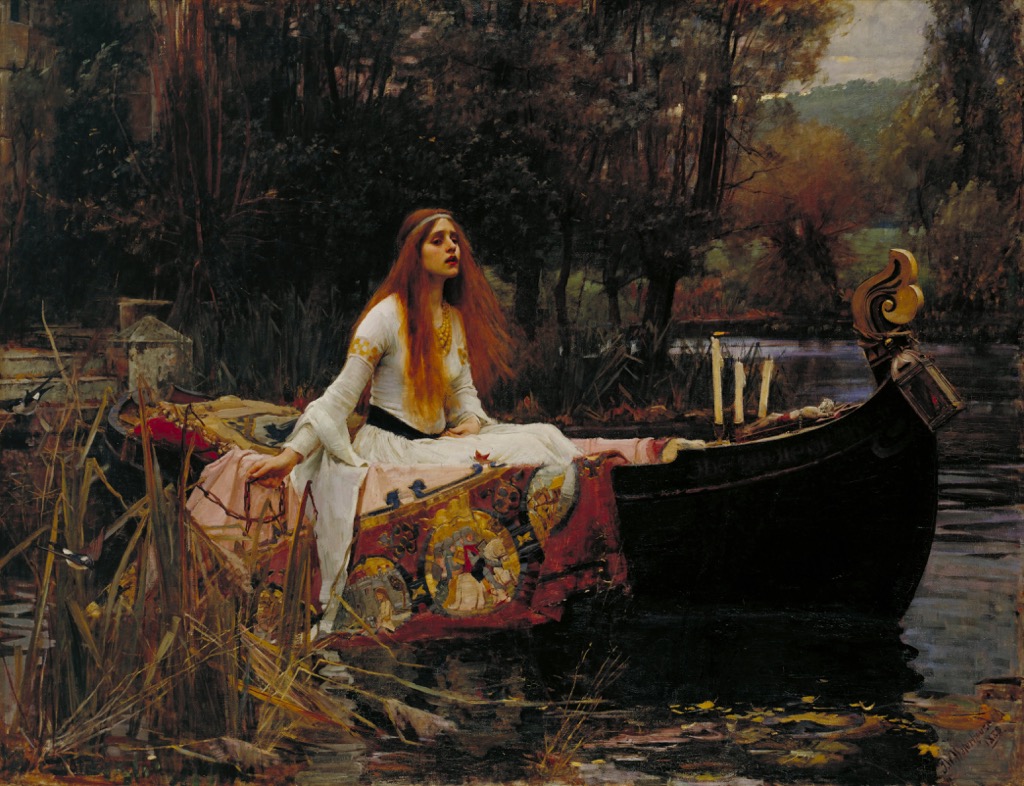
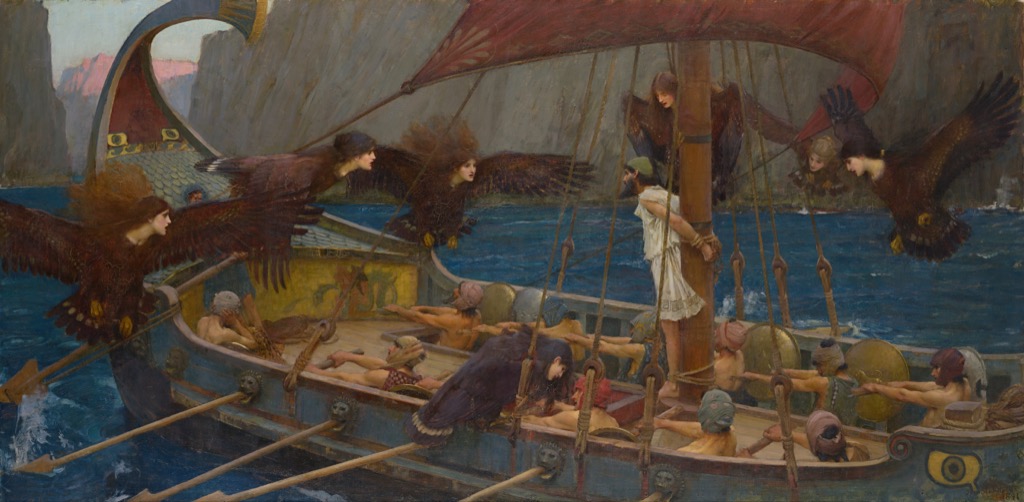
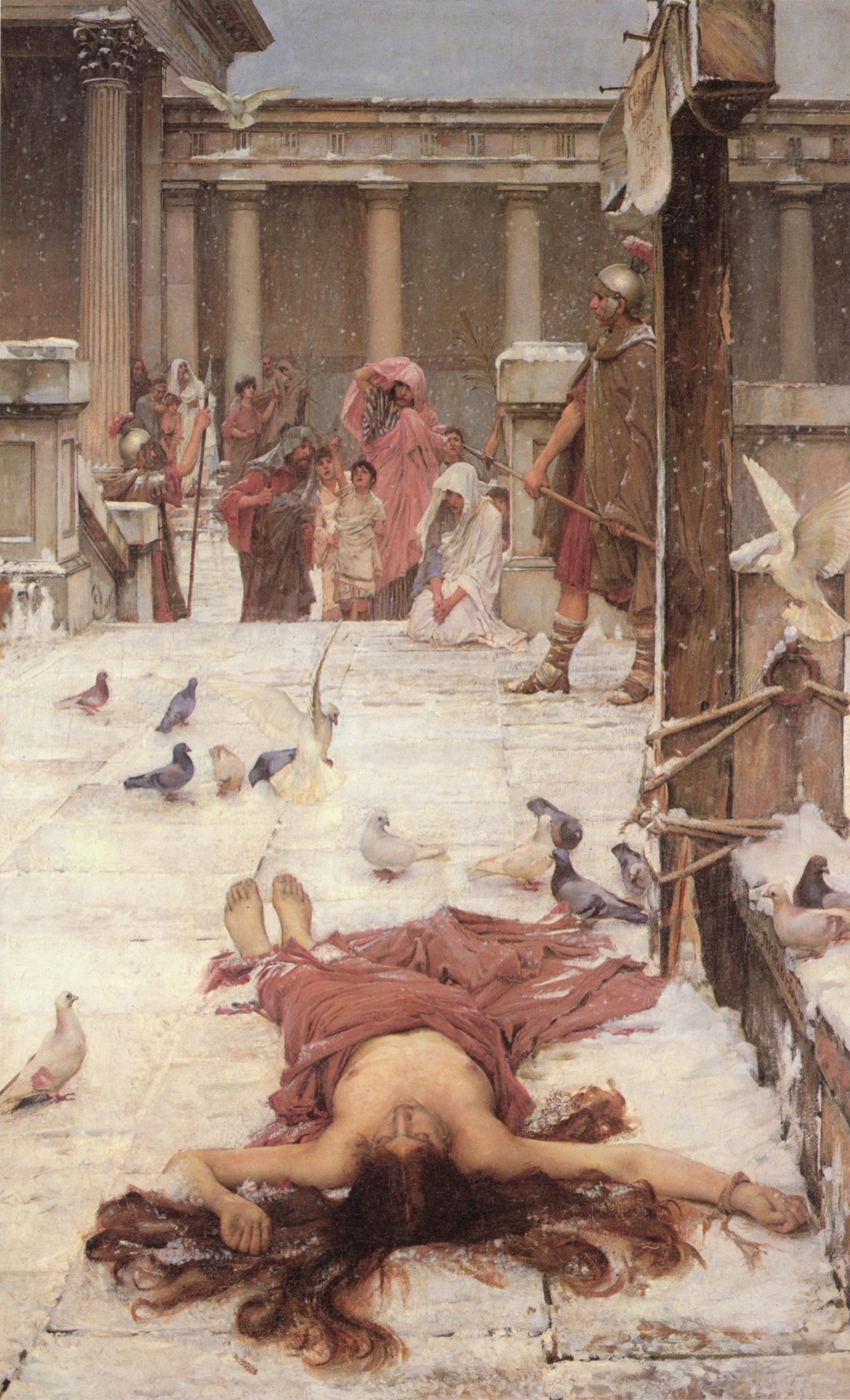
Waterhouse learned to make pictures that could function at two distances. From across a gallery, the composition needed a strong silhouette, legible action and memorable colour. Seen closely, it rewarded attention to flowers, textiles, metal, water and facial expression. Saint Eulalia commands through the diagonal of the fallen body and the cold vacancy around it. The Lady of Shalott holds the wall through its frontal boat, pale figure and autumn colour, while its chain, candles, tapestry and reeds invite slower reading. Ulysses and the Sirens gathers a complex assault into the mast and straining hero at its centre.
This public logic helps explain Waterhouse's preference for a charged instant. A Summer Exhibition picture could not depend on a long sequence of prior images. It needed to make a story accessible while preserving enough uncertainty to stimulate conversation. Departure, temptation, recognition, awakening and imminent transformation were therefore especially productive. A viewer could identify the crisis quickly, then argue about motive and consequence.
The Academy also generated a documentary record. Titles in exhibition catalogues help distinguish paintings later confused online; dates of display clarify the interval between execution and exhibition; membership records correct casual claims about status. For Waterhouse, whose letters and diaries are scarce, institutional evidence carries unusual weight.
Early exhibitions and the making of a career, 1874–1885
Waterhouse first exhibited at the Royal Academy in 1874 with Sleep and His Half-Brother Death. [2] The painting already possessed qualities that would recur throughout his career: a literary or mythic premise, carefully related bodies, concentrated atmosphere and a moment suspended between states. Yet its sombre classical subject belongs to the Academy history-painting culture in which he was trained, not to the medievalising Waterhouse later audiences know best.
During the 1870s and early 1880s he exhibited Italian genre scenes, ancient interiors and episodes from Roman history. These pictures are sometimes treated as a preliminary phase before his discovery of Tennyson. In professional terms they were foundational. They demonstrated that he could organise costume, architecture and figure groups; they established him with buyers; and they connected his London studio with the international language of classical subject painting associated with artists such as Frederic Leighton and Lawrence Alma-Tadema.
Public collections began to respond. In 1883 the Art Gallery of South Australia acquired The Favourites of the Emperor Honorius, its collection record describing it as the first Waterhouse painting bought by a public institution. [4] The purchase made in Adelaide matters as much to his early reception as a London review. It shows the British exhibition system feeding a geographically dispersed museum market and Waterhouse's classical work finding an audience thousands of miles from the Academy.
His 1885 Academy exhibit Saint Eulalia marked a new scale of ambition. The martyr lies foreshortened on a cold street after her death, while doves and distant figures convert emptiness into spiritual drama. The painting is commonly connected with Waterhouse's election that year as an Associate of the Royal Academy. [2] It is reasonable to see the picture as evidence of the artistic standing recognised by the election; it is less safe to imagine membership as an automatic prize awarded for one canvas. Academy elections reflected a professional reputation built over time.
This distinction is important throughout Waterhouse's history. Institutions do not merely ratify masterpieces one by one. They respond to sustained visibility, professional relationships, prior achievement and judgments made by members. By 1885 Waterhouse had exhibited for more than a decade. His new rank acknowledged a career already established through repetition as well as individual success.
Membership, teaching and institutional authority
Waterhouse became a full Royal Academician in 1895. [1] [2] The change placed him inside the institution that had trained and promoted him. Academicians participated in its professional culture, contributed a Diploma Work, and could affect the education and recognition of other artists. Waterhouse later taught in the Royal Academy Schools, although the surviving public summaries say more about his service than about the content of particular lessons. [2]
His Diploma Work, A Mermaid, was accepted in 1901. [8] The painting was the result of long development rather than an institutional exercise produced quickly for admission. Waterhouse had already explored the subject through studies and exhibition pictures. Its placement in the Academy's own collection made the mermaid a statement of how he wished to be represented within the body: literary suggestion, sensual presence, coastal atmosphere and meticulous attention to the figure joined with increasingly free paint.
Academy membership did not make Waterhouse aesthetically static. The 2009 retrospective account emphasised the difference between his spatial, painterly work and the intense equal focus of the original Pre-Raphaelite Brotherhood. It connected him with French-influenced naturalism circulating among neighbours and colleagues including William Logsdail and Frank Bramley. [2] The Academy could shelter tradition, but it was also a network through which painters encountered changes in contemporary practice.
Nor did membership isolate him from exhibition beyond Burlington House. Pictures appeared at the New Gallery, in regional galleries and in international displays. The Academy remained the spine of the career, but not its entire body. A full reception history must follow works after their first London appearance: into private houses, municipal museums, world fairs, loan exhibitions and reproductions.
International circulation and the success of Mariamne
Mariamne Leaving the Judgement Seat of Herod, first exhibited at the Royal Academy in 1887, provides the clearest evidence of Waterhouse's early international standing. The National Portrait Gallery records later appearances in Paris in 1889, at the World's Columbian Exposition in Chicago in 1893 and in Brussels in 1897, with awards that included medals. [1]
The painting was well suited to international exhibition culture. Its subject came from the history of Herod's court; its large figures and architectural procession communicated without requiring familiarity with a specifically British poem; and its emotional centre—a condemned woman passing the people responsible for her fate—could be grasped through pose and expression. The work presented Waterhouse as a painter of ambitious modern history painting rather than only an illustrator of English literature.
International exhibitions did more than extend fame. They changed the company in which a picture was seen. At the Academy, Mariamne entered a yearly survey of British production. In Paris, Chicago or Brussels it could be read as representative of British art, compared with national schools and judged through different assumptions about finish, colour, drama and historical reconstruction.
Awards should not be confused with universal agreement. A medal registers the decisions of a jury within one exhibition. It does not tell us that every visitor admired the work or that Waterhouse's style dominated European painting. Even so, the documented travel of Mariamne disproves the notion that he enjoyed only a narrow domestic popularity. His professional reputation operated within the international exhibition circuits of the late nineteenth century.
Waterhouse's Roman birth and Italian travel may have made his classical subjects appear especially appropriate to later biographers, but foreign reception did not depend on biography alone. The pictures offered a hybrid visual language: Academy figure drawing, classical and literary narrative, Pre-Raphaelite colour, French-influenced handling and a Symbolist interest in inward states. Different audiences could recognise different aspects of that mixture.
Australian museums and divided public opinion
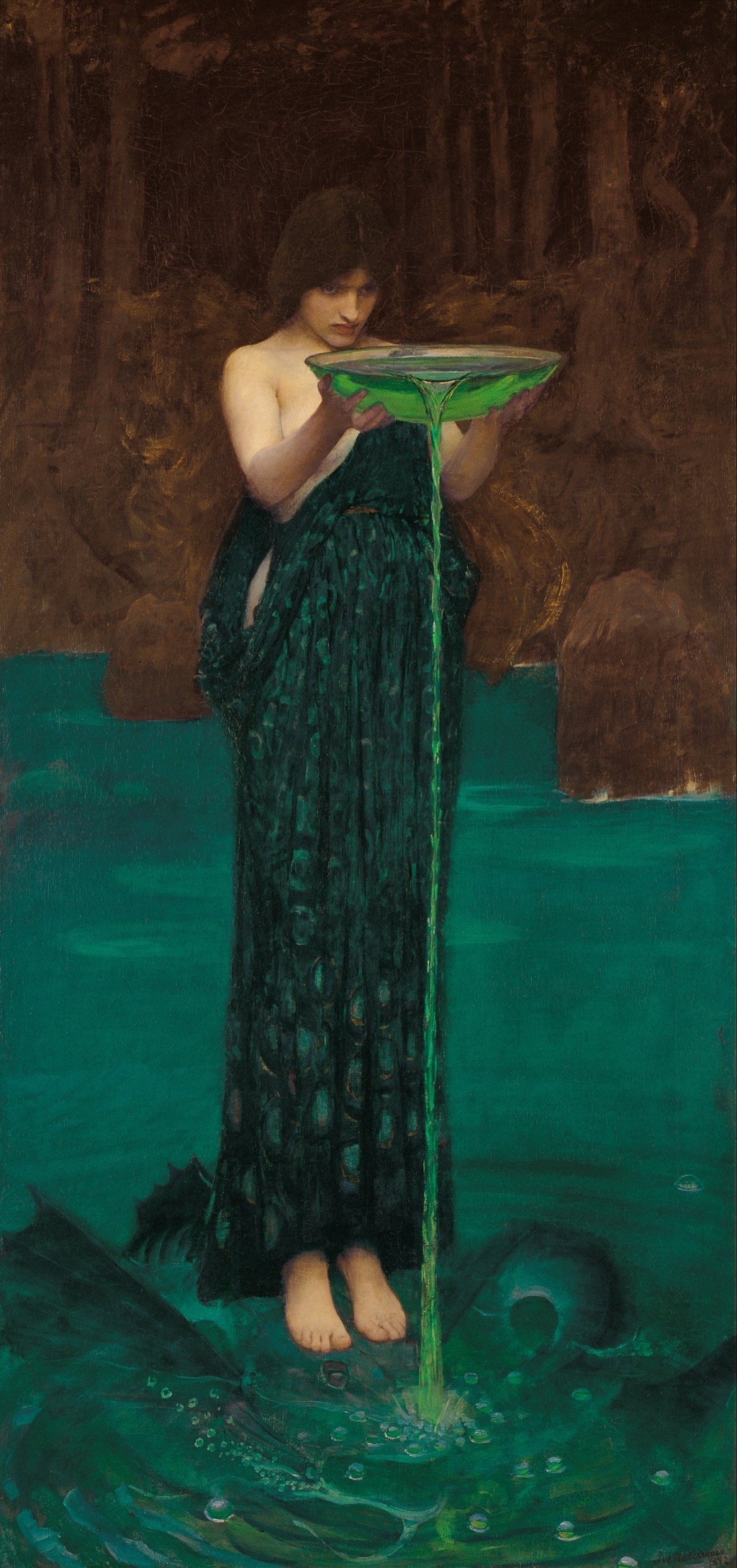
Australian collections are indispensable to understanding Waterhouse's reception during his lifetime. Adelaide acquired The Favourites of the Emperor Honorius in 1883 and Circe Invidiosa in 1892. Melbourne bought Ulysses and the Sirens directly from the artist in 1891. [4] [5] [9] These were not belated purchases made after modern popular revival. They placed major works in public ownership almost as soon as they were created.
The records also preserve disagreement. The National Gallery of Victoria's research traces objections to Ulysses and the Sirens: some viewers questioned Waterhouse's bird-bodied attackers and departures from their expectations of Homer, while supporters valued the painting's imagination and direct method. Hubert von Herkomer defended the acquisition and linked Waterhouse's technique with French influence. [5] The argument joined textual fidelity, public expenditure and painterly modernity.
Adelaide's Circe Invidiosa met a similarly mixed response. The gallery records criticism from a local viewer repelled by the work, despite the recommendation of prominent British artists involved in acquisition. [9] Its vertical field of poisonous colour and its cold, commanding sorceress were not necessarily the easy decorative pleasures imagined by later poster culture.
These controversies reveal the active role of civic museums. A public purchase converted aesthetic opinion into a question of collective ownership. Critics could ask whether a mythological subject deserved public money, whether the image was morally or visually attractive, and whether a remote adviser represented local taste. Waterhouse's work became part of debates about what a growing museum should collect.
The Australian paintings also altered the future map of his reputation. Because they remained in public collections, they could be studied and exhibited when many important Waterhouses disappeared into private houses. Modern scholarship on Ulysses benefits from the museum's work on technique, frame, iconography and contemporary response. Reception is cumulative: a purchase made in 1891 creates possibilities for research more than a century later.
Patrons, collectors and other exhibition spaces
Waterhouse's career depended upon private buyers as well as public institutions. Sir Henry Tate acquired The Lady of Shalott and presented it to the national collection in 1894. [10] George McCulloch bought Saint Cecilia and assembled a major group of modern British pictures. [11] Alexander Henderson and his family commissioned or owned Waterhouse works, including portraits and literary subjects. Dealers and auction records further reveal the movement of paintings through collections that museums alone cannot document.
Patronage affected what remained visible. A work given to a public gallery could become an enduring point of national access. A work retained privately might be known mainly through a monochrome illustration, an exhibition catalogue or an occasional loan. Gather Ye Rosebuds While Ye May of 1909, for example, was reproduced by A. L. Baldry in 1911 but was not publicly exhibited during Waterhouse's lifetime; its long private history limited knowledge of its colour. [12]
Reproduction formed a parallel exhibition space. Illustrated periodicals allowed readers to encounter compositions they could not see in person, although black-and-white printing changed colour-led paintings profoundly. The circulation of an image might therefore exceed the physical travel of the canvas while also simplifying it. Later colour books, posters, postcards and digital images extended that process.
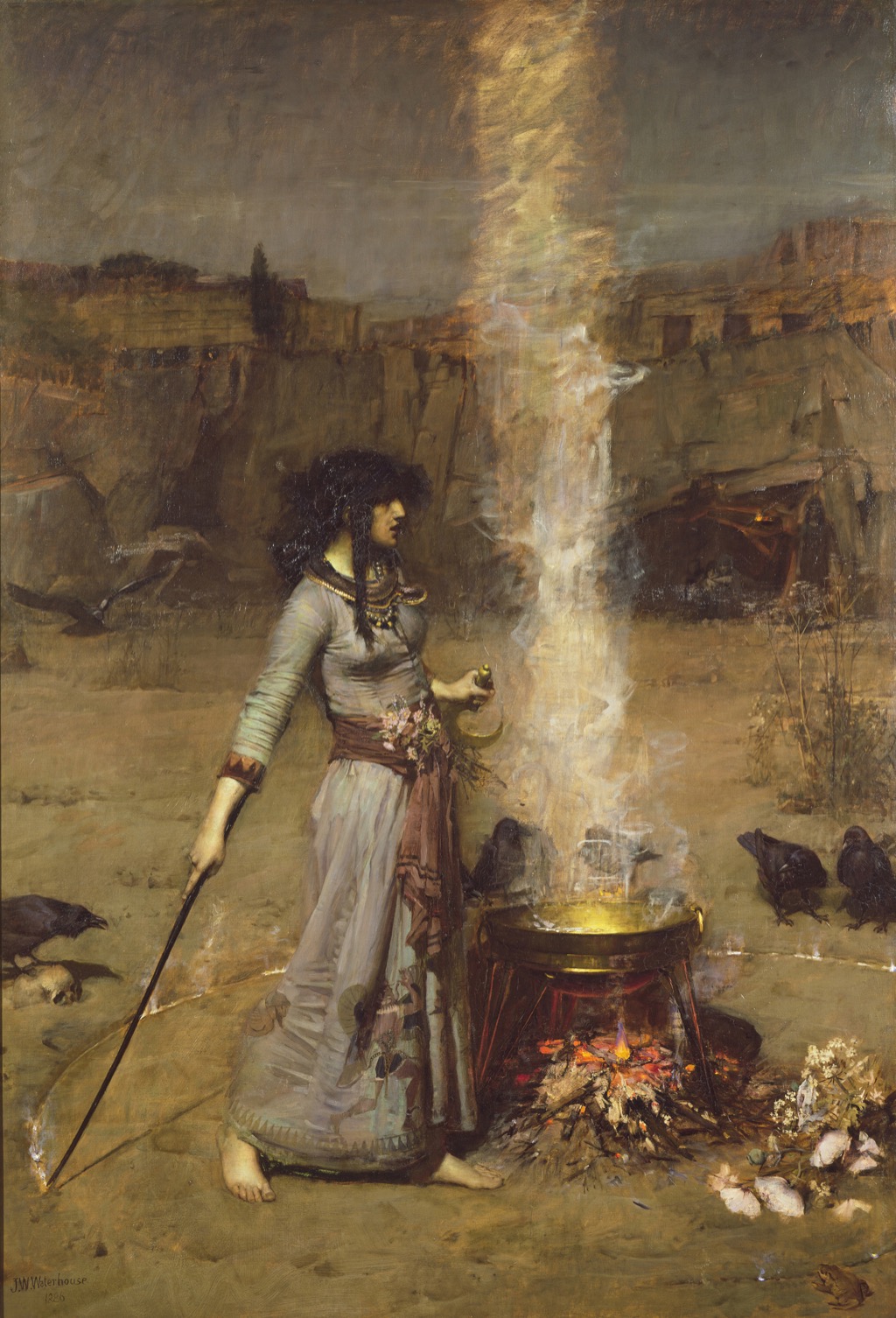
Regional museums and galleries matter for the same reason. Waterhouse's reputation cannot be reduced to London and three famous paintings. Works in Leeds, Liverpool, Manchester, Oldham, Burnley, Aberdeen, Sheffield and elsewhere gave local audiences access to different phases of the career. The network preserves classical history, wartime allegory and late poetry alongside the better-known enchantresses.
Death, changing taste and the 1978 revival
Waterhouse died in February 1917. Paintings continued to appear at the Royal Academy that year, including late works completed or left in the studio. [1] A posthumous exhibition can look like the seamless continuation of a career, but the cultural setting was transforming. The First World War had altered public life, and new accounts of modern art increasingly organised the recent past around formal innovation, abstraction and avant-garde rupture.
Waterhouse did not vanish. His pictures remained in major public collections and retained a public audience. Yet he occupied an awkward position in many histories. He was too late to belong to the original Pre-Raphaelite Brotherhood, too literary and figurative for narratives centred on modernist experiment, and too stylistically varied to fit comfortably within a single academic school.
The first substantial posthumous survey came in 1978. Organised by Sheffield City Art Galleries and prepared by Anne L. Goodchild, John William Waterhouse, R.A., 1849–1917 ran at the Mappin Art Gallery from 14 October to 19 November and at Wolverhampton's Central Art Gallery from 2 December 1978 to 13 January 1979. [6] The modest catalogue marked a significant act of recovery.
The exhibition did not instantly settle Waterhouse's place. It created a basis for looking again: works dispersed across collections could be compared, chronology revised, and the difference between familiar reproductions and painted surfaces confronted. Anthony Hobson's subsequent monograph and catalogue contributed to this rebuilding of scholarly infrastructure.
The late twentieth-century revival occurred alongside a broad return of interest in Victorian art. Popular reproduction was part of it, but not its opposite. Postcards and posters kept images before large audiences; exhibitions and catalogues tested dates, provenance and interpretation. The two forms of reception sometimes valued different things, yet both helped rescue Waterhouse from the narrowest versions of modernist neglect.
J. W. Waterhouse: The Modern Pre-Raphaelite, 2008–10
The international retrospective organised by the Groninger Museum, the Royal Academy of Arts and the Montreal Museum of Fine Arts was a decisive scholarly event. It opened in Groningen in December 2008, travelled to London in June 2009 and reached Montreal in October 2009, closing in February 2010. [3] Its catalogue, edited by Elizabeth Prettejohn, Peter Trippi, Robert Upstone and Patty Wageman, brought several leading scholars to the problem of Waterhouse's position in British and European art. [3]
More than forty paintings were accompanied by drawings, sketchbooks, photographs and annotated or illustrated literary volumes. [2] That range changed the kind of artist visible to visitors. Instead of an uninterrupted procession of finished beauties, the exhibition offered preparation, reading, revision and shifts in handling. The material supported an account of Waterhouse as a working painter rather than a manufacturer of a single recognisable formula.
The title “The Modern Pre-Raphaelite” was deliberately paradoxical. Waterhouse inherited subjects and visual interests from Pre-Raphaelitism but did not imitate its earliest technique. The exhibition situated him in debates about archaeology, classical heritage, occultism, gender and the New Woman, while drawing attention to spatial depth and looser, French-related paint. [2] It replaced a simple label with a set of productive tensions.
The catalogue won the Historians of British Art Prize in 2010. [3] An award does not make every interpretation final, but it signals the retrospective's importance to the field. Reviews debated its claims, as serious reviews should. The result was not a definitive closure but a better level of disagreement, based on assembled objects and evidence.
The three venues also produced different contexts. Groningen placed Waterhouse within a Dutch museum known for ambitious thematic presentation. The Royal Academy returned him to the institution central to his life. Montreal extended the reassessment across the Atlantic. The tour itself enacted the international reception it documented.
Popularity, scholarship and public debate
Waterhouse's present fame has several overlapping audiences. Museum visitors encounter original surfaces and scale. Scholars investigate exhibition culture, gender, technique and literary sources. Auction catalogues bring privately held paintings and studies into temporary public view. Readers and online audiences encounter images as book covers, prints, posts and illustrations of myths or poems.
The Lady of Shalott has become especially reproducible. Its clear composition, autumnal colour and familiar story survive reduction better than many complicated narrative pictures. That visibility can produce the false impression that Waterhouse painted only one kind of endangered heroine. A fuller exhibition history restores martyrs, emperors, portraits, male protagonists, wartime allegory and crowded classical scenes.
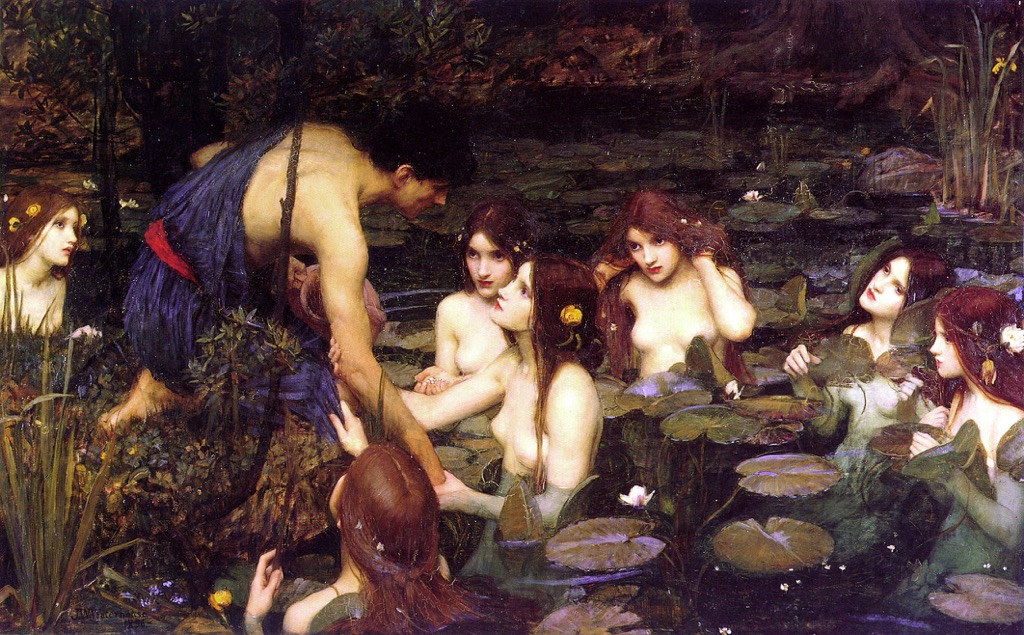
Public debate has also changed the meaning of individual works. In 2018 Manchester Art Gallery temporarily removed Hylas and the Nymphs as part of Sonia Boyce's participatory project Six Acts. The intervention invited discussion about how museums display gender, beauty and power; it was not the permanent ban often described in abbreviated reports. The gallery's later interpretive account preserves both the action and the responses it provoked. [13]
Such controversy belongs within reception history because display is never neutral. A Victorian purchase, a twentieth-century postcard and a twenty-first-century removal each place the same material object within a different public argument. None exhausts the painting. Together they show how meanings accumulate around it.
Popularity should not be treated as proof of artistic greatness or as evidence against it. The responsible question is what different audiences find in the work and how well their claims fit the object and its history. Waterhouse's ability to sustain pleasure, disagreement and research is itself a significant part of his afterlife.
How to read Waterhouse's exhibition history
An exhibition list provides dates and venues, but interpretation requires several distinctions. The year painted is not always the year first exhibited. A picture can be sent abroad after its London debut. A posthumous exhibit may have been finished, unfinished or retitled. A medal may refer to one venue rather than the work's entire reception. A public purchase documents institutional commitment, not unanimous local approval.
Titles also shift. Auction names may not match Royal Academy titles; multiple versions may share the same title; literary phrases can become attached after the artist's death. Secure catalogue records should therefore take priority over copied online lists.
Finally, exhibition success and artistic influence are not identical. Waterhouse was highly visible and professionally honoured, but tracing his effect on a later artist requires more than resemblance. Reception tells us how he was displayed, bought, discussed and remembered. Influence requires evidence of transmission.
Read with these controls, the record reveals neither an ignored genius nor an uncomplicated establishment favourite. It shows a persistent professional who used the Academy brilliantly, reached international exhibitions and overseas museums, endured changing historical fashions, and returned to major international display through sustained curatorial and scholarly work.
Related Pages
- Biography: Set Waterhouse's exhibition record beside the chronology of his training, Academy elections and public career.
- Contemporary Criticism and Quotations: Read the reviews and attributed critical language that shaped Waterhouse's public reputation.
- Influences, Reputation and Legacy: Connect institutional reception with later reputation, scholarship and modern public debate.
Frequently Asked Questions
His first accepted Royal Academy picture was Sleep and His Half-Brother Death in 1874. [2]
The National Portrait Gallery records annual exhibition from 1874 through 1917 except in 1890 and 1915. [1]
Yes. Mariamne was exhibited and honoured in Paris, Chicago and Brussels, while major public museums in Adelaide and Melbourne acquired his paintings during his lifetime. [1] [4] [5] [9]
The Art Gallery of South Australia identifies its 1883 purchase of The Favourites of the Emperor Honorius as the first acquisition of a Waterhouse painting by a public institution. [4]
No. Museum records preserve objections as well as praise, especially around Ulysses and the Sirens and Circe Invidiosa. His reception involved arguments about style, literary accuracy, public spending and disturbing subject matter. [5] [9]
Sheffield and Wolverhampton organised a specialist exhibition in 1978–79. [6] The much larger international retrospective J. W. Waterhouse: The Modern Pre-Raphaelite toured Groningen, London and Montreal in 2008–10. [2] [3]
It assembled paintings with studies, sketchbooks and literary material, repositioning Waterhouse within Pre-Raphaelitism, classicism, French-influenced naturalism, Symbolism and Edwardian culture. Its catalogue became a major modern reference. [2] [3]
No. Manchester Art Gallery temporarily removed it as one action within Sonia Boyce's participatory project Six Acts, then returned it to display. The temporary removal was designed to provoke discussion about representation and museum authority. [13]
Discussion
Waterhouse's exhibition history changes the way his paintings should be read. They may stage inward reverie, but they were made for public competition. Their strong silhouettes, narrative thresholds and controlled ambiguities were tested in galleries where a painting needed to hold attention among many others. Professional continuity allowed Waterhouse to refine that balance over four decades.
The record also replaces a simple story of fame, oblivion and rediscovery. Waterhouse enjoyed institutional success during his life; important works remained publicly visible after his death; specialist reassessment gathered force in the late twentieth century; and the 2008–10 retrospective deepened it. Popular culture, museums and scholarship did not operate in separate worlds. They repeatedly altered one another's questions.
Reader Insights
Which visible detail most changes the way you read this page?
Which source or comparison helps the work feel less familiar and more specific?
What question would you bring back to the painting after reading?
Join the Conversation
Share your reading of this page below.
References
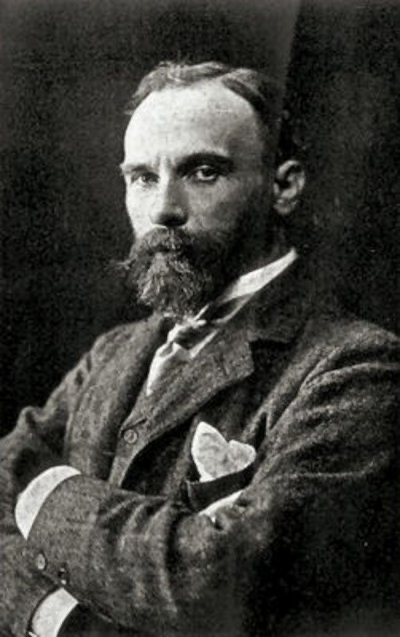
- Main image: H. S. Mendelssohn, John William Waterhouse, c. 1886, public-domain photograph via Wikimedia Commons.
- National Portrait Gallery, “John William Waterhouse (1849–1917), Figure Painter,” Later Victorian Portraits Catalogue, biography, exhibition record and bibliography. View source
- Royal Academy of Arts / Victorian Web, “J. W. Waterhouse: The Modern Pre-Raphaelite,” account of the 2009 exhibition, works assembled and curatorial interpretation. View source
- University of Bristol, “J. W. Waterhouse 1849–1917: The Modern Pre-Raphaelite,” catalogue record, tour details, editors and Historians of British Art Prize. View source
- Art Gallery of South Australia, “The Favourites of the Emperor Honorius,” object record and acquisition history. View source
- National Gallery of Victoria, “J. W. Waterhouse's Ulysses and the Sirens: breaking tradition and revealing fears,” object, acquisition and reception study. View source
- Yale Center for British Art, John William Waterhouse, R.A., 1849–1917, catalogue record for the Sheffield and Wolverhampton exhibition, 1978–79. View source
- Montreal Museum of Fine Arts, archive of past exhibitions, including the Montreal presentation of J. W. Waterhouse: The Modern Pre-Raphaelite. View source
- Royal Academy of Arts, “A Mermaid,” record of Waterhouse's Diploma Work, accepted in 1901. View source
- Art Gallery of South Australia, “Circe Invidiosa,” object, provenance and reception record. View source
- Tate, “The Lady of Shalott,” collection and provenance record. View source
- Christie's, “John William Waterhouse, R.A., St Cecilia,” catalogue essay with Royal Academy reception and McCulloch provenance. View source
- Sotheby's, “Gather Ye Rosebuds While Ye May,” catalogue essay and provenance for the 1909 version, including its reproduction by A. L. Baldry in 1911. View source
- Manchester Art Gallery, “Sonia Boyce,” interpretive text for Six Acts and the 2018 temporary removal of Hylas and the Nymphs. View source