


 Buy Art Prints Now
from Amazon
* As an Amazon Associate I earn from qualifying purchases.
Image reference [image]
 by Tom Gurney
Tom Gurney BSc (Hons) is an art history expert with over 20 years experience
Published on August 14, 2026 / Updated on August 14, 2026
Email: tomgurney1@gmail.com / Phone: +44 7429 011000
John William Waterhouse Paintings: Introduction
John William Waterhouse’s paintings move between ancient Rome, Greek myth, medieval legend and Victorian poetry. The familiar image of a beautiful woman beside dark water belongs to only one part of that achievement. His career began with ambitious scenes of classical life, gathered force through public history paintings in the early 1880s and changed decisively when he made solitary figures, supernatural events and moments of psychological suspense the centre of his art.
This guide follows that development through the paintings themselves. It explains how Diogenes differs from The Lady of Shalott, why the Homeric pictures are not simply illustrations, how Waterhouse returned to subjects such as Circe and Ophelia, and where important works can be seen today. It also separates paintings that are often confused because their titles, heroines or settings are closely related.
Browse Waterhouse Paintings
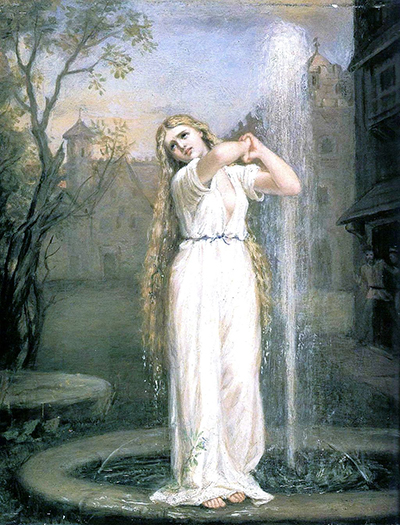
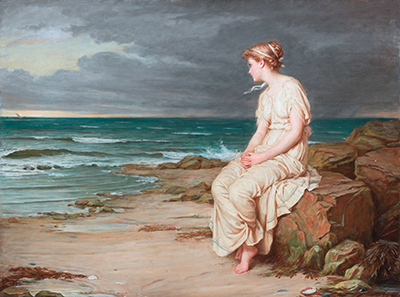
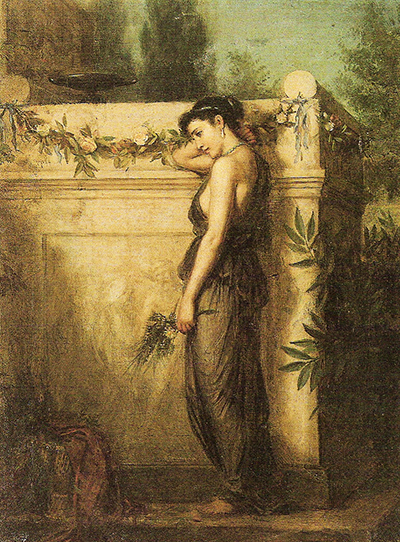
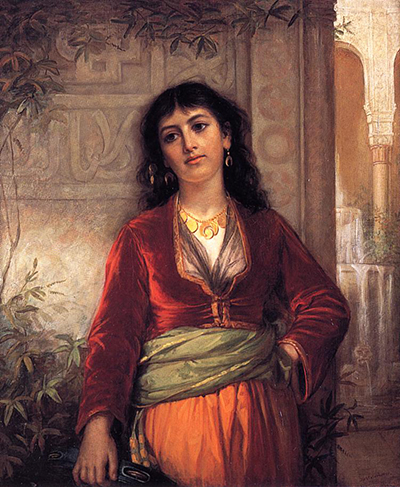
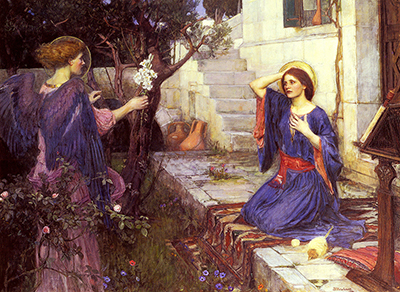
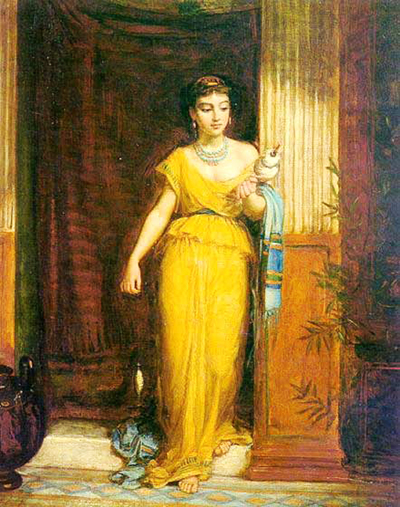
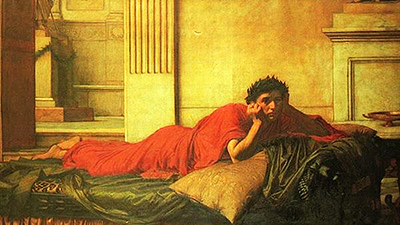
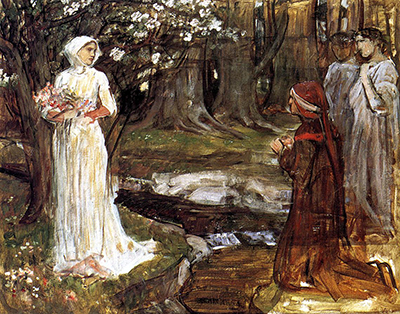
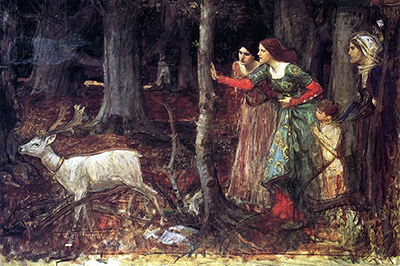
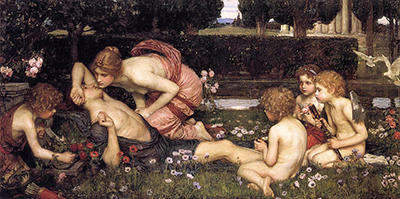
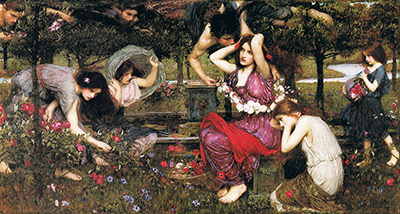
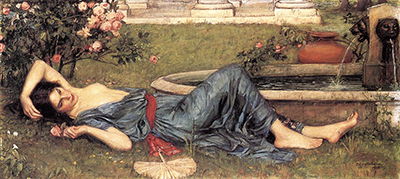
The illustrated catalogue below restores the prominent thumbnail-and-link gallery used on the earlier Waterhouse paintings page. Each image and title opens the completed guide to that work.
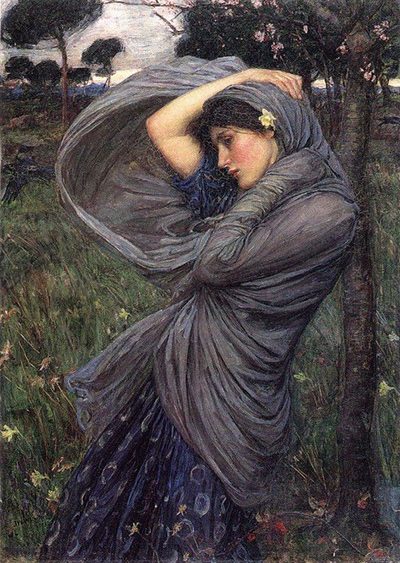
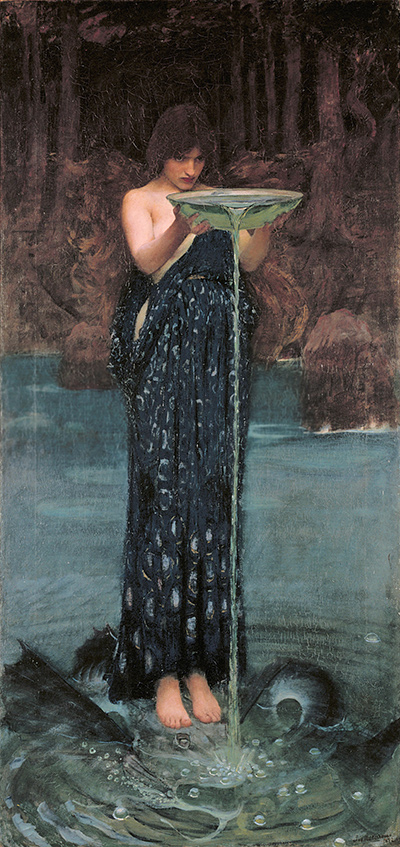
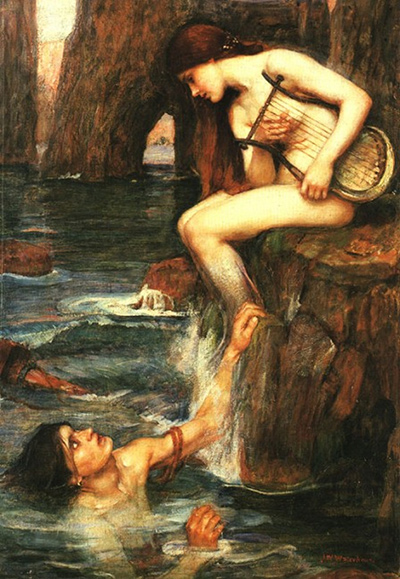
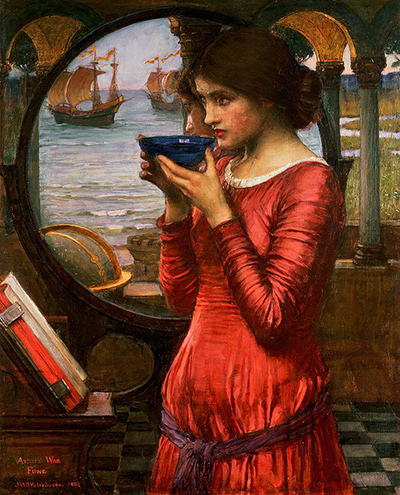
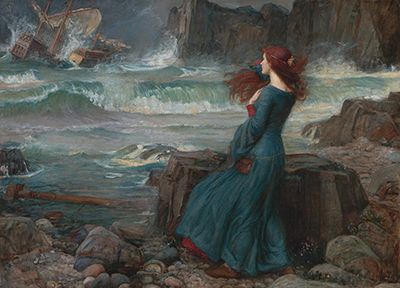
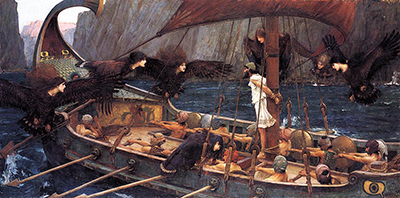
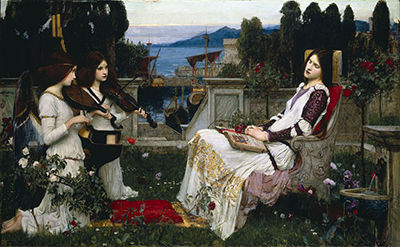
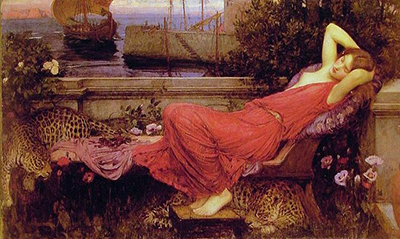
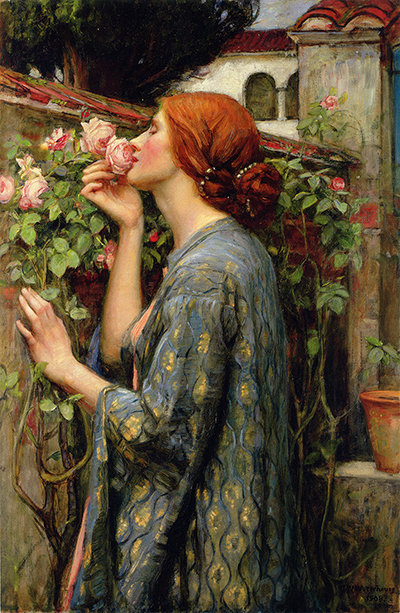
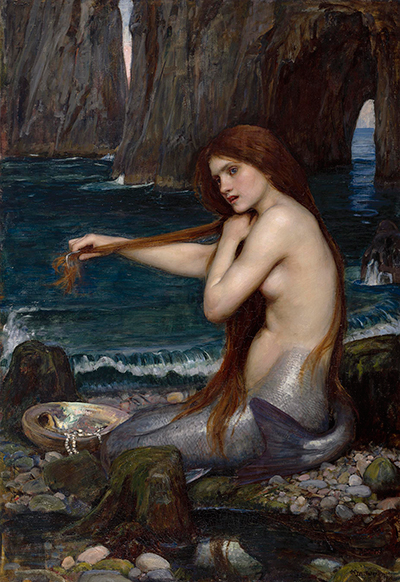
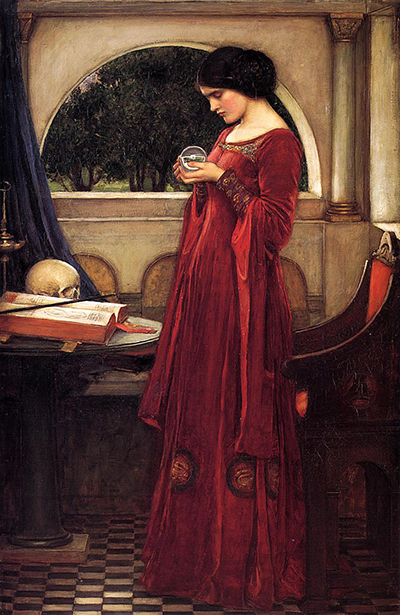
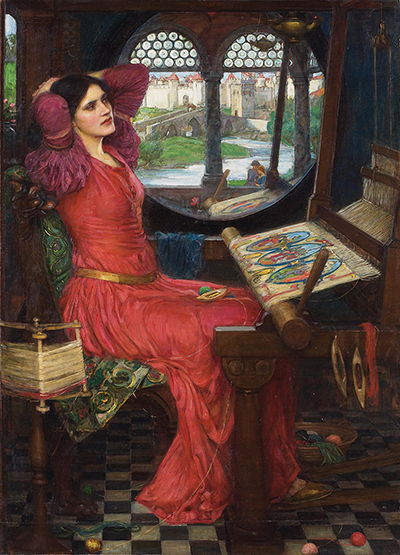
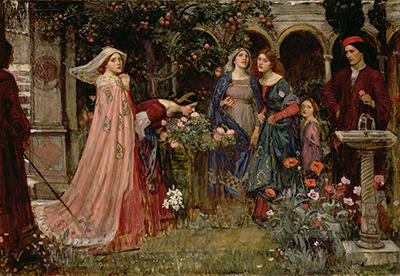
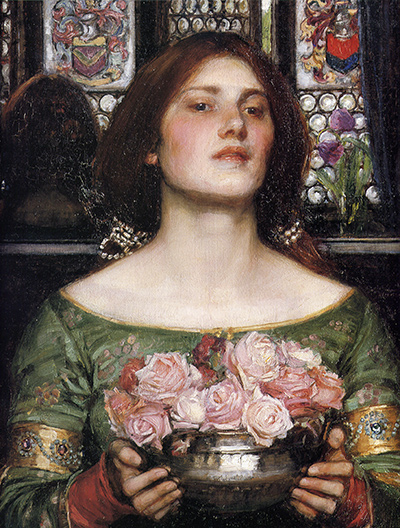
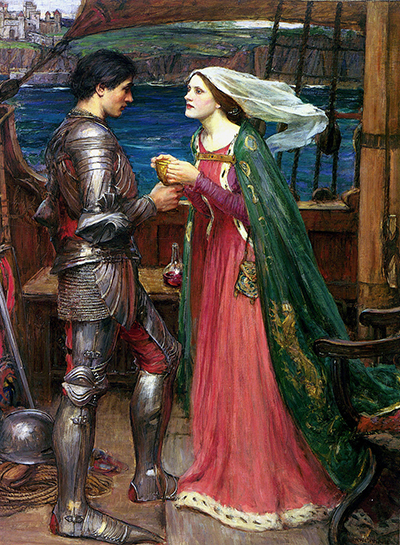
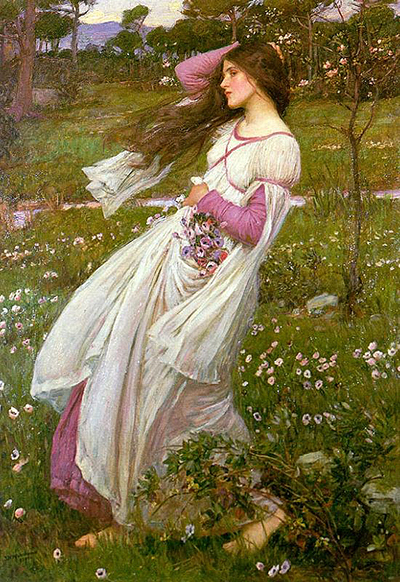
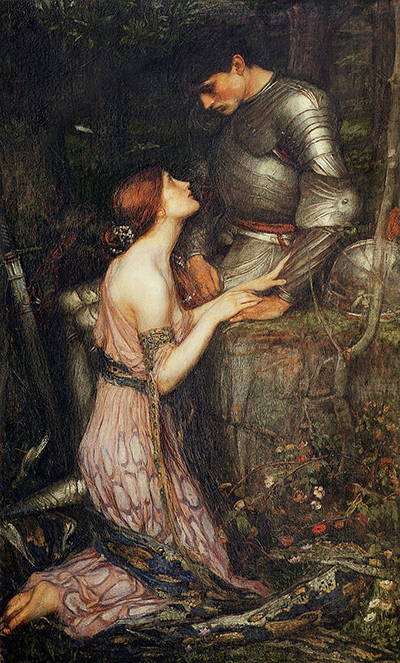
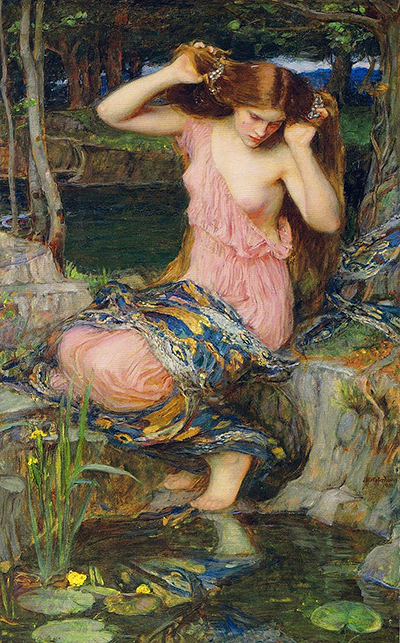
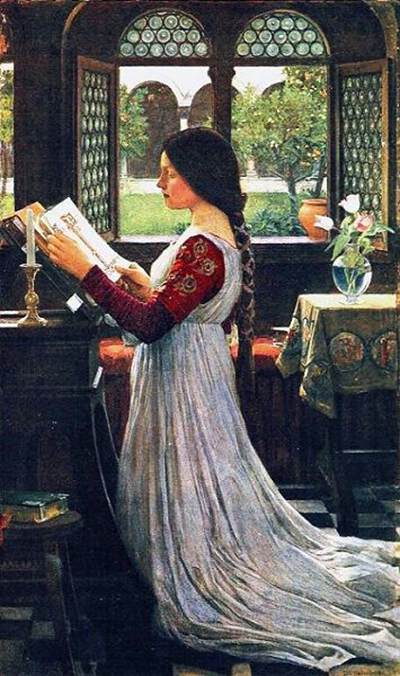
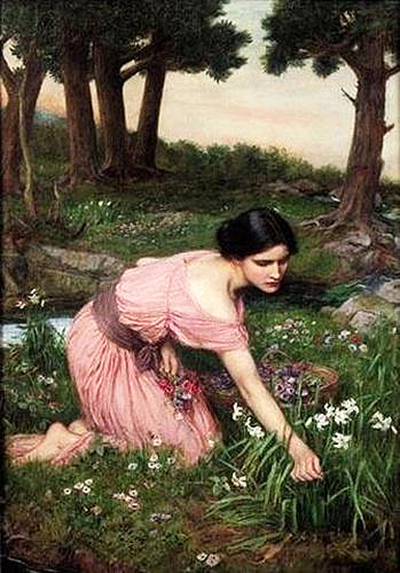
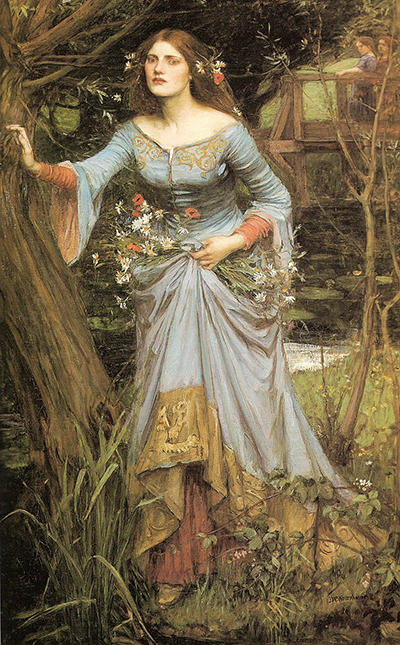
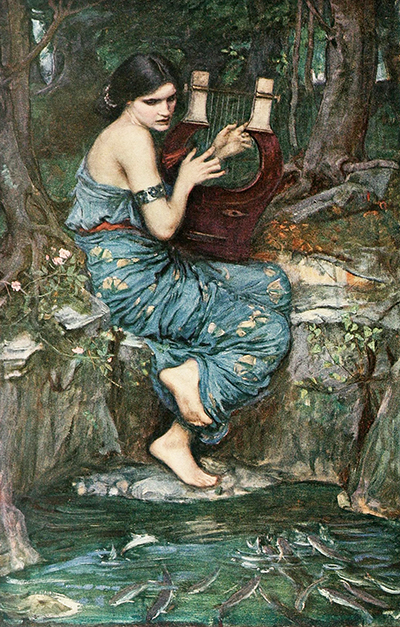
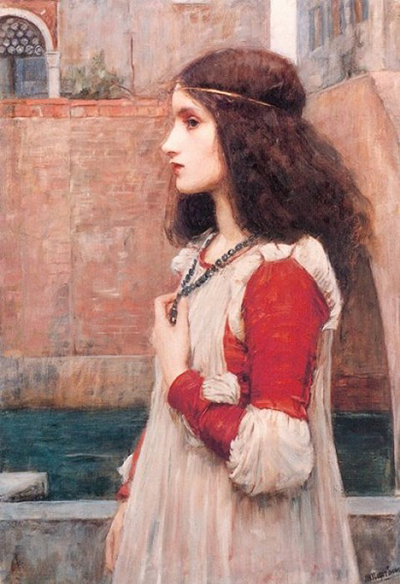
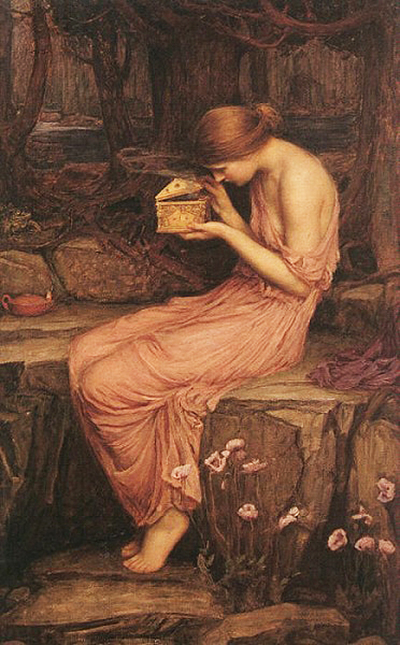
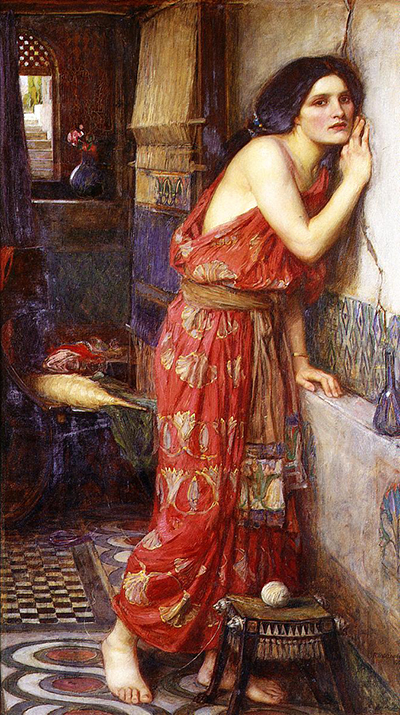
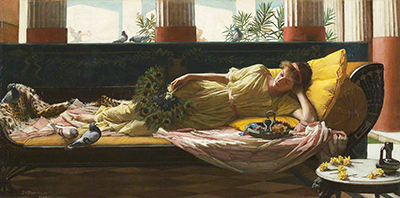
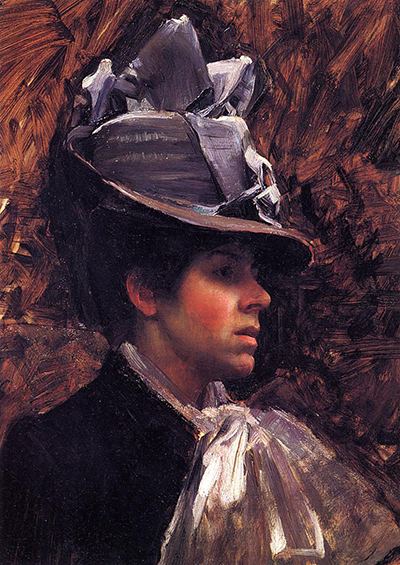
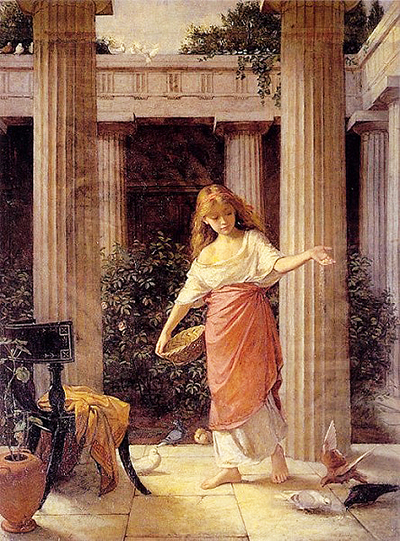
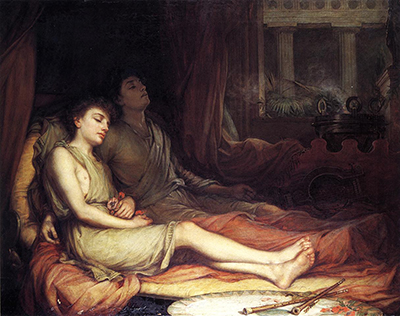
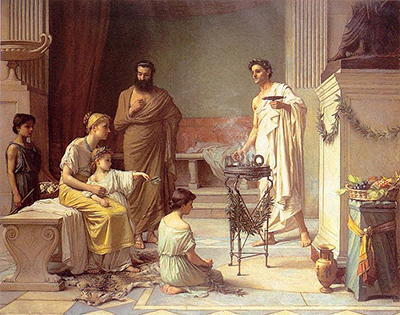
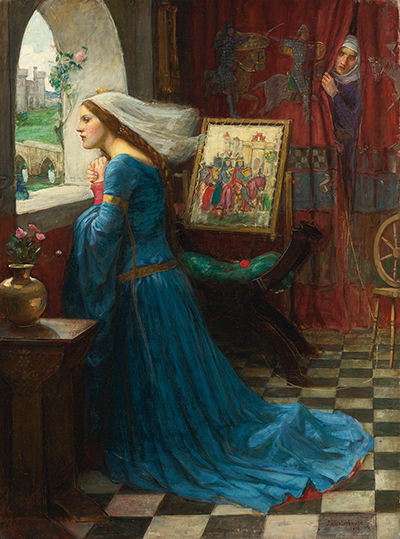
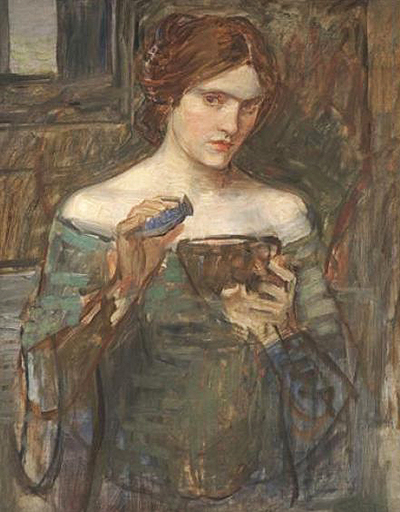
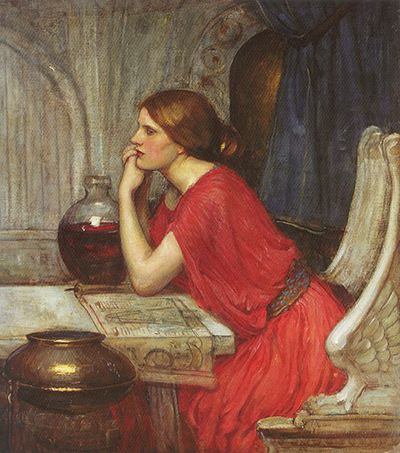
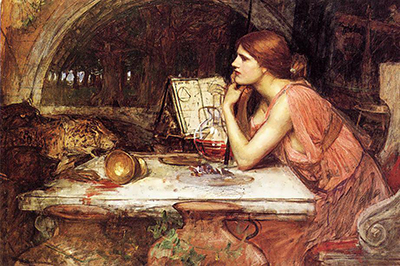
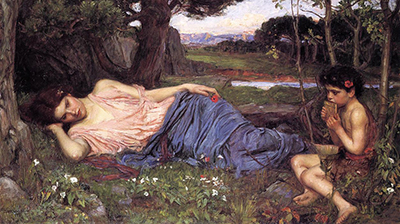
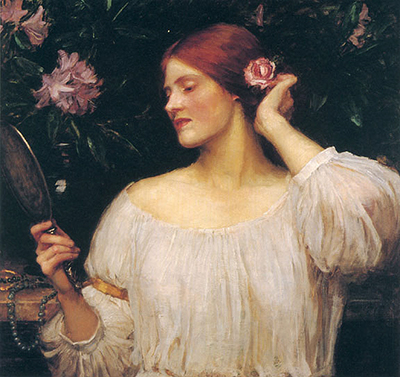
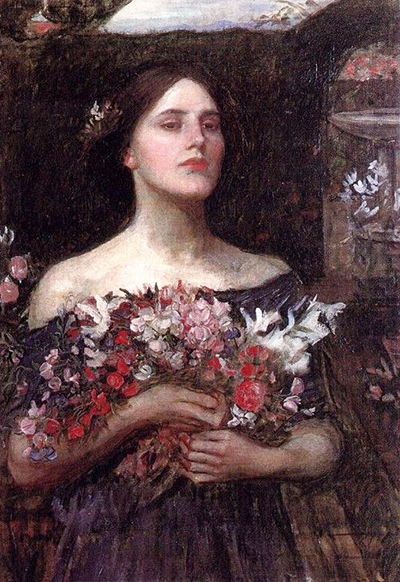
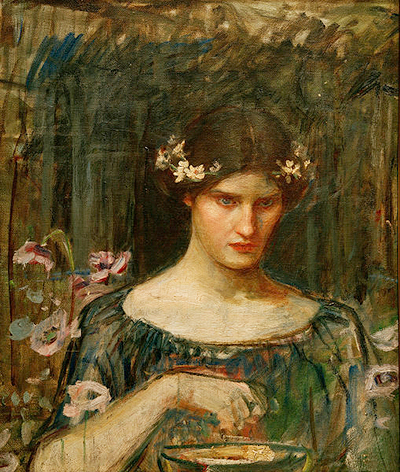
 John William Waterhouse.jpg)
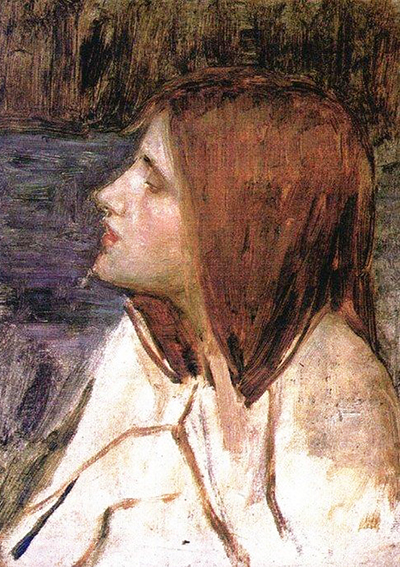
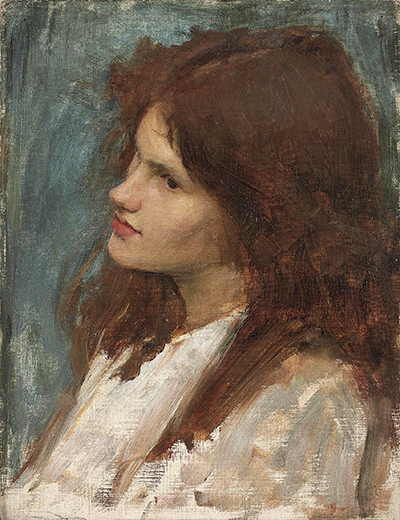
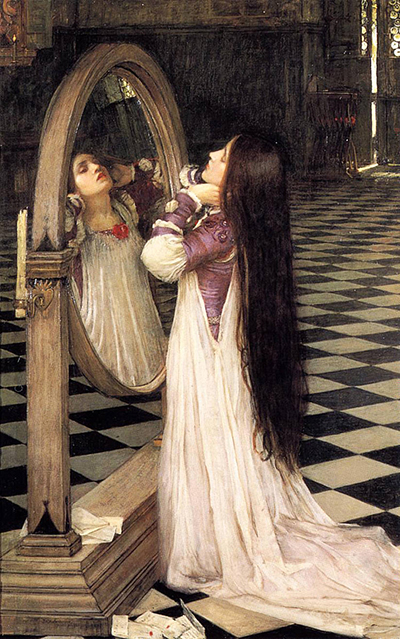
 John William Waterhouse.jpg)
 John William Waterhouse.jpg)
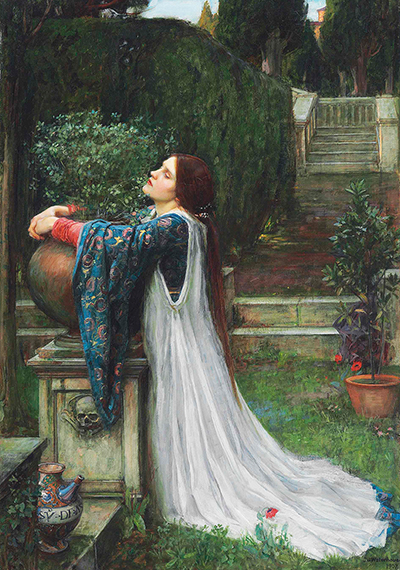
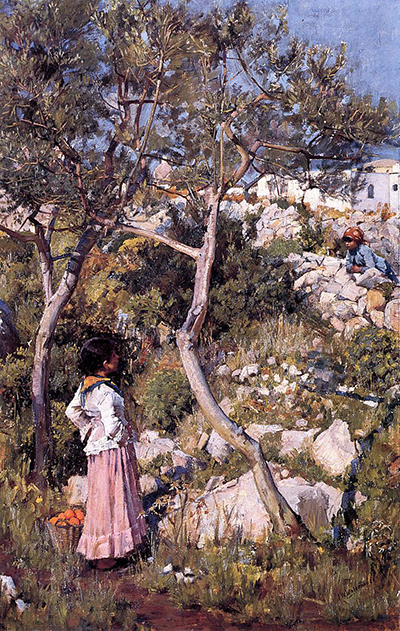
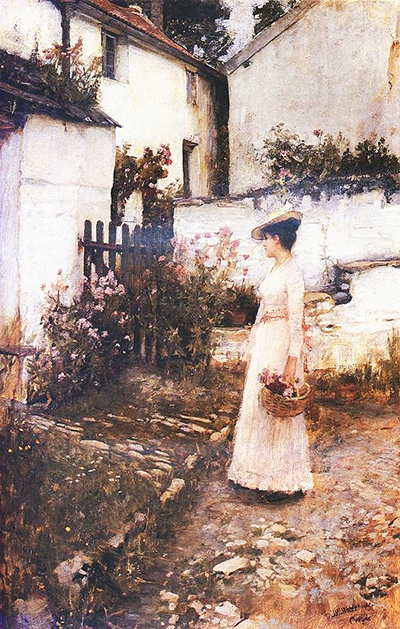
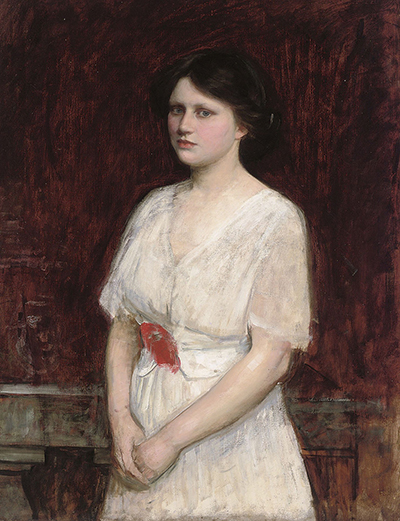
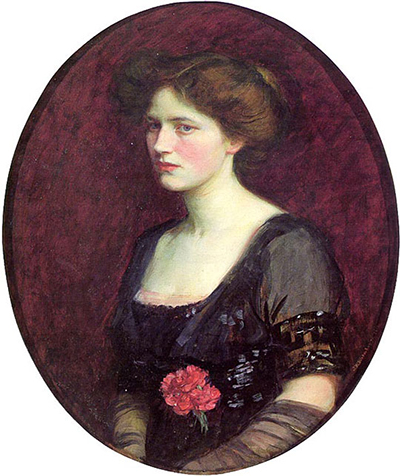
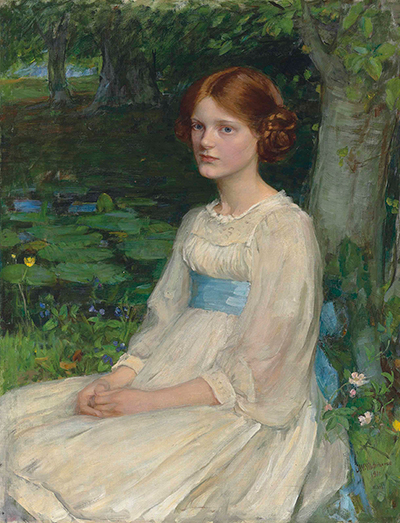
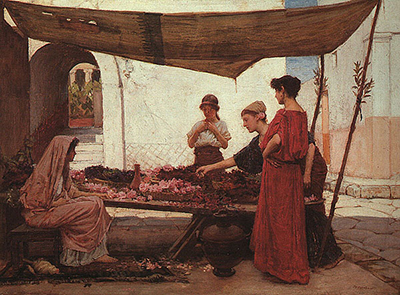
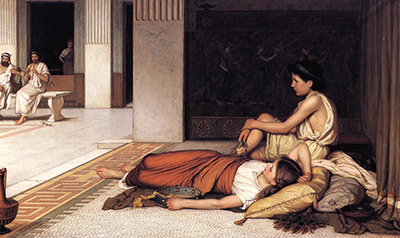
 John William Waterhouse.jpg)
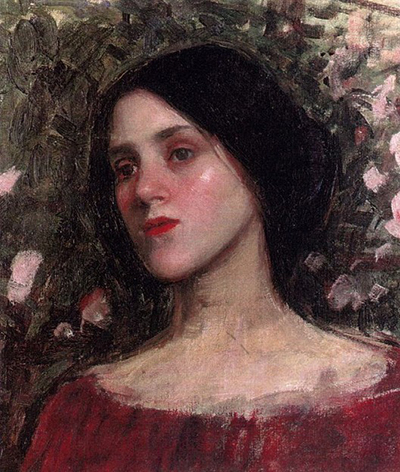
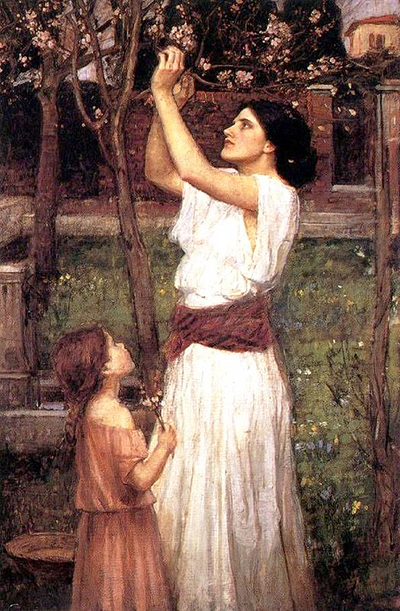
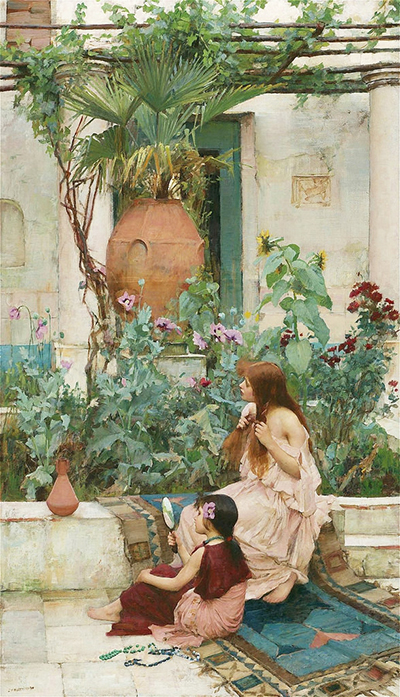
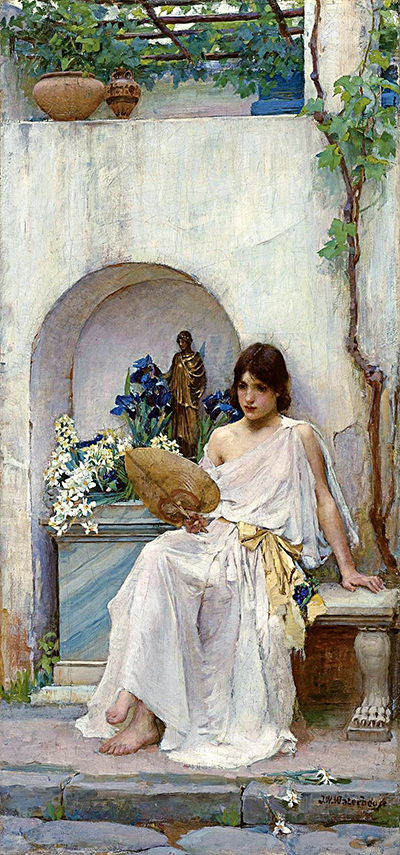
 John William Waterhouse.jpg)
 John William Waterhouse.jpg)
At a Glance
- Principal mediumoil on canvas, supported by drawings and painted studies
- Exhibiting careerWaterhouse showed paintings at the Royal Academy from 1874 until 1917, with the exceptions of 1890 and 1915. [1]
- Early emphasisItalianate genre scenes, ancient history and classical daily life
- Major 1880s worksDiogenes, The Favourites of the Emperor Honorius, Consulting the Oracle, Saint Eulalia, The Magic Circle and The Lady of Shalott
- Mature sourcesHomer, Ovid, Tennyson, Shakespeare and Keats, as well as medieval legend and the wider culture of myth
- Characteristic subjectswomen reading, weaving, gathering flowers, making magic, waiting, listening or approaching a dangerous threshold
- Important public holdingsTate, Manchester Art Gallery, the Royal Academy of Arts, Gallery Oldham, the Walker Art Gallery, Aberdeen Art Gallery, the Art Gallery of New South Wales, the National Gallery of Victoria and the Art Gallery of South Australia
- Best starting pointcompare one early classical narrative, one painting from the mid-1880s turning point, one mature myth and one late return subject
Contents
- Introduction
- How the paintings changed across Waterhouse’s career
- Early classical and Italianate paintings, 1874–1881
- Classical history and public success, 1882–1884
- The decisive years: Saint Eulalia, The Magic Circle and The Lady of Shalott
- Homer and Ovid: sirens, Circe and the danger of looking
- Tennyson, Shakespeare and Keats: painting the pause before an ending
- The paintings after 1900: returns, sequences and concentrated moods
- How Waterhouse constructs a painting
- A curated guide to twenty major paintings
How the paintings changed across Waterhouse’s career
Waterhouse’s development is sometimes reduced to a neat change from academic classicism to Pre-Raphaelitism. The paintings tell a more interesting story. Classical subject matter never disappeared after The Lady of Shalott, and literary subjects did not require him to abandon the scale, figure training or exhibition strategy of an ambitious Royal Academy painter. What changed was the kind of incident he chose and the degree to which atmosphere carried the narrative.
The early pictures tend to establish a social or historical situation. Architecture, costume and groups of figures identify an ancient world in which a viewer can read contrasts of rank, belief or behaviour. By the middle of the 1880s, Waterhouse increasingly isolated one figure at the instant when an event becomes irreversible: a martyr lies beneath miraculous snow, a magician closes her circle or the Lady of Shalott unfastens the chain of her boat. During the 1890s, the same concentration extends to figures from Homer and Ovid. The later paintings often slow the action further, making waiting, weaving, listening or looking into the central event.
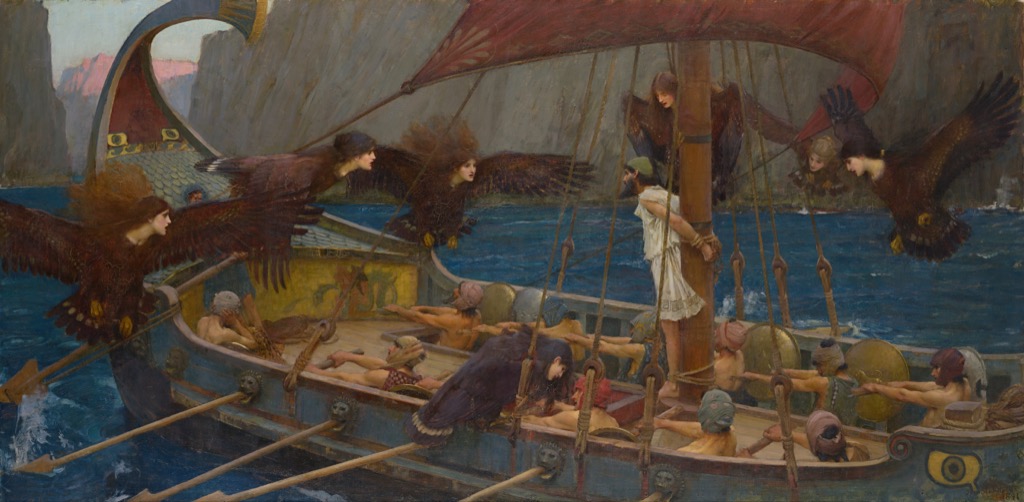
These phases overlap rather than replace one another. Ulysses and the Sirens is an expansive multi-figure narrative from 1891, while the equally classical Circe Invidiosa of 1892 is a narrow, solitary image. Penelope and the Suitors, painted in 1911–1912, returns to Homer and to a crowded composition late in Waterhouse’s career. [8] [15] The catalogue is therefore best approached as a set of recurring problems—story, attention, temptation, self-command and transformation—rather than a march from one style label to another.
Early classical and Italianate paintings, 1874–1881
Waterhouse’s first Royal Academy exhibits emerged from an academic culture in which the human figure and the art of the past remained central. The National Portrait Gallery records that he entered the Academy Schools as a sculpture student before exhibiting as a painter in 1874. [1] That training helps explain the firm contours and weighted poses that persist across his work, although it does not make the paintings disguised sculpture.
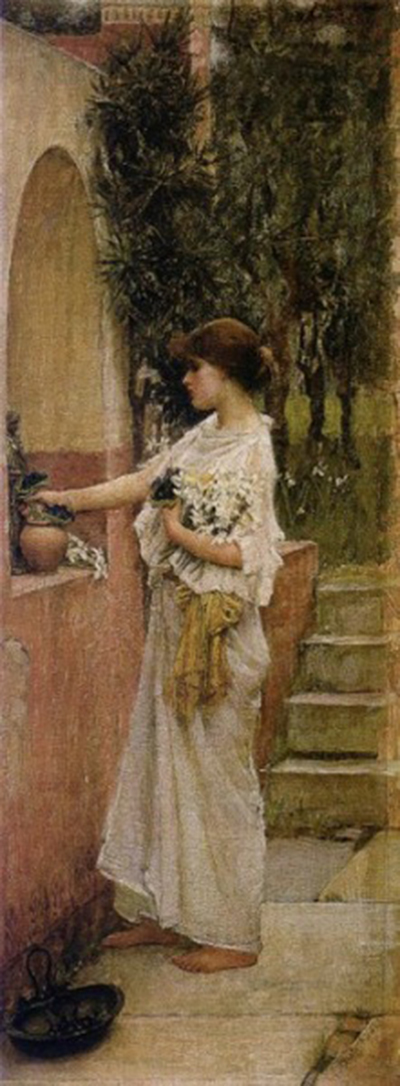
The early subjects included scenes of Italy and imagined antiquity: figures at fountains, in streets, on terraces or within carefully appointed interiors. They are often smaller and quieter than the large narratives that established his name in the following decade. Their appeal lies in the relationship between figure and setting. Tile, marble, water vessel, doorway and hanging fabric give the eye a sequence of surfaces to cross. Even when little happens, the scene feels staged for an encounter.
These works share territory with the fashionable classical genre painting of the period, especially the taste for reconstructing ancient life through decorative detail. Waterhouse did not remain an archaeologist of pleasant interiors. His growing interest was less in cataloguing an environment than in using it to direct attention. Steps separate an observer from the observed; a doorway promises another space; a vessel waits to be filled or emptied. Motifs that seem merely descriptive in the early work later become active parts of a story.
The pictures of the 1870s should not be dismissed as an immature prelude. They establish Waterhouse’s sustained interest in human behaviour inside organised spaces. They also make the later change visible. When landscape, water and vegetation begin to displace the classical interior, the artist carries the same concern with thresholds and controlled looking into a more psychologically charged world.
Classical history and public success, 1882–1884
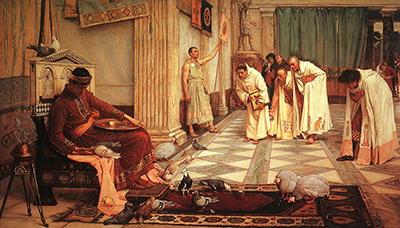
Three paintings from the early 1880s reveal Waterhouse expanding both scale and ambition: Diogenes of 1882, The Favourites of the Emperor Honorius of about 1883 and Consulting the Oracle of 1884. [3] [4] [25] They are historical or classical narratives, yet each turns on a distinctive structure of attention.
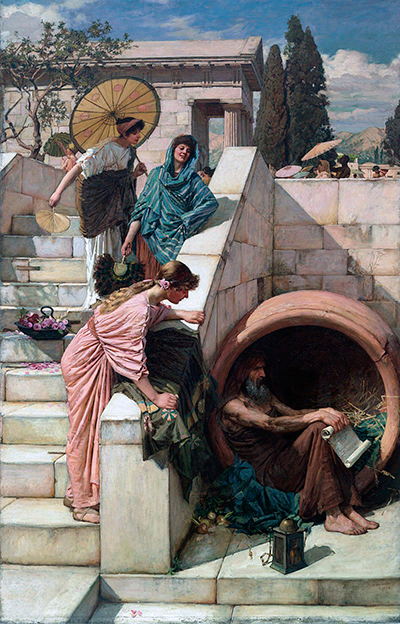
In Diogenes, the Cynic philosopher occupies his tub at the lower edge of the composition while richly dressed women approach from above. The Art Gallery of New South Wales records that the painting was shown at the Royal Academy in 1882 and purchased for Sydney in 1886. [3] Waterhouse makes the philosophical contrast spatial. Diogenes has withdrawn from social convention, but the women’s curiosity draws the public world back towards him. The painting can be read before every archaeological detail has been identified because height, gaze and bodily direction organise the encounter.
The Favourites of the Emperor Honorius spreads its scene horizontally across an imperial chamber. The young emperor attends to his birds while officials wait at the edge of his notice. The Art Gallery of South Australia dates the work to about 1883 and records its acquisition that year, the first Waterhouse painting to enter a public institution. [4] [11] The subject is political in a quiet, indirect way: the unequal distribution of attention becomes an image of failed rule. Polished surfaces and courtly furnishings sharpen rather than soften that withdrawal.
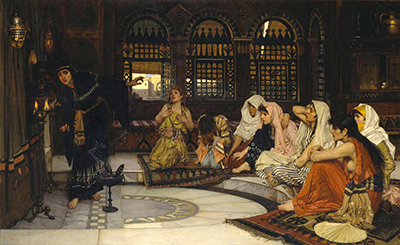
Consulting the Oracle concentrates on a group of women gathered around a severed oracular head. Here architecture is no longer just an antique setting. The room encloses the participants, and their bodies lean towards a source of knowledge that remains inaccessible to the viewer. The painting anticipates Waterhouse’s later preoccupation with prophecy and magic, but it still depends on a collective response. The drama is shared across the group rather than carried by a single commanding figure.
These pictures also mark the early international geography of Waterhouse’s reputation. Adelaide’s purchase of The Favourites of the Emperor Honorius and Sydney’s later acquisition of Diogenes were not retrospective attempts to fill gaps in a Victorian collection. They placed important contemporary paintings in Australian public galleries while Waterhouse was still developing his mature style. [3] [4]
The decisive years: Saint Eulalia, The Magic Circle and The Lady of Shalott
Between 1885 and 1888, Waterhouse produced three paintings that changed the balance of his art. All are large, legible exhibition pictures, but their emotional pressure comes from one central figure and one suspended event.
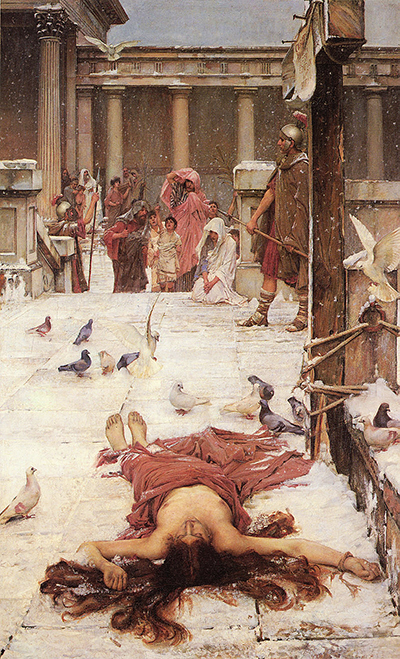
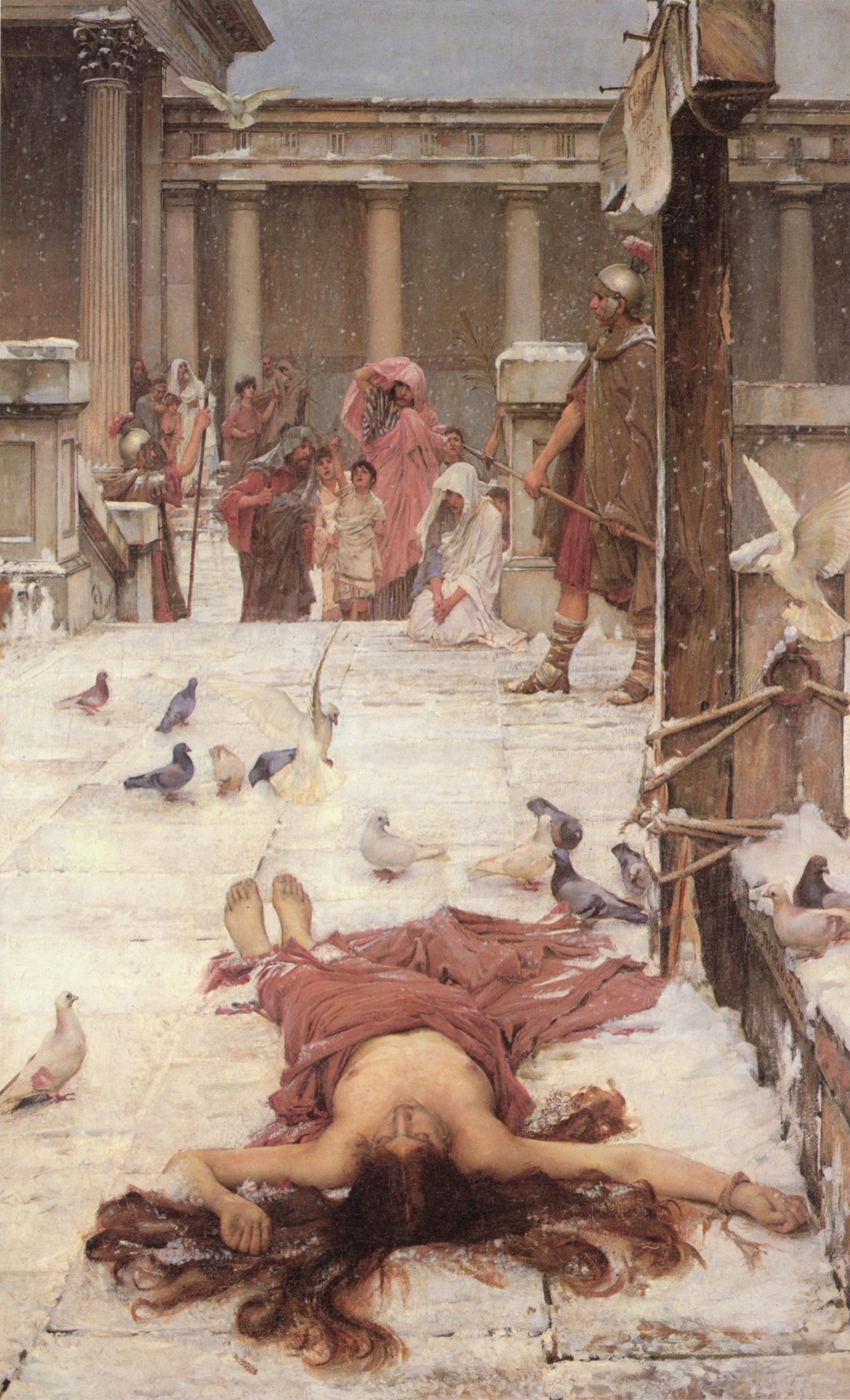
Saint Eulalia of 1885 shows the aftermath of martyrdom. Tate identifies Eulalia as a twelve-year-old Christian killed after refusing to sacrifice to Roman gods; a dove leaving her mouth and an unexpected fall of snow belong to the miracle associated with her death. [5] Waterhouse places the body on a severe diagonal and lowers the viewer’s position. The emptied expanse above her matters as much as the remaining figures. This is history painting stripped of a climactic action: the violence has occurred, and the supernatural sign enters an already altered world.
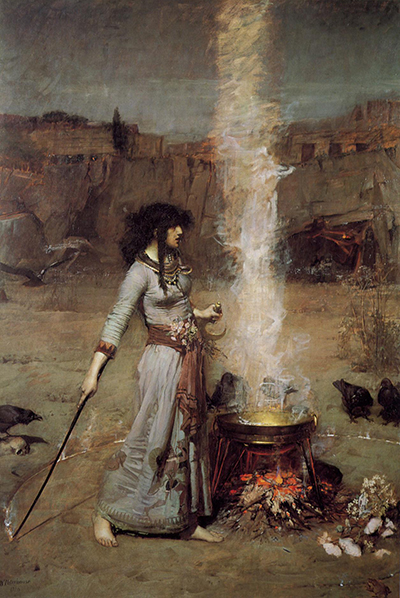
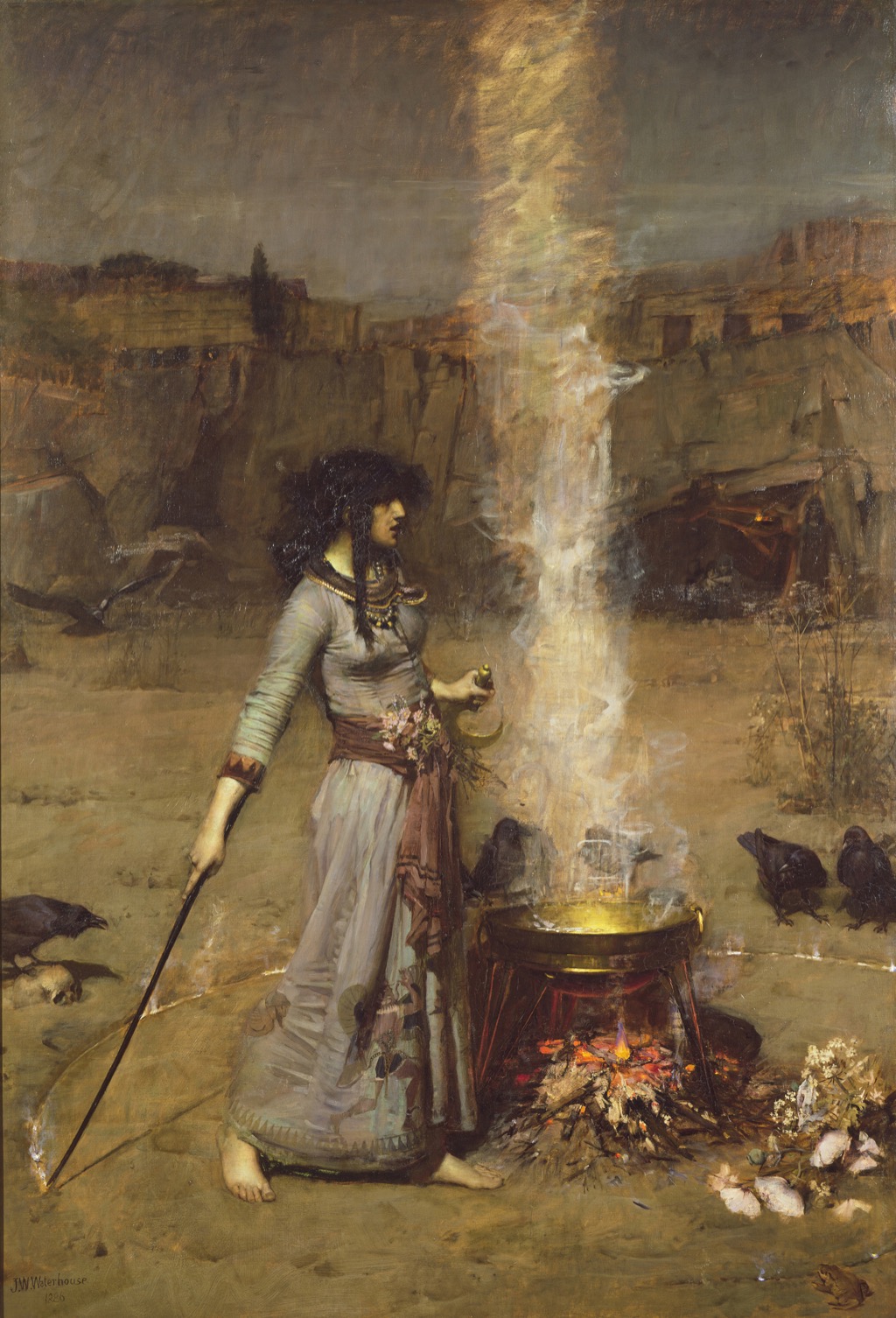
In The Magic Circle of 1886, the central woman is neither passive nor defeated. She draws a boundary while smoke rises from a vessel and birds remain beyond the line. Tate’s collection record dates the principal oil painting to 1886. [6] An 1881 review of an earlier version connected the subject with Theocritus, and recent scholarship makes a persuasive case for Simaetha’s love spell in the poet’s second Idyll. [30] That evidence does not identify every object or turn the finished canvas into a mechanical illustration. The surest way to begin is still with what the woman does. Her wand touches the ground; her body is contained within the circle; the landscape is divided into controlled and uncontrolled space. Waterhouse turns an act of making into an image of authority.
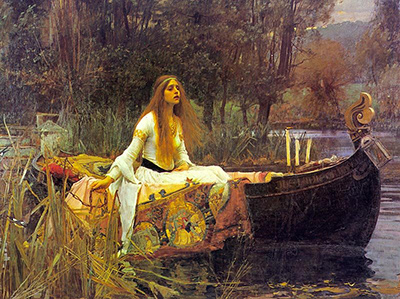
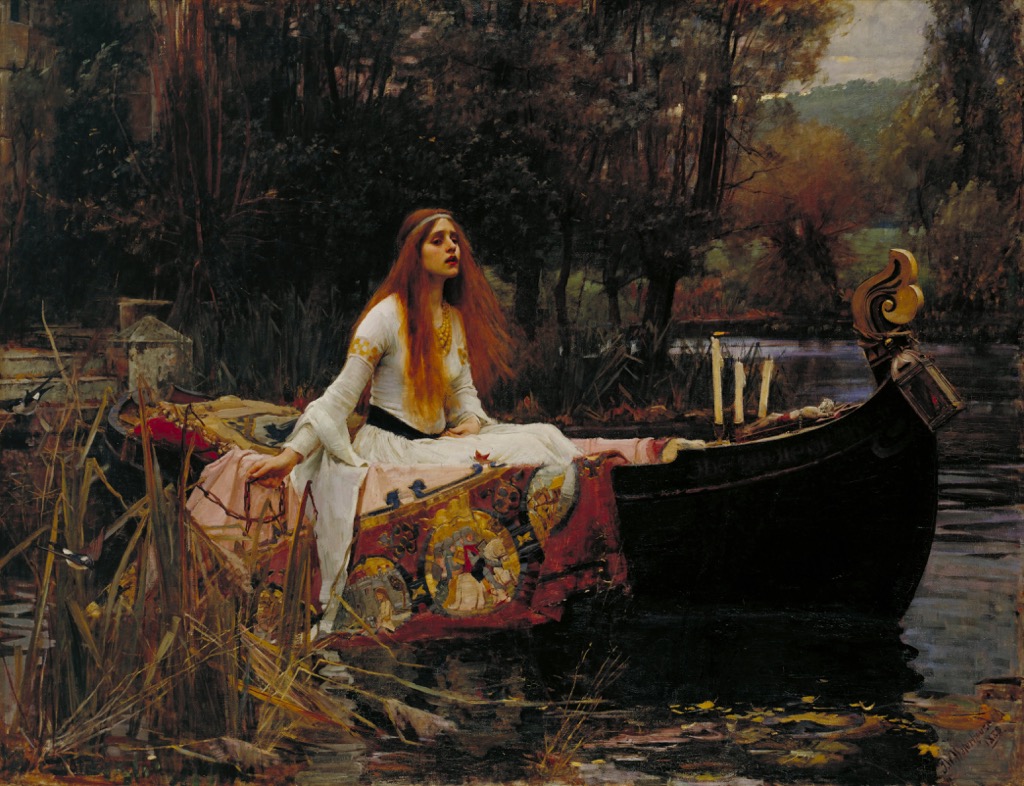
The Lady of Shalott of 1888 brings poetry, landscape and material detail into an especially powerful equilibrium. It illustrates Tennyson’s heroine after she has left her tower and entered the boat that will carry her towards Camelot and death. Tate records the painting as an oil on canvas of 1888. [7] Rather than summarising the poem, Waterhouse selects departure. The chain beside the Lady, the tapestry trailing over the boat and the darkened landscape turn the transition from enclosure to movement into a visible drama.
The three works explain why Waterhouse is associated with the Pre-Raphaelite legacy despite belonging to a later generation. Their intense colour, literary and spiritual subjects, close attention to meaningful objects and beautiful, psychologically charged figures recall concerns of the original Brotherhood. Yet Waterhouse remained a Royal Academy painter working decades after that group formed. The description “modern Pre-Raphaelite,” used for the major 2008–2010 retrospective, preserves both the inheritance and the distance. [2]
Homer and Ovid: sirens, Circe and the danger of looking
Waterhouse’s classical paintings of the 1890s are not a return to the calm interiors of his early career. Homer and Ovid supply situations in which hearing, looking or desire threatens to overturn self-command.
Ulysses and the Sirens of 1891 is the most expansive of these mature myths. The National Gallery of Victoria records the oil painting at just over two metres wide and notes that it was purchased from Waterhouse in the year of its Royal Academy exhibition. [8] Ulysses is bound to the mast while his crew pull at the oars and bird-bodied sirens close around the vessel. Waterhouse derived their hybrid form from an ancient Greek vase in the British Museum, choosing an archaeological precedent rather than the fish-tailed mermaid familiar to later audiences. [8]
The picture generated arguments about fidelity to Homer, the frightening form of the sirens and the wisdom of its public purchase. The NGV’s study of the painting reconstructs both British and Australian critical responses and shows that contemporary viewers did not treat its classicism as neutral. [9] The crowded attack, compressed sea and twisting body of Ulysses make temptation feel physical. A viewer knows that the hero will survive, yet the image is organised around the pressure of his desire to hear.
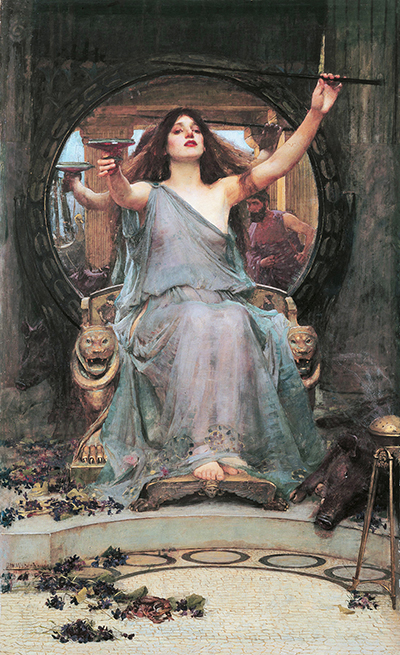
Waterhouse approached Circe in a different way. Circe Offering the Cup to Ulysses of 1891 places the enchantress frontally on a throne. Gallery Oldham’s collection record identifies the work as an oil on canvas of that year. [10] A circular mirror behind Circe shows Ulysses from her point of view, while transformed members of his crew appear at the edges. The picture gives her the centre, the cup and the controlling gaze; the hero is present, but displaced into reflection.
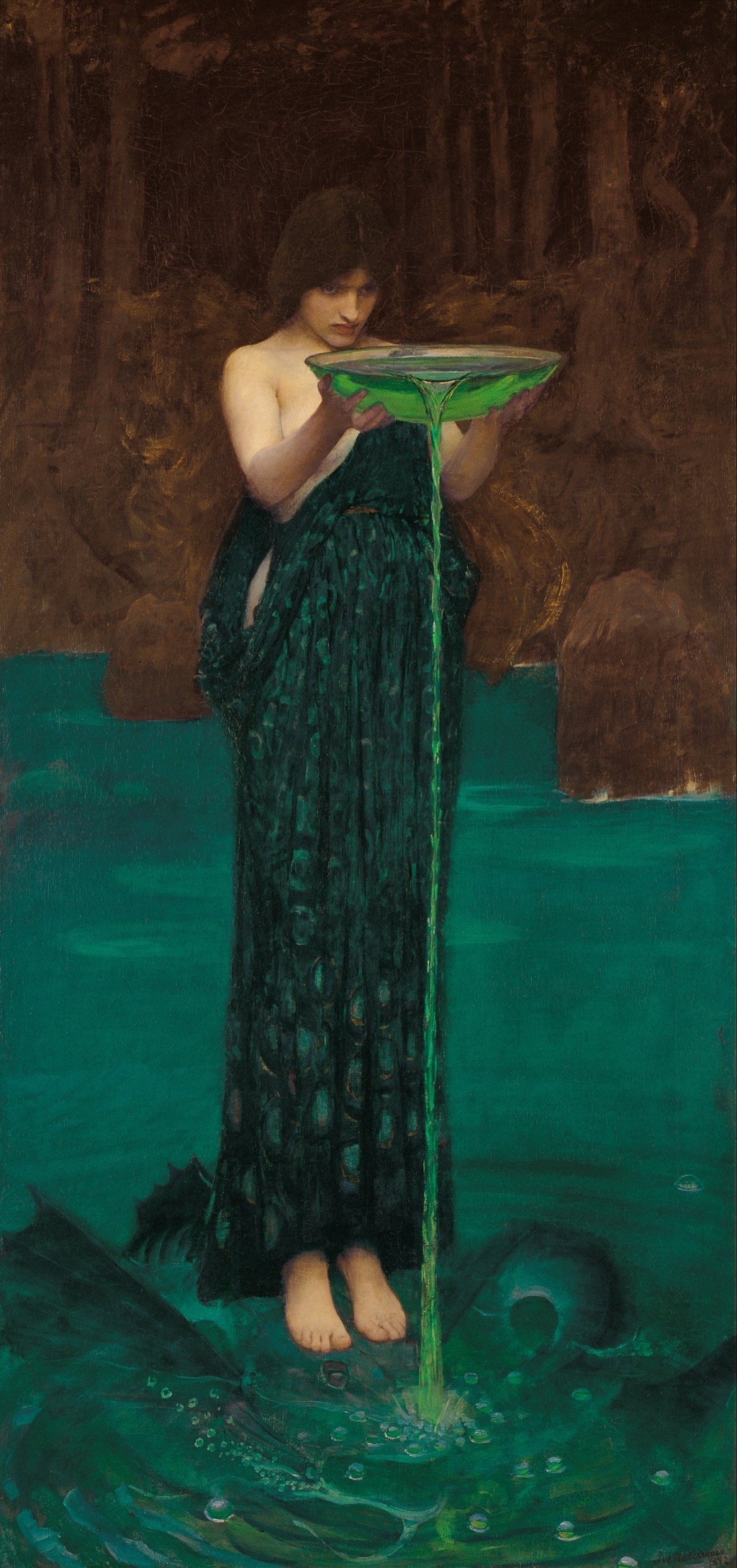
Circe Invidiosa of 1892 is not a second version of that encounter. It turns to Ovid’s account of the jealous Circe poisoning the water in which Scylla will bathe. [20] The Art Gallery of South Australia records that it bought the tall canvas in 1892 and emphasises the strange aquamarine that spreads through sea and atmosphere. [11] Waterhouse omits both Glaucus, whom Circe desires, and Scylla, whom she intends to transform. The act of pouring is enough. The painting compresses a chain of motive, spell and metamorphosis into a single descending stream.
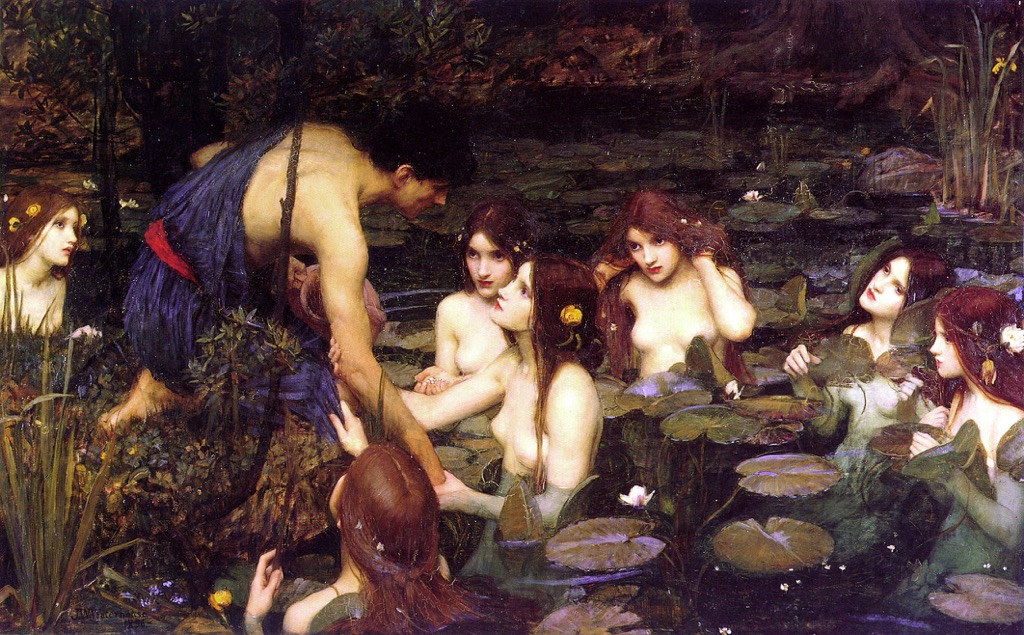
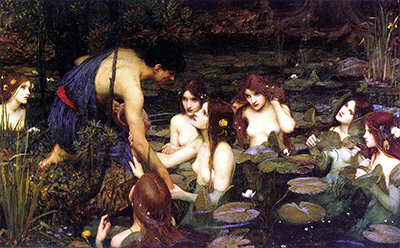
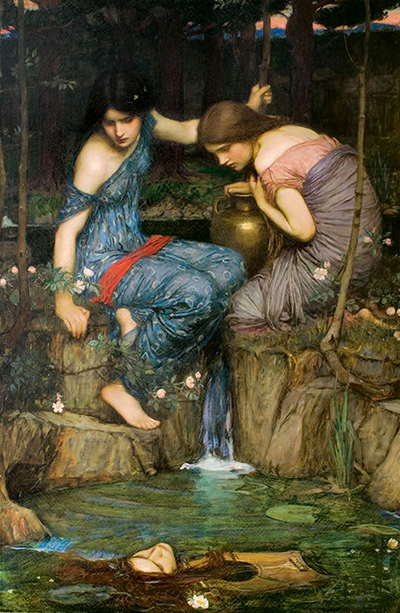
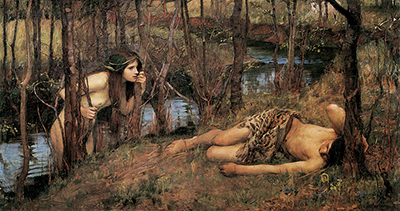
Hylas and the Nymphs of 1896 turns dangerous attraction into an exchange of looks across a pond. Manchester Art Gallery purchased the canvas from Waterhouse in the year it was painted. [12] Hylas bends towards near-identical water nymphs whose faces rise among lilies. Unlike the sirens, they do not swarm through the air; unlike Circe, they do not display an instrument of magic. Their power lies in invitation, repetition and the narrowing distance between hand and hand.
Tennyson, Shakespeare and Keats: painting the pause before an ending
Waterhouse’s literary pictures rarely attempt to illustrate an entire poem or play. They choose a moment whose outcome the viewer may already know, then make waiting for that outcome the subject.
Tennyson was especially important because his poetry offered enclosed rooms, repeated tasks, mirrored images and figures caught between withdrawal and experience. Waterhouse painted the Lady of Shalott three times, but the works belong to different points in her story. He also turned to Mariana in the South and to Saint Cecilia, subjects in which stillness becomes emotionally active. Art UK’s account of Tennyson in Victorian painting observes that his poetry repeatedly gave artists scenes of suspended movement and foreboding. [17]
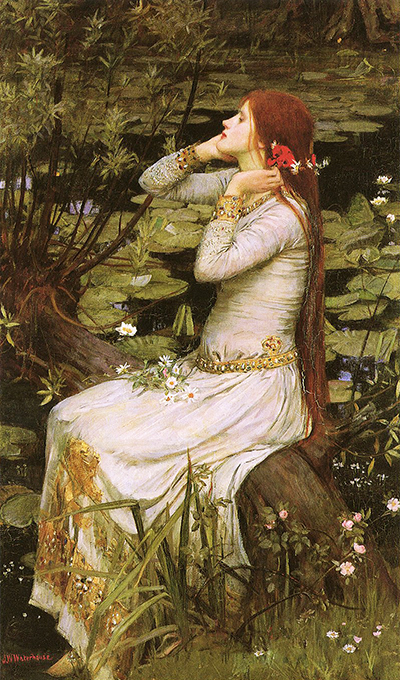
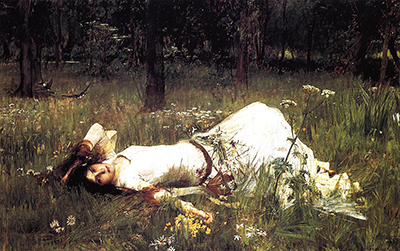
Shakespeare’s Ophelia allowed Waterhouse to explore a related problem across several paintings. Folger Shakespeare Library identifies three major treatments, from 1889, 1894 and 1910, each selecting a point before the heroine’s drowning rather than repeating Millais’s famous image of her already in the stream. [19] In one she lies among meadow flowers; in another she sits close to the water; in the late version she stands against a tree by the river. Flowers, water and bodily unease recur, but the distance from catastrophe changes.
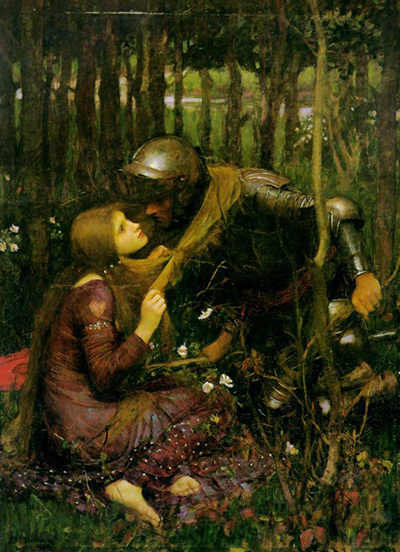
Keats supplied stories in which beauty and danger are equally difficult to separate. Waterhouse’s La Belle Dame sans Merci, Lamia and Isabella and the Pot of Basil belong to this literary current. Their medieval or legendary settings matter less as historical reconstruction than as emotional chambers. A meeting, embrace or vigil becomes the visible surface of a story already shadowed by loss.
These literary paintings reward reading the source, but they do not become tests of literal accuracy. Waterhouse adds, omits and rearranges. A title or catalogue quotation guides recognition; composition determines what the viewer experiences. The question is not simply whether he “got the story right,” but why he made one instant carry the weight of everything before and after it.
The paintings after 1900: returns, sequences and concentrated moods
Waterhouse’s paintings after 1900 do not form a gentle epilogue to the famous work of the 1880s and 1890s. They revisit classical myth, develop groups of related female figures and alternate between crowded narratives and close, absorbed states.
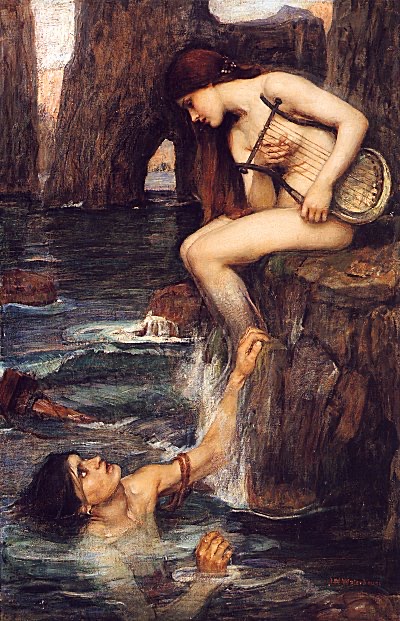
A Mermaid, painted in 1900 and accepted by the Royal Academy as Waterhouse’s Diploma Work in 1901, is one of the clearest statements of this later concentration. [13] A solitary figure sits at the edge of sea and land, combing her long hair. Shells, water and the tail identify a supernatural being, but no attacking sailor appears. The image is quieter than Ulysses and the Sirens and less explicitly fatal than Hylas and the Nymphs. It turns a creature often defined through danger to men into an absorbed presence with a world of her own.
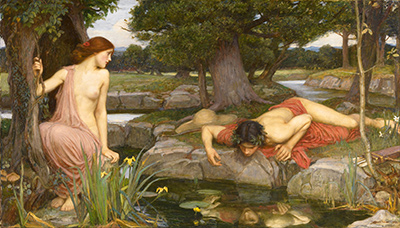
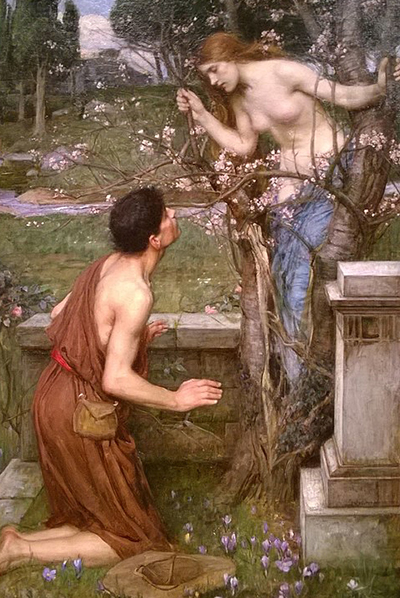
Echo and Narcissus of 1903 spreads a double tragedy across a landscape. Echo sits apart, watching Narcissus bend over his reflected image. The Walker Art Gallery holds the painting, which was exhibited at the Royal Academy in 1903. [14] Waterhouse lets the land between the figures perform the emotional separation. The viewer can see both causes of suffering at once, although neither protagonist truly sees the other.
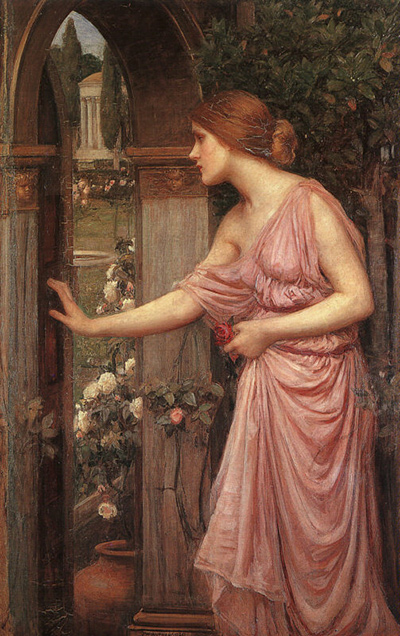
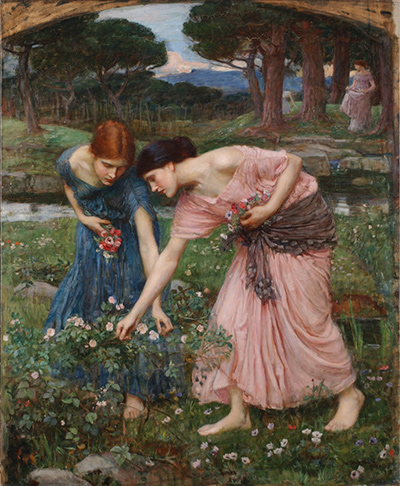
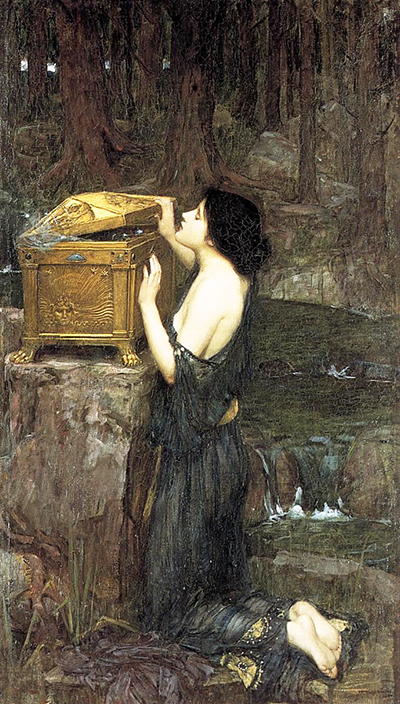
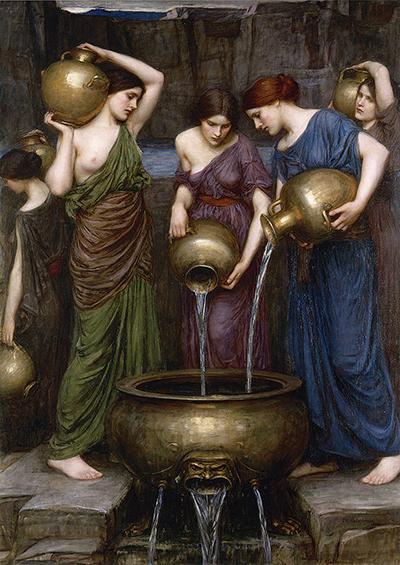
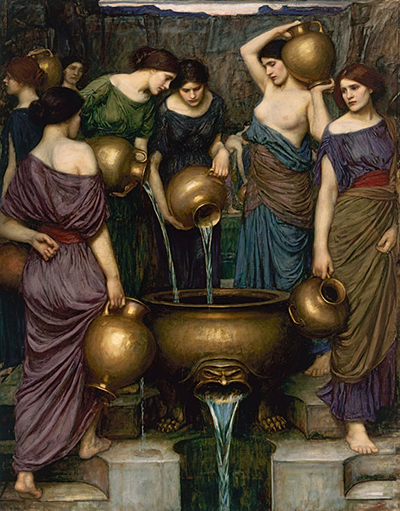
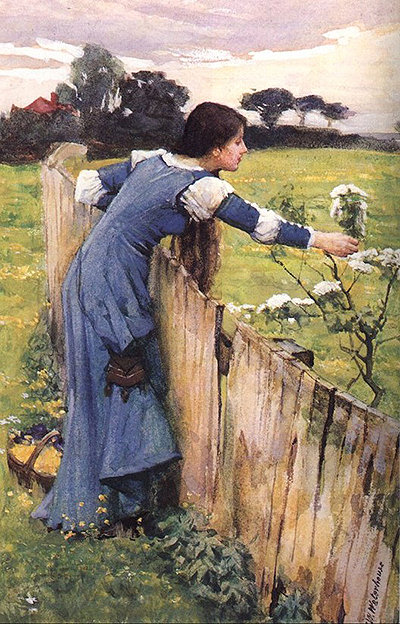
The later work frequently returns to making and repetition. The Danaïdes endlessly fill a vessel that cannot retain water. Psyche opens a forbidden container or approaches Cupid’s garden. Women gather flowers, listen to pipes, enter a doorway or tend a precious object. Similar poses and faces create a family resemblance, but titles and actions prevent the images from becoming interchangeable. A doorway can signal curiosity in one painting and exclusion in another; a vessel can contain poison, water or a task without end.
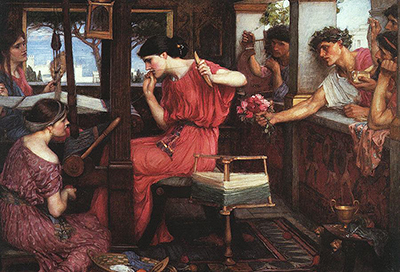
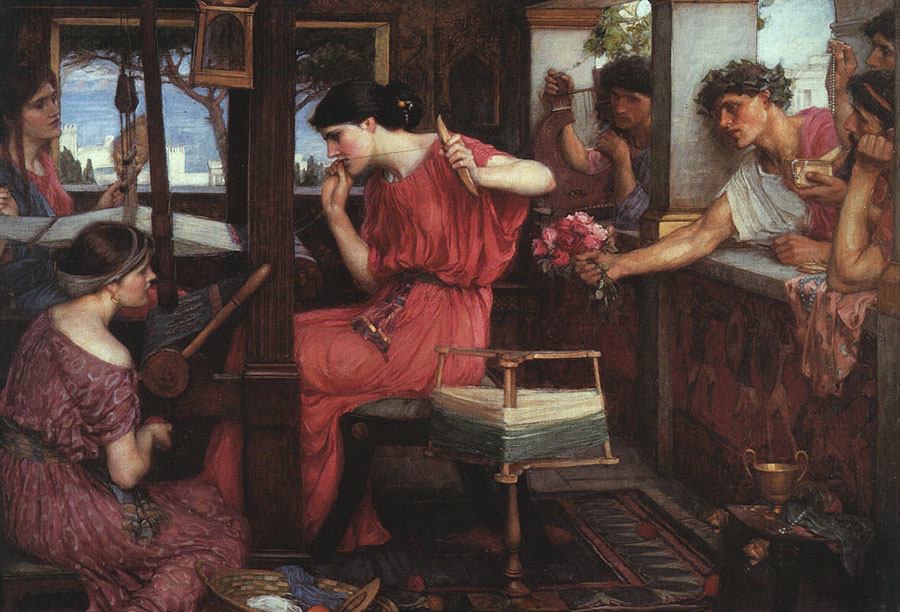
Penelope and the Suitors of 1911–1912 demonstrates that Waterhouse could still organise a complex multi-figure narrative. Aberdeen Art Gallery records that it purchased the canvas in 1912 and describes the broader, looser handling often associated with French influence. [15] Penelope turns from the gifts thrust towards her and continues weaving. The suitors crowd the outer edge, but her work establishes the painting’s centre. Like Circe drawing a circle, Penelope makes a protected field through action.
The 1915 “I am half sick of shadows,” said the Lady of Shalott is a late return rather than a remake of the 1888 boat scene. The Art Gallery of Ontario records the smaller canvas as an oil painting of 1915. [16] The Lady remains at the loom, resting her chin on her hand while the mirror and threads bind her to reflected life. Waterhouse moves backward within Tennyson’s story, from departure to dissatisfaction. The late picture is quieter because the fatal decision has not yet been made.
How Waterhouse constructs a painting
Waterhouse’s technique varied across four decades, and the available technical evidence is uneven. It is safer to describe visible effects than to invent a single recipe for every canvas. Several compositional habits, however, recur with striking consistency.
First, he makes the body carry narrative. The line of the Lady of Shalott’s arm towards the chain, Ulysses straining against the mast, Hylas bending towards the pond and Penelope turning from her suitors are not decorative poses. They disclose choice, resistance or loss of control before a viewer identifies every object.
Second, he uses containers and boundaries. Boats, mirrors, circles, doorways, pools, gardens and curtained interiors divide one condition from another. Crossing the boundary may bring knowledge, desire, freedom or death. Remaining inside it may offer safety at the price of isolation.
Third, colour concentrates attention. The snow around Eulalia, the green-blue poison of Circe Invidiosa, the red accents in The Lady of Shalott and the pale bodies among dark lilies in Hylas and the Nymphs are structural contrasts. They establish where the emotional charge lies.
Finally, Waterhouse balances detail with breadth. Some textiles, flowers and objects are sharply described; other areas are handled more loosely. The contrast allows a large painting to read across a gallery while rewarding close inspection. It also separates him from the idea that later Pre-Raphaelite art must reproduce the minute, even finish of the Brotherhood’s earliest pictures. The contemporary Encyclopaedia Britannica praised Waterhouse as a strong colourist and imaginative figure painter with a personal style, evidence that his individuality was recognised during his lifetime. [22]
A curated guide to twenty major paintings
The following route is chronological enough to reveal development but selective enough to remain useful.
- **Diogenes (1882):** begin with an early large classical narrative. Notice how the philosopher’s low, withdrawn position is opposed to the richly dressed women leaning towards him. [3]
- **The Favourites of the Emperor Honorius (about 1883):** look at how attention becomes political. The emperor’s birds matter less than the officials he ignores. [4]
- **Consulting the Oracle (1884):** compare a group organised by expectation with the solitary magic of the following years. [25]
- **Saint Eulalia (1885):** see how Waterhouse uses empty space, a low viewpoint and weather to depict the aftermath of martyrdom. [5]
- **The Magic Circle (1886):** read the drawn circle as an action before assigning fixed meanings to every bird, plant or vessel. [6]
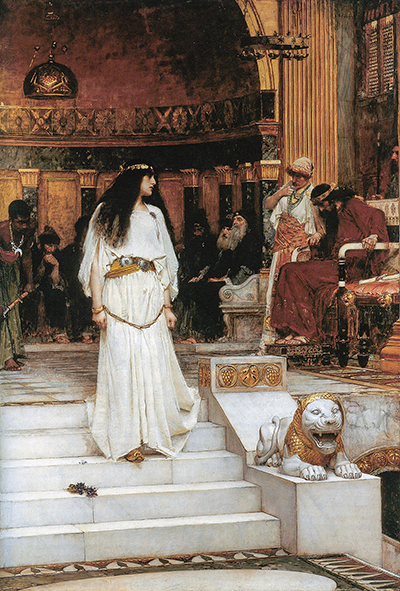
- **Mariamne Leaving the Judgement Seat of Herod (1887):** an important bridge between public history painting and the isolated tragic heroine. The National Portrait Gallery records that the work later received international exposure and awards. [1]
- **The Lady of Shalott (1888):** Waterhouse’s most complete union of poetic source, landscape, objects and irreversible movement. [7]
- **Ulysses and the Sirens (1891):** the great counterexample to the notion that mature Waterhouse means a single stationary woman. Movement presses in from every side. [8] [9]
- **Circe Offering the Cup to Ulysses (1891):** a frontal image of power in which the hero is reduced to a reflection behind the enchantress. [10]
- **Circe Invidiosa (1892):** compare the throne room with an outdoor act of poisoning. The two Circes perform different episodes from different ancient sources. [11] [20]
- **La Belle Dame sans Merci (1893):** a meeting shaped by Keats’s fatal ballad, where closeness does not promise safety. A contemporary loan catalogue records the painting’s Royal Academy exhibition in 1893. [29]
- **Ophelia (1894):** one stage in Waterhouse’s long engagement with Shakespeare’s heroine, positioned near water but before drowning. [18] [19]
- **Hylas and the Nymphs (1896):** study repetition. The similar faces form a collective lure, while Hylas’s bent body shows the distance already closing. [12]
- **A Mermaid (1900):** compare this solitary, self-contained sea figure with the attacking sirens of 1891. [13]
- **Echo and Narcissus (1903):** two figures, two kinds of frustrated desire and one landscape that keeps them apart. [14] [21]
- **Psyche Opening the Golden Box (1903):** one of several Psyche subjects in which curiosity is represented through a container, threshold or forbidden act; the finished painting was exhibited at the Royal Academy in 1903. [28]
- **The Danaïdes (1906):** repetition becomes punishment as vessels are filled without end; Aberdeen’s collection also holds a Waterhouse treatment of the subject. [27]
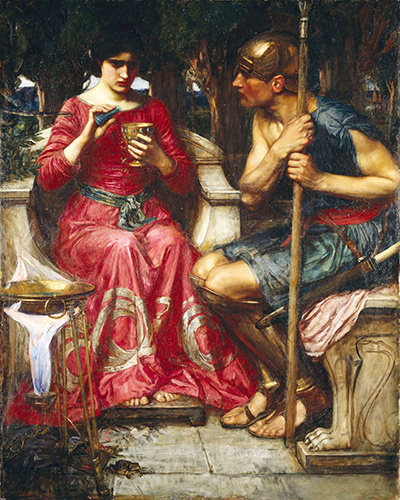
- **Jason and Medea (1907):** a late return to the classical enchantress, but now magic is shown as collaborative aid before betrayal and tragedy overtake the story. [24]
- **Penelope and the Suitors (1911–1912):** a crowded late Homeric picture held together by weaving, refusal and the contrast between inward labour and outward pressure. [15]
- **“I am half sick of shadows,” said the Lady of Shalott (1915):** end by returning to Tennyson before the voyage begins. It changes how the decisive 1888 picture is understood. [16] [17]
Selected John William Waterhouse Paintings
How to distinguish Waterhouse paintings with related subjects
The three Lady of Shalott paintings
- **The Lady of Shalott (1888):** the Lady is outdoors in a boat. The chain, tapestry and candles belong to the departure scene; the painting is at Tate. [7]
- **The Lady of Shalott (about 1894):** the Lady turns within the loom as the threads wind around her and the mirror reveals the world beyond. This version belongs to Leeds Museums and Galleries. [26]
- **“I am half sick of shadows,” said the Lady of Shalott (1915):** the Lady is still seated at the loom, weary of reflected experience; this painting is at the Art Gallery of Ontario. [16]
The dates do not follow the poem’s sequence. Waterhouse first painted the final journey, then returned to the breaking of the enclosed world and finally to the earlier state of dissatisfaction.
The Circe paintings
- **Circe Offering the Cup to Ulysses (1891):** interior, throne, cup, wand and mirror; Ulysses is visible in reflection. The subject comes from the encounter in Homer. [10]
- **Circe Invidiosa (1892):** outdoor shore, tall format and poison descending into the sea; the absent victim is Scylla, and the episode comes from Ovid. [11] [20]
- Later sorceress subjectsWaterhouse returned to female magic in works such as Jason and Medea and paintings sometimes titled The Sorceress. A magical woman should not automatically be renamed Circe when the documented title is less specific.
Sirens, mermaids, nymphs and naiads
These terms are often blurred in reproduction captions, but the paintings make important distinctions.
- *Sirens in Ulysses and the Sirens:* bird-bodied creatures attacking a ship, derived from an ancient vase tradition. [8]
- *The figure in A Mermaid:* a solitary fish-tailed being on a rocky shore, absorbed in combing her hair. [13]
- *The nymphs in Hylas and the Nymphs:* multiple freshwater figures rising among lilies to draw Hylas towards the pool. [12]
- A naiada freshwater nymph; Waterhouse also used this title for single-figure works. It describes a different mythic category from the maritime mermaid.
The Ophelia paintings
Waterhouse’s major Ophelias of 1889, 1894 and 1910 are separate compositions, not alternate titles for one canvas. [19] The 1889 heroine lies among meadow flowers with water behind her. The 1894 figure sits on a branch near the stream. The 1910 Ophelia stands against a tree on the bank, visibly distressed. All anticipate death without repeating the floating body in Millais’s Ophelia.
Where to see Waterhouse paintings in public collections
Waterhouse’s public geography is unusually international because major paintings were acquired during his lifetime.
In London, Tate holds Saint Eulalia, The Lady of Shalott and The Magic Circle, among other works and studies. [5] [6] [7] The Royal Academy owns A Mermaid, presented as Waterhouse’s Diploma Work. [13] Manchester Art Gallery has Hylas and the Nymphs, while Gallery Oldham holds Circe Offering the Cup to Ulysses. [10] [12] The Walker Art Gallery in Liverpool owns Echo and Narcissus, and Aberdeen Art Gallery owns Penelope and the Suitors and The Danaïdes. [14] [15] [27]
Australian collections contain paintings central to his development, not peripheral examples. The Art Gallery of New South Wales holds Diogenes; the National Gallery of Victoria holds Ulysses and the Sirens; and the Art Gallery of South Australia holds The Favourites of the Emperor Honorius and Circe Invidiosa. [3] [4] [8] [11]
Not every work is always on display, and many important paintings remain in private collections. A museum’s current display information should therefore be checked before travelling. The international retrospective of 2008–2010, organised for Groningen, London and Montreal, temporarily reunited a far broader range of paintings and studies than any one permanent collection can show. [2]
Display can also become part of a painting’s modern history. Manchester Art Gallery’s 2018 collaboration with Sonia Boyce included the temporary removal of Hylas and the Nymphs and invited responses to gender, sexuality, race and the conventions through which historic art is presented. [23] The project did not impose a final interpretation on Waterhouse’s painting. It demonstrated that collections shape discussion through labels, groupings and curatorial choices as well as through ownership.
Related Pages
- John William Waterhouse: Return to the artist overview and key works route.
- The Lady of Shalott: Read the flagship close-looking guide for the 1888 Tate painting.
Frequently Asked Questions
There is no single risk-free total. Catalogues include finished oils, studies, variant compositions and works whose present location is unknown; attribution and dating can also change. It is more reliable to identify the catalogue or collection being counted than to repeat an unexplained number.
His first Royal Academy exhibit dates to 1874, but importance depends on the question being asked. [1] Diogenes of 1882 is an especially useful early landmark because its scale, classical subject and documented exhibition history show Waterhouse operating as an ambitious public painter. [3] Saint Eulalia and The Magic Circle are stronger candidates for the beginning of the mature style. [5] [6]
The Lady of Shalott of 1888 is generally the painting most closely associated with his name. Its Tate setting, Tennysonian subject and extensive reproduction have made it a modern emblem of his art. [7] Hylas and the Nymphs, The Magic Circle and the Circe paintings are also widely recognised.
No. His sources include ancient history, Homeric and Ovidian myth, Christian martyrdom, medieval legend and imaginative magical subjects as well as poems and plays. Some paintings carry a quotation that identifies a precise literary moment. The Magic Circle carries no such quotation, although contemporary evidence and recent scholarship strongly support Theocritus’s second Idyll as its probable source. [6] [30]
No. Diogenes, Honorius, Ulysses, Hylas, Narcissus and numerous attendants, sailors and suitors appear across the work. Women nevertheless dominate the mature paintings, particularly as readers, makers, mourners, enchantresses and literary heroines.
Water is both setting and boundary. It carries the Lady of Shalott towards Camelot, conceals the nymphs who draw Hylas from safety, receives Circe’s poison and reflects Narcissus back to himself. Its meaning changes with the story; it should not be treated as one universal private symbol.
Related faces and body types recur, particularly in the later work, but visual similarity does not establish a sitter’s identity. The documentary record for Waterhouse’s models is incomplete, and unnamed figures should remain unnamed unless a reliable source identifies them. [1]
They belong to the later Pre-Raphaelite legacy, but Waterhouse was not a member of the Brotherhood founded in 1848. His Royal Academy training, early classical genre scenes, broader handling and later engagement with Symbolist themes complicate a simple label. “Modern Pre-Raphaelite” is useful when it describes an inheritance rather than a membership claim. [2]
The academic foundation never vanished. Large-scale composition, figure drawing and exhibition-minded narrative remain important throughout. What changes is the concentration of the subject: archaeological-looking classical scenes increasingly give way to charged literary moments, intense colour, supernatural action and isolated figures. The phases overlap.
Discussion
Waterhouse’s paintings become more varied when they are compared rather than absorbed into a single dreamlike style. Diogenes and Honorius are studies in social distance; Eulalia and the Lady of Shalott face irreversible change; Circe and Penelope protect or transform a space through deliberate action; Hylas and Narcissus lose themselves through looking.
Three comparisons offer especially productive ways to continue:
Reader Insights
The most revealing response may begin with a small difference: a hand that reaches or refuses, a reflection that includes someone absent from the foreground, a boundary that has just been crossed. Comparing those decisions keeps Waterhouse’s heroines from becoming one repeated type and restores the narrative intelligence of the paintings.
Which source or comparison helps the work feel less familiar and more specific?
What question would you bring back to the painting after reading?
Join the Conversation
Share the pairing, sequence or overlooked detail that most altered the way you see Waterhouse’s art.
References
- Main image: John William Waterhouse, Hylas and the Nymphs, 1896, Manchester Art Gallery, public-domain photographic reproduction via Wikimedia Commons.
- National Portrait Gallery, “John William Waterhouse (1849–1917), Figure painter,” Later Victorian Portraits Catalogue, Royal Academy chronology, studios and principal subjects. View source.
- Elizabeth Prettejohn, Peter Trippi, Robert Upstone and Patty Wageman, J. W. Waterhouse, 1849–1917: The Modern Pre-Raphaelite, exhibition-catalogue record, University of Bristol Research Portal, 2008. View source.
- Art Gallery of New South Wales, “Diogenes,” collection record, 1882, oil on canvas, Royal Academy exhibition and acquisition history. View source.
- Art Gallery of South Australia, “The Favourites of the Emperor Honorius,” collection record, c. 1883, oil on canvas. View source.
- Tate, “Saint Eulalia,” collection information for the 1885 oil painting and its martyrdom subject. View source.
- Tate, “The Magic Circle,” collection record, 1886, oil on canvas. View source.
- Tate, “The Lady of Shalott,” collection record, 1888, oil on canvas. View source.
- National Gallery of Victoria, “Ulysses and the Sirens,” collection record, 1891, oil on canvas, provenance and interpretive note. View source.
- Michelle Bonollo / National Gallery of Victoria, “J. W. Waterhouse’s Ulysses and the Sirens: breaking tradition and revealing fears,” study of the painting’s classical source and contemporary reception. View source.
- Art UK and Gallery Oldham, “Circe Offering the Cup to Ulysses,” collection record, 1891, oil on canvas. View source.
- Art Gallery of South Australia, “Circe Invidiosa,” collection record and curatorial interpretation, 1892, oil on canvas. View source.
- Art UK and Manchester Art Gallery, “Hylas and the Nymphs,” collection record, 1896, oil on canvas, purchased from the artist. View source.
- Royal Academy of Arts, The Artist’s Legacy, collection publication identifying A Mermaid as Waterhouse’s 1900 Diploma Work, accepted in 1901. View source.
- Art UK and the Walker Art Gallery, “Echo and Narcissus,” collection record, 1903, oil on canvas. View source.
- Aberdeen Archives, Gallery & Museums, “Penelope and the Suitors,” collection record, 1911–1912, oil on canvas, with commentary on the late handling. View source.
- Art Gallery of Ontario, “ ‘I am half sick of shadows,’ said The Lady of Shalott,” collection record, 1915, oil on canvas. View source.
- Art UK, “Tennyson: the favoured subject,” account of Tennyson’s importance to Victorian artists and Waterhouse’s Lady of Shalott paintings. View source.
- Folger Shakespeare Library, Hamlet, complete text, including Ophelia’s flower and death sequence. View source.
- Folger Shakespeare Library, “Ophelia in nineteenth-century English art, inspired by John Everett Millais,” discussion of Waterhouse’s 1889, 1894 and 1910 treatments. View source.
- Ovid, Metamorphoses, Book 14, Scylla and Circe episode, translated by Brookes More. View source.
- Ovid, Metamorphoses, Book 3, Echo and Narcissus episode, translated by Brookes More. View source.
- Encyclopaedia Britannica, “Waterhouse, John William,” 11th edition, 1911, contemporary critical notice. View source.
- Manchester Art Gallery, Sonia Boyce, long label for Six Acts, documenting the 2018 reinterpretation of Hylas and the Nymphs. View source.
- Art UK, “Representing Medea: the tale of a mythical murderess,” discussion of Waterhouse’s Jason and Medea of 1907. View source.
- Tate, “Consulting the Oracle,” collection record, 1884, oil on canvas. View source.
- Art UK and Leeds Museums and Galleries, “The Lady of Shalott,” collection record, about 1894, oil on canvas. View source.
- Aberdeen Archives, Gallery & Museums, “John William Waterhouse: Works,” collection listing for Penelope and the Suitors and The Danaïdes. View source.
- Sotheby’s, “Study for Psyche Opening the Golden Box,” catalogue entry identifying the related finished painting as a Royal Academy exhibit of 1903. View source.
- Temple Newsam, Descriptive Catalogue of the Loan Collection of Pictures, no. 122, La Belle Dame sans Merci, recording the painting’s Royal Academy exhibition in 1893. View source.
- Mark Williams and Jennifer Williams, “The Inspiration behind The Magic Circle,” summary of their 2023 Pre-Raphaelite Society Review study connecting the subject with Theocritus’s second Idyll and an 1881 Pall Mall Gazette notice. View source.