

 by Tom Gurney
Tom Gurney BSc (Hons) is an art history expert with over 20 years experience
Published on August 14, 2026 / Updated on August 14, 2026
Email: tomgurney1@gmail.com / Phone: +44 7429 011000
Sleep and His Half-Brother Death: Introduction
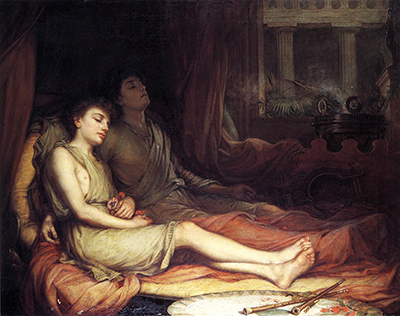
Two young men rest side by side in a shadowed classical room. Their bodies are similar enough to suggest kinship, but light, colour and small objects separate temporary unconsciousness from the stillness that does not end.
John William Waterhouse painted Sleep and His Half-Brother Death in 1874, and it became his first accepted exhibit at the Royal Academy. The picture joins Hypnos and Thanatos from Greek myth, but its most important invention lies in the word “half”: ancient poets normally make Sleep and Death brothers born of Night. Waterhouse turns that complete kinship into an uneasy resemblance. [1] [2] [3]
At a Glance
- ArtistJohn William Waterhouse (1849–1917)
- TitleSleep and His Half-Brother Death [1]
- Date1874 [1]
- MediumOil on canvas [1]
- DimensionsApproximately 69.8 × 90.8 cm, also rounded to 70 × 91 cm in published accounts [1] [4]
- CollectionPrivate collection [1] [4]
- First exhibitedRoyal Academy, London, 1874 [4] [5]
- Career importanceWaterhouse's first accepted Royal Academy exhibit [5] [6]
- Mythological figuresHypnos, personification of Sleep, and Thanatos, personification of Death [2] [3]
- Principal ancient sourcesHesiod's Theogony and Homer's Iliad [2] [3]
- Biographical contextWaterhouse had lost two younger brothers to tuberculosis; the connection to this subject is plausible and widely repeated but is not established here by a surviving statement of intent [4] [6]
- Essential distinctionAncient sources call Sleep and Death brothers; “half-brother” is the painting's poetic title, not a standard Greek genealogy [2] [3]
Contents
- Introduction
- Two Kinds of Stillness
- Hypnos and Thanatos in Greek Poetry
- Why Waterhouse Says “Half-Brother”
- Poppies, Music and the Senses
- Light, Shadow and Almost Identical Bodies
- Bereavement and the Limits of Biography
- A Pompeian Room and an Early Manner
- The Royal Academy Debut of 1874
Two Kinds of Stillness
The two figures occupy a shared couch or closely joined resting place. One lies in the foreground, chest exposed beneath pale fabric, face relaxed and body open to the light. The second reclines further back, enveloped by darker drapery and shadow.
Their closeness makes comparison unavoidable. Neither body bears a wound, and neither acts. Waterhouse asks the viewer to distinguish Sleep from Death through degrees rather than events.
The foreground youth is usually identified as Sleep. Poppies rest in or near his hand and lap, and the brighter surface allows skin, fabric and breath-like softness to remain perceptible. [1] [4]
Death occupies the darker zone behind. His stillness is not violently different, which is precisely the source of unease. The body that sleeps offers a model for imagining the body that will not wake.
Waterhouse avoids the common personification of Death as skeleton, armed executioner or aged figure. Thanatos is young and beautiful, almost a double. Mortality enters through resemblance to an everyday state rather than through physical horror.
The setting remains inhabited by objects: musical instruments, patterned textiles, architectural openings and hanging drapery. Human activity has paused, but traces of sound and touch remain close.
This is not an episode with a clear before and after. No ancient narrative requires the brothers to recline together in this room. The picture is an allegorical arrangement designed to hold a thought: sleep rehearses the appearance of death while life continues around it.
The title directs that thought without solving it. If Death is only Sleep's half-brother, the two share something essential but not everything. One stillness belongs within life; the other establishes its limit.
Hypnos and Thanatos in Greek Poetry
Hesiod's Theogony places both figures among the children of Night. Night bears Death, Sleep and the tribe of Dreams without a father being named in the passage. [2]
Later in the poem, Sleep and Death live near the house of Night in the region of the underworld. The Sun never looks upon them. Hesiod distinguishes their characters: Sleep moves peacefully over earth and sea and is kindly to mortals, while Death has an iron heart and holds fast whoever he seizes. [2]
This contrast supplies Waterhouse with more than a family tree. The gods may look like brothers, but their relations to humanity differ. Sleep releases; Death retains.
Homer gives them a shared action in Book 16 of the Iliad. After Patroclus kills Sarpedon, Zeus instructs Apollo to cleanse and anoint the body, wrap it in immortal clothing and give it to Death and Sleep. The paired messengers carry Sarpedon home to Lycia for burial. [3]
In that episode they are not opponents. Together they transport the dead, making the visual similarity between sleeping and death part of a dignified funeral sequence.
Waterhouse does not paint Sarpedon's body or the journey to Lycia. His two figures are themselves the subject, separated from narrative service and brought into intimate repose.
The painting therefore draws on a mythic relationship rather than illustrating a specific Homeric line. Hesiod provides shared descent and opposed temperaments; Homer provides partnership around a dead body. Waterhouse translates both into proximity.
Names can also clarify the subject. Hypnos is Greek for Sleep; Thanatos personifies Death. Their Roman counterparts may be called Somnus and Mors, but Waterhouse's English title avoids requiring viewers to know either vocabulary.
The myth does not make Thanatos ruler of the underworld. He is not Hades. Nor is Hypnos identical with Morpheus, one figure later associated with dreams. The painting concerns the conditions of sleep and death, not a scene of underworld kingship or a particular dream.
Why Waterhouse Says “Half-Brother”
The title creates a genuine problem. Hesiod presents Sleep and Death as children of Night, and later tradition repeatedly calls them brothers. Nothing in the principal ancient sources cited here explains a different father that would make them half-siblings. [2] [3]
“Half-brother” should therefore not be treated as a literal statement of standard mythology. It is better understood as Waterhouse's poetic qualification of resemblance.
Sleep belongs to life. It interrupts consciousness, loosens control and makes the body unresponsive, but awakening remains possible. Death shares those visible effects while removing return.
The prefix “half” preserves the border. Without it, the title might make sleep and death exact equivalents; with it, the states are related but not interchangeable.
The word also encourages the composition's fine distinctions. The figures have similar youth, beauty and pose, yet one is lit and one shadowed, one associated with poppies and one with darker finality.
It is possible that Waterhouse drew upon a modern poetic or popular formulation now difficult to trace. No source cited here identifies a single textual phrase that he copied. The safe conclusion is that the title does interpretive work whether or not its wording had a proximate source.
The formulation belongs to a long metaphorical tradition in which sleep resembles a lesser, temporary death. Its power depends upon experience available to every viewer: watching a sleeping person and recognising how close repose can appear to absence.
Waterhouse does not answer whether that resemblance consoles or frightens. If death looks like peaceful sleep, fear may soften. If ordinary sleep already displays death's posture, mortality enters daily life.
The two readings coexist because the title connects without equating.
Poppies, Music and the Senses
Poppies identify the foreground figure with sleep. Their drooping form and ancient association with sedative effects make them an economical attribute. [1] [4]
Waterhouse does not paint a scientific account of opium or a scene of deliberate intoxication. The flowers belong to a broad visual language of drowsiness, forgetfulness and altered consciousness.
The poppies are small in relation to the bodies. They reward close looking rather than functioning as a large heraldic emblem. This scale lets identification emerge through intimacy.
Musical instruments rest nearby, including a lyre and pipes or flutes. They imply sound that has ceased and performance waiting to resume. [1]
The instruments can distinguish temporary pause from permanent silence. Sleep may wake to music; Death cannot. Yet Waterhouse does not label one instrument as a private code for either brother, and no surviving explanation cited here assigns exact symbolic roles.
Textiles intensify the sensory world. Soft fabric touches exposed skin; cushions and drapery absorb bodies; folds slow the movement of the eye. The picture makes stillness sensuous rather than empty.
Architecture opens towards pale exterior light while a curtain darkens the rear. Sound, touch and sight are therefore organised along the same transition as the figures: available in the foreground, reduced towards shadow.
The picture's muted greys, greens, browns and creams prevent the poppies or fabrics from becoming festive. Colour seems to withdraw without disappearing.
This restraint is important. A stark black-and-white allegory would make the meaning instant but crude. Waterhouse allows the difference between sleep and death to arrive through accumulated changes in illumination, texture and access to sensation.
Light, Shadow and Almost Identical Bodies
The foreground figure receives the clearest light. His flesh and pale garment project into the viewer's zone, while the second body recedes beneath darker cloth and architectural shadow.
Light does not simply equal life. Sleep remains unconscious, vulnerable and still. But it gives the foreground body a relation to the room that Death increasingly loses.
The bodies nearly rhyme. Heads tilt, limbs relax and youthful faces refuse the conventional distinction between healthy beauty and corrupted corpse.
Their similarity may initially delay identification. A viewer can see two sleepers before noticing the title and attributes. The recognition that one is Death then changes the first look retrospectively.
Waterhouse uses depth rather than separation. The figures are not placed on opposite sides with an allegorical dividing line. One lies behind the other, as if death were a deeper version of the same visual condition.
The curtain and architecture reinforce that movement. Foreground space remains legible; the rear gathers obscurity. Death is close enough to touch Sleep but progressively less available to the viewer.
Neither figure meets our gaze. This absence removes moral address. The painting does not ask the brothers to explain mortality; it lets viewers project thought onto faces that cannot answer.
The exposed chest of Sleep makes the body appear warm and breathable. Reproduction cannot show actual movement, yet the possibility of breath belongs to the visual reading. Death's body, more covered and shadowed, withholds the same assurance.
No anatomical sign proves that either figure lives or has died. Meaning depends upon title, position and association. The allegory works because painting can preserve uncertainty that direct observation would try to resolve.
Bereavement and the Limits of Biography
Waterhouse had experienced severe family loss before 1874. Biographical accounts state that his mother and two younger brothers died from tuberculosis after the family's return to England. [4] [6]
Because the picture joins sleep and death through two young male bodies, writers have plausibly connected the subject to the brothers' deaths. Sotheby's modern artist profile makes the connection directly, and the Victorian Web repeats it within an account based on Waterhouse literature. [4] [6]
That context deserves inclusion, but its evidential level must remain clear. No letter, diary entry or recorded statement by Waterhouse cited here says that the two painted figures are portraits of his brothers or that their deaths caused him to choose the subject.
The safest wording is therefore autobiographical resonance, not documented portraiture. Personal bereavement may have made the ancient relationship between Sleep and Death urgent without turning the canvas into a literal family memorial.
The figures are idealised and mythological. They do not carry names, dates, recognisable contemporary clothing or funerary inscriptions that would independently identify deceased relatives.
Nor is grief the painting's only context. Victorian culture frequently represented sleep, death, beautiful young bodies and peaceful memorial repose. Classical myth allowed those interests to be combined without showing a modern sickroom.
The family history can deepen interpretation precisely when it is not made to explain every object. Poppies, instruments, shadow and architecture belong to the public language of allegory; private loss may sit behind them without being recoverable in detail.
This distinction respects both the work and the limits of Waterhouse's surviving personal record. The painting can be emotionally personal even when the mechanism of that emotion is not documented.
It also prevents a circular argument: the subject should not be called biographical merely because it is moving, then used as proof of the same biography.
A Pompeian Room and an Early Manner
Waterhouse places the brothers in an imagined Greco-Roman interior of columns, opening, curtain and richly arranged couch. Sotheby's describes the scene as Pompeian and notes the poetic freedom of his early classical pictures. [5]
“Pompeian” identifies a nineteenth-century visual atmosphere rather than a documented room excavated at Pompeii. The painting combines antiquarian suggestion with the needs of allegory.
The horizontal canvas accommodates two reclining bodies and lets light travel from the architectural opening across the couch. Unlike the tall public dramas of Waterhouse's later early career, this is intimate in scale—about 70 × 91 cm. [1] [4]
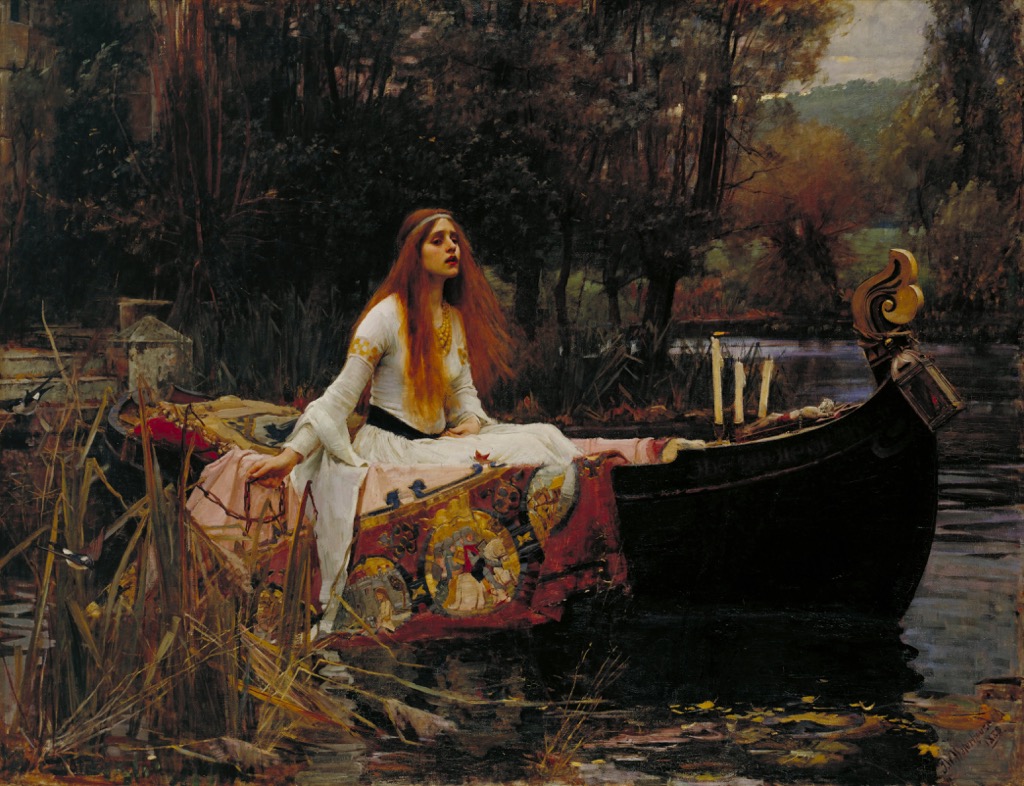
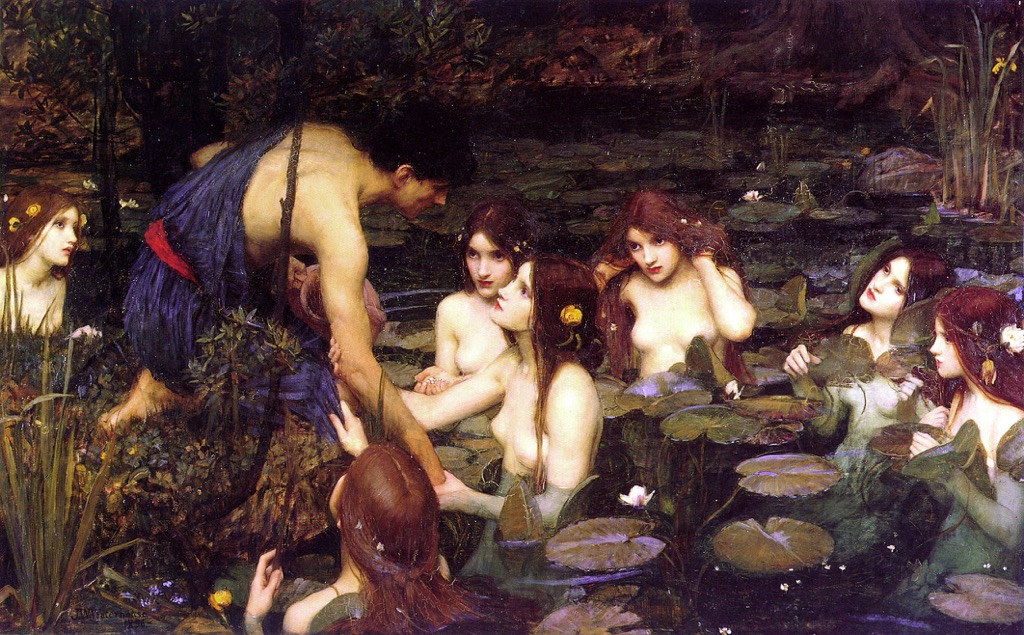
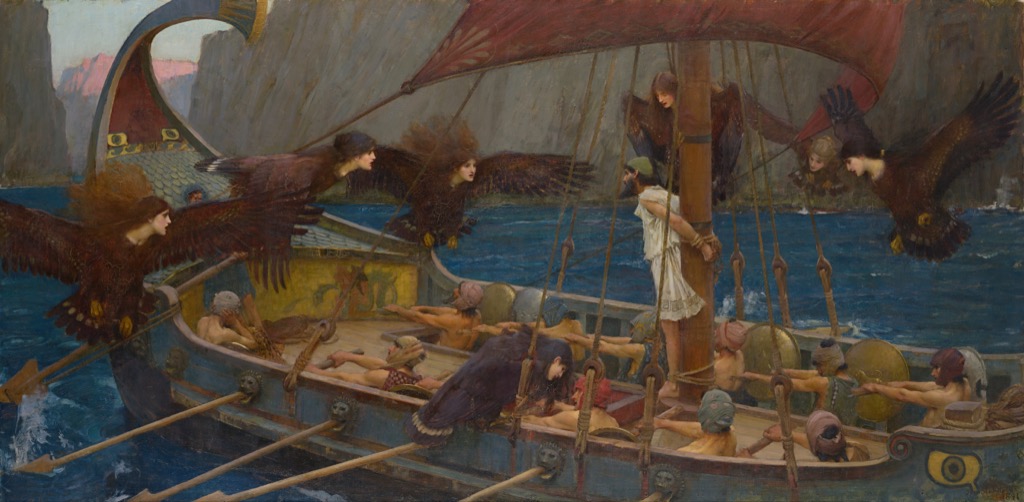
Its finish already demonstrates an interest in colour and atmosphere, but it precedes the mature manner now most associated with The Lady of Shalott, Hylas and the Nymphs and Echo and Narcissus.
The room also lets Waterhouse test an effect that a landscape could not provide as directly. Curtain, wall and couch trap shadow around the figures, while the architectural opening makes exterior brightness visible but unavailable to them. Sleep withdraws temporarily from that outer world; Death has crossed a limit no change of light can reverse.
Because the canvas is not monumental, these differences remain close and domestic. Mythological personifications occupy the scale of companions at rest, drawing the viewer into comparison rather than demanding distant awe.
The leading figures are male, the setting is enclosed and the narrative action is almost absent. These differences are valuable reminders that Waterhouse's career cannot be reduced to later images of literary women outdoors.
At the same time, several durable concerns are present. Bodies occupy a threshold between states; an old source is condensed into one psychologically suspended moment; objects carry meaning without eliminating ambiguity; water or air beyond an enclosure offers a world the figures do not enter.
The painting's classicism is therefore not a discarded phase. It provides structures Waterhouse would continue transforming.
The restrained size also suits the subject. Sleep and death are encountered close to the body, not staged as a civic spectacle. Viewers look into a private room whose allegory exceeds it.
The Royal Academy Debut of 1874
Sleep and His Half-Brother Death was Waterhouse's first accepted exhibit at the Royal Academy in 1874. [5] [6] He was twenty-five and had trained at the Academy Schools after initially considering sculpture.
The acceptance began one of the central professional relationships of his life. Waterhouse would exhibit at the Academy across the following four decades, become an Associate in 1885 and a full Royal Academician in 1895. [6]
It is tempting to narrate the debut as if later success were already guaranteed. The painting's importance is clearer in retrospect. In 1874 it introduced a young artist through a modestly sized classical allegory rather than through the large, richly populated canvases he would soon develop.
Contemporary reception is not fully reproduced in the accessible sources cited here. The statement that the painting was a “success” should therefore be kept separate from claims about specific reviews unless those reviews are located.
Its institutional consequence is documented by the career that followed. The Academy became the principal public venue through which Waterhouse's changing classical, historical and literary subjects reached London audiences.
The painting is now recorded in private ownership and appeared in the modern auction history of Waterhouse's work. [1] [5] Because it lacks a permanent public collection page, dimensions and provenance are less securely centralised than for Diogenes or the Aberdeen paintings in this batch.
That limitation should be stated rather than filled with guesswork. Published dimensions converge around 70 × 91 cm, and the painting's 1874 Royal Academy status is well established. [1] [4] [5]
As a first Academy exhibit, it offers an unusually apt beginning. Waterhouse enters public view through two figures who cannot return the gaze, and through a subject poised between temporary pause and irreversible ending.
Related Pages
- The Lady of Shalott: Compare Waterhouse's best-known literary composition.
- Hylas and the Nymphs: Compare another major mythological scene.
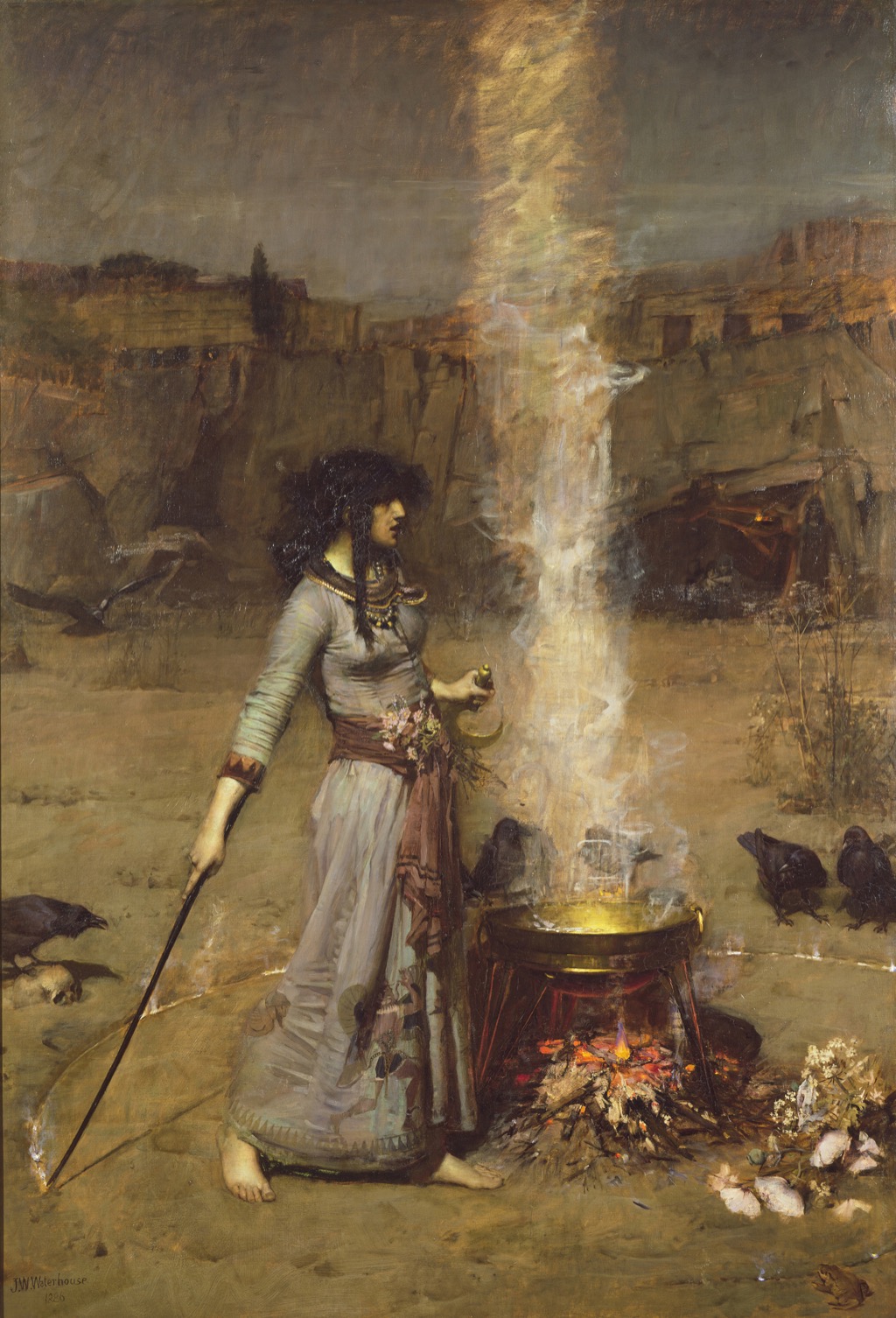
- The Magic Circle: Compare Waterhouse's treatment of ritual and symbolism.
Frequently Asked Questions
They are Hypnos and Thanatos, personifications in Greek myth. Hesiod makes both children of Night, while Homer pairs them as bearers of Sarpedon's body. [2] [3]
The principal ancient sources call them brothers and do not supply the separate fathers required by a literal half-sibling relationship. “Half-brother” is best treated as Waterhouse's poetic distinction between related but unequal states. [2] [3]
The lighter foreground youth associated with poppies is generally identified as Sleep. The darker figure behind represents Death. [1] [4]
Poppies have a long association with sleep and narcotic effects. They identify Hypnos without requiring a narrative action.
Waterhouse had lost two younger brothers to tuberculosis, and writers connect that bereavement to the subject. No artist statement cited here identifies the figures as portraits, so the link should be presented as plausible context rather than proven intention. [4] [6]
Not directly. In the Iliad, Sleep and Death carry Sarpedon's body home for burial. Waterhouse removes Sarpedon and creates a separate scene of the brothers reclining together. [3]
No. It was his first accepted Royal Academy exhibit, not necessarily his earliest completed work. [5] [6]
Discussion
1. How does Waterhouse distinguish sleep from death without showing movement or injury? 2. Does the youthful beauty of Death console the viewer or make the painting more unsettling? 3. What interpretive work is done by the word “half” in the title? 4. How do poppies and silent instruments organise the senses within the room? 5. What is gained by presenting biographical bereavement as context rather than proven explanation? 6. How does Waterhouse transform Hesiod's opposed brothers and Homer's paired messengers into a private allegory? 7. Would the painting communicate differently if Death were skeletal or visibly decayed? 8. What concerns of Waterhouse's later career can already be found in this first Royal Academy exhibit?
Reader Insights
Which visible detail most changes the way you read this page?
Which source or comparison helps the work feel less familiar and more specific?
What question would you bring back to the painting after reading?
Join the Conversation
Share your reading of this page below.
References
- Wikimedia Commons, “File: Waterhouse—Sleep and His Half-Brother Death—1874.jpg,” object data and image record, accessed 6 August 2026, View source.
- Hesiod, Theogony, especially lines 211–225 and 744–766, translated by Hugh G. Evelyn-White, Perseus Digital Library, Tufts University, accessed 6 August 2026, https://www.perseus.tufts.edu/hopper/text?doc=Perseus%3Atext%3A1999.01.0130%3Acard%3D207 and View source.
- Homer, Iliad, Book 16, especially lines 450–457 and 667–683, translated by A. T. Murray, Perseus Digital Library, Tufts University, accessed 6 August 2026, View source.
- Jacqueline Banerjee, “J. W. Waterhouse's ‘Sleep and His Half-Brother Death,’” The Victorian Web, 13 March 2021, View source.
- Sotheby's, catalogue note for John William Waterhouse, Miranda, lot 12, Victorian, Pre-Raphaelite & British Impressionist Art, London, 15 July 2015, accessed 6 August 2026, View source.
- Sotheby's, “John William Waterhouse,” artist biography, accessed 6 August 2026, View source.