

 by Tom Gurney
Tom Gurney BSc (Hons) is an art history expert with over 20 years experience
Published on August 14, 2026 / Updated on August 14, 2026
Email: tomgurney1@gmail.com / Phone: +44 7429 011000
Study for Medea: Introduction
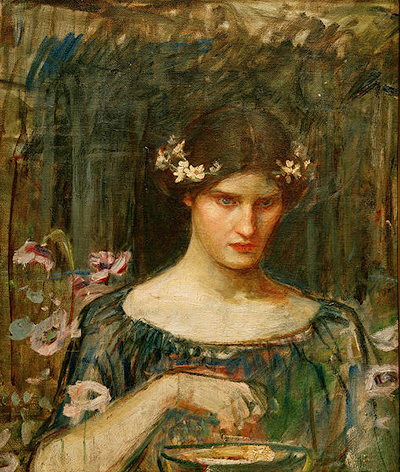
John William Waterhouse’s Study for Medea isolates the dark-haired enchantress who would appear beside Jason in the artist’s finished painting of 1907. Painted in oils around 1906–07, the surviving study is not a second completed narrative scene. It is a working image through which Waterhouse tested the face, lowered gaze, costume and concentrated stillness of a woman preparing the potion that will help Jason win the Golden Fleece. [1]
That distinction gives the study its importance. In the finished Jason and Medea, a male hero watches while Medea measures or pours her magical substance. In the study, her intellectual and practical labour occupies the whole field. The page therefore offers both a close view of Waterhouse’s method and a chance to encounter Medea before later violence has swallowed every other part of her story.
At a Glance
- ArtistJohn William Waterhouse (1849–1917)
- TitleCommonly catalogued as Study for Medea or Sketch for Medea
- DateAbout 1906–07 [1]
- MediumOil study; precise support and dimensions require confirmation from the physical object or a current catalogue
- CollectionPrivate collection or present location not securely published
- PurposePreparatory study associated with Jason and Medea (1907) [1]
- Related finished paintingJason and Medea, 1907, oil on canvas, private collection [2]
- SubjectMedea preparing the magic that enables Jason to complete Aeëtes’ trials
- Primary ancient contextsApollonius’ Argonautica and Ovid’s Heroides [3] [4]
- Essential distinctionThis page concerns the single-figure oil study, not the completed two-figure Jason and Medea
Contents
- Introduction
- What the Study Shows
- From Colchis to the Golden Fleece
- Medea Before the Crimes
- Face, Gaze and Concentrated Intelligence
- Oil Studies in Waterhouse’s Working Method
- From Solitary Figure to Jason and Medea
- Victorian Images of the Enchantress
- What Can and Cannot Be Claimed
What the Study Shows
The study presents Medea alone, probably at or near half length. Her dark hair, pale face and downward attention establish the visual type later integrated into the completed composition.
Because published reproductions vary in colour and crop, description must remain tied to what can actually be seen. The work is an oil study rather than a fully documented exhibition canvas. Areas of dress and background appear less resolved than the head, allowing the face to carry the principal psychological burden.
Medea does not confront the spectator. Her attention belongs to a task below or beside the visible centre, and that withheld gaze creates concentration rather than invitation.
The pose matters because popular images often define Medea through spectacular action: driving a dragon chariot, raising a knife, standing over dead children or confronting an unfaithful Jason. Waterhouse instead studies a moment of thought and preparation.
Her power is manual as well as supernatural. In the finished picture she works with a vessel while Jason waits. The study begins from the person who knows what to do.
This is not innocence in the sense of ignorance. Ancient narratives already make Medea a skilled user of drugs, herbs and incantations. Yet the image belongs to an early stage in her relationship with Jason, before betrayal and revenge. [3]
Waterhouse’s crop removes most narrative evidence. No dragon, fleece, bull or murdered victim tells the whole story for us.
The result is deliberately incomplete. A study can preserve the emotional centre of a composition while leaving the plot to later development.
The incompleteness also changes the viewer’s ethics. We look at Medea as an individual being imagined, not merely as the notorious endpoint of a moral caution.
From Colchis to the Golden Fleece
Medea is the daughter of Aeëtes, king of Colchis, and a granddaughter of the sun god Helios in the best-known ancient genealogy. Jason reaches Colchis with the Argonauts to claim the Golden Fleece, an object guarded by her father. [3]
Aeëtes does not simply surrender it. He imposes impossible tasks: Jason must yoke fire-breathing, bronze-footed bulls, plough a field and sow dragon’s teeth from which armed men will rise.
Medea’s knowledge makes success possible. In Apollonius’ Argonautica, divine intervention and desire bring her into conflict between loyalty to family and attachment to the foreign hero. [3]
She gives Jason a protective drug and instructions. He is to anoint his body, shield and spear so that the bulls’ fire and weapons cannot overcome him.
Her help is not a vague blessing. It is technical knowledge translated into a procedure. Substance, timing, application and strategy all matter.
The finished Waterhouse composition selects this alliance. Medea prepares the potion; Jason attends. The oil study concentrates on the person upon whom the heroic exploit depends.
This emphasis complicates the conventional name “Jason’s quest.” He may perform the public feat, but the conditions of victory are produced by Medea.
The Golden Fleece story continues beyond the trials. Medea helps Jason overcome the dragon guarding the fleece, leaves Colchis and becomes implicated in violence against her own family. [3]
Different ancient authors and later retellings vary in incident, responsibility and emphasis. A painting page should not force all versions into one seamless biography.
Waterhouse’s scene is most intelligible as a moment before the task: medicine is being made and trust is being extended. It does not narrate the entire Argonaut cycle.
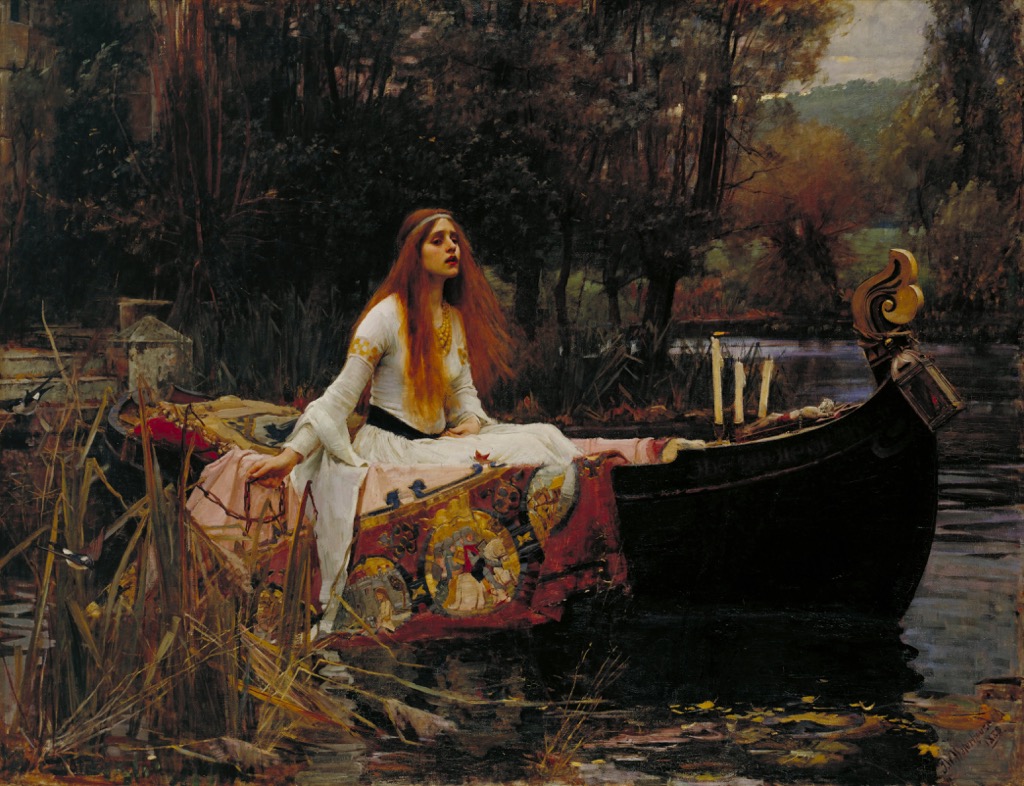
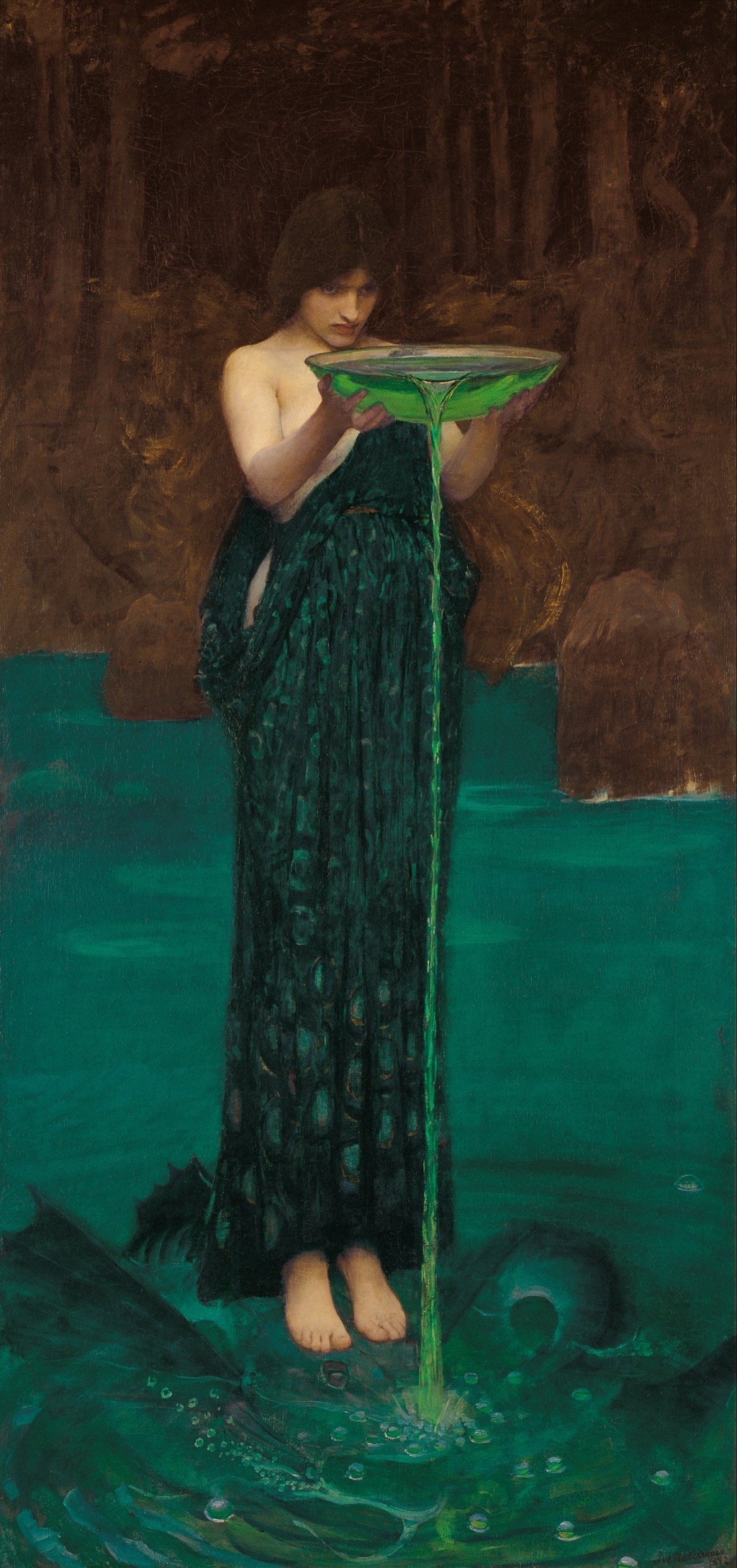
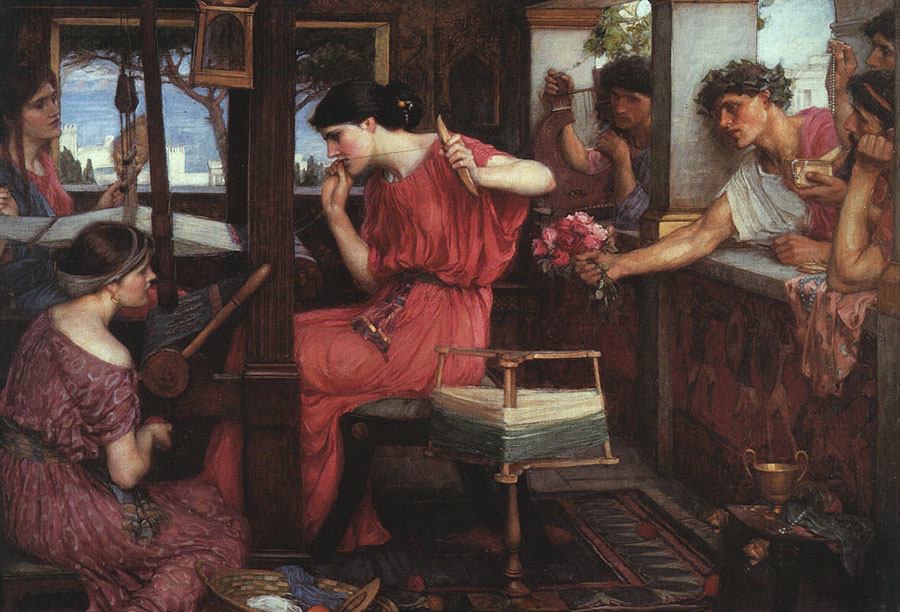
This selective approach is typical of Waterhouse. He often chooses the pause upon which a better-known catastrophe depends: the Lady of Shalott at the instant of departure, Thisbe listening at the wall, or Circe waiting among the instruments of her knowledge.
Medea Before the Crimes
Medea’s later fame presents a problem for any reading of the study. Euripides’ tragedy made the killing of her children central to the Western stage tradition, and subsequent art repeatedly approached her as the ultimate dangerous mother. [5]
Waterhouse does not show that event. He looks to the earlier Colchian story in which Medea helps Jason.
The distinction is not an attempt to acquit the complete mythical figure. It recognises that narrative time matters. A person at one moment cannot be reduced to the worst act attributed to her later.
Ovid’s Heroides lets Medea address Jason after he has abandoned her for Creusa. She recalls that he survived the bulls, earth-born warriors and dragon because of her aid. [4]
That retrospective voice changes the potion scene. What looks like a beginning already contains the imbalance that will destroy the relationship: Medea risks kin, home and reputation, while Jason will later detach his success from the woman who made it possible.
The finished painting shows him physically close, but spectators who know the myth also know the future distance between them. The study removes him altogether.
His absence can make the single figure seem more autonomous. It can also intensify tragedy, because the viewer knows that this concentrated labour will be used within a relationship that does not protect its maker.
Art UK’s survey of Medea imagery stresses that Waterhouse chose the potion enabling Jason’s tasks rather than the infanticide. [2] That choice belongs to a broader nineteenth-century re-examination of Medea as abandoned woman, foreigner, sorceress and killer rather than a one-dimensional monster.
No painting can solve the ethical contradictions. Medea suffers betrayal and commits or assists terrible violence. Sympathy for her abandonment does not erase victims; condemnation of later acts does not erase exploitation.
The study’s restraint is valuable precisely because it leaves those tensions available. It shows competence before judgement hardens.
Face, Gaze and Concentrated Intelligence
Waterhouse built many narrative paintings around a woman’s directed attention. A gaze towards a mirror, door, pool, wall or vessel tells viewers where thought is occurring even when speech is absent.
In the Study for Medea, the lowered gaze suggests work that requires precision. She is neither performing magic theatrically for us nor staring outward as a decorative portrait.
The face appears more resolved than much of the surrounding paint. That hierarchy is practical: Waterhouse needed to establish the model, inclination of the head and emotional temperature before transferring the figure into a complex canvas.
It is also interpretively powerful. The unfinished field seems to condense around a complete inward life.
Dark hair frames pale skin, a contrast Waterhouse used for heroines whose intensity differs from the red-haired types of many later flower pictures. Colour becomes character without functioning as a fixed code.
Medea’s expression should not be labelled with false certainty. “Jealous,” “evil” or “vengeful” would import later episodes into the potion-making moment.
“Calm” may also be too simple. Assistance to Jason requires betrayal of her father and flight from home. Concentration can contain fear, desire and resolve without displaying each separately.
The study does not grant access to a model’s biography. A painted face is the result of sitting, selection and revision, not an unmediated record of a known woman’s feelings.
Several preparatory drawings connected with Jason and Medea survive, including a sheet with a female bust on one side and a study for the finished composition on the other. [1] Together they show Waterhouse solving person and arrangement through separate acts of drawing.
The oil study goes further by testing flesh, hair and colour. It bridges linear planning and the material presence of the completed painting.
Oil Studies in Waterhouse’s Working Method
Waterhouse was an academically trained artist. His process moved through sketches, model studies and compositional experiments, although survival is uneven and not every finished painting retains the same range of preparation.
An oil study could answer questions that pencil alone could not. How would pale skin hold against a dark background? How dense should hair appear? Which colour should carry the face into the surrounding costume?
Paint also records correction. Edges can be moved, passages covered and emphasis redistributed. A study is therefore evidence of decisions in time.
The word “sketch” should not be mistaken for carelessness. Waterhouse could paint a head with considerable finish while leaving other areas open because the head was the problem being solved.
Nor should a study automatically be treated as an inferior version of the finished work. Its purpose differs. The final painting coordinates multiple figures, objects and a public narrative; the study preserves the focused experiment beneath that coordination.
The Study for Medea is especially useful because the completed composition places Medea within an elaborate setting. Jason’s armour, the vessel, patterned surfaces and surrounding architecture can compete for attention.
Removed from them, her face and working posture become the subject.
The study also reveals Waterhouse’s dependence upon posed observation even when painting remote myth. Colchis is imagined through a London studio, a model and accumulated visual sources.
That does not make the result fraudulent. History painting has always translated text through contemporary bodies and objects.
What matters is recognising the translation. The image is neither archaeological reconstruction nor an ancient portrait of Medea.
Documentation for minor studies is often thinner than for exhibited canvases. Titles may be assigned retrospectively, dimensions copied incorrectly, and provenance lost when studio material is dispersed.
This page therefore separates secure association from uncertain object data. The visual relationship to Jason and Medea is clear; the precise support, ownership and complete sale history should be updated only from a current authoritative record.
From Solitary Figure to Jason and Medea
The 1907 painting expands the study into a two-person drama. Medea sits or leans over the apparatus of preparation while Jason watches closely behind her. [2]
Their positions establish a transfer of power. She possesses knowledge; he possesses the public identity of the questing hero.
Jason’s armour marks the action he will perform. Medea’s vessel marks the unseen intellectual and magical work that makes performance survivable.
Waterhouse avoids the most violent test. The bulls and armed earth-born men are not shown. Preparation permits a quieter, more psychologically ambiguous encounter.
The completed composition can be read as intimacy because the figures share a close space. Yet their attention is not reciprocal in a conventional romantic sense.
Medea attends to the potion. Jason attends to Medea or to her work. The object mediates their relationship.
The study begins this chain without Jason’s gaze. It therefore refuses, temporarily, to make her beauty an object within his story.
Comparison also shows how context changes expression. A lowered face alone can appear introspective. The same face beside an armed man and magical vessel becomes purposeful within a plot.
Waterhouse did not simply paste a portrait into a larger scene. He adjusted pose, surrounding shapes and emphasis so the figure would participate in a narrative triangle of Medea, Jason and potion.
Preparatory work may preserve alternatives the final canvas closes down. The single figure could have served other sorceress subjects, but its association with the 1907 picture now directs interpretation.
The best approach is double: read the study through the finished painting, then return to the study and notice what the finished painting cannot retain—solitude, open ground and concentrated encounter with one face.
Victorian Images of the Enchantress
Medea attracted nineteenth-century artists because she combined beauty, foreignness, learned magic, desire and violence. Those elements could be used to explore female agency while also turning that agency into threat.
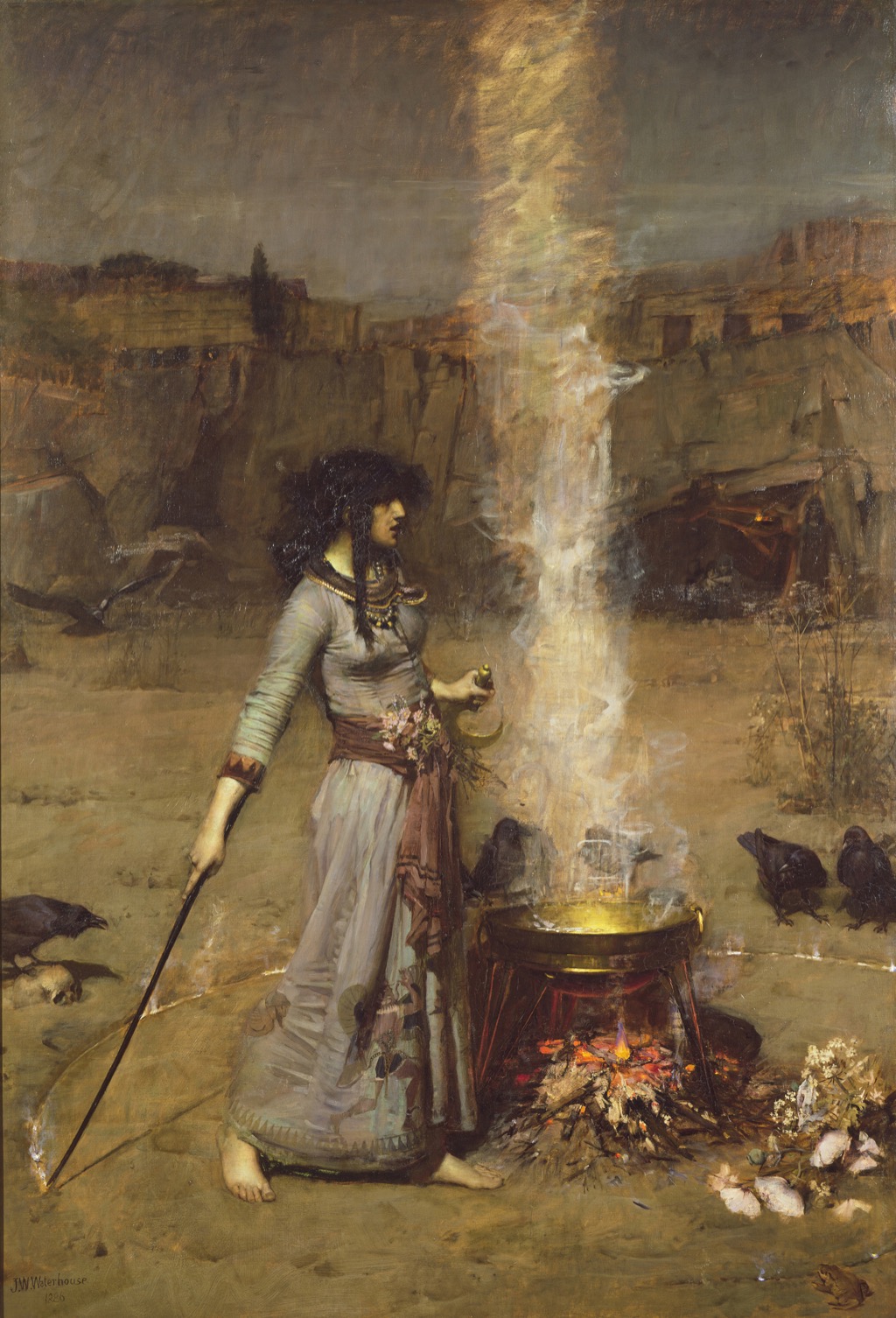
Frederick Sandys’ celebrated Medea presented an intense ritual maker amid charged objects. Christie's notes that viewers associated Waterhouse’s earlier Magic Circle sorceress with Sandys’ image. [6]
By 1906–07, Waterhouse had already painted several women who command secret knowledge: the priestesses of Consulting the Oracle, the witch of The Magic Circle and two major versions of Circe.
Medea enters an established visual language, but she is not interchangeable with those figures. Her potion has a specific narrative function: it protects Jason and begins her ruinous departure from Colchis.
The phrase femme fatale is often applied to late Victorian images of dangerous women. It can identify a cultural pattern, but it may also flatten every learned or desiring woman into the same male fear.
Waterhouse’s study is more interesting when Medea’s intelligence is taken seriously. Magic in the myth is a form of specialised knowledge, not simply decorative smoke around female beauty.
The study also belongs to an era fascinated by ancient literature but willing to assemble its visual antiquity eclectically. Costume and objects aim for poetic distance, not museum reconstruction.
This freedom helped Waterhouse make myth emotionally immediate. It also means architectural or textile details should not be cited as evidence for historical Colchis.
Modern viewers bring further questions. Who receives credit for heroic success? How are foreign women represented when their skills are desired but their autonomy feared? When does sympathy become excuse, and when does condemnation erase betrayal?
The painting does not answer those questions, but its selected moment makes them unavoidable.
What Can and Cannot Be Claimed
The featured work is a single-figure oil study associated with Jason and Medea and usually dated around 1906–07.
It is also secure that Waterhouse prepared the finished composition through drawings; a Christie's sheet explicitly carries a study for Jason and Medea on its reverse. [1]
The ancient source context is secure at the level of story. Medea’s potion and instructions enable Jason to survive Aeëtes’ tasks in the Argonaut tradition. [3]
It is less secure to assign the study one precise emotional label. A lowered gaze does not document regret, jealousy or prophecy.
The model’s name should not be supplied without object-specific evidence. Similarity to other Waterhouse faces is not identification.
Exact dimensions, ownership and provenance are also vulnerable. Public reproductions repeat titles without providing handled cataloguing.
The word “Medea” may function as a retrospective title based on relation to the finished painting. That is common for studies and does not weaken the relation, but it should not be presented as a documented lifetime exhibition title.
No claim should be made that the study depicts infanticide, the death of Creusa or Medea’s final escape. Those are later episodes.
Nor should Jason be described as entirely passive in the ancient narrative. He performs the tasks. The interpretive point is that performance depends upon Medea’s expertise.
The strongest manuscript respects these boundaries. Limited object data need not produce thin writing when visual analysis, process and source narrative are carefully separated.
Related Pages
- The Lady of Shalott: Compare Waterhouse's best-known literary composition.
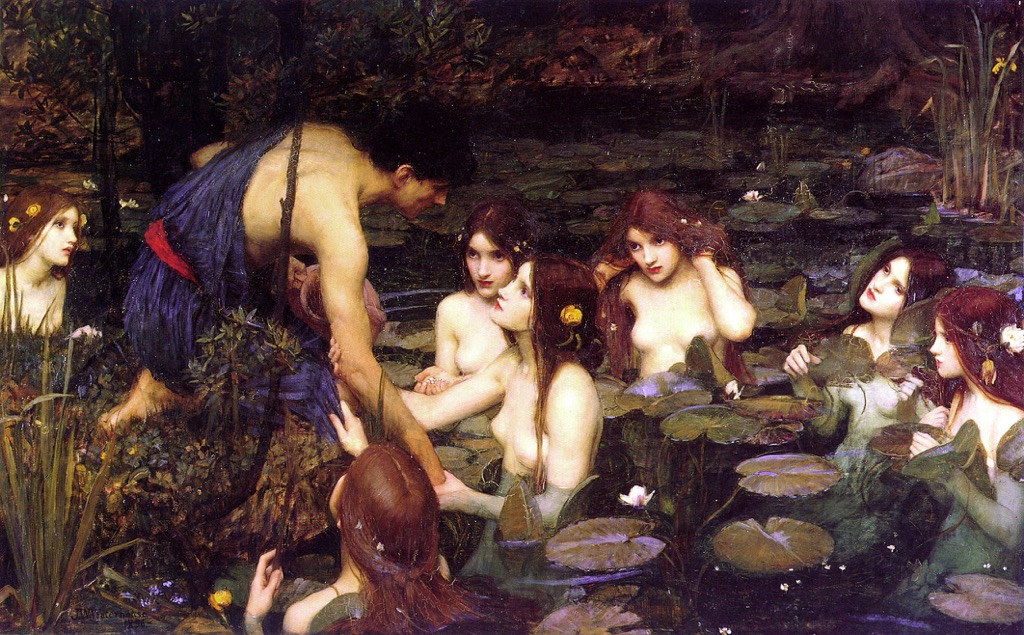
- Hylas and the Nymphs: Compare another major mythological scene.
- The Magic Circle: Compare Waterhouse's treatment of ritual and symbolism.
Frequently Asked Questions
No. It is a single-figure preparatory oil associated with the larger, finished two-figure composition of 1907. [2]
It is generally dated to about 1906–07, during preparation for the 1907 painting. [1]
She prepares the magical substance that protects Jason during the tasks set by her father, King Aeëtes. [2] [3]
No. It concerns the much earlier Colchian episode, before Jason wins the Golden Fleece.
Oil allowed him to test the model’s head, flesh, hair, colour and emotional focus before integrating her into a complex composition.
Its current location is not securely established in the accessible public documentation and should be described as private or unconfirmed.
Discussion
The study’s great achievement is to recover a stage of Medea’s identity that later crimes usually obscure. She is a maker, thinker and risk-taker whose knowledge stands between Jason and death.
Waterhouse’s preparatory format intensifies that recovery. The unfinished or loosely resolved surroundings prevent antiquarian spectacle from taking control. A face, a lowered gaze and the implied work of the hands are enough.
Reader Insights
Which visible detail most changes the way you read this page?
Which source or comparison helps the work feel less familiar and more specific?
What question would you bring back to the painting after reading?
Join the Conversation
Share your reading of this page below.
References
- Christie's, “John William Waterhouse: Study of a woman, bust-length, turned to the left; and Study for ‘Jason and Medea’,” drawing record. View source.
- Art UK, “Representing Medea: the tale of a mythical murderess,” discussion of Waterhouse’s 1907 Jason and Medea and its selected episode. View source.
- Apollonius Rhodius, Argonautica, Book III, translated by R. C. Seaton, Perseus Digital Library. View source.
- Ovid, Heroides, Epistle XII, “Medea to Jason,” translated by Grant Showerman, Perseus Digital Library. View source.
- Euripides, Medea, translated by E. P. Coleridge, Perseus Digital Library. View source.
- Christie's, “John William Waterhouse: Study for The Magic Circle,” catalogue essay discussing Frederick Sandys’ Medea and Waterhouse’s sorceress imagery. View source.