

 by Tom Gurney
Tom Gurney BSc (Hons) is an art history expert with over 20 years experience
Published on August 14, 2026 / Updated on August 14, 2026
Email: tomgurney1@gmail.com / Phone: +44 7429 011000
The Siren: Introduction
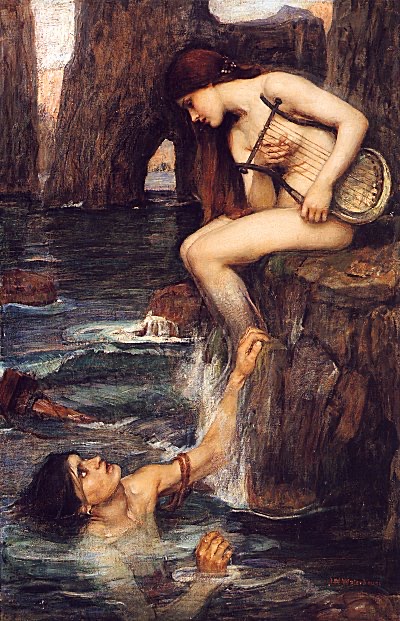
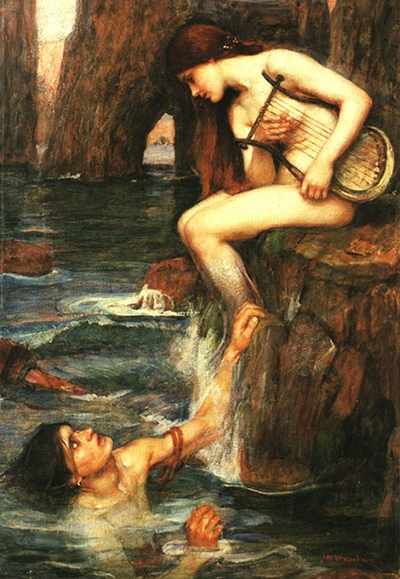
A shipwrecked sailor clings to a dark rock while a siren sits above him, singing to the accompaniment of a shell-like harp. Sea water breaks around her scaled lower body. She looks down; he looks up. John William Waterhouse reduces maritime disaster to an exchange of attention in which rescue and destruction are almost impossible to distinguish.
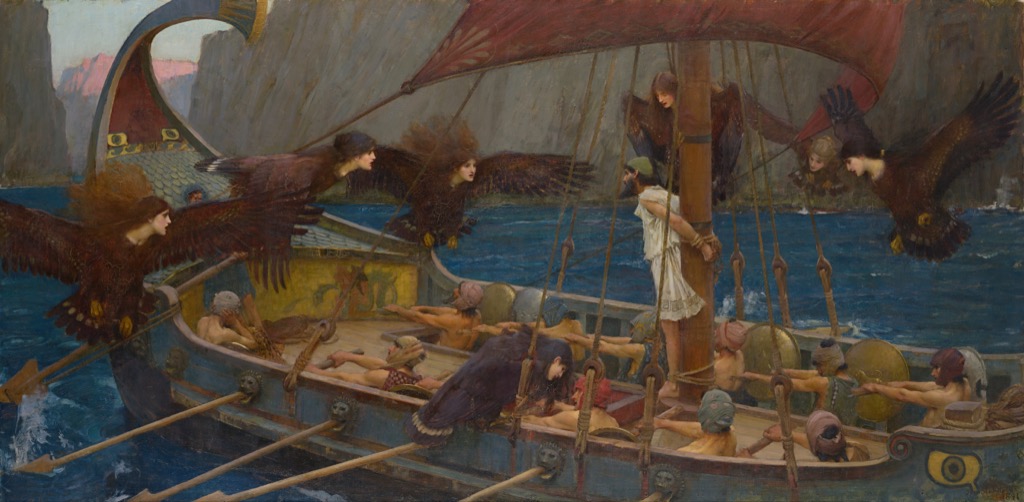
Painted around 1900 and sold by Agnew's in February 1901, The Siren belongs to the same marine period as A Mermaid and Nymphs Finding the Head of Orpheus. Unlike Waterhouse's attacking bird-women in Ulysses and the Sirens (1891), this siren is a solitary mermaid-like singer. Her danger is intimate, beautiful and uncertain even when the sailor's condition makes the likely outcome clear.
At a Glance
- ArtistJohn William Waterhouse (1849–1917)
- TitleThe Siren
- Datec. 1900
- MediumOil on canvas
- Dimensions81 × 53 cm
- SignatureSigned “JW Waterhouse” at lower right
- Current statusPrivate collection
- First documented saleSold on Waterhouse's behalf by Agnew's to James Gresham on 1 February 1901 for £450 [1]
- Later provenanceWilliam Hesketh Lever, 1st Viscount Leverhulme; Lady Lever Art Gallery; later private owners including Seymour Stein [1]
- SubjectA mermaid-like siren singing above an exhausted or drowning mariner after shipwreck
- Documented literary associationSotheby's related the picture to William Morris's The Life and Death of Jason (1867) [1] [2]
- Related Waterhouse worksUlysses and the Sirens (1891), A Mermaid (1900) and Nymphs Finding the Head of Orpheus (1900)
Contents
- Introduction
- A Rescue That May Be a Final Enchantment
- Siren, Mermaid or Both?
- The Sailor at the Limit of Strength
- Song, Harp and the Silence of Painting
- Scales, Pearls and Auburn Hair
- Rock, Water and Vertical Power
- From Three Mermaids to One
- Waterhouse's Two Kinds of Siren
- The Ethics of Rescue
A Rescue That May Be a Final Enchantment
The sailor has reached rock but not safety. His hands and upper body remain close to the water, and his position looks too weak for an easy climb. Above him sits the only being who might help.
Waterhouse does not show her extending a hand. She sings and observes. Her calm contrasts with his exhaustion, creating the moral uncertainty at the heart of the image.
If she caused the wreck through song, the sailor has reached the source of danger while believing he approaches shore. If she encountered him afterwards, her curiosity may be innocent. The painting gives no explicit answer.
The man's upward gaze makes enchantment visible without supernatural light. He remains attentive to the siren when survival should require concentration on rock and sea.
Her position also controls time. She can continue singing without effort; he can hold on only briefly. The encounter appears still because painting freezes it, but bodily endurance makes the scene urgent.
This is why the image does not need a visible sinking ship. Shipwreck survives as the condition of one body. Waterhouse concentrates catastrophe into hands losing strength.
Siren, Mermaid or Both?
Ancient Greek sirens are not originally fish-tailed women. In archaic and classical art they commonly combine female heads or torsos with bird bodies. Waterhouse followed that type in Ulysses and the Sirens, drawing upon an ancient vase model.
The figure in The Siren belongs to a later tradition in which siren and mermaid converge. Her lower legs become scales and fins in the sea, while song remains the power associated with sirens. [1]
Calling her a mermaid describes appearance; calling her a siren describes title and fatal function. The painting deliberately allows both identities to cooperate.
This distinction prevents confusion with the 1891 Homeric canvas. The Siren does not illustrate Ulysses bound to a mast or the bird-women attacking his crew. It invents a separate encounter between one singer and one mariner.
The fusion reflects centuries of visual and literary change rather than an error Waterhouse failed to notice. He knew the ancient type and chose a different one for a different emotional effect.
A bird-bodied attacker can descend violently upon a ship. A mermaid-like singer can appear vulnerable, attractive and nearly human. The later form makes danger harder to separate from desire.
The Sailor at the Limit of Strength
Only part of the sailor's body is securely above the water. Rock supports him, but surf and undertow remain active. His pose communicates effort through compression rather than heroic anatomy.
He is survivor and captive at once. Reaching the rock has saved him from immediate open sea but placed him directly under the singer's influence.
Waterhouse does not give him Ulysses's counter-strategy. There is no mast, wax, crew or divine warning. The solitary man has no visible protection from song.
His upward gaze converts physical hierarchy into psychological submission. The siren does not have to descend or attack. Attention climbs to her.
The sailor's condition also complicates consent. A person exhausted by wreck cannot approach on equal terms. Attraction takes place when alternative action is nearly impossible.
This power imbalance makes the siren's apparent innocence disturbing. She may not strike him, but passivity is enough. The sea will finish what song and weakness began.
Song, Harp and the Silence of Painting
The siren's lips part in song while her hands engage an instrument described by Sotheby's as an abalone-shell harp. [1] Voice and strings double the attraction.
Painting cannot produce sound, so Waterhouse shows its path through gaze. The sailor's fixed attention is evidence that music reaches him.
The instrument makes enchantment an activity rather than an innate aura. The siren performs. Her danger depends upon skill, repetition and a listener.
Its shell form joins music to the sea. The object appears grown from the environment that gives her power, blurring tool and body.
Sotheby's opened its catalogue discussion with lines from William Morris's The Life and Death of Jason in which sea beings welcome mariners to sleep beneath the waves. [1] [2] The comparison captures the painting's mixture of hospitality and death, although it does not prove that Waterhouse illustrated one exact stanza.
The sailor cannot answer with his own voice. Song belongs entirely to the siren; effort belongs to him. Sound and silence map onto power.
Scales, Pearls and Auburn Hair
The siren's upper body appears human, pale and youthful. Near the spray, the lower legs transform into glistening scales and fins. [1] Waterhouse places hybridity where water meets flesh.
This partial transformation creates uncertainty. At first glance, viewers may see only a seated woman. Recognition of scales revises the whole encounter.
Pearls or shell ornaments connect her beauty to marine material. Unlike jewellery brought from a human court, they make adornment appear native to the shore.
Her auburn hair belongs to a visual type frequently associated in late nineteenth-century art with the seductive or fatal woman. [1] That convention is context, not proof that hair colour itself carries a single fixed meaning.
Waterhouse softens monstrosity. No claws, teeth or violent expression announce a predator. The supernatural difference is sensuous and easily overlooked.
This makes the sailor's enchantment understandable. Danger does not wear an external warning; it appears as the most beautiful presence available after disaster.
Rock, Water and Vertical Power
The narrow vertical canvas places siren above sailor. Height becomes authority. She sits relatively stable while he occupies the unstable lower zone. [1]
Rock joins them without creating equality. It is her seat and his last handhold. The same object supports leisure above and struggle below.
Dark water surrounds the man's lower body and receives the siren's fins. It is hostile to him and native to her.
Seaweed or algae makes the rock slippery and visually connects stone with depth. Safety is compromised at the surface.
The composition allows gazes to cross diagonally. Her look descends with curiosity or detachment; his rises with dependence. The exchange is reciprocal as vision but unequal as circumstance.
Spray partly dissolves the siren's lower body, making transformation inseparable from moving water. The supernatural does not need a sharp boundary.
From Three Mermaids to One
A rough sketch for the composition survives in Waterhouse's copy of Percy Bysshe Shelley's poetry. According to Sotheby's, the first idea included three mermaids. [1]
Reducing the group to one changed the subject fundamentally. Three singers would surround the sailor with collective danger, closer to the swarming pressure of the 1891 sirens. One creates an encounter that can resemble intimacy.
The sketch also demonstrates that reading and visual invention met directly on Waterhouse's page. It does not establish Shelley as the finished painting's literary source merely because the drawing appears in his book.
Waterhouse was developing A Mermaid across the same period. Studies of mermaid poses could lead towards both a solitary figure combing her hair and a two-person scene of fatal attention. [1]
The Royal Academy's collection history confirms that A Mermaid became Waterhouse's Diploma Work, making it important to keep the Academy canvas distinct from this privately owned siren composition. [3]
He also painted Nymphs Finding the Head of Orpheus in 1900. Sotheby's proposes that related sketches contributed to both works, and the compositional kinship is clear: women above a dark pool look down towards an endangered or dead male head. [1]
Preparatory evidence therefore reveals branching rather than linear development. One marine idea could generate solitude, encounter and discovery.
Waterhouse's Two Kinds of Siren
In Ulysses and the Sirens, bird-bodied creatures circle a ship, crowd its rails and threaten the crew. The composition is noisy, expansive and based upon a named Homeric episode.
In The Siren, danger has narrowed to two figures. No one else sees the encounter. The singer does not need to attack because the sailor is already nearly powerless.
The earlier Ulysses possesses advance knowledge and a plan. He orders himself tied so that he can hear without steering to death. The shipwrecked sailor has reached song without protection.
The difference also changes female power. The 1891 sirens act as a flock; the later siren's authority is individual, bodily and emotionally legible.
Waterhouse's title uses the singular to insist on this concentration. One face and one voice are sufficient to make the whole sea dangerous.
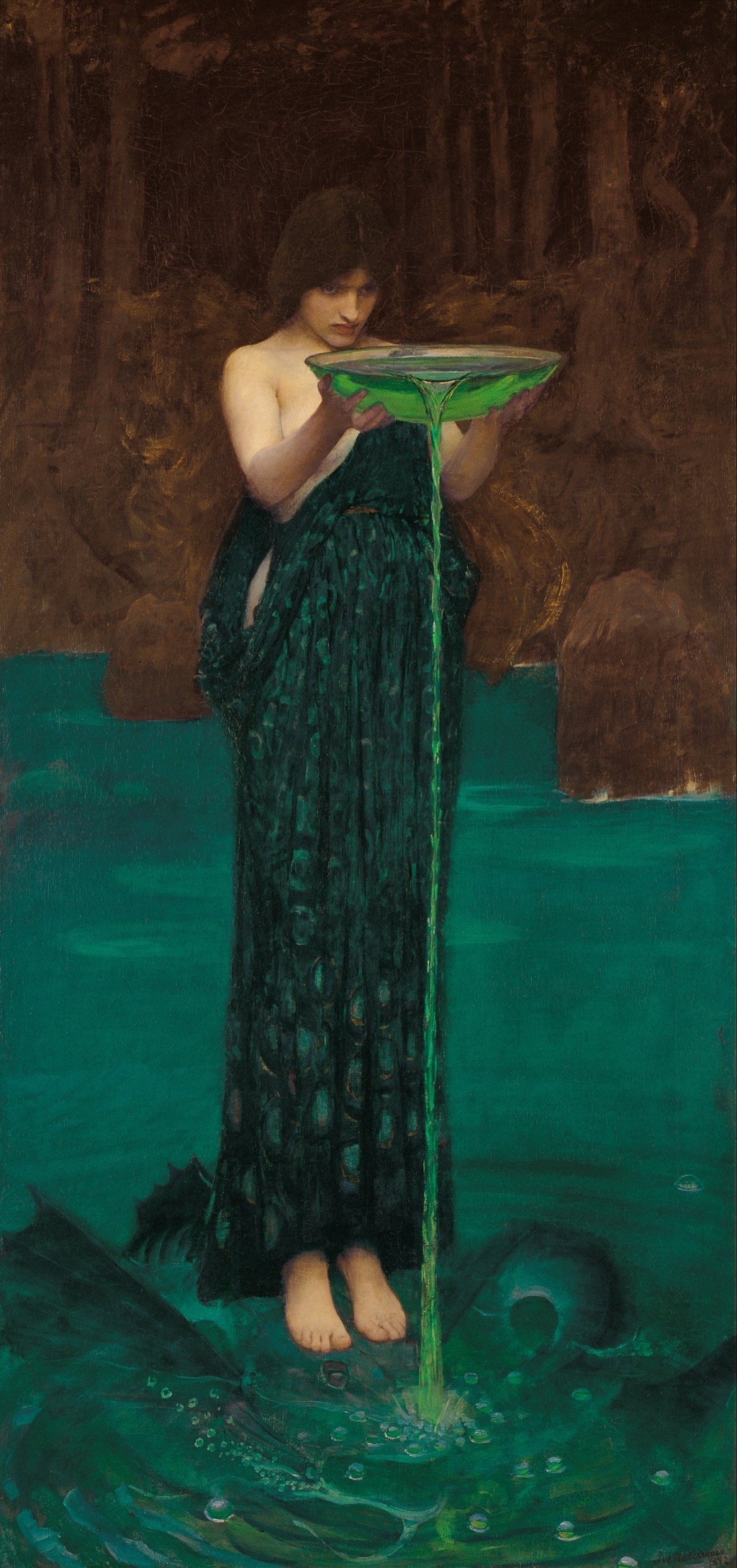
The painting can be placed beside Circe, Lamia and La Belle Dame as another late-century image of beauty framed as peril. Yet the siren's agency remains ambiguous. She may be consciously predatory, serenely indifferent or unable to understand human mortality.
That ambiguity is not exoneration. Whether or not she intends harm, the encounter remains fatal in structure. Waterhouse separates consequence from visible malice.
The Ethics of Rescue
The sailor's position creates an expectation familiar from scenes of shipwreck: anyone securely placed above him should help. Waterhouse lets that expectation form before reminding us that the apparent rescuer is not human.
The siren occupies the posture of a witness without accepting the duty of one. She sees his effort and continues to perform. This can appear cruel, but cruelty assumes that she understands human need and shares human moral obligations.
Her scaled body raises exactly that uncertainty. She belongs to the sea that threatens him. What is disaster for a sailor may be ordinary environment to her.
The picture does not allow difference to erase power. Even if she is innocently curious, she remains safe while he is dying. Her song may worsen his inability to act.
Rescue would require breaking the composition's current relation: she would need to stop playing, move downward and extend herself across the boundary between their elements. Waterhouse freezes her before any such choice.
The sailor also lacks speech within the image. He cannot request help in a way spectators can hear. His posture must communicate everything, and the siren's response remains unreadable.
This makes the scene ethically richer than a straightforward femme-fatale attack. A malicious monster would simplify blame; an enigmatic witness forces viewers to ask whether failure to help can be fatal without active violence.
The painting also challenges the romantic fantasy that beauty encountered after suffering is necessarily salvation. The most compelling vision on the shore may be another form of danger.
At the level of myth, the answer is pessimistic. Siren song does not guide mariners home. At the level of this particular face, uncertainty persists until the sailor can persist no longer.
Waterhouse uses that mismatch in duration to make non-action decisive. The siren can wait; the man cannot.
Desire When Choice Has Collapsed
The sailor's gaze is often described as spellbound, and the term captures how completely attention has moved away from self-preservation. [1] Yet enchantment operates in conditions already produced by exhaustion.
This matters because the image can otherwise be reduced to a warning about male weakness before female beauty. The sailor is not a secure traveller who freely abandons a safe route. He has survived wreck and reached the limit of bodily power.
The siren appears at precisely that limit. Desire and hallucination can no longer be separated from shock, fatigue and the hope of rescue.
Waterhouse's late-century culture frequently pictured women as embodiments of dangerous sexuality—Circe, Lamia, sphinx, vampire or siren. Such images could register fascination with female agency while framing it as a threat to men.
The Siren participates in that tradition, particularly through auburn hair, pale beauty and magical song. [1] But the painting is not exhausted by the label “femme fatale.” The woman's expression lacks clear triumph, and her hybrid nature separates her from an ordinary seductress.
The man likewise becomes an object of vision. His exposed struggle is displayed beneath the seated woman and before the gallery spectator. Vulnerability is not exclusively female in this canvas.
Their mutual gaze creates a resemblance between attraction and recognition. He sees an apparently beautiful person after isolation at sea; she sees a being from outside her element washed into reach.
Curiosity is unequal because only one can afford it. The siren may study him without risk. His study of her consumes the moments in which he might climb.
This makes enchantment a structure of attention rather than a magical special effect. No visible ray compels him. The painting asks viewers to believe that looking itself can occupy the body completely.
The scene's emotional intensity therefore comes from constrained choice. The sailor appears devoted to what may kill him because almost every other possibility has already disappeared.
William Morris and the Welcome Beneath the Waves
Sotheby's connected The Siren with lines from William Morris's The Life and Death of Jason in which sea singers welcome exhausted voyagers and promise calm sleep under the washing sea. [1] [2]
The language of welcome is crucial. Death is not announced as violence but as the end of toil. To mariners exhausted by land and sea, rest becomes the form temptation takes.
Waterhouse's sailor is exactly such an audience. The promise of sleep would meet a real bodily need. The danger lies in the substitution of permanent submersion for recovery.
Morris's lines also help explain the siren's calm. She may understand her song as hospitality within an underwater world. The “waking smile” promised to the dead gives destruction a serene appearance. [2]
This literary association is more fitting than a direct scene from Homer's Odyssey, where Ulysses hears sirens from a moving ship and their bodies are not described. Waterhouse already treated that episode separately.
The painting does not include Morris's complete group or episode, so it is safer to say the poem illuminates the conception than to declare one-to-one illustration. Sotheby's uses the lines as an interpretive epigraph. [1]
Morris also belongs to the broader medieval and mythic revival in which Waterhouse worked. Ancient beings reached Victorian audiences through new poems as well as classical translations.
The song's apparent kindness sharpens the image. “Your ills are past” can mean rescue, sleep or death depending on who speaks. The siren's offer remains linguistically and visually double.
Waterhouse converts that verbal doubleness into position. Shore is above the sailor, sea below; the singer belongs to both. Her body is the place where salvation and submersion meet.
Burne-Jones and the Beautiful Sea Predator
Sotheby's proposes that Edward Burne-Jones's The Depths of the Sea, exhibited at the Royal Academy in 1886, may have contributed to Waterhouse's conception. [1]
Burne-Jones shows a mermaid carrying a drowned or drowning naked man down into an underwater realm. Her beauty and the decorative sea intensify rather than disguise the fatal action.
Waterhouse moves the encounter to the last point before possession. His sailor still holds rock, and his siren has not touched him. This creates a before-and-after relation between the two imaginative types without proving direct sequence.
The difference is morally important. Burne-Jones makes the mermaid's action visible; Waterhouse makes intention uncertain. One carries, the other watches.
Waterhouse may also have learned from the way Burne-Jones refuses a grotesque monster. The sea being can appear delicate and almost unaware of human consequence while remaining deadly.
The comparison places The Siren inside a British visual tradition, not only a classical one. Pre-Raphaelite and Aesthetic artists repeatedly reinvented marine women through contemporary ideas of beauty, desire and danger.
Yet Waterhouse's composition remains distinct in its vertical suspense. The sailor has not crossed fully into the siren's element. Rock retains the narrow possibility of life.
This is the last boundary on which drama can be prolonged. Once the man slips, the encounter becomes possession or corpse. Waterhouse paints while the outcome is probable but not complete.
Pale Flesh Against Dark Water
Waterhouse organises the encounter through tonal as well as physical hierarchy. The siren's pale upper body catches attention above the darker water and rock, making beauty operate like a visual signal.
The sailor belongs more fully to the shadowed lower region. His body emerges from water incompletely, as though the sea has already begun to take back what the rock supports.
Auburn hair and pearl-like ornaments concentrate warm and bright accents around the singer's face. The sailor's gaze follows the same route the viewer's eye is encouraged to follow.
The composition thereby demonstrates enchantment rather than merely describing it. We too are likely to notice the siren before fully measuring the man's danger.
Scales occupy the transition between these tonal worlds. They catch spray and light but return the body towards the sea. Human beauty and marine otherness are joined gradually.
Waterhouse does not divide the canvas into a safe bright shore and a dark evil ocean. The brightest figure belongs to the dangerous element; the struggling human occupies the gloom.
This reversal prevents colour from functioning as simple moral code. Light attracts without guaranteeing goodness.
The narrow format intensifies the fall from face to water. Looking down the picture repeats the possible path of the sailor's body.
No published technical investigation cited here identifies the pigments that produce these relations. The Sotheby's condition report does, however, warn that discoloured varnish affected the surface at the time of inspection, so current reproductions may not perfectly convey original tonal balance. [1]
The secure conclusion is compositional: Waterhouse gives the siren maximum visual presence and the sailor diminishing physical purchase.
Provenance and Material Evidence
Agnew's sold The Siren on the artist's behalf to engineer and collector James Gresham on 1 February 1901. After Gresham's death it was bought for William Hesketh Lever and entered the Leverhulme collection. [1]
The Lady Lever Art Gallery later sold it in 1958. Subsequent ownership passed through dealers and private collections, including Seymour Stein after a 1985 Sotheby's sale. [1]
The picture appeared in major exhibitions on Symbolism, Pre-Raphaelitism and the 2008–10 Waterhouse retrospective. [1]
A 2018 condition report found the canvas unlined on what appeared to be its original keyed stretcher, structurally secure, with discoloured varnish and minimal retouching. [1] These observations belong to the painting at that date and should not be generalised to every Waterhouse canvas.
The condition evidence is unusually useful because it separates visible ageing from original colour. A discoloured varnish can alter tonal experience without implying that the paint beneath was poorly preserved.
The object remains privately owned. Sotheby's record provides the most complete accessible account of dimensions, provenance, preparation, exhibition and material state.
How to Look at The Siren
Start with the sailor's hands. Decide whether the rock looks like arrival or the last stage before slipping.
Then follow his gaze to the siren. The line of attention is the painted equivalent of her song.
Find the point where legs become scales. Waterhouse makes recognition gradual.
Compare the rock's meaning for each figure: seat above, uncertain rescue below.
Finally imagine the composition with three mermaids, as in the early sketch. The finished solitude is what makes danger resemble an intimate exchange.
Related Pages
- The Lady of Shalott: Compare Waterhouse's best-known literary composition.
- Hylas and the Nymphs: Compare another major mythological scene.
- The Magic Circle: Compare Waterhouse's treatment of ritual and symbolism.
Frequently Asked Questions
No. The 1891 painting shows Homeric bird-bodied sirens attacking Ulysses's ship. The Siren is a smaller c.1900 scene with one mermaid-like singer and one shipwrecked sailor. [1]
She has a mermaid-like scaled lower body but performs the fatal song associated with sirens. Waterhouse combines later mermaid imagery with the siren role.
The painting leaves intention uncertain, but his exhaustion, her lack of a helping gesture and the siren tradition make survival unlikely.
Sotheby's describes it as an abalone-shell harp. [1]
It is generally dated c.1900 and was sold on Waterhouse's behalf in February 1901. [1]
It is in a private collection. Its provenance includes James Gresham, Lord Leverhulme and the Lady Lever Art Gallery. [1]
Discussion
The Siren is frightening because it withholds visible aggression. Beauty, music and curiosity occupy the upper half; exhaustion and death gather below. The singer may not recognise herself as a killer, but the sailor's lack of power makes innocence inadequate.
Waterhouse turns song into a relation between looking bodies. The sailor sees what he wants when he is least able to choose, and the siren receives his devotion without moving. Disaster becomes desire at the precise moment when desire can no longer be safely acted upon.
Reader Insights
Which visible detail most changes the way you read this page?
Which source or comparison helps the work feel less familiar and more specific?
What question would you bring back to the painting after reading?
Join the Conversation
Share your reading of this page below.
References
- Sotheby's. “John William Waterhouse, R.A., R.I., The Siren,” 2018 lot record, catalogue note and condition report, with dimensions, provenance and preparatory evidence. View source
- William Morris. The Life and Death of Jason, 1867, the marine song cited in the Sotheby's catalogue discussion. View source
- Royal Academy of Arts. The Artist's Legacy, collection publication identifying Waterhouse's related A Mermaid as his Diploma Work. View source