

 by Tom Gurney
Tom Gurney BSc (Hons) is an art history expert with over 20 years experience
Published on August 14, 2026 / Updated on August 14, 2026
Email: tomgurney1@gmail.com / Phone: +44 7429 011000
The Rose Bower: Introduction
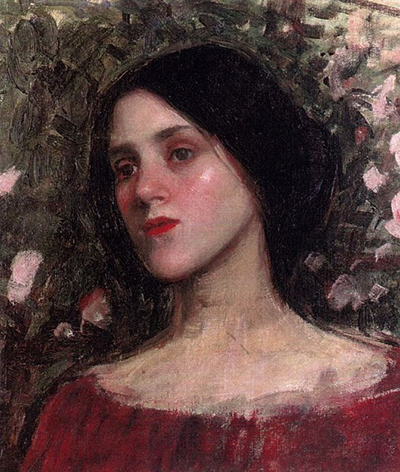
A dark-haired woman in a red dress appears close against an arch of leaves and pale roses. John William Waterhouse’s The Rose Bower is an intimate late oil in which face, flowers and foliage nearly fill the canvas. No poem or myth is named. The painting creates its drama through enclosure, colour and a gaze directed beyond the frame. [1]
Christie’s dates the work to about 1910 and records dimensions of 41.9 × 36.2 cm. It belongs to Waterhouse’s late sequence of flower-women and was exhibited on long-term loan at the Legion of Honor in San Francisco from 2008 to 2011. [1] Older online records give conflicting sizes, so the current auction measurement should control this page. [2]
At a Glance
- ArtistJohn William Waterhouse (1849–1917)
- TitleThe Rose Bower [1]
- Datec.1910 [1]
- MediumOil on canvas [1]
- Dimensions41.9 × 36.2 cm (16½ × 14¼ in) [1]
- CollectionPrivate collection [1]
- SubjectUnnamed dark-haired woman in a red dress among roses
- Series contextWaterhouse’s late flower-women, begun around 1908 [1]
- ExhibitionLegion of Honor, San Francisco, long-term loan, August 2008–January 2011 [1]
- ProvenanceWith Peter Nahum by 1989; Christie’s sales in 1992 and 1996 [1]
Contents
- Introduction
- A Face Enclosed by Roses
- The Meaning of a Bower
- Red Dress, Dark Hair, Pale Flowers
- Gaze Without Narrative
- Rossetti and the Close Female Head
- Place Within the Flower-Women Sequence
- Technique and Selective Finish
- Dimensions, Provenance and Exhibition
- Enclosure, Beauty and Time
A Face Enclosed by Roses
The composition is unusually close. Head, neck and upper chest occupy most of the small canvas, while foliage presses around them. [1]
Waterhouse offers no broad garden, architectural interior or narrative companion. The woman’s proximity becomes the event.
Her dark hair creates a large oval mass around the face. Leaves and branches extend that mass into an outer natural frame.
Pale roses break through on the right and in smaller accents elsewhere. Their scattered light prevents the enclosure from becoming a single dark field.
The model is not shown actively picking, holding or smelling a flower. She exists within the bower rather than performing a clearly defined task.
This inactivity separates the painting from The Soul of the Rose, where a woman brings a blossom to her face, and from Gather Ye Rosebuds While Ye May, where gathering supplies action.
The portrait-like crop can create a sense of intimacy, but the sitter remains unnamed. The work is better described as a figure study or flower-woman painting than a documented portrait commission.
Her face is carefully modelled enough to sustain individuality. Yet title and context transform the model into an ideal presence within a floral setting.
The near-square vertical format intensifies concentration. There is little spare room through which the viewer might escape.
Waterhouse’s bower is therefore both background and compositional pressure. It gathers the image around one face.
The Meaning of a Bower
A bower is a leafy or shaded retreat, often formed by trees, climbing plants or a garden arbour. In poetry and painting it can become a place of intimacy, shelter, courtship or sensory withdrawal.
The title does not specify a particular literary bower. No secure source text should be imposed upon the painting.
Waterhouse’s version is conveyed through proximity rather than mapped architecture. We do not see the complete structure, entrance or path.
Leaves and roses are sufficient to make enclosure imaginable beyond the crop.
The bower can feel protective because it surrounds the woman with growth. It can also feel constraining because branches and blossoms leave little visual space.
That duality suits the averted gaze. She is physically contained while attention extends elsewhere.
Roses add their long cultural associations with love, beauty, sensuality and transience. None of these meanings operates as a single code.
The painting does not identify the flower’s giver, occasion or intended recipient.
Nor is the bower necessarily a real garden portrait. Waterhouse could combine posed model and invented foliage inside the studio.
The title invites a place, but the canvas withholds enough description to keep that place poetic.
Red Dress, Dark Hair, Pale Flowers
The woman’s dress is a deep warm red across the lower part of the canvas. It supplies a broad colour counterweight to green-brown foliage.
Dark hair separates the red garment from the pale face. This sequence—red, dark, light—organises the central figure vertically.
The roses repeat lighter pinks and whites from the flesh but in broken, organic touches.
Their relationship makes the face appear part of the garden without literally merging human and flower.
Red can suggest passion, vitality or danger, but no documented symbolic programme assigns it one meaning here.
It may also be understood formally. A muted green setting requires a warm mass to prevent visual recession.
The dress neckline creates a long pale interval across shoulders and neck. Waterhouse uses exposed skin as another light area between hair and cloth.
Reproductions vary in saturation. Some make the dress crimson and the roses distinctly pink; others compress the entire work into browner tones.
Exact pigment names should await technical evidence. The visible colour relations are sufficient: warm dress, cool-to-neutral foliage, dark hair and pale blossoms.
The limited palette increases unity. Every major colour appears in a concentrated zone and echoes elsewhere in smaller quantities.
Gaze Without Narrative
The woman looks towards the left and slightly away from the viewer. Her eyes do not meet ours or settle on a visible rose.
This open direction generates a question: what does she see?
The canvas offers no answer. The missing object of attention creates atmosphere without a complete story.
Descriptions such as melancholy, longing or reverie may capture viewers’ responses, but they are not facts about the model.
Her mouth is closed and expression composed. Stillness can arise from the conditions of posing as much as from an intended emotion.
Waterhouse often used averted attention to make figures seem absorbed within their own world. It reduces the sense that the model is knowingly displaying herself.
Yet the extreme crop keeps her exposed to view. She cannot withdraw spatially because face and upper body fill the field.
This tension between psychological distance and physical proximity is central to the work.
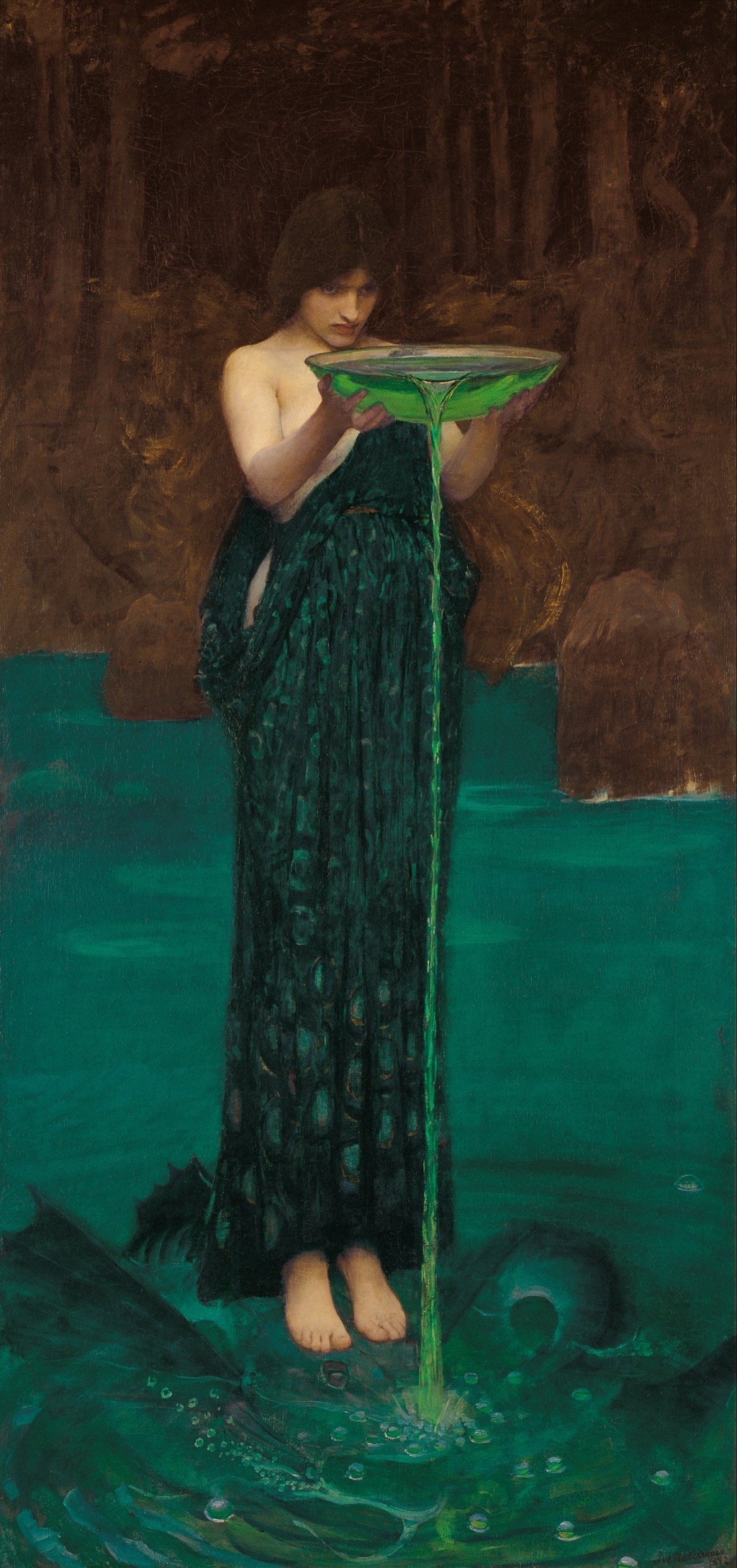
No narrative title resolves it. Unlike Ophelia or Circe, the woman does not arrive with an inherited biography.
The viewer is invited to imagine but also required to stop before imagination becomes false attribution.
The gaze’s power lies precisely in remaining uncompleted.
Rossetti and the Close Female Head
Christie’s notes that The Rose Bower owes much in format to Dante Gabriel Rossetti. [1] The comparison concerns the close female head, abundant hair, flowers and compressed sensory field.
Rossetti’s later half-length women often fill the canvas with face, neck, fabric, hair and symbolic objects. Waterhouse inherits that mode decades after the original Pre-Raphaelite Brotherhood.
The relation helps explain why Waterhouse is called a late or modern Pre-Raphaelite rather than a founding member. He was a child when the Brotherhood formed in 1848 and developed his mature Rossettian affinities later.
Rossetti’s Bocca Baciata, for example, uses a close female figure, rich hair and flowers to create intense bodily presence. [3]
Waterhouse’s painting is not a copy. Its garden enclosure, looser background and particular red-green harmony are his own.
Nor should Rossettian influence be reduced to a generic taste for beautiful women. It involves scale, cropping, colour saturation and the conversion of portrait-like observation into an ideal type.
The comparison also has limits. Rossetti’s named sitters and personal relationships cannot be transferred to Waterhouse’s anonymous model.
Influence travels through visual solutions, not identical biographies.
Waterhouse makes the close head feel less like an indoor jewel and more like a face emerging from cultivated growth.
The bower naturalises a format he inherited from earlier Aesthetic and Pre-Raphaelite art.
Place Within the Flower-Women Sequence
Christie’s situates The Rose Bower within a roughly six-year exploration that began in 1908 with works such as The Soul of the Rose and Gather Ye Rosebuds While Ye May. [1]
The group is linked by women who gather, carry, arrange, inhale or stand among flowers. Many lack the explicit literary narratives of Waterhouse’s earlier heroines.
The Rose Bower reduces action most radically. The flowers surround rather than occupy the woman’s hands.
The title’s noun names a place made of flowers, not an instruction or quoted poem.
This shift makes looking itself important. Viewers attend to colour, face and the density of growth.
The flower-woman category should still be used carefully. It is a modern grouping that clarifies motifs; it does not prove Waterhouse planned a formally numbered series.
Each work has separate dimensions, provenance and compositional problem.
Here the problem is enclosure. How can a small canvas contain face and garden without becoming crowded?
Waterhouse solves it by allowing foliage to remain broad and dark while concentrating detail in skin, eyes and selected blossoms.
Beauty and transience remain relevant. Roses bloom briefly, while the painted woman and flowers do not visibly age.
The painting preserves the appearance of a moment whose living materials would change.
Technique and Selective Finish
The background is handled more broadly than the face. Leaves and branches are often indicated through strokes and tonal masses rather than botanical enumeration.
Waterhouse can therefore create a credible bower without letting every leaf compete.
The face receives smoother transitions. Small changes around eyes, nose and mouth establish presence.
Hair mediates between the two. It is a recognisable mass with internal movement, yet some edges dissolve into foliage.
This hierarchy resembles his oil head studies, where face and neck are built before clothing and ground reach equal finish.
The Rose Bower may look study-like in reproduction, and Christie’s calls it a sensitive study, but it has a documented independent market and exhibition history. [1]
The terms “study” and “painting” are not mutually exclusive. A work can preserve exploratory handling and still circulate as a complete object.
The small scale supports immediacy. Broad marks that would look unfinished across a monumental canvas can cohere at forty-two centimetres high.
No claim should be made about absence of preliminary drawing from appearance alone. Hidden drawing requires technical imaging.
The surface does reveal a preference for selective finish. Waterhouse controls attention through degrees of resolution as much as through light.
Dimensions, Provenance and Exhibition
Christie’s records the painting at 41.9 × 36.2 cm and dates it about 1910. [1] Wikimedia Commons repeats those dimensions in its structured caption, although an older upload caption once carried a conflicting 54 × 61.5 cm description. [2]
The current auction measurement is consistent with the visibly upright format and should be preferred.
Another older catalogue-derived page gives 51 × 46 cm, demonstrating how repeated titles and historic records can attach mismatched data. [4]
Publishing the conflict is better than silently averaging numbers.
The documented provenance places the work with Peter Nahum in London by 1989, then at Christie’s sales in London on 13 November 1992 and 7 June 1996. [1]
It was subsequently lent for an extended period to the Legion of Honor, part of the Fine Arts Museums of San Francisco, from August 2008 until January 2011. [1]
That loan gave a privately owned small canvas sustained public visibility.
The known provenance does not extend to Waterhouse’s lifetime in the current online record. An original purchaser or first exhibition should not be invented.
Market history provides documentation but does not determine quality. The painting’s importance comes from its place in late practice, not an auction result.
Its private status means future access may depend upon loans and sales.
Enclosure, Beauty and Time
The Christie’s catalogue interprets the late flower-women through beauty and its inevitable disappearance. [1] The Rose Bower supports that reading without needing a written moral.
Roses are at their most visible when blooming. Their beauty signals a temporary biological stage.
The woman’s painted youth is similarly fixed in an image while the unnamed model’s life continued beyond the sitting.
Painting suspends both flower and face, but viewers bring knowledge of change back into the suspension.
The bower intensifies the theme by surrounding the woman with the very forms that will fade.
It can resemble a protective wreath, yet protection is only pictorial. Cut or rooted flowers still pass through time.
The woman’s gaze beyond the canvas introduces another temporal direction. She seems attentive to something not yet visible or already gone.
That effect is interpretive, not a recoverable private thought.
Waterhouse’s achievement is to make time felt through static relations: blooming roses, fixed face and absent object of attention.
The small painting contains no catastrophe. Its tension is quieter—the knowledge that abundance cannot remain at its living peak.
The Rose as Species and Cultural Sign
The title makes the general flower identity secure: this is a rose bower. [1] It does not establish exact cultivar, scent or garden history.
Pale blooms are visible at different angles and degrees of openness. Some appear as compact touches; others separate into petals against dark leaves.
Botanical precision is not the painting’s main method. Waterhouse needs enough variation to make a living cluster, but the face remains more individually resolved than any single rose.
The cultural rose carries overlapping meanings. Classical traditions link it with love and beauty; Christian imagery can associate it with the Virgin or martyrdom; nineteenth-century flower books divide meanings by colour and condition.
Selecting one code would oversimplify a long, inconsistent history. The picture provides no written key.
The most secure symbolism arises from material character. Roses are fragrant, visually rich, thorn-bearing and temporary. A bower can surround the body with all four qualities, even when thorns and scent cannot be directly seen.
Viewers imagine perfume because they recognise the flower. Painting activates a sense it cannot physically supply.
This absent scent connects The Rose Bower with The Soul of the Rose, but the two handle it differently. In the 1908 work, a woman presses close enough to inhale a bloom; here fragrance is environmental, dispersed through enclosure.
The model does not possess the roses as a bouquet. They remain part of growth around her.
That distinction affects the theme of impermanence. Cut flowers have already been separated from their source, while a bower continues living through season and cultivation.
Waterhouse’s roses therefore operate as visual structure, cultural memory and imagined sensation without becoming a simple one-word emblem.
The Unnamed Model and the Limits of Ideal Beauty
Christie’s describes the late series in terms of maidens and beauty, language grounded in the paintings’ youthful figures and historical catalogue tradition. [1]
Modern writing can preserve that context while examining its limits. The woman was not only an ideal produced by Waterhouse; a professional model likely supplied face, body and time.
Her name is not attached to the published object record. Repeated resemblance to other dark- or red-haired figures does not justify identification.
The close crop intensifies the ethical issue. We are invited to examine face and exposed shoulders at a distance that would be intimate in life, yet we know almost nothing about the person.
Formal analysis should not turn that access into psychological ownership. An averted eye is not proof of sadness, romantic disappointment or passivity.
Nor should the model be equated with the roses as though woman and flower shared the same human agency. Waterhouse’s composition encourages comparison through colour and beauty, but the sitter was a participant rather than garden material.
This distinction enriches rather than diminishes the work. Idealisation becomes a process to study: observation passes through the artist’s selection and inherited Rossettian format to create a recognisable Waterhouse type.
The model remains at once visible and historically obscured. Her presence is the most carefully painted fact; her biography is the greatest absence.
Acknowledging both prevents the page from repeating the archival silence as if it were natural.
Public Life on the American West Coast
The long-term loan to the Legion of Honor gave The Rose Bower a sustained public setting outside Britain. [1]
From August 2008 through January 2011, visitors could encounter its actual scale and surface within a museum known for European art.
That context matters because Waterhouse’s reputation is international even though his career was centred in London and the Royal Academy.
A private loan can extend a museum collection temporarily, allowing unfamiliar works to enter scholarly and public comparison.
The San Francisco display overlapped with the period of the major touring retrospective J. W. Waterhouse: The Modern Pre-Raphaelite, although Christie’s record does not list this canvas as part of that tour. [1]
The two events should not be conflated. One was an extended individual loan; the other a multi-venue exhibition project.
For The Rose Bower, museum display would have corrected two distortions of online viewing. It restored physical smallness and allowed broad background handling to be seen relative to the resolved face.
After January 2011 the work returned to private status. Its public visibility now depends upon further loans, exhibitions or market appearances.
This movement between private and public is part of the painting’s modern history. A canvas can be globally reproduced yet physically inaccessible, then briefly become available for direct study.
The documented loan should therefore remain prominent in the page. It records not only where the object was but how audiences gained access to the kind of visual evidence reproductions cannot preserve.
A Small Canvas in a Large Reputation
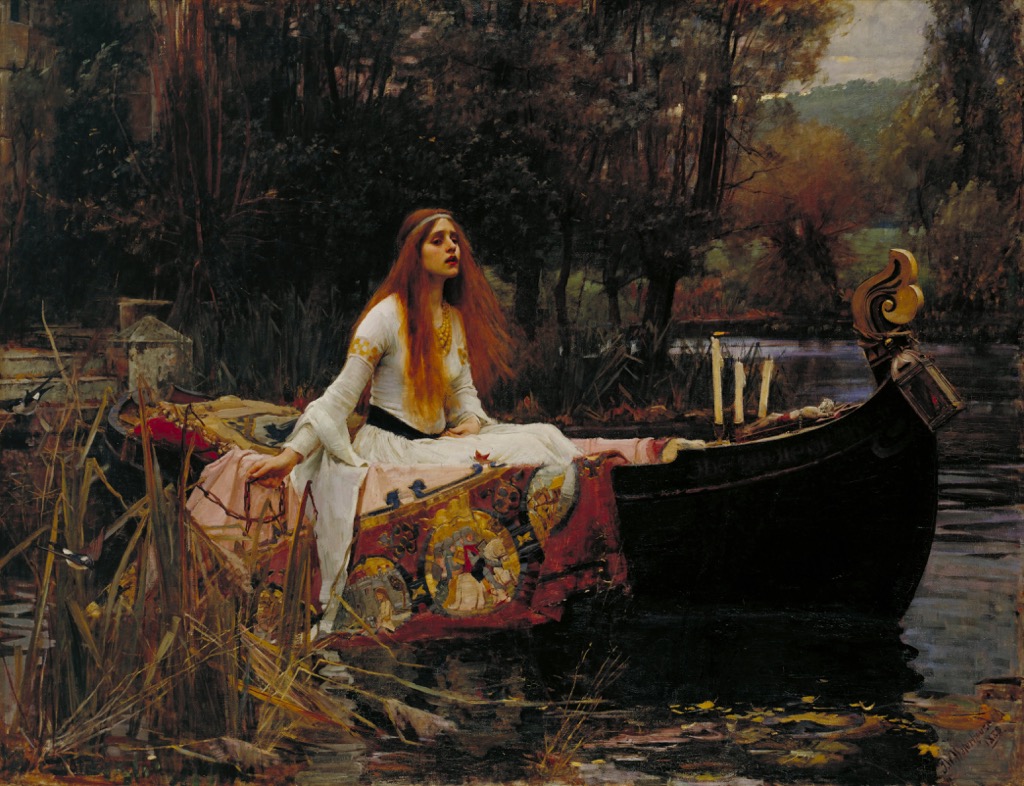
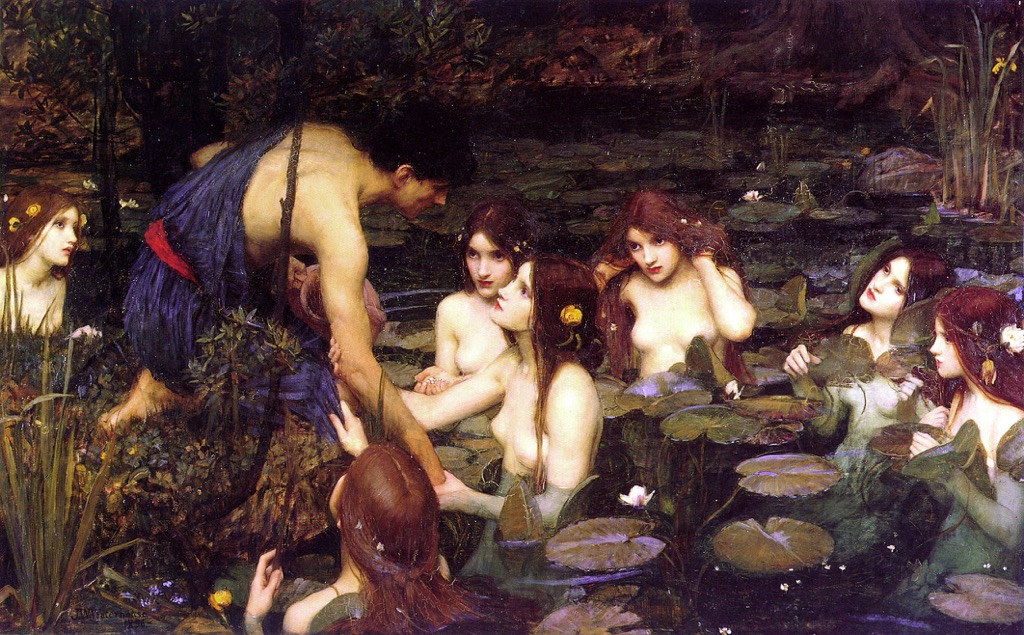
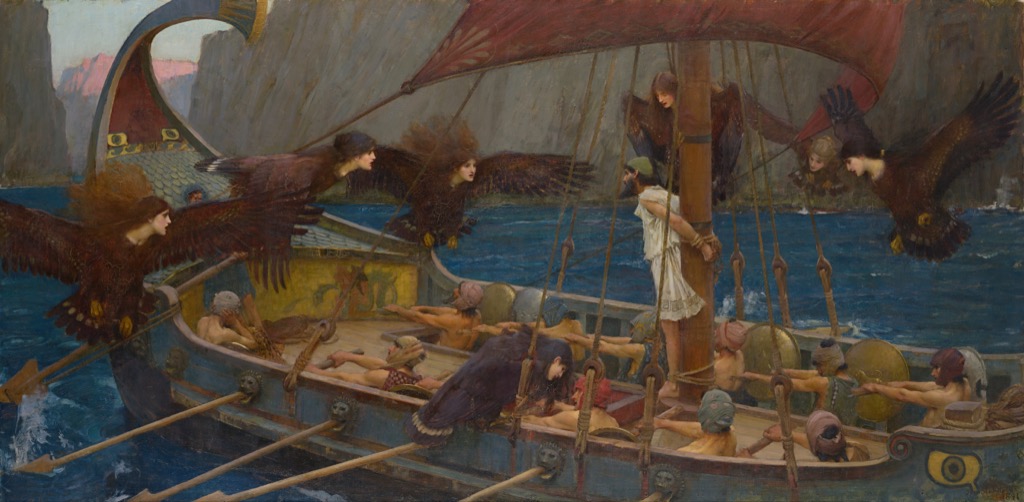
Waterhouse’s reputation rests heavily on monumental narrative pictures. The Lady of Shalott, Hylas and the Nymphs and Ulysses and the Sirens contain broad settings, multiple objects or figures and clearly identifiable stories.
The Rose Bower reduces all of those resources. It offers one unnamed woman, one floral environment and no decisive incident.
The reduction demonstrates that his late appeal did not depend entirely on literary recognition. Colour and proximity can carry emotional weight independently.
Its smallness may also have suited private interiors and collectors who could not accommodate an exhibition-scale canvas. No original commission history is known, so that remains a general possibility rather than a claim about its first owner.
Within the cluster, the manuscript provides a necessary counterpoint to flagship works. It shows Waterhouse’s signature concerns—female presence, flower, gaze and selective finish—compressed almost to their minimum.
The result is not a lesser version of a narrative painting. It is a different pictorial proposition: intimacy instead of spectacle, suggestion instead of plot.
Related Pages
- The Lady of Shalott: Compare Waterhouse's best-known literary composition.
- Hylas and the Nymphs: Compare another major mythological scene.
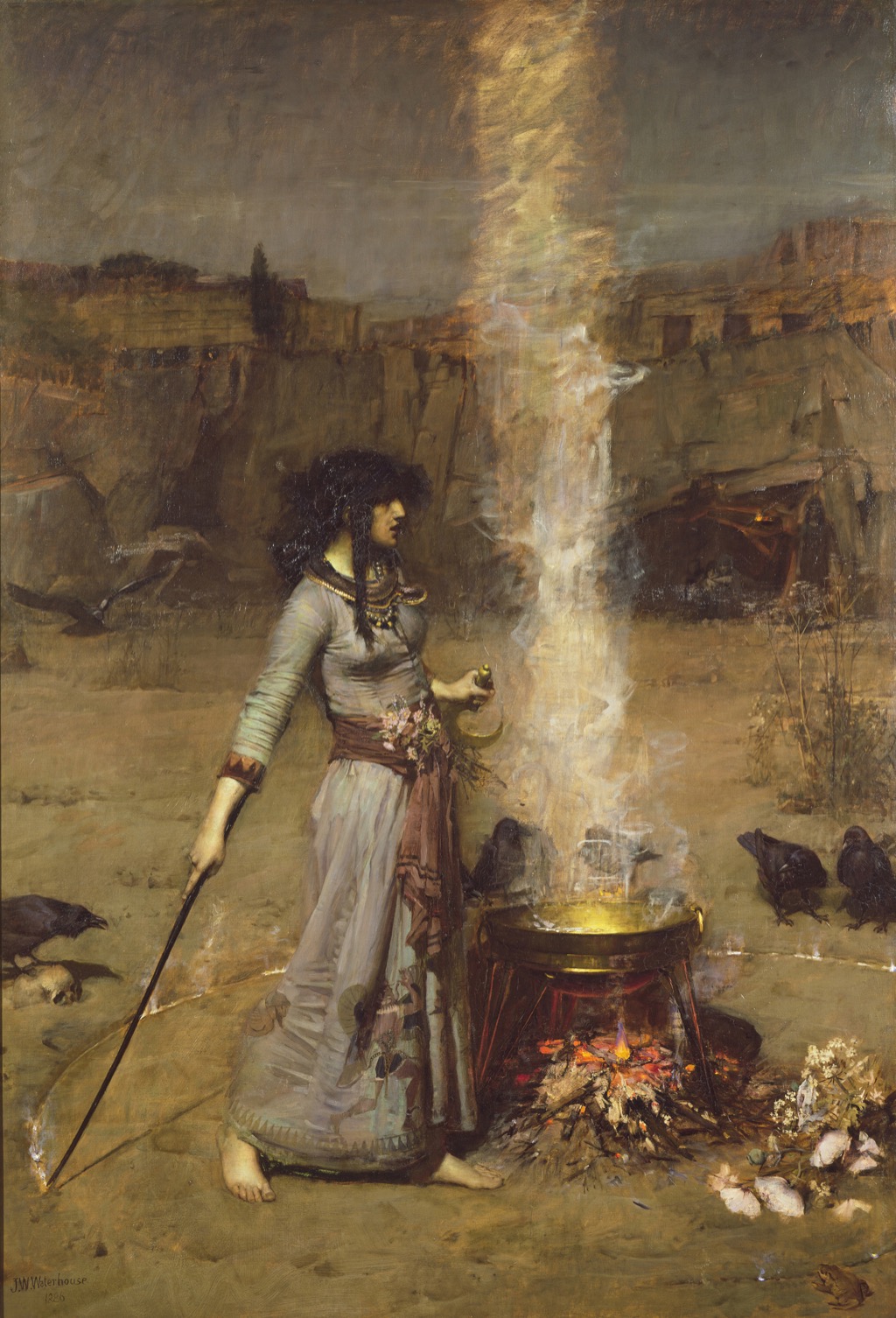
- The Magic Circle: Compare Waterhouse's treatment of ritual and symbolism.
Frequently Asked Questions
About 1910. [1]
Christie’s gives 41.9 × 36.2 cm. Larger dimensions found in older online records should not be substituted. [1] [2] [4]
No secure sitter identity is published in the sources used here.
No particular literary source is documented. Its title describes a rose-filled retreat.
It belongs to Waterhouse’s informal late group of flower-women, but not a known numbered series. [1]
It is privately owned. It was on long-term loan to the Legion of Honor from 2008 to 2011. [1]
Discussion
The Rose Bower achieves intensity through compression. A dark-haired woman, red dress, pale flowers and dense foliage nearly exhaust the canvas. Her averted gaze opens a space that the tightly cropped setting denies.
The work belongs securely to Waterhouse’s late flower-woman practice and to his broader inheritance from Rossetti. Neither context requires the sitter to become a literary heroine. The bower itself supplies enough structure: beauty encloses, flowers bloom and attention reaches beyond what we see.
Reader Insights
Which visible detail most changes the way you read this page?
Which source or comparison helps the work feel less familiar and more specific?
What question would you bring back to the painting after reading?
Join the Conversation
Share your reading of this page below.
References
- Christie’s, “John William Waterhouse, The Rose Bower,” lot record and catalogue essay, including date, dimensions, provenance, exhibition and flower-women context. View source.
- Wikimedia Commons, “John William Waterhouse: The Rose Bower,” structured object summary and history of conflicting upload metadata. View source.
- Tate, Dante Gabriel Rossetti, Bocca Baciata, collection record and Pre-Raphaelite comparison. View source.
- The Victorian Web, Hilary Morgan, “The Rose Bower by John William Waterhouse,” older catalogue-derived commentary and conflicting dimensions. View source.