

 by Tom Gurney
Tom Gurney BSc (Hons) is an art history expert with over 20 years experience
Published on August 14, 2026 / Updated on August 14, 2026
Email: tomgurney1@gmail.com / Phone: +44 7429 011000
The Soul of the Rose: Introduction
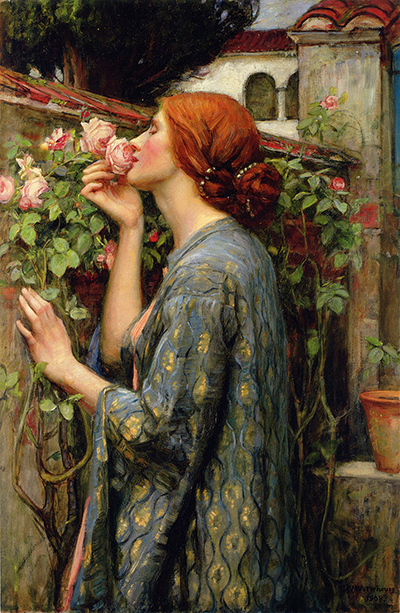
John William Waterhouse’s The Soul of the Rose makes a fragrance visible. A young woman leans towards a rose growing over a tiled garden wall, cups the flower without plucking it and closes her eyes as she breathes. The action is almost nothing, yet the painting gives it the emotional weight of an encounter. Scent, memory and desire occupy the space that a more explicit narrative might have filled.
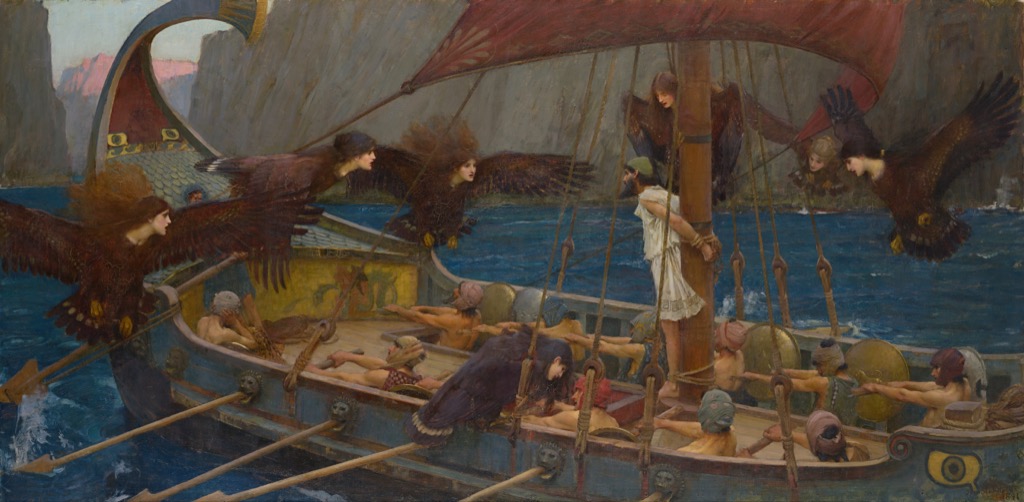
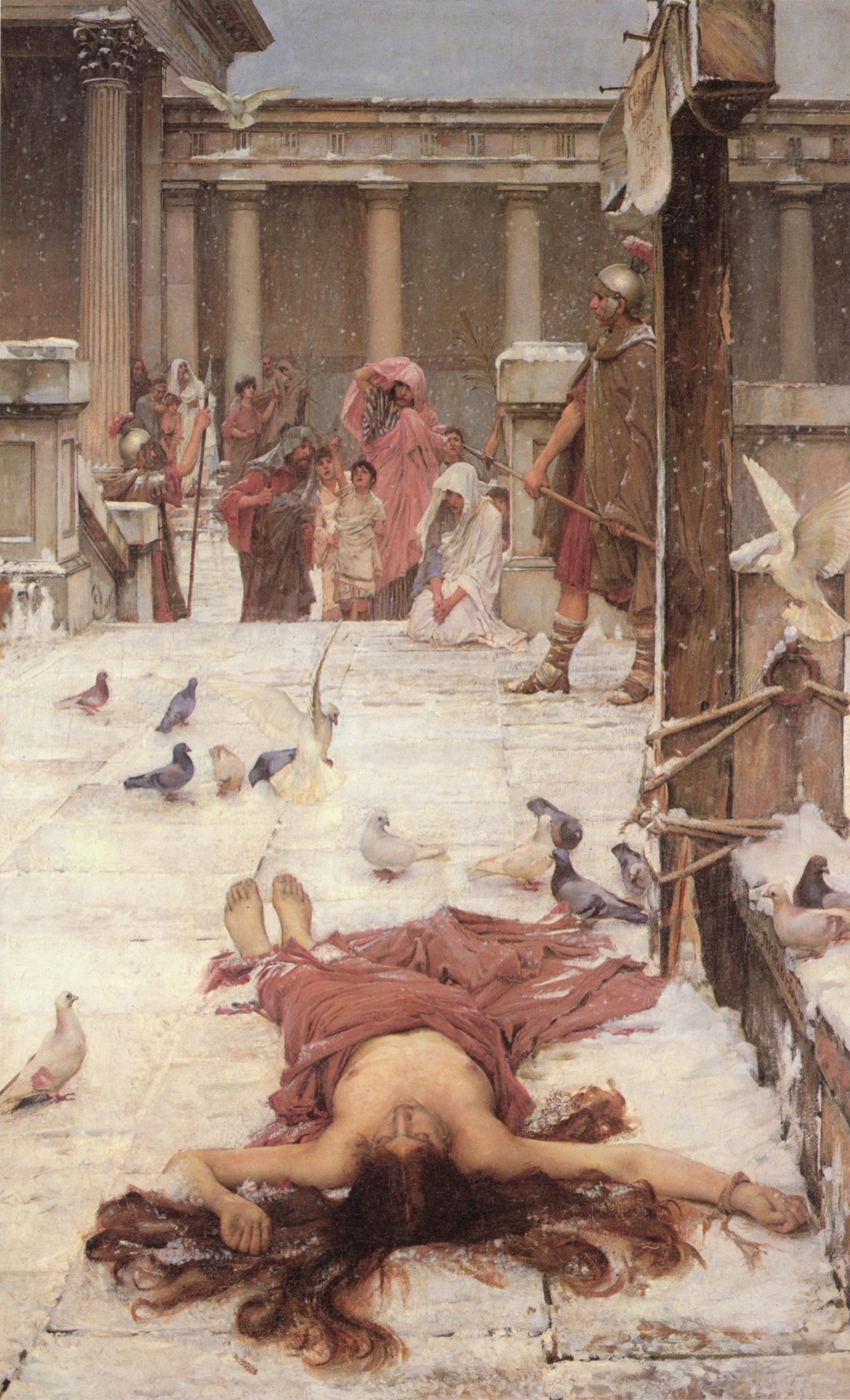
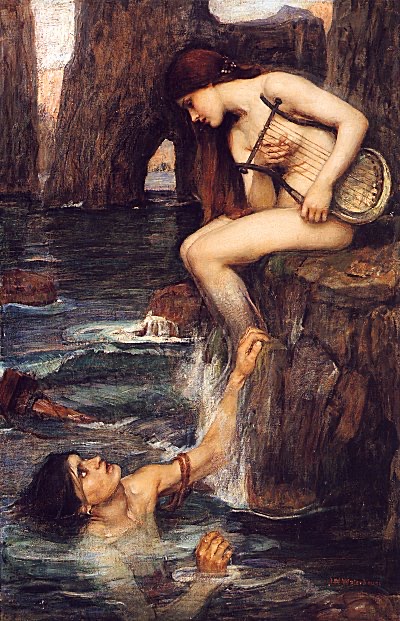
Painted in 1908, the picture belongs to Waterhouse’s mature period and to a sequence of late works in which women, flowers and enclosed gardens replace the public crises of Saint Eulalia, The Lady of Shalott or Ulysses and the Sirens. Its intimacy should not be mistaken for simplicity. The title opens competing literary routes through Tennyson and medieval courtly love; the enclosed garden can shelter and confine; the woman may remember someone absent, anticipate someone approaching or surrender briefly to sensation for its own sake. Waterhouse supplies no visible lover and no final explanation. He asks the rose to carry what cannot be seen.
At a Glance
- ArtistJohn William Waterhouse (1849–1917)
- TitleThe Soul of the Rose
- Alternative titleMy Sweet Rose, widely used but not securely established here as Waterhouse’s original exhibition title
- Date1908
- MediumOil on canvas
- Dimensions88 × 59.1 cm
- SignatureSigned and dated “J.W. Waterhouse/1908.” at lower right
- Present statusPrivate collection
- First exhibitedRoyal Academy, London, 1908, catalogue no. 78
- Early ownerSir Brodie Haldane Henderson
- Catalogue historyAnthony Hobson, no. 160; The Modern Pre-Raphaelite retrospective, no. 50 [1]
Contents
- Introduction
- A Painting Organised Around Scent
- What the Woman Is Doing—and What She Is Not
- Tennyson’s Maud and the Exact Phrase of the Title
- Chaucer, the Roman de la Rose and Courtly Love
- The Wall as Boundary and Support
- An Imagined Italian Garden
- Face, Hands and the Architecture of Attention
- Dress, Hair and the Intensity of Colour
- Who Was the Model?
A Painting Organised Around Scent
Most paintings address sight and then ask the viewer to imagine sound, touch, movement or temperature. The Soul of the Rose makes smell its principal unseen event. The woman does not merely admire the flower. She draws it towards her face, lowers her eyelids and appears to breathe. Nothing in the image can release an actual fragrance, yet posture and proximity make the viewer supply one.
This appeal to another sense explains much of the picture’s popularity. Smell is closely tied to memory, but Waterhouse does not need to paint the remembered person or event. The rose can awaken an association that remains private to the figure. We recognise the physical action while being excluded from the experience it produces. Her face is visible, but the content of her thought is not.
The encounter is reciprocal only in imagination. The woman bends towards the rose; the flowering stem appears to extend towards her. Her hands make a temporary frame around the bloom, and her face answers its rounded form. The plant has no human agency, but Waterhouse arranges it as the second presence in a two-part composition.
The rose remains attached to the living bush. That detail matters. A cut flower could be carried away, possessed or exchanged as a love token. This flower belongs to the garden. The woman must approach it where it grows, and the contact cannot last without her maintaining the pose. The picture is consequently about intensity and impermanence at once.
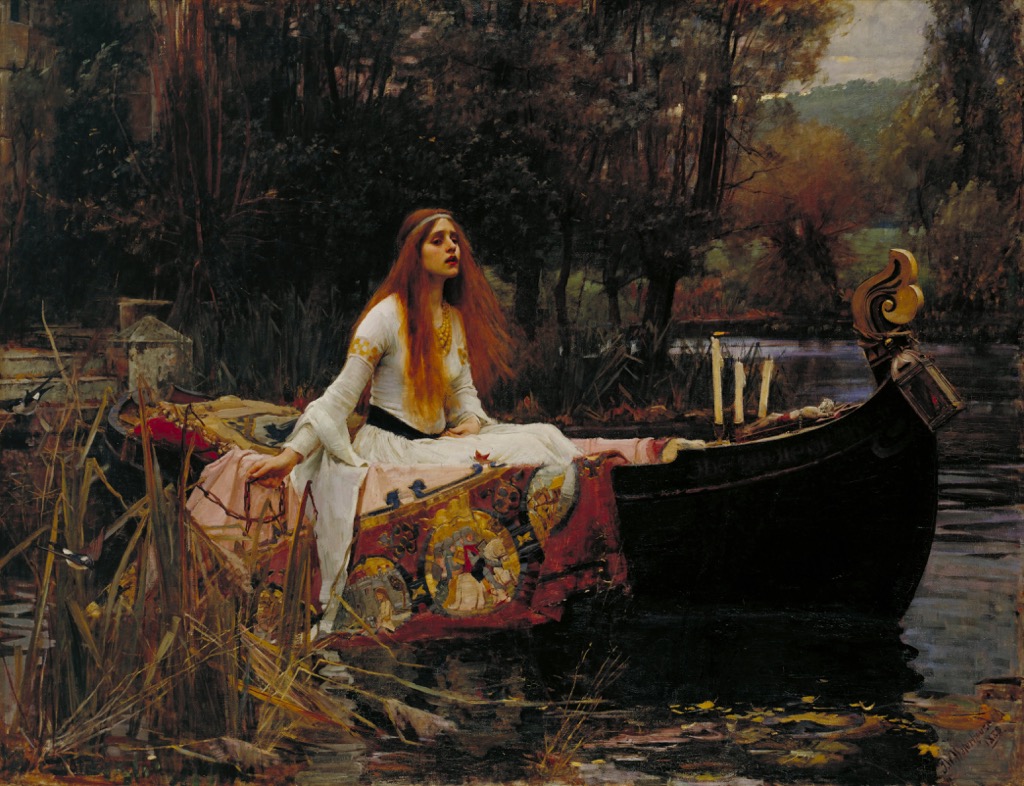
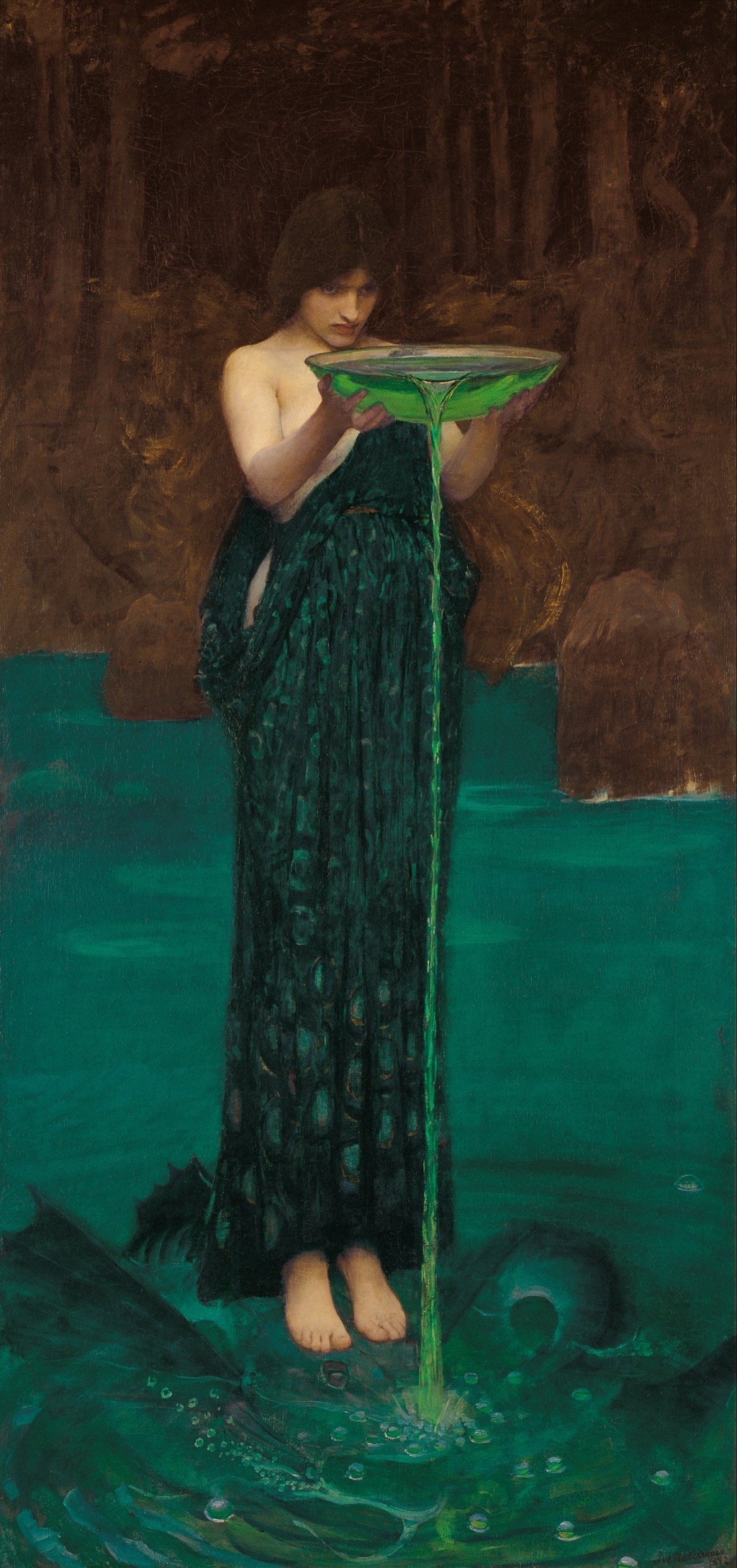
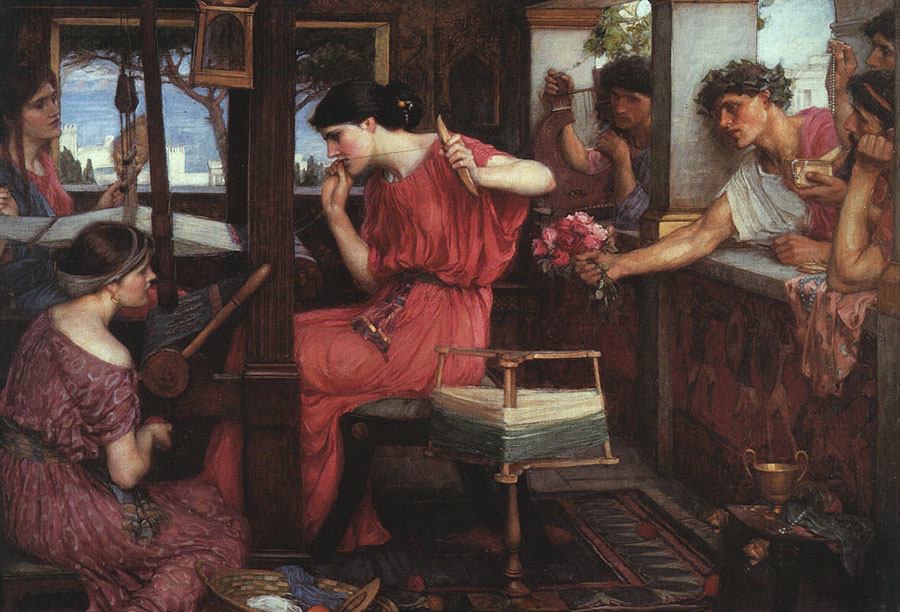
Waterhouse had long used objects to make an invisible condition legible: the Lady of Shalott’s loosening chain, Circe’s cup, Penelope’s loom and Narcissus’s reflection. Here the object is not a tool or trap. The rose becomes a sensory threshold. It permits a movement from the visible garden towards inward feeling without showing what lies on the other side.
What the Woman Is Doing—and What She Is Not
The figure stands close to a wall that rises to approximately the level of her shoulders. She leans across it towards a pale pink rose. One hand supports or draws the flower nearer; the other steadies the stem or gathers the contact into a delicate enclosure. Her eyes are closed or almost closed. Her lips do not visibly speak. The moment is private even though her upper body fills most of the canvas.
There is no action beyond this contact. She is not gathering a bouquet, placing a rose in her hair or offering it to another person. No lover appears beyond the wall. No letter, book or named literary accessory determines her identity. Waterhouse strips the scene to body, flower, wall, dress and a small area of architecture.
That reduction produces narrative pressure. The viewer may imagine longing because the woman appears absorbed and because the rose carries established associations with love. But the painting does not prove that she remembers a dead or absent lover. It may show anticipation, reverie, erotic awakening, grief, aesthetic pleasure or simple attention to fragrance. Each reading begins from a visible act and then exceeds the evidence.
Her closed eyes intensify that uncertainty. They withdraw her from the viewer while opening the possibility of an inward image. In portraits, eye contact can establish social presence; here its absence refuses conversation. We see her more closely than she sees us, but that advantage does not give access to her thoughts.
The pose also avoids passivity. Christie’s catalogue describes her as a participant rather than merely the object of desire. [1] She chooses the contact, directs the movement and controls its duration. The flower may stimulate memory, but no visible person commands her response. Waterhouse’s woman is absorbed rather than displayed as waiting for the viewer’s approach.
Tennyson’s Maud and the Exact Phrase of the Title
The strongest direct verbal parallel appears in Alfred Tennyson’s Maud. During the celebrated lyric beginning “Come into the garden, Maud,” the speaker waits outside while music continues in the house. Roses have heard the instruments through the night; flowers anticipate Maud’s arrival; desire, jealousy and possessive hope gather in the garden. The phrase “the soul of the rose went into my blood” occurs exactly in this sequence. [2]
That wording gives the Tennysonian route unusual force. Waterhouse repeatedly painted Tennyson, from the three Lady of Shalott compositions to Mariana in the South and Saint Cecilia. A title lifted from Maud would therefore belong to an established engagement rather than an isolated literary borrowing.
The poem also makes scent and sound agents of desire. The speaker stands outside the dance, hears music from within and experiences the rose as entering his blood. Garden, house, absent beloved and heightened senses converge. Waterhouse changes the point of view: a woman rather than the male speaker encounters the rose, and music, gathering and narrative crisis disappear. Yet the painting’s compression of fragrance into inward feeling closely answers Tennyson’s phrase.
The connection should still be stated carefully. No quotation appears in the accessible 1908 exhibition information cited here, and no surviving statement by Waterhouse has been located in which he names Maud as the source. Exact verbal correspondence makes Tennyson highly persuasive; it does not prove that the painting illustrates a precise stanza in every detail.
The importance of imagined smell and the Tennysonian phrase should not, however, turn the painting into a literal illustration. Waterhouse may borrow language without assigning the figure the identity of Maud or reproducing the poem’s speaker, plot and emotional instability.
Chaucer, the Roman de la Rose and Courtly Love
A second route has been advanced in modern catalogue scholarship. Christie’s connects the title loosely with the Romaunt of the Rose, the Middle English version traditionally associated in part with Geoffrey Chaucer, and with its Old French source, the Roman de la Rose begun by Guillaume de Lorris. [1] [3] [9]
The medieval poem is not a minor alternative. It offered European culture one of its most influential allegories of courtly love. A dreamer enters a walled garden, reaches the Fountain of Love and becomes overwhelmed by a rosebud representing the desired lady. The University of Chicago’s digital manuscript account summarises the first part as a quest in which the Lover seeks the Rose amid personifications of beauty, generosity, danger and resistance. [3] A Victorian audience attuned to medieval revival could recognise the walled garden and rose as a courtly field without needing a literal episode.
This tradition illuminates features that Tennyson alone does not fully explain. The woman’s brocade-like gown, architectural enclosure and garden setting evoke an unspecified medieval or early Renaissance past. The rose is both material flower and possible love emblem. The wall creates the protected, restricted space central to the medieval garden of desire.
The two literary routes do not have to cancel one another. Tennyson supplies the exact phrase and a modern Victorian language of fragrance entering the body. The Roman de la Rose supplies a deep iconographic structure of enclosed garden, lover and desired flower. Waterhouse could work within both inheritances, deliberately or through a culture in which their imagery had become intertwined.
The responsible conclusion is therefore unequal but plural. Maud is the clearest candidate for the title because its wording is exact. The medieval Rose tradition provides a persuasive broader context for the costume, garden and courtly atmosphere. There is not enough documentary evidence to claim that Waterhouse selected one text and excluded the other.
The Wall as Boundary and Support
The wall is the picture’s largest stabilising form. It runs across the lower foreground, separates the woman’s body from the garden beyond and provides the ledge over which she reaches. Its pale tiles or patterned ceramic facing create a measured grid beneath the irregular flowers and fabric.
At first the wall may appear merely decorative. Compositionally, it performs several tasks. It conceals the lower body, allowing Waterhouse to bring the figure close without turning the picture into a formal portrait. It establishes the distance she must cross to reach the rose. It also divides spaces whose relation remains unclear: is she inside the garden reaching outward, outside it reaching in, or standing within one compartment of a larger enclosed court?
That uncertainty prevents the usual simple contrast between freedom and confinement. The flowers grow abundantly along the boundary, so enclosure supports beauty as well as restricts movement. Christie’s describes the setting as a walled Tuscan garden and notes the paradox of abundance within a limited space. [1] The formulation is useful as an interpretation, not a secure geographical identification. No building is named, and the garden should not be presented as a record of a particular Italian site.
The wall also changes the physical meaning of the pose. Without it, the woman would simply incline towards a bloom. With it, reaching becomes a small crossing. Her torso and forearms extend over an architectural limit while her unseen lower body remains on the other side. Waterhouse converts scent into an experience obtained across separation.
The tiled surface rewards close attention. Its pattern is more regular than the plant and less sumptuous than the dress. These three textures—ceramic, leaf and woven cloth—meet beneath the hands. The exactness of their junction gives the dreamy scene a convincing material foundation.
An Imagined Italian Garden
Behind the figure, red or terracotta roofs, pale masonry and a strip of blue distance suggest an Italianate or Tuscan setting. Waterhouse was born in Rome to British parents and returned to Italy as an adult, while Italian subjects and architecture had occupied his earliest professional work. [1] [4] It is reasonable to recognise an Italian visual memory; it is not reasonable to treat every tile as autobiographical evidence.
The mature picture differs from the archaeological interiors of the 1870s. Architecture no longer establishes a historical anecdote through a detailed inventory. It supplies distance, warmth and enclosure. Roof and wall appear sufficient to create a world beyond ordinary Edwardian London without asking the viewer to reconstruct a particular century.
The subdued background is essential. If the buildings were painted with the same clarity as the hands and rose, they would compete for narrative attention. Waterhouse instead gives the setting less tonal depth and lets it recede. Christie’s catalogue reads this selective finish as part of his mature balance between precision and softness. [1]
The garden is consequently both place and emotional form. Its wall concentrates the encounter; its architecture suggests elsewhere; its foliage carries scent across the division. Whether the woman is secluded, protected or momentarily alone cannot be settled. The picture needs enclosure because attention becomes more intense when the world is narrowed.
Face, Hands and the Architecture of Attention
The face is not centred in the canvas, but every major line directs attention towards it. The neck inclines, the hair falls behind, the upper arm rises and the hands complete an arc around the rose. Figure and plant meet in a compact zone that contains the painting’s sharpest psychological and material information.
Waterhouse gives the profile enough definition to register absorption without supplying a theatrical expression. Closed eyelids, relaxed mouth and lowered brow can be read as calm, longing or concentration. Nothing visibly confirms tears, distress or ecstasy. The emotional range remains wide because the facial action is so slight.
The hands are more explicit. They do not crush, pluck or possess. Fingers approach stem and flower carefully, suggesting knowledge of thorns and fragility even when neither is individually emphasised. One hand brings the rose close; the other seems to protect the contact. Waterhouse makes touch visible while smell remains imagined.
The arrangement also links woman and plant formally. Pale fingers repeat petals; the curve of the hands answers the opening bloom; red hair and patterned cloth supply warmer, denser masses behind them. The figure does not dissolve into nature, but the design encourages comparison between organic forms.
That comparison can become reductive if the woman is treated as just another flower. The painting certainly participates in a long tradition that associates female beauty with blossoming and fading. Yet her agency distinguishes her from a decorative emblem. She uses the rose to enter an experience. It is the object of her attention, not simply a metaphor imposed upon her body.
Dress, Hair and the Intensity of Colour
The woman’s gown is one of the painting’s richest surfaces. Its patterned fabric gives weight to the upper body and supplies a courtly or historicising atmosphere without defining a precise date. The colour moves among blue, purple, rose and muted gold, changing as folds catch the light.
Against that textile, the face and hands appear comparatively still and pale. Waterhouse concentrates description where action occurs but allows the dress to sustain the pleasure of looking. The pattern is not merely background ornament: its dense visual rhythm slows the lower half of the composition and makes the uncluttered profile more legible.
Her red hair introduces another warm field. It is gathered or controlled rather than blown loose, reinforcing the quiet of the scene. Red hair has encouraged comparisons with Rossetti and with the recognisable “stunner” of later Pre-Raphaelite art. Such comparison helps place Waterhouse within a visual inheritance, but the figure’s bodily concentration is his own. She does not confront the spectator in the manner of an aesthetic portrait; she turns away towards the flower.
The roses are lighter than both hair and dress. Their pink is not isolated: related tones appear in flesh and fabric, making fragrance seem to spread pictorially through the canvas. Green leaves provide the necessary opposition, while pale wall and blue distance prevent the palette from closing into darkness.
Colour therefore carries the sensory argument. The rose is visually distinct enough to command the figure’s attention, but related enough to appear already absorbed into her world. Waterhouse cannot paint smell. He can make colour seem to move from flower through hands and face into the surrounding fabric.
Who Was the Model?
The sitter has been proposed as either Muriel Foster or Beatrice Ethel Hackman, also known as Beatrice Ethel Flaxman. Christie’s records both possibilities and explicitly notes the scarcity of documentation for Waterhouse’s models. [1] Neither name should be presented as settled fact.
This uncertainty matters because repeated facial types invite confident but circular identification. A viewer recognises a red-haired woman across several paintings, assigns her a name from one secondary source and then uses the resemblance as proof for every other work. Similarity can show that Waterhouse returned to a preferred type or perhaps a regular sitter; it cannot replace a contract, letter, studio record or securely documented portrait.
Muriel Foster is often associated with Waterhouse’s later women. Beatrice Hackman has also been proposed on the basis of age, hair and a possible period of modelling between 1906 and 1916. [1] The most accurate public wording is that the model may be one of these women, while her identity remains unconfirmed.
The painting itself discourages biographical certainty. It is not titled as a portrait. Costume, garden and absorption move the figure away from ordinary social identity. Even if the sitter were established, she would still be performing a pictorial role rather than simply appearing as herself.
The Preparatory Study and a Changed Conception
A preparatory study in a private collection differs notably from the finished work. Christie’s describes a dark-haired, plainly dressed girl leaning upwards to smell a flower. The final painting transforms her into a red-haired young woman in a richly patterned gown and gives the encounter greater monumentality. [1]
The difference demonstrates that the core idea preceded the final costume and type. Waterhouse began with the bodily action—woman reaching towards a rose—and revised its social, visual and historical register. Plain dress became brocade; a girl became a more mature courtly figure; the intimate gesture acquired the weight of an allegory without losing its physical credibility.
This evidence cautions against treating the finished image as a spontaneous transcription of one model in one garden. Waterhouse constructed it through alteration. The study does not reveal every intermediate stage, but it proves that pose and sensory action could remain stable while identity, hair, dress and atmosphere changed.
It also complicates model identification. If different studies or stages used different sitters, resemblance in the final canvas tells only part of the working process. A named face cannot explain the development of the whole composition.
The study’s private ownership limits what can be said about materials and sequence. No published conservation examination located for this manuscript provides imaging of the finished canvas or a full account of changes beneath the surface. The responsible claim is that a documented study records a substantially different early treatment—not that every revision can be reconstructed.
The Late Flower-Women
The Soul of the Rose belongs to a group of late Waterhouse paintings in which women gather, smell, carry or stand among flowers. Related works include Gather Ye Rosebuds While Ye May, The Rose Bower, The Charmer, Flora and the Zephyrs and the later Persephone-associated pictures. Auction scholarship describes a six-year exploration of these “flower-women” beginning around 1908. [5]
The group should not be forced into one narrative. Some titles quote Robert Herrick; others invoke myth, music, spring or an unnamed sensory state. Flowers can signify youth, recurrence, temptation, mourning, fertility, love or the passing of time. Their function changes with action and source.
What unites many of the pictures is a shift away from climactic public drama. A woman picks, arranges, listens or breathes. The action may be repeated rather than irreversible. Waterhouse creates meaning through posture, colour and atmosphere instead of relying upon a recognised tragic episode.
This does not mean that narrative disappeared. The Soul of the Rose is full of implied before and after: the woman has approached the wall; the rose has opened; a scent may awaken a memory; the contact will end. The painting offers a fragment whose emotional story is supplied collaboratively by title, figure and viewer.
The late sequence also reveals Waterhouse adapting rather than merely repeating his 1890s successes. He retains beautiful female figures and literary suggestion, but loosens the relation between title and plot. The result approaches the aesthetic portrait and Symbolist mood-piece while remaining grounded in observed bodies, fabrics and gardens.
Paint Handling and the Limits of Technical Evidence
The painting balances sharply controlled passages with broader, softer areas. Face, fingers, rose and important edges of the dress are sufficiently exact to carry the encounter. The background building has less tonal depth; foliage and fabric move between description and colour mass. Christie’s reads this selective handling as evidence of Waterhouse’s mature response to French Impressionism and British parallels. [1]
That comparison should not be inflated into a claim that Waterhouse became an Impressionist. The composition remains carefully staged, the figure substantially drawn and the literary atmosphere deliberate. What changes from some earlier paintings is the equality of finish. Not every object receives the same polish.
The variation directs attention. Precise hands make touch credible. Softer architecture prevents the setting from becoming an archaeological inventory. Broken foliage lets light and air enter around the rose. Patterned dress can appear richly material without every motif becoming separately insistent.
No accessible published technical study cited here supplies a pigment analysis, X-radiograph or account of underdrawing for this canvas. Exact claims about paint layers, named pigments or buried changes would therefore be invented. Close visual evidence and catalogue comparison support a discussion of finish, edge, colour and emphasis; they do not reveal the complete physical construction.
Within those limits, technique and meaning are inseparable. The woman’s absorption depends on the hierarchy of focus. Waterhouse makes her hands and rose concrete while allowing the world beyond them to soften. The picture imitates concentrated attention: what matters becomes clear, and everything else recedes.
The Royal Academy Exhibition of 1908
Waterhouse exhibited The Soul of the Rose at the Royal Academy in 1908 as catalogue number 78. [1] He was by then a full Royal Academician with more than three decades of exhibition history behind him. The picture belonged to an established public career, not to a private late retreat.
Its relatively narrow vertical format and concentrated figure would have allowed it to read from a distance on a crowded wall. The pale profile, red hair, patterned gown and roses create a compact visual identity. Viewers did not need to know the full literary argument before recognising the action.
The exhibition year was especially productive. Waterhouse also treated flower-gathering and metamorphosis in related pictures, and contemporary writers soon discussed his Arcadian imagery as a significant late direction. Rose E. D. Sketchley’s 1909 survey reproduced The Soul of the Rose, while A. L. Baldry included it in his 1911 account of recent work. [1] [6] [7]
Baldry argued that Waterhouse’s modernity was intellectual and markedly individual. [6] The formulation helps explain why a medieval-looking woman in a garden could appear modern in 1911. Modernity did not require abandonment of literature or beauty. It could lie in freer handling, psychological ambiguity and the conversion of an inherited emblem into a private sensory event.
The Academy context also counters the assumption that the picture was always a mass-reproduced icon detached from institutions. It first addressed viewers as a new work by a senior living artist. Its later familiarity grew through ownership, publication, exhibition, auction and reproduction.
The Henderson Family and a Major Patronage Network
The painting entered the collection of Sir Brodie Haldane Henderson, an engineer and member of a family that became central to Waterhouse’s later patronage. Christie’s states that Alexander Henderson, later Lord Faringdon, supported the artist from the late 1890s and introduced him to his brothers Henry and Brodie. Between them, the family purchased more than fifty paintings. [1]
This was more than the isolated sale of one attractive canvas. Sustained patronage offered Waterhouse a market for the late pictures through which he explored flowers, gardens, myth and female figures. Brodie’s ownership of The Soul of the Rose linked the work to a network of related paintings rather than leaving it dependent upon an anonymous public.
Sotheby’s account of Gather Ye Rosebuds While Ye May says that Brodie acquired The Soul of the Rose directly from the 1908 Royal Academy Summer Exhibition. [5] A purchase in that setting joined public display to private collection: the picture moved from a crowded annual exhibition into a patron’s domestic environment while remaining known through reproductions and criticism.
The patronage relationship should not be used to invent a commission. The accessible evidence establishes ownership and the broader Henderson support. Unless a contract or correspondence specifies subject and terms, Waterhouse’s choices of title, model and garden remain his rather than instructions safely attributed to Brodie.
Patronage nevertheless shaped reception. The Henderson collections preserved a substantial body of late work at a time when avant-garde definitions of modern art could make Waterhouse appear unfashionable. Their purchases helped sustain the conditions under which these paintings were produced and later studied.
Provenance, Retrospective Display and Auction History
After Sir Brodie Henderson, the documented provenance resumes at Christie’s in London on 16 October 1981, lot 104. The painting was later with Pre-Raphaelite Inc. until 2007, when it appeared at Christie’s on 7 June as lot 41 and was acquired by the owner who subsequently consigned it again. [1]
It returned to a major scholarly setting in the international retrospective J. W. Waterhouse: The Modern Pre-Raphaelite. The exhibition opened at the Groninger Museum in December 2008, travelled to the Royal Academy in London in 2009 and continued to the Montreal Museum of Fine Arts until February 2010. The painting was catalogue number 50. [1] [8]
That reunion altered the context of viewing. At the 1908 Academy it was contemporary art. In the retrospective it became evidence within an argument about Waterhouse’s relationship to Pre-Raphaelitism, modern handling and European symbolism. The same enclosed moment could now be compared with the full arc from early classical genre to late gardens.
At Christie’s New York on 28 October 2019, The Soul of the Rose sold for $4,695,000. [10] The figure records a market event, not artistic value, but it does demonstrate the extraordinary modern demand surrounding the image. Its current status should still be given simply as private collection unless the owner has chosen public identification.
Auction visibility has also produced one of the richest accessible object accounts. Christie’s catalogue consolidates provenance, exhibition history, bibliography, model proposals, patronage and stylistic interpretation with the assistance of Waterhouse scholar Peter Trippi. [1] Because the work is privately held, such records carry unusual importance, while still requiring distinctions between documented facts and catalogue interpretation.
What the Painting Can—and Cannot—Be Said to Mean
The most secure interpretation begins with sensation. A woman deliberately brings a living rose close enough to smell it. She closes her eyes and withdraws from the visible world. Wall, hands and flower organise a small crossing from place into inward experience.
The title makes love and memory plausible. In Tennyson, the soul of the rose enters the speaker’s blood while he waits for Maud. In the medieval Rose tradition, a walled garden contains the desired flower. Waterhouse places a woman where those traditions often place a male lover or dreamer, giving her control of the encounter. [2] [3]
The painting can therefore be read as an image of desire without an object. A person may be remembered beyond the canvas, but the figure’s absorption is complete in itself. The absence of a visible lover prevents the scene from becoming an illustration of female dependence. Her feeling is not explained for us or directed towards our gaze.
Enclosure remains double-edged. The wall can protect privacy and cultivate beauty; it can also limit movement. The rose grows along the boundary, making the source of pleasure inseparable from the structure that divides. Waterhouse does not tell us whether the woman wishes to leave, enter or remain.
Claims about fixed flower symbolism should be resisted. Roses have carried many meanings, and no surviving Waterhouse key assigns this bloom one exclusive message. Love, beauty, sensuality and transience are culturally plausible associations. The specific meaning arises from title, touch, scent and enclosure rather than from a universal floral dictionary.
Nor should the figure be confidently named as Maud, the Rose of the medieval poem, Muriel Foster or Beatrice Hackman. Each proposal belongs to a different level of evidence: literary source, allegorical role or model identity. Preserving those distinctions makes the image richer, not poorer.
Why The Soul of the Rose Still Matters
The painting demonstrates Waterhouse’s ability to make stillness eventful. Nothing visibly changes, yet sensation travels from flower to woman and, by imaginative extension, to the viewer. The entire narrative occurs within a breath.
It also gives a mature answer to problems that occupied him throughout his career. A boundary separates worlds; a woman approaches knowledge or transformation; an object concentrates desire; the decisive result remains unseen. The wall is quieter than the Lady of Shalott’s chain and the rose less dangerous than Circe’s cup, but the structure of suspended consequence persists.
The picture’s accessibility does not exhaust it. Its beauty is immediate, which has helped it circulate widely in reproduction. Close study then introduces uncertainty: two literary traditions, unconfirmed sitters, a changed preparatory conception, selective finish and a garden that shelters while dividing.
Most importantly, Waterhouse makes the woman’s inward life the subject without claiming to disclose it. We can imagine the scent because the action is familiar. We cannot possess the memory or desire it awakens. That limit preserves her privacy and keeps the painting alive beyond any single interpretation.
A Closer-Looking Guide
Begin with the rose rather than the face. Notice that it remains attached to the plant. Follow the stem towards the hands and ask how Waterhouse makes a fragile contact readable without showing a firm grip.
Next trace the wall across the canvas. Decide which parts of the woman and garden it separates, and which it brings together. Look at the tiles as pattern before treating the wall as symbol.
Move to the two hands. They perform slightly different tasks: one brings the flower towards the face, while the other steadies the meeting. Compare their precision with the softer leaves around them.
Study the profile with the eyes closed. Try to describe only what the face visibly does before naming an emotion. Notice how quickly a neutral action becomes longing, peace or grief in the viewer’s imagination.
Look across the dress. Find where its pattern is sharply legible and where it loosens into colour. Compare those changes with the relative softness of the distant building.
Finally, step back until fingers and petals merge. The composition becomes a triangle of red hair, pale face and flower above the horizontal wall. At that distance, the entire literary and sensory argument is carried by posture.
Related Pages
- The Lady of Shalott: Compare Waterhouse's best-known literary composition.
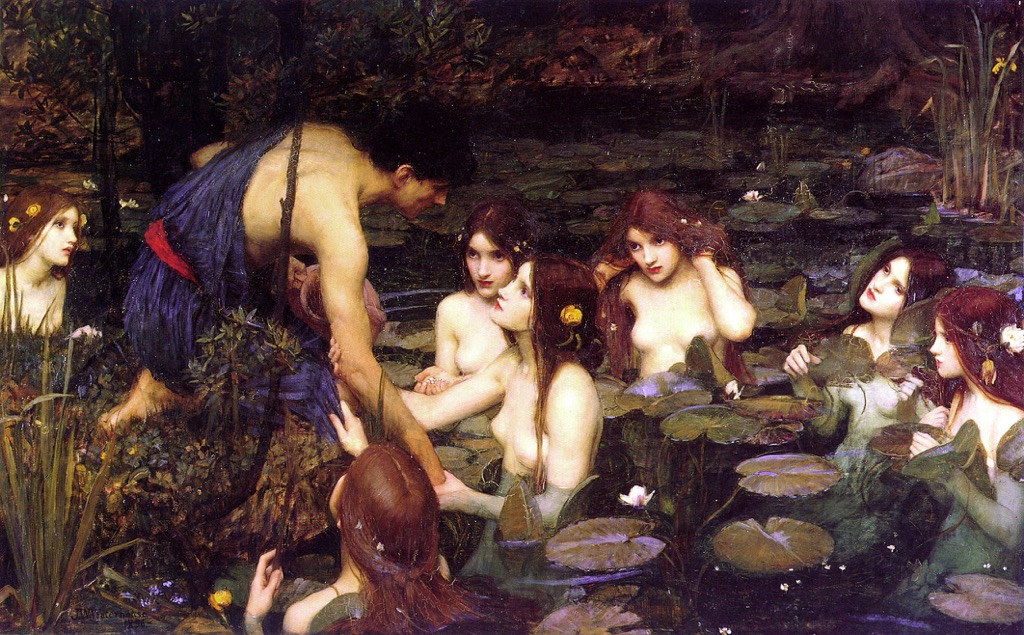
- Hylas and the Nymphs: Compare another major mythological scene.
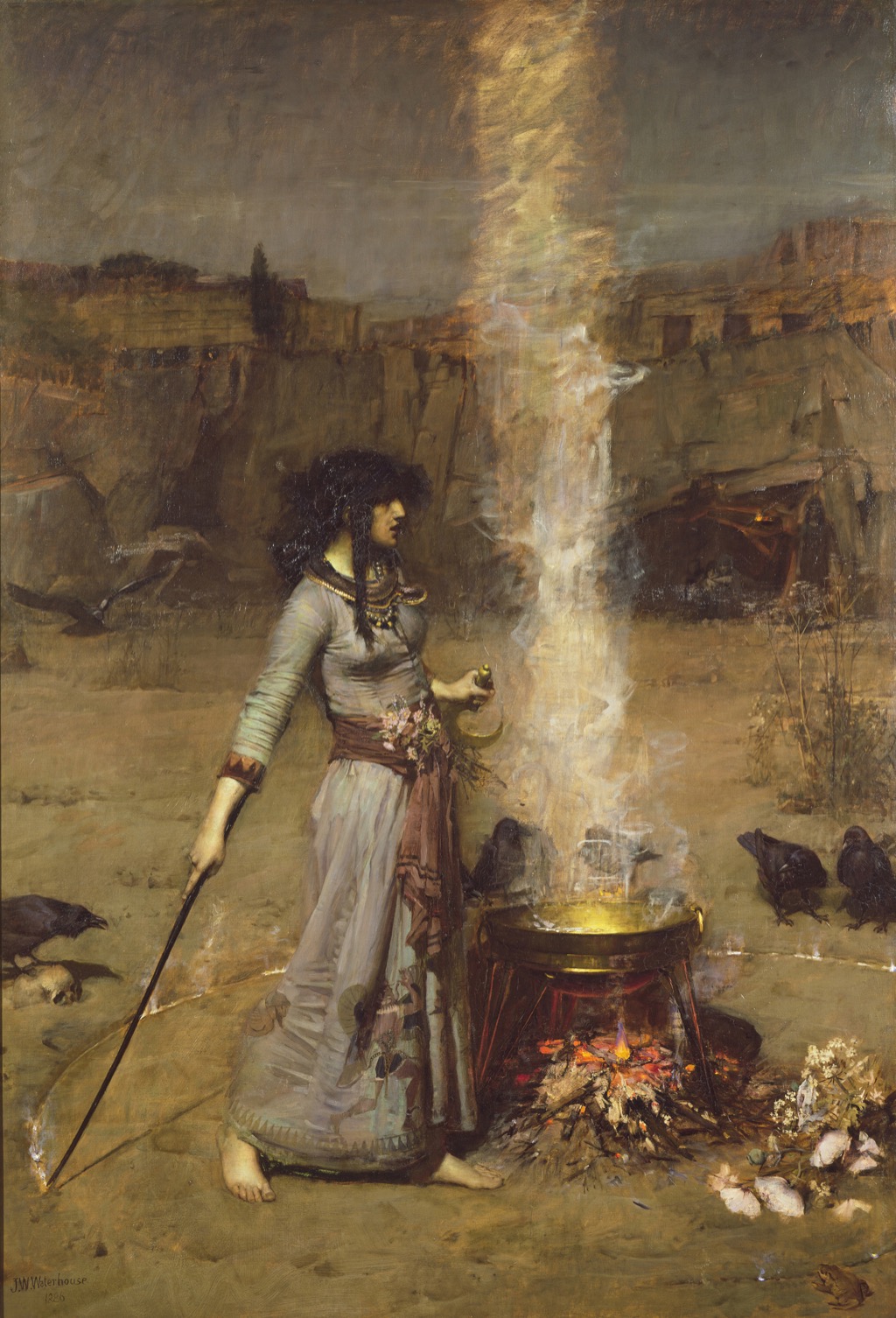
- The Magic Circle: Compare Waterhouse's treatment of ritual and symbolism.
Frequently Asked Questions
He signed and dated it in 1908. It was exhibited at the Royal Academy that year as catalogue number 78. [1]
It is frequently called My Sweet Rose. The accessible object and exhibition record cited here establishes The Soul of the Rose as the 1908 title; the origin and date of the alternative title require further documentation.
Probably. The exact phrase “the soul of the rose” appears in the garden lyric within Tennyson’s Maud, and Waterhouse repeatedly painted Tennysonian subjects. [2] No surviving statement cited here records Waterhouse explicitly naming the poem for this picture, so the relationship is strong but not a complete documented commission brief.
Modern catalogue scholarship also connects the picture with the medieval Roman de la Rose tradition, in which a lover enters a walled garden and desires a rose representing the beloved. [1] [3] That tradition helps explain the courtly costume and enclosed garden even if Tennyson supplied the title.
The model may have been Muriel Foster or Beatrice Ethel Hackman/Flaxman, but neither identity is securely proved by the evidence cited here. [1] The figure should not automatically be called Maud or treated as a portrait.
It is in a private collection. It was sold at Christie’s New York in October 2019, but the current owner is not publicly identified in the sources used here. [1] [10]
The oil on canvas measures 88 × 59.1 cm, or 34 5/8 × 23 1/4 inches. [1]
Yes. A study in a private collection shows a more plainly dressed dark-haired girl in a related pose. The differences demonstrate substantial development before the finished canvas. [1]
Love, beauty, sensual experience and transience are reasonable associations, but Waterhouse left no fixed symbolic key. In this painting the rose’s most important function is active: its scent appears to trigger an inward experience.
Its red-haired figure, literary atmosphere, rich surface and medievalising garden continue aspects of the Pre-Raphaelite legacy. Waterhouse was not a member of the original Brotherhood; by 1908 he was a senior Royal Academician developing those inheritances through a looser and more selective late style. [8]
Discussion
The Soul of the Rose asks viewers to construct a story from an action shared by almost everyone. Smelling a flower may be ordinary; closing the eyes makes it private; a literary title turns privacy into possible desire. The painting’s emotional depth lies in the distance between those stages.
Reader Insights
Does the picture become more convincing when read through Tennyson’s Maud, through the medieval Roman de la Rose, or through both?
Does the wall protect the woman’s experience, separate her from what she wants or simply make the pose possible?
Does the absence of a visible lover make the figure more independent, or does the title make an unseen relationship even more powerful?
Join the Conversation
Describe the first detail that makes the painting feel like more than a portrait: the living stem, tiled wall, closed eyes, patterned gown or something less obvious.
References
- Christie’s, “John William Waterhouse, R.A., The Soul of the Rose,” object record and catalogue essay prepared with the assistance of Peter Trippi, including dimensions, signature, provenance, exhibition history, bibliography, model proposals and analysis. View source
- Alfred Tennyson, Maud, and Other Poems, including the garden lyric containing the phrase “the soul of the rose,” Project Gutenberg edition. View source
- University of Chicago Library, “Le Roman de la Rose (The Romance of the Rose),” account of MS 1380, the walled garden, the Lover and the Rose; with Guillaume de Lorris and Jean de Meun’s courtly-love framework. View source
- National Portrait Gallery, London, “John William Waterhouse (1849–1917), Figure Painter,” biographical record including Rome, London, Royal Academy and studio chronology. View source
- Sotheby’s, “John William Waterhouse, R.A., R.I., Gather Ye Rosebuds While Ye May,” catalogue essay on the late flower-women, Henderson collecting and the 1908 Soul of the Rose. View source
- A. L. Baldry, “Some Recent Work by Mr. J. W. Waterhouse, R.A.,” The Studio, vol. 53, 1911, pp. 176–184, Heidelberg University Library digitisation. View source
- R. E. D. Sketchley, “The Life and Work of Mr. J. W. Waterhouse, R.A.,” Art Annual: The Christmas Number of The Art Journal, London, 1909, cited and bibliographically described in the Christie’s object record. View source
- Elizabeth Prettejohn, Peter Trippi, Robert Upstone and Patty Wageman, J. W. Waterhouse, 1849–1917: The Modern Pre-Raphaelite, exhibition-catalogue and retrospective record, University of Bristol Research Portal, 2008. View source
- Geoffrey Chaucer, Chaucer’s Works, Volume 1: Romaunt of the Rose; Minor Poems, edited by Walter W. Skeat, Project Gutenberg. View source
- Christie’s, “John William Waterhouse, The Rose Bower,” catalogue account of the late flower-women and the documented 2019 sale of The Soul of the Rose. View source