

 by Tom Gurney
Tom Gurney BSc (Hons) is an art history expert with over 20 years experience
Published on August 14, 2026 / Updated on August 14, 2026
Email: tomgurney1@gmail.com / Phone: +44 7429 011000
After the Dance: Introduction
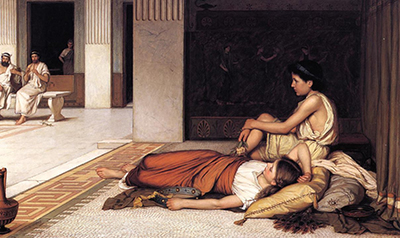
John William Waterhouse's After the Dance shows two young figures resting on cushions in a classical interior while musicians remain visible in the background. A tambourine lies beside the reclining dancer; another figure sits upright holding a small flower. The entertainment continues somewhere beyond them, but the painting concentrates on its aftermath: fatigue, quiet attention and temporary withdrawal.
Painted in 1876, the large horizontal oil measures 76.2 × 127 cm and is privately owned. [1] It was prominently displayed at the Royal Academy that year and received early critical notice. [2] [3] The figures' genders were described differently by contemporary writers, so the manuscript should preserve that uncertainty rather than impose modern confidence on the image.
At a Glance
- ArtistJohn William Waterhouse
- TitleAfter the Dance [1]
- Date1876 [1]
- MediumOil on canvas [1]
- Dimensions76.2 × 127 cm [1]
- CollectionPrivate collection [1]
- ExhibitedRoyal Academy, London, 1876 [2]
- SettingAn imagined classical interior or atrium
- SubjectTwo young people resting after dancing, with musicians beyond
- Critical uncertaintyContemporary descriptions differed over whether the foreground pair were two girls or a boy and girl [3]
Contents
- Introduction
- What the painting shows
- An aftermath rather than a performance
- The reclining figure
- The seated companion and flower
- Tambourine, lyre and aulos
- Classical architecture and imagined antiquity
- Gender uncertainty and critical response
- Composition, colour and mood
- The 1876 Royal Academy moment
What the painting shows
Two youthful figures occupy the foreground of a broad classical room. One reclines almost horizontally across cushions on a tessellated or patterned floor.
Warm orange or terracotta drapery covers the lower body. A tambourine lies close by, making the completed dance visible through its abandoned instrument.
The second figure sits upright with knees raised or folded. A small yellow flower is held in one hand.
This seated companion turns towards the reclining figure or the spectator depending on how the reproduction is read.
At the far left or in a shadowed background space, musicians continue to perform. A lyre and double pipe or aulos identify their activity.
Another man may stand behind or near them, partly absorbed into darkness.
Columns, wall panels and an opening towards an atrium or court create an antique setting.
Waterhouse keeps the foreground open enough for the resting bodies to dominate. The musicians are smaller and spatially separate.
That division produces two times within one image: ongoing public entertainment and private recovery after exertion.
The title directs attention towards the second. We do not see the dance itself, only the physical and emotional trace it leaves.
The canvas is not a mythological illustration. No named ancient character or literary source is securely attached to the figures.
An aftermath rather than a performance
Waterhouse chooses the interval when spectacle has passed. This was an unusual and psychologically productive decision.
A dance would offer movement, display and social interaction. Its aftermath permits stillness, fatigue and ambiguous intimacy.
The tambourine has stopped even though background instruments continue. The foreground figures have left the collective rhythm.
Their rest may be ordinary exhaustion. It may also suggest melancholy after excitement or a private bond within a crowded gathering.
The painting gives no evidence of intoxication, illness or romantic confession. Such narratives should not be invented from relaxed poses alone.
“After” also makes the unseen event imaginatively active. Viewers reconstruct dance from the instrument, drapery and bodies.
This temporal structure resembles theatre after a scene change: performers remain present while action has moved elsewhere.
The seated companion's attention gives the pause social meaning. One figure rests; the other watches or waits.
The background prevents complete silence. Music continues, reminding us that their withdrawal is temporary and local.
The title can therefore be read spatially as well as temporally. “After the dance” is a quieter zone beside an event still occurring beyond the frame.
Waterhouse makes the marginal moment central. Instead of painting entertainment's public peak, he explores what display costs the body.
The reclining figure
The reclining youth stretches along the canvas and determines its horizontal rhythm.
Head and torso are supported by cushions, while one arm may be raised or relaxed near the face.
Orange cloth draws the eye across the lower body and links figure to the warm interior palette.
The nearby tambourine identifies a plausible dancer, although it does not prove that only this figure performed.
Closed or lowered eyes suggest rest. The face does not dramatise collapse.
Waterhouse makes vulnerability visible without depicting danger. The body is unguarded, but a companion remains close.
The pose belongs to a long classical and academic tradition of reclining figures. It gave students an opportunity to demonstrate anatomy, foreshortening and drapery.
A later critic described After the Dance as an academic figure study rather than a dramatic illustration. [3]
That observation need not diminish the work. Formal study and narrative suggestion reinforce one another.
The extended body creates a calm line against vertical columns and wall edges. Its relaxation is carefully constructed.
Because the figure's gender was disputed by contemporary descriptions, pronouns should be used cautiously. Costume and youthful facial type did not produce a single agreed reading even in Waterhouse's own era. [3]
The uncertainty also reveals how idealised classical bodies could soften modern gender markers.
The seated companion and flower
The upright figure provides a counterweight to the recumbent body. Bent knees and vertical torso create a compact shape.
A yellow flower appears in the hand. It is small, easily overlooked and open to several meanings.
At the simplest level, the flower is an object handled during waiting. It gives the fingers a quiet task after dance.
It may suggest youth, beauty or the short duration of pleasure. Nothing in the title confirms a coded species or specific myth.
The companion's gaze is more alert than the recliner's. This creates care, curiosity or inward thought.
If the pair are a boy and girl, the scene may invite a gentle romantic reading. If two girls, it can suggest companionship among dancers.
Waterhouse does not make either interpretation essential. The emotional relation is conveyed through proximity and contrast.
The seated figure is still but not fully at rest. Upright posture remains connected to the music beyond.
The flower marks a second kind of aftermath. Like dance, a cut bloom offers intense but temporary pleasure.
It should not be turned into a declaration of love without evidence. Its visual role is secure even when symbolic meaning remains open.
Warm skin, pale garment and yellow bloom help bring the figure forward against the darker background.
The companion becomes the viewer's intermediary: awake enough to witness the sleeping or resting body, yet silent about what the moment means.
Tambourine, lyre and aulos
Music is represented through at least three instrument types: the tambourine beside the foreground figure, a lyre and a double pipe or aulos in the background. [3]
The instruments distinguish participant from accompanist. The tambourine can be carried into dance; lyre and aulos support performance from a fixed group.
The aulos was a prominent ancient Greek wind instrument consisting of pipes played with reeds. It should not be casually called a modern flute.
The lyre supplies strings and visual association with Apollo, poetry and cultivated music. The painting does not depict the contest of Apollo and Marsyas or another named myth.
Together the instruments create an imagined classical soundscape.
They also structure depth. Silent tambourine lies close; continuing instruments recede into shadow.
This arrangement turns sound into distance. The viewer imagines music still audible but no longer commanding the foreground bodies.
Waterhouse did not need to paint dancing figures because the equipment makes prior movement legible.
The tambourine's circular form contrasts with floor geometry and elongated pose. It functions as both narrative clue and design element.
Ancient accuracy is approximate. Tambourine-like frame drums, lyres and auloi belonged to Mediterranean musical culture, but the scene is an artistic synthesis rather than documented reconstruction of one ritual.
The group could be entertaining a household, feast or festival. No specific event is identified.
Music is therefore atmosphere and temporal evidence, not a key to a lost literary source.
Classical architecture and imagined antiquity
Columns, patterned floor, wall painting and open court place the scene in a classical interior.
The setting has often been called Roman, while contemporary criticism could describe the figures as Greek. [3]
Those labels reflect the broad classical vocabulary of Victorian painting rather than a securely identified building.
Waterhouse visited Italy in 1876 and made studies connected with Pompeian frescoes and architecture, according to Sotheby's later account of his development. [4]
The trip's exact timing relative to every stage of After the Dance should not be assumed. The work nevertheless belongs to the moment when ancient domestic space became increasingly important to him.
The interior is comparatively restrained. Later classical genre pictures would multiply marble, props and archaeological detail.
Here architecture establishes order and depth without overwhelming the figures.
The patterned floor provides a stable plane beneath bodies whose relaxed poses could otherwise seem weightless.
An open court suggests Mediterranean light beyond shadow. This transition separates public music from foreground rest.
Wall panels and columns also frame the pair like a stage. Antiquity becomes theatre for a modern study of exhaustion and intimacy.
The scene should not be labelled a surviving image of real ancient dance practice. It is a Victorian reconstruction shaped by Academy training and current taste.
Its credibility comes from coherent props, not documentary completeness.
Gender uncertainty and critical response
Contemporary writers did not agree about the foreground figures. An 1876 review in The Art Journal saw two Greek girls, while John Blaikie in The Magazine of Art in 1886 described a boy and girl. [3]
This difference is valuable primary reception evidence. It shows that gender ambiguity is not merely a result of poor modern reproductions.
Waterhouse's youthful faces, classical dress and softened bodies permitted more than one reading.
The disagreement affects narrative. A mixed pair might be interpreted romantically; two girls might be read as fellow performers resting together.
Neither contemporary description has automatic authority over the artist's intention.
The safest public wording is “two young figures,” followed by the documented history of divergent readings.
Blaikie's later account treated the painting as essentially an academic study of figures rather than a dramatic story. [3]
That view reflects Waterhouse's early reputation, before critics associated him with psychologically charged heroines.
The work's prominent Royal Academy hanging in 1876 ensured visibility for such discussion. [2] [3]
Early review attention indicates growing recognition, but it should not be exaggerated into universal acclaim.
Reception also changes. Modern viewers may focus on gender, intimacy or the division between performers and musicians in ways Victorian critics did not.
Publishing the disagreement invites interpretation without pretending certainty.
Composition, colour and mood
The 127-centimetre width gives Waterhouse room to separate foreground rest from background music. [1]
The reclining body forms the principal horizontal. Columns and seated torso provide vertical interruption.
Diagonal limbs and cushion edges mediate between those axes.
Terracotta or orange cloth supplies warmth near the centre. Pale garments and skin catch softer light.
The musicians occupy darker tones, making their ongoing activity visually secondary.
This reversal is essential. Action recedes; stillness comes forward.
The patterned floor carries the eye across the composition and establishes classical order beneath informal bodies.
Waterhouse's handling is more academic and less freely atmospheric than in his late work. Figure modelling and architectural clarity are central.
Yet mood is already important. The work is not merely an inventory of costumes and instruments.
Light falls gently rather than theatrically. No supernatural glow or violent contrast signals crisis.
The emotional note is difficult to name: tiredness, companionship, post-performance melancholy and sensual ease all remain possible.
That ambiguity makes the simple title effective. It gives a temporal frame without dictating feeling.
The 1876 Royal Academy moment
The Royal Academy's contributor dictionary lists Waterhouse's After the Dance in 1876. [2]
Later accounts state that the picture received a prominent hanging, an important advantage within the crowded Summer Exhibition. [3]
Waterhouse was only twenty-seven and had first exhibited at the Academy two years earlier with Sleep and His Half-Brother Death.
The 1876 canvas demonstrated increasing scale and confidence in a multi-figure classical interior.
An early notice in the Illustrated London News indicates that the work attracted press attention. [5]
The Academy context shaped how it was viewed. Spectators encountered the painting among hundreds of contemporary works and from varying distances.
Its broad format and pale foreground figures would help distinguish it on the wall.
Close inspection then revealed the flower, instruments and ambiguous relation between the pair.
Prominent hanging should not be confused with a prize or formal rank unless documented. It is evidence of favourable placement.
The exhibition also anchors the painting's public history despite its current private ownership.
It marks a point before Waterhouse's major institutional successes of the 1880s, when Tate and other collectors acquired his dramatic narratives.
Place in Waterhouse's early career
After the Dance sits between Waterhouse's earliest Orientalist and allegorical experiments and his later domestic classical scenes.
It retains the academic interest in posed bodies evident in Sleep and His Half-Brother Death.
It anticipates the antique interiors of A Sick Child Brought into the Temple of Aesculapius, Dolce Far Niente and A Grecian Flower Market.
Sotheby's describes Waterhouse's late-1870s transition from the influence of Gérôme towards Lawrence Alma-Tadema and everyday Roman life. [4]
After the Dance already treats antiquity as lived space rather than only mythic stage.
Its theme of withdrawal also anticipates mature Waterhouse women who sleep, listen, read or turn inward.
The difference is that the foreground here remains socially paired and the narrative unnamed.
The painting is not Pre-Raphaelite in the strict historical sense. Waterhouse's later literary affinities should not erase his Academy classicism.
Nor is it only derivative. Selecting the exhausted interval after performance gives the familiar antique genre a distinct emotional focus.
The work demonstrates how his career developed through changing combinations of figure study, historical setting and suggestive title.
Rest, performance and social space
The division between foreground and background can be read as a map of participation. Musicians remain professionally or ceremonially engaged, while the dancers have claimed a temporary zone of rest. The painting does not explain whether the musicians are servants, hired performers, household members or guests. Their smaller scale nevertheless makes continuing labour support foreground leisure.
This is important because “after the dance” is not after all work. Sound continues to be produced for someone beyond the resting pair. Waterhouse selects the bodies released from performance and leaves the bodies maintaining it in shadow. The resulting calm depends on activity displaced elsewhere.
The classical interior makes that hierarchy seem timeless, but it would have been legible within Victorian entertainment. Musical accompaniment, social dance and domestic service all organised classed spaces. Waterhouse need not illustrate a modern ballroom for the relation between performer, guest and rest to resonate.
The floor strengthens this reading. Its geometric surface belongs to the building and remains ordered while human bodies loosen across it. Cushions create a temporary softer territory within the hard architecture. Rest is therefore not a complete escape from social structure; it is accommodated inside it.
The small flower held by the upright figure adds another kind of attention. Hands that may recently have danced now handle something fragile and stationary. The shift from coordinated public movement to private touch is one of the painting's quietest transitions.
How to look at the composition
Begin with the longest line: the recumbent body. It draws the eye laterally until the seated companion interrupts the movement with compressed knees and upright torso. From there, architecture lifts sight towards the darker musicians before floor pattern returns it to the foreground.
This circuit makes time repeat. The eye moves from completed dance to continuing music and back again. Waterhouse has not merely placed a background anecdote behind a figure study; he has designed an exchange between states.
Next compare objects by sound. Tambourine, lyre and aulos would produce different textures, but only the distant instruments remain active. The silent circular drum near the body becomes an emblem of completed exertion. Its proximity lets viewers imagine the exact moment it was set down.
Finally, resist forcing expression. Low-resolution reproductions invite confident labels such as asleep, sad or protective. Pose and spatial relation provide firmer evidence than a pixelated face. The foreground pair share a quieter interval, and Waterhouse allows the quality of that sharing to remain open.
This close-looking approach also clarifies why contemporary gender disagreement matters. [3] The composition communicates companionship before identity. Whether two girls or a boy and girl, one figure rests and another remains attentive; that structural relation survives the uncertainty.
Related Pages
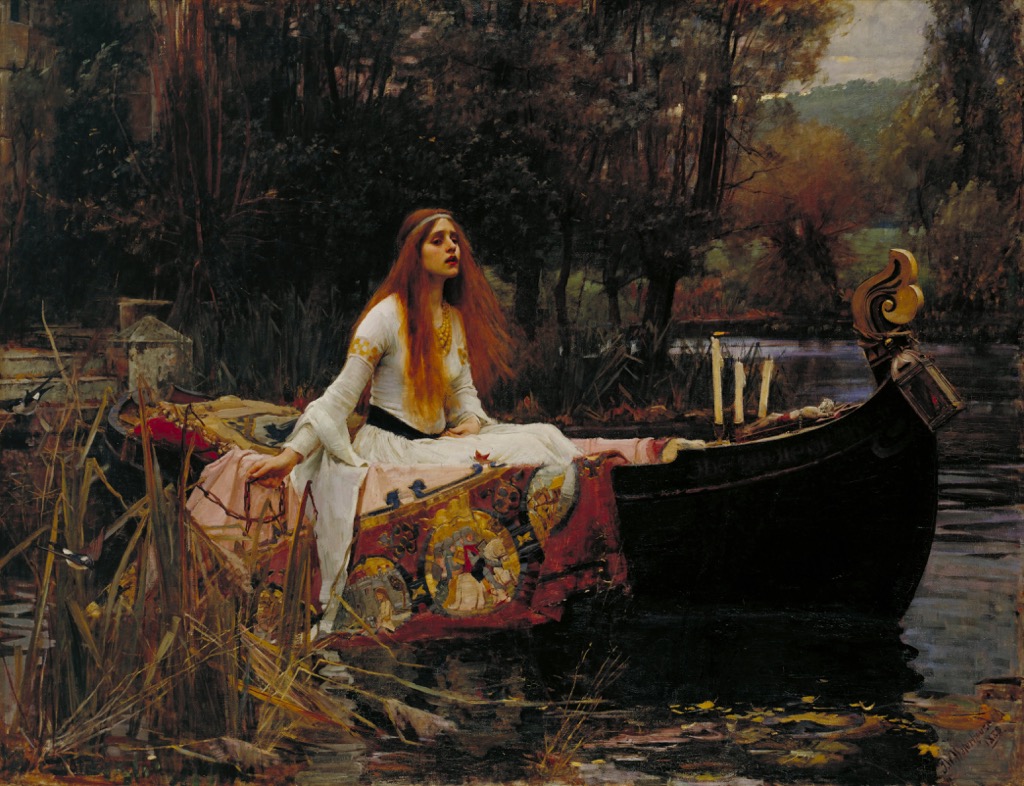
- The Lady of Shalott: Compare Waterhouse's best-known literary composition.
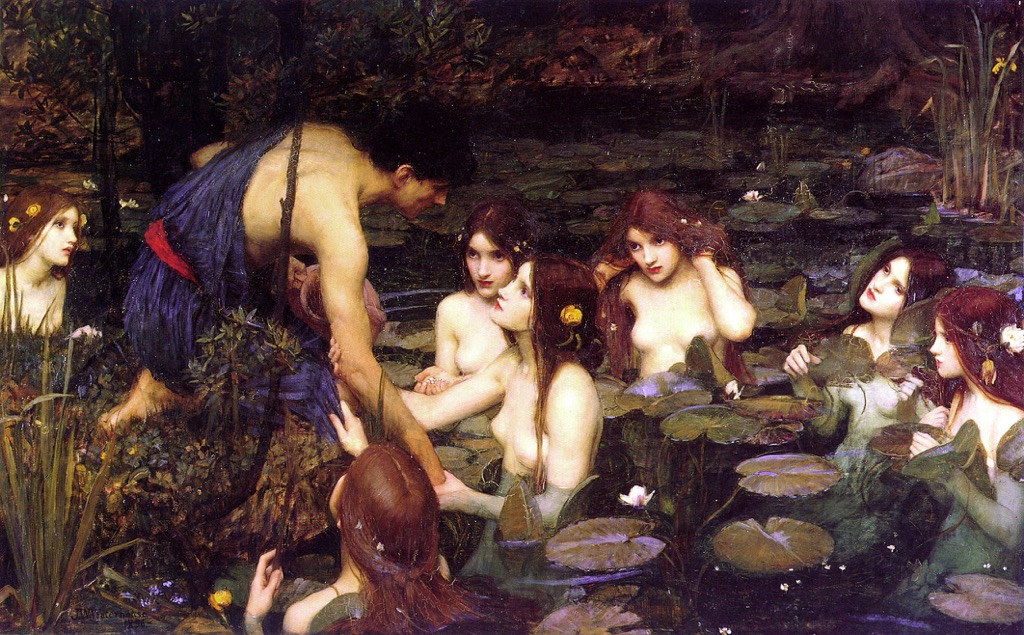
- Hylas and the Nymphs: Compare another major mythological scene.
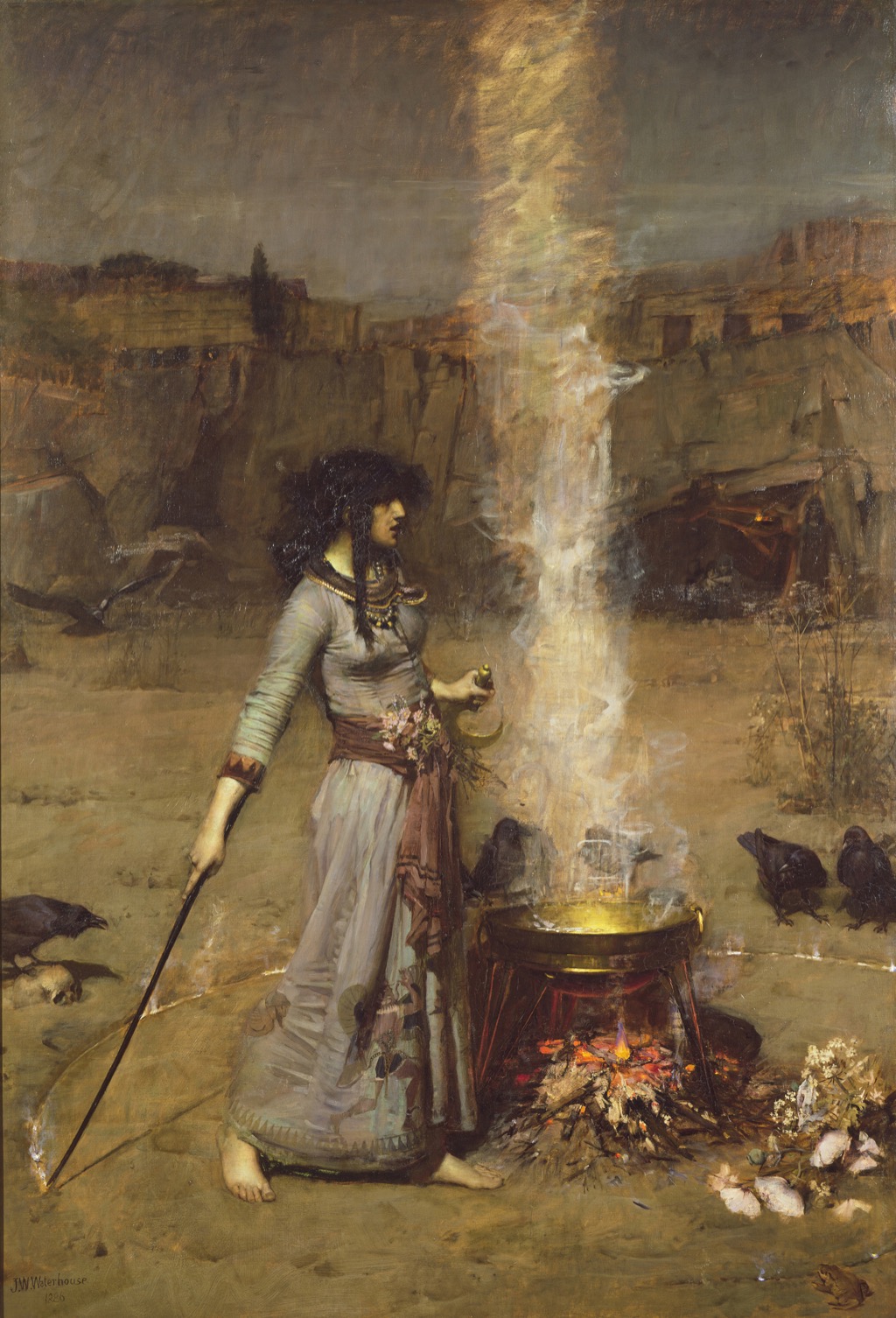
- The Magic Circle: Compare Waterhouse's treatment of ritual and symbolism.
Frequently Asked Questions
It is recorded in a private collection. [1]
The oil measures 76.2 × 127 cm. [1]
Possibly, but contemporary viewers disagreed. The Art Journal described two Greek girls; a later Magazine of Art account called them a boy and girl. [3]
A tambourine lies in the foreground, while musicians with a lyre and an aulos or double pipe appear beyond.
No specific myth or literary source is documented. It is an imagined classical genre scene centred on rest after dance.
Discussion
The painting's most modern quality may be its interest in what follows performance. Waterhouse does not give us the dance's ideal public body; he shows bodies that have stopped, loosened and become difficult to categorise.
Music continues in the background, so the foreground pause is not complete escape. The resting figures remain within a social event but temporarily outside its demands.
Reader Insights
Which visible detail most changes the way you read this page?
Which source or comparison helps the work feel less familiar and more specific?
What question would you bring back to the painting after reading?
Join the Conversation
Share your reading of this page below.
References
- Wikimedia Commons, “John William Waterhouse: After the Dance,” object and image metadata, recording 1876, oil on canvas, 76.2 × 127 cm, private collection. View source.
- Algernon Graves, The Royal Academy of Arts: A Complete Dictionary of Contributors and Their Work from Its Foundation in 1769 to 1904, entry for John William Waterhouse and After the Dance, 1876. View source.
- John William Waterhouse: The Importance of Being Unimportant, object entry for After the Dance, reproducing contemporary gender descriptions and prominent-hanging context. View source.
- Sotheby's, “John William Waterhouse: Offerings,” catalogue note discussing his 1876 Italian studies and transition in early classical work. View source.
- Jessica Frick, J. W. Waterhouse (1849–1917): Eine Studie zur Rezeption, Heidelberg University, discussion of the Illustrated London News review record beginning with After the Dance in 1876. View source.