

 by Tom Gurney
Tom Gurney BSc (Hons) is an art history expert with over 20 years experience
Published on August 14, 2026 / Updated on August 14, 2026
Email: tomgurney1@gmail.com / Phone: +44 7429 011000
The Love Philtre: Introduction
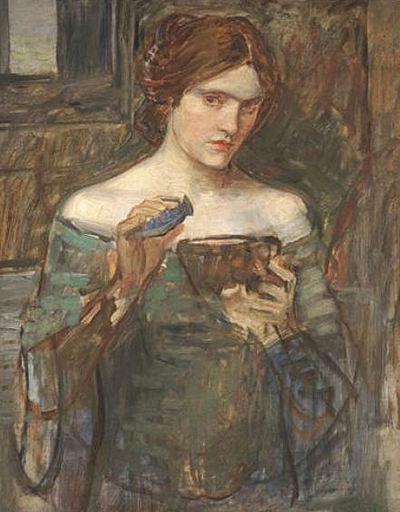
John William Waterhouse's The Love Philtre isolates a woman at the instant of preparation. Bare-shouldered in a green dress, she studies the small vessels in her hands: a cup in one, a blue container in the other. The surrounding interior is loosely stated, leaving colour, gesture and concentration to carry the subject.
The picture was once dated to about 1914, but its close relationship to Waterhouse's Jason and Medea, exhibited in 1907, has led to the more persuasive suggestion that it belongs around that earlier date. [1] An inscription on the reverse supplies the title. That documentary name is secure; the exact narrative identity and intended relationship to the larger composition require more care.
At a Glance
- ArtistJohn William Waterhouse
- TitleThe Love Philtre [1]
- Probable dateAbout 1907; formerly dated about 1914 [1]
- MediumOil on canvas [1]
- Dimensions58.5 × 45.5 cm [1]
- InscriptionTitled and signed on the reverse, “The Love Philtre. J. W. Waterhouse” [1]
- CollectionPrivate collection; present location not publicly established [2]
- SubjectA woman holding a cup and small vessel, probably related to Waterhouse's conception of Medea
- Related paintingJason and Medea, exhibited at the Royal Academy in 1907 [1]
- Important distinctionThe title does not identify a specific literary episode or prove that this was the final independent composition Waterhouse first intended
Contents
- Introduction
- What the painting shows
- Dating the picture
- The relationship to Jason and Medea
- Cup, vessel and philtre
- Medea, magic and agency
- Dress, colour and unfinished handling
- An image without Jason
- Studies, variants and artistic decisions
- Ownership and modern rediscovery
What the painting shows
A young woman occupies most of a vertical canvas. Her auburn hair is drawn back from her face, exposing the neck and shoulders. Green fabric wraps the body and drops in broad, broken folds.
She looks down and slightly across, attending to what she holds rather than addressing the viewer. One hand raises a small blue vessel or vial; the other supports a shallow cup.
The relationship between the objects is the action. The picture does not show liquid visibly pouring in a continuous stream, so the safest description is that she prepares, measures or contemplates a drink.
Her arms establish a compact circuit. Face, vessel, cup and hands form a small area of concentration against the looser garment and dark ground.
No second figure is visible. There is no armoured Jason, no palace architecture and no elaborate apparatus of ritual. The title supplies “love” and “philtre”; the visible evidence supplies a woman, two containers and sustained attention.
The handling is broad enough for canvas and brushstroke to remain apparent. This is not the hard, fully resolved finish of Waterhouse's major exhibition paintings.
It should nevertheless not be dismissed as a casual oil sketch. The figure, colour scheme and psychological action are coherent, and the reverse inscription gives it an independent title. [1]
Dating the picture
Anthony Hobson catalogued The Love Philtre at about 1914. The later Sotheby's catalogue reconsidered that placement because the figure relates closely to Medea in Jason and Medea, a painting Waterhouse exhibited in 1907. [1]
About 1907 is consequently the more useful working date, but it should remain approximate. Visual relationship establishes sequence imperfectly, and a reverse inscription does not itself include a year.
The dating question is more than a cataloguing detail. A 1907 placement makes the picture part of Waterhouse's active search for the final Medea composition rather than a late return to the subject seven years afterwards.
That interpretation is supported by the survival of other variant studies for the female figure. Their differences suggest that Medea was developed independently before the two-figure arrangement with Jason was settled. [1]
The older c.1914 date should not be erased from the manuscript. It belongs to the work's catalogue history and explains why readers may find conflicting dates in print or online.
Nor should the revised date be converted into “1907” without qualification. The evidence supports proximity to the Royal Academy painting, not a signed calendar date.
Responsible metadata can therefore read “c.1907; formerly catalogued c.1914.” This communicates both the current judgement and its evidential basis.
The relationship to Jason and Medea
In Waterhouse's completed Jason and Medea, the sorceress sits at a stone bench preparing a liquid while Jason leans towards her in armour. A brazier, patterned floor and carefully arranged vessels make the action public and narratively specific.
The woman in The Love Philtre shares Medea's downward concentration, reddish hair, exposed shoulder and work with a cup. These affinities make a Medea connection persuasive. [1]
The smaller picture is not simply a reduced copy. It removes Jason and most of the setting, turns the body more directly towards the viewer and lets green drapery replace the larger painting's architectural environment.
It may record one route through which Waterhouse arrived at the final figure. It may also have been retained or titled as a saleable independent picture after the larger design changed.
Neither possibility is documented as the artist's spoken intention. “Study related to Jason and Medea” is stronger than “the original rejected version” unless further studio evidence is found.
The comparison reveals what Jason's addition does. In the Royal Academy painting, his gaze places pressure on Medea's action: the potion is being made for a man who watches and depends upon it. Here the woman works alone, and the viewer cannot know who will receive the cup.
The title also differs. Jason and Medea names two people; The Love Philtre names an object and its purpose. Personal narrative gives way to the concentrated idea of desire made material.
Cup, vessel and philtre
A philtre is a drink or preparation believed to create or alter love. The word carries the promise that emotion might be induced through matter rather than persuasion.
Waterhouse makes that transformation imaginable by putting two small objects close together. The blue vessel suggests an ingredient or concentrate; the cup suggests mixing, offering or drinking.
Their scale is important. A love philtre capable of redirecting a life occupies only a few centimetres of painted space. The disproportion between physical size and imagined consequence creates tension.
The cup is not visibly at another person's lips. The image therefore holds open whether the woman is compounding, testing, presenting or merely contemplating the mixture.
There is also no written recipe, labelled bottle or recognisable historical instrument. It would be misleading to describe an exact ancient pharmacological practice from this poetic arrangement.
The blue of the small vessel is one of the canvas's strongest accents. Against green cloth and warm skin it becomes conspicuous enough to guide the eye even before the title is known.
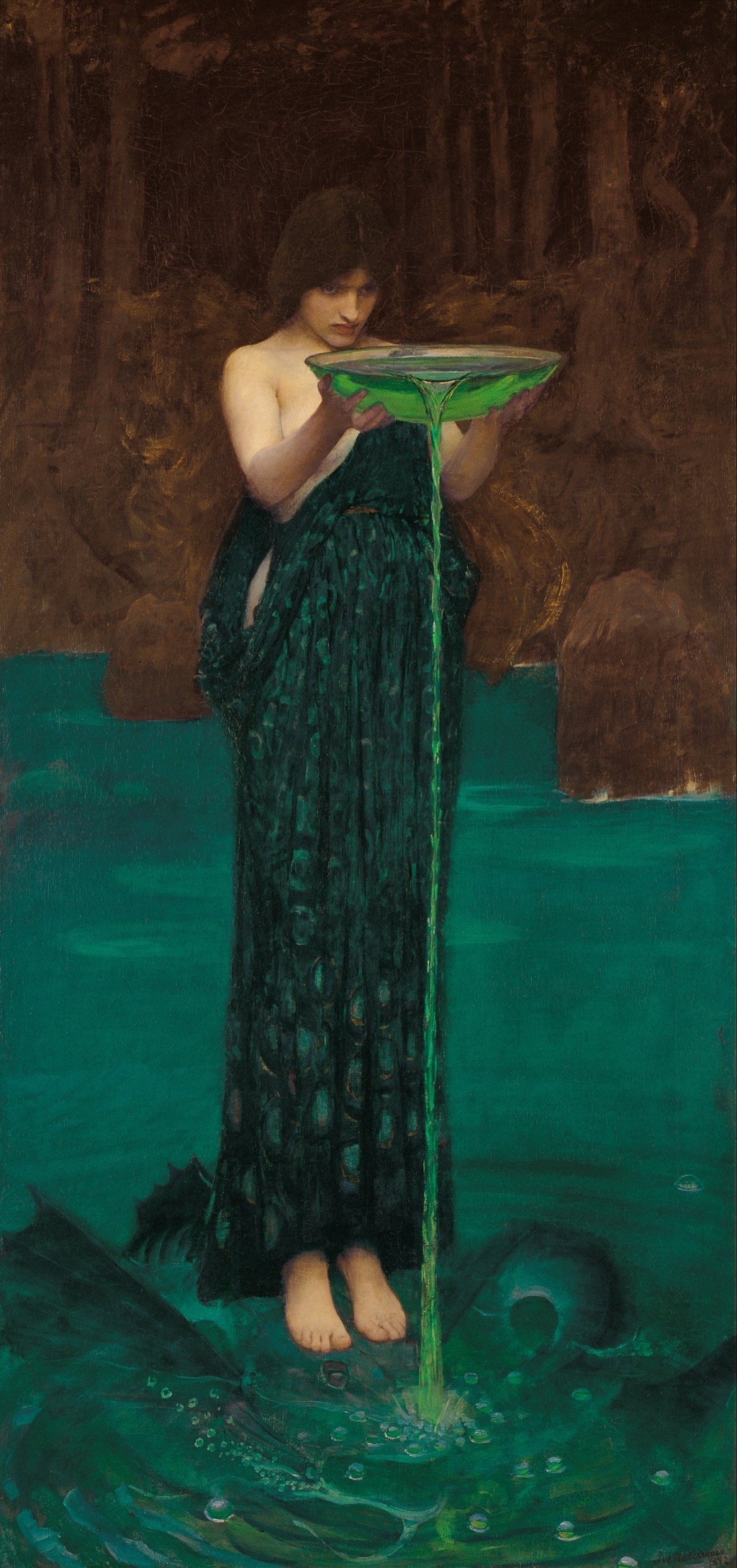
Waterhouse had repeatedly made containers into narrative hinges. Circe's cup transforms men; Psyche's box releases supernatural sleep; Pandora's casket opens onto suffering. In each case, a beautiful object concentrates invisible force.
The Love Philtre is quieter. No effect appears. Everything remains potential, contained between a hand and a cup.
Medea, magic and agency
Medea's assistance to Jason in Apollonius's Argonautica includes protective drugs and magical knowledge enabling him to face the fire-breathing bulls and the earthborn warriors. [3]
That substance is not straightforwardly a “love philtre.” Medea herself has been made to desire Jason through divine intervention; the preparation she gives him protects his body during the trials.
Waterhouse's reverse title therefore need not identify one literal sentence in Apollonius. Victorian visual culture could join Medea, magic, vessels and erotic danger more freely.
The distinction matters because a careless account reverses agency. Medea is not simply a seductress administering desire to Jason in the ancient narrative. She is also a young woman whose own desire is manipulated by gods and whose knowledge makes Jason's success possible.
In the painting, solitude restores some authority. The woman is neither observed by Jason nor reduced to an accessory in his heroic trial. Her eyes, hands and knowledge organise the whole image.
Yet power remains ambiguous. A philtre suggests control over another person's affection, while Medea's wider story exposes how little control she ultimately has over betrayal and consequence.
Waterhouse does not settle that ethical question. He gives no recipient and no result. The visible moment is one of competence before use.
It is therefore better to discuss Medea as a probable context than to caption the scene “Medea bewitching Jason.” The former follows visual and catalogue evidence; the latter invents an event.
Dress, colour and unfinished handling
Green dominates the picture. It appears in broad vertical and diagonal strokes across the dress, with darker bands articulating folds and a paler passage near the shoulder.
The exposed shoulders create a warm interval between hair and garment. They also bring the head and hands into one tonal family, separating living action from the enveloping cloth.
The dress is classicising rather than securely reconstructive. Its loosened neckline serves the figure's turning pose and Waterhouse's colour design more than archaeological demonstration.
Red-brown hair supplies a muted complement to green. The familiar pairing connects the work with Waterhouse's mature heroines without proving the identity of a recurring model.
Paint is thin or abbreviated in parts of the setting. Edges soften, and the lower garment is described through movement of tone rather than intricate pattern.
That openness can be evidence of the picture's developmental role. Waterhouse needed to establish pose, colour and relation of objects before investing in elaborate surroundings.
But “unfinished” should be used cautiously. The work was signed and titled on its reverse and entered collections as an independent object. [1] A study may be complete for the question it was made to answer.
The selective finish also benefits the subject. A perfectly inventoried room might distract from the minute act of preparation. Here nearly everything outside the hands recedes.
An image without Jason
The missing male figure distinguishes The Love Philtre from the familiar pattern in which a sorceress's power is defined by the hero she helps or threatens.
Without Jason, the viewer occupies no secure narrative position. We might be the intended recipient, an intruding witness or no one within the story at all.
The woman's gaze does not invite exchange. It closes the circuit around her task and creates psychological privacy.
This absorption is characteristic of Waterhouse's later women. The Missal's reader, the Lady of Shalott at her loom and Psyche at the golden box are made compelling through concentration on something other than the spectator.
The difference is that a philtre presumes another person even when none appears. Love is relational, and a prepared drink must eventually move from maker to drinker if it is to act.
Absence consequently becomes charged. The unseen beloved or target occupies the future of the picture, while Medea-like knowledge occupies its present.
The composition also resists easy moral judgement. A crowded narrative could display victim, deception and outcome. A solitary preparer offers only intent inferred from a title.
Waterhouse lets that uncertainty remain. Beauty and possible danger coexist without a theatrical warning sign.
Studies, variants and artistic decisions
Two other variant sketches for the figure were known to the Sotheby's cataloguer, one in a private collection and another sold in 1983. [1]
A separate Sotheby's provenance for Vain Lamorna records that the Henderson estate sold a “sketch for The Love Philtre” in 1950. [4] That description confirms that more than one object circulated under a preparatory relationship to the subject. It does not establish that the present canvas and the 1950 sketch are identical.
Together with The Love Philtre, they indicate that Waterhouse did not arrive at Jason and Medea through one fixed preparatory image.
Variants allow an artist to test the turn of a torso, the visibility of hands, the placement of vessels and the balance between independent figure and narrative group.
The final addition of Jason changes not merely the number of people but the direction of attention. His leaning body points towards Medea, while her work becomes the answer to his need.
The Love Philtre's upright format tests another possibility: a half-length sorceress capable of sustaining the picture alone.
It is tempting to arrange the surviving works into a precise chronological storyboard. The evidence does not warrant that confidence. Studies can be revisited, altered or retained after a finished picture has been exhibited.
What the group securely demonstrates is decision-making. Waterhouse's apparently effortless narrative scenes emerged from alternatives, not from the automatic repetition of a single formula.
The survival of the independent title confirms that at least one alternative acquired a life beyond the studio process.
This is why version control matters. A catalogue title, a related study and the completed Jason and Medea may all preserve different stages of a shared invention. Merging their dimensions, dates or provenance would create a composite object that never existed.
The present page should therefore keep three evidential layers visible: what can be seen in this canvas; what its reverse inscription names; and what comparison with the 1907 composition makes probable. The first two are object facts, while the third is a reasoned chronology.
Ownership and modern rediscovery
The picture was owned by William Hesketh Lever, whose collection also included several important Waterhouse works. Sotheby's later noted that The Love Philtre and An Al Fresco Toilet at Capri were sold in 1926. [2]
Its subsequent present location has not been publicly established in the principal records used here. “Private collection” is preferable to naming an owner from an old sale as if ownership had not changed.
The work appeared at Sotheby's in London on 13 July 2010, lot 39, where the revised dating and relationship to Jason and Medea were set out. [1]
Auction catalogues are especially important for privately held studies because they may reproduce inscriptions, reverse markings and comparison works inaccessible in museums.
They also require critical use. A sale date documents a market event, not the painting's original public reception, and an estimate or price does not measure artistic significance.
The 2010 catalogue's strongest contribution is not commercial. It records the reverse inscription and makes a reasoned chronological comparison.
Lever's ownership connects the picture with a major strand of Waterhouse collecting, but it does not prove that Lever commissioned it or received it directly from the artist. [2]
Place within Waterhouse's career
Around 1907 Waterhouse was revisiting powerful women from classical and literary tradition. Jason and Medea, Isabella and the Pot of Basil and Phyllis and Demophoon all place female action within narratives of desire, loyalty and betrayal.
The Love Philtre distils that concern. Architecture and male response fall away, leaving the hand that makes transformation possible.
Its broad handling also opens a valuable view into Waterhouse's process. The public often knows him through highly finished canvases; studies show how colour masses and gesture could precede detailed narrative setting.
The picture belongs beside, but not inside, the final Jason and Medea. Treating it as a distinct page allows readers to understand both its independence and its preparatory relationship.
Its independent scale also changes the experience of looking. The half-length figure is close enough for the vessels to feel manipulable and for the angle of her hands to become the principal drama. In the larger narrative canvas, those same details compete with Jason's armour, patterned architecture and a wider array of ritual objects.
Reduction is therefore not impoverishment. It exposes the visual nucleus from which the more elaborate story could grow: a knowledgeable woman, an unstable liquid and the interval before use.
It also forms part of a larger chain of Waterhouse images about controlled substances: Circe's wine, Medea's salve, Psyche's box and the Lady of Shalott's unbroken web all ask how material acts can change destiny.
Here destiny has not changed yet. The philtre remains divided between vessels, and the woman still owns the moment.
Related Pages
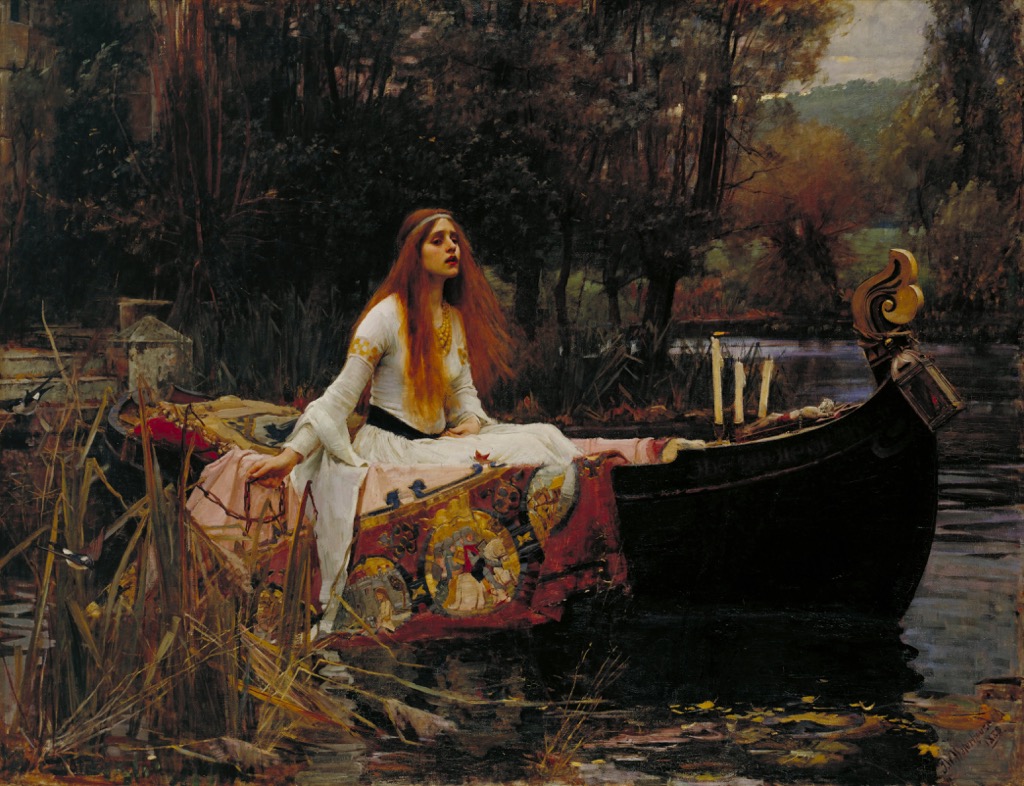
- The Lady of Shalott: Compare Waterhouse's best-known literary composition.
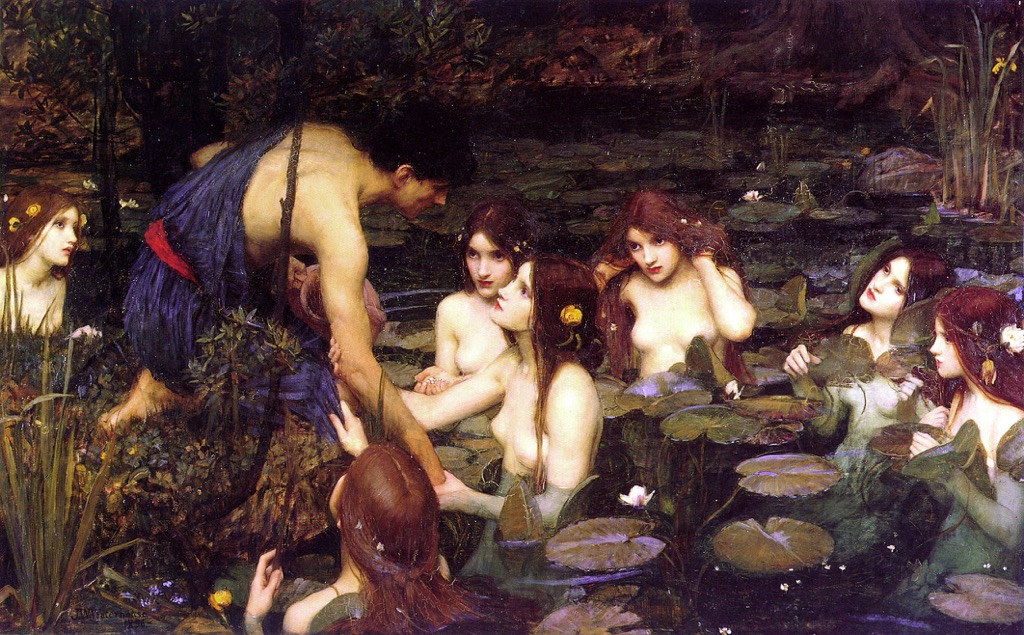
- Hylas and the Nymphs: Compare another major mythological scene.
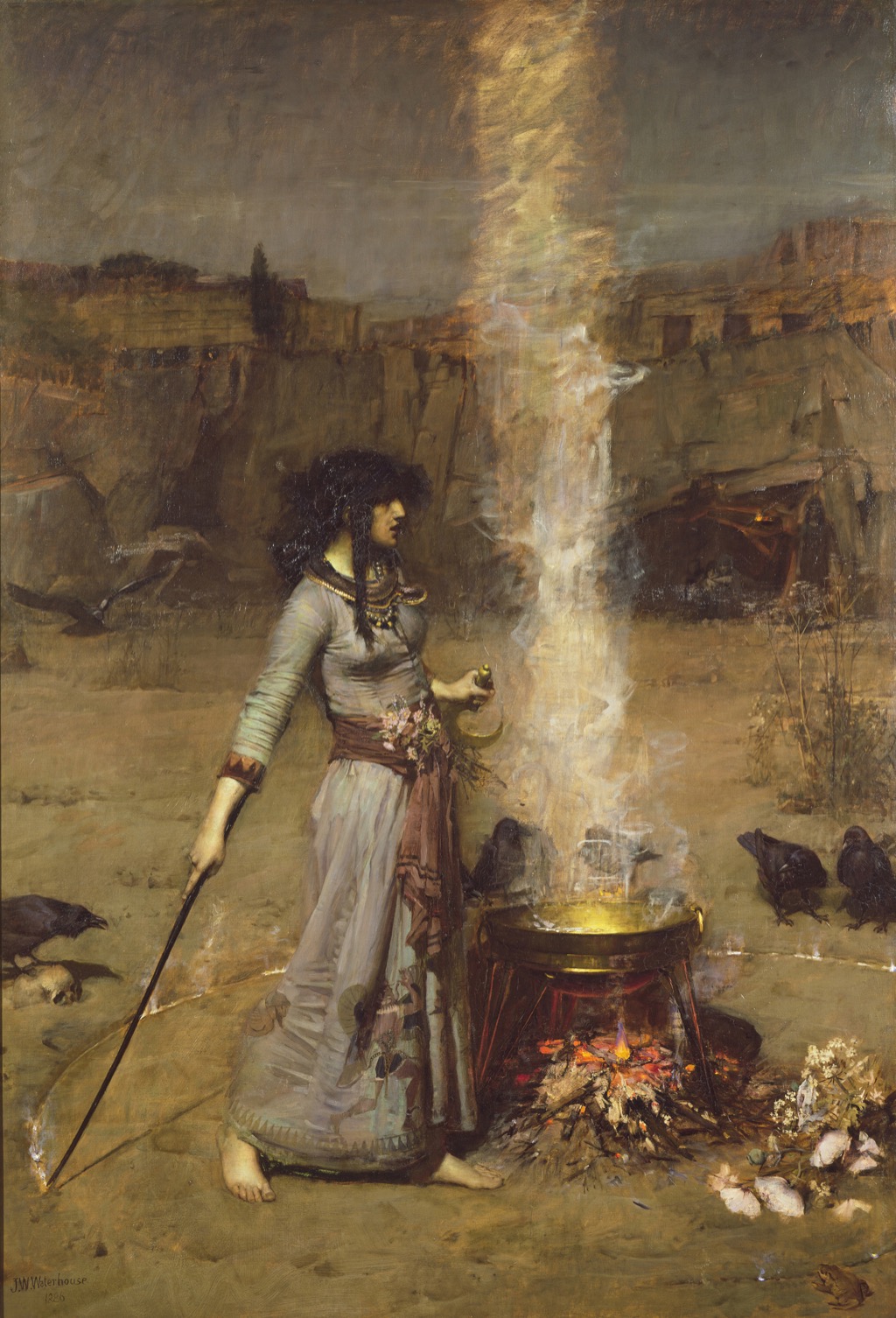
- The Magic Circle: Compare Waterhouse's treatment of ritual and symbolism.
Frequently Asked Questions
It is now most plausibly dated to about 1907 because of its relationship to Jason and Medea. It was formerly catalogued around 1914. [1]
Probably, or at least she developed from Waterhouse's Medea studies. The title itself does not name her, so the identification should remain qualified.
It is closely related and likely belongs to that process, but it is not a simple reduced copy. Waterhouse signed and titled it independently on the reverse. [1]
A small blue vessel and a cup, suggesting the preparation or contemplation of the philtre.
No visible evidence securely identifies poison, and the title specifies a love philtre. No continuous stream of liquid is clearly shown.
It measures 58.5 by 45.5 centimetres. [1]
It is in a private collection; its current location has not been publicly established in the sources used here. [2]
Yes. It was among the Waterhouse pictures associated with Lever and was later sold in 1926. [2]
Discussion
The Love Philtre is compelling because it makes preparation more important than effect. Nothing supernatural is visible. A woman weighs two small objects in her hands, and the title asks us to imagine how desire might be transferred through them.
Its relationship to Jason and Medea clarifies Waterhouse's working process without exhausting the picture. The missing Jason changes everything. Medea is no longer visibly serving a hero's trial; she becomes the sole possessor of knowledge and the centre of attention.
Reader Insights
Which visible detail most changes the way you read this page?
Which source or comparison helps the work feel less familiar and more specific?
What question would you bring back to the painting after reading?
Join the Conversation
Share your reading of this page below.
References
- Sotheby's, “John William Waterhouse, The Love Philtre,” lot 39, Victorian & Edwardian Art, London, 13 July 2010; inscription, medium, dimensions, dating and relationship to Jason and Medea. View source
- Sotheby's, catalogue note for Waterhouse's The Siren, documenting William Hesketh Lever's ownership of The Love Philtre and its 1926 sale. View source
- *Apollonius Rhodius, Argonautica, Book III*, Medea's assistance, magical preparation and Jason's trials. View source
- Sotheby's, “Vain Lamorna, A Study for Lamia,” discussion of Waterhouse's variant studies and Henderson-family provenance, including a sketch for The Love Philtre. View source