


 by Tom Gurney
Tom Gurney BSc (Hons) is an art history expert with over 20 years experience
Published on June 19, 2020 / Updated on November 29, 2026
Email: tomgurney1@gmail.com / Phone: +44 7429 011000
Overview
On 25 October 1510 Isabella d’Este wrote from Mantua asking her agent in Venice to find out whether a rare night scene remained among the belongings of a painter called Zorzo of Castelfranco. She had heard that he was dead. Her agent, Taddeo Albano, replied in November. The artist had died of plague, and the painting Isabella wanted was missing from the estate. Albano knew of two pictures people called nocte, but their owners had commissioned them for themselves and intended to keep them. The exchange is one of the most revealing moments in Giorgione’s biography. It catches the value of his work, the hold it had on people who knew it and the trouble of identifying a particular picture even then. [1] [2] [3]
At a Glance
- Datesc.1477/78–1510
- PlaceCastelfranco Veneto and Venice
- SubjectVenetian Renaissance painter
The name he used
Giorgione came from Castelfranco in the Veneto. In Venice his name appears in forms such as Zorzi and Zorzo, Venetian versions of Giorgio. The phrase da Castelfranco links the maker to the town and is one of the safest ways of identifying him in the records. The National Gallery explains the familiar name Giorgione as “big George”. The surname Barbarelli, common in later accounts of the painter, rests on a less certain identification. Archival documents contain several people called Giorgio. Their family and property relations matter when trying to decide which Giorgio was the painter. [1] [2] [4]
He was probably born during the 1470s. Sources differ even when they offer an apparently exact possibility. Augusto Gentili, in the Italian biographical dictionary, gives 1477–78 as an approximation. The National Gallery uses 1473 or 1474 with a question mark. A note found in an early printed Dante gives an age at death that would imply a birth around 1474 if its figures are accepted. The apparent precision comes from working back from another person’s record rather than from a birth document. In surviving official records the man doing the work is easier to identify than the child he once was. [1] [4] [5]
The name shines through most clearly in an inscription on a painting. On the reverse of the portrait now called Laura, an inscription dates the work to 1 June 1506 and credits a master Zorzi of Castelfranco. It calls him a colleague of the painter Vincenzo Catena. The inscription can be contemporary without being an autograph. Neither the words on the back nor the presence of leaves in the portrait tells us the sitter’s legal name. For biography, the most telling parts are the working name, date and relationship to another practising painter. All three are unusual points of contact with a career so often reconstructed from pictures whose dates or original owners are disputed. [1] [6]
Castelfranco and Venice
Castelfranco retains two works that offer different ways into the beginning of the story. The altarpiece in the cathedral sits in a chapel associated with the Costanzo family. Their arms appear on the painted front of the raised throne. The tomb of Matteo Costanzo and the fabric of the chapel make it possible to connect the image to the social life of the town. Lorenzo Finocchi Ghersi’s work on the relevant archives adds a complication. It traces a dispute before the painting acquired its familiar setting and proposes a different patron for an early version that conservation has brought to light. The visible arms document an association important to the painting as we see it. The artist’s progress towards that finished arrangement is harder to reconstruct. [7] [8]
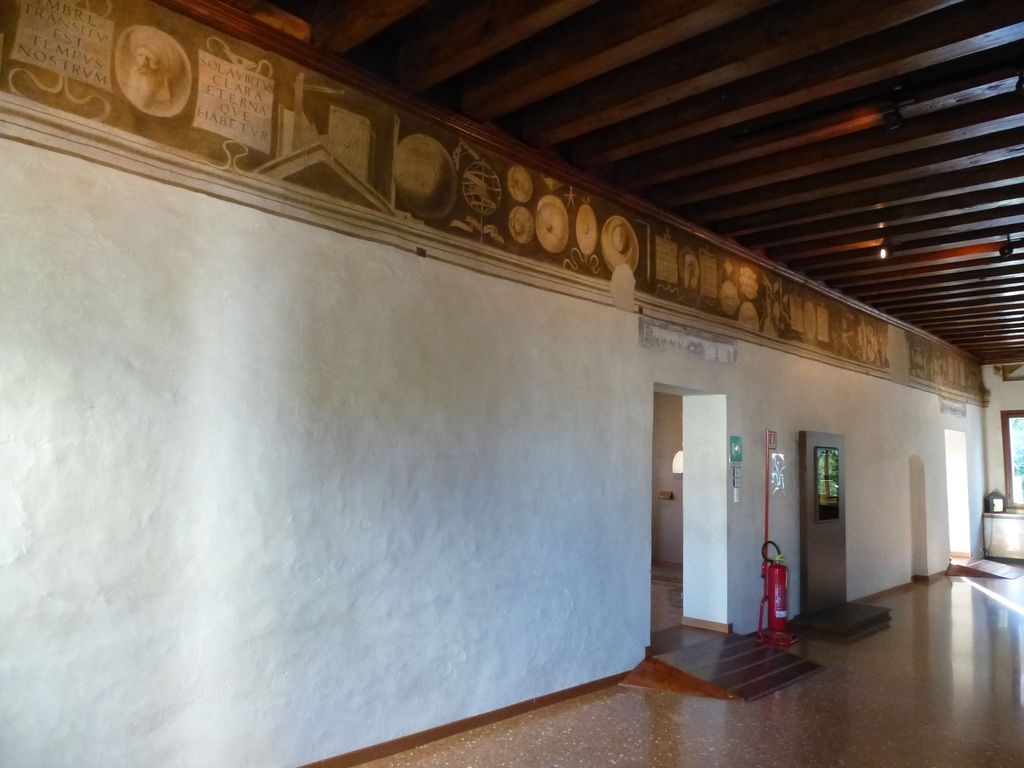
The frieze of the liberal and mechanical arts in Casa Marta-Pellizzari belongs to a household interior. Its books, figures, instruments and inscriptions extend high along the room. The historical attribution comes from a much later local writer, Nadal Melchiori. Scholars have argued over its imagery, its handling and the relevance of astronomical or astrological sources. The building’s traditional name, Casa Giorgione, has encouraged a literal association with the artist’s own life. The museum makes it possible to experience a place connected by tradition and scholarship with his work. It supplies a less certain basis for reconstructing the painter’s family dwelling. [9]
In Venice the strongest early visual comparisons are with artists of Giovanni Bellini’s generation and their successors. Bellini’s treatment of oil, light and landscape offers a way to understand what a young painter could learn in the city. A documentary link would be an apprenticeship contract or a dated record of work performed in a master’s shop. The often-repeated story of Giorgione’s training rests substantially on visual comparison and Vasari. The two editions of the Lives give the relationship a different emphasis. In 1550 Vasari describes a painter who learnt in the orbit of the Bellini and from observation. The expanded 1568 account gives Leonardo a role in the story of Giorgione’s modern manner. These are revealing sixteenth-century interpretations of Venetian painting. The changes in the text invite caution about converting a story of influence into a witnessed lesson. [1] [10]
Leonardo’s documented visit to Venice in 1500 makes the comparison especially tempting. A visit establishes that Leonardo was in the city. To turn it into a meeting requires evidence about Giorgione’s whereabouts at the same time, and Gentili argues that this is precisely what the surviving record lacks. Even the inscription linking Giorgione and Catena admits more than one account of the relationship. Gentili reads it in the context of a workshop that could have taught him a Bellini-like craft. The wording establishes professional proximity. The arrangement of the workshop and the terms of their working relationship remain harder to pin down. [1] [6]
Two public commissions in 1507 and 1508
On 14 August 1507 the Council of Ten ordered an advance of 20 ducats for a large canvas intended for the audience chamber in the Doge’s Palace. A further 25 ducats was ordered the following January. When a May 1508 reimbursement mentioned a curtain for the new audience chamber, it may have signalled that the work was already in place. Its subject is unknown and the canvas is lost. Gentili considers it likely to have vanished in one of the palace fires of the 1570s if it remained there. The payments still tell us about the confidence the authorities placed in an artist who could undertake work on a scale very different from a small devotional panel. [1] [4]
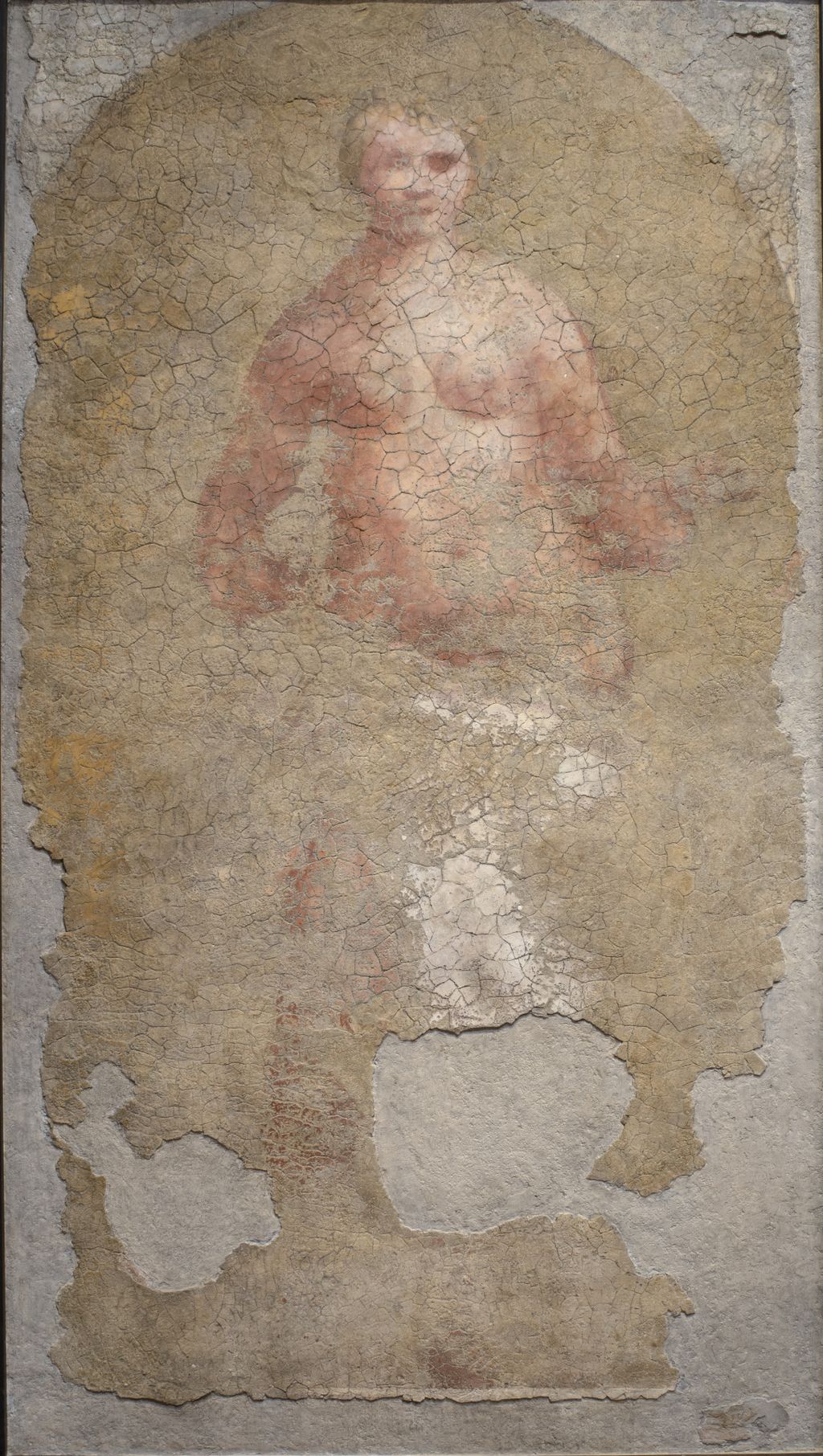
Before that year was out, Giorgione had completed fresco work on the canal side of the Fondaco dei Tedeschi. The building served German merchants. From the water, its painted elevations made a public impression on anyone approaching that stretch of Venice. In November 1508 the authorities were pressed to consider the painter’s claim for payment. On 11 December a group named by Bellini, including Vittore Carpaccio and Lazzaro Bastiani, was brought in to value the work. The panel put it at 150 ducats, and the officials set the fee at 130. The names and figures make this one of the best attested episodes in the career. The surviving fragments give an idea of the artist’s labour. The record clarifies who assessed it and how his payment was settled. [1] [2] [11]
The Accademia’s detached La Nuda belonged between upper windows of the Grand Canal front. Its surface has passed through conditions very different from those of a portrait kept indoors. Weather, exposure and later building work contributed to the losses. Early engravings and watercolours made by observers helped subsequent generations imagine figures that were fading away. Those records have to be read as records made by later eyes. The surviving painted area and the site tell us about scale and placement, while the later depictions bring back aspects of a composition we can no longer see in full. [11]
There are leads to other commissions, among them a reported agreement for four canvases dealing with the story of Daniel. The documentary position is appreciably weaker. Gentili notes that the published record is now untraced and was once suspected of being unreliable. The new audience chamber and the Fondaco have much stronger paper trails. It makes a difference that the records of those public commissions are concentrated in two years. They tell us that Giorgione had attained a certain standing by 1508, while leaving a long stretch of his previous activity without a comparable run of dated obligations. [1]
The people who wanted his work
Isabella probably knew the desired night scene through description or reputation. Her request was careful. She asked for a judgement of its quality before purchase, and the correspondence put intermediaries with knowledge of pictures and music around the transaction. Albano’s response distinguished the picture at Taddeo Contarini’s house from the one owned by Vittorio Beccaro, whose name appears in several spellings. He thought the latter better finished. The decisive difficulty was ownership. Both men had ordered their works for their own enjoyment. A court with international connections could look for a painting and still fail to prise it away. [1] [2] [3]
Alessandro Nova has considered the meaning of nocte alongside early accounts of Venetian pictures. The word identifies a kind of pictorial event familiar enough for correspondent and agent to discuss. It offers limited help in attaching the letters to one surviving panel. A religious subject, an effect of dark illumination and a descriptive title can overlap. What people understood as night in this context needs to be tested against each proposed object and its provenance. The exchange tells us more securely that these private patrons valued the pictures as particular possessions. One document tells the agent what to seek, another gives an intermediary’s account of what could be acquired and the collector’s decisions are visible only in the effects those requests had. That is part of the distinction between the physical letter, an edited transcription and a history of one specific surviving painting. [3] [12]
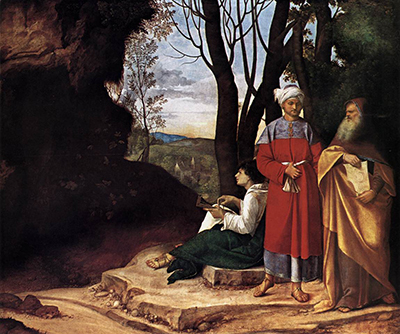
The habit of treating pictures as singular objects also appears in Marcantonio Michiel’s notes. About a generation after Giorgione’s death, he wrote down works he saw in houses, naming collections and frequently recording a painter’s name. He saw The Tempest with Gabriele Vendramin and The Three Philosophers in the Contarini collection. Descriptions like these provide a chain between the painter’s lifetime and the labels familiar today. They differ from Vasari’s form of biography, which seeks a coherent account of what kind of painter Giorgione became. Michiel helps a reader locate a particular canvas in a house. Vasari helps explain how later artists understood its historical importance. The early accounts give more of that evidence. [1] [13] [14]
Plague, a household inventory and a handwritten date
The later accounts of Giorgione’s death include two very different discoveries. Renata Segre published a document concerning the goods of a deceased painter Giorgio, whom she identifies with Giorgione. The inventory and related account belong to the administration of possessions during plague. In Segre’s reading they locate the man at the Lazzaretto Nuovo in the Venetian lagoon. Health officials distinguished people suspected of exposure from those already identified as plague sufferers. They had procedures for recording and storing goods. The paperwork makes it possible to imagine the circumstances of quarantine through objects set down in a ledger, even though it cannot show exactly where the man was buried. [2]
What survived in the document is strikingly ordinary. Segre describes beds and benches, a table, domestic objects and kitchen equipment. She dates one group of entries to March 1511 and recounts the addition of a better garment the following October. The movement of the possessions between the house, the quarantine station and the people entitled to them generated several traces. A reader expecting brushes, sketches or panels from a painter’s room encounters the concerns of administrators and heirs. That perspective gives the record much of its value and explains its silences. [2]
Segre notes that a fur-lined garment entered the valuation and that the total was 89 ducats. It was a list of items officials had to account for, and some entries entered at different stages. The figure offers a comparison with a commission like the Fondaco, whose fee also had to cover materials. It would be hazardous to make it a complete estimate of the painter’s wealth. The document's claims about the father and the involvement of a widow named Alessandra have furnished a further historical argument. Segre proposes the family name Gasparini on the strength of this reading. Both the name and the proposed family relationships stand or fall with the identification of the entry as Giorgione’s estate. [2]
Another discovery was made in an item that had never been a painting. The University of Sydney holds a copy of an edition of Dante’s Divine Comedy printed in Venice in 1497. On an opening sheet, a handwritten notice records the death of a painter named Giorgione of Castelfranco on 17 September 1510. It gives his age as 36 and names plague. The upper writing requires reconstruction and the modern library records that the volume had been trimmed and rebound. The dating and the age are thus pieces of early testimony to read alongside the correspondence, and the red chalk on the same leaf has its own, separate questions of attribution. [5] [15]
Isabella’s request in late October fixes a point by which she had already heard the news. Albano’s reply says enough to confirm the cause, regardless of the slight difference in modern printed accounts of the reply’s date. The Sydney leaf supplies a possible day and the quarantine records offer a possible location. Together they tell a fuller story than any one source. They also explain how competing figures for Giorgione’s age coexist in modern catalogues. The most vivid detail in a newly discovered document can carry a different degree of certainty from the event it helps to reconstruct. [1] [2] [3] [5]
A career remembered through pictures
Giorgione’s life remained short by every sober reconstruction. Objects travelled on after him and some, like the Dresden Sleeping Venus, carried an early report that another painter finished the work. The autograph question, the amount of work left incomplete and the degree of later change have to be considered painting by painting. There is a temptation to make the uncertain pictures illustrate the least documented episodes of his personality. Instead, the objects and their histories allow us to recover a painter who accepted a Venetian state commission, worked on a building seen from the canal and made small pictures their owners wanted to keep. Set alongside the surviving letters, the varied paintings give substance to the working life behind the name Zorzi of Castelfranco. [1] [2] [4] [16]
Giorgione’s career
Giorgione
c.1477/78–1510Castelfranco Madonna
Early 1500sFondaco dei Tedeschi
1507–08Three Philosophers
1508–09Death in Venice
1510Castelfranco Veneto
Hometown and Costanzo altarpieceVenice
Painting, collectors and public commissionsDiscussion
Share what you noticed and how you arrived at your reading.
Reader Insights
Which detail would you point out to somebody seeing Giorgione Biography for the first time?
How does a career remembered through pictures change how you read the work?
Join the Conversation
Share a detail, comparison or question about Giorgione Biography below.
References
- Augusto Gentili, Giorgio da Castelfranco, detto Giorgione, Dizionario Biografico degli Italiani, 2001. View source.
- Renata Segre, A rare document on Giorgione, The Burlington Magazine 153, 2011, pp. 383–386. View source.
- Alessandro Nova, Giorgione’s Nocte, in Dosso’s Fate, Getty, 1998. View source.
- National Gallery, London, Giorgione. View source.
- University of Sydney Library, Dante’s Divine Comedy with Giorgione illustration and death notice. View source.
- Kunsthistorisches Museum Wien, Titian’s Vision of Women exhibition catalogue, Bildnis einer jungen Frau (Laura). View source.
- Comune di Castelfranco Veneto, La Pala di Giorgione. View source.
- Lorenzo Finocchi Ghersi, La “via Lattea” di Giorgione a Castelfranco e un’ipotesi per la committenza della Pala in San Liberale, Bollettino d’Arte. View source.
- Museo Casa Giorgione, Il Fregio. View source.
- National Gallery of Art, Washington, Bellini, Giorgione, Titian, and the Renaissance of Venetian Painting. View source.
- Gallerie dell’Accademia di Venezia, La Nuda, inv. 1034. View source.
- University of Verona, Lettera di Benedetto Capilupi a Taddeo Albano and Lettera di Taddeo Albano a Isabella d’Este, catalogue record and transcriptions. View source.
- Gallerie dell’Accademia di Venezia, La tempesta, inv. 915. View source.
- Kunsthistorisches Museum Wien, Die drei Philosophen. View source.
- University of Sydney Library, Special Collections account of the discovery and transcription. View source.
- Städel Museum, Giorgione, Digital Collection. View source.