


 by Tom Gurney
Tom Gurney BSc (Hons) is an art history expert with over 20 years experience
Published on June 19, 2020 / Updated on November 29, 2026
Email: tomgurney1@gmail.com / Phone: +44 7429 011000
Overview
Lightning opens a narrow white seam over the buildings in The Tempest. The flash is far from the two people on the near bank, yet it changes how we see everything around them. A woman looks out as she nurses a child. Across the water a man stands with a staff. Between them run grass, water, masonry and patches of darkness, all caught in the same unsettled air. A visitor to the Venetian collector Gabriele Vendramin in 1530 recorded the painting by its storm and its figures. His short description has outlasted any agreement about what the people are doing there. [1]
Giorgione made pictures in which landscape could carry as much feeling as a face, and a patch of colour could be as important as a carefully drawn object. Working in and around Venice in the years before his death in 1510, he painted for civic institutions, religious settings and owners of private pictures. The scale of those commissions ranged from a façade to a portrait you could stand close enough to read inch by inch. To understand why his art mattered to the Venetian Renaissance, start with three very different encounters with it. [2] [3]
At a Glance
- Datesc.1477/78–1510
- PlaceCastelfranco Veneto and Venice
- SubjectVenetian Renaissance painter
Essential works
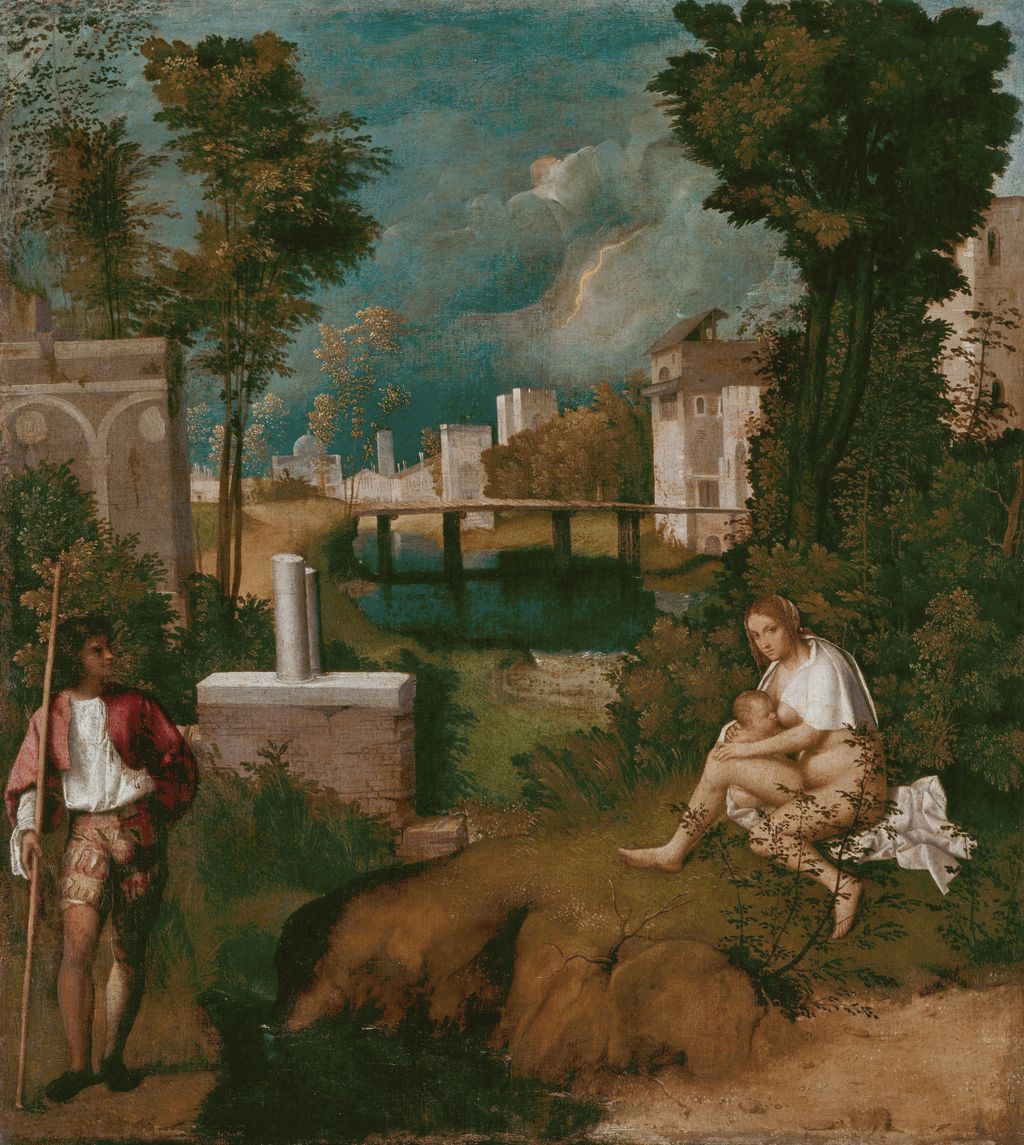
The Tempest by Giorgione
c.1505–08 · Lightning, an elusive encounter and a landscape whose design changed in the making.
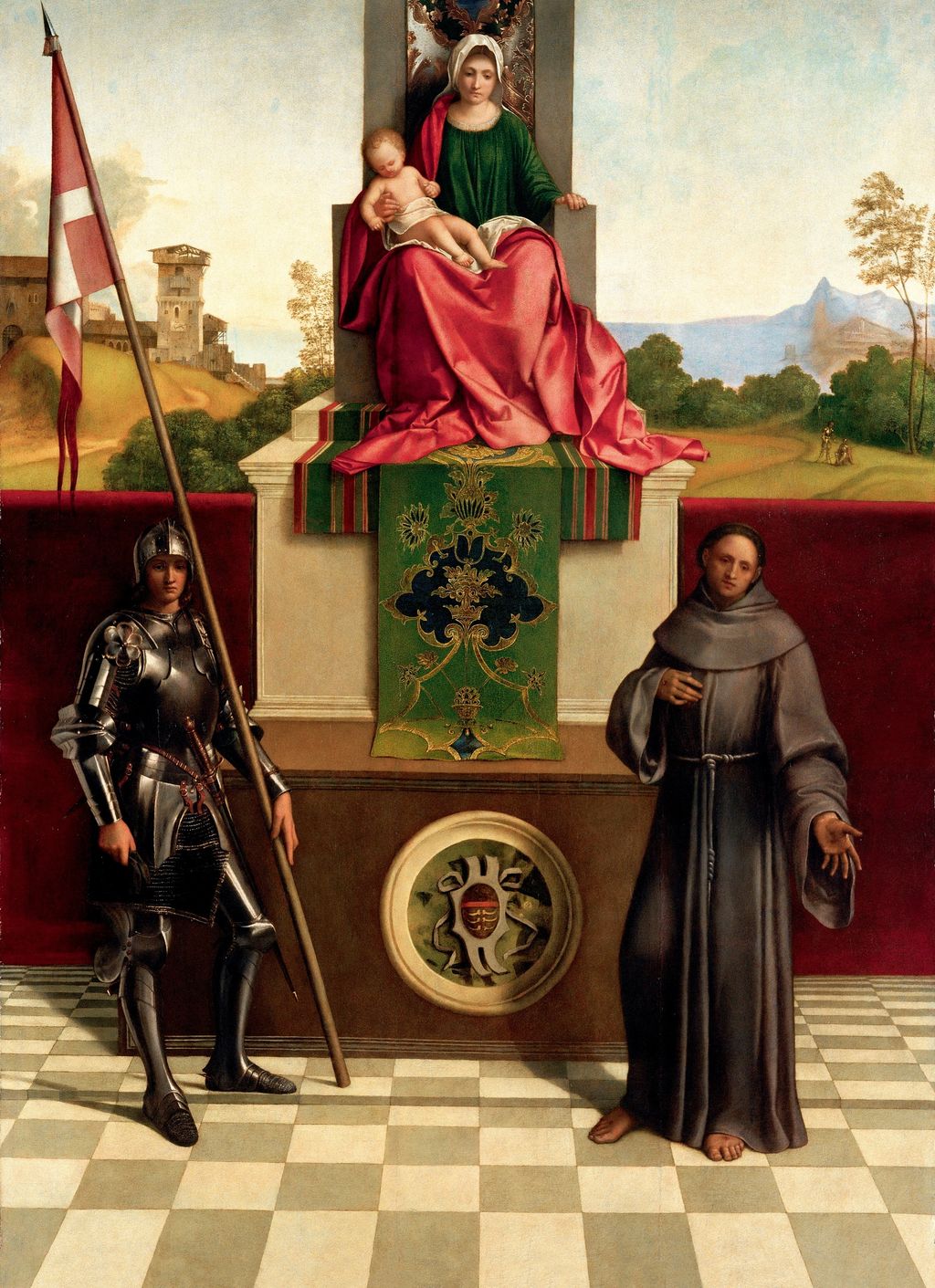
Castelfranco Madonna by Giorgione
c.1502–04 · A soaring throne, the Costanzo chapel and a landscape seen from the foot of the altar.
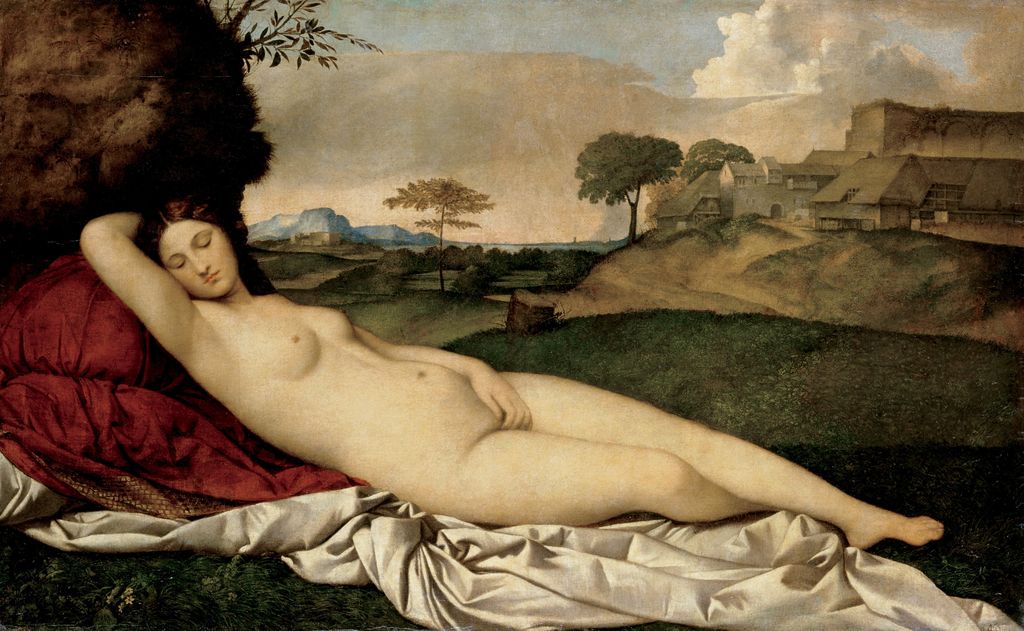
Sleeping Venus by Giorgione and Titian
c.1508–10 · The reclining figure, Titian’s reported contribution and the loss of Cupid.
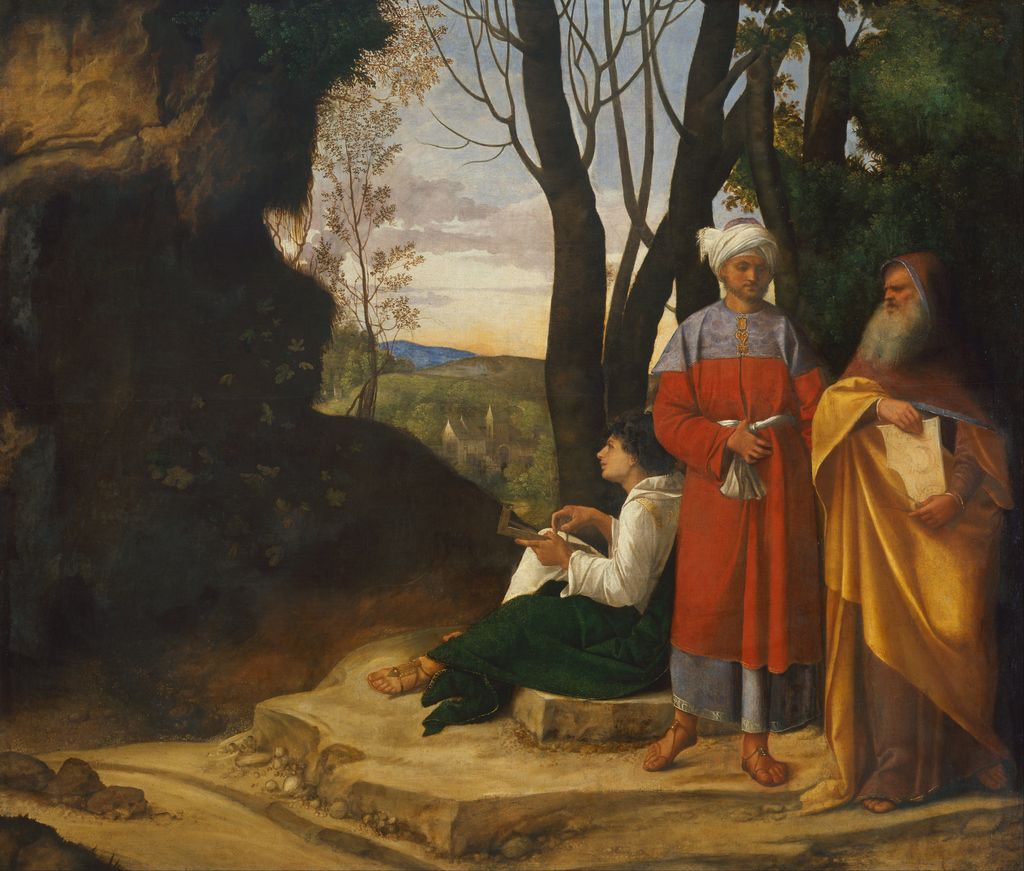
The Three Philosophers by Giorgione
c.1508–09 · Three observers, a rock and the evidence of early descriptions and technical study.
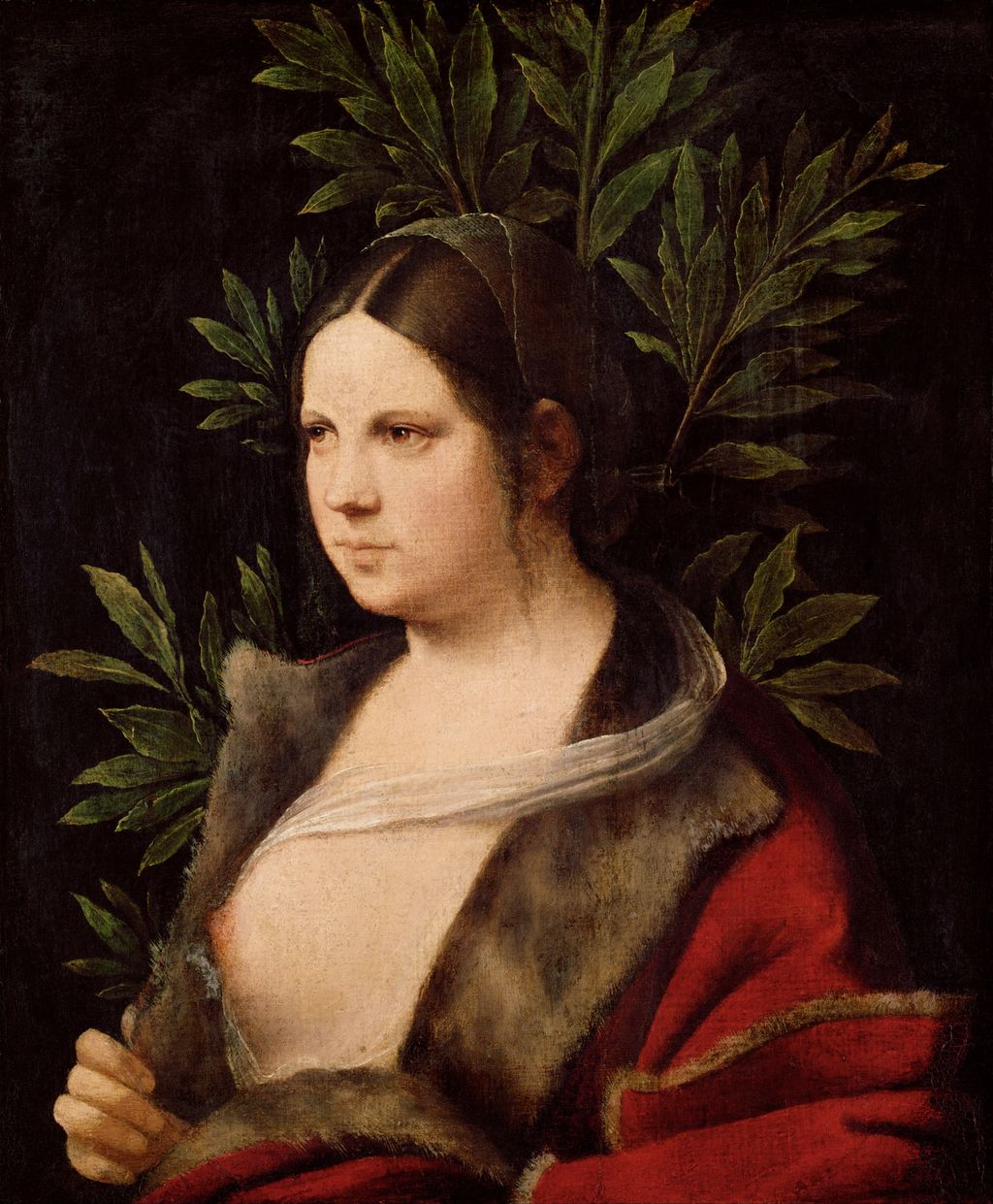
Laura by Giorgione
1506 · A dated inscription, a laurel branch and the elusive identity of the woman.
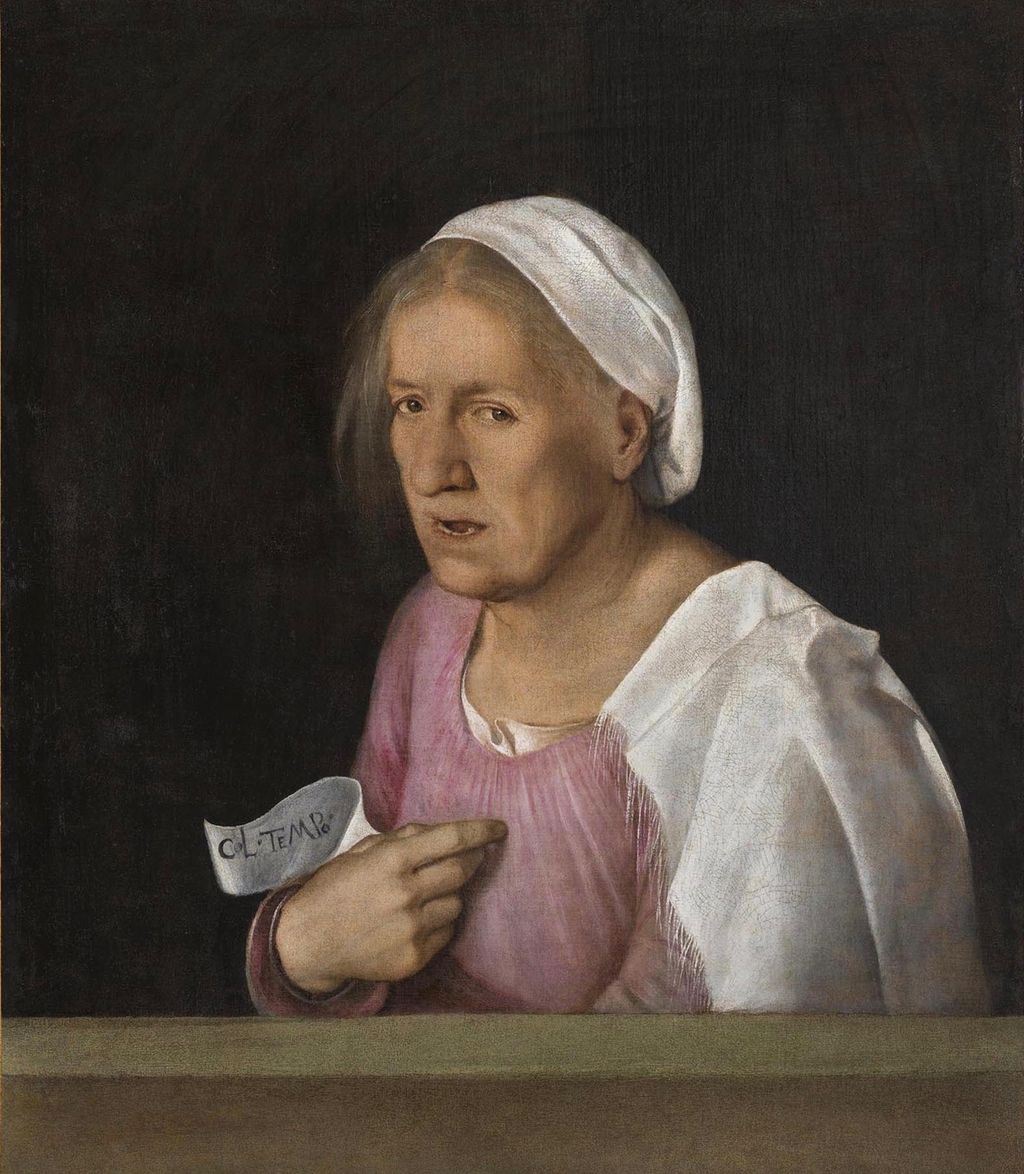
La Vecchia by Giorgione
c.1506–08 · Age and time in Giorgione’s portrait, from the scroll to the old frame and display history.
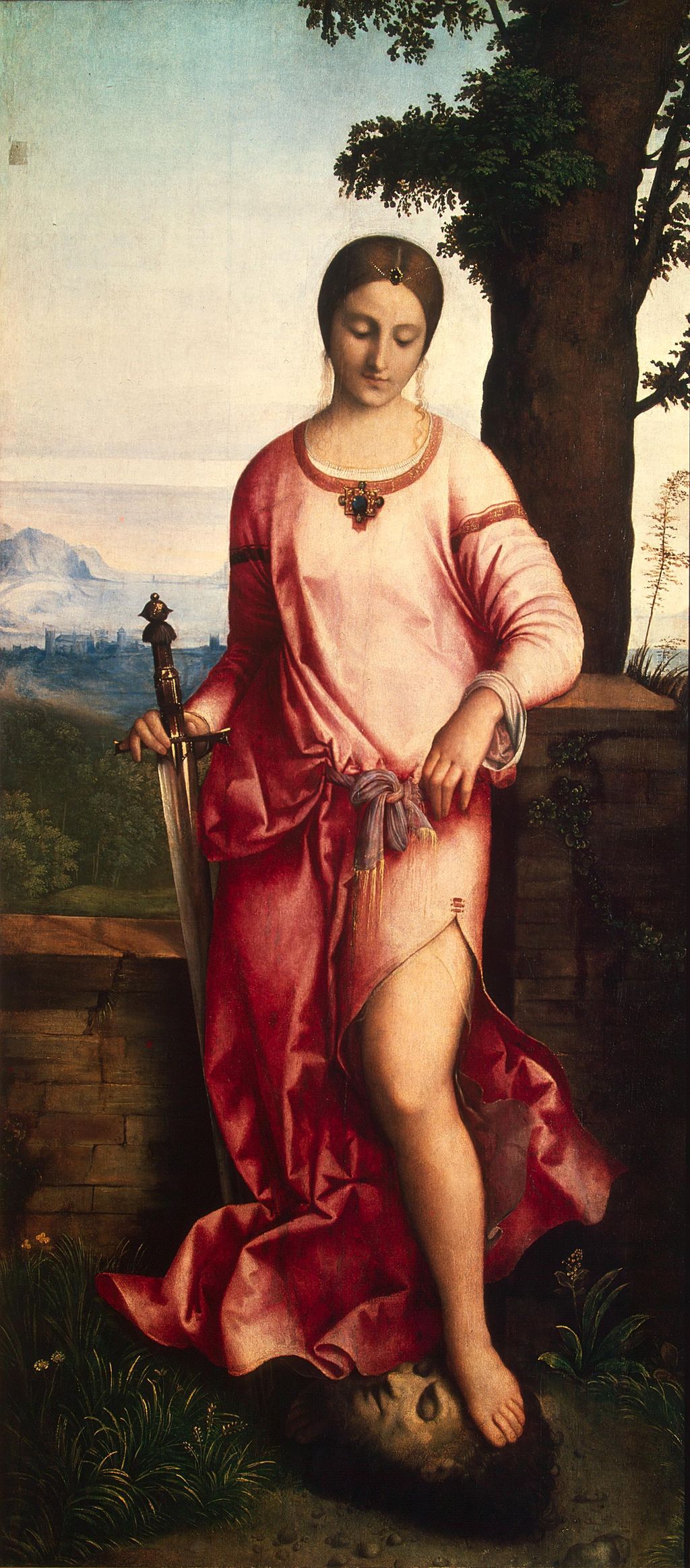
Judith by Giorgione
c.1504 · The heroine, the severed head and an unusually consequential transfer and change of format.
The Adoration of the Shepherds
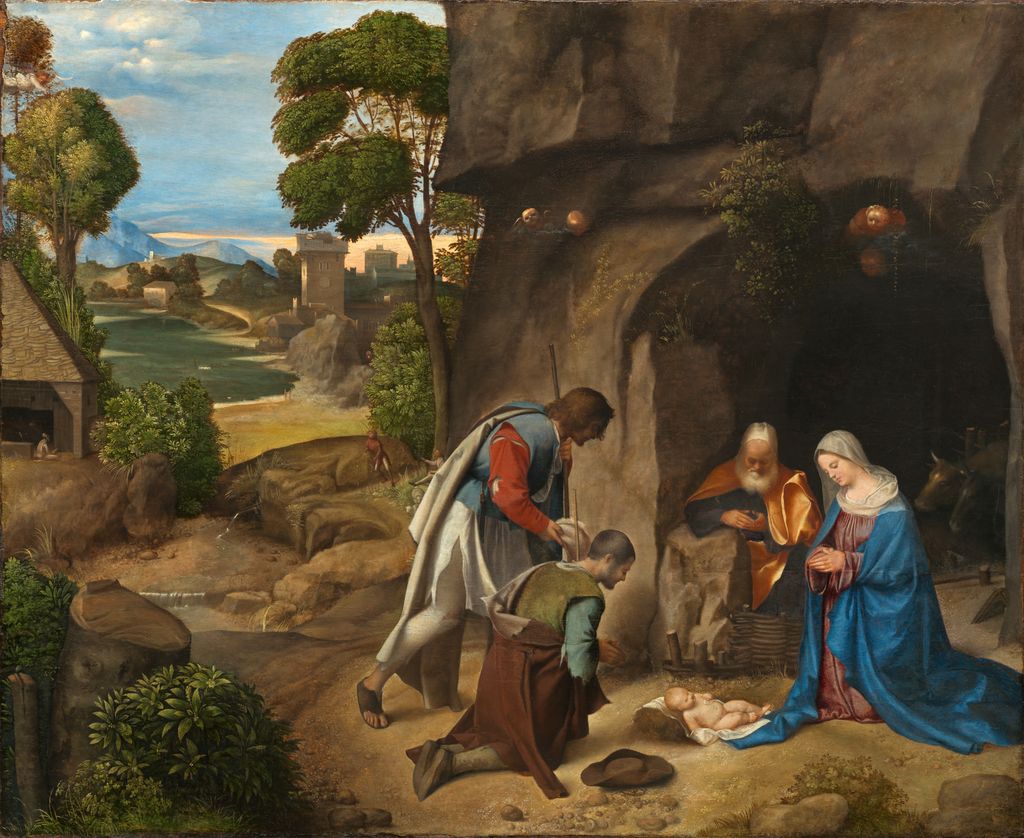
c.1505–10 · The Allendale Nativity, its dark cave, the Vienna variant and the contested modern sale.
A storm, an altarpiece and a face
In The Tempest, look first between the foreground figures. The stream and its banks open a route into the picture, towards a little bridge and the buildings under the storm. Every step into that distance involves a change of colour. In the foreground, grassy greens deepen into shadow. Farther back, pale stone and the glimmer of water keep one's eye moving under the darker sky. The atmosphere makes people, objects and city belong to the same place. That coherence remains even if you change your mind about the identity of the people. The Gallerie dell’Accademia sets out several traditions of interpretation and gives particular weight to a possible relationship with the Vendramin family. The painting still allows a visitor to begin with weather, space and the directness of the woman's gaze. [1]
In the Castelfranco Madonna, the setting has a different job. The Virgin and Child occupy a high throne. Two standing saints are closer in scale to the people in the chapel below. A geometric pavement sets out a clear approach, while the landscape appears beyond a broad horizontal barrier. The separation makes the view behind the figures seem both distant and easy to breathe in. The red and green below the Virgin’s seat carry conspicuous weight in an otherwise spacious design. The arms associated with the Costanzo family make this painting part of a particular place and history. Research on the chapel and examination of changes below the surface have opened a further question about the altarpiece’s first conception. [4] [5]
Laura shows what happens when Giorgione brings the viewer close. A branch with broad leaves fills the air behind a woman’s head. Light moves from her face across the white cloth at her throat and down towards the hand that gathers her clothing. Fur and skin have their own textures, though both emerge from the darkness without a hard outline around every edge. Her turned head and the drift of her gaze leave the encounter unfinished. The leaves gave the portrait its customary name, while the inscription on the back supplies a date in 1506 and identifies the maker as a master from Castelfranco. The inscription and the traditional name answer different questions. The sitter’s identity remains open. [2] [6]
Each picture changes the distance between us and the people it shows. At Castelfranco a visitor looks up from a shared floor. In the portrait we are close enough to notice the pressure of a hand against cloth. In the storm there is room to look past the people and towards a city. The variety matters to Giorgione’s reputation. He could make the weather seem remote or imminent, give a sacred group the measured spacing of a public ceremony, and make a small portrait feel as intimate as a face seen across a table. His precisely observed transitions of light work at all three distances. [1] [3] [4] [6]
Zorzi of Castelfranco
Venetian forms of Giorgio include Zorzi and Zorzo. Venetian records and early accounts tie the painter’s name to Castelfranco, the walled town inland from Venice. The surname Barbarelli is familiar from later biographies and belongs to a less secure naming tradition. The year of his birth is similarly uncertain. The National Gallery proposes 1473 or 1474 with a question mark, while the Accademia and other collections give a date several years later. The date in the inscription behind Laura belongs to the object’s much firmer evidence. It catches him at work in 1506, after his manner had developed far enough for brushwork and effect to carry as much identifying force as a famous name. [1] [2] [6] [7]
The records become denser shortly before his death. They place him on a commission for the Doge’s Palace and on the exterior of the Fondaco dei Tedeschi, the trading establishment of German merchants on the Grand Canal. Both were projects that had to be seen in the public city. In December 1508 a group of painters assessed the work Giorgione had done at the Fondaco, following a dispute over payment. Giovanni Bellini nominated the painters who assessed it. The event gives a glimpse of Giorgione in the world of working painters, contractors and officials that usually lies well outside the frame of his pictures. [2] [7] [8]
One surviving part, La Nuda, preserves a figure far taller than the sitter in a small portrait. Its original height on the façade changed the terms of looking. Viewers across the canal or moving beside the building could make out large shapes from below. Modern viewers encounter a detached fragment and bring to it the eyes one usually brings to a museum picture. Early drawings and prints help establish where the figure stood and how much of the scheme has disappeared. The private small paintings alone would give a very different picture of the painter’s range. [8]
In October 1510 Isabella d’Este wrote asking her Venetian agent about acquiring a night scene by Giorgione. She had heard that he was dead. In his November reply Taddeo Albano confirmed the death from plague and explained that the two night subjects he knew of were already in other hands. The exchange gives us both an artist’s death and an immediate example of collectors wanting his work. A handwritten notice in an early printed Dante, now at the University of Sydney, supplies the date 17 September and gives an age of 36. The circumstances of the reconstructed inscription and the differing birth estimates make it a revealing piece of evidence to set beside the letters. The biography follows the documents in more detail. [9] [10]
How colour changes a story
Renaissance pictures often lead a viewer from a gesture to its explanation. A person kneels and offers an object. A saint’s traditional attribute establishes who stands nearby. Giorgione could paint with that clarity. In the National Gallery's Adoration of the Kings, the procession’s arrival sets up an unmistakable relation between travellers and child. A band of figures stretches along the board. Fabric has individual flashes of brightness, and the shifting groups keep the eye moving at several speeds. The gallery considers that the unusually long panel may have been a predella, the lower part of an altarpiece. The question of its original setting changes how one imagines those little glints of colour being seen. [11]
In another religious work, the Adoration of the Shepherds in Washington, the sweep of land opens behind a much more concentrated meeting. The figures are close to the earth and to the deep shade of the cave. Their kneeling shapes bring the eye down towards the child. Farther from them, pale blue and green give the landscape the expanse of a place already waking up. These are two very different formats for devotional attention. One carries the energy of people arriving along a long stretch of ground. The other allows a close group to coexist with the distance and chill of a morning landscape. [11] [12]
The Three Philosophers extends this play of attention into an uncertain subject. A seated young man brings instruments to the rocky edge on the left, while the other figures stand more open to the sky or hold sheets. The rock exerts the pressure of an almost empty foreground mass. The transition between that mass and the far, more luminous land takes time to notice. The Kunsthistorisches Museum has presented the picture alongside historical ideas about astronomy and measurement. Its publications also set out several proposed identities for the men. Looking at where each figure turns and what each can see helps explain why the picture supports several accounts of contemplation, learning and the natural world. [13]
The Sunset illustrates a further distinction. An unfamiliar subject can reflect the painter’s choices, but our difficulty reading a very old painting can also come from a surface changed after it left the studio. Jill Dunkerton’s technical study traces alterations and restoration of the London painting. The prominent mounted figure often identified as a saint is among the additions that complicate attempts to read the original action. A silhouette that looks integral to an illustration may have a more recent history than the stretch of land around it. When such evidence exists, conservation can change the very details on which an interpretation ought to rest. [14]
Giorgione, Bellini and the younger Venetians
The National Gallery of Art brought together Giovanni Bellini, Giorgione and Titian to examine changes in Venetian painting around 1500. The comparison is especially revealing for the way sacred pictures sit alongside portraits and scenes for private collectors. Bellini offers a particularly useful point of reference for light in landscapes behind sacred figures. Giorgione shifts the relation between that setting and the actions it encloses. By the time of Titian’s early career, a landscape could provide a setting for poetry, music and invention, and the origins of a particular painting could be hard to disentangle even for early writers. Records place the artists in the same city and sometimes in the same commission history. Similar brushwork or similar faces are a weaker basis for reconstructing how a particular picture moved through their hands. [3] [7] [8]
The history of the Sleeping Venus gives a concrete example. The picture in Dresden brings the resting body and the slopes behind it into an extended set of curves. The division of labour between Giorgione and Titian is a separate historical question. An early description associates the canvas with Giorgione and gives Titian a role in its completion. In Vienna, early testimony about the Three Philosophers gives a completing role to Sebastiano del Piombo. Each record is specific to its painting. Set beside each other, they show that attribution can be a question about the stages of work on a picture, even when the major names are known. [13] [15] [16]
Another example works in the opposite direction. The Louvre’s Pastoral Concert centres on two clothed men and two nude women in a landscape. Music, a vessel pouring water and the spacing of the bodies give the encounter the feeling of an imagined pastoral world. Successive owners once called it a Giorgione. The Louvre now catalogues it as Titian and retains those earlier attributions as part of its history. Both pieces of information are valuable. The current credit governs whose work is being described. The older one shows why observers have so often talked about the picture in relation to Giorgione. [17]
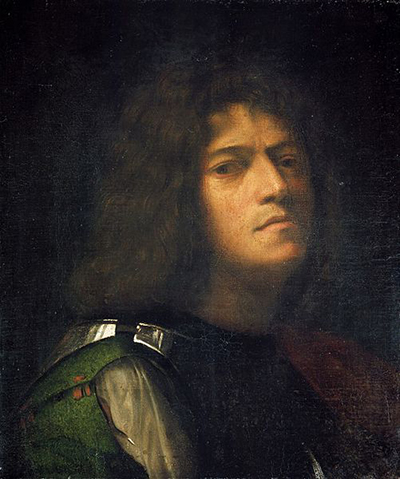
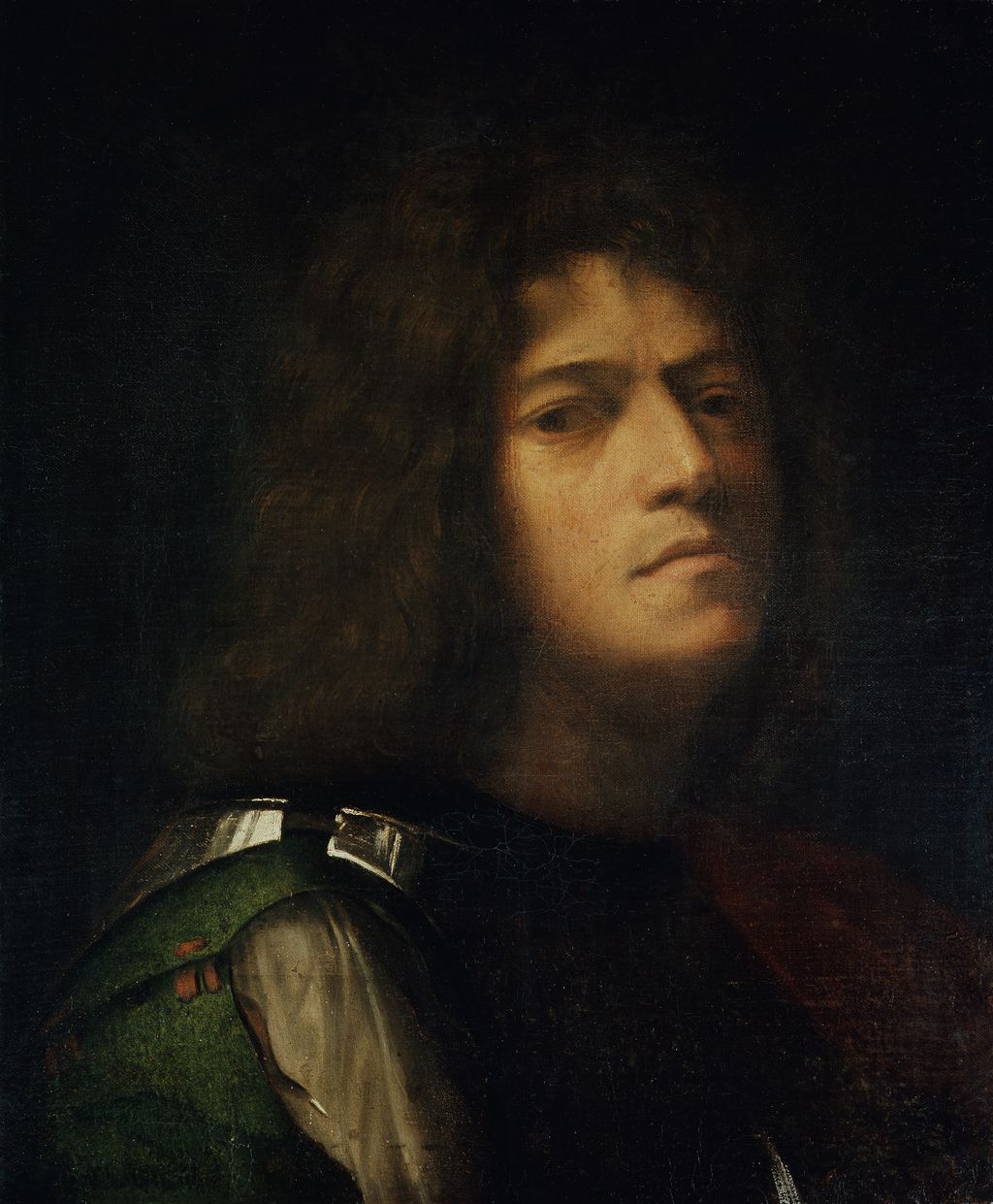
The Herzog Anton Ulrich Museum in Braunschweig calls its small armoured figure Self-Portrait as David. Here is another case where the surviving object and the story told about it have changed over time. The face turns over the near shoulder. Light touches the line of the nose and catches the edge of the armour, and the expanse of shadow around the head leaves considerable room for the glance to work on a viewer. Early references to a David and the relation of the visible fragment to a larger design enter the interpretation. The museum records that the work was called a copy in its 1816 inventory and accepted as a work by Giorgione in 1908. The modern museum title reflects that history of judgement. It is a useful companion to a portrait like Laura, where writing on the reverse gives the attribution a quite different footing. [6] [16] [18]
The Braunschweig portrait also explains the advantage of reading an artwork’s whole label. A name can describe the proposed painter, the person shown, a character the sitter plays, a former credit or the artist who finished the work. “David” and “self-portrait” in the same title make a claim about the role and a claim about the man. “Titian” attached to the Dresden Venus can refer to a later stage of its making. In the Louvre record, “Giorgione” belongs to a history of ownership and naming. These distinctions allow several images to inform our understanding of the painter while giving each work the particular account that its evidence supports. [15] [16] [17] [18]
The people who first saw the pictures
Several early descriptions relate Giorgione’s works to named rooms and collections. Marcantonio Michiel saw The Tempest in Gabriele Vendramin’s collection and described it as a small landscape in canvas. A reader familiar with reproductions on a screen can imagine standing before it in a room with other pictures, already knowing a little about its owner. The historical record helps place the object in such a setting. It rarely offers the kind of extended account that would settle whether a work illustrates a poem, family story or biblical passage. The language early viewers used to identify pictures was often as brief and practical as that of an inventory. [1] [16]
The portrait called La Vecchia also belonged to the Vendramin collection. Its figure looks out over a low ledge and holds a small piece of writing. The text has prompted viewers to read anxiety about ageing, humour or spiritual reflection into a pose that remains arresting even before the handwriting comes into focus. The Accademia exhibits both La Vecchia and The Tempest within the story of early sixteenth-century Venetian painting. Seeing them together sharpens the contrast between the slight changes of light and colour used to catch the storm and the insistently close gaze of the woman. It also restores a connection that once lay in their ownership. [1] [19] [20]
An introduction to the painter therefore includes the places that preserve his work and the names that have changed around it. For the ways that dates, signatures, damaged surfaces and early labels affect the corpus, the paintings guide brings together securely associated works and attribution cases. The early accounts trace what people wrote about Giorgione and his pictures. A visit can begin more simply. Choose the lightning in Venice, the painted hand in Vienna or the high throne at Castelfranco, and notice how long the rest of the picture holds your eye. [1] [4] [6]
Giorgione’s career
Giorgione
c.1477/78–1510Castelfranco Madonna
Early 1500sFondaco dei Tedeschi
1507–08Three Philosophers
1508–09Death in Venice
1510Castelfranco Veneto
Hometown and Costanzo altarpieceVenice
Painting, collectors and public commissionsDiscussion
Share what you noticed and how you arrived at your reading.
Reader Insights
Which detail would you point out to somebody seeing Giorgione for the first time?
How does the people who first saw the pictures change how you read the work?
Join the Conversation
Share a detail, comparison or question about Giorgione below.
References
- Gallerie dell’Accademia di Venezia, La tempesta, inv. 915. View source.
- National Gallery, London, Giorgione. View source.
- National Gallery of Art, Washington, Bellini, Giorgione, Titian, and the Renaissance of Venetian Painting. View source.
- Comune di Castelfranco Veneto, La Pala di Giorgione. View source.
- Lorenzo Finocchi Ghersi, La “via Lattea” di Giorgione a Castelfranco e un’ipotesi per la committenza della Pala in San Liberale, Bollettino d’Arte. View source.
- Kunsthistorisches Museum Wien, Titian’s Vision of Women exhibition catalogue, Bildnis einer jungen Frau (Laura). View source.
- Treccani, Dizionario Biografico degli Italiani, Giorgio da Castelfranco, detto Giorgione. View source.
- Gallerie dell’Accademia di Venezia, La Nuda, inv. 1034. View source.
- Renata Segre, A rare document on Giorgione, The Burlington Magazine 153, 2011, pp. 383–386. View source.
- University of Sydney Library, Dante’s Divine Comedy with Giorgione illustration and death notice. View source.
- National Gallery, London, The Adoration of the Kings, NG1160. View source.
- National Gallery of Art, Washington, The Adoration of the Shepherds. View source.
- Kunsthistorisches Museum Wien, A new way of looking at the world, Nature’s Time exhibition. View source.
- Jill Dunkerton, Giorgione and not Giorgione: The Conservation History and Technical Examination of Il Tramonto, National Gallery Technical Bulletin 31, 2010. View source.
- Staatliche Kunstsammlungen Dresden, Schlummernde Venus, Gal.-Nr. 185. View source.
- Städel Museum, Giorgione, Digital Collection. View source.
- Musée du Louvre, Le Concert champêtre, INV 71. View source.
- Herzog Anton Ulrich-Museum, Braunschweig, Giorgione, Selbstbildnis als David. View source.
- Gallerie dell’Accademia di Venezia, La vecchia, inv. 272. View source.
- Gallerie dell’Accademia di Venezia, Sala VIII, Giorgione and the emergence of the Venetian maniera moderna. View source.