


 by Tom Gurney
Tom Gurney BSc (Hons) is an art history expert with over 20 years experience
Published on June 19, 2020 / Updated on November 29, 2026
Email: tomgurney1@gmail.com / Phone: +44 7429 011000
Overview
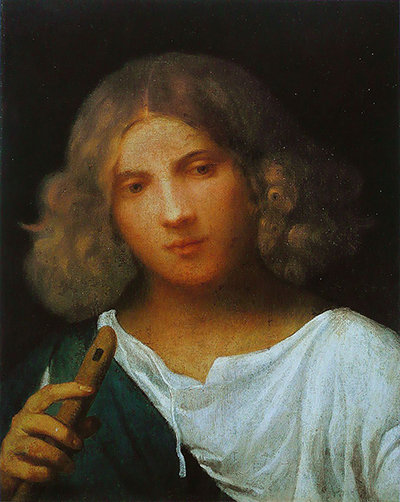
The boy is holding his pipe low, as though he has just stopped playing. His eyes have moved down and to the side. The Royal Collection calls the picture A Boy with a Pipe (The Shepherd) and attributes it to Titian, around 1510–15. It has also long been known as Shepherd with a Flute and was once celebrated as a Giorgione. The current catalogue makes room for a connection with both artists. It proposes that Titian could have executed a design conceived by Giorgione. The oil painting on canvas measures 62.5 by 49.1 centimetres and is identified by the inventory number RCIN 405767. [1] [2]
At a Glance
- Datec.1510–15
- CollectionRoyal Collection
- AttributionAttributed to Titian, possible Giorgione design
- InventoryRCIN 405767
The moment after the music
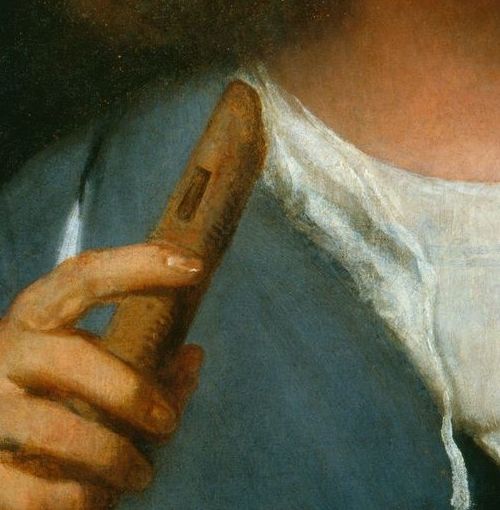
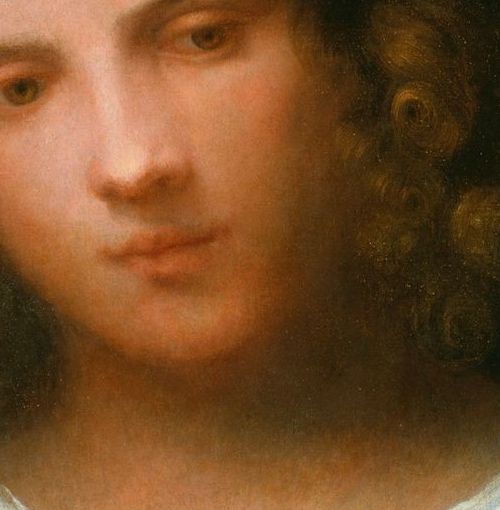
The hand still has a gentle hold on the instrument, but the distance between the pipe and the boy's face is important. If he were about to produce a note, his attention would have to return to the place where he puts his fingers and the pipe against his mouth. For the moment, he seems free to look past both. A little of the white shirt catches the light along the sleeve and round the opening under his chin. A few marks carry the ties down over the blue garment. The curl of the hair makes the movement of his head visible, since its loose strands follow the slope of the neck and the turn away from the viewer. [1] [2]
His posture suggests a pause without settling what interrupted him. It can feel as though somebody has walked up just after the music ended, or as though he has stopped to listen to something elsewhere. The dark behind him gives no specific place in which either event would have happened. This is the economy of the poetic single figure, a kind of Venetian image in which a face, an object and an open-ended mood can be sufficient. The Royal Collection connects Giorgione's cultivation of the type to Leonardo and to a generation of Venetian artists who worked out their own variations on it. [1]
The cloth is an important part of what makes this figure responsive. A plain loose shirt can signal a pastoral role at the same time that the folds register a change of stance. At one point fabric bunches beneath the open collar. Farther down it extends toward the hand. Compare those firmer marks with the continuous reading of the flesh from knuckle to wrist. The Royal Collection singles out the hand, hair and shirt in its discussion of the confidence of the brushwork. The image's mood has often been associated with Giorgione. In the catalogue's account, the way the paint gives the hand and the body weight brings the execution closer to Titian. [1] [2]
Vienna's boy and the lost shepherd
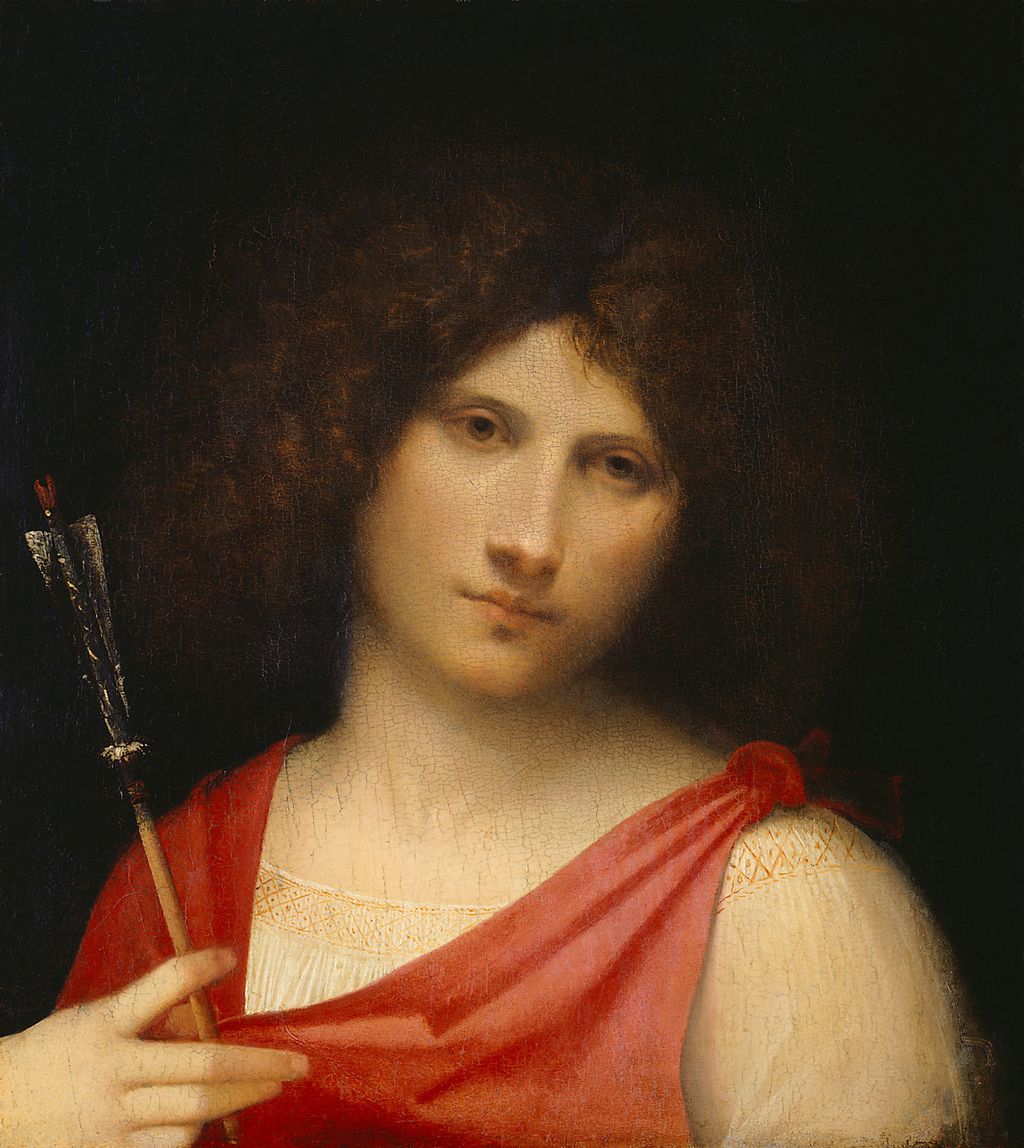
Giorgione's Youth Holding an Arrow in Vienna offers a particularly focused comparison. In each work a young person inclines his head and holds a slim object close to the lower edge. Curls soften the distinction between the figure and its dark surround. The boys are remotely similar in mood even as the tilt of the heads and the placement of the objects create different kinds of attention. The Royal Collection describes the Vienna figure as more withdrawn and the Royal Collection boy as likely to return from his pause to the world around him. Paint makes a difference to that reading. The Vienna boy emerges through subtle transitions, while the hand and the fine strokes of the cloth make the other boy's presence more immediate. [1] [2]
Marcantonio Michiel recorded a boy with an arrow and a shepherd holding fruit in Giovanni Ram's Venice collection in 1531. The fruit-bearing shepherd is known from the description, and it is a different attribute from the instrument held here. Another point of comparison comes from the lost Giorgione known as the Birth of Paris. The Royal Collection notes similar shepherds in the surviving record of that picture, including a copy by David Teniers the Younger and an engraving. Loose shirts and similar hair suggest a shared type. References like these bring the Royal Collection boy into a world of pastoral figures that survives in uneven fashion across inventories, copies and extant works. They cannot recover the precise appearance of a possible lost model for the present canvas. [1] [2] [3]
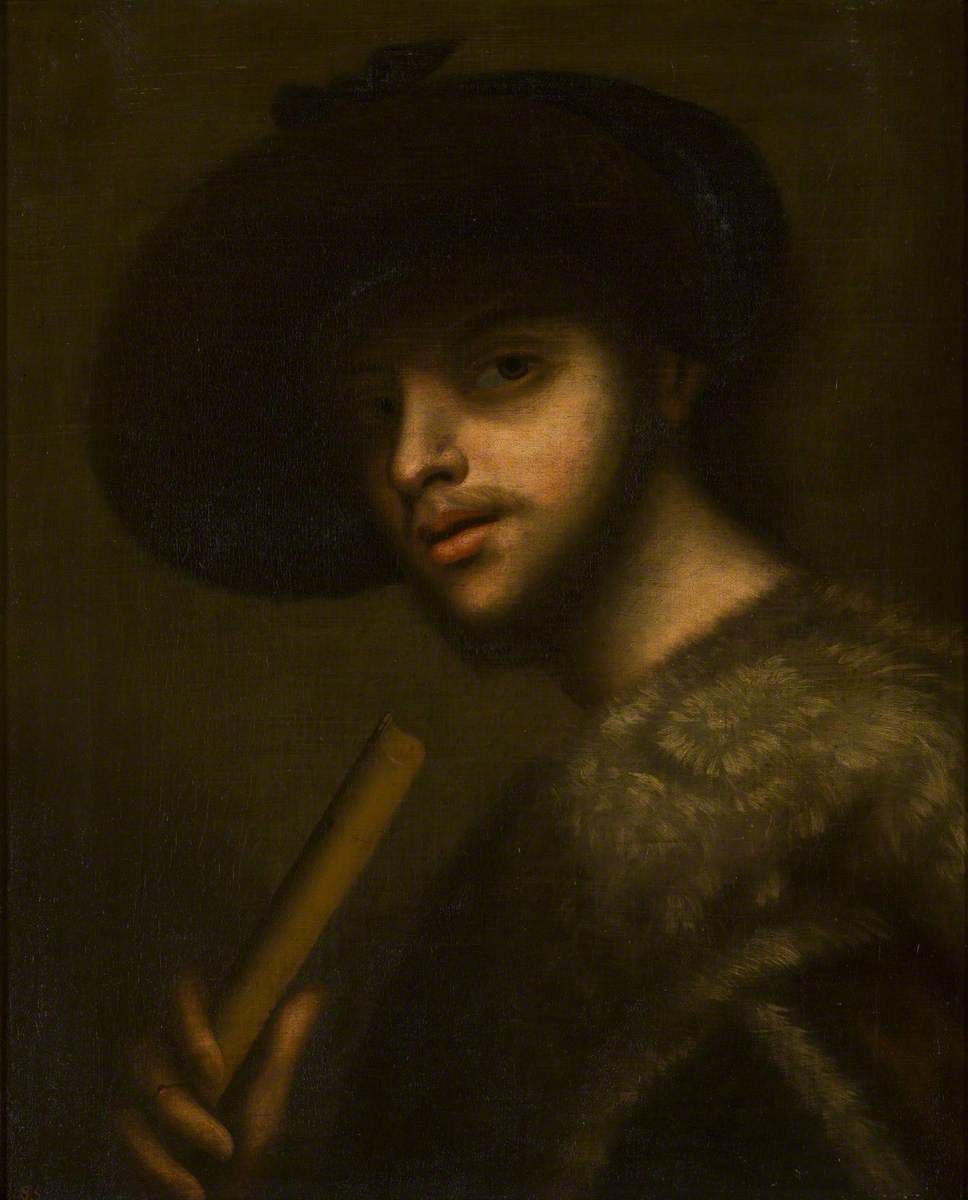
The same pastoral tradition helps explain why the musical instrument matters so much. A simple pipe could bring to mind country music and poetry for a viewer accustomed to literary shepherds. It has no need of accompaniment in the painting. Compare Giovanni Girolamo Savoldo's Shepherd with a Flute at the Getty, dated about 1525. That painter also uses a wind instrument to give a single figure a pastoral identity, but he makes more room for the sitter's elaborate costume and the circumstances of his pose. Compare as well the older, bearded Man with a Pipe or Flute in the Weston Park collection, listed as after Giorgione. It shows how readily a similar title can travel between figures from the same artistic tradition. [1] [4] [5]
Why the label changed
The Royal Collection's full catalogue identifies the canvas as apparently the picture attributed to Giorgione in Charles I's collection. It was valued at thirty pounds, sold to de Critz and associates in 1650 and recovered at the Restoration. A later Hampton Court catalogue retains the shepherd title and cites an inventory of James II that likewise gave it to Giorgione. A centuries-old attribution can tell us a great deal about taste and ownership even when its credibility as a record of an artist's hand remains open. The question is how far a chain of names can be followed back to the making of the object. [2] [6]
Bernard Berenson treated the picture as an especially convincing Giorgione at the end of the nineteenth century. His discussion of the New Gallery exhibition made the boy a test of the connoisseur's ability to recognise the painter across a room full of contested pictures. His Venetian Painters circulated it in reproduction as a work by Giorgione. John Shearman later argued for Titian during the phase when Titian's painting was closest to Giorgione's, and the present catalogue follows that direction while keeping the proposed role of Giorgione in the design. It takes two distinct judgements to arrive there. One considers the invention of the figure and pose. The other considers the brushwork of the surviving oil painting. [1] [2] [7] [8]
In 1892 the writers Katharine Bradley and Edith Cooper, publishing together as Michael Field, addressed the picture in Sight and Song under the title A Shepherd-Boy. The poem was printed with Giorgione's name and with Hampton Court as the painting's location. It is a record of what the image could do for nineteenth-century eyes and ears. The authors took the silence of pigment as an invitation to respond in verse. Reading it today adds a different sort of reception to the changed inventory labels and attribution debates. The very title of their book asks how a visible thing could seem to speak or sing. [9]
The Rome Singer with a Flute uses an instrument with a more theatrical gesture. At the Royal Collection the glance seems to go inward even as the boy stays alert to the space beside him. When you return to the painting after considering the possible lost model and Titian's brushwork, follow the clear space between the pipe and the boy's lowered eyes. That interval belongs entirely to this particular work. A short silence makes the idea of a person playing in the seconds before or after it feel quite natural. [1] [10]
Annotated Details from the Royal Collection Boy with a Pipe
Select a point to see its detail.
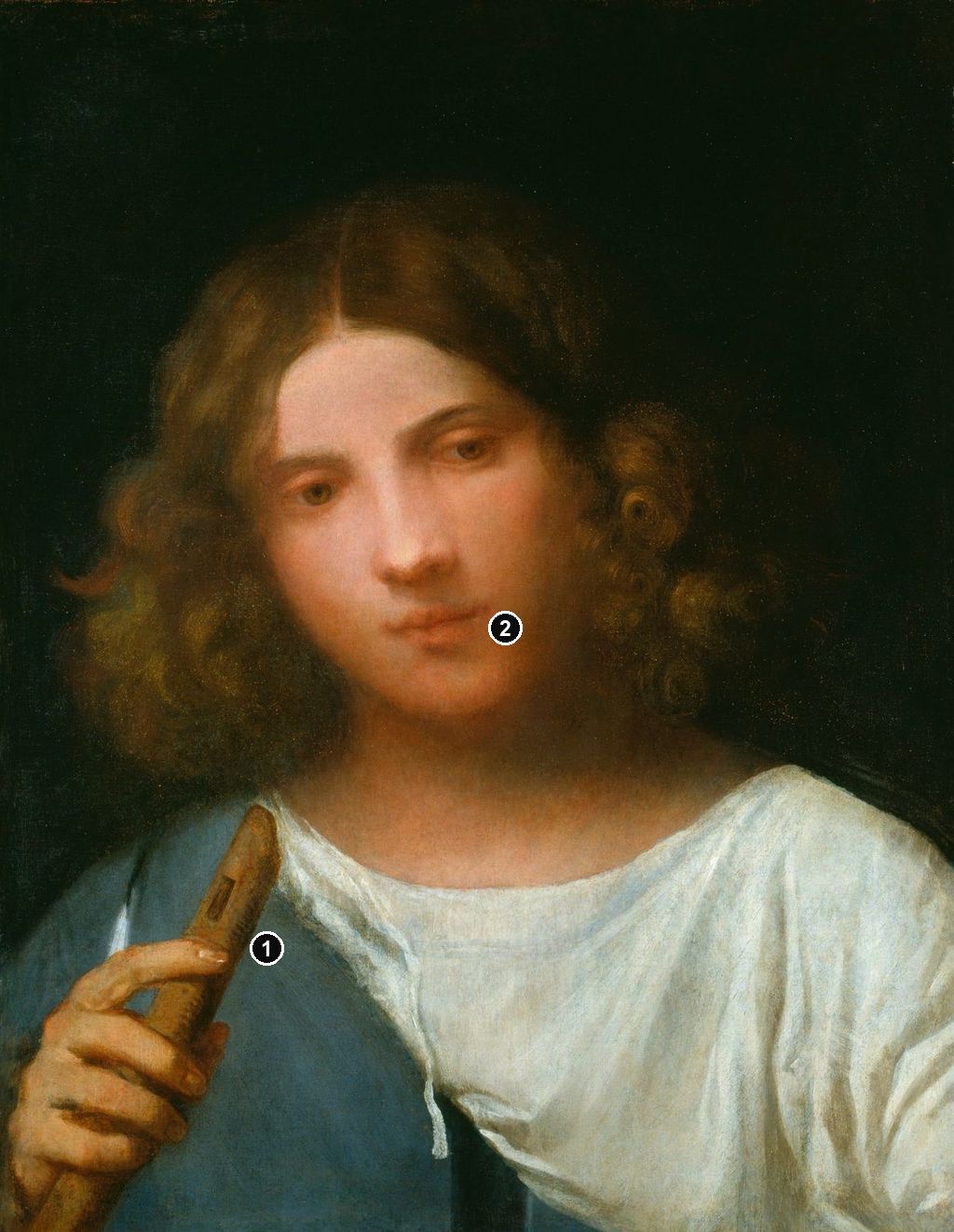
1. The pipe · 2. The boy's expression
Details from THE ROYAL COLLECTION BOY WITH A PIPE
Detail crops from the same image.
The pipe
The tilted instrument stays below the lips, as though the boy has paused between notes.
The boy's expression
The soft curls and the turn of the head bring much of the movement into the areas around the eyes.
Giorgione’s career
Castelfranco Madonna
Early 1500sFondaco dei Tedeschi
1507–08Three Philosophers
1508–09Death in Venice
1510Discussion
Share what you noticed and how you arrived at your reading.
Reader Insights
Which detail would you point out to somebody seeing Shepherd with a Flute for the first time?
How does why the label changed change how you read the work?
Join the Conversation
Share a detail, comparison or question about Shepherd with a Flute below.
References
- Royal Collection Trust, A Boy with a Pipe (The Shepherd), RCIN 405767. View source.
- Lucy Whitaker and Martin Clayton, The Art of Italy in the Royal Collection, catalogue no. 58. View source.
- Marcantonio Michiel, Notizia d'opere di disegno, works in Venice. View source.
- J. Paul Getty Museum, Giovanni Girolamo Savoldo, Shepherd with a Flute. View source.
- Weston Park Foundation image record, A Man with a Pipe or Flute, after Giorgione. View source.
- Ernest Law, A Historical Catalogue of the Pictures in the Royal Collection at Hampton Court. View source.
- Bernard Berenson, Venetian Painting at the Exhibition of Venetian Art, The New Gallery. View source.
- Bernard Berenson, The Venetian Painters of the Renaissance. View source.
- Michael Field, A Shepherd-Boy, Sight and Song. View source.
- Galleria Borghese, Flute Player. View source.