

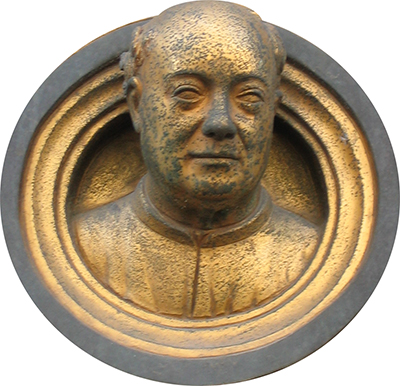
 by Tom Gurney
Tom Gurney BSc (Hons) is an art history expert with over 20 years experience
Published on June 19, 2020 / Updated on July 28, 2026
Email: tomgurney1@gmail.com / Phone: +44 7429 011000
Lorenzo Ghiberti is unusual among early Renaissance sculptors because he left an extended written work. His Commentarii discuss ancient and recent artists, vision, proportion and his own career. They provide remarkable access to how he wanted his work remembered, but that closeness requires caution: autobiography is evidence of self-understanding and self-promotion, not an impartial record.
This page therefore uses paraphrase rather than invented English quotation. Passage locations refer to Julius von Schlosser's 1912 edition, whose Italian text has been inspected directly.
Lorenzo Bartoli's 1998 edition is the preferred modern Italian route, but its public BNCF/Internet Culturale digitization is incomplete. The access-confirmed Schlosser scan is therefore used for the exact passages below.[2]
Contents
- The 1401 competition
- Freedom in designing the third doors
- Measure and imitation of nature
- Very shallow relief
- Ghiberti's panel inventory
- Self-evaluation of the Gates
- The signature on the door
- Vasari and the Gates of Paradise name
The 1401 competition
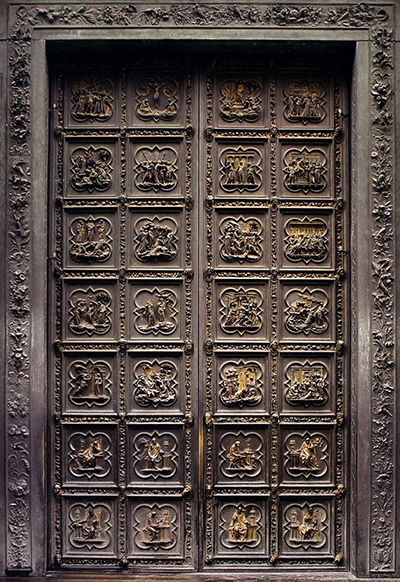
In the second Commentario, Ghiberti describes hearing that the governors of the Baptistery were seeking skilled masters and says that artists came from across Italy to compete. He identifies the common test subject as the Sacrifice of Isaac and names the other competitors. He then claims that experts and fellow competitors awarded him victory without exception. (Schlosser 1912, printed p. 46.)[1]
The passage is invaluable, but its confidence should be read as part of Ghiberti's autobiographical strategy. Other surviving accounts differ over how the final decision occurred. The secure historical outcome is that Ghiberti received the commission for the doors now called the North Doors.
Freedom in designing the third doors
When discussing the later Gates of Paradise, Ghiberti says he was given licence to conduct the work in the manner he thought would make it more perfect, ornate and rich. (Schlosser 1912, printed p. 48.)
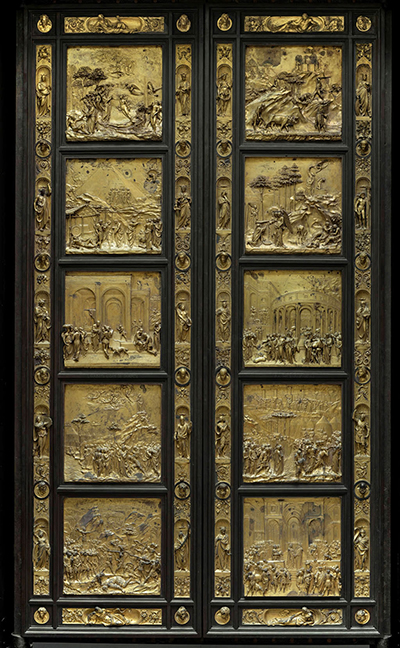
This statement helps explain why the finished doors differ so greatly from the earlier twenty-eight-panel format. Yet it does not prove that Ghiberti alone invented every aspect of the programme. Leonardo Bruni had prepared an earlier proposal, and the process by which the final ten-panel structure emerged remains incompletely documented.
The passage is best used to establish Ghiberti's claim to unusual design responsibility. It should not erase patrons, advisers or workshop labour.
Measure and imitation of nature
Ghiberti connects the Gates panels with measure and with an effort to imitate nature as far as possible. In the continuation, he describes buildings arranged according to the reason by which the eye measures them, so that they appear to project when viewed from a distance. (Schlosser 1912, printed pp. 48–49.)
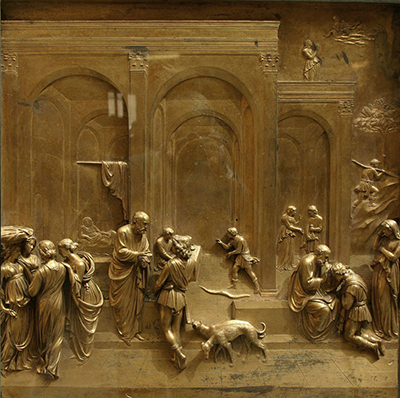
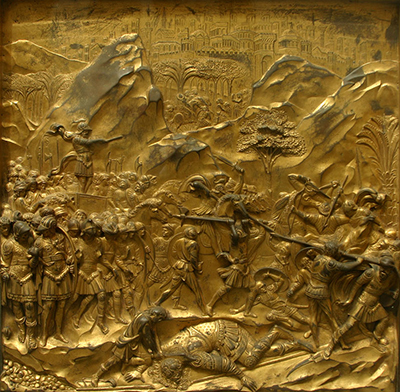
This is not a simple declaration that he “invented perspective.” It shows that optical appearance, relative scale and measured recession were conscious artistic problems. The panels solve those problems in different ways: architecture structures Isaac with Esau and Jacob, while landscape and diminishing armies create distance in David and Goliath.
Very shallow relief
Ghiberti states that the narratives have extremely little projection and that, across their planes, nearby figures appear larger while remote ones appear smaller. He says the whole work follows these measures. (Schlosser 1912, printed p. 49.)
This passage is especially useful because it links physical technique to perception. Bronze depth may be only a small fraction of the space represented. Gilding and changing light help those slight transitions remain visible, allowing the relief to operate between sculpture and drawing.
Ghiberti's panel inventory
The same pages contain Ghiberti's own sequence of the ten Gates panels. He begins with the creation of man and woman, disobedience and expulsion; continues through Cain, Noah, Abraham, Isaac, Joseph, Moses, Joshua and David; and ends with the Queen of Sheba visiting Solomon. (Schlosser 1912, printed pp. 49–50.)
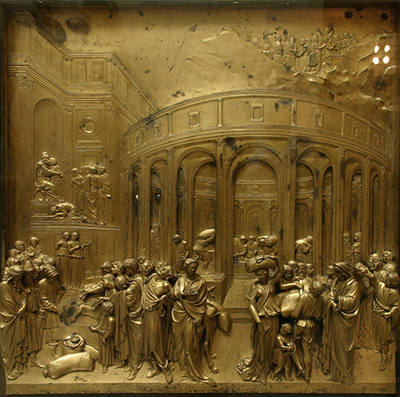
The inventory confirms what Ghiberti considered the principal subjects, but each panel contains multiple episodes. Modern short titles such as Joseph Sold into Slavery can therefore be misleading if they are treated as complete descriptions.
Self-evaluation of the Gates
At the end of the description, Ghiberti calls the Gates the most singular work he had produced and associates their completion with art, measure, ingenuity, study and discipline. (Schlosser 1912, printed p. 50.)
This is a rare artist's assessment of his own masterpiece. It should be presented as a claim, not as an external verdict. Its value lies partly in the criteria Ghiberti selects: the work's excellence depends not only on beauty but on disciplined knowledge and controlled making.
The signature on the door
The Gates also carry a Latin inscription naming Lorenzo di Cione Ghiberti and declaring the work made with admirable art. Unlike the prose of the Commentarii, this is an inscription built into the public object. Opera del Duomo records its location and wording in the scientific catalogue.[3]
The inscription makes authorship visible within a commission completed by a large workshop. It does not mean that no assistants participated. It identifies the master and public author under whose direction the ensemble was produced.
Vasari and the Gates of Paradise name
Vasari later reported the tradition that Michelangelo judged the doors worthy of Paradise. This famous statement belongs to the reception history of the Gates, not to Ghiberti's own writing and not to the original commission documentation.
Separating these voices improves the page. Ghiberti tells us how he framed his achievement; the inscription announces authorship; Vasari transmits a later reputation. Together they show how the doors acquired meaning across time, but they should never be merged into one undifferentiated collection of “Ghiberti quotes.”
Discussion
Ghiberti rewards slow looking: relief, gilding, narrative structure, workshop practice and conservation evidence can all change how a work is read.
Join the Conversation
Have an observation about Ghiberti Quotes, a source to add, or a comparison that sharpens the reading? Share it below.
References
- Warburg Institute, Schlosser 1912 PDF
- Internet Culturale/BNCF, Bartoli 1998 edition record
- Opera del Duomo scientific catalogue, Gates of Paradise (in Italian)