

 by Tom Gurney
Tom Gurney BSc (Hons) is an art history expert with over 20 years experience
Published on June 19, 2020 / Updated on September 27, 2026
Email: tomgurney1@gmail.com / Phone: +44 7429 011000
Explore the details of Red and White Domes
Select a numbered area to examine its detail at high resolution.
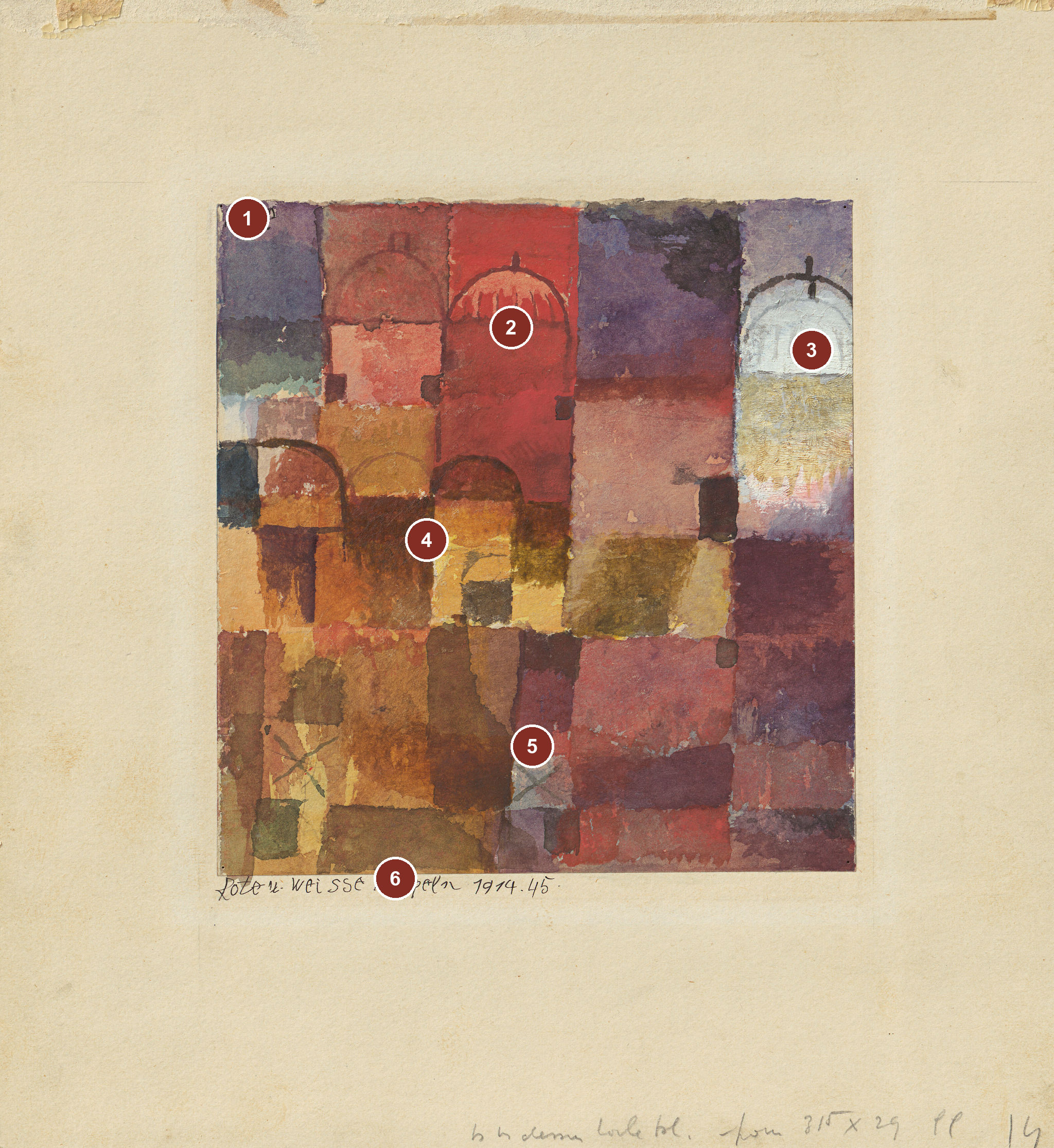
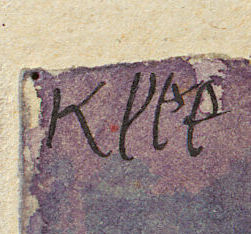
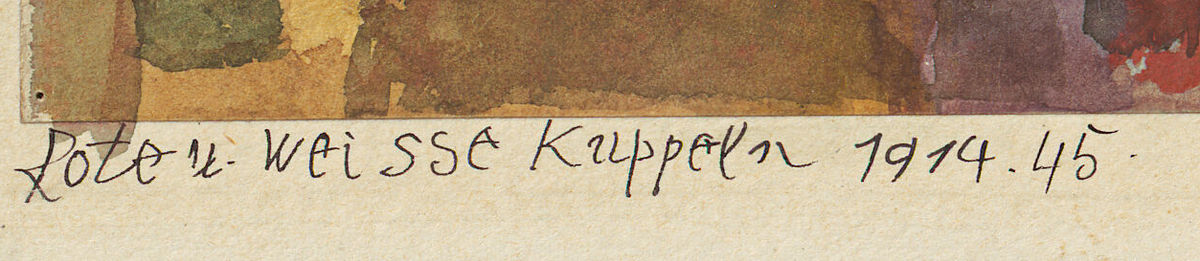
Artist’s signature at the upper-left painted edge
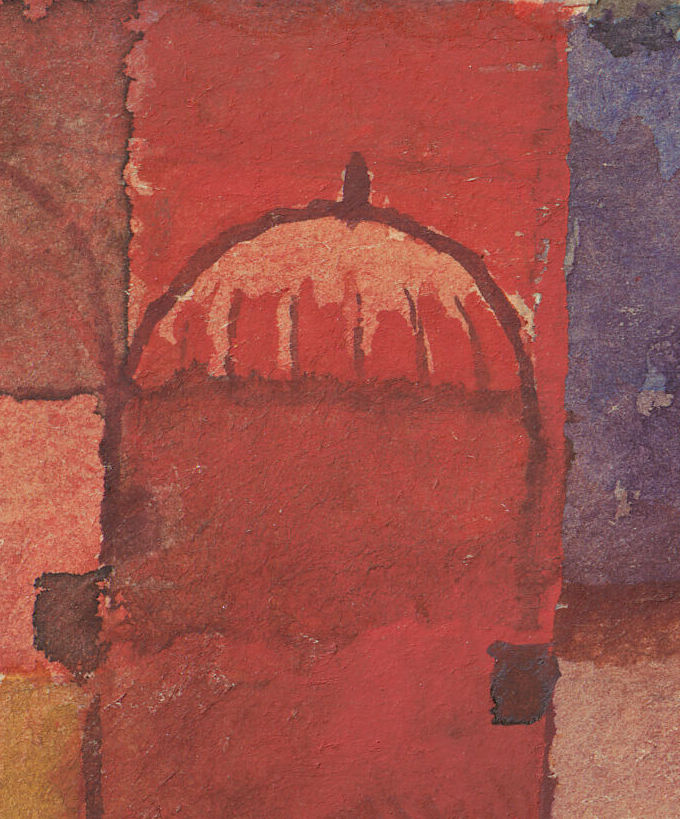
Red dome and its short upright marks
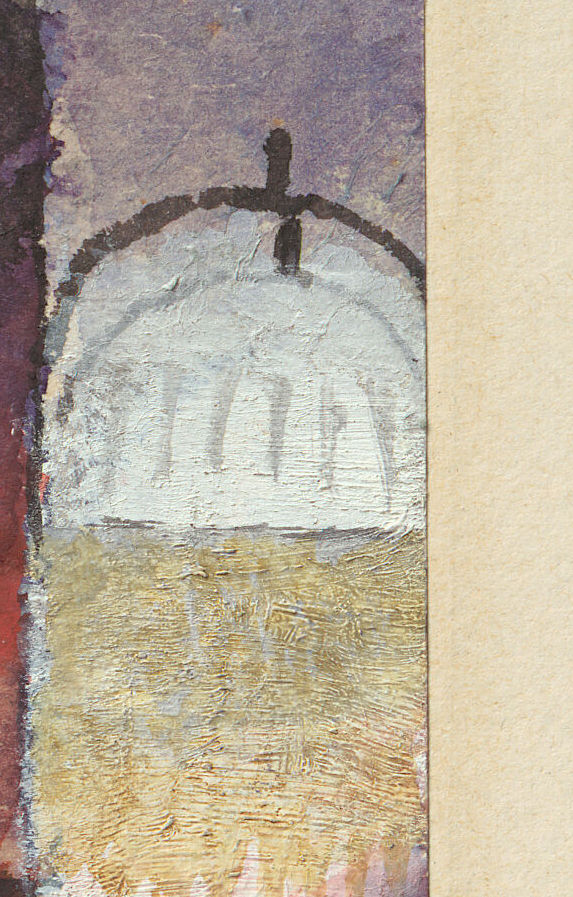
White dome at the right edge
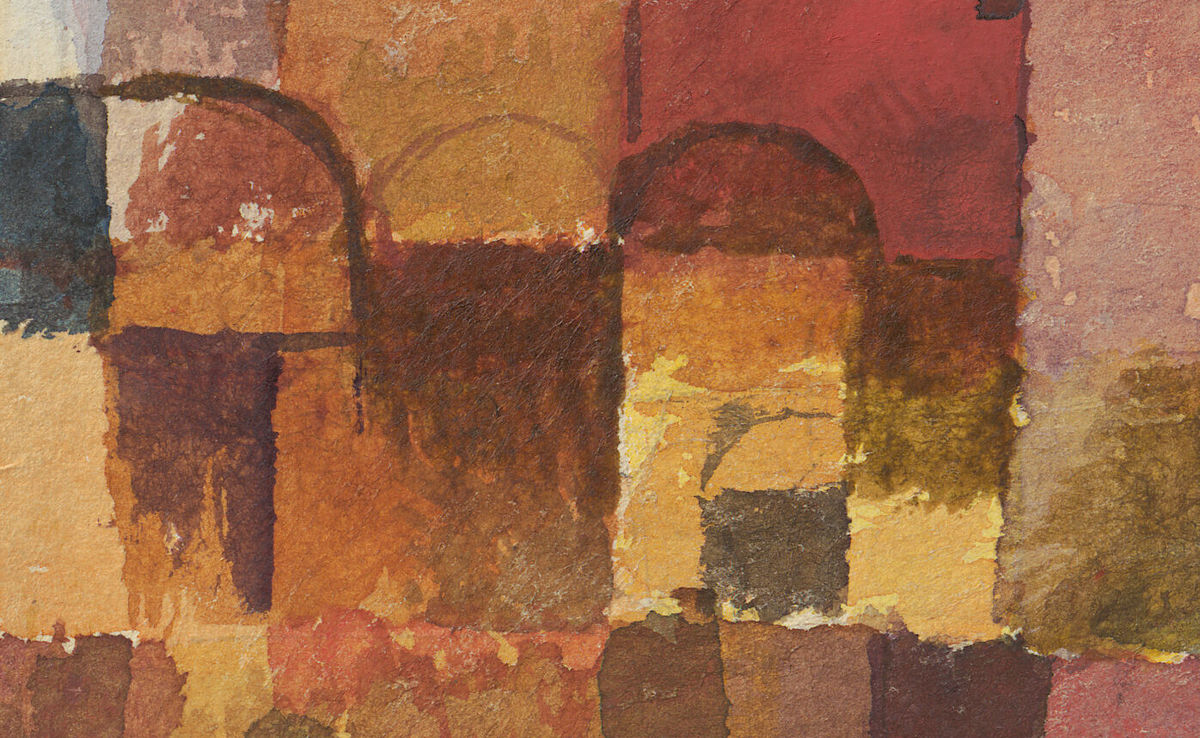
Arches across the middle of the city
Lower mosaic of translucent colour blocks
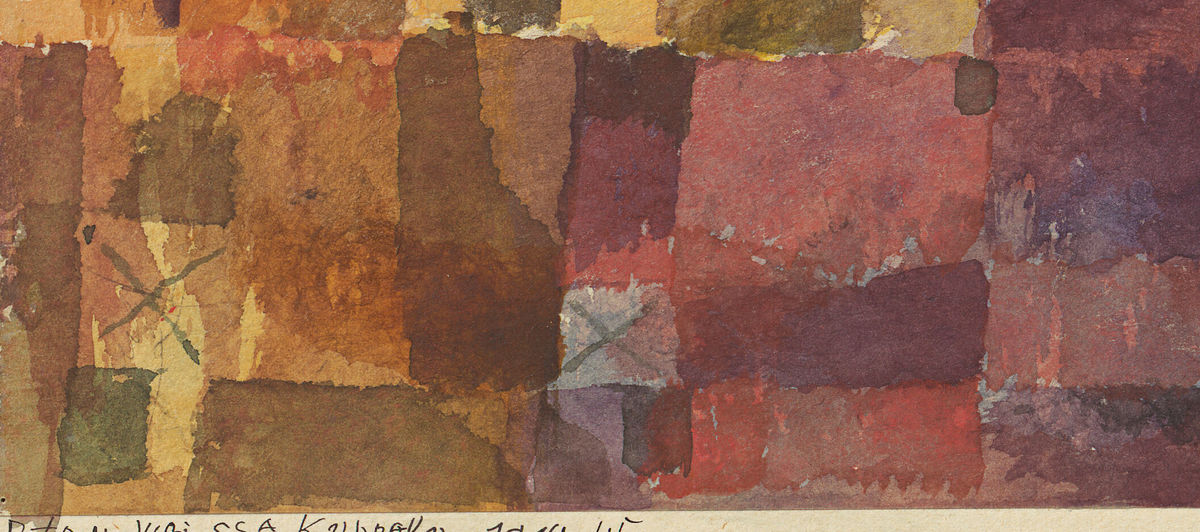
Klee’s handwritten title, date and annual number
Red and White Domes: a city built from colour
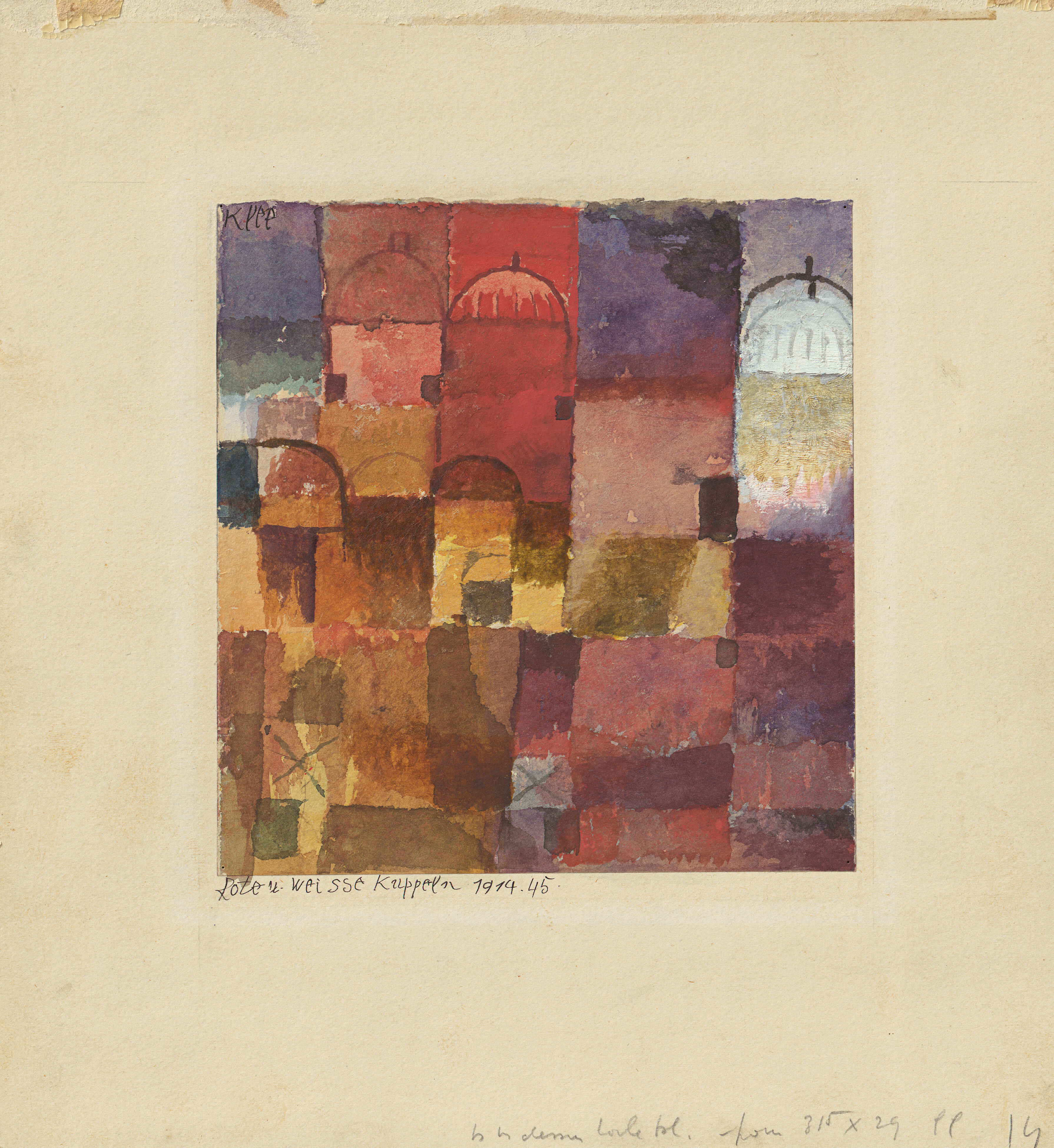
Paul Klee's Rote u. weisse Kuppeln, usually translated as Red and White Domes, is a small work of 1914. The artist signed the painted image at upper left and wrote “Rote u. weisse Kuppeln 1914.45.” on its backing mount. The Kunstsammlung Nordrhein-Westfalen in Düsseldorf records it as watercolour and gouache on paper mounted on cardboard, with a painted image of 14.6 × 13.7 cm. Its inventory number is 1014 and its published catalogue raisonné number is 1154. The object's own inscription supplies the year and Klee's annual number, 1914,45.[1]
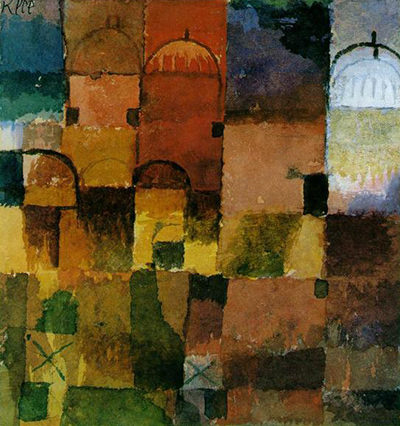
The painting offers a city without a conventional street plan. Two cupolas, one red and one white, rise above a tight arrangement of rectangular colour fields. Below them, dark arches interrupt the grid. Pink, ochre, olive, violet and red blocks join and overlap, while no single outline encloses a complete building. The title supplies architectural clues; the image lets those clues dissolve into colour.[1][2]
What the image shows
The red dome near the upper centre sits on a darker red rectangle. Its curved upper edge is marked by short upright strokes. Farther right, a bright white cupola stands against a violet and dark ground. The difference between them organizes the upper third of the image: red is absorbed into the central field, while white flares at the right edge. The painting's two named domes are visible, but they do not dominate every part of the composition.[2]
Across the middle, black and brown arches suggest doorways or arcades. Blocks of pink and yellow appear to lie behind or within them. At the lower edge, the arrangement grows denser: small squares, longer rectangles and dark vertical marks create a broken base. One can read a town built upward from these pieces. One can also follow their shapes as a design in which colour, rather than architecture, determines what joins what.[2]
The image has the size of a hand-held sheet rather than a large painting. At less than fifteen centimetres in either direction, small changes of hue carry considerable weight. The pale white dome catches the eye quickly, but attention then moves to the red curve and down through the arches. The surrounding paper and handwritten title are part of the object's presentation. A reproduction cropped to just the painted area can hide Klee's inscription and the scale of the mounted work.[1][2]
Klee's signature, close to the upper-left painted corner, and the handwritten title beneath the image serve different functions. One marks the painted composition; the other identifies it within his own sequence. The museum's high-resolution image preserves both. It also shows that the painted edges are not an immaculate geometric grid. Washes bleed and vary within their blocks, and small irregularities resist the old page's suggestion of a purely arithmetical construction.[1][2]
Tunisia and the limits of a location claim
Klee travelled to Tunisia with August Macke and Louis Moilliet in April 1914. This work has long been discussed in relation to that journey. The museum lists it among works shown in the Zentrum Paul Klee's 2014 exhibition on the Tunis trip and in a 2002 presentation at London's Hayward Gallery. A historical 1920 exhibition listing already names Rote und weiße Kuppeln under 1914/45, near works titled for Tunis and Hammamet.[1][3][4]
Those connections make a North African urban motif plausible, especially the dome and arcade forms. They do not identify a particular building, street or exact day of execution. Klee made several works on the journey and developed others from its visual material. The object record gives the year and annual number, not a place of painting. This article therefore treats the city as an invented composition related to the 1914 trip, without assigning it to Kairouan, Tunis or Hammamet as a documented viewpoint.[1][3][4]
In the picture, the red and white domes act as signs that make the blocks look architectural. Remove the title and they might still suggest roofs, but the rest of the image offers few fixed landmarks. The colours step from purple and rust near the top through warm ochre and pale pink to darker greens and browns below. This progression can be experienced as depth or atmosphere, yet it never becomes a single realistic light source. Klee makes a town legible just long enough for it to become a pattern of colour.[2]
The older page explained the picture by reference to Cubism, childhood drawing and Klee's son Felix. None of those claims was anchored to this specific work. Its 1914 date also precedes Klee's Bauhaus teaching, so later Bauhaus colour pedagogy should not be projected backward as its cause. The Tunisia context, object's materials and visible architecture provide a firmer basis for interpretation.[1][3]
Paper, gouache and the two numbers
The museum describes both watercolour and gouache on paper, mounted on cardboard. Watercolour can allow the paper and earlier layers to show through; gouache can make denser passages. The bright white cupola and more opaque red and ochre areas sit beside translucent washes and uneven boundaries. The catalogue wording establishes the materials, while the image shows how differently they register across this small surface. It cannot by itself establish the exact order in which Klee applied each layer.[1][2]
The numbers sometimes seen beside this work refer to separate systems. “1914.45” is written by Klee on the backing mount and is conventionally rendered 1914,45. The museum's catalogue raisonné number 1154 belongs to the later published catalogue of his complete work. Inventory 1014 is the Düsseldorf museum's own collection number. Keeping these distinct avoids turning a compact object record into three apparent dates or three artworks.[1]
The 1920 Ararat exhibition listing is an early witness to the title and annual number. It prints “Rote und weiße Kuppeln” at 1914/45. The museum's transcription uses the abbreviated “u.” and Klee's handwritten form on the mount. Such small variations in the written title do not imply different compositions. They show how a work moves from artist's inscription to exhibition list to later museum database.[1][4]
Ownership and an unresolved gap
The Kunstsammlung Nordrhein-Westfalen's provenance record says Klee kept the work from its creation until May 1916, when he sold it to Hermann Probst. It cannot establish every later transfer. The museum records the work with New Art Circle in New York by 1947, and with the actor and playwright Clifford Odets no later than 1951. It passed through Odets's estate, Berggruen & Cie. in Paris and the Contemporary Art Establishment in Vaduz before the Düsseldorf museum acquired it in 1965.[1]
The museum expressly states that ownership during 1933–45 could not be fully clarified and that it commissioned deeper research in 2025. That open question is part of the object's documented history. The existence of a gap does not, by itself, establish a particular loss, claimant or transfer. It means the current provenance statement should not be simplified into an uninterrupted chain from Probst to New York.[1]
Since entering the collection, the work has appeared in exhibitions in Düsseldorf and abroad, including the Hayward Gallery in London, the Musée d'Orsay in Paris, Japanese museum venues and the 2014 Tunis journey exhibition in Bern. The list demonstrates the painting's continuing role in accounts of Klee's early colour, while the object remains a small mounted sheet whose inscription and material edges merit attention in their own right.[1]
The title promises two architectural forms. The image gives them, then asks us to look past them at the unstable relations among washes, rectangles and arches. This is why Red and White Domes can feel at once like a city and like a study of how a city emerges from colour. Its known materials, artist's numbering and provenance give that visual play a precise historical frame without closing down what the picture lets us see.[1][2]
Related artworks
Explore eight other Klee works from the researched artwork cluster.
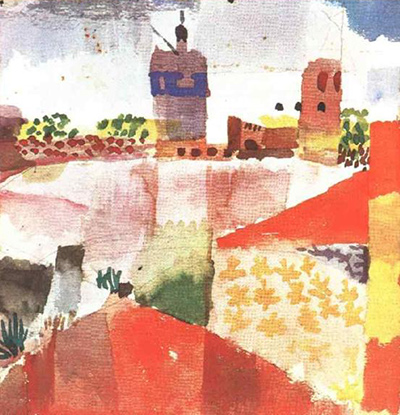
Hammamet with Mosque
1914
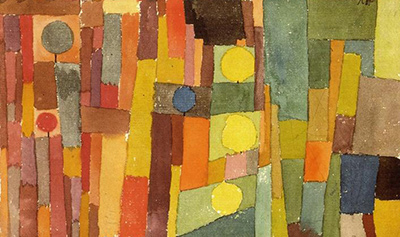
Flower Myth
1918
Angelus Novus
1920
Crystal Gradation
1921
Red Balloon
1922
References
- Kunstsammlung Nordrhein-Westfalen, Rote u. weisse Kuppeln, 1914,45, inventory 1014 (English and German): artist's inscription, materials, dimensions, catalogue raisonné no. 1154, acquisition, exhibition list and provenance with the expressly unresolved 1933–45 interval, View source.
- Kunstsammlung Nordrhein-Westfalen, public-domain-marked artwork image: museum photograph with the painted sheet, signature and title mount; 3,580 × 3,900 pixels. The full source, source URL and derived local assets are recorded in the image ledger, View source.
- Kunstsammlung Nordrhein-Westfalen exhibition list for this object: inclusion in the 2002 Hayward Gallery exhibition and the 2014 Zentrum Paul Klee Tunisreise exhibition. These records establish exhibition context, not a precise depiction site, View source.
- Der Ararat, Paul Klee special issue, 1920, exhibition listing (German): early printed Rote und weiße Kuppeln, 1914/45, adjacent to other 1914 works titled for Tunis and Hammamet, View source.