


 by Tom Gurney
Tom Gurney BSc (Hons) is an art history expert with over 20 years experience
Published on June 19, 2020 / Updated on November 29, 2026
Email: tomgurney1@gmail.com / Phone: +44 7429 011000
Constantin Brâncuși Sculptures: Introduction
Two sculptures by Constantin Brâncuși can share a title and look surprisingly different. A marble Bird in Space holds a soft band of light, while a polished metal bird reflects the room. In The Kiss, Brâncuși returned to the embrace and changed how much of each figure could be read separately. Across his sculpture, the subject might stay familiar while the material, the outline and the way the work met its support all changed. [1] [2]
At a Glance
- Figures and portraitsStart with The Kiss, the reclining head of Sleeping Muse and the compact Torso of a Young Man. Each retains different clues to the human body.
- Birds and animalsCompare the chest and beak of Maiastra with the taper of Bird in Space, or follow the long horizontal sweep of Fish.
- Materials and supportsLook for direct carving in stone and wood, the different finishes of cast metal, and bases that affect how a sculpture meets the eye.
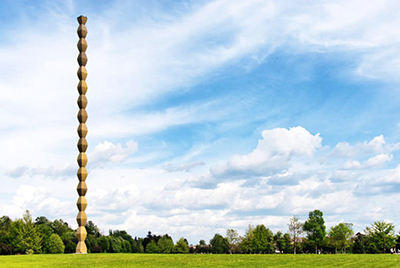
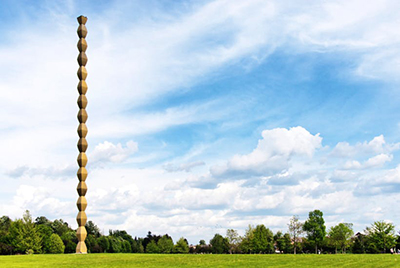
- Sculpture in public spaceThe metal Endless Column at Târgu Jiu belongs to a memorial ensemble. An earlier oak column in New York uses a related form at a very different scale.
- Identifying a versionUse the collection's title, date, material, measurements and accession number together.
Contents
- How to identify a Brâncuși sculpture
- Carved figures, heads and torsos
- Birds, fish and the direction of movement
- When the support becomes the sculpture
- Selected sculpture records
How to identify a Brâncuși sculpture
Begin with the title a collection uses, then check the medium and date. A title may name a motif, a series or a particular museum object. Sleeping Muse and La Muse endormie can be translations of the same title, while two Paris bronzes both called La Muse endormie and dated 1910 are separate objects. Their different inventory numbers, dimensions and acquisition histories make that clear. A Roman numeral can help if it is part of the collection's title, as in Torso of a Young Man [I]. Other institutions may use a shorter title for a related work. [3] [4] [5]
An accession number identifies a holding within a collection. It may include a year of acquisition or a suffix identifying parts, so read the object date separately. Two dates on one label may also describe two stages of making. The Peggy Guggenheim Collection dates its brass Bird in Space 1932–40 and suggests it could have been cast as early as 1932 and finished in 1940. Keeping both stages visible tells you more than choosing one year as the date of the whole process. [6]
Check what the measurements include. The Metropolitan Museum of Art gives an overall height with base for its 1923 marble Bird in Space. In Washington, the National Gallery of Art gives four measurements for its 1925 example, including the marble bird alone, the separate supports and the entire assembly. The full Washington sculpture reaches 344.6 cm, of which 181.9 cm is the bird. A comparison of sculptural height only works when the dimensions describe equivalent parts. A close-up photograph that fills the frame with the bird can make both works seem to be the same size. [7] [8]
Older catalogues add a different kind of evidence. The Museum of Modern Art's 1954 exhibition checklist gives its bronze Bird in Space a date of 1919. The short historical number 153.34, height of 54 inches and anonymous gift correspond with the museum's present entry for 153.1934, which dates the bronze to 1928. The difference tells us that the work circulated under another date. The current object entry supplies the dating used here. [9] [10]
Carved figures, heads and torsos
The Kiss and the shape of the block
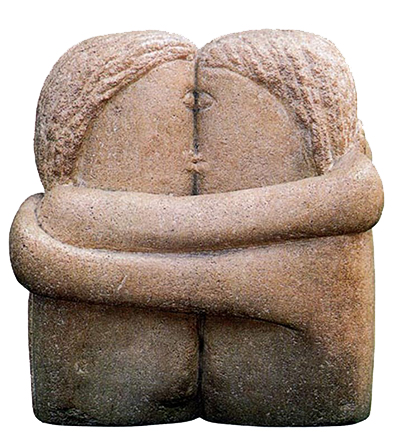
In The Kiss, the rectangular stone makes the embrace readable from more than one direction. From the front, the faces and the line between them establish the pose. The arms then carry the eye around the sides. Because so much of the outside contour belongs to the original block, a shallow cut can do several jobs. It can describe the edge of a limb, show which body that limb belongs to and bring a horizontal accent across the stone. [11] [12]
Romania's National Heritage Institute records the directly carved Sărutul held by the Craiova Art Museum as a 1907 work in Marne stone. Its entry describes the placement of the arms and records the date on the base. The Philadelphia Museum of Art dates its own The Kiss to 1916 and identifies it as the fourth version of the subject. In Philadelphia's version, the two eyes meet across the divide to make a single oval. Look at that point first, then at how far the arms and hairlines carry the union of the two figures. The block keeps its weight and geometry even as those lines make the embrace legible. [11] [12]
Display can change which of these features commands attention. Philadelphia records that Walter and Louise Arensberg initially showed their Kiss alone on a truncated beam and later placed it at the centre of a low bench with six carved Pre-Columbian works. Those settings belong to the history of this particular object. The shift from an isolated block to a sculpture in a group also changes a viewer's first encounter with it, from seeing the joined figures at a distance to noticing their shapes in relation to objects around them. [12]
Sleeping Muse and the reclining head
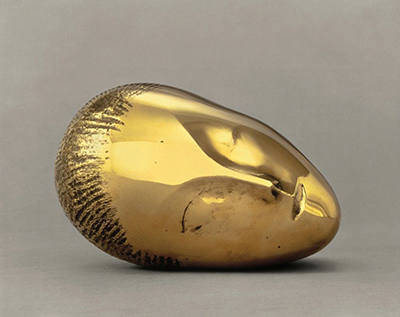
The head of Sleeping Muse lies on its side. That orientation allows the outline itself to convey repose. In the polished bronze that the sitter, Baroness Renée Irana Frachon, gave to the French national collection, the ridge of the nose and the fine lines of the closed eyes still locate the face. A darker treatment in the grooves of the hair gives that area a different visual weight. In the Centre Pompidou's account, the series began with a marble and the bronzes vary subtly in size, symmetry and surface as a result of work on the metal or on intermediate plaster. [3]
It is possible to compare two 1910 bronzes in the Pompidou catalogue without leaving the series or changing the subject. The sitter's gift, AM 1374 S, measures 27.3 cm along its longest axis. The museum describes AM 818 S, a purchase recorded in 1947, as a Valsuani cast measuring 26 cm along its longest axis. The Met's Sleeping Muse, 49.70.225, is a further bronze dated 1910. The Met describes its object as one of four casts made that year, while the Pompidou describes six bronzes in its broader discussion. Those figures refer to their respective descriptions of the casting history. Each museum's accession record is a better way to locate the head you want to see than an unqualified total for the series. [3] [4] [13]
Torso of a Young Man and the forked form
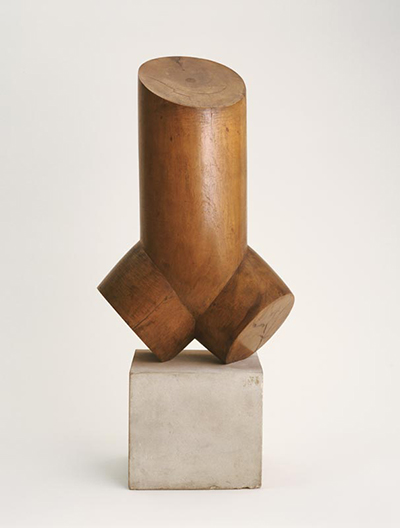
The body in Torso of a Young Man can be read from the relation of three forms. A central section rises where the torso would be. Two short branches suggest upper thighs and turn out below it. The Philadelphia wood version, dated about 1917–22, and Cleveland's brass Male Torso, dated 1917 in its collection record, share this arrangement. Cleveland situates its sculpture alongside the Philadelphia wood and a second brass example at the Hirshhorn. [5] [14]
Compare the junction where the three forms meet. In the wood it is easy to read that junction as a fork with a natural growth habit. On the brass, a bright highlight can travel from the trunk into a branch and call attention to the continuous rounded surface. Each material offers its own way of finding the body in the abbreviated form. The two dates in the collection records identify the works as catalogued. They leave open a more detailed question about how the designs, carving and casts followed one another. [5] [14]
Birds, fish and the direction of movement
From Maiastra to Bird in Space
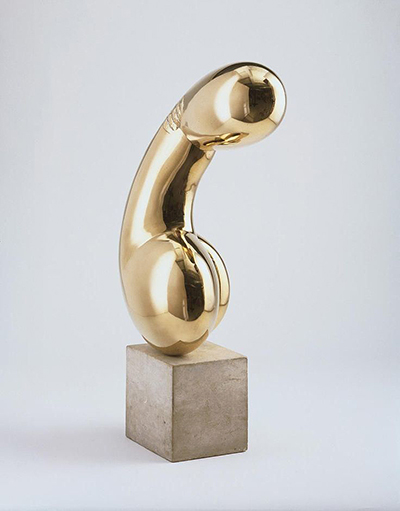
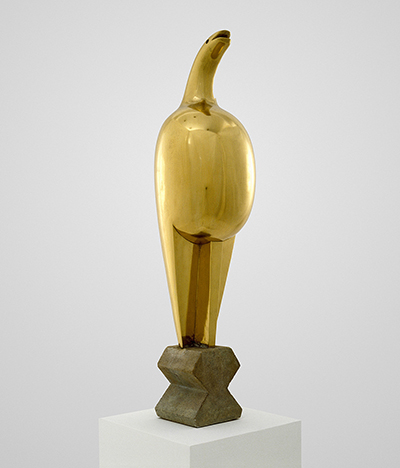
Maiastra takes its name from a magical bird in Romanian folklore. The white marble at MoMA, dated 1910–12, has a swelling chest, a lifted neck and a tail whose edges still suggest feathers. Its 55.9 cm bird stands on a limestone support 177.8 cm high. The middle piece, Double Caryatid, began as an independent sculpture. The Peggy Guggenheim Collection's Maiastra, catalogued as polished brass on a limestone base and dated about 1912, treats the chest as a broad reflective surface. The shapes of neck and body become clear where the reflections turn over the curve. [15] [16]
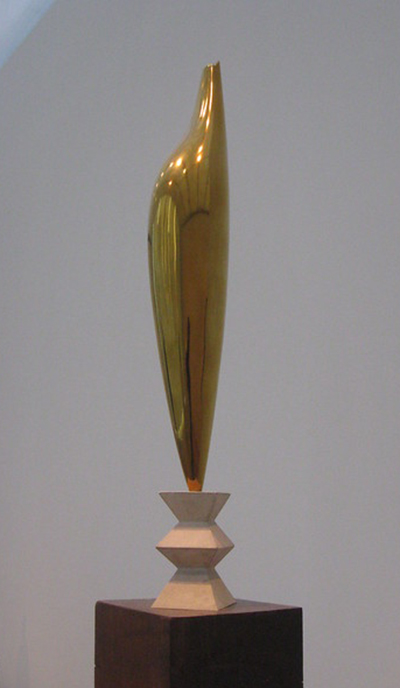
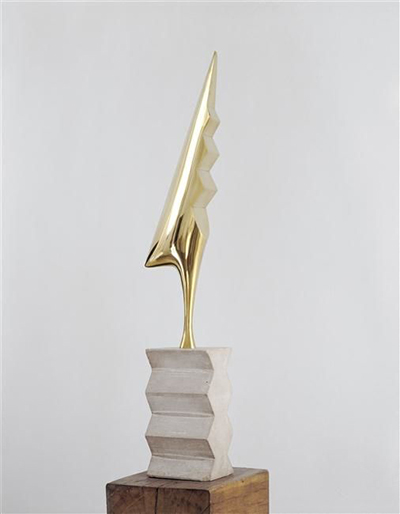
The Venice collection places the Golden Bird group between Maiastra and Bird in Space. Compare the MoMA marble Maiastra with the Met's 1923 marble Bird in Space. In the later work, the foot narrows and the body swells upward in one long line. A slant at the top carries what remains of the head and beak. The upward direction comes from the relation of the swell to the long taper. This becomes especially apparent when the sculpture is seen full length, with the transition from the pedestal to the narrow foot still visible. [6] [7] [15]
The Washington marble, the MoMA bronze and the Venice brass are three distinct objects. Under a single title, they give viewers different points of reference for the support, the surface and the apparent height of the bird. MoMA calls its metal bronze, and Venice catalogues its own polished metal as brass. Colour in a photograph is a poor basis for changing those labels. Metal can take on the colour of nearby walls or daylight, and photography can turn the same surface warm or cool. [6] [8] [10]
Fish and the changing profile
Brâncuși explored horizontal movement in Fish. The blue-grey marble in MoMA's collection, dated 1930, is 180.3 cm long and 14 cm thick. From one side it looks broad and substantial. Move towards the end and the volume narrows almost to a line. The pivot once allowed the piece to rotate above its pedestal. A viewer walking around a stationary display can still see much of that alternating breadth and thinness. The stone's weight makes the impression of sudden movement all the more surprising. [17]
The dimensions explain why a small change of position matters so much. The marble is nearly thirteen times as long as it is thick. A broad view exposes the pale flecks that run through the stone, which MoMA likens to the movement of water. Towards either end, that same surface offers the eye less space to follow the markings, and the outline takes over. At the junction with the pedestal, a shallow marble section rests above two limestone cylinders. Their round profiles stay broad when the fish is seen end-on. This gives the viewer a steady point of comparison as the upper form seems to contract or extend. [17]
Compare that effect with the polished brass Bird in Space in Venice. Against a quiet background, the bright marks in the marble are part of a pattern fixed in the body of Fish. On the bird, a moving bright band can come from a reflection on the curved metal. A single photograph freezes both effects and gives them a similar appearance. A change of viewpoint makes the distinction easier to see, because the stone's markings hold their position on the surface while the reflected light shifts with the viewer. [6] [17]
The Pompidou has a Le Poisson catalogued as plaster, dated 1924 and measuring 43 cm in length. It also has a much larger Le Poisson in patinated plaster with a grey marble support, dated 1930–49. In a photograph of the assembled later work, material and scale are two separate questions. The grey marble in the Paris record describes a support, while blue-grey marble describes the body of MoMA's fish. This is a case for reading the material fields all the way through and identifying which part they describe. [17] [18] [19]
When the support becomes the sculpture
Brâncuși's supports range from a shallow foot or disc to a stack taller than the carving it carries. The pedestal changes where you stand in relation to a work and where your gaze starts. In MoMA's Maiastra, the rougher limestone work in the middle draws attention to the distance between the gallery floor and the elevated perch of the polished bird. At Târgu Jiu, distance and approach become part of the work at the scale of streets and parks. It helps to start with the assembly and then consider what each material and level contributes. [15] [20]
The title Double Caryatid describes a pair of figures that bear a stone over their heads. In 1908 Brâncuși exhibited the carving independently. In the assembly MoMA now catalogues as Maiastra, it sits between rectangular limestone blocks and participates in the act its figures represent. From below, the upper block may look like a load borne by the figures. Follow the stack upwards and that same block becomes the perch for the bird. The roughened carving between two more regular shapes gives the eye something to pause over before it reaches the rounded marble. An object once displayed on its own gained a distinct role through its placement. [15]
Brâncuși also showed what happened when the upper sculpture was absent. According to the Centre Pompidou, he included five pedestals without sculptures on top at the Brummer Gallery in New York in 1926. That display gives context for the attention his bases demand in a composite such as Maiastra. You can imagine seeing the limestone stack on its own and reading the shapes from the largest block towards the carved figures. In the assembled work a second reading starts with the bird and moves down. Both journeys bring the eye to the figures in the middle. The Brummer example shows that an exhibition list can record a pedestal as an exhibit in its own right, even when a museum elsewhere catalogues a support together with the work it carries. [15] [21]
The 1918 Endless Column, version I, in MoMA's collection is directly carved in oak. MoMA traces its repeated geometry back to the use of doubled pyramids in earlier bases. One unit widens and narrows, and the next takes up that rhythm without a pause. In the New York object, the rhythm runs along a single length of wood. At Târgu Jiu, the Endless Column is a metal monument within a memorial built in 1937–38. From a distance its repetitions establish a vertical axis. As you approach, you can see how that axis relates to the space set aside around it. [2] [20]
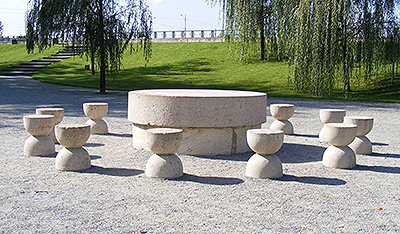
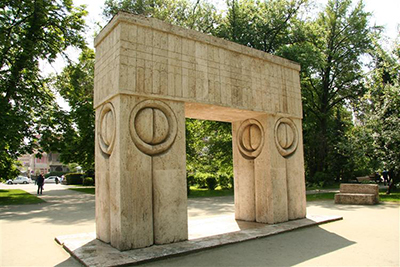
The monumental ensemble at Târgu Jiu also includes the Table of Silence, the Alley of Chairs and the Gate of the Kiss. It commemorates those who died defending the city in the First World War. The gate invites passage, the table and seats bring the forms close to the body, and the column carries the eye upwards. A catalogue record for the oak column and a heritage record for the memorial answer different questions. At the memorial, the path between works and the time spent walking it are part of what can be experienced. [2] [20]
What studio photographs can tell us
Unlike a museum photograph of one object against a plain background, a view of Brâncuși's Paris studio can show how several objects meet in one space. The Centre Pompidou describes how he moved supports from one sculpture to another as he changed the arrangement, and how he sometimes put a plaster copy in the place of a work he had sold. A photograph may therefore preserve a particular arrangement even when the same object and base cannot be found together in a later display. A record for a photograph supplies a date for that view. Look for a separate object record to date the making of the sculpture it shows. [21]
There are several clues to follow in such an image. Look first at where the body of the sculpture ends. Find any narrow stem or foot that looks continuous with it, and then trace the seams between the stacked parts below. Compare the result with the material and measurement fields in the collection record. In the Washington Bird in Space, for example, a short cylindrical stone support sits over another shaped stone piece, and the dark wooden base raises both. The eye travels through the angular shapes underneath before it reaches the long curve of the bird. A tightly cropped image could miss that sequence entirely. [8]
The status of a plaster likewise depends on the particular object and its evidence. The Paris Fish made of patinated plaster and grey marble can be compared with MoMA's fish for the relation between body and support. The earlier, smaller plaster at the Pompidou gives another point of comparison for thickness and scale. A plaster might preserve a stage of work or serve in a studio arrangement, and those roles give us different reasons to look at its dimensions and surface. [17] [18] [19] [21]
Selected sculpture records
Each entry identifies an object or place that can be looked up independently. Museum names refer to the holding collections. Dimensions specify a part or the full assembly when the distinction matters.
| Work and date | Material and support | Collection and identifier |
|---|---|---|
| Sărutul, 1907 | Directly carved Marne stone | Muzeul de Artă Craiova, 4/948. [11] |
| The Kiss, 1916 | Carved stone block | Philadelphia Museum of Art, collection record 51306. [12] |
| La Muse endormie, 1910 | Polished bronze, 27.3 cm long | Centre Pompidou, AM 1374 S. [3] |
| La Muse endormie, 1910 | Bronze, Valsuani cast, 26 cm long | Centre Pompidou, AM 818 S. [4] |
| Sleeping Muse, 1910 | Bronze | The Metropolitan Museum of Art, 49.70.225. [13] |
| Maiastra, 1910–12 | White marble on a three-part limestone pedestal | The Museum of Modern Art, 144.1953.a-d. [15] |
| Maiastra, c. 1912 | Polished brass on a limestone base | Peggy Guggenheim Collection, 76.2553 PG 50. [16] |
| Torso of a Young Man [I], c. 1917–22 | Wood | Philadelphia Museum of Art, collection record 51091. [5] [14] |
| Male Torso, 1917 | Brass, 63.8 cm high with base | Cleveland Museum of Art, 1937.3205. [14] |
| Endless Column, version I, 1918 | Oak, 203.2 cm high | The Museum of Modern Art, 645.1983. [2] |
| Bird in Space, 1923 | Marble, 144.1 cm high with base | The Metropolitan Museum of Art, 1996.403.7ab. [7] |
| Bird in Space, 1925 | Marble with stone and wood supports, 344.6 cm total height | National Gallery of Art, Washington, 1967.13.3. [8] |
| Bird in Space, 1928 | Bronze, 137.2 cm high as catalogued | The Museum of Modern Art, 153.1934. [10] |
| Bird in Space, 1932–40 | Polished brass on a limestone base | Peggy Guggenheim Collection, 76.2553 PG 51. [6] |
| Le Poisson, 1924 | Plaster, 43 cm long | Centre Pompidou, AM 4002-89. [18] |
| Fish, 1930 | Blue-grey marble on a three-part marble and limestone pedestal | The Museum of Modern Art, 695.1949.a-d. [17] |
| Le Poisson, 1930–49 | Patinated plaster with a grey marble support | Centre Pompidou, AM 4002-90 and AM 4002-90 (1). [19] |
| Brâncuși Monumental Ensemble of Târgu Jiu, 1937–38 | Public memorial with a metal column, stone sculptures and seating | Târgu Jiu, Romania, UNESCO World Heritage List 1473. [20] |
Browse Brâncuși’s sculptures
Browse sculptures and drawings
Browse articles on the sculptures and separately catalogued museum objects. A work can have several physical versions. Drawing records from the Tate catalogue retain their October 2014 snapshot wording where present.
| Name | Date | Medium |
|---|---|---|
| Arch | Sculpture | |
| Bird in Space | Sculpture | |
| The Blond Negress | Sculpture | |
| The Cock | Sculpture | |
| The Endless Column | Sculpture | |
| The First Cry | Sculpture | |
| Fish | Sculpture | |
| The Gate of the Kiss | Sculpture | |
| Golden Bird | Sculpture | |
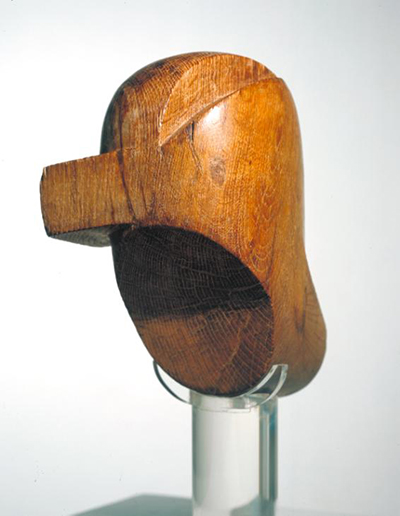
| Head | Sculpture | |
| The Kiss | Sculpture | |
| Leda | Sculpture | |
| Madame L.R. | Sculpture | |
| Mademoiselle Pogany II | Sculpture | |
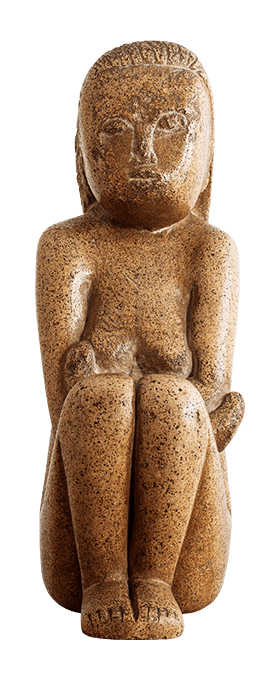
| Mademoiselle Pogany | Sculpture | |
| Maiastra | Sculpture | |
| The Newborn | Sculpture | |
| Phoque II | Sculpture | |
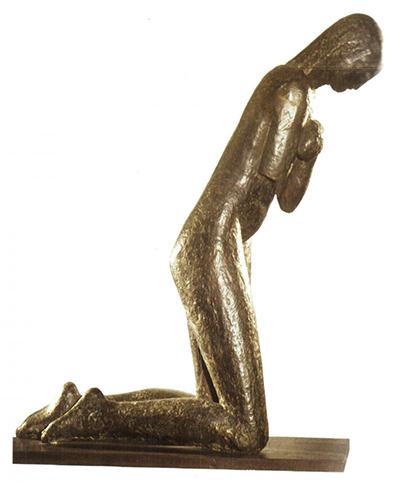
| The Prayer | Sculpture | |
| Princess X | Sculpture | |
| Prometheus | Sculpture | |
| Târgu Jiu monumental ensemble | Sculpture | |
| Sculpture for the Blind | Sculpture | |
| The Seal | Sculpture | |
| The Signal | Sculpture | |
| Sleeping Muse | Sculpture | |
| The Sorceress | Sculpture | |
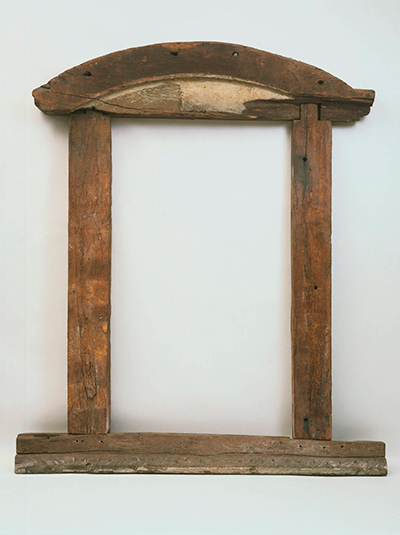
| The Table of Silence | Sculpture | |
| Torso of a Young Man | Sculpture | |
| Two Lamps | Sculpture | |
| Vitellius | Sculpture | |
| The White Negress | Sculpture | |
| The Wisdom of the Earth | Sculpture | |
| Young Bird | Sculpture | |
| The Kiss (Philadelphia, fourth version) | 1916 | Sculpture Catalogue. |
| Sleeping Muse (Pompidou bronze) | 1910 | Sculpture Catalogue. |
| Mlle Pogany, version I (MoMA bronze) | 1913, after a marble of 1912 | Sculpture Catalogue. |
| Maiastra (Venice brass) | about 1912 | Sculpture Catalogue. |
| Bird in Space (MoMA bronze) | about 1941 | Sculpture Catalogue. |
| Bird in Space (Venice brass) | 1932–40 | Sculpture Catalogue. |
| Endless Column, version I (oak) | 1918 | Sculpture Catalogue. |
| Brâncuși Monumental Ensemble of Târgu Jiu | 1937–38 | Sculpture Catalogue. |
| Bust of a nude woman in profile, head inclined | about 1910 | Drawing Catalogue. |
| Nude study, head inclined (recto) | — | Drawing Catalogue. |
| Self-portrait (ink) | — | Drawing Catalogue. |
| View of the Artist’s Studio | 1918 | Drawing Catalogue. |
| Study for the cock (lost clay Grand Coq) | about 1923 | Drawing Catalogue. |
| Portrait of a woman in profile | — | Drawing Catalogue. |
| Animal head | — | Drawing Catalogue. |
| Animal sketch (2002 checklist) | 1929 | Drawing Catalogue. |
| Plans of the studio (verso) | about 1930–38 | Drawing Catalogue. |
| Danaïde (Tate T00296) | c.1918 | Sculpture Catalogue. |
| Maiastra (Tate T01751) | 1911 | Sculpture Catalogue. |
| Head (Tate T03066) | c.1919–23 | Sculpture Catalogue. |
| Fish (Tate T07107) | 1926 | Sculpture Catalogue. |
Frequently Asked Questions
His sculptures include carved wood and stone, as well as plaster and cast metal. To understand what the material contributes, compare two objects with a related form. In Maiastra, the white marble and polished brass separate chest from neck through different kinds of light. In Endless Column, version I, cuts in the oak remain visible within the repeated geometry. The article on Brâncuși's style and technique follows these decisions across more works. [1] [2] [15] [16]
No. The Met catalogues its 1923 work as marble, MoMA lists its 1928 example as bronze and the Peggy Guggenheim Collection lists its 1932–40 example as polished brass on limestone. Looking at two versions side by side makes the differences in taper, footing and surface easier to see. Several sculptures that have bird subjects, including Maiastra, also belong to related groups with their own titles. [6] [7] [10] [15]
Check the object record and the history of its display. MoMA catalogues the three limestone sections with its white marble Maiastra and identifies the middle section as an earlier sculpture. The National Gallery of Art's entry for its 1925 Bird in Space measures the marble, stone and wood separately as well as together. Records like these let you distinguish the overall assembly from the particular piece of stone or metal that carries the motif. [8] [15]
Major holdings include the Centre Pompidou, the Philadelphia Museum of Art, MoMA, The Met and the Peggy Guggenheim Collection in Venice. The Târgu Jiu works can be experienced as an outdoor ensemble. Before planning a museum visit for a particular version, check its accession number against the institution's display and loan information. A sculpture can belong to one collection and be on loan to another. [4] [5] [6] [7] [10] [20]
Discussion
Look again at the images and ideas explored in Constantin Brâncuși Sculptures. These editorial prompts invite your observations.
Choose two versions of the same subject. Where does your eye go first in each one? Consider whether the difference comes from a change in outline, the finish of the material or the height and shape of the support.
Reader Insights
Choose a bird or a head. Which physical detail would help you distinguish two versions?
How do the different supports change the way you look at the two sculptures?
Join the Conversation
Share a detail, comparison or question about Constantin Brâncuși Sculptures below.
References
- Centre Pompidou, L’artiste et son œuvre (in French). View source.
- The Museum of Modern Art, Endless Column, version I, oak, 645.1983. View source.
- Centre Pompidou, La Muse endormie, AM 1374 S, with analysis by Marielle Tabart (in French). View source.
- Centre Pompidou, La Muse endormie, AM 818 S (in French). View source.
- Philadelphia Museum of Art, Torso of a Young Man [I], c. 1917–22. View source.
- Peggy Guggenheim Collection, Bird in Space, 76.2553 PG 51. View source.
- The Metropolitan Museum of Art, Bird in Space, 1996.403.7ab. View source.
- National Gallery of Art, Bird in Space, 1967.13.3. View source.
- The Museum of Modern Art Archives, Checklist for Exhibition 563, Sculpture by Constantin Brancusi, 1954, item 5. View source.
- The Museum of Modern Art, Bird in Space, 153.1934. View source.
- Institutul Național al Patrimoniului, Sărutul, inventory 4/948 (in Romanian). View source.
- Philadelphia Museum of Art, The Kiss, 1916. View source.
- The Metropolitan Museum of Art, Sleeping Muse, 49.70.225. View source.
- Cleveland Museum of Art, Male Torso, 1937.3205. View source.
- The Museum of Modern Art, Maiastra, 144.1953.a-d. View source.
- Peggy Guggenheim Collection, Maiastra, 76.2553 PG 50. View source.
- The Museum of Modern Art, Fish, 695.1949.a-d. View source.
- Centre Pompidou, Le Poisson, AM 4002-89 (in French). View source.
- Centre Pompidou, Le Poisson, AM 4002-90 and AM 4002-90 (1) (in French). View source.
- UNESCO World Heritage Centre, Brâncuși Monumental Ensemble of Târgu Jiu, World Heritage List 1473. View source.
- Centre Pompidou, Brancusi's studio, including The role of the pedestal. View source.
More BRÂNCUȘI Sculptures
Bird in Space
Compare the marble and metal versions of Brâncuși’s sculpture.